The Honda Road Departure Mitigation System Problem warning means the Road Departure Mitigation (RDM) system has detected a fault. The warning usually affects the Honda Sensing safety features instead of the vehicle’s basic driving functions. You can still drive in many situations, but the system may stop providing steering assistance or automatic braking when it detects an unintended lane departure.
Several issues can trigger this warning. A dirty front camera, a blocked radar sensor, low battery voltage, outdated software, or incorrect camera calibration are the most common causes. A windshield replacement or a minor front-end collision can also interrupt communication between the sensors and the control module.
Understanding the cause of the warning helps you choose the right solution. Some problems only require cleaning the camera or charging the battery. Others need professional diagnosis and ADAS calibration to restore normal operation.
This guide explains what the Honda Road Departure Mitigation System Problem means and why it appears. It also shows how to diagnose the fault, repair the affected components, estimate repair costs, and prevent the warning from returning. By the end of this article, you will understand how the Road Departure Mitigation System works and what steps you should take to keep every Honda Sensing feature operating correctly.
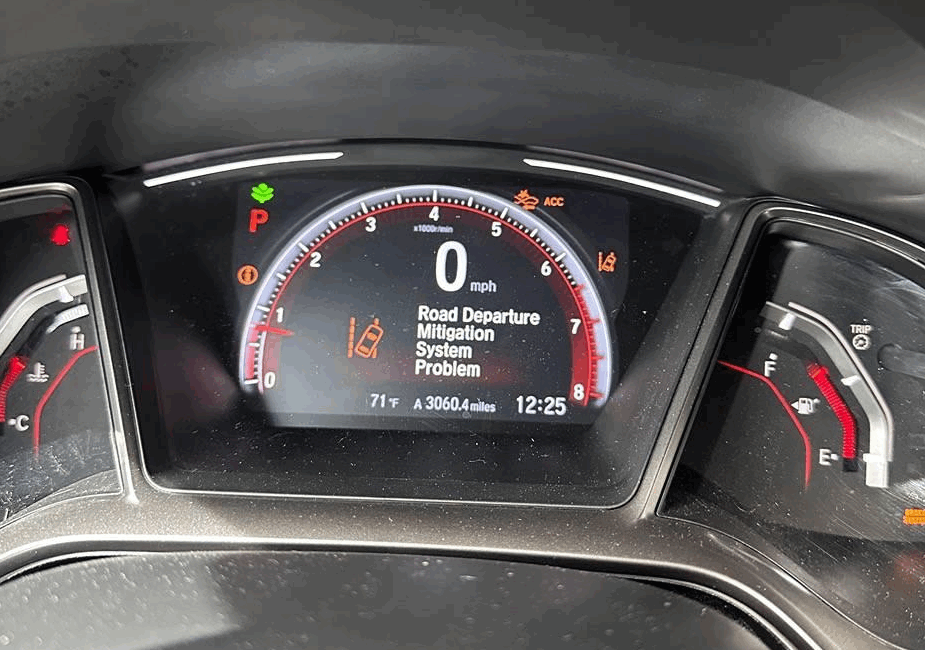
What Does the Honda Road Departure Mitigation System Problem Mean?
The Honda Road Departure Mitigation System Problem warning means the RDM system has detected a fault. The system can no longer operate as expected. It temporarily disables its lane departure assistance until you resolve the issue. In most cases, the warning affects Honda Sensing features instead of the vehicle’s basic driving functions.
Honda designed the Road Departure Mitigation System to help drivers stay within marked lanes. The front camera monitors lane markings while the control module analyzes the road ahead. When the vehicle drifts without a turn signal, the system warns the driver. It may also apply gentle steering or braking assistance to reduce the risk of leaving the roadway.
The warning does not always indicate a major mechanical failure. However, it tells you that one or more safety features have stopped working correctly. You may also see alerts for Lane Keeping Assist System, Adaptive Cruise Control, or Collision Mitigation Braking System. These systems share cameras, sensors, and electronic components, so one fault can trigger multiple warnings.
Several problems can activate the warning. Dirt on the windshield camera is a common cause. A weak battery, damaged radar sensor, or failed camera calibration can also interrupt system operation. Finding the root cause early helps restore every Honda Sensing feature and prevents unnecessary repairs.
What Causes the Honda Road Departure Mitigation System Problem?
Several issues can trigger the Honda Road Departure Mitigation System Problem warning. Most of them involve the camera, radar sensor, or electronic control system. The warning appears when these components cannot collect or process accurate driving data. The control module then disables the RDM system to avoid incorrect steering or braking assistance.
A dirty windshield camera is one of the most common causes. Dust, mud, insects, snow, or heavy rain can block the camera’s view. The system struggles to detect lane markings when visibility drops. As a result, the dashboard displays the warning until the camera works normally again.
A blocked or damaged radar sensor can also interrupt system operation. The sensor sits behind the front grille on many Honda models. Road debris, ice, or a minor collision can reduce its accuracy. Even a small impact may change the sensor’s alignment and trigger multiple Honda Sensing warnings.
Low battery voltage creates another common problem. Modern Honda vehicles rely on stable electrical power to operate advanced driver assistance systems. A weak battery can interrupt communication between control modules. The warning may disappear after replacing the battery and clearing diagnostic trouble codes.
Windshield replacement often causes unexpected RDM faults. The front camera must remain perfectly aligned after technicians install a new windshield. Even a slight position change affects lane recognition. Honda therefore recommends ADAS calibration after every windshield replacement.
Software problems can also trigger the warning. An outdated ECU, corrupted data, or communication errors may prevent the system from working correctly. In these cases, technicians usually inspect the vehicle with the Honda Diagnostic System before updating the software or replacing electronic components.
Although temporary weather conditions may activate the warning, persistent alerts usually indicate a hardware or calibration issue. Diagnosing the exact cause early reduces repair time and helps restore every Honda Sensing feature to normal operation.
Can You Drive With the Honda Road Departure Mitigation System Problem?
Yes, you can usually drive with the Honda Road Departure Mitigation System Problem warning. The warning does not prevent the engine, brakes, or steering from working. Your vehicle still operates like a standard car. However, the Road Departure Mitigation System will no longer provide steering or braking assistance.
The warning reduces the protection offered by Honda Sensing. The system cannot help if the vehicle drifts toward the edge of the road. In many cases, other driver assistance features also stop working. These features may include Lane Keeping Assist System, Adaptive Cruise Control, and Collision Mitigation Braking System because they rely on the same camera or radar sensor.
You should pay close attention to the warning if it appears with other dashboard messages. A low battery warning, ABS light, or brake system warning may indicate a larger electrical problem. Driving with several warning lights increases the risk of unexpected system failures. A diagnostic inspection can confirm whether the issue affects only Honda Sensing or other vehicle systems.
Weather conditions also affect the warning. Heavy rain, dense fog, or snow can block the front camera for a short time. The warning often disappears after visibility improves or after you clean the windshield. If the message returns on clear days, the problem is more likely related to the camera, radar sensor, or electronic control module.
You should arrange an inspection as soon as possible if the warning remains on. Continuing to drive without Honda Sensing reduces your vehicle’s active safety capabilities. While the car remains drivable, it no longer provides the same level of driver assistance. Restoring the system ensures every safety feature performs as Honda intended and helps reduce the risk of avoidable road accidents.
How Do You Diagnose the Honda Road Departure Mitigation System Problem?
Diagnosing the Honda Road Departure Mitigation System Problem starts with a visual inspection. Check the windshield in front of the camera first. Dirt, water spots, frost, or stickers can block the camera’s view. You should also inspect the front grille because many Honda models place the radar sensor behind it. Remove any mud, snow, or debris before moving to the next step.
Next, restart the vehicle after cleaning the affected areas. Drive on a road with clear lane markings if conditions are safe. The warning may disappear once the camera detects the road correctly. If the message stays on, the problem likely involves a sensor, calibration, or electronic component.
The next step is to scan the vehicle for diagnostic trouble codes. A standard OBD-II scanner may detect basic fault codes. However, a Honda Diagnostic System (HDS) provides more detailed information. It can identify communication errors, camera faults, radar problems, and software issues that generic scanners often miss.
You should also check the battery and charging system. Low voltage can interrupt communication between electronic control modules. Test the battery before replacing expensive components. If the battery fails the test, replace it and clear the stored fault codes. Some warning messages disappear after the electrical system returns to normal voltage.
If no electrical problems appear, inspect the vehicle for recent repairs or damage. A windshield replacement, front-end collision, or bumper repair can affect camera or radar alignment. Even a slight change in sensor position can trigger the warning. In these situations, technicians usually perform an ADAS calibration to restore accurate sensor alignment.
Do not replace the camera or radar sensor without confirming the fault. Many RDM warnings result from calibration errors instead of failed hardware. A complete diagnosis helps identify the actual cause, reduces unnecessary repair costs, and restores every Honda Sensing feature to normal operation.
How Do You Fix the Honda Road Departure Mitigation System Problem?
The right repair depends on the cause of the Honda Road Departure Mitigation System Problem. You should always identify the fault before replacing any parts. Many warnings result from simple issues instead of failed components. A proper diagnosis helps reduce repair costs and prevents unnecessary repairs.
Start with the easiest solution. Clean the windshield in front of the camera with a soft cloth and glass cleaner. Remove dirt, snow, ice, or insect residue from the front grille if it covers the radar sensor. Restart the vehicle after cleaning both areas. The warning may disappear once the sensors detect the road correctly.
Next, inspect the battery if the warning remains. A weak battery can interrupt communication between Honda Sensing control modules. Test the battery and charging system with the proper equipment. Replace the battery if it cannot maintain the required voltage. After the repair, clear the diagnostic trouble codes and check whether the warning returns.
If the problem started after a windshield replacement or a front-end repair, the camera may need recalibration. Honda requires ADAS calibration whenever the camera or radar sensor changes position. Technicians perform this procedure with specialized equipment in a controlled environment. A successful calibration restores accurate lane detection and normal system operation.
Software updates may also solve the problem. Honda occasionally releases updated software for electronic control modules. Technicians install these updates through the Honda Diagnostic System. The update can correct communication errors, improve sensor performance, and remove false warning messages.
Replace the camera or radar sensor only after confirming that the component has failed. These parts are expensive and usually require calibration after installation. Installing a new sensor without calibration often leaves the warning on. Completing both the repair and calibration ensures the Road Departure Mitigation System works correctly and allows every Honda Sensing feature to operate as intended.
How Much Does It Cost to Repair the Honda Road Departure Mitigation System Problem?
The repair cost depends on the underlying cause of the Honda Road Departure Mitigation System Problem. Some repairs require only basic maintenance, while others involve advanced diagnostics or component replacement. Identifying the fault first helps avoid unnecessary expenses. It also ensures technicians replace only the parts that have actually failed.
Minor issues usually cost the least to fix. Cleaning the front camera or radar sensor often restores normal operation without replacing any components. If the warning appears because of dirt, snow, or road debris, you may not need to pay for a repair. A basic diagnostic inspection is often enough to confirm that the system works correctly again.
Calibration costs are higher than basic maintenance but lower than major repairs. After replacing a windshield or repairing the front end, technicians normally perform an ADAS calibration. This procedure aligns the front camera and radar sensor with factory specifications. Without proper calibration, the warning may remain on even if every component works correctly.
Electrical problems can increase repair costs. Replacing a weak battery is usually less expensive than repairing electronic control modules. However, damaged wiring, failed control units, or communication faults require additional testing and labor. Technicians often use the Honda Diagnostic System to locate these problems before starting repairs.
The highest repair costs usually involve replacing the front camera or radar sensor. These components contain sensitive electronics and require precise installation. Technicians must also calibrate the new sensor after installation. Skipping this step can prevent the Road Departure Mitigation System from working correctly.
Repair prices vary by vehicle model, labor rates, and the failed component. For that reason, requesting a complete diagnostic inspection is often the most cost-effective approach. An accurate diagnosis prevents unnecessary parts replacement and helps restore the full Honda Sensing system with the lowest possible repair cost.
How Can You Prevent the Honda Road Departure Mitigation System Problem?
Regular maintenance is the best way to prevent the Honda Road Departure Mitigation System Problem. The Road Departure Mitigation System depends on accurate sensor data. Even a small obstruction can reduce its performance. Keeping every sensor clean helps the system detect lane markings more accurately.
Clean the windshield regularly, especially around the front camera. Remove dirt, ice, insects, and water spots before driving. You should also check the front grille because it protects the radar sensor on many Honda models. A clean camera and radar sensor reduce the risk of false warnings.
Pay attention to your vehicle’s electrical system. Replace an aging battery before it begins to fail. Low voltage can interrupt communication between Honda Sensing components and trigger warning messages. Routine battery testing helps detect electrical problems before they affect driver assistance systems.
Schedule an ADAS calibration after replacing the windshield or repairing the front bumper. The front camera and radar sensor must remain correctly aligned. Even a slight change can reduce detection accuracy. Professional calibration restores factory settings and helps every Honda Sensing feature operate correctly.
Install software updates whenever Honda recommends them. Updated software can improve system performance and correct known issues. You should also address dashboard warnings as soon as they appear. Ignoring a minor fault may allow a small problem to develop into a more expensive repair.
Safe driving habits also protect the system. Avoid unnecessary impacts with curbs, road debris, or deep potholes because they can affect sensor alignment. During routine servicing, ask the technician to inspect the camera, radar sensor, and related wiring. Consistent maintenance keeps the Road Departure Mitigation System reliable and helps every Honda Sensing safety feature perform as designed.
Frequently Asked Questions About the Honda Road Departure Mitigation System Problem
Can I reset the Honda Road Departure Mitigation System warning myself?
You cannot reset the warning permanently unless you fix the underlying problem. If dirt, snow, or temporary weather conditions trigger the warning, cleaning the camera or radar sensor and restarting the vehicle may clear the message. However, faults related to sensors, calibration, or electronic modules usually require diagnostic testing before the warning disappears.
Why did the warning appear after a windshield replacement?
The front camera sits behind the windshield and must remain precisely aligned. Replacing the windshield can slightly change the camera’s position. Even a small alignment error affects lane detection. An ADAS calibration restores the camera to Honda’s factory specifications.
Does the warning affect other Honda Sensing features?
Yes. The Road Departure Mitigation System shares sensors and control modules with other Honda Sensing technologies. A single fault may also disable Lane Keeping Assist System, Adaptive Cruise Control, or Collision Mitigation Braking System. Multiple warning messages often point to the same underlying issue.
Can a weak battery trigger the warning?
Yes. A weak battery can reduce system voltage and interrupt communication between electronic control modules. As a result, the vehicle may display the Road Departure Mitigation System warning even when the camera and radar sensor work correctly. Testing the battery is often one of the first diagnostic steps.
Should I replace the camera or radar sensor immediately?
No. Sensor replacement should be the last option. Many warning messages result from dirty sensors, failed calibration, low battery voltage, or software issues. A complete diagnostic inspection identifies the actual cause and helps avoid unnecessary repair costs.
Conclusion
The Honda Road Departure Mitigation System Problem warning does not always indicate a serious mechanical failure. In many cases, the warning appears because the camera cannot detect lane markings, the radar sensor loses accuracy, or the system requires calibration after a repair. Identifying the root cause is the fastest way to restore normal operation.
Simple maintenance can resolve some problems. Cleaning the front camera, checking the battery, or removing debris from the radar sensor may clear the warning. More complex faults require professional diagnosis, software updates, or ADAS calibration. Replacing major components should only happen after technicians confirm that the original parts have failed.
Regular inspections and timely maintenance help keep the Road Departure Mitigation System operating correctly. Addressing warning messages early also protects the performance of every Honda Sensing safety feature. With proper care and accurate diagnosis, you can restore full driver assistance functions and maintain a safer driving experience.