Seeing the “Engine Power Reduced” warning on your GMC Sierra can be frustrating, especially if it appears unexpectedly while you’re driving. One moment your truck accelerates normally, and the next it struggles to gain speed, making highway merging, towing, or climbing steep grades both difficult and potentially unsafe. Fortunately, this warning isn’t a random error. It’s your truck’s way of protecting the engine and other critical components from further damage.
The GMC Sierra Engine Power Reduced message is typically triggered when the Engine Control Module (ECM) detects a fault that could compromise vehicle performance or safety. To minimize the risk of severe mechanical failure, the ECM activates a protective mode commonly known as Reduced Engine Power or Limp Mode, limiting throttle response and engine output until the underlying problem is diagnosed and repaired.
The good news is that many of the issues behind this warning are both identifiable and repairable. A dirty throttle body, a failing throttle position sensor, damaged wiring, or even a faulty mass airflow sensor can all trigger the message. While some repairs require professional equipment, others can be completed with basic tools and a quality OBD-II scanner.
In this comprehensive guide, you’ll learn what the GMC Sierra Engine Power Reduced warning really means, the most common causes behind it, how to diagnose the problem step by step, proven repair methods, safe reset procedures, estimated repair costs, and practical maintenance tips to help prevent the warning from returning. Whether you’re an experienced DIY mechanic or simply want to understand what’s happening before visiting a repair shop, this guide will help you make informed decisions and get your GMC Sierra back to full performance.
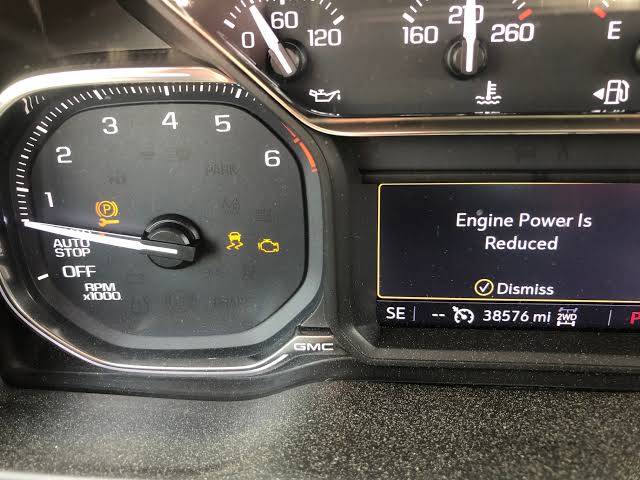
What Does “Engine Power Reduced” Mean on a GMC Sierra?
When your dashboard displays the Engine Power Reduced warning, your GMC Sierra is telling you that the Engine Control Module (ECM) has detected a problem that could affect engine performance or vehicle safety. Rather than allowing the engine to continue operating normally and potentially suffer more serious damage, the ECM automatically limits engine output. This protective strategy is commonly known as Reduced Engine Power Mode or Limp Mode.
Unlike a standard Check Engine Light, which can indicate anything from a loose gas cap to a serious engine malfunction, the Engine Power Reduced warning is more urgent. It means the truck has already taken action to reduce available horsepower and throttle response. You may notice that the accelerator pedal feels unresponsive, the engine refuses to rev beyond a certain RPM, or the truck struggles to accelerate. While these limitations can be frustrating, they are intentionally designed to prevent further damage until the underlying issue is repaired.
The ECM continuously monitors dozens of sensors throughout the engine and transmission. If one or more of these sensors sends incorrect data or stops communicating altogether, the computer may no longer be able to accurately control the electronic throttle system. To avoid unsafe engine operation, it restricts engine performance as a precaution. This system is particularly important because modern GMC Sierra models rely on electronic throttle control rather than a traditional mechanical throttle cable.
In many cases, the reduced power mode is triggered by problems within the electronic throttle control system. However, issues involving fuel delivery, ignition, airflow measurement, wiring, or even software faults inside the ECM can also activate the warning. Because multiple components work together to regulate engine performance, identifying the exact cause requires a systematic diagnostic process instead of simply replacing parts based on guesswork.
Common Symptoms of Reduced Engine Power
The symptoms accompanying the Engine Power Reduced warning can vary depending on the severity of the fault. Some drivers only notice sluggish acceleration, while others experience significant performance limitations that make the vehicle difficult to drive safely.
Common symptoms include:
- Engine Power Reduced message on the Driver Information Center
- Illuminated Check Engine Light
- Slow or delayed acceleration
- Limited engine RPM
- Reduced top speed
- Poor throttle response
- Rough idle
- Hesitation during acceleration
- Transmission shifting abnormally
- Reduced towing capability
- Increased fuel consumption
- Cruise control becoming unavailable
Some Sierra owners also report that the traction control or Stabilitrak warning appears simultaneously. These systems communicate with the ECM, and when engine output is restricted, stability and traction management functions may also be affected.
It is important to understand that these symptoms are protective rather than destructive. The vehicle is intentionally limiting performance to reduce stress on critical engine components until repairs can be completed.
What Causes GMC Sierra Engine Power Reduced?
The GMC Sierra Engine Power Reduced warning can be triggered by several different mechanical or electrical problems. While many drivers immediately assume the throttle body is to blame, the reality is that multiple systems interact with the electronic throttle control system. A fault in any of these components may cause the ECM to activate Reduced Engine Power Mode.
Below are the most common causes.
Faulty Throttle Body
The electronic throttle body is one of the leading causes of reduced engine power. Instead of using a mechanical cable, modern GMC Sierra models rely on an electronically controlled throttle plate that regulates airflow into the engine. Over time, carbon deposits accumulate around the throttle plate, restricting its movement. In other cases, the internal electric motor or position sensor may fail.
Common signs include sluggish acceleration, rough idle, inconsistent throttle response, and hesitation when pressing the accelerator. Cleaning the throttle body often resolves minor issues caused by carbon buildup, while severe wear usually requires replacing the entire assembly.
Failed Accelerator Pedal Position Sensor
The accelerator pedal position sensor measures how far the driver presses the accelerator pedal and sends this information to the ECM. If the sensor provides inaccurate or conflicting signals, the computer cannot safely determine the driver’s intended throttle input. As a result, it limits engine power to prevent unintended acceleration.
Symptoms often include delayed throttle response, sudden loss of power, and intermittent Engine Power Reduced warnings. Diagnostic trouble codes such as P2122, P2127, or related accelerator pedal sensor codes frequently accompany this failure.
Throttle Position Sensor Problems
The throttle position sensor monitors the exact position of the throttle plate. Accurate readings are essential because the ECM constantly compares desired throttle opening with actual throttle position. If these values no longer match, the computer assumes the throttle system is malfunctioning and activates Reduced Engine Power Mode.
A failing throttle position sensor may cause rough idling, poor acceleration, unexpected surging, or inconsistent engine performance. Ignoring these symptoms can eventually leave the vehicle operating only in limp mode until repairs are completed.
Wiring and Electrical Problems
Electrical issues are another common but often overlooked cause of the Engine Power Reduced warning. Modern GMC Sierra trucks rely on an extensive network of wiring harnesses and connectors to transmit information between sensors, actuators, and the Engine Control Module. Even if every individual component is functioning correctly, damaged wiring can interrupt communication and cause the ECM to believe a critical system has failed.
Corroded terminals, loose electrical connectors, broken wires, and damaged insulation are among the most frequent problems. These issues are especially common in trucks that are regularly exposed to heavy rain, road salt, mud, or off road conditions. Moisture can enter connectors and create intermittent electrical resistance, resulting in random throttle control faults that are difficult to diagnose.
Rodent damage is another possibility. Mice and other small animals often chew through engine wiring while the vehicle is parked for extended periods. A single damaged wire connected to the throttle body or accelerator pedal sensor may be enough to trigger Reduced Engine Power Mode.
When diagnosing electrical problems, technicians typically perform a visual inspection of the wiring harness before testing circuits with a multimeter. Repairing a damaged connector or replacing a section of wiring is often far less expensive than replacing sensors that are actually functioning normally.
ECM Issues, MAF Sensor Problems, Vacuum Leaks, and Other Common Causes
Although throttle-related components account for a large percentage of GMC Sierra Engine Power Reduced warnings, they are not the only possible culprits. Several other engine management systems work together to ensure proper performance, and a failure in any of them may cause the Engine Control Module (ECM) to restrict engine output as a safety measure.
Engine Control Module (ECM) Problems
The Engine Control Module acts as the brain of your GMC Sierra. It continuously processes data from dozens of sensors and adjusts fuel injection, ignition timing, throttle opening, and transmission operation in real time. If the ECM detects conflicting information or experiences an internal malfunction, it may trigger Reduced Engine Power Mode to prevent engine damage.
Software glitches are one of the more common ECM-related issues. Manufacturers occasionally release software updates that correct known programming bugs affecting throttle response and sensor communication. If your truck has not received the latest calibration, updating the ECM software may resolve the problem without replacing any hardware.
Electrical failures inside the module are less common but more serious. Voltage spikes caused by a weak battery, alternator problems, or poor grounding can damage sensitive electronic circuits within the ECM. Symptoms often include multiple warning lights, communication errors, random fault codes, hard starting, or intermittent engine stalling.
Because ECM replacement requires programming with factory diagnostic equipment, this repair is typically performed by a dealership or a qualified repair shop.
Mass Air Flow Sensor Problems
The Mass Air Flow (MAF) sensor measures the amount of air entering the engine so the ECM can calculate the correct fuel mixture. When this sensor becomes contaminated with dust, oil residue, or dirt, airflow readings become inaccurate.
An incorrect airflow measurement can cause the engine to run either too rich or too lean. If the discrepancy becomes significant, the ECM may determine that engine performance can no longer be safely controlled and activate the Engine Power Reduced warning.
Drivers may notice symptoms such as rough idling, hesitation during acceleration, reduced fuel economy, black exhaust smoke, or inconsistent engine performance. Diagnostic codes like P0101 or P0102 often point toward MAF sensor issues.
Fortunately, a dirty sensor does not always require replacement. Cleaning the MAF sensor with a specialized cleaner designed for electronic components can often restore accurate readings. However, if the sensor has failed internally, replacing it is the only permanent solution.
Vacuum Leaks
Vacuum leaks are another overlooked cause of reduced engine performance. The intake system relies on a sealed path to ensure that all incoming air passes through the MAF sensor before entering the engine. Cracked vacuum hoses, damaged intake gaskets, or leaking PCV components allow unmetered air to bypass the sensor.
Since this extra air is not measured, the ECM calculates an incorrect air fuel ratio. As the mixture becomes excessively lean, combustion quality deteriorates and engine performance suffers.
Common symptoms include rough idle, engine misfires, whistling noises from the engine bay, poor fuel economy, and illuminated Check Engine Light. Depending on the severity of the leak, the ECM may eventually activate Reduced Engine Power Mode to protect the engine from prolonged lean operation.
Inspecting rubber hoses for cracks, replacing damaged intake gaskets, and checking PCV valves are often effective ways to eliminate vacuum leaks before they become more serious.
Fuel System, Ignition System, and Transmission Problems
A healthy fuel and ignition system is essential for producing the power your GMC Sierra was designed to deliver. When these systems cannot maintain proper combustion, engine performance decreases significantly, increasing the likelihood of an Engine Power Reduced warning.
Fuel Delivery Problems
The fuel system must supply the engine with adequate fuel pressure under all driving conditions. If fuel delivery becomes inconsistent, combustion efficiency drops and engine output decreases.
One of the most common causes is a weak fuel pump. As the pump wears out, it may struggle to maintain sufficient pressure, especially during hard acceleration or while towing heavy loads. Drivers often notice hesitation, sputtering, or sudden power loss before the warning message appears.
A clogged fuel filter can create similar symptoms by restricting fuel flow to the engine. Although many newer GMC Sierra models feature non-serviceable fuel filters integrated into the fuel pump assembly, older models may still require periodic filter replacement.
Dirty or partially clogged fuel injectors can also contribute to reduced engine performance. Deposits inside the injectors disrupt fuel spray patterns, leading to uneven combustion, rough idle, and decreased acceleration.
When diagnosing fuel system issues, technicians typically measure fuel pressure using specialized equipment and compare the results to factory specifications. Low pressure often indicates a failing fuel pump, restricted fuel line, or faulty pressure regulator.
Ignition System Failures
The ignition system creates the spark necessary to ignite the air fuel mixture inside each cylinder. If spark quality deteriorates, combustion becomes incomplete, reducing engine efficiency and increasing the likelihood of misfires.
Worn spark plugs are among the most common maintenance-related causes of performance issues. As electrode wear increases, stronger voltage is required to produce a spark. Eventually, misfires become frequent enough for the ECM to recognize abnormal engine operation.
Faulty ignition coils can produce similar symptoms. A weak coil may fail only under heavy engine load, making the problem difficult to reproduce during routine driving. Drivers often experience hesitation, poor acceleration, rough idle, or flashing Check Engine Lights when misfires occur.
Persistent ignition misfires not only reduce engine performance but can also damage the catalytic converter if left unrepaired. For this reason, the ECM may activate Reduced Engine Power Mode before more expensive damage occurs.
Transmission Related Problems
Although the warning is commonly associated with engine faults, certain transmission problems can also trigger Reduced Engine Power Mode. Modern GMC Sierra trucks feature sophisticated communication between the transmission control module and the Engine Control Module. When the transmission detects a condition that could threaten drivability or component durability, it may request the engine to limit available torque.
Examples include severe transmission slipping, internal clutch failures, torque converter problems, overheating, or communication errors between control modules.
Drivers experiencing transmission-related reduced power often notice delayed shifting, harsh gear changes, inability to shift into higher gears, or transmission warning messages in addition to reduced acceleration.
Because transmission repairs can be complex, professional diagnosis is recommended whenever reduced engine power is accompanied by transmission-related fault codes.
Diagnostic Trouble Codes Associated With Engine Power Reduced
The fastest way to determine why your GMC Sierra has entered Reduced Engine Power Mode is by scanning the vehicle with an OBD-II diagnostic scanner. These diagnostic trouble codes, commonly referred to as DTCs, provide valuable clues that significantly reduce diagnostic time.
Below are some of the most common codes associated with the GMC Sierra Engine Power Reduced warning.
| Diagnostic Code | Description | Possible Cause |
|---|---|---|
| P0120 | Throttle Position Sensor Circuit Malfunction | Failed throttle position sensor, damaged wiring |
| P0220 | Throttle Position Sensor Circuit B Malfunction | Sensor failure or connector problems |
| P1516 | Throttle Actuator Control Module Performance | Electronic throttle body malfunction |
| P2101 | Throttle Actuator Performance | Dirty or defective throttle body |
| P2135 | Throttle Position Sensor Correlation Error | Conflicting throttle sensor signals |
| P1518 | Throttle Actuator Module Communication Fault | Wiring or control module issue |
| P2176 | Throttle Actuator Idle Position Not Learned | Dirty throttle body or failed relearn procedure |
| P0101 | Mass Air Flow Sensor Performance | Dirty or faulty MAF sensor |
| P0171 | System Too Lean | Vacuum leak, low fuel pressure, intake leak |
| P0300 | Random Engine Misfire | Ignition, fuel delivery, or compression problem |
While these codes provide an excellent starting point, they should never be viewed as automatic instructions to replace a specific component. A code identifies the affected system, but additional testing is often required to determine the exact root cause. Performing a thorough diagnosis before purchasing replacement parts can save both time and unnecessary repair expenses.
How to Diagnose GMC Sierra Engine Power Reduced
Diagnosing the GMC Sierra Engine Power Reduced warning correctly is essential before replacing any parts. While many vehicle owners immediately assume the throttle body has failed, the warning can be triggered by numerous electrical and mechanical faults. A systematic diagnostic process helps identify the actual problem, saving both time and repair costs.
Step 1: Scan for Diagnostic Trouble Codes
The first step is connecting an OBD-II scanner to the diagnostic port located beneath the dashboard. Reading the stored Diagnostic Trouble Codes (DTCs) provides valuable insight into which system caused the ECM to activate Reduced Engine Power Mode.
Pay attention to both active and pending codes. Active codes indicate a current problem, while pending codes may reveal an intermittent issue that has not yet fully developed.
Record every code before clearing them. Multiple related codes often point toward a single underlying fault rather than several independent problems.
Step 2: Inspect the Throttle Body
Since throttle body failures are among the most common causes of reduced engine power, begin with a visual inspection.
Remove the air intake duct and examine the throttle plate for heavy carbon deposits. Excessive buildup can prevent the throttle plate from opening and closing smoothly, confusing the ECM and triggering limp mode.
Check for signs of physical damage, oil contamination, or binding movement. If the throttle body appears dirty but otherwise undamaged, cleaning it with a dedicated throttle body cleaner may restore proper operation.
Avoid forcing the throttle plate open aggressively, as this can damage the electronic throttle motor on certain models.
Step 3: Examine Electrical Connectors and Wiring
Electrical problems are responsible for many intermittent Engine Power Reduced warnings.
Inspect the wiring harness connected to the throttle body, accelerator pedal sensor, MAF sensor, and ECM.
Look for:
- Loose connectors
- Broken locking tabs
- Corrosion
- Frayed insulation
- Burn marks
- Pinched wiring
- Rodent damage
Even a single loose connector can interrupt communication between components and activate Reduced Engine Power Mode.
Step 4: Test the Sensors
After confirming the wiring is intact, inspect the sensors involved in throttle control.
These include:
- Accelerator Pedal Position Sensor
- Throttle Position Sensor
- Mass Air Flow Sensor
- MAP Sensor where equipped
Using a scan tool capable of displaying live data allows you to compare sensor readings while slowly pressing the accelerator pedal. Sudden voltage drops or inconsistent readings usually indicate a failing sensor.
Step 5: Check Fuel Pressure
If no throttle-related faults are found, the next step is verifying fuel pressure.
A weak fuel pump or restricted fuel delivery system can reduce engine output enough for the ECM to activate protective mode.
Fuel pressure should be tested using the manufacturer’s specifications for your specific GMC Sierra engine.
If pressure is below specification, inspect:
- Fuel pump
- Fuel filter
- Fuel pressure regulator
- Fuel lines
Step 6: Inspect the Ignition System
Misfires caused by worn ignition components can also trigger reduced engine power.
Inspect:
- Spark plugs
- Ignition coils
- Coil connectors
- Spark plug wiring on older models
Replace worn spark plugs if they have exceeded the recommended service interval.
Step 7: Road Test the Vehicle
After completing repairs, clear all stored codes and perform a controlled road test.
Monitor live engine data while driving.
Pay attention to:
- Throttle position
- Accelerator pedal position
- Fuel trims
- Engine load
- Airflow readings
- Engine RPM
If the warning does not return and no new codes appear, the repair was successful.
How to Fix GMC Sierra Engine Power Reduced
The appropriate repair depends entirely on what caused the warning in the first place. Replacing parts without proper diagnosis often leads to unnecessary expenses and frustration.
Below are the most effective repair solutions.
Clean the Throttle Body
If carbon buildup is preventing the throttle plate from moving freely, cleaning the throttle body is often the simplest and least expensive repair.
Remove the intake tube, spray throttle body cleaner onto the throttle plate and bore, then gently wipe away carbon deposits using a lint free cloth.
After cleaning, some GMC Sierra models require a throttle relearn procedure before normal operation resumes.
Replace the Throttle Position Sensor
A faulty throttle position sensor sends incorrect information to the ECM.
If diagnostic testing confirms inconsistent voltage readings, replacing the sensor is the recommended repair.
Always use a high quality OEM or equivalent replacement sensor to ensure accurate throttle calibration.
Replace the Accelerator Pedal Position Sensor
If the accelerator pedal sensor fails, the ECM cannot accurately determine driver input.
Replacing the pedal assembly or sensor restores proper communication between the accelerator pedal and the throttle body.
Many newer Sierra models integrate the sensor into the pedal assembly, requiring replacement of the complete unit.
Repair Damaged Wiring
Repair or replace damaged wiring whenever corrosion, broken conductors, or loose connectors are discovered.
Use proper soldered connections or weatherproof automotive connectors rather than temporary repairs.
Incorrect wiring repairs can create additional electrical problems later.
Update ECM Software
If a software issue has been identified, an ECM reprogramming procedure may permanently eliminate the warning.
Dealerships and qualified repair facilities can install the latest calibration released by General Motors.
Software updates often improve throttle response and resolve known communication errors.
Replace the Mass Air Flow Sensor
If cleaning the MAF sensor does not restore accurate airflow readings, replacement is necessary.
Installing a quality replacement sensor ensures proper fuel mixture calculations and improved engine performance.
Avoid inexpensive aftermarket sensors that may provide inaccurate readings.
Repair Vacuum Leaks
Replace cracked vacuum hoses, damaged intake gaskets, or faulty PCV components.
After repairs are completed, clear all diagnostic codes and verify that fuel trims have returned to normal during a road test.
Repair Fuel System Problems
Fuel related repairs vary depending on the failed component.
Possible repairs include:
- Replacing the fuel pump
- Cleaning clogged fuel injectors
- Replacing restricted fuel filters
- Repairing damaged fuel lines
After repairs, verify fuel pressure meets factory specifications.
Replace Ignition Components
Replace worn spark plugs according to the maintenance schedule.
If ignition coils show signs of failure or misfire counts remain high, replace the affected coils.
Addressing ignition problems early can prevent catalytic converter damage.
How to Reset Engine Power Reduced on a GMC Sierra
Many owners wonder whether the Engine Power Reduced warning can simply be reset. While resetting the system may temporarily clear the message, it does not eliminate the underlying problem. If the fault remains, the warning will almost always return.
Here are the most common reset methods.
Method 1: Restart the Vehicle
Turn the engine off and wait approximately five minutes.
Restart the truck and check whether the warning has disappeared.
This method only works if the triggering condition was temporary.
Method 2: Disconnect the Battery
Disconnect the negative battery terminal for approximately fifteen minutes.
Reconnect the battery and start the engine.
Some adaptive engine settings may need time to relearn after battery power has been removed.
Keep in mind that disconnecting the battery will not repair faulty sensors or damaged wiring.
Method 3: Clear Codes Using an OBD-II Scanner
After completing repairs, connect an OBD-II scanner and erase all stored diagnostic codes.
Start the engine and verify that the warning does not immediately return.
If codes reappear within a short period, additional diagnosis is required.
Method 4: Complete a Drive Cycle
Certain repairs require the ECM to complete a full drive cycle before confirming the fault has been resolved.
Drive under a variety of conditions including city traffic, highway speeds, idle periods, and moderate acceleration.
During the drive cycle, the ECM performs self tests on multiple engine systems. If every monitored component operates normally, the warning will remain off.
Important Reminder
Resetting the GMC Sierra Engine Power Reduced warning without fixing the root cause is only a temporary solution. Ignoring the underlying issue can eventually lead to poor drivability, increased repair costs, and in severe cases, permanent engine or transmission damage. If the warning returns after a reset, perform a complete diagnostic inspection before continuing to drive the vehicle.
Can You Drive a GMC Sierra With Engine Power Reduced?
The answer depends on what caused the warning and how severely the truck’s performance has been affected. In some situations, you may be able to drive a short distance to a repair shop or a safe location. In others, continuing to drive could increase the risk of engine damage or leave you stranded on the road.
Reduced Engine Power Mode is designed to protect the engine, not to permanently disable the vehicle. By limiting throttle response and horsepower, the ECM reduces stress on critical components until the fault is repaired. However, the system cannot determine whether the underlying issue is minor or severe, so it is important for the driver to evaluate the situation carefully.
When It May Be Safe to Continue Driving
You may be able to drive cautiously if:
- The truck still accelerates normally at lower speeds.
- No unusual engine noises are present.
- Engine temperature remains within the normal operating range.
- Oil pressure warning lights are not illuminated.
- The vehicle runs smoothly without severe shaking or misfires.
- You only need to travel a short distance to a repair facility.
Even under these conditions, avoid aggressive acceleration, towing heavy loads, or driving at highway speeds for extended periods. Reduced Engine Power Mode limits performance for a reason, and ignoring the warning may worsen the original problem.
When You Should Stop Driving Immediately
Pull over safely and shut off the engine if you experience any of the following:
- Flashing Check Engine Light
- Severe engine misfires
- Loud knocking or grinding noises
- Rapid engine overheating
- Extremely low oil pressure
- Thick smoke from the exhaust
- Complete loss of throttle response
- Engine stalling while driving
These symptoms may indicate a serious mechanical failure that requires immediate attention. Continuing to drive could result in catastrophic engine damage or create a dangerous driving situation.
Risks of Ignoring the Warning
Ignoring the GMC Sierra Engine Power Reduced message can lead to far more expensive repairs than addressing the issue early.
Possible consequences include:
- Complete throttle body failure
- Catalytic converter damage caused by prolonged misfires
- Engine overheating
- Increased fuel consumption
- Transmission damage from abnormal torque management
- Unexpected loss of acceleration in traffic
- Vehicle becoming stranded
Treat the warning as an early indicator that something requires attention rather than simply an inconvenience.
GMC Sierra Engine Power Reduced Repair Costs
Repair costs vary depending on which component has failed, labor rates in your area, and whether original equipment or aftermarket parts are used. While some issues can be resolved with basic maintenance, others require specialized diagnostic equipment and professional programming.
The following estimates represent typical repair costs in the United States.
| Repair | Estimated Cost |
|---|---|
| Throttle body cleaning | $80 to $180 |
| Throttle body replacement | $350 to $800 |
| Throttle Position Sensor replacement | $150 to $350 |
| Accelerator Pedal Position Sensor replacement | $180 to $450 |
| Mass Air Flow Sensor replacement | $180 to $400 |
| Fuel pump replacement | $700 to $1,500 |
| Ignition coil replacement | $120 to $350 per coil |
| Spark plug replacement | $180 to $500 |
| Wiring repair | $100 to $700 |
| Vacuum leak repair | $100 to $500 |
| ECM software update | $100 to $250 |
| ECM replacement and programming | $800 to $2,000 |
Labor costs typically account for a significant portion of the total repair bill. Before approving major repairs, it is wise to request a complete diagnostic report and compare estimates from multiple reputable repair facilities.
How to Prevent Engine Power Reduced Problems
Although not every failure can be avoided, regular maintenance significantly reduces the chances of seeing the Engine Power Reduced warning.
Follow these preventive maintenance tips to keep your GMC Sierra operating reliably.
Clean the Throttle Body Periodically
Carbon deposits naturally accumulate inside the throttle body over time. Cleaning it every 30,000 to 50,000 miles helps maintain smooth throttle operation and prevents sticking.
Replace the Engine Air Filter
A clogged air filter restricts airflow and increases contamination inside the intake system. Replacing the air filter at the recommended interval protects the MAF sensor and throttle body from excessive dirt buildup.
Inspect Wiring During Routine Maintenance
Check engine wiring for loose connectors, cracked insulation, corrosion, or signs of rodent damage. Catching electrical problems early can prevent intermittent faults from developing into larger issues.
Use High Quality Fuel
Poor quality fuel may contribute to carbon deposits inside the intake system and fuel injectors. Using fuel from reputable stations helps maintain cleaner combustion and more consistent engine performance.
Scan for Trouble Codes Regularly
Even if the Check Engine Light is not illuminated, periodic OBD-II scans can detect pending codes before they become serious enough to trigger Reduced Engine Power Mode.
Maintain a Healthy Battery
Modern engine management systems depend on stable electrical voltage. A weak battery or failing alternator can create communication problems between electronic modules and sensors.
Test the battery annually, especially before winter, and replace it when necessary.
Follow the Recommended Maintenance Schedule
Routine maintenance remains the best defense against unexpected engine problems.
Important maintenance items include:
- Engine oil changes
- Spark plug replacement
- Air filter replacement
- Fuel system inspection
- Cooling system maintenance
- Transmission service
- Software updates when available
Consistent maintenance costs far less than repairing major engine or transmission failures.
Frequently Asked Questions
Can a bad battery cause Engine Power Reduced?
Yes. A weak battery or unstable charging system can create voltage fluctuations that interfere with sensor communication and ECM operation. Although it is not the most common cause, electrical problems should always be considered during diagnosis.
Can I continue driving with Engine Power Reduced?
You may be able to drive a short distance if the truck remains stable and no severe symptoms are present. However, driving should be limited to reaching a repair facility. Continuing to drive for extended periods increases the risk of additional damage.
Will disconnecting the battery fix the warning?
Disconnecting the battery may temporarily clear the warning, but it does not repair the underlying problem. If the fault still exists, the Engine Power Reduced message will usually return after a short period of driving.
Can a dirty throttle body trigger Reduced Engine Power?
Absolutely. Carbon buildup can restrict throttle plate movement, causing the ECM to detect abnormal throttle operation and activate Reduced Engine Power Mode.
Can low engine oil cause Engine Power Reduced?
Low engine oil does not directly trigger the warning in most GMC Sierra models. However, extremely low oil levels can lead to engine protection strategies or additional fault codes that reduce engine performance.
Does bad fuel cause Engine Power Reduced?
Poor quality or contaminated fuel can contribute to engine misfires, injector problems, and poor combustion. In severe cases, these conditions may cause the ECM to limit engine output.
How long does it take to diagnose the problem?
Basic diagnostics usually take between one and two hours. More complex electrical or intermittent faults may require additional testing to identify the exact cause.
Is Engine Power Reduced covered under warranty?
Coverage depends on your vehicle’s age, mileage, warranty status, and the failed component. Factory warranties or extended service contracts may cover certain electronic throttle system components.
Can an OBD-II scanner diagnose the problem?
Yes. An OBD-II scanner is the most effective starting point because it retrieves diagnostic trouble codes stored by the ECM. Advanced scanners that display live data provide even greater diagnostic accuracy.
How often should the throttle body be cleaned?
Many technicians recommend inspecting or cleaning the throttle body every 30,000 to 50,000 miles, although the ideal interval depends on driving conditions and maintenance history.
Final Thoughts
The GMC Sierra Engine Power Reduced warning should never be ignored. While the message may initially seem alarming, it is actually a built in protection system designed to minimize engine damage when the ECM detects a potentially harmful fault. The most common causes include a dirty or failing throttle body, defective throttle position or accelerator pedal sensors, damaged wiring, mass air flow sensor problems, fuel delivery issues, ignition failures, and occasionally ECM or transmission faults.
The key to an efficient repair is accurate diagnosis rather than replacing parts based on assumptions. Using an OBD-II scanner to retrieve diagnostic trouble codes, inspecting the throttle system, testing electrical connections, and verifying fuel and ignition performance can quickly narrow down the root cause. In many cases, relatively simple repairs such as cleaning the throttle body, repairing damaged wiring, or replacing a faulty sensor are enough to restore normal engine performance.
Routine maintenance remains the best way to reduce the likelihood of encountering this warning. Keeping the throttle body clean, replacing filters and spark plugs on schedule, inspecting wiring, and addressing Check Engine Light warnings promptly can prevent small issues from developing into costly repairs.
If your GMC Sierra enters Reduced Engine Power Mode, resist the temptation to simply clear the warning and continue driving. Instead, identify the underlying problem, perform the appropriate repair, and confirm that the system operates correctly before returning the truck to normal use. Taking a proactive approach will improve reliability, reduce long term repair costs, and help ensure your GMC Sierra continues to deliver the performance and dependability it was built for.