GMC Park Assist not working is usually caused by dirty parking sensors, damaged ultrasonic sensors, wiring faults, a blown fuse, low battery voltage, or a malfunctioning Park Assist control module. While some issues can be resolved by cleaning the sensors or resetting the system, others require diagnostic scanning and component replacement.
The GMC Park Assist system helps drivers detect obstacles around the vehicle during low-speed maneuvers by using ultrasonic sensors installed in the front and rear bumpers. When functioning correctly, the system provides audible alerts and visual warnings through the Driver Information Center (DIC), making parking safer and reducing the risk of minor collisions. If the system detects a fault, it may display messages such as “Service Park Assist”, disable the parking sensors, or stop providing distance warnings altogether.
Because multiple electrical and mechanical components work together, identifying the root cause is not always straightforward. A warning message does not necessarily indicate a failed sensor—environmental conditions, electrical issues, software faults, or aftermarket accessories can produce similar symptoms. Replacing parts without proper diagnosis often leads to unnecessary repair costs.
This guide explains the most common reasons why GMC Park Assist is not working, how to diagnose the problem step by step, practical repair methods for each cause, estimated repair costs, and when professional service or dealership diagnostics become the most appropriate solution.
Why Is My GMC Park Assist Not Working?
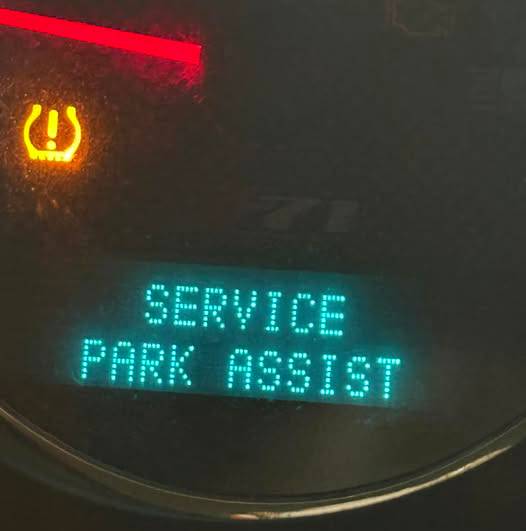
A GMC Park Assist system stops working when one or more components required for obstacle detection or system communication fail. The most common causes include contaminated parking sensors, damaged ultrasonic sensors, electrical faults, low battery voltage, blown fuses, or a malfunctioning Park Assist control module. When the system detects a fault, it disables parking assistance to prevent inaccurate distance measurements and displays a warning such as “Service Park Assist” or “Park Assist Unavailable” in the Driver Information Center (DIC).
The Park Assist system relies on multiple ultrasonic sensors mounted in the front and rear bumpers. These sensors continuously emit ultrasonic waves and measure the time required for the reflected signal to return after hitting a nearby object. The control module processes this information and determines the distance between the vehicle and surrounding obstacles. If any sensor fails to transmit or receive a valid signal, the module can no longer calculate accurate distances and disables the entire system instead of relying on incomplete data.
Not every Park Assist warning indicates a failed component. Environmental conditions, temporary electrical interruptions, or software logic may also deactivate the system. Heavy rain, packed snow, mud, road salt, or ice covering the sensors can block ultrasonic waves and produce symptoms that resemble hardware failure. Likewise, installing a trailer hitch, bike rack, or oversized bumper accessory may interfere with the sensors’ detection area and trigger false warnings.
Understanding why the system stopped working is the first step toward selecting the correct repair. Cleaning the sensors may restore normal operation within minutes, while communication faults or module failures require diagnostic equipment capable of reading manufacturer-specific Diagnostic Trouble Codes (DTCs).
What Causes GMC Park Assist to Stop Working?
Can Dirty or Blocked Parking Sensors Disable Park Assist?
Yes. Dirty or obstructed parking sensors are the most common cause of a GMC Park Assist malfunction. Dust, mud, road salt, snow, wax residue, insect debris, or ice covering the ultrasonic sensor surface can absorb or scatter sound waves before they reach nearby objects. As a result, the control module receives inaccurate distance information and may disable the system to avoid providing misleading parking guidance.
The problem often appears after driving on muddy roads, during winter weather, or immediately after washing the vehicle with products that leave a protective coating on the bumper. In many cases, gently cleaning each sensor with a microfiber cloth and water is sufficient to restore normal operation. Abrasive cleaners or hard brushes should be avoided because they may scratch the sensor surface and permanently reduce detection accuracy.
Can Damaged Ultrasonic Sensors Cause the System to Fail?
Yes. A damaged ultrasonic sensor can disable the entire Park Assist system. Each sensor performs continuous self-diagnostics while the vehicle is operating. If one sensor stops transmitting ultrasonic pulses, receives no return signal, or reports values outside the expected operating range, the control module records a fault code and suspends Park Assist operation.
Sensor damage commonly results from minor parking impacts, rear-end collisions, moisture intrusion, internal corrosion, or physical cracks in the sensor housing. Although exterior damage is sometimes visible, many failed sensors appear normal from the outside and require electronic testing with a scan tool or multimeter for confirmation.
Can a Blown Fuse Turn Off Park Assist?
Yes. A blown fuse interrupts the electrical supply required for the Park Assist system to operate. Without stable power, the Park Assist control module and ultrasonic sensors cannot initialize during vehicle startup, causing warning messages to appear immediately after the ignition is switched on.
Fuse failure may occur because of electrical overload, short circuits, wiring damage, or component failure elsewhere in the circuit. Checking the fuse box using the owner’s manual is one of the quickest diagnostic steps because replacing a failed fuse is inexpensive compared with replacing sensors or control modules. If a replacement fuse blows again shortly afterward, the underlying electrical fault should be diagnosed before installing another fuse.
Can Wiring Problems Interrupt the Park Assist System?
Yes. Damaged wiring is a frequent cause of intermittent or complete Park Assist failure. The ultrasonic sensors communicate with the Park Assist module through dedicated wiring harnesses routed behind the front and rear bumpers. Broken wires, loose connectors, corrosion, moisture intrusion, or rodent damage can interrupt communication even when every sensor is functioning correctly.
Electrical wiring problems often produce inconsistent symptoms. The warning message may disappear temporarily after restarting the vehicle, driving over bumps, or changing weather conditions before returning later. Because intermittent faults rarely leave visible evidence, technicians often inspect connector terminals and perform continuity testing before replacing electronic components.
Can Low Battery Voltage Affect Park Assist?
Yes. Low battery voltage can temporarily disable GMC Park Assist and several other electronic driver assistance systems. Modern GMC vehicles continuously monitor battery voltage to protect sensitive control modules from unstable electrical conditions. If system voltage drops below the required operating threshold during engine start or while the vehicle is running, the Park Assist module may suspend operation until stable voltage is restored.
Weak batteries, charging system problems, corroded battery terminals, or alternator issues can all contribute to low system voltage. If multiple warning lights appear simultaneously—including messages related to traction control, stability control, or driver assistance systems—the charging system should be inspected before replacing Park Assist components.
Can a Faulty Park Assist Module Cause the Warning Message?
Yes. A defective Park Assist control module can prevent the entire system from functioning even when all sensors are operational. The control module coordinates communication between the ultrasonic sensors, the Driver Information Center, and other vehicle control systems. Internal software corruption, hardware failure, water intrusion, or communication errors on the vehicle network may cause the module to disable Park Assist and store diagnostic trouble codes.
Unlike sensor contamination, module failures usually cannot be confirmed through visual inspection. Diagnosis typically requires a professional scan tool capable of accessing manufacturer-specific control modules, reading stored fault codes, and verifying communication across the vehicle network.
Can Trailer Hitches or Accessories Trigger False Warnings?
Yes. Trailer hitches and rear-mounted accessories can interfere with ultrasonic sensor operation. Accessories such as hitch-mounted bike racks, cargo carriers, aftermarket bumpers, or oversized tow equipment may remain inside the sensors’ detection zone. The system interprets these objects as permanent obstacles and may issue continuous warnings or automatically disable Park Assist.
Some GMC models allow drivers to disable rear Park Assist temporarily while towing. If warning messages appear immediately after installing an accessory, removing the obstruction and restarting the vehicle is often the fastest way to determine whether the accessory is responsible for the problem.
How Can You Diagnose a GMC Park Assist Problem?
Diagnosing a GMC Park Assist problem starts with the simplest inspections before moving to electronic diagnostics. This approach helps identify common issues without replacing functional components unnecessarily. Most Park Assist failures originate from sensor contamination, electrical faults, or communication errors, all of which can be isolated through a structured inspection process.
How Do You Inspect the Parking Sensors?
Begin by inspecting every parking sensor for visible contamination or physical damage. Walk around the vehicle and examine each ultrasonic sensor installed in the front and rear bumpers. Look for mud, road salt, snow, ice, wax residue, water spots, or insect debris covering the sensor face. Even a thin layer of contamination can interfere with ultrasonic signals and cause inaccurate distance measurements.
Next, inspect the sensor housing for cracks, dents, loose mounting clips, or impact damage. Parking sensors are frequently damaged during low-speed collisions with curbs, poles, shopping carts, or other vehicles. Although severe damage is easy to identify, even a small crack may allow moisture to enter the sensor and cause intermittent failures.
After cleaning the sensors with a soft microfiber cloth and clean water, restart the vehicle and engage Reverse or activate the front parking sensors. If the warning message disappears, contamination was likely preventing proper operation.
How Do You Check for Warning Messages?
The Driver Information Center provides valuable clues about the type of Park Assist failure. Instead of ignoring the warning, record the exact message displayed on the instrument cluster because different alerts indicate different diagnostic paths.
Messages such as “Service Park Assist” usually indicate that the control module has detected a hardware or communication fault requiring further diagnosis. “Park Assist Unavailable” may appear temporarily when environmental conditions prevent accurate sensor operation, while repeated warnings after every engine start generally suggest an electrical or component failure.
If multiple driver assistance warnings appear simultaneously, including Stability Control, ABS, Forward Collision Alert, or Lane Keep Assist, the underlying problem may involve battery voltage, network communication, or another shared electronic system rather than the Park Assist sensors themselves.
How Do You Scan Diagnostic Trouble Codes?
Scanning manufacturer-specific Diagnostic Trouble Codes (DTCs) is the most reliable way to identify the failed component. A standard code reader may detect generic powertrain faults, but many Park Assist faults are stored inside the Body Control Module (BCM) or the Park Assist Module and require an advanced scan tool capable of accessing manufacturer-specific systems.
Common diagnostic codes can indicate a failed ultrasonic sensor, communication loss with the Park Assist Module, low supply voltage, internal module faults, or wiring interruptions. Instead of replacing sensors one by one, technicians use these codes to narrow the diagnosis before performing electrical testing.
After recording all stored and pending codes, erase them only after completing the necessary repairs. If the same code returns immediately, the underlying fault remains active and requires additional inspection.
How Do You Test the Fuse and Electrical Connections?
A quick electrical inspection can eliminate several common causes before expensive repairs become necessary. Locate the fuse assigned to the Park Assist system using the owner’s manual or the fuse box diagram. Remove the fuse and inspect it for a broken metal element or signs of overheating.
If the fuse is intact, continue by examining the electrical connectors behind the front and rear bumpers. Loose connectors, moisture intrusion, corrosion, damaged terminals, or partially disconnected wiring harnesses can interrupt communication between the ultrasonic sensors and the control module.
Vehicles operated in regions with heavy road salt or frequent flooding are particularly susceptible to connector corrosion. Cleaning oxidized terminals and securing loose connections often restores normal communication without replacing any electronic components.
When Should You Reset the System?
Reset the Park Assist system only after confirming that no physical or electrical faults remain. Restarting the vehicle can clear temporary communication errors caused by low battery voltage, software glitches, or environmental interference. Some GMC models also allow the Park Assist feature to be disabled and re-enabled through the infotainment system or vehicle settings menu.
Disconnecting the battery may reset certain electronic modules, but it does not repair failed sensors, damaged wiring, or defective control modules. If the warning message returns immediately after the reset, the fault is active and requires further diagnosis rather than repeated system resets.
If cleaning the sensors, inspecting the fuse, checking the wiring, and resetting the system do not restore normal operation, professional diagnostics become the next logical step. A dealership or qualified repair shop can perform live sensor data analysis, network communication testing, module programming, and calibration procedures that are not available through basic diagnostic tools.
How Do You Fix GMC Park Assist Not Working?
The correct repair depends on the underlying cause identified during diagnosis. Simple issues such as dirty sensors or temporary software glitches can often be resolved within minutes, while damaged sensors, wiring faults, or control module failures require component replacement or professional repair. Following the repair steps in order minimizes unnecessary expenses and prevents replacing parts that are still functioning properly.
Clean the Parking Sensors
Cleaning the parking sensors is the first repair you should attempt because sensor contamination is the most common cause of Park Assist failure. Dirt, mud, road salt, wax residue, ice, and snow can block ultrasonic signals and prevent the sensors from accurately detecting nearby obstacles.
Use a clean microfiber cloth with water or a mild automotive shampoo to wipe each sensor. Avoid abrasive cleaners, polishing compounds, or high-pressure washers directed at close range because they may damage the sensor surface or force water into the housing. After cleaning all sensors, restart the vehicle and activate Park Assist to verify whether the warning message has disappeared.
If the system resumes normal operation after cleaning, no additional repairs are required. If the warning remains, continue with further diagnostics.
Remove Ice, Snow, or Temporary Obstructions
Temporary environmental conditions can disable Park Assist even when every component is functioning correctly. Ice accumulation, packed snow, heavy rain, or frozen slush covering the bumper can distort ultrasonic signals and cause the control module to suspend the system.
Inspect both the front and rear bumpers for anything blocking the sensors, including leaves, plastic bags, trailer accessories, license plate frames, or decorative bumper guards. During winter, allow frozen moisture to melt naturally or use warm water to remove ice instead of scraping directly on the sensor surface.
If the warning disappears after removing the obstruction, the system was responding normally to unfavorable operating conditions rather than a mechanical failure.
Replace a Faulty Parking Sensor
Replacing a defective ultrasonic sensor restores accurate obstacle detection when sensor failure has been confirmed. Modern GMC vehicles continuously monitor each sensor and store diagnostic codes when a sensor stops transmitting or receiving ultrasonic signals.
Before installing a replacement sensor, inspect the mounting bracket and connector for damage because a loose bracket or corroded connector can produce the same symptoms as a failed sensor. After installation, clear the stored diagnostic codes using a compatible scan tool and verify that every sensor responds correctly during a functional test.
Some GMC models recognize a new sensor automatically, while others require calibration or configuration using dealership-level diagnostic equipment.
Repair Damaged Wiring
Repairing damaged wiring is necessary when electrical continuity between the sensors and the Park Assist module has been interrupted. Wiring damage commonly occurs behind the bumpers where harnesses are exposed to water, road debris, vibration, and minor collision impacts.
Inspect the harness for broken insulation, crushed wiring, loose connectors, corrosion, and evidence of rodent damage. Any damaged section should be repaired using automotive-grade wiring, waterproof connectors, and heat-shrink insulation to maintain long-term reliability.
Temporary repairs using household electrical tape or twist-on wire connectors should be avoided because moisture and vibration can quickly cause the problem to return.
Replace a Blown Fuse
Replacing a blown fuse is one of the simplest and least expensive Park Assist repairs. A failed fuse prevents the Park Assist control module from receiving electrical power, causing the system to remain disabled during vehicle operation.
Always replace the fuse with another fuse that has the identical amperage rating specified by GMC. Installing a fuse with a higher rating increases the risk of wiring damage if another electrical fault exists.
If the replacement fuse fails immediately or shortly after installation, stop replacing fuses and inspect the circuit for a short, damaged wiring harness, or defective electrical component.
Update or Reprogram the Control Module
Software updates can resolve Park Assist problems caused by programming errors or communication faults. GMC periodically releases calibration files and software updates that improve communication between electronic control modules or correct known system issues identified after vehicle production.
Module reprogramming normally requires manufacturer-approved diagnostic equipment and access to GMC service software. Independent repair facilities with factory-compatible programming tools can often perform the same procedure as a dealership.
Software updates should be considered after confirming that the sensors, wiring, battery voltage, and electrical system are functioning correctly.
Replace the Park Assist Module
Replacing the Park Assist control module becomes necessary when internal electronic failure prevents the system from operating correctly. Module failure is less common than sensor or wiring problems but can occur because of water intrusion, electrical overload, manufacturing defects, or communication failures on the vehicle network.
A replacement module usually requires programming and configuration before it can communicate with the vehicle’s other electronic systems. Depending on the GMC model, additional calibration procedures may also be required to ensure the Park Assist system accurately interprets signals from every ultrasonic sensor.
Because module replacement involves both hardware installation and software configuration, it is generally recommended to have the repair completed by a dealership or a qualified automotive electronics specialist.
When Should You Visit a GMC Dealer?
Professional diagnosis is recommended when basic troubleshooting does not restore Park Assist operation or when advanced electronic faults are detected. Although many owners can clean sensors, inspect fuses, or identify obvious physical damage, diagnosing network communication failures and module programming issues requires specialized equipment unavailable to most DIY mechanics.
A dealership or qualified repair facility should inspect the vehicle if the “Service Park Assist” message returns immediately after clearing diagnostic codes, multiple sensors report faults simultaneously, communication codes remain active, or the Park Assist module fails to communicate with the scan tool. These symptoms frequently indicate wiring faults, module failure, or Controller Area Network (CAN) communication problems that require advanced testing.
Professional service is also recommended after collision repairs involving the front or rear bumper. Even minor impacts can alter sensor alignment, damage mounting brackets, or affect calibration accuracy without leaving obvious exterior damage. If replacement sensors or modules have been installed, the vehicle may require programming or calibration before the Park Assist system can operate normally again.
Vehicles still covered under the manufacturer’s warranty should be inspected by an authorized GMC dealership whenever possible. Warranty coverage may reduce repair costs for defective sensors, electronic modules, or factory-installed wiring components, particularly if the failure is caused by a manufacturing defect rather than accidental damage or environmental exposure.
How Much Does It Cost to Repair GMC Park Assist?
The cost to repair a GMC Park Assist system varies depending on whether the problem is caused by sensor contamination, electrical faults, damaged wiring, or a failed control module. Cleaning the sensors is usually free if performed by the owner, while replacing electronic components can cost several hundred dollars depending on the vehicle model and labor rates.
The following table provides typical repair cost estimates in the United States.
| Repair | Typical Parts Cost | Typical Labor Cost | Estimated Total |
|---|---|---|---|
| Sensor cleaning | Free–$20 | DIY | Free–$20 |
| Parking sensor replacement | $40–$180 | $80–$200 | $120–$380 |
| Fuse replacement | $5–$20 | $20–$60 | $25–$80 |
| Wiring repair | $20–$150 | $100–$300 | $120–$450 |
| Park Assist module replacement | $250–$700 | $150–$350 | $400–$1,050 |
| Diagnostic inspection | — | $100–$180 | $100–$180 |
| Module programming or calibration | — | $100–$250 | $100–$250 |
Repair costs increase when multiple sensors fail simultaneously or when bumper removal is required to access damaged components. Vehicles equipped with advanced driver assistance systems (ADAS) may also require calibration after repairs, adding to the total service cost.
Before authorizing expensive repairs, request a diagnostic report showing the stored Diagnostic Trouble Codes (DTCs). This helps confirm that the recommended replacement addresses the actual fault instead of relying on trial-and-error repairs.
Which GMC Models Commonly Experience Park Assist Problems?
Park Assist problems can occur on any GMC vehicle equipped with ultrasonic parking sensors, but several models report these issues more frequently because of higher production volume and long-term ownership. The underlying causes remain largely the same regardless of model year, including sensor contamination, damaged wiring, failed ultrasonic sensors, and electronic control module faults.
GMC Sierra
The GMC Sierra frequently experiences Park Assist issues because its front and rear bumpers are regularly exposed to mud, gravel, road salt, and minor impacts during towing or off-road driving. Damaged sensor housings and wiring behind the rear bumper are common findings on high-mileage trucks.
GMC Yukon and Yukon XL
Large SUVs such as the Yukon and Yukon XL depend heavily on parking sensors because of their overall size. Owners commonly report intermittent “Service Park Assist” warnings caused by moisture intrusion, aging sensors, or corrosion in rear bumper electrical connectors.
GMC Acadia
The Acadia may develop Park Assist faults related to wiring harness wear or communication problems between electronic modules. Water intrusion around bumper connectors can also contribute to intermittent warning messages.
GMC Terrain
Terrain models commonly experience temporary Park Assist deactivation during winter because snow, slush, and road salt accumulate around the ultrasonic sensors. Most cases are resolved by cleaning the sensors, although older vehicles may eventually require sensor replacement.
GMC Canyon
The GMC Canyon shares many electronic components with the Sierra and may develop similar Park Assist faults after prolonged exposure to harsh road conditions, towing, or off-road driving. Wiring inspections are particularly important if intermittent warnings appear after driving over uneven terrain.
Although these models are frequently discussed in owner forums and repair shops, Park Assist failures are generally related to operating conditions, component age, and maintenance history rather than a defect unique to a single GMC model.
Can You Drive Safely If Park Assist Is Not Working?
Yes, you can usually continue driving safely when the Park Assist system is not working because it is a driver assistance feature rather than a system required for basic vehicle operation. A Park Assist failure does not affect engine performance, braking capability, steering control, or transmission operation.
The primary consequence is the loss of audible and visual obstacle detection while parking at low speeds. Drivers must rely on mirrors, direct observation, and, if available, the backup camera to judge surrounding distances. Extra caution is particularly important when reversing near pedestrians, bicycles, low walls, or objects positioned below the driver’s normal field of view.
If the Park Assist warning appears together with messages involving ABS, Stability Control, Forward Collision Alert, or other ADAS features, the problem may extend beyond the parking assistance system. Multiple simultaneous warnings can indicate battery voltage issues, communication faults on the vehicle network, or failures affecting several electronic control modules. In these situations, a comprehensive diagnostic inspection should be scheduled as soon as possible.
You should also arrange professional inspection if the warning appears immediately after a collision, bumper repair, flood damage, or electrical modifications. Continuing to drive is generally safe, but postponing diagnosis may allow electrical faults to worsen or affect additional vehicle systems.
How Can You Prevent Future Park Assist Problems?
Routine maintenance significantly reduces the likelihood of Park Assist failures and extends the service life of the ultrasonic sensors and electrical components. Most preventive measures require only a few minutes and can help avoid unnecessary repair costs.
Keep the parking sensors clean by washing the front and rear bumpers regularly, especially after driving through mud, snow, or heavily salted roads. Removing dirt before it hardens prevents signal interference and reduces the chance of moisture becoming trapped around the sensor housing.
Inspect the bumpers after minor parking impacts, even if no visible damage is present. Low-speed contact with poles, curbs, or another vehicle can loosen sensor brackets or crack the sensor housing without leaving obvious exterior marks.
Maintain a healthy electrical system by replacing weak batteries before voltage becomes unstable and by cleaning battery terminals to ensure reliable electrical connections. Many electronic driver assistance systems, including Park Assist, depend on stable system voltage for proper operation.
Avoid directing high-pressure water streams directly at the parking sensors or their electrical connectors during vehicle washing. Excessive pressure can force water past protective seals and contribute to corrosion inside connectors over time.
If you install a trailer hitch, cargo carrier, aftermarket bumper, or other rear-mounted accessory, verify that it does not interfere with the ultrasonic sensors. Accessories positioned within the detection zone may trigger continuous obstacle warnings or disable the Park Assist system until they are removed.
Finally, perform a diagnostic scan whenever a warning message appears instead of waiting for the problem to become permanent. Identifying sensor faults, wiring issues, or low-voltage conditions early often prevents more expensive repairs and reduces the risk of additional electronic components being affected.