The “Service Traction Control” warning on a GMC Acadia indicates that the vehicle has detected a fault affecting the traction control system or one of its related components, such as the ABS, StabiliTrak, wheel speed sensors, or the electronic brake control system. When this message appears, the traction control function may be limited or completely disabled, reducing the vehicle’s ability to maintain grip during acceleration on slippery surfaces.
In many cases, the warning does not point to a failed traction control system itself. Instead, it is triggered by another component that supplies critical data to the system. A faulty wheel speed sensor, damaged wiring, a malfunctioning ABS module, a steering angle sensor error, or even low system voltage can all cause the dashboard to display the Service Traction Control message. Depending on the underlying fault, additional warnings such as ABS, StabiliTrak, Check Engine, or Reduced Engine Power may also appear.
This guide explains the most common causes of the GMC Acadia Service Traction Control warning, the symptoms that help identify the underlying problem, how to diagnose the issue step by step, typical repair methods, and the expected repair costs. You’ll also learn when it is safe to continue driving and when the warning indicates a problem that should be repaired immediately to avoid compromising vehicle stability and safety.
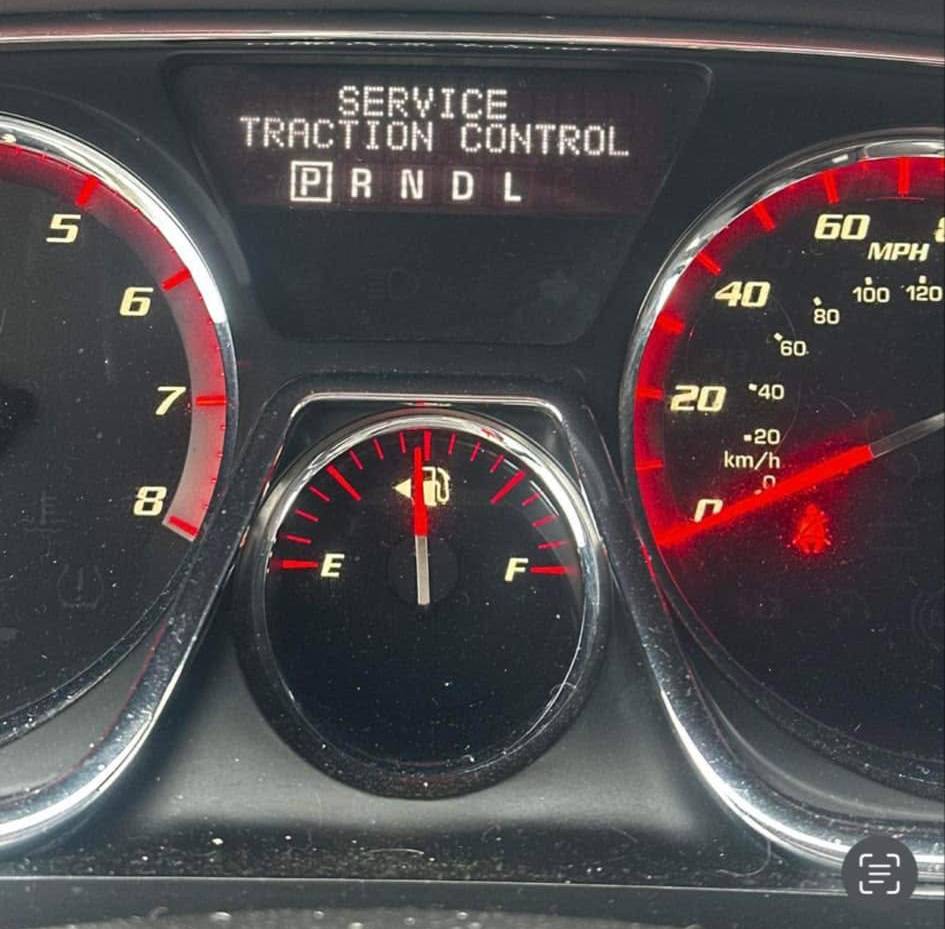
What Does “Service Traction Control” Mean on a GMC Acadia?
The “Service Traction Control” message means the GMC Acadia has detected a fault that prevents the traction control system from operating correctly. Rather than identifying a failed traction control module, the warning indicates that one or more supporting components are no longer providing reliable data. Because the system depends on information from multiple sensors and control modules, a problem in any of these components can cause the traction control function to be disabled.
The Traction Control System (TCS) is designed to reduce wheel spin during acceleration by monitoring the rotational speed of each wheel. When the Electronic Brake Control Module (EBCM) detects that one drive wheel is spinning faster than the others, it automatically applies braking force to the slipping wheel or requests the Engine Control Module (ECM) to reduce engine torque. This coordinated response helps the vehicle maintain traction on wet roads, snow, gravel, or other low-friction surfaces.
On the GMC Acadia, the traction control system is closely integrated with the Anti-lock Braking System (ABS) and StabiliTrak. All three systems share wheel speed sensors, the Electronic Brake Control Module, and communication through the vehicle’s Controller Area Network (CAN Bus). As a result, a single failed wheel speed sensor or ABS-related fault can simultaneously trigger multiple dashboard messages, including Service Traction Control, Service StabiliTrak, and the ABS Warning Light.
In many situations, the traction control warning is accompanied by changes in vehicle behavior. The traction control indicator may remain illuminated, cruise control may stop functioning, and the vehicle may become less stable during acceleration on slippery roads. If the underlying problem affects engine management or communication between control modules, the vehicle may also enter Reduced Engine Power mode to protect critical systems.
Understanding this warning as an indication of an underlying system fault rather than a standalone failure is the first step toward accurate diagnosis. Reading diagnostic trouble codes (DTCs) with an OBD-II scanner is usually necessary to identify the exact component responsible for the warning.
What Causes the Service Traction Control Warning on a GMC Acadia?
Several components can trigger the Service Traction Control warning, but wheel speed sensor failures are the most common cause. Because the traction control system relies on accurate wheel speed data to detect tire slip, any interruption in sensor signals immediately affects system operation.
Can a faulty wheel speed sensor trigger the warning?
Yes. A defective wheel speed sensor is the leading cause of the Service Traction Control message. Each wheel is equipped with an ABS sensor that continuously reports rotational speed to the Electronic Brake Control Module. If one sensor produces inaccurate, intermittent, or no signal at all, the control module can no longer determine whether wheel slip is occurring. As a safety measure, it disables traction control and stores a diagnostic trouble code such as C0035, C0040, or C0050, depending on the affected wheel.
Wheel speed sensors commonly fail because of corrosion, physical damage from road debris, moisture intrusion, damaged wiring, or excessive metal particles accumulating on the magnetic sensor tip. In higher-mileage GMC Acadia models, worn wheel bearings can also introduce excessive play that changes the sensor air gap and produces inaccurate speed readings.
Can a damaged steering angle sensor cause the problem?
Yes. A steering angle sensor that reports incorrect steering input can disable traction control and electronic stability functions. The sensor measures steering wheel position and sends this information to the stability control system. The vehicle compares steering input with wheel speed and yaw rate to determine whether it is following the driver’s intended direction.
If the steering angle sensor becomes miscalibrated after a wheel alignment, steering rack replacement, battery disconnection, or electronic malfunction, the control module may detect conflicting information and deactivate both StabiliTrak and Traction Control until the fault is corrected.
Can ABS module failures disable traction control?
Yes. A malfunctioning Electronic Brake Control Module (EBCM) can disable the entire traction control system. The EBCM acts as the central controller for ABS, traction control, and stability control. Internal circuit failures, software corruption, communication errors, or power supply problems can prevent the module from processing wheel speed information correctly.
When the EBCM fails, drivers often notice multiple warning messages appearing simultaneously, including ABS, StabiliTrak, and Service Traction Control. Diagnostic codes related to module communication or internal control faults typically require professional testing before replacing the module.
Can wiring or connector damage cause intermittent warnings?
Damaged electrical wiring is another common source of intermittent traction control faults. Wheel speed sensor harnesses are exposed to water, road salt, vibration, and debris, making them vulnerable to corrosion, broken conductors, and loose connectors. Because these faults may interrupt the signal only while driving over bumps or during wet weather, the warning message can appear and disappear unpredictably.
Technicians generally inspect harness routing, connector terminals, and continuity before replacing expensive electronic components. In many cases, repairing a damaged wire resolves the problem without replacing the sensor itself.
Can a weak battery or charging system trigger the message?
Yes. Low system voltage can affect multiple electronic control modules, including the traction control system. Modern GMC Acadia models rely on stable electrical voltage for communication between the ECM, EBCM, ABS module, and other onboard computers. A weak battery, failing alternator, or poor ground connection may create temporary communication faults that trigger traction control warnings.
Drivers may notice that the warning appears primarily during cold starts or immediately after starting the engine. Battery voltage testing and charging system inspection are often recommended before diagnosing more complex electronic failures.
Can engine or transmission faults disable traction control?
Yes. Certain engine and transmission problems can cause the traction control system to deactivate. Because the ECM manages engine torque during traction control intervention, faults affecting throttle control, ignition, fuel delivery, or transmission operation may prevent the system from reducing engine power when wheel slip occurs.
In these situations, the Service Traction Control message is frequently accompanied by the Check Engine Light, Reduced Engine Power warning, or transmission-related diagnostic trouble codes. Repairing the underlying engine or transmission fault often restores normal traction control operation after the stored codes are cleared.
What Symptoms Usually Appear with the Service Traction Control Warning?
The Service Traction Control warning is often accompanied by additional dashboard alerts and noticeable changes in vehicle performance. Because the traction control system communicates with the ABS, StabiliTrak, engine control module, and transmission control module, a single fault can affect multiple vehicle systems simultaneously. Recognizing these accompanying symptoms helps narrow down the root cause before diagnostic testing begins.
ABS Warning Light
The ABS warning light is one of the most common indicators that appears alongside the Service Traction Control message. Since both systems share the same wheel speed sensors and Electronic Brake Control Module (EBCM), an ABS fault frequently disables traction control as a precaution. If the ABS light remains illuminated, the anti-lock braking system may no longer prevent wheel lockup during emergency braking, especially on wet or icy roads.
An ABS warning combined with traction control usually points to problems such as a failed wheel speed sensor, damaged ABS wiring, a defective wheel bearing affecting sensor readings, or an internal EBCM malfunction. Reading the stored diagnostic trouble codes is the fastest way to determine which component has failed.
Service StabiliTrak Warning
Many GMC Acadia owners see the Service StabiliTrak message at the same time as the Service Traction Control warning. This occurs because StabiliTrak uses the same network of sensors—including wheel speed sensors, steering angle sensors, and yaw rate sensors—to maintain directional stability during cornering and emergency maneuvers.
When either system loses access to reliable sensor data, the Electronic Brake Control Module disables both functions to avoid making incorrect braking or engine torque adjustments. Although normal braking remains available, the vehicle loses important electronic assistance designed to improve stability on low-traction surfaces.
Reduced Engine Power
Some GMC Acadia models enter Reduced Engine Power mode when a traction control-related fault affects engine management. During traction control intervention, the Engine Control Module reduces engine torque to minimize wheel spin. If communication between the ECM and EBCM becomes unreliable or an electronic throttle fault is detected, the vehicle may intentionally limit engine output to protect critical systems.
Drivers typically notice sluggish acceleration, delayed throttle response, and reduced maximum speed. When Reduced Engine Power appears together with Service Traction Control, the diagnosis should include both engine-related and chassis-related diagnostic trouble codes instead of focusing solely on the ABS system.
Cruise Control Disabled
Cruise control may stop functioning when the traction control system is disabled. Modern GMC vehicles require accurate wheel speed and stability information to maintain a constant vehicle speed safely. If traction control or StabiliTrak becomes unavailable, the vehicle automatically disables cruise control because it can no longer guarantee stable speed regulation under changing road conditions.
Although this symptom does not directly affect drivability, it often confirms that the fault extends beyond a single dashboard warning and involves shared electronic safety systems.
Poor Traction on Slippery Roads
The vehicle may experience noticeably reduced grip during acceleration on wet, snowy, icy, or gravel-covered roads. Without traction control intervention, excessive throttle input can cause one or both drive wheels to spin freely, reducing forward acceleration and making the vehicle more difficult to control.
Most drivers will not notice a difference on dry pavement. However, during poor weather or low-friction conditions, the absence of traction control increases the likelihood of wheel spin and reduces overall vehicle stability.
Check Engine Light
The Check Engine Light may illuminate if the underlying problem involves the engine management system instead of the traction control hardware itself. Faults affecting electronic throttle control, ignition timing, engine torque management, or CAN Bus communication can prevent the traction control system from operating normally because it depends on the Engine Control Module to reduce engine power during wheel slip events.
When both the Check Engine Light and Service Traction Control warning appear together, technicians should diagnose engine-related trouble codes before replacing ABS or traction control components. In many cases, repairing the primary engine fault automatically restores normal traction control operation.
Is It Safe to Drive with the Service Traction Control Warning?
Whether it is safe to continue driving depends on the underlying cause of the warning and the vehicle’s overall behavior. In some situations, the vehicle remains fully drivable with only the traction control function disabled. In others, the warning signals a more serious electronic or braking system failure that requires immediate attention.
When is it relatively safe to continue driving?
You can usually drive the vehicle for a short distance if the Service Traction Control message is the only warning displayed and the vehicle behaves normally. Steering, braking, engine performance, and transmission operation should remain unaffected. Under these conditions, the primary consequence is the loss of traction control assistance during acceleration on slippery surfaces.
Even when the vehicle appears to drive normally, extra caution is necessary in rain, snow, ice, loose gravel, or muddy conditions because the electronic system will no longer reduce wheel spin automatically. Gentle throttle application and increased following distance help compensate until repairs are completed.
When should you stop driving immediately?
You should stop driving as soon as it is safe if the Service Traction Control warning appears together with critical warning messages or severe drivability problems. Examples include the ABS warning light, Brake System warning, Reduced Engine Power, overheating, transmission malfunction, or a noticeable loss of braking performance.
Additional symptoms such as repeated engine stalling, significant steering instability, abnormal brake pedal feel, loud wheel bearing noise, or persistent communication errors indicate that the fault may involve systems beyond traction control alone. Continuing to drive under these conditions can increase the risk of vehicle instability or lead to more expensive repairs.
How does the warning affect vehicle stability?
A disabled traction control system reduces the vehicle’s ability to maintain grip during acceleration but does not automatically make the GMC Acadia unsafe to drive. Normal steering and conventional hydraulic braking remain available unless another system has also failed. However, electronic assistance designed to control wheel slip is no longer active.
Drivers are most likely to notice the difference when accelerating from a stop on wet pavement, climbing snowy hills, exiting gravel roads, or driving through icy intersections. In these situations, one drive wheel may spin excessively before traction is regained, increasing stopping distance and reducing directional control. Repairing the fault restores the coordinated operation of the ABS, Traction Control, and StabiliTrak systems, allowing the vehicle to regain its full electronic stability capabilities.
How Do You Diagnose the Service Traction Control Problem?
Diagnosing the Service Traction Control warning requires identifying the component that caused the Electronic Brake Control Module (EBCM) to disable the system. Because multiple sensors and control modules work together, replacing parts without testing often results in unnecessary repairs. A systematic diagnosis begins with electronic fault codes and progresses through electrical and mechanical inspections.
Scan for OBD-II Trouble Codes
The first step is to scan the vehicle for Diagnostic Trouble Codes (DTCs). A professional OBD-II scanner capable of communicating with the ABS and chassis control modules provides much more information than a basic code reader that only accesses engine-related codes.
Common ABS and traction control codes include:
| DTC | Possible Cause |
|---|---|
| C0035 | Left Front Wheel Speed Sensor |
| C0040 | Right Front Wheel Speed Sensor |
| C0050 | Rear Wheel Speed Sensor |
| C0561 | System Disabled Information |
| U0121 | Lost Communication With ABS Module |
| U0100 | Lost Communication With ECM |
Rather than replacing the component listed in the code immediately, technicians use the code as a starting point. For example, a wheel speed sensor code may actually be caused by damaged wiring, excessive wheel bearing play, or poor electrical connections instead of a failed sensor.
Inspect Wheel Speed Sensors
Wheel speed sensors should be inspected before replacing expensive control modules. These sensors operate in harsh conditions and are constantly exposed to water, dirt, road salt, brake dust, and flying debris. Physical damage is one of the most common causes of intermittent traction control faults.
During inspection, technicians typically check for cracked sensor housings, broken mounting tabs, damaged sensor cables, excessive rust around the mounting surface, and metal debris attached to the magnetic sensor tip. Live wheel speed data should also be compared while driving. If one wheel reports a significantly different speed than the others under steady driving conditions, the corresponding sensor or bearing should be investigated further.
Check Wiring and Electrical Connectors
Electrical wiring problems are responsible for many intermittent Service Traction Control warnings. Sensor harnesses flex continuously as the suspension moves, making them vulnerable to internal wire breaks that may not be visible externally.
A thorough inspection includes checking connector corrosion, bent terminals, loose locking tabs, damaged insulation, and continuity through the harness. Voltage drop testing can reveal high-resistance connections that only fail under load. Repairing a damaged section of wiring is often less expensive than replacing multiple electronic components unnecessarily.
Test Battery Voltage and Charging System
A healthy electrical system is essential for reliable communication between vehicle control modules. Low battery voltage or unstable alternator output can generate communication faults that affect the ABS, ECM, transmission control module, and traction control system simultaneously.
With the engine off, battery voltage should typically measure around 12.6 volts. After the engine starts, charging voltage generally increases to approximately 13.5–14.8 volts depending on operating conditions. Readings outside this range may indicate a weak battery, failing alternator, poor ground connection, or charging system problem that should be corrected before further diagnosis.
Inspect the ABS Module and Related Components
The ABS module should be evaluated if sensors and wiring test normally. Modern scan tools allow technicians to monitor live wheel speed data, activate ABS components, and verify communication between the Electronic Brake Control Module and other onboard controllers.
Internal EBCM failures are less common than sensor problems but become more likely on higher-mileage vehicles or those exposed to moisture, corrosion, or previous electrical damage. Before replacing the module, technicians should confirm that power supply circuits, ground circuits, and CAN Bus communication are operating correctly, as external electrical faults can mimic module failure.
How Do You Fix the Service Traction Control Warning?
The correct repair depends entirely on the component that caused the warning. Clearing diagnostic codes without repairing the underlying fault usually results in the message returning after a short drive. Permanent repairs require addressing the root cause identified during diagnosis.
Replace a Faulty Wheel Speed Sensor
Replacing a failed wheel speed sensor is the most common repair for the Service Traction Control warning. Once the defective sensor has been identified through diagnostic testing, the damaged unit is removed and replaced with a new sensor that matches the vehicle’s specifications.
After installation, technicians inspect the sensor wiring, verify proper mounting clearance, clear the stored diagnostic codes, and road-test the vehicle to confirm that all four wheel speed signals remain consistent. If the warning does not return and live data remains stable, the repair is considered successful.
Repair Damaged Wiring
Repairing damaged wiring restores reliable communication between sensors and control modules. Broken conductors, corroded connectors, or loose terminals interrupt sensor signals and often create intermittent warnings that appear only under certain driving conditions.
Effective repairs involve replacing damaged wire sections, sealing new connections against moisture, cleaning corroded terminals, and securing the harness to prevent future vibration damage. Simply wrapping damaged wires with electrical tape rarely provides a long-term solution.
Replace or Recalibrate the Steering Angle Sensor
A faulty or miscalibrated steering angle sensor should be replaced or recalibrated according to the manufacturer’s service procedure. In some cases, the sensor itself remains functional but loses its calibration following wheel alignment, suspension repairs, or battery replacement.
Using a professional scan tool, technicians perform a steering angle relearn procedure that synchronizes the sensor with the Electronic Stability Control system. If calibration fails or the sensor continues to report inaccurate values, replacement becomes necessary.
Repair or Replace the ABS Control Module
An Electronic Brake Control Module replacement is required only after confirming that the module itself has failed. Because the EBCM controls the ABS, traction control, and StabiliTrak systems, replacing it without proper diagnosis can become an expensive mistake.
After installation, the replacement module typically requires programming or configuration using manufacturer-specific diagnostic software. The technician then clears all stored fault codes, performs system initialization if required, and completes a road test to verify normal operation.
Update Vehicle Software When Applicable
Some traction control problems can be resolved through software updates rather than hardware replacement. Manufacturers occasionally release revised control module calibrations that correct communication issues, improve sensor interpretation, or eliminate false warning messages.
Before replacing electronic modules, technicians should check whether Technical Service Bulletins (TSBs) or software updates are available for the specific GMC Acadia model year. Applying the latest calibration may resolve intermittent faults without additional parts.
Clear Diagnostic Trouble Codes and Verify the Repair
The final step is to clear all stored fault codes and verify that the repair has corrected the underlying problem. Clearing codes alone does not fix the issue; it simply removes the warning until the control module detects the fault again.
A proper verification procedure includes monitoring live sensor data, confirming that the ABS, StabiliTrak, and traction control systems communicate normally, and completing a road test under different driving conditions. If no warning lights return and all systems operate correctly, the repair can be considered complete.
How Much Does It Cost to Repair Service Traction Control on a GMC Acadia?
The cost to repair the Service Traction Control warning varies depending on which component has failed. In many cases, the repair involves replacing a wheel speed sensor or repairing damaged wiring, making it relatively affordable. However, replacing an ABS control module or diagnosing complex communication faults can significantly increase the total repair bill.
The table below summarizes the most common repairs and their typical price ranges in the United States.
| Repair | Parts | Labor | Total Estimated Cost |
|---|---|---|---|
| Diagnostic Scan | — | $80–$180 | $80–$180 |
| Wheel Speed Sensor Replacement | $30–$120 | $80–$180 | $110–$300 |
| Steering Angle Sensor Replacement | $120–$350 | $120–$250 | $240–$600 |
| Wheel Bearing Replacement | $100–$350 | $180–$350 | $280–$700 |
| Wiring Repair | $20–$150 | $100–$300 | $120–$450 |
| ABS Module Replacement | $300–$900 | $150–$400 | $450–$1,300 |
| Battery Replacement | $150–$350 | $20–$80 | $170–$430 |
| Alternator Replacement | $250–$600 | $150–$300 | $400–$900 |
These estimates vary depending on the GMC Acadia model year, labor rates in your area, and whether OEM or aftermarket parts are used. Dealerships generally charge higher labor rates than independent repair shops, while genuine GM replacement parts typically cost more than aftermarket alternatives.
Diagnostic Cost
Professional diagnosis usually costs between $80 and $180. Most repair facilities charge one hour of labor to connect a professional scan tool, retrieve ABS and chassis fault codes, inspect live data, and perform preliminary testing.
Although some auto parts stores offer free code scanning, these scanners often read only engine-related codes. Since the Service Traction Control warning commonly originates from the ABS control module, a professional diagnostic scanner is usually required.
Wheel Speed Sensor Replacement Cost
Replacing a wheel speed sensor is typically the least expensive permanent repair. The sensor itself generally costs between $30 and $120, while labor ranges from one-half to one hour depending on its location and whether corrosion makes removal more difficult.
If the sensor has been damaged by a failing wheel bearing or a broken wiring harness, replacing only the sensor may not permanently solve the problem. Inspecting surrounding components during the repair helps prevent repeat failures.
ABS Module Replacement Cost
Replacing the ABS control module is usually the most expensive traction control repair. The module itself often costs between $300 and $900, and programming after installation adds both labor time and equipment costs.
Because internal ABS module failures are considerably less common than sensor or wiring problems, technicians generally eliminate all other possible causes before recommending module replacement.
Steering Angle Sensor Replacement Cost
A steering angle sensor replacement generally costs between $240 and $600. Vehicles that require steering wheel removal or additional calibration procedures typically have higher labor costs than models with easier sensor access.
If the sensor simply loses calibration after suspension repairs or wheel alignment, recalibration may resolve the warning without replacing the component.
Wiring Repair Cost
Electrical wiring repairs vary depending on the location and extent of the damage. A simple connector repair may cost little more than diagnostic labor, while replacing damaged harness sections routed through the suspension or engine compartment requires considerably more labor.
Finding intermittent wiring faults often consumes more time than repairing them, making accurate diagnosis the most important factor in controlling repair costs.
Which GMC Acadia Model Years Commonly Experience This Problem?
The Service Traction Control warning can appear on any GMC Acadia model year, but certain generations have developed recurring patterns of electronic and chassis-related failures. While the exact cause differs from vehicle to vehicle, understanding common problem areas can help owners prioritize inspection during diagnosis.
First-Generation GMC Acadia (2007–2016)
First-generation GMC Acadia models experience traction control warnings more frequently due to age-related electrical wear and component degradation. As these vehicles accumulate higher mileage, wheel speed sensors, wheel bearings, wiring harnesses, and ABS components naturally become more susceptible to failure.
Moisture intrusion around wheel hubs and connectors is another common issue. Corrosion can increase electrical resistance or interrupt sensor signals, causing intermittent Service Traction Control, ABS, and StabiliTrak warnings that become more frequent over time.
Some higher-mileage vehicles also develop communication faults between electronic modules as ground connections deteriorate or charging system performance declines.
Second-Generation GMC Acadia (2017–Present)
Second-generation GMC Acadia models generally have improved reliability but still experience traction control warnings caused by sensor failures and electronic communication issues. Wheel speed sensors remain the most common failure point, while software-related issues occasionally trigger false warnings that can be corrected through updated control module calibrations.
Battery voltage also plays a larger role in newer vehicles because modern control systems rely heavily on stable electronic communication. A weak battery or failing alternator may produce multiple warning messages even though no individual traction control component has failed.
Common Reliability Trends
Most Service Traction Control problems originate from relatively inexpensive components rather than catastrophic system failures. Across both generations, wheel speed sensors consistently account for the highest percentage of repairs, followed by damaged wiring, wheel bearings, steering angle sensor faults, and charging system problems.
ABS control module failures occur less frequently but remain one of the most expensive repairs when they do occur. For this reason, experienced technicians typically verify sensor signals, wiring integrity, and battery voltage before replacing electronic control modules.
How Can You Prevent Future Traction Control Problems?
Regular maintenance significantly reduces the likelihood of recurring traction control faults. Although some electronic failures cannot be prevented completely, many common causes develop gradually and can be detected during routine vehicle inspections.
Inspect Wheel Speed Sensors Regularly
Inspecting wheel speed sensors during brake service helps identify damage before warning lights appear. Technicians should check sensor mounting points, wiring condition, connector seals, and excessive rust around the wheel hub. Early detection prevents intermittent electrical faults from developing into complete sensor failures.
Maintain the Battery and Charging System
Keeping the battery and charging system in good condition helps maintain stable communication between control modules. Battery testing should be included in routine maintenance, especially before winter, when low temperatures reduce battery performance. Replacing a weak battery before it fails can prevent unnecessary electronic warning messages.
Repair Wheel Bearing Problems Promptly
Replacing worn wheel bearings early protects wheel speed sensor accuracy. Excessive bearing play changes the distance between the tone ring and the sensor, producing inconsistent speed readings that may trigger ABS and traction control faults.
Ignoring bearing noise often leads to additional repairs because prolonged vibration can damage nearby sensors and wiring.
Address Dashboard Warnings Immediately
Warning lights should never be ignored, even if the vehicle appears to drive normally. Small electrical faults frequently become larger and more expensive when left unresolved. Diagnosing the problem while the symptoms are still intermittent often reduces repair time and replacement costs.
Perform Routine Brake System Maintenance
Routine brake inspections support reliable ABS and traction control operation. During scheduled brake service, technicians can inspect wheel speed sensors, brake wiring, hydraulic components, and wheel bearings at the same time. Combining these inspections minimizes the risk of hidden faults developing unnoticed.
Frequently Asked Questions About GMC Acadia Service Traction Control
Can a low battery trigger the Service Traction Control warning?
Yes. Low battery voltage can interrupt communication between the Engine Control Module, ABS control module, and other electronic systems. If voltage drops below normal operating levels, multiple warning messages may appear simultaneously even though the traction control hardware is functioning correctly.
Will disconnecting the battery reset the warning?
Disconnecting the battery may temporarily clear the warning, but it does not repair the underlying fault. Once the control module detects the same problem again, the Service Traction Control message will return. Permanent repairs require diagnosing and correcting the root cause.
Can a bad wheel bearing cause the Service Traction Control warning?
Yes. A worn wheel bearing can create excessive movement between the wheel speed sensor and the reluctor ring, causing inaccurate wheel speed readings. The ABS module may interpret these irregular signals as sensor failure and disable the traction control system.
Is the Service Traction Control problem expensive to repair?
Not always. Many repairs involve replacing a wheel speed sensor or repairing damaged wiring, both of which are relatively affordable. Costs increase significantly only when major components such as the ABS control module require replacement or programming.
Can I fix the Service Traction Control warning myself?
Simple repairs such as replacing an accessible wheel speed sensor or repairing obvious wiring damage may be possible for experienced DIY mechanics. However, accurately diagnosing the fault usually requires a professional scan tool capable of accessing ABS and chassis control modules. Without proper diagnostic equipment, replacing parts based on guesswork often increases repair costs instead of resolving the problem.