A Ford PCM Tear Tag Number identifies information about a Ford Powertrain Control Module (PCM). Technicians use this code to check the PCM configuration in a specific vehicle. The number helps with diagnostics, replacement decisions, and programming tasks.
Ford PCM identification requires accurate matching between hardware and software. A PCM must match the vehicle’s engine system, transmission controls, calibration data, and programming requirements. The Tear Tag Number provides one important reference point during this process.
Ford PCM modules contain several identification codes. These include the PCM part number, calibration ID, strategy code, and vehicle identification number (VIN). Many vehicle owners confuse these codes because each number serves a different purpose.
Technicians often check the Ford PCM Tear Tag Number before they replace or reprogram a module. The code helps them confirm PCM compatibility and avoid incorrect installations. A missing or incorrect identification number can create problems during PCM replacement.
This guide explains what a Ford PCM Tear Tag Number means. It also shows where to find it, how to read PCM identification information, and how the number supports Ford PCM replacement and programming.
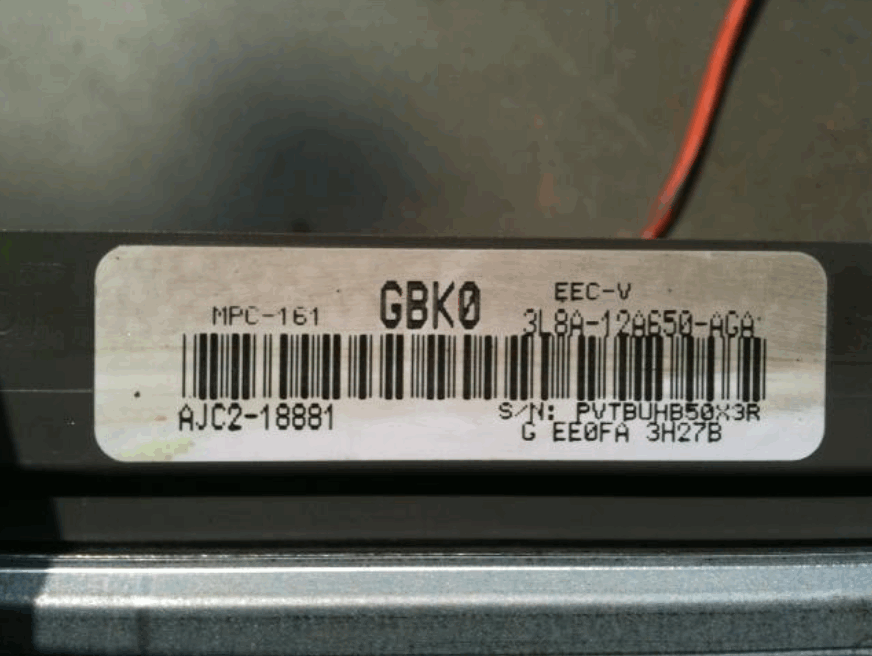
What Is a Ford PCM Tear Tag Number?
A Ford PCM Tear Tag Number is an identification code that helps identify a specific Powertrain Control Module configuration. Ford uses this information to distinguish PCM units with different hardware setups, software calibrations, and vehicle applications. The Tear Tag Number helps technicians verify that a PCM matches the requirements of a particular Ford vehicle.
The Powertrain Control Module controls important vehicle functions, including engine operation and transmission management. Because Ford produces many vehicles with different engine options, transmissions, and emissions requirements, each PCM configuration requires specific identification information. The Tear Tag Number helps connect the physical PCM module with its correct technical data.
A Ford PCM label usually contains multiple codes. The Tear Tag Number works together with other identifiers, such as the PCM part number, calibration ID, strategy code, and hardware number. Each identifier provides different information. The Tear Tag Number helps identify the PCM configuration, while the part number helps determine whether a replacement module matches the original component.
Technicians use the Ford PCM Tear Tag Number during diagnostic and repair procedures because incorrect PCM identification can create compatibility problems. For example, installing a PCM with different calibration data may prevent proper communication with vehicle systems or require additional programming steps.
The Tear Tag Number does not replace the need for VIN verification or programming information. Instead, it acts as one part of a complete PCM identification process. Accurate identification requires checking multiple data points to confirm that the module matches the vehicle’s specifications.
Where Can You Find the Ford PCM Tear Tag Number?
The Ford PCM Tear Tag Number is usually located on the identification label attached to the Powertrain Control Module. The PCM label contains important module information, including the Tear Tag Number, part numbers, calibration details, and manufacturing codes. The exact label location depends on the Ford vehicle model, engine type, and production year.
Most Ford vehicles place the PCM inside the engine compartment because the module needs direct connections with engine sensors, actuators, and the vehicle wiring system. For example, Ford F 150 models may place the PCM near the engine bay area, while other models such as the Ford Mustang or Ford Explorer may use different mounting positions. Technicians should check the PCM housing and surrounding brackets when searching for the identification label.
Finding the Tear Tag Number through physical inspection requires access to the PCM label. Dirt, corrosion, damaged labels, or limited space around the module can make the code difficult to read. In these situations, technicians often use diagnostic tools to retrieve PCM information electronically.
Diagnostic equipment can access PCM data through the vehicle’s OBD II port. Tools such as Ford IDS, Ford FDRS, FORScan, and professional scan tools can display module identification information without removing the PCM. This method helps technicians confirm PCM details when the physical label is unavailable or difficult to access.
The vehicle identification number (VIN) also supports PCM identification, but it does not always replace the Tear Tag Number. A VIN identifies the vehicle, while the Tear Tag Number identifies PCM configuration information. Using both sources together provides a more accurate way to confirm PCM compatibility before replacement or programming.
How Do You Identify a Ford PCM Using the Tear Tag Number?
A Ford PCM Tear Tag Number helps technicians identify the correct PCM configuration by connecting the module with its technical specifications. The identification process requires more than reading one code because Ford PCM modules contain several related identifiers. Each identifier provides different information about the module’s hardware, software, and vehicle compatibility.
The first step is to locate the Tear Tag Number on the PCM label or retrieve the information through a diagnostic scanner. Technicians then compare this number with other PCM data, including the part number, calibration ID, strategy code, and hardware number. This comparison confirms whether the PCM matches the vehicle’s original configuration.
The PCM part number identifies the physical module specification. The calibration ID identifies the software settings that control engine and transmission functions. The strategy code identifies the programming strategy that Ford uses for a specific vehicle configuration. The Tear Tag Number connects these details into a complete PCM identification profile.
A correct PCM identification process also requires vehicle information. Technicians compare PCM data with the vehicle identification number (VIN), engine type, transmission type, and production specifications. This step prevents incorrect module selection because similar Ford models can use different PCM configurations.
For example, two Ford vehicles from the same model year may use different PCM calibrations because they have different engines or transmission systems. The Tear Tag Number helps technicians identify these differences before they install or program a replacement module.
Accurate PCM identification reduces programming errors and improves repair efficiency. By checking the Tear Tag Number together with other module information, technicians can select compatible PCM units and complete the required programming procedures correctly.
What Is the Difference Between a Ford PCM Tear Tag Number and a PCM Part Number?
A Ford PCM Tear Tag Number and a PCM Part Number identify different aspects of a Powertrain Control Module. The Tear Tag Number describes specific PCM configuration information, while the PCM Part Number identifies the physical module component. Technicians check both identifiers because they provide different details during diagnostics, replacement, and programming.
The PCM Part Number focuses on the hardware specification of the module. It helps determine whether a replacement PCM has the correct physical design, connector type, and compatibility with a specific Ford vehicle system. A matching part number reduces the risk of selecting a module that cannot communicate correctly with the vehicle.
The Tear Tag Number provides additional configuration information related to the PCM installed in the vehicle. It helps technicians identify the calibration and software relationship associated with the module. This information becomes important because Ford vehicles with the same model year can use different PCM configurations based on engine options, transmission types, and regional requirements.
The Calibration ID and Strategy Code also play an important role in PCM identification. The Calibration ID represents software calibration data, while the Strategy Code identifies the programming strategy used by Ford. These codes help technicians determine whether a PCM requires specific programming after installation.
Confusing the Tear Tag Number with the PCM Part Number can create problems during PCM replacement. A technician may install a physically compatible module but still require additional programming to match the vehicle configuration. For example, a Ford F 150 with a different engine option may use a similar PCM housing but require different calibration software.
The correct identification process combines the Tear Tag Number, PCM Part Number, Calibration ID, Strategy Code, and VIN. Together, these identifiers provide a complete view of PCM compatibility and help ensure successful replacement and programming procedures.
How Does the Ford PCM Tear Tag Number Help With PCM Replacement and Programming?
A Ford PCM Tear Tag Number helps technicians select the correct replacement module and complete accurate programming procedures. When a Powertrain Control Module fails, the replacement unit must match the vehicle’s hardware and software requirements. The Tear Tag Number provides important identification information that supports this matching process.
PCM replacement requires more than installing a physically similar module. A Ford vehicle depends on specific PCM settings for engine control, transmission operation, emissions systems, and communication with other vehicle modules. The Tear Tag Number helps technicians verify that the replacement PCM belongs to the correct configuration before programming begins.
Technicians compare the Tear Tag Number with the PCM Part Number, Calibration ID, Strategy Code, and VIN during the replacement process. These identifiers help determine whether the replacement module requires software updates, calibration changes, or complete reprogramming. This process prevents issues caused by incompatible PCM data.
Ford diagnostic systems such as Ford IDS and Ford FDRS use vehicle information and module data to configure replacement PCMs. Professional tools and applications such as FORScan can also provide access to PCM information for certain diagnostic procedures. The available programming method depends on the vehicle model, PCM type, and repair requirements.
A replacement PCM may have a different Tear Tag Number from the original module. This situation does not always indicate a problem because Ford may use updated modules with revised software or improved hardware. However, technicians must confirm compatibility before installation and programming.
Using the Ford PCM Tear Tag Number correctly helps reduce programming failures, communication errors, and incorrect module installations. It gives technicians a reliable reference point when restoring the vehicle’s powertrain control system.
Can You Find Ford PCM Information Without the Tear Tag Number?
A Ford PCM can still be identified without the Tear Tag Number by using alternative vehicle and diagnostic information. The Tear Tag Number provides valuable PCM configuration data, but technicians can use other sources to determine module details when the original label is missing, damaged, or unreadable.
The vehicle identification number (VIN) is one of the most common alternatives for identifying Ford PCM information. The VIN connects the vehicle with factory specifications, including engine type, transmission configuration, production year, and original equipment details. However, the VIN alone may not provide every PCM identifier because Ford vehicles can receive updated modules during repairs or previous replacements.
Diagnostic scan tools provide another method for retrieving PCM information. When a technician connects a scanner through the OBD II port, the tool can communicate with the PCM and display available module data. This information may include the PCM part number, calibration ID, software version, and strategy code. These details help technicians understand the current PCM configuration without physically accessing the module label.
Ford diagnostic software, including Ford IDS and Ford FDRS, can retrieve factory level module information for supported vehicles. Other diagnostic platforms, such as FORScan, can also access PCM data for many Ford models. The available information depends on the vehicle generation, PCM type, and diagnostic tool capabilities.
Finding PCM information without a Tear Tag Number becomes more difficult when the module has been replaced previously or when communication problems prevent scanner access. In these situations, technicians may need additional records, dealer information, or direct PCM inspection.
The Tear Tag Number remains one of the most useful references for Ford PCM identification, but it works best as part of a complete identification process. Combining VIN data, diagnostic information, and PCM codes creates a more accurate method for confirming module compatibility.
Why Is Ford PCM Identification Important Before Installing a Replacement Module?
A Ford PCM identification process helps ensure that a replacement Powertrain Control Module matches the vehicle’s technical requirements. Installing a PCM without verifying its identification information can create compatibility problems, communication failures, or incorrect engine and transmission operation.
Ford vehicles use different PCM configurations based on several factors, including engine type, transmission system, emission standards, and production year. Two vehicles from the same model family may require different PCM hardware and software settings. Checking the Tear Tag Number, PCM Part Number, Calibration ID, and VIN helps technicians confirm that the replacement module fits the vehicle correctly.
An incorrect PCM installation can affect how the vehicle communicates with other electronic systems. The PCM exchanges information with modules such as the transmission control system, body control module, and anti theft system. If the replacement PCM does not match the vehicle configuration, the system may display fault codes, fail to start, or require additional programming procedures.
PCM identification also helps technicians avoid problems with used replacement modules. A used PCM from another Ford vehicle may look identical but contain different calibration data. For example, a PCM from a Ford F 150 with a different engine option may require different software before it can operate correctly in another truck.
Proper identification improves the efficiency of PCM replacement and programming. Technicians can select the correct module, prepare the required programming steps, and reduce unnecessary diagnostic time. The Tear Tag Number provides an important reference, but successful PCM replacement requires reviewing all available identification information.
A complete PCM verification process creates a reliable connection between the replacement module and the vehicle’s original specifications. This approach helps maintain correct engine performance, transmission operation, and communication between vehicle systems.
What Should You Know About Ford PCM Tear Tag Numbers?
A Ford PCM Tear Tag Number is an important identifier that helps technicians understand a vehicle’s Powertrain Control Module configuration. The number provides useful information during diagnostics, PCM replacement, and programming procedures. However, technicians should not use the Tear Tag Number alone when identifying a PCM.
A complete PCM identification process combines several data sources, including the Tear Tag Number, PCM Part Number, Calibration ID, Strategy Code, and Vehicle Identification Number (VIN). Each identifier provides different information about the module’s hardware, software, and compatibility with the vehicle system.
The Tear Tag Number becomes especially valuable when replacing a damaged PCM or installing a used module. It helps technicians compare the original PCM configuration with the replacement unit before programming. This process reduces the risk of incorrect module selection and prevents compatibility issues after installation.
Ford PCM systems continue to become more complex because modern vehicles rely on advanced electronic communication between multiple control modules. Accurate identification ensures that the replacement PCM receives the correct calibration and programming data for the vehicle’s engine, transmission, and electronic systems.
Understanding the Ford PCM Tear Tag Number helps vehicle owners and technicians make better repair decisions. By using the Tear Tag Number together with other PCM information, they can identify the correct module, complete programming procedures accurately, and maintain reliable vehicle operation.