Ford F-150 performance upgrades can significantly improve horsepower, torque, throttle response, towing capability, and overall driving dynamics when the right components work together. However, installing more aftermarket parts does not always produce better results. Every performance modification affects a different system, including the engine, intake, exhaust, suspension, brakes, drivetrain, and tires. Choosing upgrades that match your truck’s engine, driving style, and performance goals creates a balanced build that delivers measurable improvements instead of unnecessary expenses.
The Ford F-150 remains one of the most popular full-size pickup trucks because it offers exceptional aftermarket support across every generation. Whether your truck is equipped with the 2.7L EcoBoost, 3.5L EcoBoost, 5.0L Coyote V8, or PowerBoost Hybrid engine, there are performance parts designed to increase power, improve handling, strengthen towing performance, or enhance off-road capability. Understanding how these upgrades interact is just as important as selecting individual components, since airflow, fuel delivery, engine calibration, suspension geometry, and braking performance all contribute to the truck’s overall efficiency.
This guide explains the most effective Ford F-150 performance upgrades based on real-world performance gains rather than marketing claims. You will learn which modifications deliver the biggest horsepower and torque increases, which upgrades provide the best value for different budgets, and how to build a reliable upgrade path without sacrificing durability or factory drivability. By the end of this guide, you will understand how to choose performance parts that match your driving needs while maximizing the long-term performance potential of your Ford F-150.
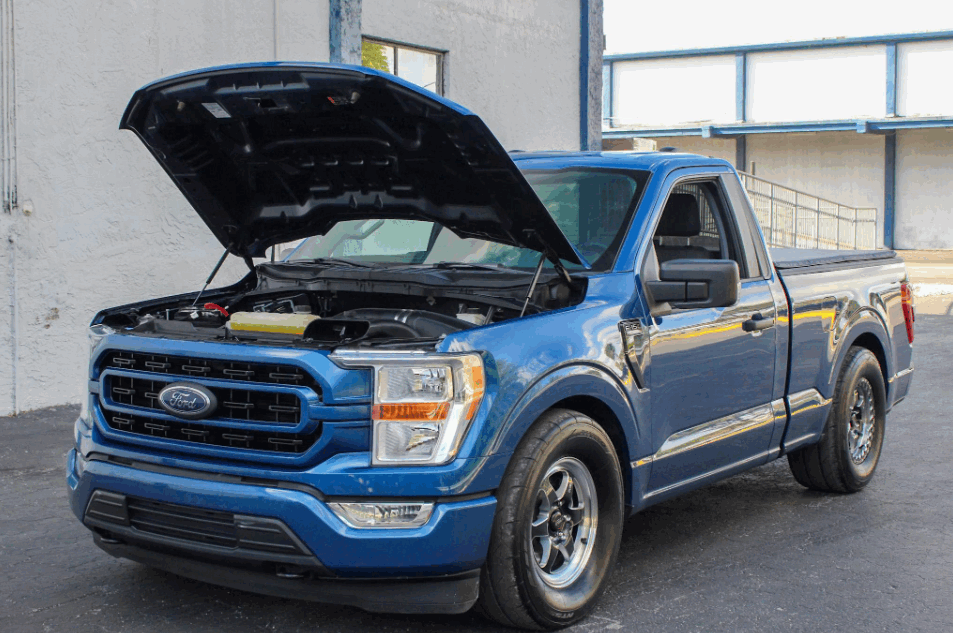
What Are Ford F-150 Performance Upgrades?
Ford F-150 performance upgrades are modifications that improve how the truck performs. These upgrades affect power, handling, braking, towing, and driving response. They can include engine parts, suspension components, brake systems, wheels, and tires.
Performance upgrades work by improving specific vehicle systems. Engine upgrades focus on airflow, fuel delivery, and engine calibration. Suspension upgrades improve stability and wheel control. Brake upgrades increase stopping power during demanding driving conditions.
The main goal of a performance upgrade is not only to add horsepower. A complete upgrade should improve how different systems work together. A truck with more power also needs proper cooling, traction, and braking support.
Ford F-150 owners choose different upgrades based on their driving needs. A towing-focused build requires different parts from an off-road build. A daily driver may benefit more from throttle response and handling improvements than maximum horsepower.
Common performance upgrades include ECU tuning, cold air intake systems, exhaust upgrades, intercoolers, suspension kits, and performance tires. Each modification changes a different part of the driving experience.
The best upgrade strategy starts with understanding the truck’s engine and purpose. A 3.5L EcoBoost F-150 may respond differently from a 5.0L Coyote V8 model. Choosing compatible parts creates better performance and protects long-term reliability.
Which Ford F-150 Performance Upgrades Increase Horsepower and Torque the Most?
The Ford F-150 performance upgrades that create the biggest power gains are ECU tuning, forced induction systems, and airflow improvements. These modifications increase engine efficiency by improving combustion and power delivery.
ECU tuning is one of the most effective upgrades for modern F-150 models. The engine control unit manages fuel, ignition timing, and boost pressure. A performance tune changes these settings to unlock additional power from the factory engine.
Turbocharged EcoBoost engines benefit significantly from tuning. The 2.7L EcoBoost and 3.5L EcoBoost engines can produce stronger acceleration after calibration. Transmission tuning can also improve shift speed and power delivery.
Cold air intake systems improve engine airflow by allowing the engine to receive cooler air. Cooler air contains more oxygen, which supports more efficient combustion. This upgrade usually works best when combined with proper engine tuning.
Performance exhaust systems improve exhaust flow by reducing restrictions. A cat-back exhaust system allows gases to exit more efficiently. This can improve throttle response and create a more aggressive engine sound.
Larger intercoolers, upgraded turbochargers, and supercharger systems provide higher power increases. These upgrades support higher airflow and boost levels. However, they require additional supporting components to maintain reliability.
A high-performance Ford F-150 build needs balance. Adding horsepower without improving cooling, drivetrain strength, and traction can reduce reliability. The best results come from combining compatible upgrades that support each other.
Owners should select upgrades based on their goals. A moderate build may focus on tuning and airflow improvements. A high-power build may require forced induction and stronger supporting systems.
Which Suspension and Brake Upgrades Improve Overall Driving Performance?
Suspension and brake upgrades improve the Ford F-150’s control, stability, and safety. These systems become more important when the truck receives additional horsepower, carries heavy loads, or operates in difficult conditions.
Suspension upgrades improve how the truck connects with the road. Factory suspension systems are designed for a balance between comfort, durability, and cost. Performance components create better control by improving wheel movement and reducing unwanted body motion.
Lift kits are popular upgrades for Ford F-150 owners who drive off-road. A quality lift kit increases ground clearance and creates more space for larger tires. This improves obstacle clearance on trails and rough terrain. However, larger lifts require proper alignment and supporting suspension components.
Performance shocks and coilovers improve ride control. They manage suspension movement during acceleration, braking, and cornering. Better shock control helps the tires maintain contact with the road. This creates improved handling and a more stable driving experience.
Control arms and sway bars also contribute to suspension performance. Upgraded control arms maintain correct suspension geometry after lifting the truck. Larger sway bars reduce body roll during cornering and improve steering confidence.
Brake upgrades are essential for trucks with increased power or towing demands. More horsepower allows the F-150 to accelerate faster, but stronger brakes are needed to control that additional performance.
Big brake kits improve stopping ability through larger rotors, stronger calipers, and better heat management. Performance brake pads maintain braking force during repeated stops. These upgrades are especially useful for towing, mountain driving, and high-performance applications.
A balanced Ford F-150 build requires both acceleration and control. Increasing engine power without improving suspension and braking can create an incomplete setup. The best performance upgrades improve the entire driving system rather than focusing on one component.
Which Wheels and Tires Deliver the Biggest Performance Difference?
Wheels and tires create one of the most noticeable changes in Ford F-150 performance. They directly affect traction, handling, braking, comfort, and fuel efficiency. The right combination improves how power reaches the road.
Performance tires increase grip by using specialized rubber compounds and tread designs. Better traction improves acceleration, cornering, and braking performance. This improvement is especially noticeable on powerful F-150 models with upgraded engines.
All-terrain tires are a common choice for drivers who need both road comfort and off-road capability. They provide stronger sidewalls and deeper tread patterns. These features improve durability on gravel, dirt, and uneven surfaces.
Mud-terrain tires are designed for extreme off-road conditions. They provide aggressive tread patterns that improve traction in mud and loose terrain. However, they usually create more road noise and can reduce highway comfort.
Wheel selection also affects performance through weight reduction. Lightweight wheels reduce unsprung weight and rotational mass. This allows the suspension to react faster and can improve steering response.
Larger wheels and tires can improve appearance and off-road capability. However, they also increase weight and rolling resistance. Oversized tire setups may reduce acceleration and fuel economy if they are not matched correctly.
The best wheel and tire setup depends on the truck’s purpose. A street-performance F-150 benefits from lightweight wheels and high-grip tires. An off-road build requires durable wheels and aggressive all-terrain or mud-terrain tires.
Choosing the correct tire size is also important. Tire dimensions affect acceleration, braking, suspension stress, and speedometer accuracy. A properly matched wheel and tire combination improves performance without creating unnecessary mechanical problems.
Which Performance Upgrades Are Best for Each Ford F-150 Engine?
The best Ford F-150 performance upgrades depend on the engine configuration. Each engine has different strengths, limitations, and upgrade potential. Choosing parts based on the engine creates better performance and improves long-term reliability.
The 2.7L EcoBoost engine responds well to software and airflow upgrades. ECU tuning is one of the most effective improvements for this engine. A performance tune can improve throttle response, horsepower, and torque by optimizing boost pressure and fuel delivery.
Cold air intake systems and intercooler upgrades also benefit the 2.7L EcoBoost. These parts improve airflow and help maintain consistent performance under higher loads. They are useful for daily driving and moderate towing applications.
The 3.5L EcoBoost engine offers strong performance potential because of its twin-turbocharged design. This engine benefits significantly from ECU tuning, upgraded intercoolers, and improved exhaust systems. These modifications help manage higher boost levels and increase power delivery.
The 5.0L Coyote V8 provides a different performance experience. It uses natural aspiration instead of turbocharging. This engine responds well to intake upgrades, exhaust improvements, throttle body upgrades, and engine tuning. Supercharger systems are also popular for owners seeking major horsepower increases.
The PowerBoost Hybrid combines a 3.5L EcoBoost engine with an electric motor system. Performance upgrades must consider both the combustion engine and hybrid components. Calibration improvements and cooling upgrades can enhance performance while maintaining system efficiency.
The Ford F-150 Raptor requires specialized upgrades because it is designed for high-performance off-road driving. Suspension improvements, stronger wheels, performance tires, and cooling upgrades often provide better results than simple horsepower modifications.
Each F-150 engine requires a different upgrade strategy. The most effective build matches the modification with the engine’s design. Understanding the engine platform helps owners avoid incompatible parts and unnecessary costs.
What Is the Best Upgrade Order for a Ford F-150?
The best Ford F-150 upgrade order starts with improvements that create a strong foundation. Installing random performance parts can create compatibility problems and reduce the effectiveness of individual upgrades. A structured approach produces better results.
The first step is improving airflow. Cold air intake systems and exhaust upgrades help the engine breathe more efficiently. These modifications create a better foundation for future tuning and power increases.
The second step is engine calibration. ECU tuning allows the engine computer to adjust fuel delivery, ignition timing, and boost pressure. A proper tune helps the truck use airflow improvements more effectively.
The third step is improving cooling performance. Intercoolers, upgraded radiators, and cooling systems become important when engine output increases. Lower operating temperatures help maintain consistent performance.
The fourth step is upgrading traction and control. Performance tires, suspension components, and brake upgrades allow the truck to use additional power safely. These modifications improve handling during acceleration, cornering, and heavy-duty driving.
The fifth step is adding advanced power upgrades. Superchargers, upgraded turbochargers, and other forced induction systems should be installed after supporting systems are prepared. These modifications create significant power increases but require stronger components.
The final step is fine-tuning the entire setup. Dyno testing and professional calibration help optimize performance. This process ensures that engine power, transmission behavior, cooling, and traction work together.
A successful Ford F-150 performance build follows a logical sequence. Owners should improve supporting systems before adding extreme power. This approach creates a faster, safer, and more reliable truck.
What Should You Know Before Installing Ford F-150 Performance Upgrades?
Installing Ford F-150 performance upgrades requires planning before buying aftermarket parts. The right modification depends on the truck’s engine, driving purpose, budget, and long-term goals. A successful upgrade improves performance without creating unnecessary reliability issues.
Compatibility is the first factor to consider. Different F-150 generations use different engines, transmissions, and electronic systems. A performance part designed for a 3.5L EcoBoost may not work correctly on a 5.0L Coyote V8. Checking vehicle specifications prevents installation problems and wasted costs.
Warranty impact is another important consideration. Some aftermarket modifications can affect factory warranty coverage. Engine tuning, forced induction systems, and major drivetrain changes usually receive more attention from manufacturers and dealerships. Choosing high-quality parts and professional installation reduces potential risks.
Emissions compliance also matters when installing performance components. Certain regions have strict regulations for aftermarket parts. Some intake systems, exhaust components, and engine tunes may require emissions certification. Checking local requirements helps owners avoid legal problems.
Reliability should remain a priority during any performance build. Increasing horsepower creates additional stress on the engine, transmission, cooling system, and drivetrain. Supporting upgrades are often necessary when adding significant power. A balanced build protects the truck and improves long-term ownership value.
Installation quality affects the final result. Some upgrades are simple bolt-on modifications, while others require specialized tools and professional calibration. ECU tuning, turbo upgrades, and suspension changes often require expert knowledge for proper setup.
The best Ford F-150 performance upgrades combine quality components with proper planning. A reliable build focuses on compatibility, maintenance, and realistic performance goals. More power is valuable only when the truck remains dependable.
How Much Do Ford F-150 Performance Upgrades Cost?
The cost of Ford F-150 performance upgrades depends on the type of modification, part quality, and installation requirements. Basic improvements usually require a smaller investment, while advanced performance builds can cost several thousand dollars.
Entry-level upgrades often include cold air intake systems, performance filters, exhaust components, and basic tuning solutions. These modifications usually provide noticeable improvements in throttle response and driving feel. They are popular choices for owners who want better performance without major mechanical changes.
Mid-range upgrades include ECU tuning, intercoolers, suspension components, brake upgrades, and performance tires. These modifications create larger improvements because they affect multiple areas of vehicle performance. They are suitable for drivers who want stronger acceleration, better handling, or improved towing capability.
High-performance builds require more advanced components. Supercharger systems, upgraded turbochargers, transmission upgrades, and complete suspension setups involve higher costs. These modifications also require additional supporting parts to maintain reliability.
Installation costs should also be included in the total budget. Some parts can be installed at home, but complex upgrades often require professional service. Tuning, suspension alignment, and forced induction installation need specialized equipment and technical knowledge.
The most valuable upgrade is not always the most expensive one. A well-planned combination of affordable parts can create better results than expensive components installed without proper balance. Owners should choose upgrades based on their performance goals rather than focusing only on maximum horsepower.
A realistic Ford F-150 performance upgrade budget starts with identifying the desired outcome. Daily drivers may only need a few targeted improvements. Dedicated performance builds require a larger investment in supporting systems and professional installation.
How Do You Choose the Best Ford F-150 Performance Upgrades?
Choosing the best Ford F-150 performance upgrades starts with identifying the main purpose of the truck. Different drivers need different improvements. A towing-focused truck requires different components from a street-performance or off-road build.
The first factor is the driving goal. Owners who want more horsepower should focus on engine upgrades such as ECU tuning, intake systems, exhaust improvements, and forced induction. These modifications increase engine output and improve acceleration.
Towing-focused builds require upgrades that improve strength and control. Transmission tuning, cooling improvements, brake upgrades, and better tires help the truck handle heavier loads. Increasing horsepower alone does not create a better towing vehicle.
Off-road drivers should prioritize suspension, tires, and durability improvements. Lift kits, performance shocks, all-terrain tires, and protective components improve capability on difficult terrain. These upgrades increase ground clearance and improve traction.
Daily drivers usually benefit from balanced modifications. A cold air intake, performance tune, quality tires, and suspension improvements can create noticeable changes without affecting comfort. These upgrades improve the driving experience while maintaining everyday reliability.
The engine platform also determines the right upgrade path. EcoBoost engines respond well to tuning and airflow improvements. The 5.0L Coyote V8 offers strong potential through intake, exhaust, and forced induction upgrades. Understanding the engine helps owners choose compatible parts.
Budget is another important factor when selecting performance components. The most expensive parts do not always provide the best value. A well-planned upgrade package delivers better results than unrelated modifications.
The best Ford F-150 performance upgrades create a balanced system. Power, cooling, traction, braking, and suspension should work together. A complete approach improves performance while protecting reliability and long-term ownership value.
Conclusion: Ford F-150 Performance Upgrades
Ford F-150 performance upgrades deliver the best results when they are selected based on the truck’s purpose and performance goals. Increasing horsepower is only one part of building a better-performing pickup truck. Engine power must work together with cooling, suspension, brakes, tires, and drivetrain components.
The most effective upgrade path starts with understanding the vehicle platform. EcoBoost engines often benefit from tuning, airflow improvements, and intercooler upgrades. The 5.0L Coyote V8 provides strong potential through intake, exhaust, and forced induction modifications. Off-road models such as the F-150 Raptor require upgrades that improve suspension performance and durability.
A reliable performance build focuses on balance. Adding more power without improving supporting systems can reduce reliability and increase maintenance requirements. Choosing compatible parts creates better acceleration, stronger towing capability, improved handling, and a more enjoyable driving experience.
The best Ford F-150 performance upgrades are not always the most expensive options. They are the modifications that match your driving needs and provide measurable improvements. Whether the goal is more torque, better towing, improved off-road capability, or sharper street performance, a planned upgrade strategy creates a stronger and more capable F-150.