Finding the Dodge Durango battery location is not always as straightforward as opening the hood. While many SUVs keep the battery inside the engine compartment, the Dodge Durango uses different battery locations depending on the model year and drivetrain configuration. Older generations typically place the battery under the hood, whereas most modern models position it beneath the front passenger seat. In addition, some Durango models equipped with the Engine Stop/Start system include both a main battery and an auxiliary battery, making the electrical system more complex than many owners expect.
Understanding where the battery is located is the first step before performing maintenance, replacing the battery, charging it, or jump-starting the vehicle. Looking in the wrong location can waste time and may even lead to unnecessary disassembly. Knowing whether your Durango has one battery or two also helps you diagnose starting issues, warning lights, and charging system faults more accurately.
This guide explains the Dodge Durango battery location by model year from 1998 through 2025. It also covers why the battery location changed over time, how to access it safely, which models include an auxiliary battery, and what you should know before replacing or servicing the battery. By the end of this guide, you will be able to identify the correct battery location for your specific Dodge Durango and perform basic battery-related maintenance with greater confidence.
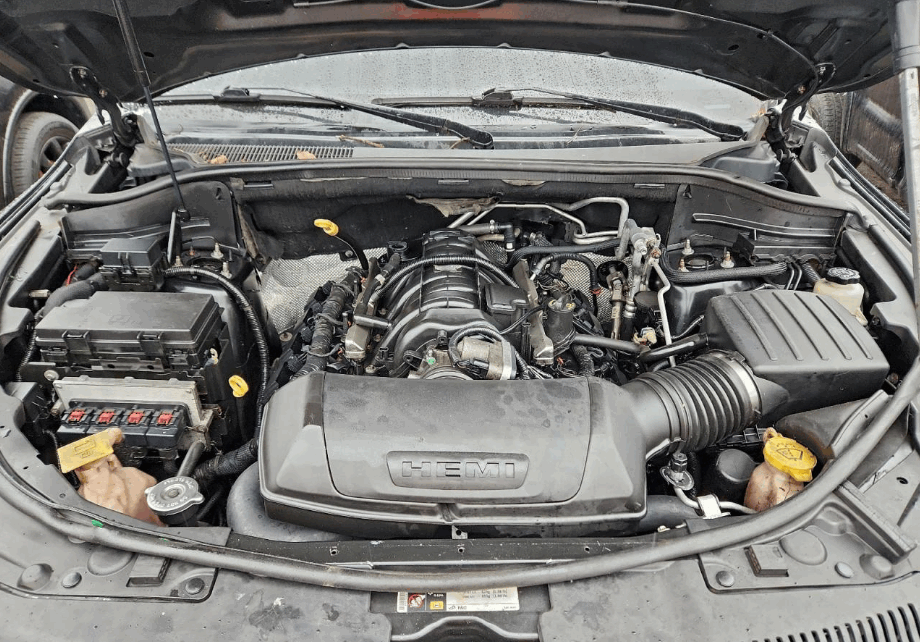
Where Is the Battery Located on a Dodge Durango?
The Dodge Durango battery location depends entirely on the vehicle’s generation and model year. Earlier models place the battery inside the engine compartment, making it easy to inspect and replace. However, beginning with the third-generation Durango introduced for the 2011 model year, Dodge relocated the main battery beneath the front passenger seat. This design remains consistent across most models through 2025 and often surprises owners who expect to find the battery under the hood.
The relocation was not a cosmetic change. Moving the battery away from the engine bay helps protect it from excessive heat, which is one of the leading causes of premature battery failure. Lower operating temperatures allow the battery to maintain more stable performance and can extend its service life. Placing the battery closer to the center of the vehicle also improves weight distribution, which contributes to better handling and overall vehicle balance.
Many owners assume the battery is missing after opening the hood because only the jump-start terminals and electrical components are visible. On newer Dodge Durango models, these terminals provide convenient access for charging the battery or jump-starting the vehicle without removing the passenger seat. The actual battery remains protected underneath the cabin floor, where it is less exposed to engine heat, moisture, and road debris.
Battery location may also vary slightly depending on the vehicle’s equipment. Models equipped with the Engine Stop/Start system include an auxiliary battery that works alongside the main battery to support electrical functions during automatic engine shutdowns. Understanding whether your Durango has a single battery or a dual-battery system is essential before diagnosing charging problems, replacing a battery, or troubleshooting electrical faults. Once you identify your vehicle’s model year, locating the correct battery becomes a straightforward process.
Dodge Durango Battery Location by Model Year (1998–2025)
The Dodge Durango battery location varies by model year because Dodge redesigned the vehicle’s platform and electrical system over multiple generations. Models built between 1998 and 2010 keep the battery inside the engine bay, allowing owners to inspect, charge, or replace it by simply opening the hood. Starting with the 2011 model year, Dodge relocated the main battery beneath the front passenger seat to improve durability, optimize engine compartment space, and achieve better weight distribution. As a result, finding the battery first requires identifying the correct model year.
For 1998–2003 Dodge Durango models, the battery is mounted in the engine compartment near the front of the vehicle. The open layout provides quick access to the battery terminals, making routine maintenance such as voltage testing, terminal cleaning, and battery replacement relatively simple. The 2004–2010 Dodge Durango continues using an under-hood battery location, although the exact position may differ slightly depending on whether the vehicle is equipped with a V6 or V8 engine.
A significant change arrived with the third-generation Dodge Durango, introduced in 2011. Instead of exposing the battery to constant engine heat, Dodge installed it beneath the front passenger seat. This location helps reduce heat exposure, protects the battery from engine vibration, and creates additional room for modern powertrain components under the hood. Owners must slide the passenger seat forward and remove the protective floor cover before accessing the battery.
The same battery layout remains standard on 2021–2025 Dodge Durango models. Vehicles equipped with the Engine Stop/Start system may also include an auxiliary battery, while the main battery stays beneath the passenger seat. Although jump-start terminals remain under the hood for convenience, the primary battery location has not changed, making it essential to verify the model year before performing any battery service.
Why Is the Battery Under the Passenger Seat on Newer Dodge Durango Models?
The battery sits beneath the front passenger seat on newer Dodge Durango models for several practical reasons. Dodge introduced this design with the third-generation Durango in 2011. The new platform required more room for the engine, cooling system, and electrical components. Moving the battery outside the engine bay solved these packaging challenges while improving long-term reliability.
Heat protection is the biggest advantage of the new battery location. Batteries lose performance faster when they operate in high temperatures. An engine compartment can become extremely hot during daily driving, especially in warm climates or heavy traffic. By placing the battery beneath the passenger seat, Dodge reduces heat exposure and helps extend battery life.
The new position also improves vehicle balance. A battery adds noticeable weight to the vehicle, and placing it closer to the center helps distribute that weight more evenly. Better weight distribution supports handling and stability while creating extra space under the hood for larger engines and additional cooling equipment. This layout also makes the engine compartment easier to service.
Many owners become confused when they cannot find the battery after opening the hood. This is completely normal on most 2011–2025 Dodge Durango models. The hood contains dedicated jump-start terminals instead of the main battery. Drivers can use these terminals for charging or jump-starting the vehicle without removing the passenger seat. The battery only needs to be accessed when it requires inspection, replacement, or other maintenance, making routine service more convenient while keeping the battery better protected.
Which Dodge Durango Models Have an Auxiliary Battery?
Not every Dodge Durango comes with an auxiliary battery. Most models built before the introduction of the Engine Stop/Start system use only one main battery. However, many newer Durango models equipped with Stop/Start technology include a second battery that supports the vehicle’s electrical system during automatic engine shutdowns. Checking your model year and equipment level is the easiest way to determine whether your vehicle uses a dual-battery system.
The main battery supplies power for starting the engine and operating the vehicle’s primary electrical components. The auxiliary battery has a different job. It keeps essential systems running while the engine temporarily shuts off at traffic lights or during short stops. This small battery powers features such as the radio, climate control, dashboard electronics, and onboard computers until the engine restarts. Without the auxiliary battery, these systems could lose power or operate less efficiently during Stop/Start events.
Many owners mistake the auxiliary battery for a backup battery. In reality, it works together with the main battery rather than replacing it. If either battery begins to fail, the Stop/Start system may stop working correctly. Drivers may also notice warning messages, battery indicator lights, or repeated notifications that the Stop/Start system is unavailable. In some cases, the vehicle disables the feature automatically to protect the electrical system.
Most 2016–2025 Dodge Durango models equipped with the Engine Stop/Start feature include both a main battery and an auxiliary battery, although availability depends on the engine and trim level. Because both batteries operate as part of the same electrical system, technicians often recommend testing them together during routine maintenance. Replacing only the weak battery may not resolve charging problems if the second battery has also reached the end of its service life.
How Do You Access and Replace the Dodge Durango Battery?
Accessing the Dodge Durango battery depends on where the battery is installed. Models built between 1998 and 2010 provide direct access under the hood, making inspection and replacement relatively simple. Most 2011–2025 models require access through the front passenger side because the main battery sits beneath the passenger seat. Identifying the correct battery location before starting the job prevents unnecessary disassembly and reduces the risk of damaging interior trim.
Before replacing the battery, park the vehicle on a level surface and switch off the ignition. Remove the key or key fob from the vehicle to prevent electrical activity during the replacement process. If your Durango has the battery beneath the passenger seat, slide the seat fully forward to expose the battery access panel. Remove the protective cover and inspect the battery, terminals, and hold-down bracket before disconnecting any cables.
Always disconnect the negative battery terminal before removing the positive terminal. This sequence reduces the chance of creating an electrical short while working around metal tools. After removing the retaining bracket, lift the battery carefully because most Dodge Durango batteries weigh between 40 and 55 pounds. Installing the new battery follows the reverse order. Secure the battery, connect the positive terminal first, reconnect the negative terminal, and confirm that both connections are tight.
Once the installation is complete, start the engine and verify that the charging system operates normally. Some models may temporarily disable the Engine Stop/Start function until the new battery reaches an appropriate state of charge. It is also normal to reset features such as the clock, radio presets, or automatic window functions after reconnecting the battery. A final inspection for warning lights or loose battery cables helps ensure the replacement was completed correctly and the electrical system is operating as intended.
Where Are the Jump-Start Terminals on a Dodge Durango?
The jump-start terminals on a Dodge Durango are located under the hood, even though the main battery sits beneath the front passenger seat on most 2011–2025 models. Dodge designed this layout to make emergency jump-starts and battery charging easier. Drivers can connect jumper cables or a battery charger without removing the passenger seat or accessing the battery directly.
The positive jump-start terminal is covered by a red plastic cap inside the engine compartment. The negative connection point is a designated grounding post attached to the vehicle’s chassis or engine. These terminals connect directly to the electrical system and provide the same function as the battery terminals during a jump-start. Using the designated connection points also reduces the chance of accidental short circuits or damage to nearby electrical components.
Many owners wonder why they should not connect jumper cables directly to the battery. The main reason is accessibility. Removing the passenger seat trim takes time and increases the risk of damaging interior panels. Under-hood terminals provide a faster and safer solution for roadside emergencies. They also allow technicians to perform battery testing and charging without disturbing the battery compartment.
Always inspect the jump-start terminals before connecting any cables. Clean away dirt or corrosion if necessary and confirm that the protective cap is securely attached after use. Connect the positive cable first, then attach the negative cable to the designated ground point. After the engine starts, disconnect the cables in the reverse order to prevent electrical arcing. Following the recommended procedure helps protect the vehicle’s electrical system and ensures a safe jump-start whenever the battery becomes discharged.
What Battery Size Does a Dodge Durango Use?
The correct battery size for a Dodge Durango depends on the model year, engine, and factory equipment. Choosing the right battery is essential because the electrical system is designed to operate within specific capacity and performance requirements. Installing a battery with the wrong group size or insufficient cold cranking amps can reduce starting performance, shorten battery life, and affect systems such as Engine Stop/Start.
The table below summarizes the most common battery specifications used across Dodge Durango model years.
| Model Years | Common Battery Group | Battery Type |
|---|---|---|
| 1998–2003 | Group 65 | Flooded Lead-Acid |
| 2004–2010 | Group 65 | Flooded Lead-Acid |
| 2011–2015 | Group 94R (H7) | AGM or Flooded (depending on trim) |
| 2016–2025 | Group 94R (H7) | AGM Recommended |
Most 2016–2025 Dodge Durango models equipped with the Engine Stop/Start system require an AGM (Absorbent Glass Mat) battery. AGM batteries tolerate frequent charging and discharging better than conventional flooded batteries. They also recover more quickly after repeated engine restarts, making them the preferred choice for modern vehicles with advanced electrical systems. Replacing an AGM battery with a standard flooded battery may reduce reliability and cause the Stop/Start system to malfunction.
Cold Cranking Amps, commonly known as CCA, are another important specification. CCA measures a battery’s ability to start the engine in cold weather. Most Dodge Durango models require a battery rated between 700 and 850 CCA, although the exact requirement varies by engine size and factory configuration. Selecting a battery that meets or exceeds the manufacturer’s recommended CCA helps ensure reliable starting throughout the year.
Before purchasing a replacement battery, verify the model year, engine, and factory battery specification listed in the owner’s manual or on the original battery label. Choosing the correct group size, battery technology, and CCA rating helps maintain proper charging performance, supports the vehicle’s electrical system, and maximizes battery service life.
What Are the Most Common Dodge Durango Battery Problems?
Several battery-related problems can affect a Dodge Durango, especially as the battery ages or the electrical system becomes more demanding. The most common issues include a dead battery, repeated battery drain, auxiliary battery failure, terminal corrosion, and charging system faults. While some problems develop gradually, others can appear without warning and leave the vehicle unable to start.
A dead battery is the issue owners encounter most often. As the battery loses capacity over time, it struggles to provide enough power to crank the engine. Common warning signs include slow engine cranking, dim headlights, and repeated clicking sounds when turning the key or pressing the start button. Most vehicle batteries last between three and five years, although extreme temperatures and frequent short trips can shorten their lifespan.
Battery drain is another common complaint, particularly when the vehicle sits unused for several days. Interior lights, aftermarket accessories, or electrical modules that remain active after the engine is turned off can slowly discharge the battery. If the battery repeatedly goes flat, the charging system and parasitic electrical draw should be inspected instead of replacing the battery immediately.
Models equipped with the Engine Stop/Start system may also experience auxiliary battery failure. A weak auxiliary battery often disables the Stop/Start function and triggers warning messages on the instrument cluster. In some cases, the main battery also works harder to compensate, which can shorten its service life. Testing both batteries at the same time provides a more accurate diagnosis and helps prevent recurring electrical problems.
Corroded battery terminals and charging system faults can produce symptoms similar to a failing battery. Corrosion increases electrical resistance and limits current flow between the battery and the vehicle. A worn alternator or faulty voltage regulator may also prevent the battery from charging correctly while driving. Inspecting the battery, terminals, and charging system together is the most effective way to identify the root cause and restore reliable starting performance.
Frequently Asked Questions About Dodge Durango Battery Location
Can I jump-start a Dodge Durango without accessing the battery?
Yes. Most 2011–2025 Dodge Durango models provide dedicated jump-start terminals under the hood. These terminals connect directly to the electrical system, allowing you to jump-start or charge the vehicle without removing the passenger seat or exposing the main battery.
Does every Dodge Durango have two batteries?
No. Only selected Dodge Durango models equipped with the Engine Stop/Start system use both a main battery and an auxiliary battery. Earlier models and some trims without this feature use a single battery.
Where is the auxiliary battery located?
The auxiliary battery is usually installed near the main battery, depending on the model year and trim level. Its exact location can vary slightly, so checking the owner’s manual or factory service information is the best way to identify its position.
How long does a Dodge Durango battery last?
A Dodge Durango battery typically lasts three to five years under normal driving conditions. Frequent short trips, extreme temperatures, and heavy electrical loads can reduce battery life. Regular battery testing helps identify declining performance before a failure occurs.
Can a bad auxiliary battery prevent the vehicle from starting?
Yes. A failing auxiliary battery can affect the Engine Stop/Start system and trigger warning messages. In some cases, it may also contribute to starting issues because both batteries work together to support the vehicle’s electrical system.
Should I replace both batteries at the same time?
If your Dodge Durango uses a dual-battery system, replacing both batteries at the same time is often the best solution. The batteries usually age together, and installing one new battery alongside an older one may reduce charging efficiency and shorten the service life of the replacement battery.
Can I install a standard flooded battery instead of an AGM battery?
It is not recommended on models that require an AGM battery. AGM batteries are designed to support repeated engine restarts and higher electrical demands. Using a conventional flooded battery may reduce reliability and prevent the Engine Stop/Start system from operating correctly.
How do I know which battery fits my Dodge Durango?
The easiest method is to verify the model year, engine, and factory battery specification before purchasing a replacement. Matching the correct battery group size, battery type, and Cold Cranking Amps ensures proper performance and reliable starting in all driving conditions.
Conclusion
Finding the correct Dodge Durango battery location starts with identifying the vehicle’s model year. Models built between 1998 and 2010 place the battery inside the engine bay, making inspection and replacement straightforward. Most 2011–2025 models relocate the main battery beneath the front passenger seat to improve heat protection, optimize weight distribution, and free space under the hood. Vehicles equipped with the Engine Stop/Start system may also include an auxiliary battery that works alongside the main battery to support the vehicle’s electrical system.
Understanding these differences helps you perform battery maintenance more efficiently and avoid unnecessary repairs. Whether you need to inspect the battery, replace it, or jump-start the vehicle, knowing the correct battery location allows you to complete the job safely and with confidence. Before installing a new battery, always confirm the correct battery group size, battery type, and electrical specifications for your specific Dodge Durango model. Following the manufacturer’s recommendations helps maintain reliable starting performance, supports the charging system, and extends the service life of both the battery and the vehicle’s electrical components.