The Dodge Dakota fuel filter location depends on the model year and fuel-system configuration. On some Dakota models, the serviceable fuel filter may be positioned along the fuel delivery system, while other configurations can incorporate filtration components into the fuel pump module inside the fuel tank. For this reason, identifying the truck’s model year is the first step before inspecting, servicing, or replacing the filter.
The location also determines how the filter can be accessed. An external filter can be inspected by locating the fuel tank and tracing the fuel line toward the engine. An in-tank configuration requires a different service approach because the filter, fuel pump, strainer, and related components may be part of the same fuel module assembly. These components should not be treated as interchangeable terms when identifying the correct part.
This guide explains the Dodge Dakota fuel filter location by model year, how to determine whether your Dakota uses an external or in-tank configuration, and how the filter relates to the fuel pump and fuel tank. It also covers access, replacement, clogged-filter symptoms, and basic fuel-system diagnosis so you can identify the correct component before starting repairs.
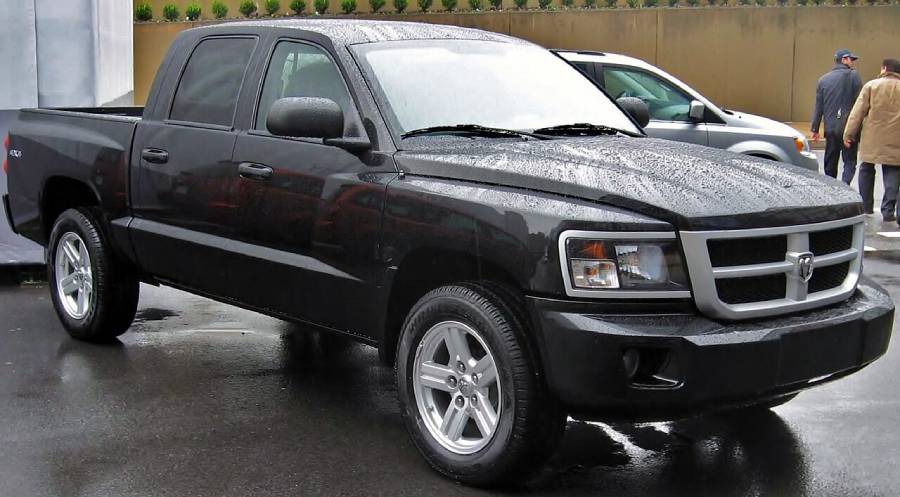
Where Is the Fuel Filter Located on a Dodge Dakota?
The Dodge Dakota fuel filter is associated with the fuel pump module at the fuel tank rather than being a conventional replaceable filter mounted along the frame on the later fuel-injected models covered by Dodge service information. The exact filter design and whether an individual component can be serviced separately depend on the model year and fuel-system configuration.
This distinction matters because searching underneath the truck for a typical cylindrical inline filter can lead to the wrong component. For example, Dodge service information for the 1997 Dakota identifies a combination fuel filter and fuel pressure regulator on top of the fuel pump module, which is mounted on top of the fuel tank. It specifically states that a separate frame-mounted fuel filter is not used.
Later Dakota models integrate filtration even more closely with the fuel pump module. Service information for the 2006 Dakota identifies an internal fuel filter and a separate inlet filter within or at the bottom of the fuel pump module. The module itself sits on top of the fuel tank. The 2008 and 2011 service information describes the same basic arrangement and states that there is no separate frame-mounted fuel filter.
Therefore, the first information to check before buying a replacement filter is the Dakota’s model year. The term “fuel filter” can refer to a filter/regulator assembly on one configuration and an internal or inlet filter incorporated into the pump module on another.
| Dodge Dakota model/year | Fuel filter location | Configuration | Separate frame-mounted filter |
|---|---|---|---|
| 1997 | Top of fuel tank/fuel pump module | Fuel filter/pressure regulator plus pump inlet filter | No |
| 2002 example | Fuel pump module inside fuel tank | Inlet filter at bottom of module | No conventional inline filter identified |
| 2006 | Fuel pump module at fuel tank | Internal filter plus inlet filter | No |
| 2008 | Fuel pump module at fuel tank | Internal filter plus inlet filter | No |
| 2011 | Fuel pump module at fuel tank | Internal filter plus inlet filter | No |
The table should not be interpreted as proof that every Dakota produced between those individual years uses an identical service procedure. Engine, fuel-tank, cab, and fuel-system configurations should still be checked before parts are ordered or the tank is removed.
Where Is the Fuel Filter on a Dodge Dakota by Model Year?
The Dodge Dakota fuel filter location changed in configuration across the truck’s production history, so the model year should be identified before locating or servicing the filter. A useful distinction is not simply whether the filter is “under the truck” or “in the tank,” but whether the vehicle uses a separately serviceable filter/regulator or filtration incorporated into the fuel pump module.
Where Is the Fuel Filter on Early Dodge Dakota Models?
Early Dodge Dakota fuel systems should be identified by the specific model year and engine before a filter location is assumed. The available service-manual sources used for this article do not establish one verified fuel-filter location for every 1987–1996 Dakota, so applying the later 1997 configuration backward to all first-generation trucks would be unreliable.
This is especially important when buying parts for an older Dakota. A parts catalog may list a component as a “fuel filter,” but that does not establish where it is mounted on every engine and fuel-system combination. The correct approach is to match the year, engine, and fuel-system configuration with the appropriate service information before tracing or disconnecting a fuel line.
For owners of these early trucks, start with the vehicle identification information rather than assuming that a filter should appear along the frame rail. This prevents a common diagnostic mistake: replacing or searching for a component based on the layout of another Dakota model year.
Where Is the Fuel Filter on Second-Generation Dodge Dakota Models?
On a 1997 Dodge Dakota, the fuel filter/fuel pressure regulator is located on top of the fuel pump module at the top of the fuel tank. Dodge service information describes the combination filter/regulator as fitting into the top of the pump module and states that a separate frame-mounted fuel filter is not used. A fuel pump inlet filter is also positioned at the bottom of the module.
The 1997 configuration also illustrates why “fuel filter replacement” does not always mean replacing the same component. Dodge documented two filter/regulator designs for that model year. A version using a rubber grommet between the filter/regulator and pump module could be serviced separately, while a version without that grommet required replacement of the fuel pump module assembly when service was necessary.
By 2002, service information for the Dakota also identifies a fuel pump inlet filter, or strainer, at the bottom of the fuel pump module inside the fuel tank. Accessing that inlet filter requires removal of the fuel tank and then the fuel pump module. This location explains why an owner looking only along the frame rail may not find the filtration component expected from an older conventional fuel system.
The practical rule for a second-generation Dakota is therefore to identify the exact year before purchasing a supposed inline replacement filter. The fuel pump module, filter/regulator, inlet strainer, and fuel pressure regulator are related components, but their serviceability should not be assumed to be identical across every model year.
Where Is the Fuel Filter on Third-Generation Dodge Dakota Models?
On verified third-generation Dodge Dakota applications, the fuel filters are part of the fuel pump module system at the fuel tank, and a separate frame-mounted fuel filter is not used. Dodge service information for a 2006 Dakota states that the pump module contains an internal fuel filter and a separate fuel pick-up or inlet filter. The fuel pump module is mounted at the top of the fuel tank.
The same basic design is documented for the 2008 Dakota. One filter is located at the bottom of the fuel pump module and another is located inside the module. Dodge’s service information specifically states that no separate frame-mounted fuel filter is used with any engine covered by that documentation.
The 2011 Dakota service information describes the same arrangement: the module is positioned on top of the fuel tank and contains an internal fuel filter, a separate inlet filter, the electric fuel pump, fuel pressure regulator, and fuel-level sending unit. If the fuel filter requires service, the service information specifies replacement of the fuel pump module rather than routine replacement of a standalone inline filter.
This means owners of these later Dakotas should not expect to find a conventional serviceable fuel filter attached to the frame rail. If a parts search or general automotive guide tells you to follow the fuel line until you find an inline filter, verify that instruction against the exact Dakota model year before removing any components.
Is the Dodge Dakota Fuel Filter Inside the Fuel Tank?
On later Dodge Dakota models, the primary filtration components are part of the fuel pump module at the fuel tank rather than a separate inline filter mounted on the frame rail. The exact arrangement depends on model year. For example, service information for the 1997 Dakota places the combined fuel filter/fuel pressure regulator at the top of the fuel pump module on top of the fuel tank.
This configuration is different from a conventional fuel system that uses a standalone cylindrical filter somewhere between the tank and engine. On the 1997 system, the filter and pressure regulator are combined into an assembly connected to the fuel pump module. A fuel pump inlet filter also protects the pump from contaminants entering from the tank. As a result, an owner searching along the frame rail for a conventional inline filter may not find one.
Later Dakotas integrate filtration further into the fuel pump module. For example, the 2006 fuel pump/level unit includes the fuel pump inlet strainer, electric pump, internal fuel filter, fuel pressure regulator, and fuel-level sending unit. The inlet filter is attached to the bottom of the module, while the internal filter is incorporated into the assembly.
This distinction explains why the terms fuel filter, fuel pump strainer, and fuel pump module should not be used interchangeably. The fuel filter removes contaminants from fuel before it reaches downstream components. The inlet strainer provides initial filtration as fuel enters the pump. The fuel pump moves fuel from the tank toward the engine. The fuel pump module packages several of these components into one assembly.
The configuration also changes the repair strategy. A conventional external fuel filter can normally be accessed without removing the fuel pump module. An integrated filter cannot necessarily be replaced independently. For the 2006 Dakota fuel pump module documented in the Mopar parts information, the internal components are serviced through replacement of the complete module assembly rather than individual replacement.
Therefore, seeing a replacement “fuel filter” listed online does not by itself prove that the component fits a specific Dakota or mounts externally. Confirm the model year, engine, part number, and fuel-system configuration before ordering the component.
How Can You Tell if Your Dodge Dakota Has an In-Tank Fuel Filter?
Identify whether your Dodge Dakota has an in-tank fuel filter by checking the model year and engine against the correct fuel-system service information. Physical inspection alone can be misleading because an integrated filter is not visible from underneath the truck.
Start with the model year. A 1997 Dakota provides a useful example of why this matters: its service information identifies a combined filter/pressure regulator at the top of the fuel pump module and states that a separate frame-mounted filter is not used. It also documents two versions of the filter/regulator. One design can be serviced separately when a rubber grommet is present between the filter/regulator and pump module, while the other requires replacement of the pump module assembly.
Next, verify the engine and fuel-system configuration. The same truck name can cover multiple engines and configurations during its production history. For example, Mopar catalog information for the 2006 Dakota lists a fuel module for both the 3.7-liter V6 and 4.7-liter V8 and identifies the assembly as the fuel pump/level unit.
Then check whether the service information identifies an external filter. If the documentation states that no separate frame-mounted filter is used and describes an internal filter or inlet strainer as part of the pump module, searching along the fuel line for another filter is unnecessary.
Do not determine the filter location from symptoms alone. Hard starting, hesitation, stalling, or loss of power can indicate a fuel-delivery problem, but these symptoms do not establish whether the filter is restricted or where it is located. Fuel pump performance, electrical supply, fuel pressure, injectors, ignition, and other systems can produce overlapping symptoms.
How Do You Find the Fuel Filter on Your Dodge Dakota?
Find the fuel filter on a Dodge Dakota by identifying the model year and engine first, then matching that configuration to the fuel pump and filtration system used on the truck. Do not begin by disconnecting fuel lines or searching randomly underneath the vehicle.
First, confirm the model year from the vehicle identification information. This step establishes which service documentation and parts catalog apply. It is particularly important on the Dakota because fuel filtration should not be assumed to use the same layout across the truck’s entire production run.
Second, confirm the engine. Dodge offered the Dakota with different engines over its production history, and parts should be matched to the specific vehicle configuration. For example, the Mopar catalog identifies the 2006 fuel module as applicable to the 3.7-liter six-cylinder and 4.7-liter eight-cylinder configurations listed for that model year.
Third, locate the fuel tank underneath the rear portion of the truck. On a configuration such as the 1997 Dakota documented in service information, the fuel filter/fuel pressure regulator sits at the top of the fuel pump module on top of the tank. This means the filter/regulator is not simply visible as an inline component when looking underneath the vehicle.
Fourth, determine whether the truck uses a separate serviceable filter/regulator or an integrated fuel pump module. A 2006 Dakota provides an example of the latter arrangement: the fuel pump module contains the inlet strainer, pump, internal fuel filter, pressure regulator, and fuel-level sending unit.
Fifth, compare the physical system with the correct service diagram before removing anything. A fuel line, EVAP line, fuel pressure regulator, or pump connection should not be identified as a fuel filter simply because it is positioned near the fuel tank.
Following this sequence creates a more reliable identification process:
- Confirm the model year. Use the vehicle information rather than appearance alone.
- Confirm the engine. Match the engine to the appropriate fuel-system information.
- Locate the fuel tank. Use it as the reference point for the pump module.
- Identify the fuel pump module. Determine whether the filter or strainer is incorporated into it.
- Verify serviceability. Check whether the filtration component can be replaced separately or requires module replacement.
For example, an owner of a 2006 Dakota looking for a traditional inline filter under the driver’s side of the truck could spend time searching for a component that the documented fuel-module configuration does not use. The relevant filtration components are associated with the fuel pump module instead. Mopar’s catalog for the 2006 Dakota confirms a complete fuel pump/level unit for both listed 3.7-liter and 4.7-liter applications.
Fuel-system pressure should also be treated as a safety factor before service begins. The 1997 service procedure specifically requires fuel-system pressure to be released before servicing the filter/pressure regulator. Locating a component is an inspection task; disconnecting it is a fuel-system repair and requires the appropriate service procedure.
How Do You Access the Fuel Filter on a Dodge Dakota?
Access to the Dodge Dakota fuel filter depends on whether the model year uses a separately serviceable filter/regulator or filtration incorporated into the fuel pump module. On configurations where the filtration components are mounted on or inside the fuel pump module, accessing them requires reaching the module at the fuel tank rather than searching for a conventional inline filter along the frame.
On the 1997 Dakota configuration described in service information, the combination fuel filter/fuel pressure regulator is installed at the top of the fuel pump module. The module is mounted at the top of the fuel tank, so the filter/regulator is positioned in an area that cannot be treated like an easily accessible frame-mounted filter. Service information also states that the fuel system must be depressurized before the filter/regulator is serviced.
The design of the 1997 filter/regulator determines what happens after access is obtained. Dodge documented a configuration in which a rubber grommet connects the filter/regulator to the fuel pump module. On that design, the filter/regulator can be serviced separately. Another configuration does not use the grommet, and the filter/regulator is not serviced independently from the module. Identifying the design is therefore necessary before purchasing parts or attempting removal.
On later Dakota configurations with an internal filter, access becomes a fuel pump module service operation. The module contains several related components rather than only a filter. Depending on the application, these components include the electric fuel pump, inlet strainer, internal fuel filter, fuel pressure regulator, and fuel-level sending unit.
This arrangement creates an important distinction between finding the fuel filter and accessing the fuel filter. A vehicle owner may determine that the filter is associated with the top of the fuel tank without having direct physical access to the filtration component. Accessing an internal component can require fuel tank and fuel pump module service.
Removing the fuel tank should not be the first step merely to confirm the filter location. Confirm the model year, engine, and applicable fuel-system diagram first. This prevents unnecessary tank removal when the actual goal is only to identify the filtration configuration.
Fuel-system pressure also changes the safety requirements of this job. Gasoline in a fuel-injected system can remain pressurized after the engine has been turned off. Follow the service procedure for relieving fuel pressure before opening a fuel connection. Keep ignition sources away from the work area and use equipment intended for fuel-system service.
A practical access sequence is:
- Identify the model year and engine. Use this information to select the correct service procedure.
- Verify the filter configuration. Determine whether the vehicle uses a serviceable filter/regulator, inlet strainer, internal filter, or module-based arrangement.
- Relieve fuel-system pressure. Complete the specified pressure-relief procedure before disconnecting a pressurized fuel connection.
- Locate the fuel tank and pump module. Use the tank as the reference point when the filter is associated with the module.
- Determine whether tank removal is required. Do not remove the tank until the applicable service procedure establishes that access requires it.
- Inspect connections before disassembly. Identify fuel, electrical, and related connections so they are not confused with the filtration component.
The exact removal sequence should follow the service information for the specific Dakota rather than a universal procedure. Differences in model year, drivetrain, tank design, and fuel module configuration can change the steps required to reach the component.
Can You Replace a Dodge Dakota Fuel Filter Separately?
A Dodge Dakota fuel filter can be replaced separately only on configurations designed with a separately serviceable filtration component; other configurations require service or replacement of the fuel pump module. This is why the truck’s model year and fuel-system design should be confirmed before a replacement filter is purchased.
The 1997 Dakota demonstrates this difference within a single model year. Dodge service information describes a combination fuel filter/fuel pressure regulator mounted on the fuel pump module. One design uses a rubber grommet between the filter/regulator and module and permits the filter/regulator to be serviced separately. Another design does not use this grommet and requires the fuel pump module assembly to be replaced when the filter/regulator needs service.
This distinction means that a parts listing alone is insufficient evidence that a standalone replacement filter fits every Dakota of the same general generation. The physical configuration on the vehicle and the correct service information should agree with the replacement part.
Later Dakota fuel systems can incorporate the filter more completely into the fuel pump module. On these systems, the module can contain the fuel pump, internal fuel filter, inlet filter or strainer, pressure regulator, and fuel-level sending unit. When the internal filter is not separately serviceable, replacing a conventional external fuel filter is not an available maintenance procedure because that external component does not exist in the documented configuration.
The inlet filter or strainer should also be distinguished from the internal fuel filter. Both remove contaminants, but they occupy different positions and perform different filtration roles. The inlet strainer is positioned where fuel enters the pump assembly and helps prevent larger contaminants from reaching the pump. The internal filtration component provides additional filtration within the module’s fuel-delivery path.
Before deciding what to replace, answer 3 questions:
- Where is the filtration component located on this model year? Confirm whether it is external, attached to the module, or incorporated into the module.
- Is that component separately serviceable? A visible or identifiable filter does not automatically mean Dodge intended it to be replaced independently.
- Has the filter actually been diagnosed as the problem? Poor fuel delivery can also result from a weak fuel pump, electrical fault, restricted pickup, pressure-regulator problem, injector problem, or another engine-management fault.
Replacing parts without completing these checks can turn a fuel-pressure problem into an unnecessary fuel pump module replacement. Location identifies where the component is; diagnosis establishes whether that component has failed.
When Does the Fuel Pump Module Need to Be Serviced Instead?
The fuel pump module needs to be serviced or replaced instead of a standalone fuel filter when the filter is integrated into the module and is not designed for separate service. The applicable Dodge service information should establish this before the module is removed.
Module replacement may also become relevant when testing identifies a failure of another non-serviceable component within the assembly. The fuel pump and filtration components work as part of the same fuel-delivery path, but a symptom such as low fuel pressure does not identify which component has failed by itself. A restricted filter can reduce fuel delivery, while a worn pump can also fail to produce the required pressure or volume.
For example, an engine that loses power under load may have inadequate fuel delivery. Replacing the complete module solely because the truck loses power would skip the diagnostic step. Fuel pressure and other applicable tests should first determine whether the fuel-delivery system is operating outside specification.
The same principle applies when the engine is difficult to start or stalls. These symptoms can occur with fuel-system faults, but they are not unique to a clogged filter. Electrical power to the pump, pump operation, fuel pressure, injector operation, ignition, and engine-management inputs can require evaluation before the module is identified as the failed component.
For a Dakota with an integrated filter, the correct sequence is therefore identify the configuration, test the fuel system, determine the failed component, and then follow the specified service procedure. This approach prevents the filter’s location inside or near the fuel pump module from being mistaken for proof that the entire module needs replacement.
What Are the Symptoms of a Clogged Dodge Dakota Fuel Filter?
There are 5 main symptoms that can point to restricted fuel delivery on a Dodge Dakota: hard starting, hesitation during acceleration, loss of power under load, engine stalling, and low fuel pressure. These symptoms can occur when the engine does not receive the amount of fuel required for its operating condition. However, none of the 5 symptoms confirms a clogged fuel filter by itself because fuel pump, electrical, injector, ignition, and engine-management faults can produce similar behavior.
Hard starting can occur when the fuel system cannot establish adequate fuel pressure or flow during startup. The engine requires sufficient fuel delivery while cranking, and a restriction in the fuel path can interfere with that supply. A weak fuel pump can produce a similar condition, so hard starting should be treated as evidence for further fuel-system diagnosis rather than proof that the filter needs replacement.
Hesitation during acceleration can appear when fuel demand increases faster than the system can supply it. An engine requires more fuel when the throttle opens and engine load rises. A restriction becomes more noticeable under these conditions because sufficient fuel may be available at low demand but not during acceleration. For example, a Dakota may idle normally but hesitate when accelerating onto a highway. The change in behavior under load makes fuel delivery one system worth testing.
Loss of power under load can also indicate inadequate fuel delivery. Climbing a hill, towing, or accelerating places greater fuel demand on the engine than idling or steady low-speed driving. A restricted filtration component can limit flow, but the same loss of power can result from a weak fuel pump or faults outside the fuel system. The symptom identifies an operating condition in which the problem occurs; it does not identify the failed component.
Engine stalling can occur when fuel delivery falls below the amount required to maintain combustion. A severe restriction may contribute to this condition, but stalling has multiple possible causes. Electrical faults, ignition problems, sensor failures, and fuel pump problems can interrupt engine operation as well. Diagnosis should therefore examine the complete symptom pattern instead of using stalling alone to justify fuel filter or fuel pump module replacement.
Low fuel pressure provides stronger evidence of a fuel-delivery problem, but it still does not identify a clogged filter by itself. Pressure that falls outside the specification for the exact engine and model year can result from a restriction, pump problem, regulator problem, leak, or another fault within the fuel system. Compare measured pressure with the specification for the specific Dakota rather than using a generic pressure value from another engine or model year.
The relationship between these symptoms and filter location is especially important on a Dodge Dakota. If the applicable model uses filtration incorporated into the fuel pump module, diagnosing a suspected restriction is different from simply finding and replacing a conventional inline filter. Confirm the fuel-system configuration before deciding which component needs service.
A useful diagnostic distinction is:
| Symptom | What it indicates | Does it confirm a clogged filter? |
|---|---|---|
| Hard starting | Fuel delivery may be inadequate during starting | No |
| Hesitation | Fuel supply may not meet increased demand | No |
| Loss of power under load | Fuel delivery may be insufficient at higher demand | No |
| Stalling | Fuel delivery or another engine system may be interrupted | No |
| Low fuel pressure | A fuel-system fault requires diagnosis | No |
The strongest diagnosis comes from combining symptoms with testing. For example, hesitation under load plus fuel pressure that falls outside the correct specification provides more useful diagnostic information than hesitation alone. The next step is determining whether the pressure problem originates from the filter, pump, regulator, electrical supply, or another part of the fuel-delivery system.
How Can You Tell if the Fuel Filter or Fuel Pump Is the Problem?
You can distinguish a suspected Dodge Dakota fuel filter problem from a fuel pump problem by testing fuel-system performance instead of relying on engine symptoms alone. A restricted filter and a weak pump can both reduce fuel delivery, which means hard starting, hesitation, loss of power, and stalling do not reliably separate the two faults.
The mechanical difference is straightforward. A fuel filter restriction interferes with the passage of fuel through the filtration path. A failing fuel pump affects the system’s ability to move fuel and establish the pressure or flow required by the engine. Both faults can therefore produce inadequate fuel delivery at the engine even though their causes are different.
Start by confirming the Dakota’s model year and fuel-system configuration. This step matters because the filter and pump can be closely integrated within the same module. On configurations with an internal filter, locating a fuel-delivery fault does not automatically identify a separately replaceable filter. The diagnostic result must be interpreted according to the design used on that model year.
Next, measure fuel pressure according to the correct service procedure and compare the result with the specification for the exact engine. A pressure reading outside specification establishes that further fuel-system diagnosis is necessary. It does not establish by itself whether the restriction, pump, regulator, electrical supply, or another component caused the reading.
Evaluate how pressure behaves under different operating conditions when the applicable diagnostic procedure requires it. A vehicle can appear to have adequate fuel delivery at idle but develop a problem when engine demand increases. This is one reason a Dakota that idles normally can still hesitate or lose power during acceleration.
The fuel pump’s electrical supply should also be checked before the pump is condemned. A pump cannot deliver its expected performance if it does not receive the required electrical supply. A wiring, connector, relay, ground, or related electrical fault can therefore produce symptoms that resemble mechanical pump failure. Replacing the pump without checking its supply can leave the original problem unresolved.
Pump sound can provide supporting information but should not be used as a standalone diagnosis. A pump that cannot be heard does not automatically prove that the pump itself has failed because the electrical circuit may not be activating it. Conversely, hearing the pump operate does not prove that it is producing the required pressure and flow.
The distinction can be summarized as follows:
| Diagnostic check | Suspected fuel filter restriction | Suspected fuel pump problem |
|---|---|---|
| Hard starting | Possible | Possible |
| Hesitation under load | Possible | Possible |
| Loss of power | Possible | Possible |
| Low fuel pressure | Possible | Possible |
| Pump electrical fault | Does not directly identify filter restriction | Can prevent normal pump operation |
| Pump runs but delivery is inadequate | Restriction remains one possible cause | Pump performance remains one possible cause |
| Component replacement decision | Depends on filter serviceability | Depends on test results and module design |
This overlap is why replacing the filter first is not always an effective diagnostic strategy on a Dodge Dakota. On a vehicle with an inexpensive external serviceable filter, that approach may appear straightforward. On a Dakota where filtration is incorporated into the fuel pump module, assuming that the filter is responsible can lead to unnecessary module removal or replacement.
For example, consider a Dakota that starts normally but loses power during heavy acceleration. The symptom establishes that the fault becomes apparent as engine demand increases. It does not establish whether the filter is restricted. Checking the applicable fuel pressure specification, pressure behavior, pump electrical supply, and related fuel-system components provides evidence needed to isolate the problem.
The correct diagnostic sequence is therefore confirm the vehicle configuration, verify the symptoms, test fuel-system performance, check pump electrical supply when applicable, and identify the failed component before replacing parts. This sequence is particularly important when the Dodge Dakota fuel filter is integrated with the fuel pump module because locating the filter and diagnosing a fuel-delivery failure are separate tasks.
How Often Should a Dodge Dakota Fuel Filter Be Replaced?
A Dodge Dakota fuel filter does not have one replacement interval that applies to every model year because the filter design and serviceability vary by fuel-system configuration. Some configurations use filtration components associated with the fuel pump module rather than a conventional external filter designed for routine periodic replacement. For this reason, the correct maintenance decision should be based on the specific model year and applicable service information.
This distinction is important because a generic recommendation such as replacing the fuel filter every 30,000 miles cannot automatically be applied to every Dodge Dakota. A replacement interval only makes sense when the vehicle has a filter designed to be serviced separately at that interval. When filtration is incorporated into the fuel pump module and the internal filter is not separately serviceable, routine replacement of a standalone fuel filter is not the applicable maintenance procedure.
The 1997 Dakota demonstrates why serviceability must be checked before an interval is assigned. Its fuel system can use a combination fuel filter/fuel pressure regulator at the fuel pump module. Dodge documented different versions of this assembly, including a design that permits separate service of the filter/regulator and another design in which service requires replacement of the fuel pump module. The physical design therefore affects the appropriate service procedure.
Later Dakota configurations can incorporate an internal fuel filter and inlet strainer into the fuel pump module. On these systems, the owner should not interpret the absence of a scheduled external-filter replacement as evidence that the fuel system has no filtration. The filtration components still perform their function, but their integration into the module changes how they are serviced.
Replace or service the filtration component when the applicable maintenance information specifies replacement or when diagnosis identifies a restriction or related component failure that requires service. Do not replace the fuel pump module solely because the vehicle has accumulated a particular mileage unless the service information for that configuration calls for it or testing establishes a fault.
Fuel quality and contamination also matter when evaluating the system. The filter and inlet strainer are designed to prevent contaminants from moving through the fuel-delivery system, but contamination severe enough to restrict fuel flow requires more than an assumption based on vehicle mileage. The source of contamination and the condition of the fuel system should be evaluated so that a replacement component is not exposed immediately to the same problem.
There are 4 checks to make before deciding whether a Dodge Dakota fuel filter needs replacement:
- Confirm the model year and engine. These details determine which fuel-system configuration and service information apply.
- Identify the filter design. Determine whether the Dakota uses a separately serviceable filter/regulator or filtration incorporated into the fuel pump module.
- Check the applicable maintenance information. Follow the service requirements for that configuration rather than a universal aftermarket interval.
- Diagnose suspected fuel-delivery problems. Use symptoms and appropriate fuel-system testing to determine whether a restriction or another fault actually exists.
For example, a Dakota with 100,000 miles does not automatically need a fuel pump module simply because its internal filter has never been replaced. Mileage alone does not establish that the filter is restricted. Conversely, a truck experiencing inadequate fuel delivery should not continue operating indefinitely simply because it has not reached a generic replacement mileage. The diagnostic condition and the manufacturer’s service procedure are more relevant than a universal mileage rule.
This is also why maintenance advice for a different Dodge vehicle should not automatically be transferred to the Dakota. Two vehicles from the same manufacturer can use different fuel-system layouts, filters, modules, and service procedures. Even within the Dakota line, the correct component must be identified by model year and configuration.
For most owners trying to determine the Dodge Dakota fuel filter location, the practical sequence is simple: identify the model year first, determine whether the filtration component is attached to or integrated into the fuel pump module, and verify whether it can be serviced separately. If a fuel-delivery problem exists, diagnose the system before replacing the filter or complete pump module. This approach connects the filter’s location directly to the correct maintenance decision instead of relying on a replacement interval that may not apply to the truck.