The Dodge 440 is a 440-cubic-inch (7.2-liter) big-block V8 from Chrysler’s RB engine family, built with a 4.32-inch bore and 3.75-inch stroke. Introduced for the 1966 model year, the 440 became one of Chrysler’s largest production passenger-car V8s and was offered in standard and high-performance configurations across Dodge, Plymouth, and Chrysler vehicles.
Dodge 440 engine specs vary by model year and configuration. Factory versions included standard 440 engines as well as performance-oriented 440 Magnum and 440 Six Pack variants. These engines shared the same basic 440-cubic-inch displacement and bore-and-stroke dimensions, but differences in compression ratio, induction, exhaust, and other components affected horsepower and torque output. Published power figures also require model-year context because the industry transitioned from SAE gross to SAE net horsepower ratings during the 1970s.
This guide covers the Dodge 440’s horsepower, torque, bore, stroke, compression ratio, firing order, major factory variants, and specification changes across its production years. It also explains how the standard 440 compares with the 440 Magnum and 440 Six Pack so that each specification is tied to the correct engine configuration.
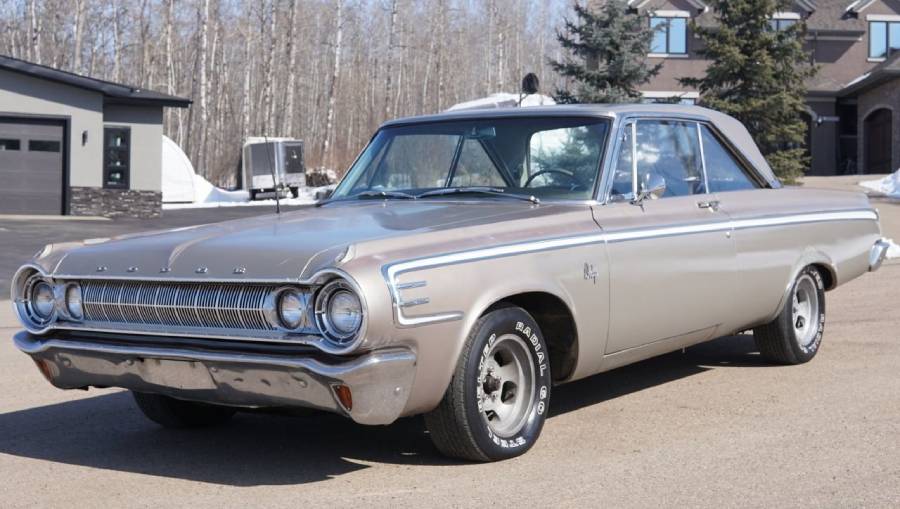
What Are the Dodge 440 Engine Specs?
The Dodge 440 is a 440-cubic-inch (7.2-liter) Chrysler RB-series V8 with a 4.32-inch bore and 3.75-inch stroke. Its basic displacement and cylinder dimensions remained consistent, while compression ratio, carburetion, horsepower, and torque varied according to model year and engine configuration.
The 440 belongs to Chrysler’s raised-block, or RB, big-block engine family. The RB architecture uses a taller deck than Chrysler’s B-series big-block design, providing the additional space required for the longer 3.75-inch crankshaft stroke. With eight cylinders, a 4.32-inch bore, and a 3.75-inch stroke, the engine displaces approximately 440 cubic inches, or 7.2 liters.
The main Dodge 440 engine specifications are summarized below. Horsepower, torque, and compression ratio are shown as variable specifications because Dodge 440 engines were produced in multiple configurations over several model years.
| Specification | Dodge 440 Engine |
|---|---|
| Engine family | Chrysler RB |
| Engine type | 90-degree V8 |
| Displacement | 440 cu in (7.2 L) |
| Bore | 4.32 in (109.7 mm) |
| Stroke | 3.75 in (95.3 mm) |
| Bore-to-stroke design | Oversquare |
| Valvetrain | OHV, 2 valves per cylinder |
| Block | Cast iron |
| Cylinder heads | Cast iron on factory production engines |
| Compression ratio | Varies by year and configuration |
| Horsepower | Varies by year and configuration |
| Torque | Varies by year and configuration |
| Fuel system | Carbureted |
| Factory carburetion | 4-barrel or three 2-barrel carburetors on major performance configurations |
| Firing order | 1-8-4-3-6-5-7-2 |
The 4.32-inch bore is 0.57 inch larger than the 3.75-inch stroke, making the 440 an oversquare engine. This cylinder geometry combines a large cylinder bore with the RB family’s longer stroke. The result is 55 cubic inches of displacement per cylinder across the engine’s eight cylinders.
Horsepower and compression ratio require more context than bore and stroke. A standard passenger-car 440, a 440 Magnum, and a 440 Six Pack can share the same displacement, bore, and stroke while producing different factory power ratings. Changes in compression ratio, carburetion, intake and exhaust systems, camshaft specifications, emissions equipment, and model-year calibration account for these differences.
Power ratings from different years also cannot always be compared directly. Earlier muscle-car-era engines were commonly advertised using SAE gross horsepower, while manufacturers transitioned to SAE net ratings in the early 1970s. SAE gross figures measured an engine under less restrictive test conditions, whereas SAE net ratings reflected an engine in a configuration closer to how it was installed in the vehicle. A lower published number therefore does not necessarily represent an equivalent percentage decrease in actual installed-engine output.
How Much Horsepower Does a Dodge 440 Engine Have?
A Dodge 440 can produce substantially different factory-rated horsepower depending on its model year and configuration, with the high-performance versions carrying the strongest published ratings during the muscle-car era. For this reason, there is no single horsepower figure that accurately represents every factory 440.
The engine’s horsepower changed because Chrysler used the 440 for different purposes. Standard versions were installed in passenger cars and other applications where high displacement and torque were important, while performance versions received specifications intended to increase power. The 440 Magnum and 440 Six Pack are two of the best-known examples of these higher-output configurations.
Another major factor is the method used to report horsepower. Comparing an earlier SAE gross rating directly with a later SAE net rating creates a misleading impression because the two figures were measured under different conditions. Model year, engine configuration, and rating standard should therefore accompany a Dodge 440 horsepower figure whenever possible.
How Much Horsepower Does a Standard Dodge 440 Make?
Standard Dodge 440 horsepower varies by year because Chrysler changed the engine’s compression, induction, emissions equipment, and calibration throughout its production life. Early versions were developed before emissions regulations and fuel-economy requirements became major design constraints, while later versions were increasingly configured for lower compression and emissions compliance.
This distinction matters when identifying an original engine. Two factory 440 engines can have identical 440-cubic-inch displacement and 4.32 × 3.75-inch bore-and-stroke dimensions but different power ratings. The model year, engine code, carburetor configuration, cylinder-head specification, and compression ratio provide more useful identification information than displacement alone.
The decline in advertised horsepower during the 1970s also reflects both mechanical changes and the transition from SAE gross to SAE net ratings. A later published rating should therefore be evaluated according to the rating system used in that model year rather than compared numerically with an earlier gross figure without context.
How Much Horsepower Does a 440 Magnum Make?
The 440 Magnum was the high-performance four-barrel version of Chrysler’s 440 and was rated higher than the standard passenger-car 440 in comparable muscle-car-era applications. Dodge used the Magnum designation for performance applications, while related Chrysler Corporation brands used different names for versions of the same RB-engine architecture.
The additional performance did not come from increased displacement. The 440 Magnum retained the 440’s 4.32-inch bore and 3.75-inch stroke. Its higher output came from the surrounding engine configuration, including performance-oriented induction, compression, camshaft, exhaust, and related components.
This distinction is important for restoration and engine identification. A block being a 440 does not by itself establish that the complete engine was originally a 440 Magnum. Factory identification information and configuration-specific components are required to determine whether an engine corresponds to an original high-performance application.
How Much Horsepower Does a 440 Six Pack Make?
The 440 Six Pack was one of the highest-performance factory versions of the 440 RB engine and used three two-barrel carburetors instead of the single four-barrel arrangement associated with the 440 Magnum. Plymouth marketed the related configuration as the 440 Six Barrel, while Dodge used the Six Pack name.
Its induction system provided six carburetor barrels through three two-barrel carburetors. The center carburetor handled normal low-demand operation, while the front and rear carburetors provided additional airflow as engine demand increased. This configuration distinguished the Six Pack from the conventional four-barrel 440 without changing the fundamental 440-cubic-inch displacement.
The Six Pack’s factory horsepower figure should still be tied to a specific model year rather than treated as a universal specification. Compression, calibration, and other factory details changed, and published ratings must be interpreted using the horsepower measurement standard applied at the time. For an accurate specification comparison, horsepower, torque, compression ratio, carburetion, and model year should be evaluated together.
How Much Torque Does a Dodge 440 Engine Produce?
The Dodge 440 produced up to 490 lb-ft of factory-rated torque in its high-performance muscle-car configurations, while torque output varied by model year and version. The engine’s 440-cubic-inch displacement allowed it to generate substantial torque without requiring high engine speeds, which made torque one of the defining performance characteristics of the Chrysler RB 440.
High-performance 440 versions from the late 1960s and early 1970s were designed to deliver strong torque across the lower and middle portions of the engine’s operating range. The 440 Magnum, also marketed under different performance names by other Chrysler Corporation divisions, was commonly associated with a factory gross torque rating around 480 lb-ft in peak muscle-car configurations. The 440 Six Pack/Six Barrel configuration increased the published peak figure to approximately 490 lb-ft in its best-known factory specification.
| 440 Version | Factory Horsepower | Factory Torque | Induction |
|---|---|---|---|
| Standard 440 | Varies by year | Varies by year | Primarily 4-barrel in relevant passenger-car applications |
| 440 Magnum | Up to 375 hp gross | Approx. 480 lb-ft gross | 4-barrel |
| 440 Six Pack/Six Barrel | 390 hp gross in its best-known factory rating | Approx. 490 lb-ft gross | Three 2-barrel carburetors |
These peak figures should not be applied to every engine carrying a 440 designation. Chrysler changed compression ratios, camshaft specifications, carburetion, exhaust systems, emissions equipment, and engine calibration during the 440’s production life. A late-production 440 therefore does not necessarily have the same torque specification as a high-performance 440 from the muscle-car period.
The 440’s torque characteristics are closely connected to its displacement and 3.75-inch stroke. Each of the eight cylinders displaces approximately 55 cubic inches, allowing a large volume of air and fuel to be processed during each operating cycle. This displacement helped the engine generate substantial crankshaft torque at moderate engine speeds rather than depending exclusively on high RPM for performance.
Torque specifications also need the same measurement context as horsepower specifications. Earlier published figures were associated with gross engine ratings, while later specifications were reported under net-rating practices. Model year and rating method therefore need to accompany horsepower and torque figures when comparing factory 440 engines.
What Are the Bore and Stroke of a Dodge 440 Engine?
The Dodge 440 has a 4.32-inch (109.7 mm) bore and a 3.75-inch (95.3 mm) stroke. These dimensions produce approximately 440 cubic inches of total displacement across eight cylinders and remained fundamental dimensions of the 440 RB engine regardless of whether the engine was configured as a standard 440, 440 Magnum, or 440 Six Pack.
The bore represents the diameter of each cylinder, while the stroke represents the distance traveled by the piston between top dead center and bottom dead center. Because the 440’s 4.32-inch bore is larger than its 3.75-inch stroke, the engine has an oversquare bore-to-stroke relationship. The bore is approximately 15.2% larger than the stroke.
Engine displacement can be derived from the cylinder bore, crankshaft stroke, and number of cylinders. Applying the 4.32-inch bore and 3.75-inch stroke across eight cylinders produces approximately 440 cubic inches of displacement. The resulting metric displacement is approximately 7.2 liters, which is why the engine is also described as a 7.2-liter V8.
The bore and stroke are especially useful specifications when comparing the 440 with other Chrysler big-block engines. Displacement alone identifies engine size, but bore and stroke explain how that displacement is created. Chrysler’s RB architecture accommodated a longer crankshaft stroke than the related low-deck B-series architecture, helping distinguish engines such as the 440 within the company’s big-block family.
The same bore and stroke across the major 440 performance variants also explain why additional horsepower did not require additional displacement. The 440 Magnum and 440 Six Pack retained the fundamental 4.32 × 3.75-inch dimensions. Their higher performance came from differences in components and calibration that affected airflow, compression, combustion, and exhaust flow rather than from increasing cylinder volume.
Is the Dodge 440 a Big-Block Engine?
Yes. The Dodge 440 is a Chrysler RB-series big-block V8. The letters “RB” refer to the raised-block version of Chrysler’s big-block architecture, which uses a taller deck than the related B-series engine family to accommodate a longer crankshaft stroke.
Chrysler’s B and RB engine families share fundamental architectural relationships, but their deck dimensions and displacement combinations differ. The raised-deck RB configuration provided additional vertical space for the longer-stroke rotating assembly. In the 440, this architecture combines a 3.75-inch stroke with a 4.32-inch cylinder bore to produce the engine’s 440-cubic-inch displacement.
The 440 was not the only engine based on Chrysler’s RB architecture. The engine family included other displacement combinations, but the 440 became its largest widely produced passenger-car displacement. This distinction is useful when identifying an engine because the term “Mopar big-block” describes a broader engine category rather than a specific displacement.
The 440 should also not be confused with Chrysler’s 426 Hemi simply because both are commonly described as Mopar big-block engines. They are distinct engine designs with different cylinder-head architecture, combustion characteristics, and performance configurations. The 440 uses the Chrysler RB wedge-engine architecture, while the 426 Hemi is defined by its hemispherical combustion-chamber cylinder-head design. That architectural difference makes the two engines separate central entities even when they appear in similar muscle-car applications.
What Compression Ratio Does a Dodge 440 Engine Have?
The Dodge 440 does not have one compression ratio because Chrysler changed compression specifications according to model year and engine configuration. High-performance versions from the muscle-car period used higher compression ratios than many later 440 engines, while compression was reduced as emissions requirements, fuel characteristics, and vehicle priorities changed during the 1970s.
Compression ratio describes the relationship between the cylinder’s total volume when the piston is at bottom dead center and its remaining combustion-chamber volume when the piston reaches top dead center. Increasing this ratio allows the air-fuel charge to be compressed into a smaller space before combustion. Within otherwise comparable engine configurations, compression ratio influences combustion efficiency, cylinder pressure, fuel-octane requirements, and potential power output.
Muscle-car-era 440 engines were available with compression ratios around the 10:1 range in major high-performance applications. The 440 Magnum and 440 Six Pack used high-compression configurations during their peak performance years. Later production engines moved toward lower compression ratios as Chrysler adapted its powertrains to changing emissions standards and fuel requirements.
| 440 Configuration/Period | Approximate Compression Ratio | Performance Context |
|---|---|---|
| Early standard 440 | Around 10:1, depending on year/application | Passenger-car configuration |
| Muscle-era 440 Magnum | Around 10:1 | High-performance 4-barrel |
| 440 Six Pack/Six Barrel | Around 10:1+ in key applications | High-performance 3×2-barrel |
| Later 1970s 440 | Lower than peak muscle-era versions | Emissions-era configuration |
Compression ratio should therefore be matched to an exact model year and engine code before it is used for restoration, tuning, or parts selection. A 440 block alone does not establish the original compression ratio because pistons, cylinder heads, combustion-chamber volume, head-gasket dimensions, and deck clearance contribute to the actual ratio of an assembled engine.
The decline in compression during the 1970s also helps explain why later factory 440s carried lower power ratings. Compression was only one factor; camshaft profiles, carburetor calibration, ignition settings, intake and exhaust systems, and emissions equipment also changed. The simultaneous switch from SAE gross to SAE net horsepower ratings makes a direct numerical comparison between early and later advertised horsepower figures even less reliable.
What Is the Difference Between the 440, 440 Magnum, and 440 Six Pack?
The main differences between the standard 440, 440 Magnum, and 440 Six Pack are their induction systems and performance-oriented engine specifications, not their displacement. All three are based on the 440-cubic-inch Chrysler RB architecture and retain the fundamental 4.32-inch bore and 3.75-inch stroke.
The standard 440 served a broader range of passenger-car and other vehicle applications. Its specifications changed according to year and intended use, so the standard designation should not be interpreted as one fixed engine package. Chrysler could alter compression, carburetion, camshaft calibration, exhaust equipment, and other components while retaining the same 440-cubic-inch engine identity.
The 440 Magnum represented a high-performance four-barrel configuration sold under Dodge branding. It combined the 440 RB short-block architecture with performance-oriented components designed to increase airflow and output. Other Chrysler Corporation divisions used different names for related high-performance 440 packages, so the term “440 Magnum” should be interpreted in the context of Dodge applications rather than applied automatically to every high-output 440.
The 440 Six Pack moved further toward a specialized performance configuration by using three two-barrel carburetors. This six-barrel induction arrangement increased available airflow while allowing the engine to operate primarily through the center carburetor under lighter demand. The front and rear carburetors supplemented airflow when greater engine output was required. Plymouth used the “Six Barrel” name for the corresponding configuration.
| Specification | Standard 440 | 440 Magnum | 440 Six Pack |
|---|---|---|---|
| Engine family | Chrysler RB | Chrysler RB | Chrysler RB |
| Displacement | 440 cu in | 440 cu in | 440 cu in |
| Bore | 4.32 in | 4.32 in | 4.32 in |
| Stroke | 3.75 in | 3.75 in | 3.75 in |
| Configuration | V8 | V8 | V8 |
| Primary character | General/passenger applications | High-performance | High-performance |
| Carburetion | Varies by application | 4-barrel | Three 2-barrel carburetors |
| Horsepower | Varies by year | Up to 375 hp gross in key muscle-era specifications | 390 hp gross in its best-known factory specification |
| Torque | Varies by year | Approx. 480 lb-ft gross in key specifications | Approx. 490 lb-ft gross in key specifications |
| Compression ratio | Varies by year | High-compression muscle-era configuration | High-compression muscle-era configuration |
The table demonstrates why “Dodge 440 engine specs” should not be reduced to one horsepower figure. Displacement, bore, and stroke identify the basic engine architecture, while induction, compression, camshaft, cylinder-head configuration, exhaust, and calibration determine the characteristics of a particular factory version.
The distinction is especially important when evaluating a classic vehicle advertised as having a “440 Magnum” or “440 Six Pack.” A replacement 440 block equipped with aftermarket induction parts is not necessarily an original factory performance engine. Engine identification numbers, casting information, assembly markings, model year, and vehicle documentation provide stronger evidence of the original configuration.
How Did Dodge 440 Engine Specs Change by Year?
Dodge 440 engine specs changed substantially from the engine’s 1960s introduction through its later 1970s applications, especially in compression ratio and advertised horsepower. The basic 440-cubic-inch displacement, 4.32-inch bore, and 3.75-inch stroke remained defining dimensions, while the components and calibration surrounding that architecture evolved.
The first major period was the late 1960s muscle-car era. Chrysler used the 440 as both a large-displacement passenger-car engine and the basis for high-performance packages. Higher compression, four-barrel carburetion, performance-oriented camshaft and exhaust specifications, and later the Six Pack/Six Barrel induction system allowed the 440 to reach its best-known factory gross horsepower and torque ratings.
The second major period began around the transition into the 1970s. Automakers faced changing emissions requirements and fuel considerations, leading to changes in compression ratios and engine calibration. Chrysler continued using the 440, but its specifications increasingly reflected a different operating environment from the peak muscle-car years.
A third change involved the method used to publish engine output. The industry transitioned from SAE gross ratings toward SAE net ratings in the early 1970s. Gross ratings measured engine output under test conditions that did not fully represent the accessories and restrictions present in an installed vehicle. Net ratings measured output in a configuration closer to actual vehicle installation. As a result, part of the apparent drop in published horsepower represents a change in measurement methodology rather than an equivalent mechanical loss.
| Production Period | Bore × Stroke | Main Specification Trend | Horsepower Context |
|---|---|---|---|
| 1966–late 1960s | 4.32 × 3.75 in | 440 introduced and performance applications expanded | SAE gross era |
| Late 1960s–1971 | 4.32 × 3.75 in | Peak muscle-era 440, Magnum and Six Pack configurations | High gross ratings |
| Early 1970s | 4.32 × 3.75 in | Compression and calibration changes | Transition toward SAE net |
| Mid-to-late 1970s | 4.32 × 3.75 in | Lower-compression, emissions-era applications | SAE net ratings |
The bore and stroke remaining constant while published output changed illustrates the distinction between engine displacement and engine specification. Displacement determines the swept volume of the cylinders, but it does not independently determine horsepower. Airflow, compression, combustion, ignition, exhaust flow, engine speed, and calibration determine how effectively that displacement produces power.
This model-year context is also necessary when buying parts or evaluating a rebuilt 440. A component appropriate for a late-1960s high-compression performance build may not match the pistons, cylinder heads, fuel requirements, or intended operating conditions of a later low-compression engine. Identifying the block and original application before using a published specification prevents specifications from different 440 versions from being combined incorrectly.
What Vehicles Came With the Dodge 440 Engine?
The Dodge 440 was installed in multiple Dodge passenger cars during the muscle-car era, including performance-oriented versions of the Charger, Coronet, and Challenger. Chrysler Corporation also used versions of the 440 across Plymouth and Chrysler vehicles, making the engine a broader Mopar powerplant rather than an engine exclusive to the Dodge brand.
The Dodge Charger is one of the vehicles most closely associated with the 440. Depending on model year and trim, buyers could find 440-powered Chargers equipped with high-performance configurations such as the 440 Magnum. The combination provided substantial torque for a relatively heavy intermediate-size performance car without requiring the more specialized 426 Hemi.
The Dodge Coronet also received the 440 in selected configurations. Like the Charger, exact availability depended on model year, body style, trim, and performance package. A vehicle model appearing on a list of 440 applications therefore does not mean every version of that model was available with the same 440 specification.
The Dodge Challenger joined the 440 application list during the E-body muscle-car period. High-performance Challenger configurations could be equipped with 440-based powertrains, including the 440 Six Pack. This application is especially important when distinguishing the standard 440 from the specialized high-performance variants because engine package and model year determine the relevant horsepower, torque, carburetion, and compression specifications.
Chrysler Corporation also installed the 440 in vehicles sold under its Plymouth and Chrysler divisions. These applications sometimes used different marketing names for mechanically related engines. Plymouth, for example, used “Six Barrel” terminology for the three-two-barrel-carburetor performance configuration that Dodge marketed as the “Six Pack.”
For restoration or vehicle identification, the model name alone is insufficient to establish the original engine specification. Model year, VIN information where applicable, engine identification data, factory documentation, and vehicle-specific equipment codes provide a more reliable basis for determining whether a particular car originally received a 440 and which version was installed.
What Is the Firing Order of a Dodge 440 Engine?
The Dodge 440 firing order is 1-8-4-3-6-5-7-2. Correct firing order is required for the spark plugs to ignite each cylinder in the sequence intended by the engine design.
Cylinder numbering and distributor-terminal position must also be identified correctly when installing spark-plug wires. Knowing the sequence alone does not prevent an ignition problem if the wires are connected to incorrectly identified cylinders or if the distributor position has been changed during previous engine work.
The firing order should therefore be used together with the correct cylinder-numbering layout and distributor rotation when servicing the ignition system. This is especially relevant after distributor removal, engine rebuilding, spark-plug-wire replacement, or work on an older 440 whose ignition components may have been modified.
An incorrect plug-wire arrangement can cause misfiring, rough running, backfiring, poor power, or prevent the engine from starting. When troubleshooting these symptoms after ignition work, verifying the 1-8-4-3-6-5-7-2 sequence is one of the first checks that can eliminate an installation error.
How Can You Identify a Dodge 440 Engine?
A Dodge 440 is best identified by combining block casting information, stamped engine data, casting dates, and the engine’s physical RB-series characteristics. Visual appearance or the presence of a 440-style intake system alone is not sufficient to prove an engine’s original displacement or factory performance configuration.
Block casting information provides one of the starting points for identification. Casting numbers can identify the block family and help determine whether the block corresponds to a 440 application. Casting dates add chronological context by indicating when the component was produced, which can then be compared with the vehicle’s production period and other engine markings.
Stamped information provides another identification layer. Factory stampings can contain assembly-related data that helps establish when and for which specification an engine was assembled. These markings are particularly valuable when evaluating whether a classic Dodge retains a period-correct or potentially original engine rather than a later replacement block.
Physical architecture also helps distinguish the 440 from unrelated engine families. The 440 belongs to Chrysler’s raised-deck RB big-block family, so its external dimensions and component relationships differ from Chrysler small-block engines. However, physical appearance becomes less definitive when distinguishing the 440 from closely related RB engines because they share substantial architectural similarities.
Identifying a 440 block and identifying an original 440 Magnum or 440 Six Pack are also two different tasks. A 440 block does not automatically make an engine a factory Magnum or Six Pack. Performance packages depended on a combination of factory components, assembly specifications, engine codes, and vehicle applications. A standard 440 can also be modified with performance intake, carburetor, cylinder-head, camshaft, and exhaust components that visually resemble a higher-performance configuration.
For a restoration, identification should therefore proceed from permanent or factory-applied evidence toward removable components. Block casting and stamped information should be examined first, followed by casting dates and vehicle documentation. Intake manifolds, carburetors, exhaust components, and other replaceable parts can then be evaluated to determine whether they correspond to the expected factory configuration.
How Much Does a Dodge 440 Engine Weigh?
A complete Chrysler 440 is commonly described as weighing roughly 650–700 pounds, but the exact figure depends on which accessories and components are included in the measurement. A weight specification should therefore identify the engine configuration rather than presenting one number as an absolute value for every 440.
The factory 440 uses substantial cast-iron components, including the engine block and production cylinder heads. These materials contribute to the engine’s weight but also reflect the construction methods used for large-displacement American V8 engines of its period. Intake, exhaust, ignition, cooling, and accessory components add further mass to a fully assembled engine.
The terms “bare block,” “short block,” “long block,” and “complete engine” describe different levels of assembly and should not be treated as equivalent weight measurements. A bare block excludes most internal and external components. A short block generally adds the rotating assembly, while a long block adds cylinder heads and major valvetrain components. A dressed engine can include the intake, carburetor, exhaust manifolds, water pump, ignition components, pulleys, and other accessories.
Aftermarket components can also change the total weight of a rebuilt 440. Replacing factory cast-iron parts with lighter components, such as aluminum cylinder heads or an aluminum intake manifold, reduces engine mass without changing the fundamental 440-cubic-inch displacement. For this reason, the weight of a modified 440 should be calculated from its actual component configuration rather than assumed from a factory-engine estimate.
Engine weight matters when planning removal, installation, transportation, and vehicle modifications. An engine hoist, stand, lifting equipment, and related hardware should be rated with sufficient capacity above the expected assembled-engine weight. For technical comparison purposes, the most useful weight figure is one that states exactly which components were present when the engine was measured.
Is the Dodge 440 a Good Engine?
Yes. The Dodge 440 is a strong big-block engine for classic Mopar applications because it combines 440 cubic inches of displacement with substantial torque, straightforward OHV architecture, and multiple factory performance configurations. Its strongest attributes are not based on displacement alone; the 440’s value comes from the combination of its RB architecture, 4.32-inch bore, 3.75-inch stroke, and the performance packages Chrysler developed around the basic engine.
Torque is one of the 440’s defining characteristics. High-performance muscle-car configurations reached factory gross ratings of approximately 480 lb-ft for the 440 Magnum and about 490 lb-ft for the 440 Six Pack in key applications. This output allowed the engine to deliver strong acceleration without depending exclusively on high engine speeds. For relatively heavy Dodge muscle cars such as the Charger, that torque characteristic was particularly useful.
The 440 also provided Chrysler with one basic displacement that could serve several performance levels. Standard versions could be configured for regular passenger-car use, while the 440 Magnum combined the same 440-cubic-inch displacement with a performance-oriented four-barrel configuration. The 440 Six Pack used three two-barrel carburetors and became one of the most performance-focused factory versions. The fundamental 4.32-inch bore and 3.75-inch stroke remained the same while induction, compression, camshaft, exhaust, and calibration changed the engine’s output.
The engine’s conventional pushrod OHV architecture also makes the 440 mechanically different from more specialized Mopar performance engines such as the 426 Hemi. The 440 uses Chrysler’s RB wedge-engine design rather than hemispherical combustion chambers. For an owner evaluating a classic Mopar, this distinction matters because the two engines have different cylinder-head architecture, components, identification characteristics, and factory applications.
A 440’s condition is more important than its historical reputation when evaluating an individual engine today. These engines are decades old, and an original block may have undergone rebuilding, machining, component replacement, or performance modification. Compression, oil pressure, cooling-system condition, cylinder wear, valvetrain condition, ignition operation, carburetor condition, and previous machine work provide more useful evidence about a specific engine than the 440 designation by itself.
Originality also affects how a 440 should be evaluated. A replacement 440 equipped with an aftermarket intake and carburetor can be a capable engine without being an original 440 Magnum or Six Pack. Factory casting information, stamped identification data, component dates, vehicle documentation, and application-specific parts are necessary when originality or a numbers-correct restoration is the objective.
The Dodge 440 is therefore best understood as an engine family specification rather than a single fixed performance package. Its 440-cubic-inch displacement, 4.32-inch bore, and 3.75-inch stroke establish the basic architecture, while model year and configuration determine compression ratio, carburetion, horsepower, and torque. Identifying those variables is the key to comparing 440 engines accurately, selecting compatible parts, and determining whether an engine matches its claimed factory specification.