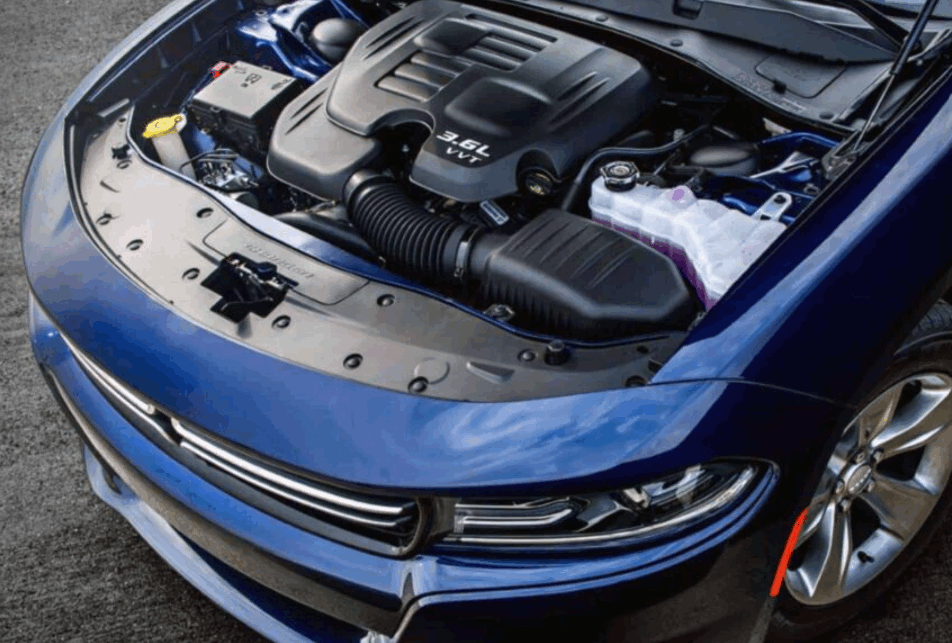
The Dodge 3.6L Pentastar is one of the most popular V6 engines from Chrysler. It powers many Dodge, Jeep, Ram, and Chrysler models. Millions of drivers use this engine every day. As a result, many owners and technicians search for its firing order during routine maintenance or engine repairs.
The Dodge 3.6 firing order controls the sequence in which each cylinder fires. This sequence keeps the engine balanced and helps it produce smooth power. It also improves fuel efficiency and reduces engine vibration. When a cylinder misfires, the firing order helps you identify the affected ignition coil, spark plug, or fuel injector much faster.
Many repair jobs require accurate cylinder identification. For example, you need the correct cylinder numbering before replacing spark plugs or ignition coils. You also need it when diagnosing trouble codes such as P0301 through P0306. A simple mistake can lead to incorrect repairs and wasted time.
This guide explains the Dodge 3.6 firing order step by step. It also covers the cylinder numbering, engine diagram, Bank 1 and Bank 2 locations, and ignition sequence. By the end of this article, you will understand how the ignition system works and how to diagnose common engine problems with confidence.
What Is the Dodge 3.6 Firing Order?
The Dodge 3.6 firing order is 1-2-3-4-5-6. This sequence tells the engine control system when each cylinder completes the combustion process. The 3.6L Pentastar V6 uses this order to maintain smooth power delivery and balanced engine operation.
The firing order does not describe the physical cylinder location. Instead, it describes the sequence that the spark plugs ignite the air and fuel mixture inside the cylinders. The Powertrain Control Module (PCM) controls ignition timing and sends signals to each ignition coil based on this programmed sequence.
The Dodge 3.6L Pentastar engine uses six cylinders arranged in two banks. Each cylinder fires at a specific point during the four stroke combustion cycle. The correct sequence helps the crankshaft receive consistent power from each combustion event. This design reduces vibration and improves engine durability.
A wrong firing order can create serious engine problems. The engine may experience rough idle, poor acceleration, increased fuel consumption, and misfire codes. For example, connecting ignition coils to the wrong cylinders can trigger OBD II codes such as P0301, P0302, or P0306 because the PCM detects irregular combustion.
The firing order also helps technicians during engine diagnosis. When a mechanic identifies a specific misfire cylinder, they can compare the cylinder number with the firing sequence. This process helps locate possible problems with spark plugs, ignition coils, fuel injectors, or compression.
The Dodge 3.6 firing order remains an important reference for anyone servicing the Pentastar V6 engine. Understanding this sequence provides the foundation for correct cylinder identification and accurate ignition system repairs.
How Are the Cylinders Numbered on the Dodge 3.6 Pentastar?
The Dodge 3.6 Pentastar cylinder numbering follows a specific layout that helps technicians identify each combustion chamber correctly. The engine uses a V6 configuration with two cylinder banks. One bank contains cylinders 1, 3, and 5, while the other bank contains cylinders 2, 4, and 6.
The cylinder numbering starts from the front of the engine, not from the driver or passenger side of the vehicle. On the Dodge 3.6L Pentastar, Bank 1 contains the odd numbered cylinders. These cylinders include cylinder 1, cylinder 3, and cylinder 5. Bank 2 contains the even numbered cylinders, which include cylinder 2, cylinder 4, and cylinder 6.
Understanding Bank 1 and Bank 2 locations is important during engine diagnostics. The PCM uses cylinder identification to detect misfires and store specific trouble codes. For example, a P0301 code indicates a misfire on cylinder 1, while a P0305 code indicates a misfire on cylinder 5.
The cylinder layout also helps during ignition system repairs. When replacing spark plugs or ignition coils, technicians must match each component with the correct cylinder position. Installing a coil or connector on the wrong cylinder can create an ignition problem even when the parts work correctly.
The Dodge 3.6 Pentastar engine places the cylinders in a logical pattern to support efficient service procedures. However, different vehicle platforms such as the Dodge Charger, Jeep Grand Cherokee, and Ram 1500 may have different engine bay orientations. Always identify the engine front and cylinder bank location before starting repairs.
Correct cylinder numbering provides the foundation for accurate firing order diagnosis. Once you understand the cylinder layout, you can connect the firing sequence with ignition components and troubleshoot engine problems more efficiently.
Why Does the Correct Firing Order Matter?
The correct firing order matters because it controls how the Dodge 3.6L Pentastar engine produces power during the combustion cycle. Each cylinder must ignite at the correct time to maintain engine balance, smooth operation, and efficient fuel use. The firing sequence allows the crankshaft to receive power evenly from all six cylinders.
The combustion cycle inside the engine follows four main steps: intake, compression, power, and exhaust. During the power stroke, the spark plug ignites the air and fuel mixture inside the cylinder. The correct firing order ensures that each cylinder completes this process at the right moment without interfering with other cylinders.
A balanced firing order reduces unnecessary vibration and mechanical stress. When cylinders fire in the correct sequence, the crankshaft rotates smoothly and the engine maintains stable performance. This design also helps protect internal components such as engine bearings, connecting rods, and the crankshaft.
The ignition system depends on accurate cylinder timing. The PCM controls each ignition coil according to the programmed firing sequence. When the ignition system follows the correct order, the engine receives consistent combustion events. As a result, the vehicle delivers better throttle response, stable idle quality, and reliable performance.
An incorrect firing order creates several engine problems. The engine may shake during idle, lose power during acceleration, or produce a check engine light. In severe cases, incorrect ignition timing can increase fuel consumption and damage components such as catalytic converters because unburned fuel enters the exhaust system.
For Dodge 3.6 Pentastar owners, understanding the firing order provides a practical advantage during maintenance and repairs. It allows technicians to connect cylinder numbers with ignition components and quickly identify possible causes of engine performance problems.
What Problems Can an Incorrect Firing Order Cause?
An incorrect firing order can cause engine misfires, unstable performance, and poor combustion in the Dodge 3.6L Pentastar engine. The firing sequence controls when each cylinder receives a spark. When the sequence does not match the engine design, the combustion process becomes irregular.
The first common problem is an engine misfire. A misfire happens when one or more cylinders fail to burn the air and fuel mixture correctly. The PCM detects this problem and stores diagnostic trouble codes such as P0300 for random misfires or P0301 through P0306 for specific cylinder misfires.
A wrong firing order can also create rough engine operation. The vehicle may shake during idle, hesitate during acceleration, or lose power under load. These symptoms occur because the crankshaft does not receive consistent force from each combustion event. As a result, the engine cannot maintain normal power output.
Another issue involves fuel efficiency and emissions. When the ignition sequence is incorrect, some fuel may remain unburned inside the cylinder. This fuel can enter the exhaust system and increase emissions. Over time, excessive unburned fuel can damage the catalytic converter because the component must handle higher temperatures.
Incorrect firing order can also make diagnosis more difficult. A technician may replace working ignition coils or spark plugs if they do not check cylinder numbering first. For this reason, accurate identification of cylinder positions, Bank 1, Bank 2, and the firing sequence remains essential during troubleshooting.
The Dodge 3.6 Pentastar ignition system depends on precise timing between the PCM, ignition coils, spark plugs, and cylinders. When these components follow the correct firing order, the engine operates smoothly. When the sequence changes, even a reliable engine can develop noticeable performance problems.
How Do You Identify Cylinder Misfires on a Dodge 3.6?
You can identify cylinder misfires on a Dodge 3.6L Pentastar by checking diagnostic trouble codes, inspecting ignition components, and testing related engine systems. A misfire occurs when a cylinder fails to complete the combustion process correctly. The PCM monitors engine speed changes and stores error codes when it detects abnormal combustion.
The first step involves scanning the vehicle with an OBD II diagnostic tool. The most common misfire codes include P0300, P0301, P0302, P0303, P0304, P0305, and P0306. Each code provides information about the affected cylinder. For example, P0304 indicates a misfire on cylinder 4, while P0306 identifies a problem with cylinder 6.
After identifying the cylinder, inspect the ignition coil and spark plug. A damaged ignition coil can prevent the spark plug from creating a strong ignition spark. A worn or damaged spark plug can also reduce combustion efficiency. Swapping the ignition coil with another cylinder can help confirm whether the coil causes the problem.
Fuel delivery problems can also create cylinder misfires. A faulty fuel injector may deliver too much or too little fuel to the combustion chamber. In addition, low compression from internal engine problems can prevent a cylinder from producing normal power.
The cylinder numbering system makes the diagnostic process faster. Technicians can connect the trouble code with the correct cylinder location, ignition coil, and spark plug. This approach prevents unnecessary part replacement and helps locate the actual cause of the problem.
A proper misfire diagnosis requires more than reading an error code. The Dodge 3.6 engine uses multiple systems that work together, including the PCM, ignition coils, spark plugs, fuel injectors, and mechanical components. Checking each system in order provides a more accurate repair solution.
Which Dodge, Jeep and Chrysler Vehicles Use the 3.6 Pentastar Engine?
The 3.6L Pentastar V6 engine powers many Dodge, Jeep, Chrysler, and Ram vehicles. Chrysler introduced this engine family to provide strong performance, improved fuel efficiency, and reliable operation across different vehicle platforms. Because many models use the same engine design, the Dodge 3.6 firing order applies to several vehicles with minor differences in engine packaging.
Dodge vehicles that use the 3.6L Pentastar include the Dodge Charger, Dodge Challenger, Dodge Durango, and other models from the brand’s lineup. These vehicles use the V6 engine for daily driving, highway performance, and balanced fuel economy. The same firing order and cylinder numbering principles apply when technicians diagnose ignition problems.
Jeep models also use the 3.6L Pentastar engine in vehicles such as the Jeep Grand Cherokee and Jeep Wrangler. These applications require accurate cylinder identification because the engine compartment layout can differ from Dodge passenger vehicles. However, the internal ignition sequence remains the same because the engine design does not change.
Chrysler and Ram vehicles also use this engine platform. The Chrysler 300 and Ram 1500 are examples of vehicles that feature the 3.6L Pentastar V6. These vehicles benefit from the same ignition technology, including electronically controlled ignition coils and PCM-managed timing.
Although different vehicles share the same engine, technicians should always confirm the exact model year before performing repairs. Manufacturers may update engine components, wiring layouts, or control systems over time. Checking the vehicle identification number (VIN) and factory service information helps ensure accurate repairs.
Understanding which vehicles use the 3.6L Pentastar engine helps owners find the correct maintenance information. It also allows technicians to apply the correct firing order, cylinder numbering, and diagnostic procedures across multiple Chrysler engine applications.
What Should You Know Before Replacing Spark Plugs or Ignition Coils?
Replacing spark plugs or ignition coils on a Dodge 3.6L Pentastar requires accurate cylinder identification and proper installation procedures. These components directly control the ignition process. A small mistake during replacement can create misfires, performance problems, or unnecessary repair costs.
Before replacing any ignition component, identify the correct cylinder location. The Dodge 3.6 engine uses six cylinders arranged across two banks. Each ignition coil connects to a specific cylinder. Installing a coil connector on the wrong cylinder can cause the PCM to detect abnormal combustion and trigger misfire codes.
Spark plug condition also affects engine performance. Worn spark plugs can create weak ignition, rough idle, hesitation, and reduced fuel economy. Carbon buildup, damaged electrodes, or incorrect spark plug gaps can prevent the air and fuel mixture from burning efficiently.
Ignition coils require careful inspection before replacement. A failed coil can cause a single cylinder misfire, but other issues such as damaged wiring, poor electrical connections, or fuel delivery problems can create similar symptoms. Testing the suspected component before replacement helps avoid replacing parts that still work correctly.
Proper installation matters after selecting the correct parts. Technicians should follow the manufacturer’s torque specifications and use the recommended spark plugs for the specific engine model year. Over tightening or under tightening spark plugs can damage the cylinder head or create sealing problems.
The Dodge 3.6 Pentastar ignition system works as a complete unit. Spark plugs, ignition coils, cylinder numbering, and the PCM must operate together for reliable engine performance. Understanding the firing order and cylinder layout makes ignition repairs faster, safer, and more accurate.
Summary of Dodge 3.6 Firing Order
The Dodge 3.6 firing order is an important reference for understanding how the 3.6L Pentastar V6 engine creates power and maintains smooth operation. The correct firing sequence allows each cylinder to ignite at the proper moment during the combustion cycle. This process helps the engine deliver stable performance, reduce vibration, and maintain efficient fuel use.
Cylinder numbering plays an important role when diagnosing engine problems. The Dodge 3.6 engine uses two cylinder banks, with Bank 1 containing the odd numbered cylinders and Bank 2 containing the even numbered cylinders. This layout helps technicians connect misfire codes with the correct ignition components.
The firing order also provides valuable information during maintenance and repairs. When the engine develops problems such as rough idle, hesitation, or check engine light warnings, technicians can use cylinder identification and diagnostic codes to locate possible failures. Checking spark plugs, ignition coils, fuel injectors, and compression helps confirm the actual cause.
Understanding the relationship between the firing order, cylinder layout, and ignition system makes Dodge 3.6 repairs more accurate. Whether you own a Dodge Charger, Jeep Grand Cherokee, Chrysler 300, or Ram 1500, the same basic principles apply when servicing the Pentastar V6 engine.
A correct diagnosis always starts with accurate information. Knowing the Dodge 3.6 firing order and cylinder numbering gives vehicle owners and technicians a reliable foundation for troubleshooting ignition problems and maintaining long term engine performance.