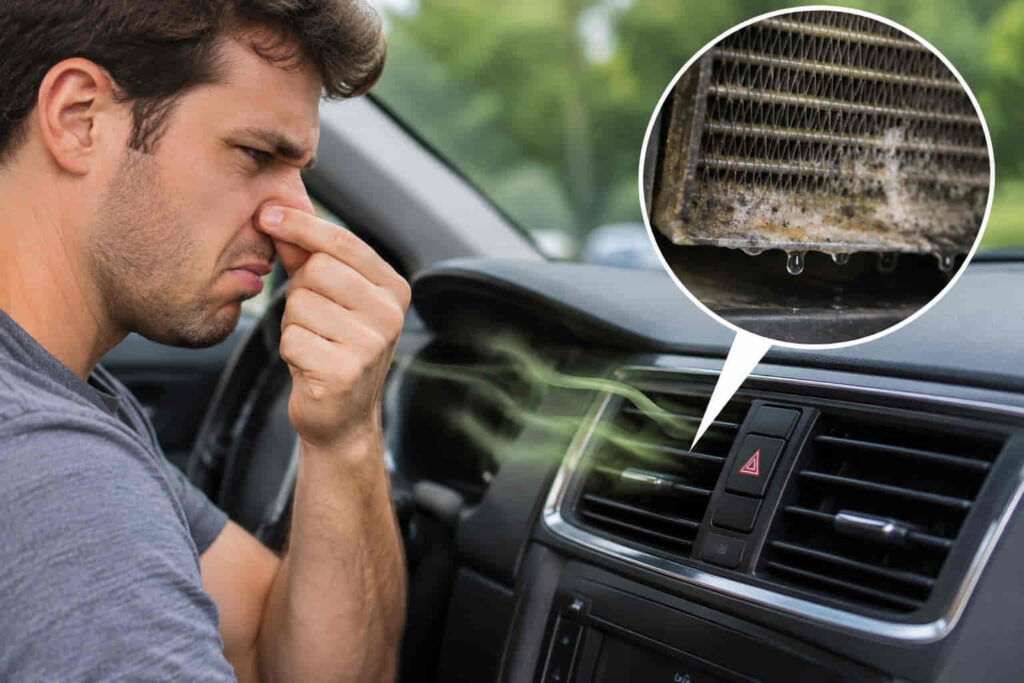
A car AC that smells bad when first turned on is commonly caused by moisture, microbial growth, or accumulated debris inside the air conditioning system. The AC evaporator is a frequent source of musty or sour odors because condensation collects on its cooling surfaces during operation. When moisture remains inside the HVAC housing, bacteria and fungi can grow on damp surfaces containing dust and organic material. The next time the air conditioner starts, airflow carries odor-producing compounds through the vents and into the passenger cabin.
The unpleasant smell may disappear after a few seconds or minutes as fresh airflow dilutes the concentrated odors released during startup. However, the disappearance of the smell does not mean the underlying contamination has been removed. A dirty cabin air filter, blocked condensate drain, or debris trapped near the evaporator can contribute to recurring odors. Different smells also indicate different potential problems. Musty and vinegar-like odors commonly suggest moisture-related contamination, while burning, sweet, or fuel-like smells may indicate electrical problems, coolant leaks, or other mechanical faults.
Eliminating car AC odors requires identifying the source rather than masking the smell with air fresheners. This guide explains why car air conditioners develop unpleasant odors at startup, how to distinguish common smell types, which cleaning methods address the underlying causes, and how to prevent odors from returning.
Why Does My Car AC Smell Bad When I First Turn It On?
A car AC smells bad when first turned on primarily because moisture, microbial growth, and accumulated organic debris produce unpleasant odors inside the air conditioning system. The AC evaporator is a common source of these smells because its cold surfaces collect condensation whenever warm, humid air passes through the cooling system. When the air conditioner stops operating, residual moisture can remain on the evaporator fins and surrounding HVAC housing. This damp environment allows bacteria and fungi to grow on surfaces contaminated with dust, pollen, and other organic particles.
The evaporator plays a central role in this process because it removes both heat and moisture from the air entering the passenger cabin. Refrigerant flowing through the evaporator absorbs heat, causing the evaporator surface temperature to fall below the dew point of the incoming air. Water vapor then condenses into liquid droplets, which normally collect in a drain pan and exit through the condensate drain tube beneath the vehicle. However, some moisture remains on the evaporator fins after the AC compressor shuts off. When this moisture combines with accumulated debris, it creates conditions that support microbial growth and the production of odor-causing compounds.
A contaminated cabin air filter can also contribute to unpleasant smells during AC startup. The filter captures airborne particles such as dust, pollen, leaves, and road debris before they enter the HVAC system. Over time, trapped material can retain moisture and develop unpleasant odors, particularly in humid climates or vehicles frequently parked outdoors. When the blower motor starts, air passes through the contaminated filter and carries these odors into the cabin. A dirty filter may also restrict airflow, reducing ventilation efficiency and contributing to moisture retention within the HVAC system.
The source of a startup odor is not always the evaporator or cabin air filter. Leaves trapped near the exterior air intake, debris inside the blower housing, or a partially blocked condensate drain can produce similar symptoms. A restricted drain allows water to accumulate inside the HVAC housing instead of flowing out beneath the vehicle, increasing the time internal surfaces remain damp. Identifying the actual odor source is essential because replacing the cabin air filter will not eliminate contamination already present on the evaporator, and cleaning the evaporator will not resolve an obstructed condensate drain.
Why Does My Car AC Smell Bad for Only a Few Minutes?
A car AC smells bad for only a few minutes because the first burst of airflow carries accumulated odor-producing compounds from damp HVAC components into the passenger cabin. When the vehicle remains parked with the ventilation system switched off, air inside the HVAC housing becomes relatively stagnant. Odorous compounds released by microbial contamination or decomposing organic material can accumulate in this enclosed space. Once the blower motor starts, the concentrated air moves through the ducts and vents, making the unpleasant smell particularly noticeable during the initial seconds of operation.
As the ventilation system continues running, the concentration of odor-producing compounds decreases because incoming air replaces and dilutes the air initially trapped inside the HVAC housing. Depending on the selected ventilation mode, the system introduces outside air or recirculates cabin air through the cooling components. Continued airflow disperses the initial odor concentration, which explains why a strong musty or sour smell may become less noticeable after one to five minutes. This time range describes a possible odor pattern rather than a fixed diagnostic threshold, since odor duration depends on contamination levels, airflow rate, humidity, and HVAC design.
The evaporator’s changing moisture conditions can also influence how long the smell remains noticeable. When the AC begins operating, condensation forms on the evaporator as humid air contacts its cold surfaces. This moisture can interact with existing microbial deposits and accumulated debris, affecting the release of odor-producing compounds. Although continuous airflow may reduce the smell perceived by occupants, the contaminated material can remain attached to the evaporator fins or surrounding surfaces. Consequently, the same unpleasant odor may return after the vehicle has been parked and the air conditioning system is restarted.
A bad smell that disappears after several minutes does not mean the car AC has cleaned itself or that the underlying problem has been resolved. Repeated startup odors indicate that an odor source remains somewhere in the ventilation system or its incoming airflow. If the smell returns every morning, after extended parking, or during humid weather, the evaporator, cabin air filter, condensate drain, and air intake should be inspected. Removing contaminated material and correcting moisture drainage problems addresses the cause more effectively than allowing the blower to run until the odor becomes less noticeable.
Read more: what is a blue title in texas
What Causes a Musty Smell From Car AC Vents?
A musty smell from car AC vents is commonly caused by microbial growth on damp evaporator surfaces, moisture-contaminated cabin air filters, or organic debris trapped inside the HVAC system. The odor often resembles mildew, wet towels, or damp clothing because bacteria and fungi can release volatile compounds as they grow on moisture-exposed surfaces. The smell becomes particularly noticeable when the air conditioner first starts because the blower pushes air across contaminated components and carries accumulated odors into the passenger cabin.
The AC evaporator is a frequent source of musty odors because it repeatedly experiences condensation during normal cooling operation. As warm cabin air passes over the evaporator’s cold metal fins, water vapor condenses into droplets that collect on the cooling surfaces. Most of this water drains through the condensate tube, but residual moisture can remain between the closely spaced fins after the system shuts down. Dust, pollen, and other organic particles deposited on these surfaces provide material that supports microbial growth. Over time, the combination of moisture and accumulated debris can create a persistent odor source that becomes noticeable whenever airflow resumes.
Environmental conditions influence how quickly musty odors develop inside a vehicle’s ventilation system. High humidity increases the amount of condensation produced during cooling, while frequent short trips can leave limited time for wet HVAC components to dry between operating cycles. Vehicles parked outdoors may also collect leaves, pollen, and other organic debris near the fresh-air intake beneath the windshield. If this material enters the ventilation housing or remains damp near the intake, it can contribute to unpleasant odors even when the evaporator itself is relatively clean. A clogged condensate drain can worsen the problem by allowing water to remain inside the HVAC housing longer than intended.
A musty AC smell suggests moisture-related contamination, but the odor alone does not confirm the presence of mold. Bacteria, decomposing leaves, damp filter material, and other organic residues can produce similar smells. A technician can inspect the cabin air filter, evaporator housing, condensate drain, and accessible ventilation components to identify visible contamination or retained moisture. Replacing a contaminated cabin air filter may eliminate the odor when the filter is the primary source, while persistent evaporator contamination generally requires cleaning the affected surfaces. Correcting drainage problems is equally important because moisture accumulation can allow odors to return after cleaning.
Why Does My Car AC Smell Like Vinegar When It Starts?
A car AC that smells like vinegar when it starts may have moisture-related microbial contamination inside the evaporator housing, cabin air filter, or ventilation ducts. The sharp, sour odor can result from volatile compounds released by microorganisms or decomposing organic material on damp HVAC surfaces. Unlike a musty smell, which resembles mildew or wet fabric, a vinegar-like odor has a more acidic character. However, the smell alone cannot identify a particular chemical compound, bacterial species, or mechanical defect without further inspection.
Microbial activity is one possible explanation for sour odors in the air conditioning system. Bacteria and fungi can metabolize organic residues deposited on the evaporator fins, including dust, pollen, and other airborne particles. Some microorganisms produce volatile organic compounds during these processes, and certain compounds can have sour or acidic odor characteristics. When the vehicle remains parked, these compounds may accumulate within the enclosed HVAC housing. The first airflow after startup then carries the concentrated odor through the vents, making the vinegar-like smell more noticeable before ventilation dilutes it.
A damp cabin air filter or trapped organic debris can produce a similar odor without extensive evaporator contamination. For example, leaves that enter the fresh-air intake can retain moisture and gradually decompose, releasing unpleasant compounds into the ventilation airflow. A filter exposed to repeated condensation or water intrusion can also develop sour odors as trapped organic material deteriorates. These conditions are more likely when the HVAC housing remains wet because of poor drainage, water intrusion, or accumulated debris. The presence of a vinegar-like smell therefore indicates a need to inspect multiple components rather than assuming the evaporator is the only possible source.
Eliminating a vinegar smell from car AC requires removing the contaminated material and correcting the moisture conditions that allow the odor to develop. The appropriate repair may involve replacing a damp cabin air filter, removing debris from the air intake, cleaning the evaporator with an automotive HVAC-approved product, or clearing a restricted condensate drain. Air fresheners and fragrance sprays may temporarily mask the sour smell, but they do not remove microbial deposits or accumulated organic material. If the odor persists after basic cleaning, a professional HVAC inspection can help identify contamination in areas that are difficult to access without disassembling ventilation components.
Can a Dirty Cabin Air Filter Make Your Car AC Smell Bad?
Yes, a dirty cabin air filter can make your car AC smell bad by trapping dust, pollen, moisture, and organic debris that produce unpleasant odors inside the ventilation system. The cabin air filter removes airborne contaminants before they enter the passenger compartment, but accumulated particles can become an odor source when exposed to moisture. A contaminated filter may release musty, sour, or stale smells when the blower motor starts pushing air through the HVAC system, particularly after the vehicle has remained parked for several hours.
Most cabin air filters contain pleated filtration media designed to capture particles entering through the vehicle’s fresh-air intake. As the filter collects road dust, pollen, leaves, and other airborne debris, its available airflow passages gradually become restricted. If the collected material becomes damp because of high humidity, water intrusion, or condensation near the filter housing, it can support microbial growth and the decomposition of organic matter. Air passing through the contaminated filter can then carry odor-producing compounds into the cabin. A heavily restricted filter may also reduce airflow from the vents, although weak airflow alone does not establish that the filter is responsible for the smell.
The location of the cabin air filter influences how contamination develops. In many passenger vehicles, the filter sits behind the glove compartment or beneath the dashboard, between the fresh-air intake and the HVAC blower or evaporator assembly. Leaves and other debris entering through the cowl intake can collect around the filter housing, especially when exterior intake screens are damaged or obstructed. Water entering through deteriorated seals or blocked cowl drains can also wet the filter material. For example, a vehicle that develops a musty smell after heavy rainfall may have a damp cabin filter or water intrusion near the ventilation intake rather than contamination originating exclusively from the evaporator.
Replacing a dirty cabin air filter can eliminate AC odors when the filter is the primary source, but it will not remove contamination already present on the evaporator or inside the ventilation ducts. Owners should inspect the filter for accumulated debris, discoloration, moisture, and unusual odors before replacing it with a component that meets the vehicle manufacturer’s specifications. Replacement intervals vary by vehicle and operating conditions, so the maintenance schedule in the owner’s manual provides the appropriate starting point. If the unpleasant smell continues after installing a clean filter, the evaporator, condensate drain, and surrounding HVAC housing should be inspected for additional contamination or retained moisture.
How Can You Identify the Cause of a Bad Car AC Smell?
You can identify the likely cause of a bad car AC smell by examining the odor type, when it appears, how long it lasts, and whether it occurs with the air conditioning compressor operating or with ventilation alone. Musty and sour smells commonly point toward moisture-related contamination, while burning, sweet, and fuel-like odors require investigation of different vehicle systems. Comparing these symptoms helps narrow the possible sources, but odor characteristics alone cannot confirm a mechanical failure or identify a specific contaminant.
A musty or mildew-like smell that appears immediately after AC startup often indicates damp organic material or microbial contamination inside the HVAC system. The evaporator, cabin air filter, and fresh-air intake are the main components to inspect because each can retain moisture and accumulated debris. A sour or vinegar-like smell may have a similar source, although the chemical compounds responsible for the odor can differ. If the smell is strongest after the vehicle has been parked overnight and fades during continued ventilation, accumulated odor-producing compounds inside the HVAC housing are a plausible explanation. If the smell remains constant, contamination may be extensive or an external odor source may be continuously entering the system.
A burning smell requires a different diagnostic approach because it may indicate overheated electrical components, damaged wiring, a failing blower motor, or engine-related heat exposure. For example, a blower motor drawing excessive electrical current or a deteriorating electrical connection can generate heat and produce an odor resembling burning plastic. Oil leaking onto hot engine or exhaust components can also create a burning smell that enters the passenger compartment through the ventilation intake. A persistent burning odor, visible smoke, or signs of electrical overheating require immediate attention rather than routine AC cleaning. Drivers should stop in a safe location, shut off the affected system, and arrange professional inspection before continuing to operate the vehicle.
A sweet smell from the ventilation system may indicate an engine coolant leak, particularly when accompanied by windshield fogging, damp carpeting, or a decreasing coolant level. The heater core circulates hot engine coolant through a small heat exchanger inside the HVAC housing. If the heater core develops a leak, coolant vapor or droplets can enter the ventilation airflow and produce a sweet, chemical-like odor. Unlike evaporator contamination, this problem involves the vehicle’s cooling and heating systems and requires leak diagnosis and repair. A fuel-like odor can indicate fuel vapors entering through the fresh-air intake or a possible fuel system leak. A strong gasoline smell should be treated as a potential fire hazard, especially when it persists outside the vehicle or appears alongside visible leakage.
The relationship between odor and HVAC operating mode provides additional diagnostic information. If the smell occurs when the blower operates with the AC compressor switched off, the source may be the cabin air filter, ventilation ducts, heater core, or outside air entering through the fresh-air intake. However, an evaporator can still release accumulated odors during fan-only operation because air continues passing across its surfaces. If the smell becomes more noticeable when cooling begins, evaporator moisture and temperature changes may be contributing factors. Comparing fresh-air and recirculation modes can also help determine whether an odor originates outside the vehicle, although airflow paths vary by HVAC design.
A reliable diagnosis combines odor observations with inspection of the components most likely to produce the detected smell. A musty startup odor accompanied by a damp cabin filter suggests filter contamination or water intrusion, while persistent sour odors after filter replacement justify examining the evaporator and condensate drainage system. Sweet odors with coolant loss require cooling system inspection, and burning or fuel-like smells demand immediate investigation of potentially hazardous mechanical or electrical conditions. Identifying these differences prevents unnecessary component replacement and ensures that cleaning procedures are used only when contamination is the actual source of the problem.
How Do You Get Rid of a Bad Smell From Car AC?
You can get rid of a bad smell from car AC by replacing a contaminated cabin air filter, removing debris from the HVAC air intake, cleaning the evaporator, and restoring proper condensate drainage. The correct cleaning method depends on where the odor originates. A dirty cabin filter requires replacement, while microbial contamination on the evaporator needs appropriate HVAC cleaning. If moisture accumulates because of a blocked drain tube, the obstruction must be corrected to prevent the smell from returning. Using air fresheners or fragrance sprays alone only masks unpleasant odors without removing their underlying source.
Replacing the cabin air filter is a practical first step when the AC produces a musty or stale smell. The filter collects dust, pollen, leaves, and other airborne particles that can retain moisture and develop unpleasant odors over time. Most vehicles provide access to the filter behind the glove compartment or beneath the dashboard, although the exact location depends on the manufacturer and model. Owners should consult the vehicle’s owner’s manual to identify the correct filter size and replacement procedure. A new filter should meet the manufacturer’s specifications, particularly when the vehicle uses an activated-carbon filter designed to reduce certain airborne odors. If the smell persists after replacement, the contamination may be located deeper inside the HVAC system.
Cleaning the AC evaporator is important when microbial contamination or accumulated organic debris causes persistent musty odors. The evaporator sits inside the HVAC housing, where its cold fins collect condensation during normal cooling operation. Dust and other particles can accumulate on these damp surfaces, creating conditions that support microbial growth and odor production. Automotive HVAC evaporator cleaners are formulated to reach contaminated cooling surfaces and remove or reduce odor-producing deposits. Depending on the product and vehicle design, application may involve an access point near the evaporator or the condensate drain opening. Owners should follow the product manufacturer’s instructions and vehicle service guidance because incorrect application can damage electrical components, interior materials, or HVAC surfaces.
Inspecting and clearing the AC condensate drain is another essential step when moisture-related odors repeatedly return. The drain tube allows condensed water collected inside the evaporator housing to exit beneath the vehicle. Leaves, dirt, and other debris can obstruct the opening, causing water to accumulate inside the HVAC housing instead of draining normally. Drivers may notice damp carpeting, unusual water sounds behind the dashboard, or little to no condensate dripping beneath the vehicle during AC operation. A technician can inspect the drain and remove obstructions using an appropriate service procedure. Applying excessive compressed air or inserting sharp objects into the drain can damage components or dislodge connections, so the cleaning method should match the vehicle manufacturer’s recommendations.
Cleaning the exterior air intake can also reduce unpleasant odors entering the ventilation system. Most vehicles draw fresh air through an intake area near the base of the windshield, where leaves, pollen, and road debris can accumulate. Organic material trapped in this area may become damp during rainfall and gradually decompose, producing odors that enter the HVAC housing. Removing accessible debris and ensuring that the intake area remains unobstructed helps maintain cleaner incoming air. However, owners should avoid spraying water or household cleaning chemicals directly into the air intake because liquids can reach electrical components, the blower motor, or other sensitive HVAC parts.
Professional evaporator cleaning or HVAC inspection is necessary when unpleasant odors remain after replacing the cabin filter and checking accessible drainage components. A repair technician can inspect the evaporator, blower housing, drain tube, and ventilation ducts to locate contamination that cannot be reached through routine maintenance. If the odor comes from a coolant leak, overheated electrical component, or fuel system problem, ordinary AC deodorizing will not resolve the underlying fault. Correct diagnosis is therefore more important than repeatedly applying cleaning products. Removing the original contamination and correcting the moisture or mechanical condition responsible for the odor provides a more effective long-term solution.
Is It Dangerous to Breathe Air From a Smelly Car AC?
Breathing air from a car AC that smells musty or moldy can cause discomfort and may trigger respiratory or allergic symptoms in people who are sensitive to mold and airborne contaminants. The potential health effects depend on the source of the odor, the level of contamination, the duration of exposure, and an individual’s sensitivity. A musty smell does not automatically mean that the air inside the vehicle is toxic, but it can indicate moisture-related microbial growth that deserves investigation.
Mold and other microorganisms can develop on damp evaporator surfaces, contaminated cabin air filters, and moisture-exposed HVAC components. As the blower motor moves air through these areas, it can distribute airborne particles and microbial volatile organic compounds (mVOCs) into the passenger compartment. These compounds are responsible for some of the unpleasant musty odors associated with microbial growth. The US Environmental Protection Agency (EPA) explains that mold-related volatile compounds can produce unpleasant odors and that exposure has been associated with symptoms such as nasal irritation, headaches, dizziness, fatigue, and nausea, although the health effects of many individual compounds remain incompletely understood. US EPA+1
People with asthma, allergies, or existing respiratory sensitivities deserve particular attention when a vehicle repeatedly produces mold-like odors. Exposure to airborne mold particles and other irritants may aggravate symptoms in susceptible individuals, potentially causing coughing, sneezing, nasal congestion, or respiratory discomfort. However, the presence of an unpleasant AC smell alone does not establish that mold exposure is causing a specific medical condition. The actual contamination source and the individual’s health response must be considered separately.
A persistent musty AC odor should be treated as a ventilation maintenance problem rather than something to mask with fragrance products. Replacing a contaminated cabin air filter, cleaning affected HVAC surfaces, and correcting water drainage problems can reduce the conditions that support microbial growth. If passengers experience recurring respiratory symptoms while using the vehicle, limiting exposure until the source has been inspected is a sensible precaution. Anyone experiencing persistent or worsening respiratory symptoms should seek medical advice rather than relying solely on vehicle cleaning.
Not every unpleasant car AC smell is caused by mold, and some odors indicate more immediate mechanical hazards. A burning plastic smell may suggest overheated electrical wiring or a failing blower motor, while a strong gasoline odor may indicate a fuel leak. A sweet smell accompanied by coolant loss or windshield fogging may indicate a leaking heater core. Drivers should stop using the affected system and arrange an immediate professional inspection when they notice burning odors, strong fuel smells, smoke, or signs of coolant leakage. These conditions require mechanical diagnosis rather than routine evaporator cleaning.
How Much Does It Cost to Fix a Bad Smell in Car AC?
Fixing a bad smell in a car AC typically costs between $35 and $250 for common filter replacement, evaporator cleaning, and condensate drain services in the United States. More extensive repairs can cost considerably more when technicians need to access deeply contaminated HVAC components or replace damaged parts. The final price depends on the odor source, vehicle design, labor requirements, and whether the repair involves simple maintenance or major HVAC disassembly.
Cabin air filter replacement is generally the least expensive repair because the filter is a replaceable maintenance component. A typical replacement at an independent repair shop costs approximately $35–$100, including parts and labor. The price depends on filter quality, vehicle accessibility, and whether the vehicle uses a standard particulate filter or an activated-carbon filter. Vehicles with filters located behind easily removable glove compartments generally require less labor than models that require dashboard or cowl panel removal. MechanicRank+1
Professional evaporator cleaning generally costs approximately $80–$250, depending on contamination severity and the cleaning procedure. Basic cleaning involves applying an automotive HVAC-approved cleaning product to the evaporator and removing accumulated debris or microbial deposits. Some services combine evaporator cleaning with cabin air filter replacement and condensate drain inspection. For example, a Toyota dealership in Montgomery, Alabama, advertised an AC system cleaning service with cabin air filter replacement for $99.95 in 2026. This illustrates how dealership promotions can affect local service pricing. Perry’s Auto+2
More extensive repairs become necessary when contamination is difficult to reach or the evaporator cannot be adequately cleaned without removing interior components. Deep evaporator cleaning that requires dashboard access may cost several hundred dollars because technicians must spend additional labor hours removing and reinstalling HVAC components. If the evaporator itself is damaged or requires replacement, the repair can exceed $1,000 on some vehicles. However, evaporator replacement is not normally necessary for a simple musty startup odor; technicians should first determine whether cleaning and drainage correction can resolve the problem. Perry’s Auto+2
A blocked condensate drain may require a separate cleaning service, particularly when accumulated water has contributed to recurring odors or damp carpeting. The cost depends on drain accessibility and whether technicians need to remove interior trim to reach the obstruction. If the actual problem involves a leaking heater core, damaged blower motor, or electrical fault, the repair will follow a different pricing structure. These components should not be replaced solely because the AC produces an unpleasant smell.
The most cost-effective repair is the one that eliminates the actual odor source without replacing unnecessary HVAC components. Owners should request a diagnostic inspection and an itemized estimate that separates cabin filter replacement, evaporator cleaning, drain clearing, and any additional mechanical repairs. Comparing these services helps determine whether a basic cleaning is sufficient or whether deeper HVAC work is justified.
How Can You Prevent Your Car AC From Smelling Bad Again?
You can prevent your car AC from smelling bad again by reducing moisture accumulation, maintaining proper condensate drainage, replacing the cabin air filter regularly, and keeping the HVAC air intake free of debris. These practices help prevent the damp conditions and organic material buildup that contribute to microbial growth inside the ventilation system. Preventive maintenance is particularly important in humid climates, where condensation forms frequently on the evaporator during normal air conditioning operation.
Allowing the evaporator to dry before parking can help reduce residual moisture inside the HVAC housing. One practical method is to switch off the AC compressor while leaving the ventilation fan running shortly before reaching your destination. This allows outside or cabin air to continue moving across the evaporator, helping remove some remaining moisture from its surfaces. The exact drying time depends on humidity, airflow, and vehicle design, so this practice reduces moisture retention but does not guarantee that microbial growth will be prevented.
Replacing the cabin air filter according to the vehicle manufacturer’s maintenance schedule is another important preventive measure. The filter gradually accumulates dust, pollen, road particles, and organic debris that can restrict airflow and contribute to unpleasant odors when exposed to moisture. A heavily contaminated filter can also reduce ventilation performance, making the HVAC system less effective at distributing conditioned air. Drivers who frequently travel on dusty roads, park beneath trees, or operate their vehicles in areas with high pollen levels may need more frequent filter inspections than drivers operating under normal conditions.
Maintaining a clear AC condensate drain is equally important because the drainage system removes water produced during the cooling process. When the drain becomes blocked by dirt, leaves, or other debris, condensation can accumulate inside the HVAC housing and keep internal surfaces damp. Under normal operating conditions, water dripping beneath a vehicle after using the AC is generally a sign that condensation is draining properly. However, the absence of visible water does not automatically indicate a blockage because drainage varies with humidity, temperature, and operating conditions. If the vehicle develops damp carpeting, unusual water sounds behind the dashboard, or recurring musty odors, the drain system should be inspected.
Keeping the exterior HVAC air intake clean also helps reduce the amount of organic material entering the ventilation system. Leaves, pollen, and other debris can collect near the base of the windshield and gradually enter the fresh-air intake. When this material becomes wet, it can decompose and produce unpleasant odors that travel through the ventilation ducts. Removing accessible debris and keeping the intake area unobstructed reduces the accumulation of contaminants before they reach the cabin air filter and evaporator.
Regular HVAC inspections are particularly useful when a bad AC smell returns despite basic cleaning and filter replacement. A professional technician can examine the evaporator, condensate drain, blower housing, and ventilation ducts to identify hidden contamination or drainage problems. If the vehicle has a history of water intrusion or recurring microbial odors, addressing the underlying moisture source is more effective than repeatedly applying deodorizing products. Maintaining clean filters, proper drainage, and adequate airflow helps keep the ventilation system functioning properly and reduces the likelihood of unpleasant odors returning during future AC startups.