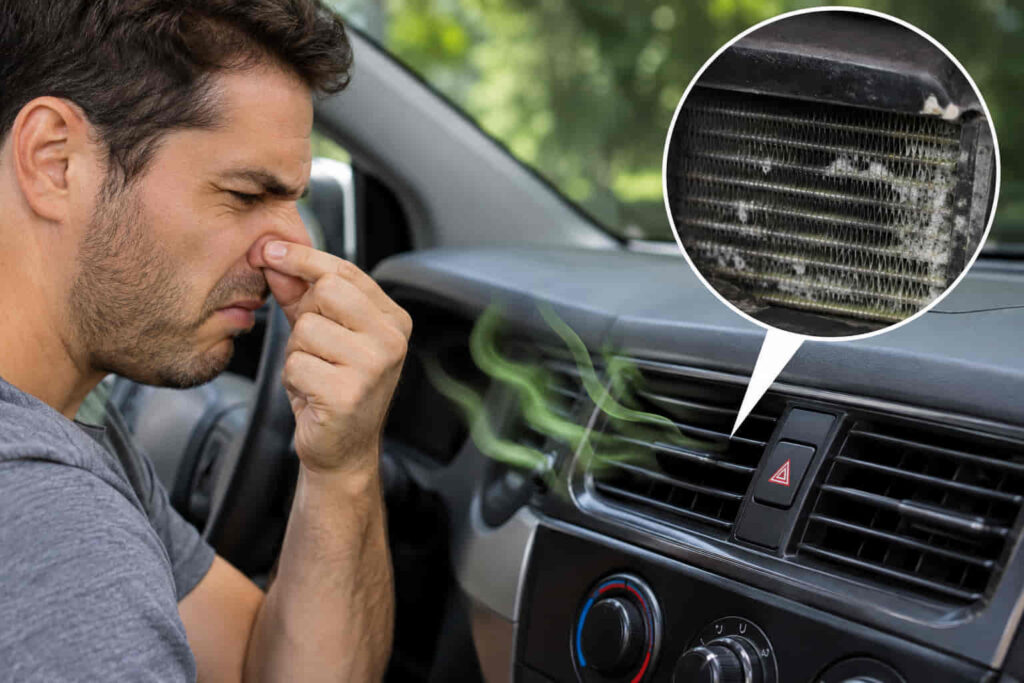
A musty smell from your car AC usually comes from moisture and odor-producing contaminants accumulating on the evaporator coil, inside the HVAC housing, or in a damp cabin air filter. When the air conditioner cools warm, humid air, condensation forms on the evaporator. If moisture remains trapped alongside dust and organic debris, bacteria and fungi can grow and produce unpleasant odors that circulate through the vehicle’s air vents.
The smell is often strongest when the air conditioning system first turns on because airflow carries accumulated odors from damp HVAC components into the passenger cabin. A dirty cabin air filter, clogged AC condensate drain, or contaminated evaporator can contribute to the problem. However, a musty odor alone does not confirm mold growth, and the source must be identified before choosing a repair.
Getting rid of a musty car AC smell requires removing the source of contamination and correcting the moisture problem. Effective solutions include replacing a damp or contaminated cabin air filter, cleaning the evaporator with an appropriate HVAC product, and restoring proper condensate drainage. Air fresheners may temporarily mask the odor but do not remove its underlying cause.
This guide explains why car air conditioners develop musty smells, how to identify the affected components, which cleaning methods work, what repairs may cost, and how to prevent the odor from returning.
Why Does My Car AC Smell Musty?
A car AC smells musty primarily because moisture accumulates inside the air conditioning system and allows odor-producing microorganisms to grow on contaminated surfaces. The most common sources include the evaporator coil, damp cabin air filter, HVAC housing, and areas where condensation cannot drain properly. These components are exposed to humid air, dust, and organic debris, creating conditions that can produce a persistent mildew-like odor when the ventilation system operates.
The evaporator coil is a major source of musty air conditioning odors because it continuously removes moisture from the air during cooling. As warm cabin air passes over the cold evaporator surface, water vapor condenses into liquid droplets that collect in the HVAC housing and normally exit through the condensate drain. Dust, pollen, and other airborne particles can accumulate on these damp surfaces. When moisture remains long enough, bacteria and fungi may colonize the debris and release volatile compounds responsible for unpleasant odors. Airflow from the blower motor then carries these smells through the dashboard vents and into the passenger compartment.
A dirty or damp cabin air filter can also contribute to a musty smell. The filter captures airborne contaminants such as pollen, dust, and road debris before they circulate through the ventilation system. When the filter becomes wet because of water intrusion, excessive humidity, or drainage problems, trapped organic material can support microbial growth and retain unpleasant odors. A dry, dusty filter does not necessarily produce a musty smell, but a visibly damp or contaminated filter should be replaced and the source of moisture investigated.
A clogged AC condensate drain creates another source of persistent odors by preventing collected water from leaving the evaporator housing. Under normal operating conditions, condensation flows through a drain tube and drips beneath the vehicle. When leaves, dirt, or other debris obstruct the drain, water can remain inside the housing and keep surrounding surfaces wet. This increases the opportunity for microbial growth and may eventually cause water to leak into the passenger footwell. A wet carpet or soaked floor insulation can become an additional odor source that continues to smell even after the air conditioning system is switched off.
Musty odors can also originate outside the air conditioning unit. Water entering through damaged door seals, windshield seals, or blocked body drainage channels can soak carpeting and interior insulation. The ventilation system may distribute these existing cabin odors without being their original source. Identifying whether the smell comes from the evaporator, air filter, condensate drainage system, or wet interior materials is essential because cleaning the AC vents alone will not resolve moisture problems elsewhere in the vehicle.
Why Does My Car AC Smell Musty When I First Turn It On?
A car AC often smells musty when first turned on because the blower pushes air across damp or contaminated HVAC surfaces where odors accumulated while the system was inactive. The initial airflow carries concentrated odor compounds from the evaporator housing, cabin air filter, or ventilation ducts into the passenger cabin. The smell may become less noticeable after several minutes as fresh air circulates and the concentration of odor compounds decreases.
The evaporator remains wet for a period after the air conditioner stops cooling because condensation does not disappear immediately when the compressor shuts off. Some water drains naturally, while residual moisture can remain on the evaporator fins and nearby surfaces. When the vehicle is parked in warm, humid conditions, these damp areas can provide a favorable environment for odor-producing microorganisms. During the next startup, the blower moves air through the same components and releases accumulated odors into the cabin.
A musty smell that appears immediately after switching on the fan, even when the AC compressor is disabled, can indicate contamination within the ventilation airflow path. The cabin air filter, evaporator housing, and air ducts remain exposed to blower airflow regardless of whether active cooling is operating. In contrast, an odor that becomes stronger after the AC has been running may indicate moisture-related contamination or another condition that requires further inspection. These patterns help narrow the possible sources but cannot establish a definitive diagnosis without examining the system.
The disappearance of the smell after a few minutes does not mean the underlying problem has been corrected. Continuous airflow can dilute odor compounds, while changing temperature and humidity conditions can alter how strongly the smell is perceived. Contaminated surfaces may remain inside the HVAC system and release the same odor during subsequent startups. Cleaning the affected components and correcting persistent moisture accumulation provides a more lasting solution than relying on ventilation to temporarily reduce the smell.
Read more: mini cooper timing chain replacement cost
Can a Dirty Cabin Air Filter Cause a Musty AC Smell?
A dirty cabin air filter can cause a musty car AC smell when trapped dust, pollen, and organic debris become damp and retain odor-producing contaminants. The cabin air filter removes airborne particles from the ventilation system, but accumulated debris combined with moisture can create conditions that support bacterial and fungal growth. When the blower operates, air passes through or around the contaminated filter and carries unpleasant odors into the passenger compartment.
Cabin air filters collect contaminants from outside air and, depending on the vehicle’s HVAC design, recirculated cabin air. Common trapped materials include road dust, pollen, leaves, and fine organic particles. A filter that remains dry primarily restricts airflow as debris accumulates, while a filter exposed to persistent moisture can develop a mildew-like odor. Water intrusion through the fresh-air intake, blocked drainage channels, or unusually humid conditions can contribute to filter contamination. However, a dirty filter does not automatically indicate microbial growth, and visible dust alone does not confirm the source of a musty smell.
A contaminated cabin air filter may produce odors whenever the ventilation fan runs, regardless of whether the air conditioning compressor is operating. Reduced airflow through the dashboard vents can also indicate a heavily restricted filter, although blower problems and blocked air passages can cause similar symptoms. Inspecting the filter for dampness, discoloration, accumulated debris, and unusual odors helps determine whether replacement is necessary. Dark staining is not definitive proof of mold because ordinary dirt and other contaminants can produce similar appearances.
Replacing a damp or heavily contaminated cabin air filter removes accumulated material and restores normal filtration when the filter is the primary problem. Most vehicles use a replaceable filter located behind the glove compartment, beneath the dashboard, or near the windshield cowl, although access varies by model. The replacement filter must match the vehicle’s specifications and airflow direction. Activated carbon filters can help adsorb certain odor compounds, but they cannot eliminate contamination elsewhere in the HVAC system.
A musty smell that persists after cabin air filter replacement indicates that additional sources require inspection. The evaporator coil, HVAC housing, condensate drain, and surrounding air passages may still contain moisture or odor-producing debris. Replacing the filter without correcting water intrusion or drainage problems can also allow the new filter to become damp again. Effective odor removal therefore depends on identifying the moisture source rather than treating cabin air filter replacement as a guaranteed solution.
How Can You Tell Where the Musty Smell in Your Car AC Comes From?
You can narrow down the source of a musty car AC smell by comparing when the odor appears, checking the cabin air filter, inspecting for trapped moisture, and observing how the smell changes between ventilation modes. These checks help distinguish contamination inside the HVAC system from water-damaged interior materials. Because several components share the same airflow path, identifying the exact source may require direct inspection rather than relying on the smell alone.
The timing of the odor provides an initial diagnostic clue. A musty smell that appears immediately when the ventilation fan starts suggests that odor-producing material is already present along the airflow path. This includes the cabin air filter, evaporator housing, and ventilation ducts. An odor that is strongest after the vehicle has been parked for several hours may be associated with residual moisture and accumulated odor compounds inside the HVAC system. However, these patterns do not identify a specific component without additional checks.
Comparing fan-only operation with active air conditioning can provide further information. Running the blower with the AC compressor disabled allows air to circulate through much of the same ventilation system without actively cooling the evaporator. If the odor remains noticeable in both modes, contamination may exist on surfaces exposed to airflow regardless of compressor operation. A smell that changes when cooling begins can indicate temperature- or moisture-related conditions, but the result is not conclusive because the evaporator and surrounding housing remain part of the airflow path in both modes.
The cabin air filter is one of the most accessible components to inspect. A filter containing wet debris, excessive dirt, or an obvious unpleasant odor is a reasonable replacement candidate. The surrounding filter compartment should also be checked for leaves, standing water, and signs of water intrusion. If the filter is clean and dry but the odor persists, attention should shift toward the evaporator housing, condensate drainage system, and other areas where moisture can accumulate.
Condensate drainage provides another useful diagnostic clue. During humid conditions, a functioning automotive air conditioner normally produces water that drains beneath the vehicle. A lack of visible dripping does not automatically indicate a blockage because condensation volume depends on humidity, operating time, and system conditions. However, standing water inside the passenger footwell, unusual sloshing noises, or visible moisture near the HVAC housing can indicate a drainage problem. A blocked condensate drain may allow water to accumulate and contaminate surrounding insulation or carpeting.
The location and persistence of the smell also help distinguish HVAC contamination from interior water damage. If the vehicle smells musty even when the ventilation system is switched off, damp carpeting, floor insulation, trunk materials, or water intrusion around doors and windows should be investigated. Interior fabrics can retain moisture and odors long after the original leak occurs. A professional inspection may be necessary when the source remains unclear, particularly when water is accumulating inside the cabin or the smell returns shortly after cleaning.
How Do You Get Rid of a Musty Smell in Your Car AC?
To get rid of a musty smell in your car AC, remove contaminated debris, replace any damp cabin air filter, clean the evaporator when necessary, and correct moisture drainage problems. These actions address the conditions that produce the odor rather than temporarily covering it with fragrances. The appropriate treatment depends on whether the smell originates from the evaporator, air filter, HVAC housing, or water-damaged interior materials.
Start by inspecting the cabin air filter and its surrounding compartment. A filter containing damp debris, visible contamination, or a persistent mildew-like odor should be replaced with a compatible filter that meets the vehicle manufacturer’s specifications. Before installing the replacement, remove loose leaves and dirt from the accessible filter housing without pushing debris deeper into the ventilation system. If water is present, identify its entry point because installing a new filter without correcting the moisture source can allow the odor to return.
Cleaning the evaporator is the next treatment when the smell persists after filter inspection or replacement. The evaporator’s closely spaced metal fins collect condensation during air conditioning operation, while airborne particles can accumulate on the wet surfaces. An automotive evaporator cleaning product designed for the specific application can help remove deposits and odor-producing contamination. Some products use foam that expands across accessible evaporator surfaces before draining away, while other cleaning methods require professional access to the HVAC housing. The cleaning procedure must follow the product instructions and the vehicle manufacturer’s service guidance to avoid damaging electrical components, sensors, or interior materials.
The AC condensate drain must also function correctly to prevent moisture from remaining inside the evaporator housing. Condensation normally collects in a drain pan and exits through a tube beneath the vehicle. When the drain becomes obstructed by debris, water can accumulate around the evaporator and contribute to recurring odors. A technician can inspect the drain outlet and clear an obstruction using a method appropriate for the vehicle. Forcing rigid tools or high-pressure air into the drain without following the correct procedure can damage the housing or disconnect drainage components.
Removing moisture from the HVAC system after cleaning helps limit the conditions that support odor recurrence. In vehicles where the manufacturer permits it, switching off active cooling while allowing the ventilation fan to run briefly before parking can help dry residual moisture on the evaporator. The effectiveness of this practice depends on ambient humidity, airflow, and the HVAC design. Vehicles equipped with automatic evaporator-drying functions should be operated according to their manufacturer’s instructions.
Air fresheners and fragrance-based vent sprays do not provide a permanent solution when contaminated surfaces remain inside the HVAC system. These products may temporarily change the perceived smell, but they do not necessarily remove microbial deposits, repair blocked drains, or eliminate trapped moisture. Similarly, disinfectant sprays should not be introduced into the ventilation system unless they are specifically approved for automotive HVAC use and applied according to their labeling. Effective treatment requires physical cleaning and moisture control rather than masking the odor.
Professional HVAC cleaning becomes appropriate when the musty smell persists after basic maintenance, the evaporator cannot be accessed safely, or water continues to collect inside the passenger compartment. A qualified technician can inspect the evaporator housing, condensate drain, cabin air intake, and related components to identify the source. Addressing the underlying contamination and moisture problem together provides the best opportunity for lasting odor removal.
Will Cleaning the AC Evaporator Remove the Musty Smell?
Cleaning the AC evaporator can remove a musty car AC smell when odor-producing contamination on the evaporator or nearby housing surfaces is the primary cause. The treatment works by removing accumulated dirt, organic deposits, and microbial residue from surfaces exposed to condensation. However, evaporator cleaning will not permanently eliminate the odor if a blocked drain, damp cabin air filter, or interior water leak continues to introduce moisture and contamination.
The evaporator is especially vulnerable to odor buildup because its cooling function creates a wet surface during normal operation. Warm, humid air passing through the evaporator loses heat, causing water vapor to condense on the metal fins. Dust and organic particles can adhere to these surfaces and accumulate over time. When moisture persists, microorganisms may grow within the deposits and produce odor compounds that enter the cabin through the ventilation system. Removing these deposits reduces the material responsible for the smell.
Automotive evaporator cleaning treatments are designed to reach contaminated surfaces without requiring complete dashboard removal in every vehicle. Foam-based products may be introduced through a manufacturer-approved access point or another location specified by the product and vehicle instructions. The cleaning agent contacts the evaporator surfaces, loosens deposits, and drains away with the resulting liquid. Treatment effectiveness depends on surface coverage, the type and amount of contamination, and whether the drainage system allows the cleaning residue to exit properly.
Evaporator cleaning differs from spraying fragrance into dashboard vents because the treatment targets the surfaces where moisture and debris accumulate. Fragrance sprays primarily alter the smell of air passing through the ducts, while appropriate evaporator cleaners are intended to remove deposits from the cooling assembly. Nevertheless, a single cleaning treatment cannot guarantee complete removal of deeply embedded contamination or odors originating from other HVAC components.
The musty smell can return after evaporator cleaning if the underlying moisture conditions remain unchanged. A clogged condensate drain, water intrusion around the fresh-air intake, or a persistently damp filter can reintroduce conditions favorable to microbial growth. Inspecting these components alongside evaporator cleaning helps prevent repeated contamination. If the odor persists despite proper cleaning and drainage, further inspection is necessary to identify hidden debris, inaccessible contaminated surfaces, or moisture-damaged cabin materials.
Is a Musty Smell From Your Car AC Dangerous?
A musty smell from your car AC may indicate moisture-related microbial growth that can affect cabin air quality, particularly for people with asthma, allergies, or respiratory sensitivities. The odor itself does not establish that dangerous mold is present, but persistent dampness and visible microbial contamination should not be ignored. Moisture inside the evaporator housing, HVAC ducts, or cabin air filter compartment can support microbial growth and allow airborne particles and odor-producing compounds to circulate through the passenger cabin.
Mold and other microorganisms can develop when moisture remains on contaminated surfaces. The U.S. Centers for Disease Control and Prevention (CDC) explains that exposure to damp and moldy environments can cause symptoms such as nasal congestion, sore throat, coughing, wheezing, eye irritation, and skin reactions. People with asthma or mold allergies may experience more severe reactions, while individuals with weakened immune systems or chronic lung disease may face additional health risks. These effects depend on the type and level of exposure, and a musty car AC odor alone cannot determine whether occupants have been exposed to harmful concentrations.
A contaminated automotive HVAC system can also circulate unpleasant microbial odors and particles whenever the blower operates. The evaporator, cabin air filter, and ventilation ducts can become sources of contamination when moisture and organic debris accumulate. Drivers who experience recurring coughing, eye irritation, or respiratory discomfort while using the AC should investigate the ventilation system and reduce exposure until the source has been addressed. Persistent or severe symptoms require appropriate medical evaluation rather than relying exclusively on AC cleaning.
Removing the odor requires correcting the moisture problem and cleaning contaminated components. Replacing a damp cabin air filter, cleaning accessible HVAC surfaces with automotive-approved products, and restoring condensate drainage help reduce the conditions that support microbial growth. If the smell persists or visible contamination is present inside inaccessible components, professional HVAC inspection is preferable to repeatedly applying fragrance sprays. Cleaning without eliminating the source of moisture can allow the odor to return.
How Much Does It Cost to Fix a Musty Car AC Smell?
The cost of fixing a musty car AC smell depends on whether the problem requires a cabin air filter replacement, evaporator cleaning, HVAC drainage repair, or more extensive component replacement. A simple filter replacement is generally less expensive than cleaning contaminated evaporator surfaces or repairing a blocked condensate drain. The final repair bill depends on vehicle design, parts availability, labor rates, and how easily technicians can access the affected components.
Cabin air filter replacement is usually one of the least expensive solutions. Kelley Blue Book estimates that replacing a cabin air filter typically costs approximately $25 to $90, depending on the vehicle and service provider. This repair can eliminate the odor when the filter itself is contaminated, but it will not resolve microbial growth on the evaporator or moisture trapped inside the HVAC housing. Owners should therefore confirm that the filter is the actual source before assuming replacement will permanently remove the smell.
Evaporator cleaning generally requires additional labor because technicians must access the evaporator surface and remove accumulated contamination. The cleaning procedure may involve specialized HVAC cleaning products, foam treatments, and inspection of the condensate drain. The cost varies considerably between vehicles and repair facilities, and there is no single reliable national price range for every evaporator cleaning procedure. A repair estimate should distinguish routine evaporator cleaning from evaporator replacement because these are substantially different services.
Evaporator replacement is considerably more expensive than cleaning because the component is located deep inside the HVAC assembly. RepairPal’s September 2026 estimate places the average AC evaporator replacement cost between $1,351 and $1,891, including approximately $436 to $549 for parts and $915 to $1,342 for labor. Dashboard removal or extensive HVAC disassembly can account for a significant portion of the labor expense. However, evaporator replacement is generally necessary for a failed or leaking component, not simply because the AC produces a musty smell.
The most economical repair approach is to identify the odor source before replacing expensive components. A technician should inspect the cabin air filter, evaporator housing, condensate drain, and surrounding areas for moisture or contamination. Comparing written estimates from multiple repair facilities also helps identify differences in diagnostic charges, cleaning procedures, replacement parts, and workmanship warranties. Treating the actual source of the odor prevents unnecessary component replacement and reduces the likelihood of paying for repeated cleaning services.
How Can You Prevent Your Car AC From Smelling Musty?
You can prevent your car AC from smelling musty by reducing moisture buildup, maintaining the cabin air filter, keeping the condensate drain clear, and allowing the evaporator to dry when appropriate. These practices reduce the accumulation of water, dust, and organic debris inside the HVAC system, which are the main conditions associated with recurring musty odors. Preventive maintenance is more effective when it addresses moisture at its source rather than relying on air fresheners or occasional deodorizing treatments.
Maintaining the cabin air filter helps prevent dust, pollen, and organic debris from accumulating inside the ventilation system. A clogged or contaminated filter can restrict airflow and retain unpleasant odors, particularly when it becomes damp. Replacing the filter according to the vehicle manufacturer’s maintenance schedule helps maintain proper ventilation and filtration. Vehicles frequently driven in dusty environments or areas with high pollen levels may require more frequent inspections. Selecting a compatible replacement filter also ensures that airflow remains within the manufacturer’s intended specifications.
Keeping the AC condensate drain clear is another important preventive measure because the drain removes water collected during the cooling process. Under normal conditions, condensation flows from the evaporator housing through a drain tube and exits beneath the vehicle. Debris or obstructions can prevent this water from draining properly, allowing moisture to accumulate around the evaporator. Regular HVAC inspections can identify drainage problems before they contribute to persistent odors or water entering the passenger compartment.
Allowing the evaporator to dry before parking can help reduce residual moisture inside the HVAC housing. When appropriate for the vehicle, switching off the AC compressor while keeping the ventilation fan running briefly before shutting down the engine allows airflow to pass across the evaporator without continued active cooling. This can help evaporate some remaining surface moisture, although its effectiveness depends on ambient humidity and ventilation design. Some newer vehicles also include automatic evaporator-drying functions that manage residual moisture without requiring driver intervention.
Keeping the vehicle interior dry also helps prevent musty odors from developing outside the HVAC system. Wet floor mats, soaked carpets, spilled liquids, and water entering through damaged door or windshield seals can create persistent odors that become noticeable when the ventilation system operates. Removing wet materials, drying affected surfaces, and repairing water leaks prevents moisture from accumulating in carpeting and floor insulation. This is particularly important because cleaning the evaporator will not eliminate odors originating from water-damaged interior materials.
Following the manufacturer’s air conditioning maintenance recommendations helps identify developing problems before they become expensive repairs. Cabin air filter inspections, condensate drain checks, and periodic HVAC evaluations help maintain proper airflow and moisture removal. If a musty smell returns after cleaning, the system should be inspected for unresolved contamination or water intrusion rather than repeatedly treated with fragrance products. Correcting the underlying moisture problem provides the most reliable way to keep the car AC fresh and prevent recurring odors.