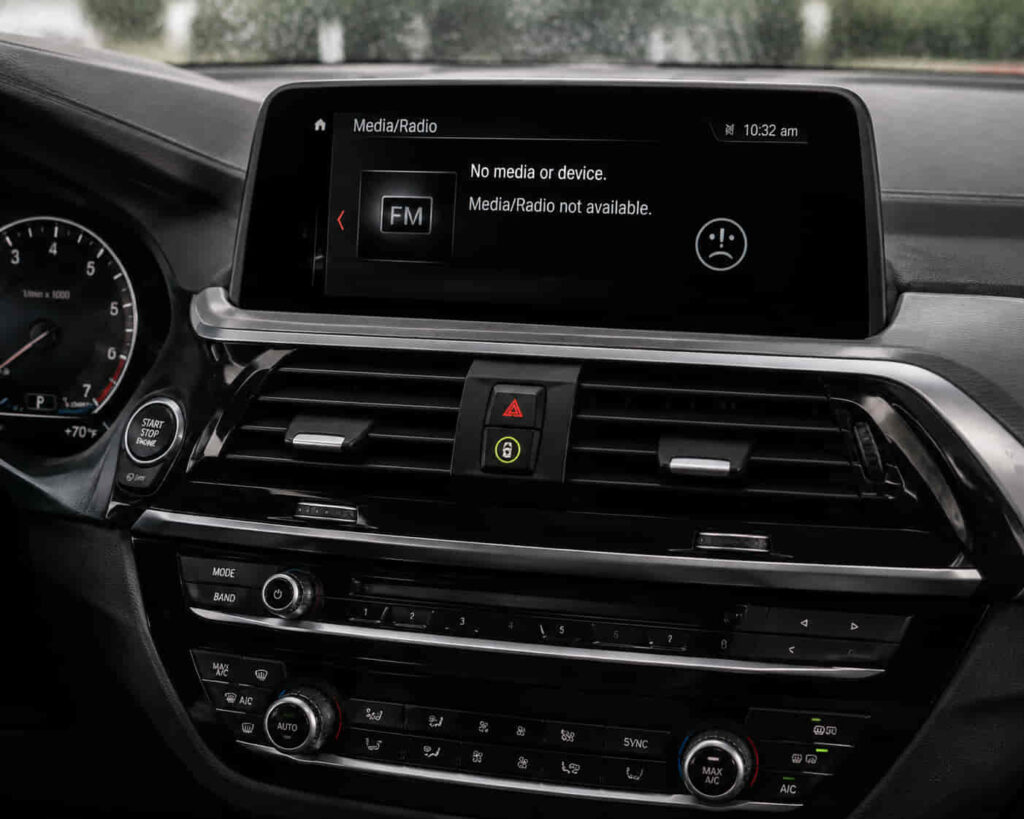
A BMW radio that is not working usually indicates a problem within the infotainment system, audio components, electrical supply, or communication network. The BMW audio system is not controlled by a single component but by multiple connected systems that work together to process signals and deliver sound through the vehicle’s speakers.
The radio system includes components such as the iDrive interface, head unit, radio tuner, amplifier, speakers, antenna system, and electronic communication networks. When the driver selects a radio station or media source, the command passes through the infotainment system before the audio signal reaches the amplifier and speakers.
A common mistake is assuming that a BMW radio not working problem always means the head unit has failed. In reality, the same symptom can come from different causes. A radio that turns on but produces no sound may involve the amplifier or speaker output system, while a radio that cannot receive stations may involve the antenna or tuner system.
Modern BMW infotainment systems also depend heavily on software and electronic communication. Control modules must exchange information correctly for audio functions, Bluetooth, media playback, and radio operation to work normally. A temporary software issue, voltage instability, or communication error can interrupt these functions without indicating permanent hardware damage.
The correct repair approach starts by identifying the exact symptom. Whether the issue involves no power, no sound, poor reception, system freezing, or repeated restarts, the affected part of the infotainment system must be identified before replacing components.
This guide explains the common causes of BMW Radio Not Working, how different infotainment components affect audio operation, how to diagnose the problem correctly, and why resetting the system may not always solve the underlying issue.
Can BMW iDrive Software Problems Cause Radio Failure?
BMW iDrive software problems can cause radio failure because the infotainment system depends on software control to process audio commands, manage media sources, and communicate with connected modules. The radio system is not only a physical audio device; it is an electronic platform where software controls how the driver interacts with radio, Bluetooth, USB, and other entertainment functions.
The iDrive system manages multiple operations through the head unit, including source selection, audio settings, display functions, and communication with other infotainment components. When software becomes unstable, the system may freeze, fail to load audio functions, restart repeatedly, or stop responding to driver commands.
A software-related BMW radio problem does not automatically mean that the head unit or amplifier has failed. Temporary software errors, incomplete updates, communication interruptions, or system glitches can create symptoms that look like hardware problems. This is why replacing expensive infotainment components without diagnosis can result in unnecessary repairs.
Software issues may appear in different ways depending on the affected system. Some BMW owners may notice that the radio screen works but audio functions are unavailable, while others may experience complete infotainment freezing or repeated system restarts.
Diagnosing BMW radio problems related to iDrive software requires checking system behavior, stored faults, software version, module communication, and whether a reset or update can restore normal operation. Identifying whether the issue is software-related or hardware-related is essential before replacing any components.
Can Low Battery Voltage Cause BMW Radio Not Working?
Low battery voltage can affect BMW radio operation because infotainment modules require stable electrical power to communicate correctly and maintain normal functionality. BMW audio systems contain multiple electronic modules that depend on consistent voltage to process commands, store settings, and exchange information through the vehicle network.
The head unit, amplifier, and related infotainment components must receive reliable power during operation. When battery voltage becomes unstable, the system may enter protection modes, lose communication, restart unexpectedly, or temporarily disable certain functions to protect electronic components.
A battery-related radio problem does not automatically mean the battery itself is the only cause. The issue may involve alternator performance, weak electrical connections, poor grounding, wiring problems, or another condition affecting the vehicle’s electrical supply. This is why replacing the battery without confirming the electrical condition may not resolve the audio issue.
Voltage problems can also create intermittent symptoms. The radio may work normally after starting the vehicle but fail after sitting for an extended period, or different electronic systems may show unrelated warnings at the same time due to unstable power conditions.
Diagnosing BMW radio problems related to battery voltage requires checking battery condition, charging system performance, electrical connections, and infotainment module faults. Confirming the power supply condition helps prevent unnecessary replacement of the head unit or audio components.
Read more: BMW Sunroof Won’t Close
Can BMW Amplifier Problems Cause No Sound?
BMW amplifier problems can cause audio failure when the infotainment system processes audio signals correctly but the signal cannot be delivered to the vehicle’s speakers. The amplifier is a critical part of the BMW audio system because it increases the power of audio signals before they reach the speakers.
The audio process involves several connected stages. The head unit processes the selected audio source, sends the signal through the vehicle communication network, and the amplifier controls the output power delivered to each speaker. If the amplifier fails or cannot communicate correctly with the infotainment system, the radio may appear to function normally while producing no sound.
An amplifier-related BMW radio problem does not automatically mean the amplifier hardware has completely failed. The issue may involve power supply problems, damaged wiring, communication errors through the vehicle network, or internal amplifier faults. This is why replacing the amplifier without testing the complete audio system can lead to unnecessary costs.
Symptoms of amplifier problems can vary depending on the failure condition. Some vehicles may have complete loss of sound, while others may experience intermittent audio, certain speakers not working, or sound cutting in and out during operation.
Diagnosing BMW amplifier problems requires checking audio signals, amplifier power supply, communication status, fault information, and speaker output. Confirming where the audio signal stops helps determine whether the amplifier is the actual cause or whether another part of the infotainment system is responsible.
Can BMW Head Unit Problems Cause Radio Failure?
BMW head unit problems can affect radio operation because the head unit controls audio sources, system communication, and the interaction between the driver and the infotainment system. The head unit acts as one of the central components of the BMW audio system, processing commands from iDrive controls and managing audio information before sending it to other components.
The head unit manages functions such as radio tuning, media selection, Bluetooth communication, display information, and audio settings. When the head unit experiences a hardware problem, software failure, or communication issue, multiple infotainment functions may become unavailable at the same time.
A head unit problem does not always mean the entire unit must be replaced. Similar symptoms can result from software corruption, unstable voltage, connector problems, coding issues, or communication failures with other modules. Proper diagnosis is necessary because the head unit may simply be reporting a problem caused by another system.
Common signs of head unit-related issues include frozen displays, missing audio sources, repeated system restarts, unavailable radio functions, or complete infotainment shutdown. However, these symptoms overlap with other electronic problems, making diagnosis essential.
Diagnosing BMW head unit problems requires checking module communication, stored fault codes, power supply, software condition, and interaction with other infotainment components. Identifying the actual source of the failure helps avoid replacing an expensive control unit unnecessarily.
Can Antenna Problems Cause BMW Radio Reception Issues?
Antenna problems can affect BMW radio performance because the radio system depends on a reliable signal source to receive and process broadcast information. The antenna system collects radio signals from the environment and transfers them to the radio tuner inside the infotainment system, allowing the vehicle to receive AM, FM, or other broadcast sources.
When the antenna system develops a fault, the BMW radio may turn on normally but experience poor reception, weak signals, static noise, or difficulty finding available stations. This type of problem is different from a complete infotainment failure because the audio system may still function correctly with other sources such as Bluetooth or USB.
An antenna-related radio problem does not automatically mean the antenna itself is damaged. The issue may involve the antenna module, wiring connections, signal interference, tuner communication, or a component responsible for processing the incoming radio signal. Proper diagnosis is required because reception problems can have multiple causes.
The symptoms often depend on the type of failure. A damaged antenna connection may cause consistently poor reception, while an intermittent connection may cause the radio signal to disappear and return during driving conditions.
Diagnosing BMW radio reception problems requires checking antenna connections, signal quality, tuner operation, stored faults, and communication between infotainment components. Identifying whether the problem occurs before or after signal processing helps determine the correct repair path.
Can MOST Bus Communication Problems Cause BMW Audio Failure?
MOST bus communication problems can cause BMW audio system failure because many BMW infotainment components depend on this network to exchange information and operate together. The Media Oriented Systems Transport (MOST) network is designed to allow electronic audio components such as the head unit, amplifier, and other infotainment modules to communicate efficiently.
BMW audio systems are not independent components working separately. The head unit sends audio information through the vehicle communication network, and connected modules must receive and process this information correctly before sound can reach the speakers. If communication is interrupted, the entire audio system may become unavailable even when individual components are not physically damaged.
A MOST bus-related problem does not automatically mean the amplifier or head unit has failed. The issue may involve network communication errors, damaged optical connections, module faults, voltage problems, or another component preventing normal data exchange.
Communication failures can create different symptoms depending on which part of the network is affected. The radio may show missing audio functions, produce no sound, restart repeatedly, or display infotainment errors while other vehicle systems continue operating normally.
Diagnosing BMW audio problems related to MOST bus communication requires scanning relevant modules, checking communication status, inspecting network connections, and identifying the component interrupting system operation. Finding the communication failure point prevents unnecessary replacement of expensive infotainment components.
Can Speaker Problems Cause BMW Radio Not Working?
Speaker problems can cause BMW radio issues when the audio signal is produced correctly but cannot be converted into sound output inside the vehicle cabin. The speakers are the final stage of the BMW audio system, receiving processed signals from the amplifier and converting electrical energy into audible sound.
The audio system works through a connected chain. The head unit selects and processes the audio source, the amplifier increases the signal strength, and the speakers deliver the final sound output. If a speaker, wiring connection, or output channel fails, the radio system may appear to be malfunctioning even though the earlier components are operating normally.
A speaker-related BMW radio problem does not automatically mean all speakers have failed. The issue may involve a single damaged speaker, loose wiring, connector problems, amplifier output channels, or incorrect audio configuration. This is why checking the entire audio pathway is necessary before replacing individual components.
Speaker problems often create specific symptoms. The vehicle may have sound from only certain areas, distorted audio, intermittent sound loss, or complete silence from the speaker system. These symptoms help determine whether the problem is isolated to the speakers or related to another part of the infotainment system.
Diagnosing BMW speaker problems requires checking speaker output signals, wiring conditions, amplifier operation, and audio system settings. Identifying where the audio signal stops allows the repair process to focus on the actual failed component.
Why Does BMW Radio Turn On But Have No Sound?
A BMW radio that turns on but produces no sound usually indicates a problem between audio processing and sound output rather than a complete infotainment system failure. The display, controls, and radio functions may continue working while another component prevents the audio signal from reaching the speakers.
The BMW audio system requires multiple stages to produce sound. The head unit processes the selected source, the amplifier controls output power, and the speakers convert the signal into sound. A failure in any stage after the audio source is selected can result in a silent system.
A no-sound condition does not automatically mean the speakers are damaged. The problem may involve amplifier failure, communication issues between infotainment modules, muted settings, audio output configuration, or electrical problems affecting the sound system.
The diagnostic approach depends on whether all audio sources are affected or only specific functions. For example, if radio, Bluetooth, and USB audio all have no sound, the issue may involve the amplifier or output system. If only radio reception has a problem, the antenna or tuner system may require inspection.
Diagnosing BMW radio no-sound problems requires identifying whether the failure occurs at the source, processing, amplification, or speaker output stage. Following the complete audio signal path prevents incorrect repairs and unnecessary component replacement.
Why Does BMW Radio Keep Restarting?
A BMW radio that repeatedly restarts usually indicates a software, electrical, or communication problem affecting the infotainment system. The head unit and related modules must maintain stable power and communication to operate continuously, and interruptions can cause the system to reboot.
Software instability is one possible cause because modern BMW infotainment systems rely on complex programming to control multiple functions. Temporary software errors, corrupted data, or module communication problems can interrupt normal operation and force the system to restart.
Electrical conditions can also influence infotainment stability. Low battery voltage, charging system issues, or unstable power delivery may cause modules to shut down and restart as a protective response.
A restarting radio does not automatically mean the head unit has failed. Similar symptoms can result from amplifier communication problems, network faults, software conditions, or another module affecting the infotainment system.
Diagnosing a BMW radio restart problem requires checking fault codes, voltage conditions, software status, and communication between infotainment modules. Finding the reason for the interruption is more effective than replacing the head unit without confirmation.
How Do You Reset BMW Radio and iDrive System?
Resetting the BMW radio and iDrive system can help resolve temporary software or communication issues, but it does not repair hardware failures or damaged components. A reset restarts the infotainment system and may restore normal operation when the problem is caused by a temporary system error.
A reset may be useful when the radio freezes, the display becomes unresponsive, audio functions stop working temporarily, or the system experiences a minor software interruption. In these situations, restarting the system can restore communication between infotainment components.
However, a reset cannot fix problems caused by failed amplifiers, damaged speakers, antenna faults, wiring problems, or defective control modules. If the same issue returns after resetting, the underlying cause requires further diagnosis.
Repeated resets without identifying the actual problem can delay proper repair. The reset process should be considered a troubleshooting step rather than a complete solution.
BMW radio reset is effective for temporary software-related issues, but persistent audio failures require inspection of the complete infotainment system.
How Do You Diagnose BMW Radio Not Working?
Diagnosing BMW Radio Not Working requires identifying which stage of the infotainment system has failed, from power supply and control modules to audio output components. Because BMW audio systems contain multiple connected electronic components, the visible symptom alone does not identify the failed part.
The diagnostic process begins by identifying the exact symptom. A radio with no power, no sound, poor reception, repeated restarts, or missing audio sources requires different testing procedures because each symptom points toward different system areas.
The next step involves checking electrical supply, scanning infotainment modules for fault information, evaluating communication between components, and testing audio output. BMW-specific diagnostic tools can provide information from control modules that basic scanners may not access.
A common mistake is replacing the head unit immediately because it appears to control the entire system. In many cases, the actual cause may be a voltage problem, amplifier failure, communication issue, or software condition affecting the infotainment network.
The correct BMW radio diagnostic sequence is: identify symptom → check power supply → scan modules → test communication → inspect audio components → confirm repair → verify operation.
How Much Does BMW Radio Repair Cost?
BMW radio repair costs depend on the component causing the failure, the complexity of diagnosis, and whether the problem involves software, electrical components, or hardware replacement. The infotainment system includes multiple interconnected parts, meaning repair requirements can vary significantly.
A software reset, coding adjustment, or electrical connection repair requires a different approach compared with replacing an amplifier, head unit, or other infotainment component. The cost is determined by the actual failed system rather than the warning symptom alone.
Accurate diagnosis is the most important factor in controlling repair costs. Replacing expensive components without confirming the cause can increase expenses while leaving the original problem unresolved.
The repair decision should be based on identifying whether the issue comes from power supply, communication, audio processing, signal reception, or sound output components.
BMW radio repair costs are determined by the diagnosed cause and required repair procedure, not simply by the fact that the radio is not working.
When Should BMW Radio Problems Be Diagnosed Professionally?
Professional diagnosis is recommended when BMW radio problems continue after a reset, multiple infotainment functions fail, audio repeatedly cuts out, or communication errors appear between electronic modules. Modern BMW audio systems depend on several connected components, including the head unit, amplifier, antenna system, and communication networks, making accurate diagnosis more complex than checking a single part.
A professional evaluation becomes especially important when the radio stops working completely, the system repeatedly restarts, different audio sources fail at the same time, or the vehicle shows additional electronic warnings. These symptoms may indicate a deeper issue involving power supply, module communication, software conditions, or hardware failure.
The correct diagnostic process identifies where the audio signal is interrupted by checking system faults, electrical conditions, module communication, and component operation. This approach prevents unnecessary replacement of expensive infotainment parts and ensures that the repair addresses the actual cause.
The correct repair path is:
radio problem appears → identify symptom → check infotainment system → test components → repair cause → verify audio operation
BMW Radio Not Working is a symptom of an infotainment system issue, not a specific component diagnosis. Understanding the relationship between iDrive, head unit, amplifier, speakers, antenna, and electronic communication is essential for restoring reliable audio performance.