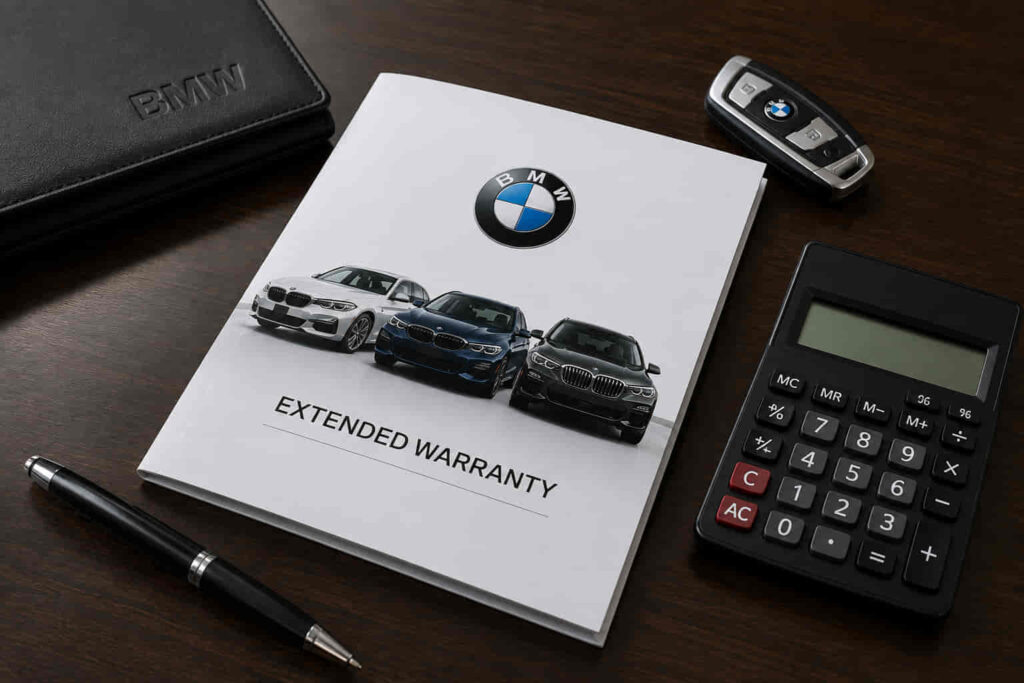
BMW Extended Warranty Cost refers to the amount owners pay to extend protection beyond the original factory warranty period and reduce the financial risk of unexpected vehicle repairs. Because BMW vehicles use advanced engines, electronic systems, turbocharged components, and complex drivetrain technology, repair expenses can become significant once the factory warranty expires.
A BMW Extended Warranty provides additional coverage for eligible components after the original warranty ends. The goal is not to reduce routine maintenance expenses but to protect owners from high-cost repairs involving major vehicle systems such as the engine, transmission, drivetrain, and electronic modules.
The actual cost of BMW extended warranty coverage is not the same for every vehicle. Pricing depends on several factors, including the BMW model, vehicle age, mileage, coverage level, deductible, and ownership history. A newer BMW with lower mileage may qualify for broader coverage at a lower risk level, while an older vehicle with higher mileage may have higher warranty costs because potential repair risks increase.
Understanding BMW Extended Warranty Cost is important because the decision is not only about the price of the warranty itself. Owners must compare the cost of protection against potential repair expenses during long-term ownership. A BMW with expensive components and complex technology may create significant repair bills, making warranty protection more valuable for some owners.
This guide explains how BMW Extended Warranty pricing works, what coverage includes, what affects the cost, whether it is worth buying, and how it compares with other protection options.
How Does BMW Extended Warranty Work?
BMW Extended Warranty works by extending protection beyond the original factory warranty period and covering specific vehicle components against unexpected mechanical or electrical failures. The program is designed to reduce financial uncertainty for BMW owners who want additional protection after the standard warranty expires.
The original BMW factory warranty provides coverage for a limited period, but many owners continue using their vehicles for several years after that protection ends. During this period, expensive components such as turbochargers, transmission systems, electronic modules, and advanced drivetrain parts can become costly to repair.
BMW Extended Warranty focuses on protecting against unexpected repair expenses rather than routine ownership costs. Maintenance services such as oil changes, brake pads, tires, and other wear-related items are generally separate from extended warranty protection because they are considered normal vehicle maintenance.
The value of an extended warranty depends on the relationship between coverage cost and potential repair risk. A BMW with advanced technology, high-performance components, or expensive electronic systems may create larger repair bills when failures occur. In these situations, warranty protection can provide more predictable ownership expenses.
The warranty structure also depends on the specific plan selected. Different coverage levels may protect different components, have different time or mileage limits, and include different deductible requirements. Understanding these details is important because the lowest-priced warranty option may not always provide the level of protection an owner needs.
For example, a BMW owner who drives a turbocharged model with complex electronic features may consider extended warranty protection differently from an owner of a simpler vehicle with lower expected repair costs.
How Much Does BMW Extended Warranty Cost?
BMW Extended Warranty Cost typically depends on the vehicle’s model, age, mileage, coverage level, and warranty provider, making the final price different for every BMW owner. There is no single fixed price because warranty companies evaluate the expected repair risk of each individual vehicle.
A newer BMW with lower mileage usually has a lower warranty cost because fewer components have experienced long-term wear. The risk of major failures is generally lower compared with an older BMW that has accumulated significant mileage and may require more expensive repairs in the future.
Vehicle model also has a major impact on pricing. A BMW equipped with advanced performance technology, such as M models, turbocharged engines, air suspension, or complex electronic systems, may cost more to protect because replacement parts and labor expenses are higher.
Coverage level is another important factor. Comprehensive plans that include a wider range of mechanical and electronic components usually cost more than limited plans that only cover specific systems. Owners must balance the level of protection with their expected ownership period and driving habits.
The deductible amount also affects warranty pricing. A higher deductible generally reduces the upfront warranty cost, while a lower deductible increases the purchase price because the warranty provider takes on more repair expense responsibility.
For example, a BMW owner planning to keep a vehicle for several additional years may choose broader coverage because one major repair involving the engine, transmission, or electronic systems could exceed the cost of the warranty itself.
Read more: What Cars Have the B58 Engine
What Factors Affect BMW Extended Warranty Cost?
BMW Extended Warranty Cost is affected by several risk factors, including vehicle model, mileage, age, coverage level, deductible, and expected repair expenses. Warranty providers calculate pricing based on the likelihood that a vehicle will require covered repairs during the protection period.
Vehicle model is one of the most important factors because different BMW models have different levels of mechanical complexity and repair costs. A BMW equipped with advanced performance systems, turbocharged engines, adaptive suspension, or sophisticated electronics may require more expensive repairs compared with simpler configurations.
Vehicle age and mileage also directly influence warranty pricing. As a BMW accumulates more miles, components experience more wear and the probability of mechanical failure increases. A newer BMW with lower mileage generally represents a lower risk for the warranty provider, while an older vehicle may require a higher warranty price because more components are approaching potential failure points.
The selected coverage level has a significant impact on cost. Comprehensive plans that protect major systems such as the engine, transmission, drivetrain, and electronic components usually have higher prices because they provide broader financial protection. More limited plans may cost less but leave owners responsible for certain repair categories.
The deductible amount also changes the total warranty price. A lower deductible means the owner pays less when a repair occurs, but the upfront warranty cost is usually higher. A higher deductible reduces the purchase price but requires greater out-of-pocket payment during service.
Ownership history and vehicle condition can also affect eligibility and pricing. A BMW with proper maintenance records may be viewed differently from a vehicle with unknown service history because maintenance quality influences future repair risk.
For example, a high-performance BMW M model with advanced electronics and higher repair costs will typically have different warranty pricing compared with a lower-specification BMW sedan with fewer complex systems.
What Does BMW Extended Warranty Cover?
BMW Extended Warranty coverage protects selected vehicle components against unexpected mechanical and electrical failures that occur after the original factory warranty expires. The purpose of this protection is to reduce the financial impact of major repairs that are expensive to diagnose and repair.
Major mechanical systems are usually the primary focus of extended warranty protection. Components such as the engine and transmission represent some of the highest repair costs in a BMW, so coverage for these systems can provide significant financial value for long-term owners.
The drivetrain is another important coverage area because components responsible for transferring engine power can be expensive to replace. Protection may include eligible parts related to power delivery systems depending on the specific warranty contract.
Modern BMW vehicles also rely heavily on electronic technology. Systems such as control modules, sensors, and advanced vehicle electronics can create expensive repair bills when failures occur. Certain extended warranty plans include coverage for these electrical components.
Performance-related components may also influence warranty value. Turbocharged BMW engines, for example, use additional components that can increase repair complexity compared with naturally aspirated engines.
However, coverage depends entirely on the specific BMW warranty contract. Different plans may have different exclusions, mileage limits, and covered components. Owners should review the agreement carefully to understand what repairs qualify for protection.
For example, a BMW owner with a vehicle containing expensive electronic systems and turbocharged components may receive more value from comprehensive coverage than an owner whose vehicle has fewer high-cost components.
What Does BMW Extended Warranty Not Cover?
BMW Extended Warranty does not cover every vehicle expense because it is designed to protect against unexpected mechanical and electrical failures rather than normal ownership and maintenance costs. Understanding exclusions is important because many owners confuse extended warranty protection with a complete vehicle maintenance plan.
Routine maintenance items are generally not included because they are considered normal wear from vehicle operation. Services such as oil changes, brake pad replacement, tire replacement, and scheduled maintenance remain the owner’s responsibility.
Wear-and-tear components may also be excluded depending on the specific warranty agreement. Parts that naturally deteriorate through regular use are usually treated differently from unexpected mechanical failures because replacement is considered part of normal vehicle ownership.
Damage caused by improper use, accidents, modifications, or lack of maintenance may not qualify for coverage. Extended warranty programs are designed to protect against mechanical defects and failures under normal operating conditions, not preventable damage caused by neglect or misuse.
Cosmetic issues are also typically outside the purpose of extended warranty protection. Problems involving paint, interior materials, or appearance-related components are usually handled separately from mechanical repair coverage.
Understanding these limitations helps BMW owners set realistic expectations. An extended warranty can reduce financial risk from major repairs, but it does not eliminate all vehicle ownership expenses.
For example, a failed turbocharger or transmission component may qualify for protection under an appropriate plan, while worn brake pads or overdue maintenance service would normally remain the owner’s responsibility.
Is BMW Extended Warranty Worth It?
BMW Extended Warranty is worth considering for owners who want predictable repair costs, plan to keep their vehicle long term, or own a BMW with expensive components and advanced technology. The value depends on the vehicle’s reliability, expected ownership period, and the owner’s ability to handle unexpected repair expenses.
BMW vehicles often include complex systems that improve performance, comfort, and driving experience. However, these systems can also increase repair costs when failures occur. Components such as turbocharged engines, electronic control modules, advanced suspension systems, and drivetrain components can require significant labor and expensive parts.
An extended warranty provides financial predictability by replacing uncertain repair expenses with a known upfront cost. This can be valuable for owners who prefer stable budgeting instead of facing unexpected bills after the factory warranty expires.
However, not every BMW owner will receive the same value from extended coverage. A driver who sells the vehicle shortly after the factory warranty ends may not benefit as much as someone who keeps the vehicle for many additional years.
The decision should also consider the BMW model and ownership history. Vehicles with strong maintenance records and lower repair risk may reduce the financial advantage of a warranty, while high-performance or technology-heavy models may make additional protection more attractive.
For example, a BMW owner keeping a turbocharged luxury model for eight years may find extended warranty protection valuable because one major engine or electronic repair could cost several thousand dollars.
When Should You Buy BMW Extended Warranty?
The best time to buy BMW Extended Warranty is usually before the original factory warranty expires and while the vehicle still meets eligibility requirements. Purchasing coverage earlier often provides more options because the vehicle has lower mileage and a stronger service history.
Buying an extended warranty before major mileage increases can be beneficial because warranty providers generally consider vehicle age and condition when determining availability and pricing. A BMW with fewer miles represents lower repair risk and may qualify for broader protection.
Owners purchasing a used BMW should also consider warranty options before completing ownership plans. A used luxury vehicle can provide excellent value, but repair expenses can become unpredictable as factory protection disappears.
Timing is especially important for BMW models with complex systems. Vehicles equipped with turbocharged engines, advanced electronics, or performance features may become more expensive to repair as they age.
Waiting until after a major mechanical problem appears is usually not useful because warranty providers generally do not cover existing conditions or failures that occurred before coverage began.
For example, purchasing extended warranty protection while a BMW is still within its original warranty period allows the owner to secure coverage before repair risks increase with age and mileage.
How Can BMW Owners Reduce Repair Costs Without Extended Warranty?
BMW owners can reduce repair costs without extended warranty protection by following preventive maintenance schedules, maintaining detailed service records, and addressing small problems before they become major failures. Proper ownership habits can significantly influence long-term vehicle expenses.
Regular maintenance helps protect expensive components by reducing unnecessary wear. Keeping up with oil changes, fluid services, cooling system maintenance, and manufacturer-recommended inspections allows problems to be identified earlier.
Maintaining complete service records also improves ownership value. Documentation helps track vehicle condition and provides useful information when diagnosing future problems or selling the vehicle.
Choosing qualified repair facilities can also influence costs. BMW specialists often have experience with common BMW failures and may diagnose problems more efficiently than general repair facilities unfamiliar with the brand’s systems.
Creating a repair budget is another approach for owners who choose not to purchase extended warranty protection. Setting aside funds for unexpected repairs can provide financial flexibility when major service is required.
Early diagnosis remains one of the most effective cost-control strategies. Addressing warning signs such as unusual noises, dashboard warnings, performance changes, or fluid leaks can prevent minor issues from developing into expensive repairs.
For example, replacing a worn component early may cost significantly less than repairing additional damage caused by continued operation after a warning symptom appears.