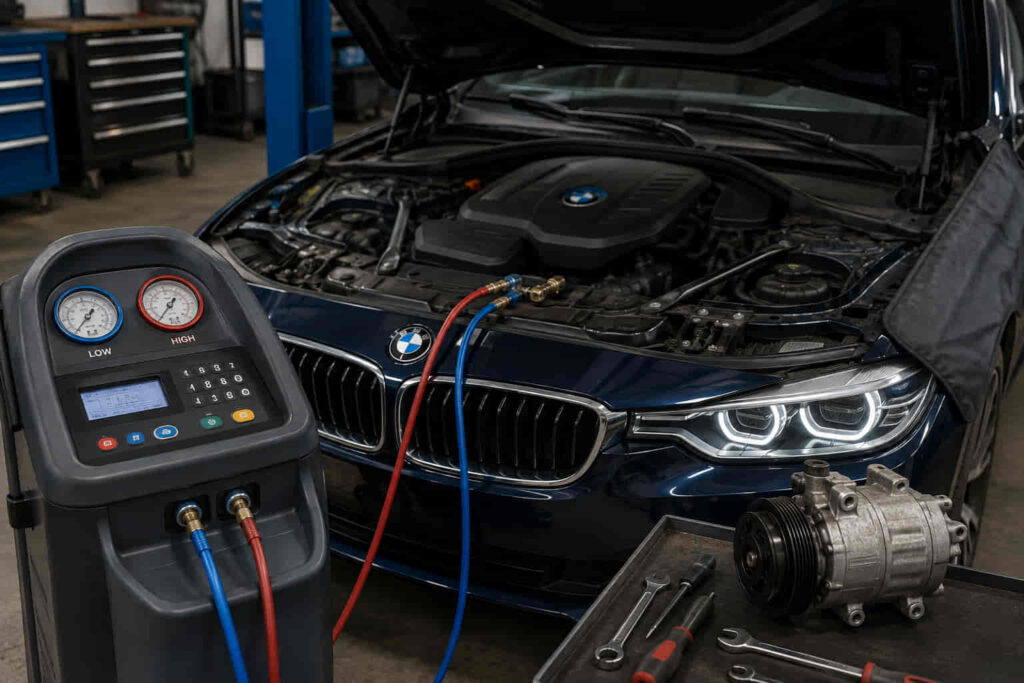
BMW Air Conditioning Repair is required when the vehicle’s HVAC system cannot provide consistent cooling because of problems involving refrigerant circulation, compressor operation, electrical controls, or damaged AC components. The air conditioning system is an important comfort system in BMW vehicles because it regulates cabin temperature, airflow, and air quality through a combination of mechanical and electronic components.
A BMW air conditioning system depends on several connected parts working together, including the AC compressor, condenser, evaporator, expansion valve, refrigerant circuit, blower motor, and climate control module. When one component fails, the entire cooling process can become inefficient or stop completely.
Many BMW owners experience AC problems such as warm air from the vents, weak airflow, unusual compressor noises, inconsistent cooling, or climate control errors. These symptoms can come from simple issues such as low refrigerant levels or clogged cabin air filters, but they can also indicate more expensive failures involving the compressor, electrical system, or control modules.
Understanding the cause of an air conditioning problem is important because different failures require different repair solutions. Adding refrigerant may temporarily improve cooling when the system is low on refrigerant, but it will not solve a leak or a failing compressor.
This guide explains how the BMW air conditioning system works, the most common problems, the causes behind AC failures, diagnostic methods, repair options, and the costs involved in restoring proper cooling performance.
How Does the BMW Air Conditioning System Work?
The BMW air conditioning system works by circulating refrigerant through a closed cooling cycle while using mechanical and electronic components to regulate cabin temperature and airflow. The system combines refrigeration technology with BMW’s climate control electronics to maintain a comfortable interior environment under different driving conditions.
The cooling process begins with the AC compressor, which pressurizes the refrigerant and moves it through the system. The high-pressure refrigerant then travels to the condenser, where heat is removed before the refrigerant continues through the expansion valve. This process reduces refrigerant pressure and allows it to absorb heat inside the evaporator.
The evaporator is responsible for cooling the air that enters the cabin. As warm air passes through the evaporator, heat is transferred to the refrigerant, creating cooler airflow that is distributed through the vehicle’s vents by the blower motor.
BMW climate control systems also depend on electronic components to maintain accurate temperature control. Sensors monitor cabin temperature, outside air conditions, and system performance, while the climate control module adjusts compressor operation, fan speed, and airflow direction.
Because BMW uses advanced electronic climate systems, an air conditioning problem may not always come from the cooling components themselves. A faulty sensor, control module issue, or electrical problem can prevent the system from operating correctly even when the compressor and refrigerant system are functional.
For example, a BMW with a functioning compressor but incorrect temperature readings may have a sensor or control problem rather than a refrigerant issue.
What Are Common BMW Air Conditioning Problems?
Common BMW air conditioning problems include warm air from the vents, weak cooling performance, compressor failure, refrigerant leaks, electrical faults, and climate control system malfunctions. These problems can affect different parts of the HVAC system and may require different repair approaches depending on the underlying cause.
One of the most common complaints is that the BMW AC blows warm air instead of cold air. This problem often occurs when refrigerant levels are too low, the compressor cannot circulate refrigerant properly, or the system cannot maintain the required pressure.
Weak airflow is another common issue. When air volume from the vents decreases, the cause may involve a restricted cabin air filter, blower motor problems, or airflow control issues. A cooling system can operate correctly but still provide poor cabin comfort if airflow is limited.
AC compressor problems are among the more expensive BMW air conditioning repairs. The compressor is responsible for creating refrigerant pressure, so a failure can prevent the entire cooling cycle from working. Signs of compressor problems may include unusual noises, inconsistent cooling, or complete loss of cold air.
Refrigerant leaks are also frequent causes of BMW AC problems. The refrigerant system is designed to operate as a sealed circuit, so a low refrigerant condition usually indicates that a leak exists somewhere in the system. Simply adding refrigerant without repairing the leak may only provide temporary improvement.
Electrical problems can also affect BMW climate control operation. Faulty sensors, damaged wiring, blown fuses, or control module failures can prevent the system from activating correctly.
For example, a BMW that produces cold air intermittently may have a pressure sensor or electrical control issue, while a system that never produces cold air may require inspection of the compressor and refrigerant circuit.
Read more: BMW Extended Warranty Cost
What Causes BMW Air Conditioning Problems?
BMW air conditioning problems are commonly caused by refrigerant issues, AC compressor failures, damaged cooling components, electrical faults, sensor failures, or climate control system problems. Because the BMW HVAC system combines refrigeration, mechanical components, and electronic controls, a failure in any part of the system can reduce cooling performance.
Low refrigerant levels are one of the most common causes of poor AC performance. The refrigerant is responsible for absorbing and transferring heat during the cooling cycle, so insufficient refrigerant prevents the evaporator from producing cold air effectively. However, low refrigerant is usually a symptom of another issue because the system should remain sealed during normal operation.
Refrigerant leaks can develop from damaged hoses, seals, condenser components, or other parts of the AC circuit. A leak allows refrigerant to escape gradually, causing the system pressure to drop and reducing cooling efficiency. Adding refrigerant without locating the leak may only provide a temporary solution.
A failed AC compressor is another major cause of BMW air conditioning problems. The compressor creates the pressure required to circulate refrigerant through the system, so a malfunctioning compressor can stop the cooling process completely. Compressor problems may result from internal wear, electrical failure, or insufficient lubrication.
Condenser and evaporator issues can also affect AC performance. The condenser removes heat from the refrigerant, while the evaporator cools the cabin air. Damage, blockage, or contamination in these components can reduce the system’s ability to regulate temperature.
Electrical failures are especially important in modern BMW vehicles because climate control systems rely heavily on electronic communication. Faulty temperature sensors, damaged wiring, blown fuses, or climate control module failures can prevent the system from operating correctly even when mechanical components are working.
For example, a BMW with low refrigerant pressure and weak cooling may require leak detection, while a vehicle with no compressor activation may have an electrical control or compressor-related failure.
What Symptoms Indicate BMW AC Needs Repair?
BMW AC repair is usually needed when the system shows symptoms such as warm air from the vents, inconsistent cooling, weak airflow, unusual noises, unpleasant odors, or climate control errors. Recognizing these symptoms early helps prevent minor issues from developing into more expensive repairs.
The most noticeable symptom is warm air coming from the vents when the air conditioning is turned on. This indicates that the cooling cycle is not working correctly and may involve refrigerant pressure problems, compressor failure, or control system issues.
Inconsistent cooling is another common warning sign. The AC may produce cold air sometimes but become warm during certain driving conditions. This behavior can indicate an intermittent electrical issue, failing compressor, sensor problem, or refrigerant pressure imbalance.
Weak airflow can occur even when the AC system is producing cold air. A restricted cabin air filter, failing blower motor, or airflow control problem can reduce the amount of cooled air entering the cabin.
Unusual noises from the AC system may indicate mechanical problems. Clicking, grinding, or rattling sounds can be associated with compressor wear, damaged components, or problems with the blower motor assembly.
Unpleasant odors from the vents may result from moisture buildup, microbial growth on the evaporator, or a dirty cabin air filter. While this issue does not always affect cooling performance, it indicates that the HVAC system requires attention.
Climate control warning messages or incorrect temperature adjustments may indicate electronic problems. Since BMW climate systems use multiple sensors and control modules, a software or electrical failure can affect system operation.
For example, a BMW that blows cold air only while driving at higher speeds may have airflow or condenser-related issues, while a vehicle that never produces cold air may require a complete AC system diagnosis.
How Do You Diagnose BMW Air Conditioning Problems?
Diagnosing BMW air conditioning problems requires testing refrigerant pressure, checking electrical operation, inspecting components, and analyzing climate control system data. Accurate diagnosis is important because replacing the wrong component can result in unnecessary repair expenses.
The first step is usually checking the basic operation of the system. Technicians verify whether the compressor activates, whether the blower motor operates correctly, and whether the climate control system responds to temperature settings.
Refrigerant pressure testing is a key diagnostic procedure because incorrect pressure levels can indicate leaks, overcharging, or component failures. The system must operate within specific pressure ranges to provide effective cooling.
A leak inspection may be required when refrigerant levels are low. Technicians may use specialized detection methods to identify damaged seals, hoses, condenser leaks, or other areas where refrigerant escapes.
Electrical testing is also important in BMW vehicles because the AC system depends on sensors, modules, and wiring. Diagnostic equipment can identify communication problems, sensor failures, or stored fault codes related to climate control operation.
Component inspection helps determine whether major parts such as the compressor, condenser, evaporator, or blower motor require repair or replacement. A complete diagnosis connects the symptoms with the actual failed component rather than relying only on visible signs.
For example, replacing an AC compressor without checking refrigerant pressure and electrical signals may not solve the problem if the original failure was caused by a sensor or wiring issue.
How Do You Repair BMW Air Conditioning Problems?
BMW air conditioning repair depends on the failed component, the severity of the problem, and whether the issue involves refrigerant, mechanical parts, or electronic controls. The correct repair approach should address the actual cause of the failure instead of only treating the visible symptom.
Refrigerant recharge is one of the simplest AC services, but it is only an effective solution when the system has lost refrigerant due to a minor service issue rather than an active leak. If refrigerant continues escaping, the leak must be identified and repaired before the system can operate correctly.
Leak repairs may involve replacing damaged seals, hoses, condenser components, or other parts of the refrigerant circuit. Because the BMW air conditioning system operates as a sealed system, restoring proper cooling requires maintaining the correct refrigerant pressure.
AC compressor replacement is one of the more complex BMW air conditioning repairs. The compressor is responsible for circulating refrigerant and creating the pressure required for cooling. When internal components fail or the compressor cannot engage, replacement may be necessary to restore system operation.
Other repairs may involve replacing the condenser, evaporator, expansion valve, blower motor, or climate control components. The correct repair depends on which part prevents the HVAC system from completing the cooling process.
Electrical repairs may also be required when sensors, wiring, fuses, or control modules prevent normal operation. Modern BMW climate systems rely heavily on electronic communication, so a component that appears mechanical may actually be controlled by an electrical fault.
For example, a BMW with a refrigerant leak requires leak repair and system recharge, while a vehicle with compressor failure may require component replacement and refrigerant service after installation.
How Much Does BMW Air Conditioning Repair Cost?
BMW Air Conditioning Repair Cost depends on the failed component, vehicle model, labor requirements, and whether the repair involves a simple service or major component replacement. BMW vehicles use advanced HVAC systems, so repair expenses can vary significantly depending on the complexity of the problem.
A basic diagnostic inspection is usually the first cost because technicians need to identify whether the issue comes from refrigerant pressure, electrical controls, or mechanical components. Accurate diagnosis helps prevent unnecessary replacement of expensive parts.
Refrigerant-related services are generally less expensive than major repairs because they involve pressure testing, leak inspection, and system recharge. However, if the system has a leak, additional repair work is required before the refrigerant can maintain proper levels.
Component replacement creates higher costs because parts such as AC compressors, condensers, and evaporators require more labor and specialized procedures. Compressor replacement, for example, often involves removing the failed unit, installing the new component, and restoring the refrigerant system.
The BMW model also affects repair costs because different vehicles use different HVAC layouts and component designs. A compact BMW 3 Series may have different labor requirements compared with a larger BMW X5 or X7 equipped with advanced climate control features.
Electrical diagnosis can also influence the final cost because locating intermittent sensor or module problems may require additional testing time.
For example, a BMW needing only a refrigerant recharge will have a different repair cost compared with a BMW requiring AC compressor replacement and electrical diagnosis.
How Can You Prevent BMW Air Conditioning Problems?
Preventing BMW air conditioning problems requires regular HVAC maintenance, monitoring system performance, and addressing early warning signs before they develop into major failures. Proper maintenance helps reduce stress on AC components and improves long-term cooling performance.
Replacing the cabin air filter at the recommended interval helps maintain proper airflow and reduces strain on the blower motor. A restricted filter can reduce ventilation performance and make the climate control system work harder.
Maintaining the refrigerant system is also important because low refrigerant levels can reduce cooling efficiency and increase stress on the compressor. If the system loses refrigerant repeatedly, the underlying leak should be repaired instead of relying on frequent recharging.
Regular inspection of AC performance helps identify problems early. Changes such as slower cooling, unusual noises, weak airflow, or inconsistent temperature control often appear before complete system failure.
Using the climate control system regularly can also help maintain component operation. Long periods without AC operation may contribute to seal deterioration and reduced system performance over time.
Addressing small problems early is one of the most effective ways to reduce repair costs. A minor refrigerant leak or sensor issue can become a more expensive failure if the system continues operating under abnormal conditions.
For example, repairing a small refrigerant leak early may prevent additional compressor damage caused by operating with insufficient lubrication and pressure.