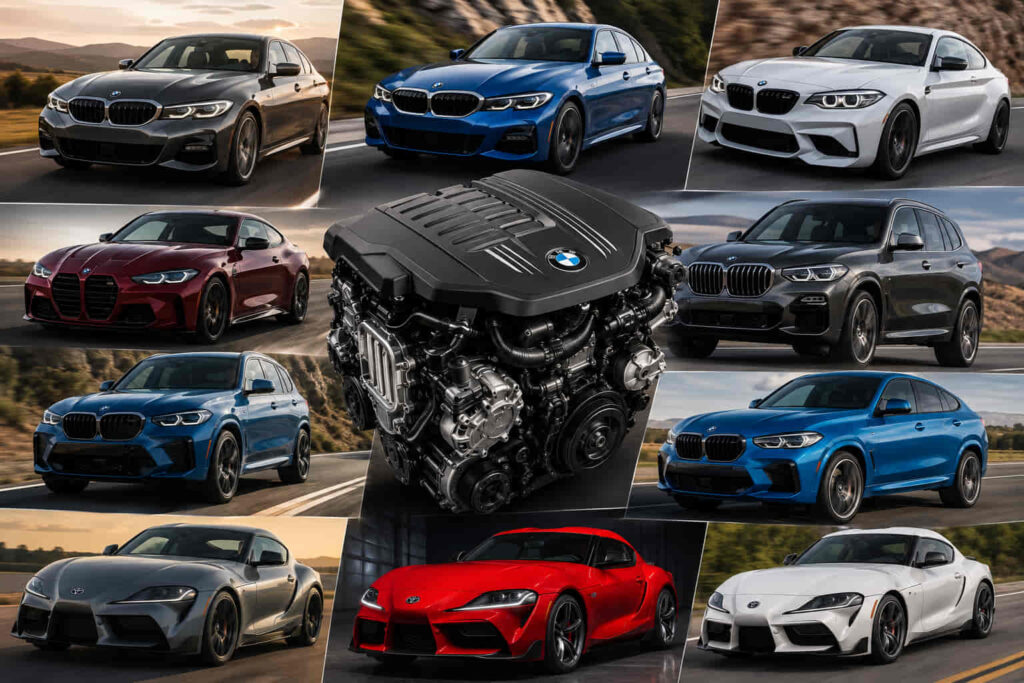
The BMW B58 engine is used in a wide range of BMW performance and luxury vehicles, as well as the Toyota GR Supra 3.0, making it one of the most recognized modern turbocharged inline-six engines. Introduced in 2015 as part of BMW’s modular engine family, the B58 was developed to replace the N55 engine while improving power delivery, efficiency, reliability, and tuning capability.
The B58 engine is a 3.0-liter turbocharged inline-six engine known for its smooth operation, strong torque output, and advanced engineering. BMW used this engine across multiple vehicle categories, including sports sedans, luxury sedans, SUVs, and performance-oriented models. The engine has also gained popularity outside BMW through its use in the Toyota GR Supra, where it became known for its performance potential and aftermarket support.
Identifying which cars have the B58 engine is important for buyers and enthusiasts because different models use different versions of the engine with varying power outputs, cooling systems, and factory tuning. A BMW M340i, for example, uses a performance-focused version of the B58, while SUV models such as the X3 M40i use the engine with different calibration to match vehicle weight and driving purpose.
This guide explains what the BMW B58 engine is, which cars use it, the different B58 versions, performance characteristics, reliability factors, and which B58-powered vehicles are worth considering.
What Is the BMW B58 Engine?
The BMW B58 engine is a 3.0-liter turbocharged inline-six gasoline engine developed by BMW as part of its modular engine family and introduced as a successor to the N55 engine. The engine was designed to deliver a balance between high performance, smooth operation, fuel efficiency, and long-term durability.
The B58 uses a straight-six cylinder layout, which is known for naturally balanced operation and smooth power delivery. Combined with BMW TwinPower Turbo technology, direct fuel injection, Double VANOS variable valve timing, and Valvetronic technology, the engine provides strong torque throughout a wide range of engine speeds.
One of the major engineering improvements of the B58 compared with earlier BMW turbocharged engines is its closed-deck engine design. This structure improves block strength and allows the engine to handle higher cylinder pressures, which contributes to its popularity among performance enthusiasts who modify and tune their vehicles.
The B58 also introduced improvements in thermal management. BMW designed the engine with an integrated cooling system that helps control operating temperatures more effectively during both daily driving and high-performance use. This allows the engine to maintain consistent performance under different conditions.
The engine has appeared in several generations, including the original B58, B58TU1, and newer B58TU2 versions. Each update brought improvements in efficiency, emissions control, cooling systems, and power delivery while maintaining the core inline-six turbocharged architecture.
Because of its combination of reliability, smooth performance, and tuning capability, the BMW B58 has become one of the most respected modern BMW engines. It is used in vehicles ranging from compact performance sedans to larger luxury SUVs.
What BMW Cars Have the B58 Engine?
Many BMW models use the B58 engine, including performance sedans, luxury vehicles, and SUVs equipped with the brand’s 40i and M Performance variants. The exact B58 application depends on the model year, market, and vehicle configuration because BMW adjusts engine output and calibration for different platforms.
The BMW 3 Series is one of the most recognized platforms using the B58 engine. Models such as the BMW 340i and later BMW M340i use B58 variants because the engine provides the combination of quick acceleration, smooth power delivery, and everyday usability expected from a performance sedan.
The BMW 4 Series also uses B58-powered models, including the 440i and M440i. These vehicles use the engine to provide stronger performance compared with four-cylinder versions while maintaining the refinement expected from BMW’s coupe and convertible lineup.
The BMW 5 Series and 7 Series use B58 engines in models such as the 540i and 740i. In these luxury sedans, BMW calibrates the engine for smooth torque delivery and comfortable highway performance rather than aggressive track-focused behavior.
BMW SUVs also use the B58 engine extensively. Models such as the X3 M40i, X4 M40i, X5 xDrive40i, and X6 xDrive40i use this engine because its strong low-end torque is well suited to heavier vehicles. The turbocharged inline-six provides the power needed for larger vehicles without sacrificing refinement.
The BMW Z4 M40i is another notable B58-powered vehicle. This roadster uses the engine in a lightweight performance application, allowing the B58’s torque and responsiveness to create a more engaging driving experience.
For example, a buyer looking for a practical daily vehicle with B58 performance may choose the BMW M340i or X3 M40i, while someone prioritizing sports car dynamics may prefer the Z4 M40i.
Read more: Buick Enclave Transmission Problems
Does the Toyota GR Supra Have the B58 Engine?
The Toyota GR Supra 3.0 uses the BMW B58 engine, making it one of the most well-known non-BMW vehicles powered by this turbocharged inline-six engine. Through the partnership between Toyota and BMW, the fifth-generation Supra received BMW-developed engine technology while Toyota focused on vehicle dynamics, chassis tuning, and driving characteristics.
The GR Supra 3.0 and 3.0 Premium models use a version of the B58 engine designed to provide strong acceleration, smooth power delivery, and significant tuning potential. The engine configuration matches the Supra’s performance-focused design because the inline-six layout provides excellent balance, while the turbocharger delivers strong torque throughout the rev range.
The B58-powered Supra became especially popular among enthusiasts because of its aftermarket support. The engine’s strong internal design allows many owners to increase power through software tuning, upgraded cooling systems, and performance modifications while maintaining daily drivability.
The Supra’s B58 application also demonstrates the flexibility of the engine platform. While BMW uses the B58 in luxury sedans and SUVs, Toyota uses the same fundamental engine architecture in a lightweight sports car environment. This creates a different driving experience because the vehicle platform, transmission calibration, and chassis setup influence how the engine delivers performance.
For example, a BMW X5 xDrive40i uses the B58 to provide smooth power for a larger SUV, while the Toyota GR Supra uses the same engine concept to deliver sharper acceleration and a more performance-oriented driving experience.
What Are the Different Versions of the B58 Engine?
The BMW B58 engine has evolved through several versions, including B58TU0, B58TU1, and B58TU2, with each generation introducing improvements in efficiency, cooling, emissions control, and performance. Although these versions share the same basic inline-six turbocharged architecture, BMW made engineering changes to improve reliability and meet changing performance requirements.
The original B58, often referred to as B58TU0, was introduced around 2015 and appeared in early models such as the BMW 340i, 440i, and 540i. This version replaced the N55 and introduced stronger engine construction, improved thermal management, and better performance capability.
The B58TU1 update arrived around 2018 and brought several technical improvements. BMW revised the cooling system, improved turbocharger technology, and adjusted engine management to increase efficiency and performance. This version is found in vehicles such as the BMW M340i, Z4 M40i, and Toyota GR Supra 3.0.
The newer B58TU2 version continues the development of the platform with additional improvements for emissions compliance and efficiency. Some applications combine the engine with mild-hybrid technology to improve fuel economy and reduce emissions while maintaining strong performance.
Each B58 generation maintains the characteristics that made the engine popular, including smooth inline-six operation, strong torque delivery, and tuning potential. However, differences in hardware and software mean that power output and modification options vary depending on the specific vehicle and model year.
Understanding the B58 version in a specific vehicle is important because two cars using the B58 name may have different cooling systems, turbochargers, engine management software, and factory performance levels.
How Much Power Does the B58 Engine Make?
The BMW B58 engine produces different levels of horsepower and torque depending on the vehicle model, engine generation, and factory calibration. BMW designed the B58 as a flexible engine platform, allowing the same basic architecture to deliver different performance levels across sedans, SUVs, and sports cars.
Early B58 applications produced around 320 to 335 horsepower depending on market specifications. These versions provided strong acceleration and smooth power delivery in models such as the BMW 340i, 440i, and 540i.
Later B58TU1 versions increased performance in several applications. Models such as the BMW M340i and Toyota GR Supra 3.0 received higher-output calibrations with stronger acceleration characteristics. The increased output came from improvements in engine management, turbocharger technology, and supporting systems.
Torque delivery is one of the main strengths of the B58 engine. The turbocharged inline-six design allows the engine to produce strong torque at lower engine speeds, which improves daily drivability and acceleration response. This characteristic makes the B58 suitable for both performance vehicles and larger SUVs.
Factory power output does not represent the full capability of the B58 platform. The engine has become popular in the tuning community because its strong construction and turbocharged design provide significant upgrade potential through software tuning and supporting modifications.
For example, a BMW M340i and Toyota GR Supra may use closely related B58 technology, but their factory tuning, vehicle weight, and drivetrain setup create different performance experiences.
Why Is the BMW B58 Engine Popular?
The BMW B58 engine is popular because it combines smooth inline-six performance, strong reliability, advanced engineering, and excellent tuning potential in one modern powertrain package. These characteristics have made it one of BMW’s most respected turbocharged engines among both daily drivers and performance enthusiasts.
The inline-six configuration is one of the major reasons for the engine’s reputation. Unlike smaller four-cylinder engines, the straight-six layout provides naturally balanced operation, resulting in smooth power delivery and refined engine characteristics.
The B58 also improved on several areas compared with previous BMW turbocharged engines. Its stronger engine block design, improved cooling system, and updated fuel delivery technology help it handle higher performance demands while maintaining everyday reliability.
Another reason for its popularity is aftermarket support. The B58 has become widely adopted by tuning companies because the engine responds well to software calibration and performance upgrades. Owners can increase power while keeping the engine suitable for regular street use when modifications are performed correctly.
The engine is also versatile because BMW uses it across different vehicle categories. The same basic engine family powers sports sedans, luxury cars, SUVs, and performance-focused models, demonstrating its adaptability.
For example, enthusiasts may choose the B58 because it offers many of the performance characteristics associated with BMW’s legendary inline-six engines while providing modern turbocharged efficiency and technology.
Are B58 Engine Cars Reliable?
B58 engine cars are generally considered reliable when properly maintained, with the engine’s design improvements helping it achieve a strong reputation compared with many earlier BMW turbocharged engines. However, long-term reliability still depends on maintenance history, driving conditions, and how the vehicle has been modified.
The B58 benefits from several engineering improvements, including a stronger engine block, improved thermal management, and updated internal components. These changes help the engine handle higher operating pressures and reduce some weaknesses associated with older BMW engines.
Regular maintenance remains important for preserving reliability. Oil changes, cooling system maintenance, proper fuel quality, and attention to early warning signs all influence the engine’s long-term performance.
Modified B58 vehicles require additional consideration. While the engine has strong tuning capability, aggressive modifications without supporting upgrades can increase stress on components such as the turbocharger, cooling system, and drivetrain.
Common ownership concerns are usually related to supporting components rather than the basic engine design. Cooling components, seals, sensors, and other accessories may require attention as mileage increases.
For example, a stock BMW M340i with complete maintenance records may provide strong long-term reliability, while a heavily modified B58 vehicle with poor maintenance history may experience avoidable problems.
Which B58 Engine Cars Are the Best to Buy?
The best B58-powered vehicle depends on whether the buyer prioritizes performance, practicality, luxury, or tuning potential. Because BMW uses the B58 engine across multiple platforms, each vehicle provides a different combination of driving characteristics and ownership benefits.
The BMW M340i is one of the most popular B58 vehicles because it combines sports sedan performance with daily usability. It offers strong acceleration, modern technology, and enough practicality for regular driving.
The BMW X3 M40i is a strong choice for buyers who want B58 performance in an SUV format. It provides the engine’s strong torque delivery while offering additional cargo space and a higher driving position.
The Toyota GR Supra 3.0 appeals to drivers who prioritize sports car characteristics. Its lightweight platform and rear-wheel-drive layout allow the B58 engine to deliver a more focused performance experience.
The BMW Z4 M40i is another option for enthusiasts seeking an open-top sports car with B58 power. Its smaller size and performance-oriented design highlight the engine’s responsiveness.
Choosing the right B58 vehicle depends on the intended use. Buyers looking for a daily performance car may prefer the M340i, while those wanting maximum driving enjoyment may consider the GR Supra or Z4 M40i.