Choosing the best Cummins engine year requires more than comparing horsepower or production dates. Every Cummins generation offers different strengths. Some engines deliver exceptional reliability for hundreds of thousands of miles. Others introduce fuel system or emissions problems that increase repair costs. Understanding these differences helps you avoid expensive mistakes and choose a truck that matches your needs.
Cummins has powered Ram heavy duty trucks for decades. During that time, the company introduced several major engine generations. The legendary 5.9L 12 Valve earned a reputation for mechanical simplicity. The 5.9L Common Rail improved performance and drivability. The modern 6.7L Cummins added more power and better towing capability. However, stricter emissions equipment also changed long term reliability for some model years.
Many buyers assume the newest truck is the best option. That assumption is often wrong. A well maintained older Cummins can outperform a newer model with expensive emissions issues. Reliability depends on engine design, fuel injection technology, maintenance history, and intended use. These factors matter more than model year alone.
This guide compares every major Cummins generation to identify the best model years. It also explains which years deserve extra caution and why. You will learn how each engine performs in daily driving, heavy towing, and long term ownership. By the end of this guide, you will know which Cummins engine offers the best value for your budget.
What Is the Best Cummins Engine Year?
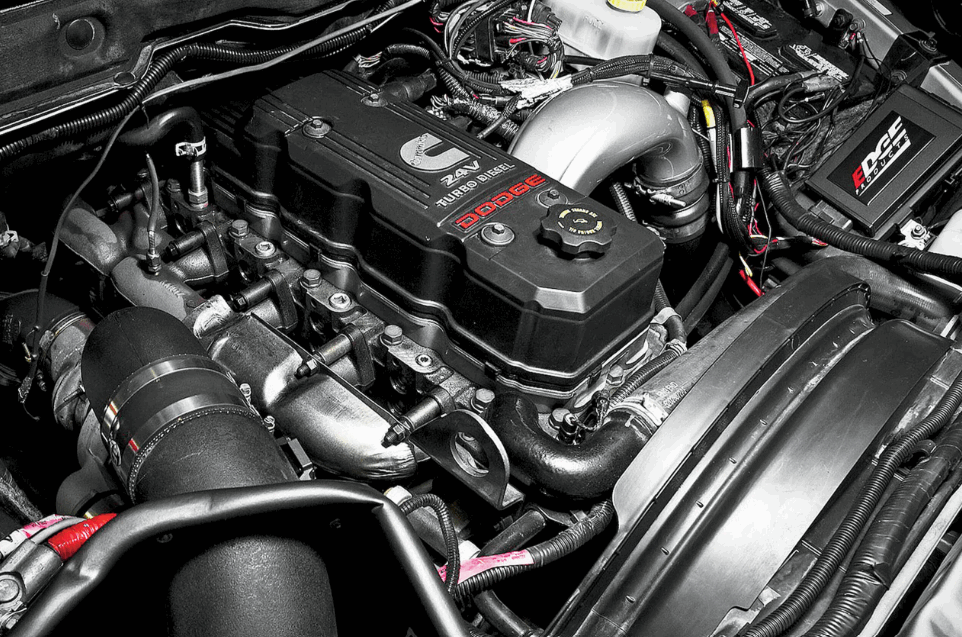
The best Cummins engine year for most buyers is 2006. This model combines the proven 5.9L Common Rail Cummins engine with the reliable CP3 fuel injection system before stricter emissions equipment became standard. It delivers excellent durability, strong towing performance, and lower maintenance costs than many newer diesel trucks. Many owners report driving well beyond 300,000 miles with routine servicing, making the 2006 model one of the most respected Cummins-powered trucks ever built.
Several factors separate the best Cummins model years from the rest. Engine reliability is the most important consideration because major diesel repairs can cost thousands of dollars. Fuel system design also plays a significant role. Earlier engines equipped with the P7100 injection pump earned an outstanding reputation for mechanical durability, while the later CP3 system improved fuel delivery without sacrificing long term dependability. By contrast, engines with more complex emissions equipment often require additional maintenance as mileage increases.
Ownership costs also influence which model year provides the best value. A reliable engine reduces unexpected repairs and spends more time on the road. Many buyers also prefer model years with strong aftermarket support because replacement parts and performance upgrades remain widely available. This combination lowers maintenance expenses and makes future modifications easier.
Although the 2006 Cummins stands out as the best overall choice, it is not the perfect option for every driver. Buyers who prioritize mechanical simplicity often prefer the 1996 to 1998 12 Valve models. Those who need greater towing capacity and modern features may find later 6.7L Cummins trucks more suitable. The ideal model year depends on your budget, driving habits, and long term ownership goals, but reliability should always remain the first priority.
Which Cummins Engine Generations Are the Most Reliable?
The most reliable Cummins engine generations are the 5.9L 12 Valve, 5.9L Common Rail, and early 6.7L Cummins. Each engine offers different advantages, but all three have earned a strong reputation for durability when owners follow the recommended maintenance schedule. Their simple design, proven fuel systems, and long service life make them popular choices in the used diesel truck market.
The 5.9L 12 Valve, produced from 1989 through 1998, remains the benchmark for mechanical reliability. Its straightforward design uses fewer electronic components than later generations, which reduces the number of potential failure points. Models built between 1994 and 1998 feature the legendary P7100 injection pump, often called the P Pump. Many diesel enthusiasts consider this fuel system one of the strongest ever installed in a pickup truck because it delivers consistent performance and responds well to maintenance and performance upgrades. It is common to find well maintained 12 Valve engines that continue running after 500,000 miles.
The 5.9L Common Rail, introduced in 2003, represents an excellent balance between modern performance and long term dependability. Cummins replaced the previous fuel system with the CP3 high pressure injection pump, which improved fuel delivery, throttle response, and overall efficiency. Model years from 2004.5 to 2007 are especially desirable because they avoid the complex emissions equipment found on later engines. These trucks also offer better drivability than earlier generations while maintaining excellent reliability under heavy towing and daily use.
The 6.7L Cummins delivers more horsepower and torque than the older 5.9L engines. It also provides stronger towing performance and quieter operation. However, emissions equipment such as the EGR valve, diesel particulate filter, and selective catalytic reduction system adds complexity to long term ownership. Newer model years have become more dependable as Cummins refined these systems, but maintenance costs usually remain higher than those of the 5.9L Common Rail.
Each generation excels in different situations. The 12 Valve appeals to buyers who value simplicity and durability. The 5.9L Common Rail offers the best combination of reliability and modern performance. The 6.7L Cummins suits drivers who need greater towing capability and updated technology. Choosing the right generation depends on how you plan to use the truck, but reliability, maintenance history, and overall condition should always outweigh age alone.
Which Cummins Engine Years Should You Buy?
The best Cummins engine years to buy are 1996 to 1998, 2004.5 to 2007, and 2019 or newer. These model years consistently deliver strong reliability, dependable performance, and lower long term ownership costs than many alternatives. Each range suits a different type of buyer, but all have built a solid reputation among diesel owners and industry experts.
The 1996 to 1998 Ram trucks equipped with the 5.9L 12 Valve Cummins remain a favorite for buyers who value simplicity. These trucks use the legendary P7100 injection pump, which offers outstanding durability and excellent tuning potential. The engine contains fewer electronic components than later generations, making diagnosis and repairs much easier. Owners who perform regular oil changes and cooling system maintenance often keep these engines on the road for well over 500,000 miles.
The 2004.5 to 2007 models represent the sweet spot for many buyers. They combine the 5.9L Common Rail Cummins with the reliable CP3 fuel pump while avoiding the diesel particulate filter introduced on later trucks. This generation delivers smooth power, better fuel economy, and improved towing performance without adding complex emissions systems. Replacement parts remain widely available, and aftermarket support continues to grow. These advantages make the 2006 and 2007 model years especially attractive for buyers seeking long term value.
Buyers who prefer a newer truck should consider 2019 or newer 6.7L Cummins models. Cummins and Ram improved emissions technology, engine calibration, and transmission performance compared with earlier versions of the 6.7L engine. These trucks provide higher towing capacity, greater torque, and a more refined driving experience. Although maintenance costs remain higher than older 5.9L models, improved reliability helps offset those expenses over time.
Choosing the right model year ultimately depends on your priorities. The 1996 to 1998 models suit enthusiasts who appreciate mechanical simplicity. The 2004.5 to 2007 trucks offer the best balance of reliability and modern performance. The 2019 and newer models provide the latest technology and the strongest towing capability. Regardless of the model year, always inspect service records, maintenance history, and overall vehicle condition before making a purchase. A well maintained Cummins almost always proves to be a better investment than a neglected truck with fewer miles.
Which Cummins Engine Years Should You Avoid?
Some Cummins engine years deserve extra caution because they are more likely to develop expensive mechanical or emissions related problems. That does not mean every truck from these years is unreliable. Many owners enjoy years of dependable service with proper maintenance. However, these models require a more thorough inspection before purchase because repair costs can increase quickly if major components fail.
The 1998.5 to 2002 models often raise the biggest concerns because they use the VP44 electronic injection pump. This fuel system depends on a properly functioning lift pump to maintain adequate fuel pressure. When the lift pump fails, the VP44 can lose lubrication and overheat, leading to premature failure. Replacing the injection pump is expensive, so buyers should confirm that the fuel system has been upgraded or maintained correctly before purchasing one of these trucks.
The 2007.5 to 2012 models introduced the 6.7L Cummins along with stricter emissions equipment. Components such as the exhaust gas recirculation system and diesel particulate filter helped reduce emissions, but they also increased maintenance requirements. Trucks used mainly for short trips often struggle to complete regeneration cycles, allowing soot to build inside the emissions system. Over time, this buildup can reduce performance and trigger costly repairs if owners ignore warning signs.
Some 2013 to 2018 models also require careful evaluation. Cummins improved engine performance during these years, but emissions components continued to influence long term reliability. Sensors, EGR coolers, and diesel exhaust fluid systems can wear out as mileage increases. Regular highway driving and scheduled maintenance usually reduce these risks, but neglected trucks may require significant repairs after years of heavy use.
Model year alone should never determine your buying decision. A well maintained 2010 Cummins with complete service records can be a better investment than a poorly maintained 2006 model. Always inspect maintenance history, fuel system condition, transmission performance, and signs of emissions system repairs before making a purchase. A detailed pre purchase inspection often reveals more about a truck’s future reliability than its production year alone.
How Does the 5.9L Cummins Compare With the 6.7L Cummins?
The 5.9L Cummins is the better choice for buyers who value simplicity and long term reliability. The 6.7L Cummins offers greater power, higher towing capacity, and more advanced technology. Neither engine is better in every situation. The right option depends on how you plan to use your truck and how much maintenance you are willing to perform over the years.
The 5.9L Cummins built its reputation on a simple and durable design. Earlier versions use fewer electronic components and no modern emissions equipment, making them easier to maintain and repair. The Common Rail models produced between 2004.5 and 2007 combine excellent fuel efficiency with dependable performance, making them one of the most desirable diesel engines in the used truck market. Replacement parts are widely available, and the aftermarket offers countless upgrades for owners who want more power without sacrificing reliability.
The 6.7L Cummins introduced larger displacement, improved combustion efficiency, and significantly higher torque. These improvements allow the engine to tow heavier trailers with less effort while delivering a quieter and more refined driving experience. Newer trucks also benefit from stronger transmissions, updated suspension systems, and modern safety features. These advantages make the 6.7L Cummins an excellent choice for commercial work and heavy towing.
The biggest difference between the two engines is long term ownership cost. Most 5.9L models require less maintenance because they do not rely on complex emissions systems. The 6.7L Cummins uses components such as the EGR valve, diesel particulate filter, and selective catalytic reduction system to meet modern emissions standards. These systems improve environmental performance but also introduce additional maintenance and repair expenses as the truck ages.
Buyers looking for maximum reliability usually prefer the 5.9L Cummins, especially the 2004.5 to 2007 models. Drivers who regularly tow heavy loads or want modern comfort often find the 6.7L Cummins a better investment despite its higher maintenance costs. Both engines can exceed several hundred thousand miles when owners follow the recommended service schedule, making either one a dependable choice for long term ownership.
Which Cummins Engine Is Best for Different Driving Needs?
The best Cummins engine depends on how you use your truck. Some owners prioritize maximum reliability, while others need stronger towing performance or modern features. Understanding your primary driving needs makes it easier to choose the right engine generation and avoid paying for capabilities you may never use.
The 1996 to 1998 5.9L 12 Valve Cummins is the best option for buyers who value durability and mechanical simplicity. Its proven P7100 injection pump and straightforward engine design make routine maintenance easier than most newer diesel trucks. Many owners choose this generation for long term ownership because it offers excellent reliability and strong aftermarket support. It also appeals to enthusiasts who plan to modify the engine for higher performance.
The 2004.5 to 2007 5.9L Common Rail Cummins is the best all around choice for most drivers. It delivers an ideal balance of reliability, fuel economy, towing capability, and everyday comfort. The CP3 fuel pump has a strong reputation for dependability, while the engine avoids the diesel particulate filter found on later models. This combination reduces maintenance costs without sacrificing performance, making these trucks highly desirable in the used market.
The 2019 and newer 6.7L Cummins is the best choice for heavy towing and commercial use. These trucks produce significantly more torque than earlier generations and benefit from improved transmission performance, refined engine calibration, and updated towing technology. Drivers who regularly tow large campers, equipment trailers, or construction machinery often appreciate the additional power and improved stability offered by these newer models.
Budget also plays an important role when choosing a Cummins engine. Older trucks usually cost less to purchase, but some may require suspension, transmission, or interior repairs because of their age. Newer trucks demand a higher purchase price, yet they offer modern safety systems, improved ride quality, and better overall comfort. Buyers should compare total ownership costs instead of focusing only on the initial purchase price.
The best Cummins engine is the one that matches your driving habits and maintenance expectations. Buyers seeking legendary reliability should focus on the 5.9L generations, especially the 1996 to 1998 and 2004.5 to 2007 models. Drivers who need maximum towing capacity and modern technology should consider a newer 6.7L Cummins. Choosing the right engine for your specific needs will provide better value than simply buying the newest or most powerful truck available.
Conclusion
The best Cummins engine year ultimately depends on what you expect from your truck, but a few models consistently stand above the rest. The 2006 model remains the top recommendation for most buyers because it combines the dependable 5.9L Common Rail Cummins, the reliable CP3 fuel pump, and a pre emissions design that keeps maintenance costs under control. Buyers who prefer mechanical simplicity should consider the 1996 to 1998 12 Valve models, while those who need maximum towing capability and modern features will find the 2019 and newer 6.7L Cummins more suitable.
No matter which model year you choose, the condition of the truck is just as important as the engine itself. A well maintained Cummins with complete service records often delivers better long term value than a newer truck with a poor maintenance history. Before making a purchase, inspect the fuel system, transmission, suspension, cooling system, and any emissions components. A professional pre purchase inspection can also help identify hidden problems before they become expensive repairs.
Cummins has built one of the strongest reputations in the diesel industry because its engines can deliver exceptional durability when owners follow the recommended maintenance schedule. Choosing the right model year allows you to enjoy that reliability while avoiding common issues associated with less dependable generations. By comparing reliability, performance, maintenance costs, and intended use, you can confidently select a Cummins powered truck that meets your needs today and continues to perform for many years to come.