When shopping for a new or used vehicle, reliability is often one of the most important factors influencing the final decision. While features, performance, and design certainly matter, most buyers want an engine that can deliver years of dependable service without generating expensive repair bills. If you have been researching Subaru models, Porsche sports cars, or other vehicles equipped with boxer engines, you have probably asked the question: Are boxer engines reliable?
Boxer engines stand out from traditional inline and V-shaped engines because of their unique horizontally opposed piston layout. This design offers several advantages, including a lower center of gravity, improved vehicle stability, and smoother operation. These benefits have made boxer engines a signature feature of brands such as Subaru and Porsche for decades.
However, boxer engines have also developed a reputation for certain maintenance concerns. Potential buyers frequently worry about oil leaks, head gasket failures, higher repair costs, and whether these engines can withstand high mileage over the long term. Such concerns often create uncertainty when comparing vehicles equipped with boxer engines to those using more conventional engine designs.
In this comprehensive guide, we will examine the real-world reliability of boxer engines, explore their most common problems, discuss maintenance requirements, compare them with inline engines, and help you determine whether a boxer-powered vehicle is the right choice for your needs.
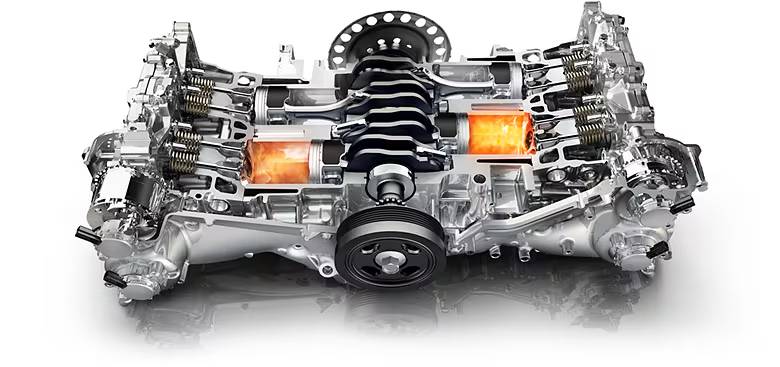
What Is a Boxer Engine?
A boxer engine, also known as a horizontally opposed engine, is a unique engine configuration in which the pistons move horizontally rather than vertically. Unlike inline engines, where cylinders are arranged in a single row, or V engines, where cylinders are positioned at an angle, boxer engines place the cylinders flat on opposite sides of the crankshaft.
The name “boxer” comes from the way the pistons move. As opposing pistons extend and retract simultaneously, they resemble two boxers throwing punches toward each other. This balanced motion helps reduce vibration and contributes to smoother engine operation.
One of the most significant advantages of this design is its low center of gravity. Since the engine sits lower in the vehicle, weight is distributed closer to the road surface. This improves handling, cornering stability, and overall driving dynamics. For this reason, manufacturers such as Subaru and Porsche continue to rely on boxer engines across many of their vehicle lineups.
Another benefit is natural balance. Because the opposing pistons counteract each other’s movement, boxer engines produce less vibration than many traditional engine designs. This can reduce wear on internal components over time and contribute to long term durability.
Although boxer engines are less common than inline or V engines, they have built a loyal following among drivers who value stability, performance, and engineering innovation. Understanding how they work is the first step toward evaluating their reliability.
Why Are Boxer Engines Considered Reliable?
Boxer engines have earned a reputation for reliability because of several engineering advantages that contribute to durability and long term performance.
One of the primary reasons is their exceptional balance. In a boxer engine, opposing pistons move simultaneously in opposite directions, naturally canceling out many of the vibrations found in other engine configurations. Lower vibration levels can reduce stress on internal components such as bearings, crankshafts, and engine mounts. Over time, this may help extend the life of critical engine parts.
Another important factor is thermal efficiency. The symmetrical layout of a boxer engine allows heat to be distributed more evenly across the cylinders. Consistent temperature management can reduce the risk of localized hot spots that contribute to premature wear.
The low center of gravity also indirectly supports reliability. Vehicles equipped with boxer engines often experience improved weight distribution and handling stability. Reduced body roll and smoother vehicle dynamics can lessen stress on various drivetrain components during everyday driving.
Real world evidence further supports their reputation. Millions of Subaru vehicles have accumulated hundreds of thousands of miles using boxer engines. Similarly, Porsche has relied on boxer engines for decades in some of its most iconic sports cars. Numerous owners report reaching 200,000 miles or more with proper maintenance and timely servicing.
Like any engine design, reliability ultimately depends on maintenance habits. Regular oil changes, cooling system inspections, and adherence to manufacturer service schedules play a major role in determining how long a boxer engine will last.
Common Boxer Engine Problems Every Buyer Should Know
While boxer engines are generally reliable, they are not without weaknesses. Understanding the most common issues can help buyers make informed decisions and avoid unexpected repair expenses.
Oil leaks are among the most frequently reported concerns. Because boxer engines position their cylinders horizontally, oil can accumulate around seals and gaskets in ways that differ from conventional engines. Over time, aging seals may allow oil to seep from valve covers or other engine components. While many leaks are minor, neglected leaks can eventually lead to more serious problems.
Head gasket failure is another issue often associated with older Subaru boxer engines, particularly models produced during certain generations. A failing head gasket can allow coolant and engine oil to mix, potentially causing overheating and significant engine damage if not addressed promptly. Fortunately, modern boxer engines have largely improved in this area.
Some owners also report higher than average oil consumption. Certain boxer engine generations may consume oil between service intervals, requiring drivers to monitor oil levels more closely. Ignoring low oil levels can accelerate engine wear and reduce reliability.
Maintenance accessibility presents another challenge. Because the cylinders are mounted horizontally, tasks such as spark plug replacement can be more labor intensive than on many inline engines. As a result, repair and maintenance costs may sometimes be higher.
Despite these concerns, it is important to keep them in perspective. Many boxer engine problems are well documented, predictable, and manageable through preventive maintenance. Buyers who understand these potential issues and follow recommended service schedules often enjoy many years of dependable ownership.
How Long Do Boxer Engines Last?
One of the most common questions among car buyers is whether a boxer engine can deliver the same longevity as more conventional engine designs. The answer is generally yes. A well maintained boxer engine is capable of lasting well beyond 200,000 miles, and many owners have reported reaching 250,000 to 300,000 miles without major engine failures.
Several factors influence the lifespan of a boxer engine. Regular oil changes are perhaps the most important. Because lubrication plays a critical role in protecting internal engine components, using the correct oil and following the manufacturer’s service intervals can significantly extend engine life.
The cooling system is equally important. Overheating can shorten the lifespan of any engine, including boxer engines. Maintaining proper coolant levels, replacing worn hoses, and addressing cooling system issues promptly can help prevent expensive repairs later.
Driving habits also affect longevity. Vehicles that are driven aggressively on a regular basis may experience greater wear than those operated under normal conditions. Consistent highway driving often places less stress on the engine than frequent stop and go traffic.
Real world examples provide strong evidence of boxer engine durability. Many Subaru Outback, Forester, and Legacy owners have accumulated hundreds of thousands of miles while maintaining reliable performance. Porsche boxer engines are also known for their ability to withstand high mileage when properly serviced.
Ultimately, a boxer engine’s lifespan depends far more on maintenance practices than on its unique design. Buyers willing to follow recommended maintenance schedules can reasonably expect many years of dependable operation.
Boxer Engine vs Inline Engine Reliability
When comparing engine reliability, boxer engines and inline engines each offer distinct advantages and disadvantages. Neither design is universally superior, but understanding the differences can help buyers choose the option that best fits their priorities.
Boxer engines excel in balance and smoothness. Their horizontally opposed piston layout naturally reduces vibration, which can decrease stress on internal engine components. This design also lowers the vehicle’s center of gravity, improving handling and stability. These characteristics contribute to the strong reputation boxer engines have earned among enthusiasts and long term owners.
Inline engines, on the other hand, are generally simpler in design. Their straightforward layout often makes maintenance and repairs easier and less expensive. Mechanics are more familiar with inline engines, and access to engine components is usually less complicated. This can reduce labor costs during routine servicing and repairs.
From a reliability standpoint, both engine types can achieve excellent longevity when properly maintained. The key difference often lies in ownership costs. Inline engines may offer lower maintenance expenses, while boxer engines provide unique driving dynamics and engineering benefits that many drivers appreciate.
Buyers focused primarily on minimizing repair costs may lean toward inline engines. Those who value vehicle stability, smoother operation, and all wheel drive performance may find boxer engines more appealing despite potentially higher maintenance complexity.
The reality is that reliability depends less on engine configuration and more on manufacturing quality, maintenance history, and owner care. A well maintained boxer engine can be just as dependable as a well maintained inline engine.
Maintenance Costs and Ownership Experience
Maintenance costs are one of the biggest concerns for anyone considering a vehicle with a boxer engine. While boxer engines are not necessarily expensive to own, certain maintenance procedures can cost more than similar services on inline engines.
Routine maintenance items such as oil changes, air filter replacements, and fluid services are generally comparable to other vehicles in the same class. However, some repairs require additional labor because of the engine’s horizontal layout. For example, replacing spark plugs can be more time consuming due to limited access around the engine bay.
Major repairs, such as replacing head gaskets or repairing oil leaks, may also involve higher labor costs. Fortunately, these repairs are not routine requirements for most modern boxer engines. Many owners go years without encountering major mechanical issues.
Despite occasional maintenance challenges, boxer engine owners frequently report positive ownership experiences. Subaru drivers often praise the combination of reliability, all weather capability, and long term durability. Porsche owners appreciate the balance of performance and engineering sophistication that boxer engines provide.
Another advantage is predictable maintenance. Most common boxer engine issues are well understood by experienced technicians, making it easier to identify potential problems before they become serious. Preventive maintenance can significantly reduce the likelihood of unexpected breakdowns and costly repairs.
For buyers willing to stay proactive with servicing, ownership costs are generally reasonable. The additional maintenance complexity is often outweighed by the engine’s unique characteristics, durability, and driving experience.
Should You Buy a Vehicle with a Boxer Engine?
Whether you should buy a vehicle with a boxer engine ultimately depends on your priorities as a driver and vehicle owner. The good news is that modern boxer engines have proven themselves to be reliable, durable, and capable of delivering excellent performance over the long term when properly maintained.
A boxer engine may be an excellent choice if you value vehicle stability, balanced handling, and a smooth driving experience. The low center of gravity created by the engine’s design contributes to better road manners and improved control, especially in challenging weather conditions. This is one reason why Subaru vehicles have built such a strong reputation among drivers who frequently encounter rain, snow, or rough terrain.
Buyers looking for a vehicle that can easily surpass 200,000 miles may also find boxer engines attractive. Numerous high mileage examples demonstrate that these engines are capable of impressive longevity when maintenance schedules are followed consistently.
However, there are situations where another engine configuration may be more suitable. If your primary goal is minimizing maintenance complexity and repair costs, an inline engine may offer a simpler ownership experience. In some areas, finding technicians with extensive boxer engine expertise may also be more difficult than finding mechanics familiar with conventional engine layouts.
For most drivers, though, the advantages outweigh the drawbacks. A well maintained boxer engine provides a unique combination of reliability, performance, and driving confidence that continues to attract loyal owners around the world.
Conclusion
So, are boxer engines reliable?
The short answer is yes. Modern boxer engines are generally considered reliable and capable of delivering many years of dependable service. While they have certain characteristics that differ from traditional inline and V shaped engines, their unique design does not make them inherently less reliable.
Boxer engines offer several notable advantages, including excellent balance, reduced vibration, a lower center of gravity, and strong long term durability. These qualities have helped manufacturers such as Subaru and Porsche build decades of success around the boxer engine platform.
Like any engine, boxer engines are not immune to problems. Issues such as oil leaks, increased oil consumption, and head gasket concerns have affected certain generations. However, many of these problems are either associated with older models or can be effectively managed through proper maintenance and timely repairs.
For prospective buyers, the most important factor is not whether the vehicle has a boxer engine, but whether it has been properly maintained. A well cared for boxer engine can easily exceed 200,000 miles and continue performing reliably for years to come.
If you are considering a vehicle equipped with a boxer engine, there is little reason to avoid it solely because of reliability concerns. With routine maintenance and responsible ownership, a boxer powered vehicle can be a dependable and rewarding investment.
Have you owned a vehicle with a boxer engine? Share your experience and insights to help other buyers make a more informed decision.