The Ford F-150 Lead Frame Recall addresses a transmission safety issue in certain trucks equipped with the 6R80 automatic transmission. A faulty molded lead frame disrupts communication between internal transmission sensors and the control modules. As a result, the truck may shift harshly, downshift unexpectedly, enter limp mode, or display incorrect speed readings. These problems reduce driving performance and can increase the risk of losing vehicle control.
Many owners assume every Ford F-150 qualifies for the recall, but that is not true. Ford only included specific model years, production periods, and VIN ranges in the program. Some trucks develop the same symptoms even though they do not qualify for free repairs. For that reason, checking your VIN is the first step before scheduling service or replacing transmission components.
This guide explains the Ford F-150 Lead Frame Recall in clear and practical terms. You will learn which model years are affected, what symptoms usually appear first, and why the lead frame fails over time. The article also explains how to check your recall status, what happens during the repair process, and how much replacement may cost if your truck no longer qualifies for coverage. By the end, you will know how to identify the problem early and choose the most appropriate repair option for your Ford F-150.
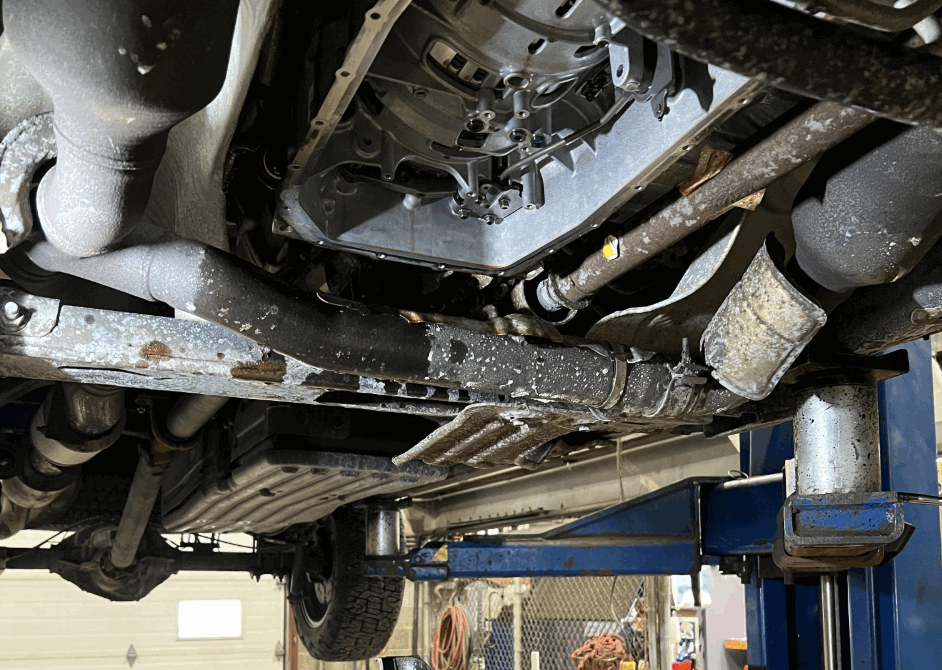
What Is the Ford F-150 Lead Frame Recall?
The Ford F-150 Lead Frame Recall is a safety campaign that addresses a defective molded lead frame inside certain 6R80 automatic transmissions. The lead frame contains electronic circuits and speed sensors that help the transmission control module monitor gear changes and vehicle speed. When this component fails, the transmission may receive incorrect data and react unexpectedly. Even a small sensor error can affect shift quality and reduce overall driving safety.
Ford introduced the recall after receiving reports of unexpected downshifts and inaccurate output speed sensor readings in affected vehicles. In some cases, the transmission suddenly shifted into first gear while the truck was moving at higher speeds. This behavior increased the risk of losing traction, especially on wet roads or during heavy traffic. Although the transmission usually continued to operate, the unexpected gear change created a potential safety hazard that required immediate attention.
Most affected vehicles use the 6R80 six-speed automatic transmission, which Ford installed in selected F-150 models and several other trucks during specific production years. However, not every vehicle equipped with a 6R80 transmission qualifies for the recall. Ford based eligibility on the vehicle identification number, production date, and manufacturing records rather than the transmission model alone. Owners should always verify their VIN before assuming their truck is covered.
The recall typically involves replacing the faulty molded lead frame or updating the transmission control software, depending on the inspection results. Technicians also perform a diagnostic scan to confirm the failure and ensure the transmission operates correctly after the repair. Completing the recall as soon as possible helps restore normal shifting performance and reduces the chance of further transmission damage or unexpected driving issues.
Which Ford F-150 Model Years Are Affected?
The Ford F-150 Lead Frame Recall affects selected trucks built with the 6R80 six speed automatic transmission during specific production years. Most recalled vehicles belong to the 2011 through 2013 model years, although recall eligibility depends on the vehicle identification number rather than the model year alone. Ford assigned eligible vehicles based on production records, which means two trucks from the same year may have different recall statuses.
Many owners believe every 2011 to 2013 Ford F-150 qualifies for a free repair. However, Ford only included vehicles equipped with affected molded lead frames. Trucks produced outside the specified manufacturing period or fitted with different transmission components may not qualify. Because of this, checking the VIN provides the most accurate way to confirm whether the recall applies to your vehicle.
Ford also installed the 6R80 transmission in several other models, including the Expedition, Mustang, and Lincoln Navigator. Some of these vehicles experienced similar lead frame failures and received separate recall campaigns or customer satisfaction programs. Even so, each program follows its own eligibility requirements. Owners should avoid assuming that recall coverage is identical across different Ford vehicles.
If your Ford F-150 falls within the affected production range, schedule an inspection as soon as possible. An authorized Ford dealer can verify your VIN, inspect the transmission, and determine whether your truck qualifies for a free repair. Taking action early reduces the risk of unexpected shifting problems and helps prevent additional transmission damage before the condition becomes more severe.
What Are the Most Common Symptoms of a Failing Lead Frame?
A failing lead frame often causes noticeable transmission problems before it stops working completely. The most common symptom is unexpected downshifting, where the transmission shifts into a lower gear without driver input. This change can happen at highway speeds and may cause the truck to decelerate suddenly. Drivers often notice a sharp jolt followed by higher engine RPM and reduced driving comfort.
Many trucks also develop harsh or delayed shifting as the lead frame begins to fail. The transmission may hesitate before changing gears or shift with excessive force during acceleration. In some cases, the truck struggles to select the correct gear, especially when moving from a complete stop. These symptoms usually become more frequent as the internal sensors continue to lose accuracy.
Another common warning sign is the Check Engine Light or a wrench warning indicator on the dashboard. These warnings often appear when the transmission control module detects incorrect speed sensor data. Diagnostic scans may reveal trouble codes related to the output speed sensor or communication faults inside the transmission. Ignoring these warning lights can allow the problem to worsen over time.
A defective lead frame can also force the transmission into limp mode. This protective feature limits vehicle speed and locks the transmission into a single gear to reduce further damage. While limp mode helps protect the transmission, it also makes normal driving difficult and can leave the truck with poor acceleration. Drivers should arrange a professional inspection as soon as these symptoms appear.
Some symptoms develop gradually, while others occur without warning. For that reason, owners should never ignore unusual shifting behavior, dashboard alerts, or sudden changes in transmission performance. Early diagnosis often prevents additional damage and allows technicians to confirm whether the truck qualifies for the Ford F-150 Lead Frame Recall before more expensive repairs become necessary.
Why Does the Lead Frame Fail?
A Ford F-150 lead frame usually fails because its electronic components wear out after years of heat, vibration, and repeated transmission operation. The molded lead frame contains the output speed sensor and electrical circuits that transmit critical data to the transmission control module. When these circuits begin to deteriorate, they can send inaccurate signals or stop communicating altogether. Even a minor interruption can affect shift timing and overall transmission performance.
Heat is one of the primary causes of lead frame failure. Every drive cycle exposes the transmission to high operating temperatures, especially when towing heavy loads or driving in stop-and-go traffic. Over time, constant heat expands and contracts the electronic materials inside the lead frame. This repeated stress weakens internal connections and increases the chance of sensor failure.
Vibration also plays an important role. The transmission experiences continuous movement while the truck accelerates, brakes, and travels over uneven roads. Although Ford designed the lead frame to withstand normal driving conditions, years of mechanical vibration can gradually damage delicate electrical pathways. As these pathways degrade, the transmission control module receives inconsistent speed data and may select the wrong gear.
Transmission fluid contamination can make the problem even worse. Dirty or degraded fluid does not always damage the lead frame directly, but it reduces overall transmission efficiency and exposes internal components to additional stress. Poor maintenance may also accelerate wear on nearby parts, making transmission faults more difficult to diagnose.
Lead frame failure rarely happens without warning. Many trucks display shifting problems, dashboard warning lights, or diagnostic trouble codes before the component stops working completely. Identifying these early signs allows technicians to replace the faulty lead frame before it causes more serious transmission damage. Prompt repairs also improve driving safety and help restore smooth, reliable gear changes.
How Can You Check Whether Your Truck Is Included in the Recall?
The fastest way to determine whether your truck qualifies for the Ford F-150 Lead Frame Recall is to check its Vehicle Identification Number (VIN). Every Ford vehicle has a unique 17-character VIN that allows Ford to identify its production details, factory equipment, and recall eligibility. A VIN search provides more accurate results than relying on the model year because recall coverage depends on specific manufacturing records rather than the year alone.
Start by locating your VIN on the driver’s side dashboard, inside the driver’s door jamb, or on your vehicle registration documents. Once you have the number, enter it into Ford’s official recall lookup tool or the National Highway Traffic Safety Administration (NHTSA) recall database. Both resources display active safety recalls that apply to your vehicle. If the lead frame recall appears in the results, contact an authorized Ford dealership to schedule an inspection.
A dealership inspection provides the most reliable confirmation. Certified technicians verify the VIN, review the vehicle’s service history, and perform a diagnostic scan if transmission symptoms are present. Even when the recall no longer appears as active, the inspection may identify related issues that qualify under another Ford service program or warranty extension. This step also helps rule out other transmission problems that can produce similar symptoms.
Owners should not wait until the transmission begins to fail before checking recall status. A truck may qualify for a free repair even if it currently drives without noticeable problems. Verifying recall eligibility early allows technicians to replace a defective lead frame before it causes unexpected downshifts or additional transmission damage. Taking a few minutes to perform a VIN check can save both repair costs and unnecessary safety risks in the future.
What Happens During the Recall Repair Process?
The Ford F-150 Lead Frame Recall repair follows a standard procedure that allows technicians to identify the fault and restore normal transmission operation. The process begins with a vehicle inspection and a diagnostic scan. Technicians connect a factory scan tool to the truck and check for diagnostic trouble codes related to the transmission or output speed sensor. They also review the vehicle’s recall status and service history before starting any repairs.
After confirming the problem, technicians inspect the transmission to determine whether the molded lead frame has failed. If the inspection verifies a defective component, they remove the transmission oil pan and valve body to access the lead frame assembly. The damaged part is then replaced with an updated component that meets Ford’s latest engineering specifications. This repair restores accurate communication between the transmission sensors and the transmission control module.
Many recall repairs also include a Powertrain Control Module (PCM) software update. The updated calibration improves how the transmission interprets sensor signals and manages gear changes. After completing the repair, technicians clear any stored fault codes and perform another diagnostic scan to confirm that the transmission operates correctly. This step helps ensure that no additional electrical or mechanical problems remain.
The final stage is a road test. Technicians drive the truck under different operating conditions to verify smooth shifting, stable speed sensor readings, and normal transmission performance. They also check for warning lights or abnormal behavior before returning the vehicle to the owner. Most recall repairs can be completed within a single day, although the repair time may vary depending on dealership workload and parts availability. Completing the recall promptly helps restore safe driving performance and reduces the risk of future transmission failures.
What If Your Ford F-150 Is No Longer Covered?
A Ford F-150 that no longer qualifies for the lead frame recall can still receive a professional repair, but the owner usually pays the full cost. Recall coverage may expire because the vehicle falls outside the eligible VIN range, the recall program has ended, or the truck does not meet Ford’s repair requirements. Before approving any repairs, ask the dealership to confirm your VIN and explain why the vehicle does not qualify. This step helps you avoid unnecessary expenses and understand your available options.
The repair cost depends on the extent of the transmission damage. If technicians identify the lead frame as the only failed component, replacing it is often less expensive than rebuilding or replacing the entire transmission. However, delaying the repair can allow incorrect sensor data to create additional wear inside the transmission. A simple electrical fault may eventually develop into a more complex mechanical problem that requires significantly higher repair costs.
Owners should also ask whether their truck qualifies for a Customer Satisfaction Program, an extended warranty, or any manufacturer assistance. Ford has introduced service programs for certain transmission concerns that differ from official safety recalls. Although these programs do not apply to every vehicle, they may reduce repair costs for eligible owners. An authorized Ford dealership can verify whether any additional coverage remains available.
Some drivers choose an independent transmission repair shop instead of a dealership. A qualified transmission specialist can replace a faulty lead frame and diagnose related transmission problems. However, independent shops cannot perform an official recall repair on Ford’s behalf. For that reason, owners should always verify recall eligibility before scheduling repairs elsewhere.
Ignoring lead frame symptoms rarely saves money in the long run. Harsh shifting, unexpected downshifts, and warning lights usually become more frequent as the condition worsens. Repairing the problem early protects the transmission, improves driving safety, and helps prevent more expensive repairs in the future.
How Can You Prevent Future Transmission Problems?
Preventing transmission problems starts with consistent maintenance and early attention to warning signs. Although no maintenance routine can completely eliminate the risk of lead frame failure, proper care reduces unnecessary stress on the transmission and helps technicians identify developing issues before they become serious. Regular inspections also improve long-term reliability and lower the chance of unexpected breakdowns.
Transmission fluid plays a critical role in protecting internal components. Clean fluid lubricates moving parts, controls operating temperature, and supports smooth gear changes. Over time, heat and contamination reduce its effectiveness. Following Ford’s recommended transmission service intervals helps maintain stable performance and minimizes excessive wear inside the transmission. If you frequently tow heavy loads or drive in stop-and-go traffic, more frequent inspections may provide additional protection.
Drivers should also pay close attention to changes in transmission behavior. Delayed shifting, harsh gear engagement, unusual noises, or dashboard warning lights often appear before a major failure occurs. Addressing these symptoms early allows technicians to diagnose electrical or mechanical problems while repairs remain relatively simple. Waiting until the transmission enters limp mode or begins to downshift unexpectedly can increase repair costs and extend vehicle downtime.
Software updates also contribute to reliable transmission operation. Ford periodically releases updated calibrations for the Powertrain Control Module to improve shift quality and system performance. During routine service visits, ask the dealership whether your truck requires any available software updates. These updates can improve communication between electronic components and reduce the likelihood of false sensor readings.
Safe driving habits provide another layer of protection. Avoid aggressive acceleration when the engine is cold, allow the transmission to reach normal operating temperature, and avoid exceeding the vehicle’s towing capacity. Combining routine maintenance with responsible driving practices helps extend transmission life and reduces the risk of future lead frame or transmission-related problems.
Frequently Asked Questions About the Ford F-150 Lead Frame Recall
Is the Ford F-150 Lead Frame Recall still active?
The recall remains active for many eligible vehicles that have not received the required repair. However, eligibility depends on your VIN rather than the model year alone. The quickest way to confirm your status is to check your VIN through Ford or the National Highway Traffic Safety Administration (NHTSA).
Is the recall repair free?
Yes. Ford performs the recall repair at no cost if your truck qualifies for the official safety recall. The repair usually includes replacing the defective molded lead frame, updating the necessary software, and verifying that the transmission operates correctly after the repair.
How long does the repair take?
Most dealerships complete the repair within one business day. The actual repair time depends on technician availability, diagnostic results, and replacement part inventory. If additional transmission damage is present, the repair may require more time.
Can the lead frame fail again after replacement?
Ford designed the updated replacement part to improve long-term reliability. Although no mechanical component lasts forever, the revised lead frame is less likely to experience the same manufacturing issue that affected earlier components. Routine transmission maintenance also helps reduce the risk of future problems.
Is it safe to drive with a faulty lead frame?
Driving with a failing lead frame is not recommended. A defective lead frame can trigger harsh shifting, unexpected downshifts, or limp mode without warning. These symptoms may reduce vehicle control and increase safety risks, especially during highway driving or when towing heavy loads.
Can an independent repair shop replace the lead frame?
Yes. An experienced transmission repair shop can replace a faulty lead frame if your truck is no longer covered by the recall. However, only an authorized Ford dealership can perform an official recall repair under Ford’s safety campaign.
Conclusion
The Ford F-150 Lead Frame Recall addresses a transmission safety issue that can affect vehicle performance, reliability, and driver confidence. Understanding the affected model years, recognizing the earliest symptoms, and verifying recall eligibility with your VIN allow you to respond before minor transmission faults develop into expensive repairs. Early diagnosis also improves safety by reducing the risk of unexpected downshifts and other transmission-related problems.
If your truck qualifies for the recall, schedule the repair as soon as possible to restore normal transmission operation at no cost. If your vehicle is no longer covered, a professional diagnosis remains the best way to determine whether replacing the lead frame is the most effective solution. Regular transmission maintenance, timely software updates, and prompt attention to warning signs will help protect your Ford F-150 and extend the service life of its transmission. For a complete understanding of long-term transmission reliability, consider reading related guides about Ford 6R80 transmission problems, Ford F-150 transmission replacement cost, and how to check a Ford recall by VIN.