An air suspension system that is not airing up usually has a problem with the compressor, electrical power supply, air delivery, air retention, or suspension control system. A failed compressor may prevent the system from generating enough pressure, while a blown fuse or faulty relay can stop the compressor from turning on. Air can also escape through a leaking air spring, damaged air line, loose fitting, or faulty valve block before enough pressure builds to raise the vehicle.
The symptoms can help identify where the problem starts. A compressor that does not turn on points toward an electrical, compressor, sensor, or control issue. A compressor that runs while the vehicle stays low suggests insufficient pressure, an air leak, a restricted air line, or a valve block problem. If only one corner stays low, the fault is more likely to involve the air spring, local air line, fitting, or valve controlling that corner. A vehicle that rises normally but sinks again has a pressure retention problem rather than a complete inflation failure.
Diagnosing these symptoms in the correct order helps isolate the failed component before parts are replaced. This guide explains the main causes of air suspension inflation failure, how to diagnose each condition, and which repairs can restore the correct ride height.
Why Is My Air Suspension Not Airing Up?
Your air suspension is not airing up because the system cannot create, deliver, retain, or control enough air pressure. There are 6 main causes. These include a weak compressor, electrical failure, air leak, damaged air line, faulty valve block, and control system fault. Each problem affects a different part of the inflation process.
The air suspension compressor supplies compressed air to the air springs. A worn compressor may run but produce too little pressure to raise the vehicle. A failed compressor may not run at all. However, the compressor itself is not always the cause. A blown fuse or bad relay can cut electrical power to it. Damaged wiring or poor connections can also stop normal compressor operation.
Air leaks prevent the suspension from building or maintaining enough pressure. Common leak points include air springs, fittings, connections, and air lines. A large leak may release air as quickly as the compressor supplies it. As a result, the vehicle stays low even while the compressor runs. A blocked, damaged, or disconnected line can create a similar symptom by restricting airflow.
The valve block controls how compressed air moves between different parts of the suspension. A faulty valve can stop air from reaching one or more air springs. Electronic faults can also prevent normal inflation. For example, a bad ride height sensor may send incorrect height data to the control module.
The vehicle’s behavior can help narrow down these 6 causes. First, check whether the compressor runs. Next, identify which corners remain low. Finally, check whether the suspension stays raised after the compressor stops. These symptoms help separate compressor, electrical, leak, valve, and control problems.
How Can You Diagnose Air Suspension That Is Not Airing Up?
Diagnose air suspension that is not airing up by checking the vehicle height, compressor, electrical supply, air pressure, leaks, valve block, and control system. Follow this order to find simple faults before testing more complex components. The vehicle’s symptoms can also show which part of the system needs attention.
Start by looking at the vehicle from level ground. Check whether the entire vehicle sits low or only one corner has dropped. Next, listen for the air suspension compressor when the system tries to raise the vehicle. No compressor sound may indicate a fuse, relay, wiring, compressor, or control problem. A running compressor with no increase in ride height points more strongly toward low pressure or an air leak.
Check the compressor fuse and relay before replacing the compressor. Inspect electrical connectors and visible wiring for loose connections, corrosion, or damage. If the compressor receives power and runs, check whether it produces enough air pressure. A compressor can make noise and still fail to create the pressure required to inflate the air springs.
Inspect the air springs, lines, fittings, and connections for leaks. Escaping air may produce a hissing sound. A soap and water solution can also reveal accessible leaks through growing bubbles. Follow the vehicle manufacturer’s procedures when working around a pressurized suspension system.
Finally, inspect the valve block and electronic controls when the basic checks reveal no clear fault. A diagnostic scanner may identify trouble codes related to the compressor circuit, pressure sensor, ride height sensor, or suspension control module.
What Should You Check First When Air Suspension Will Not Raise?
Check the ride height, suspension warning messages, compressor operation, fuse, and visible air suspension components first. These checks can quickly separate an electrical problem from an air pressure or leak problem. Move to pressure testing and electronic diagnosis when these basic checks do not identify the cause.
Why Is My Air Suspension Compressor Running but the Car Is Not Raising?
Your air suspension compressor may run without raising the car when the system cannot build, deliver, or retain enough air pressure. Four main problems can cause this symptom. These include a weak compressor, a large air leak, a damaged air line, and a faulty valve block.
A running compressor does not prove that it produces enough pressure. Internal wear can reduce compressor output while the electric motor continues to operate. The compressor may sound normal but struggle to inflate the air springs. Pressure testing can confirm whether its output meets the vehicle manufacturer’s specifications.
A large air leak can create the same symptom. The compressor supplies air, but the system loses pressure before the suspension can raise the vehicle. Air springs, fittings, connections, and air lines are common places to inspect. A hissing sound or visible bubbles during a leak test can help locate an accessible leak.
Air delivery problems can also keep the vehicle low. A kinked, blocked, damaged, or disconnected air line can stop compressed air from reaching an air spring. This problem may affect one corner or a larger section of the suspension.
The valve block provides another possible failure point. It directs compressed air to the correct air springs. A faulty valve or solenoid can restrict this airflow even when the compressor works correctly.
Use the symptom pattern to narrow the diagnosis. Check compressor pressure when all corners remain low. Inspect local lines and valves when only one corner fails to rise. Look for leaks when the compressor runs for long periods without achieving the correct ride height.
Why Is My Air Suspension Compressor Not Turning On?
Your air suspension compressor may not turn on because it lacks electrical power, has an internal fault, or receives no activation command. Six common causes include a blown fuse, bad relay, damaged wiring, poor connection, failed compressor motor, and control system fault. Check the electrical circuit before assuming that the compressor needs replacement.
Start with the compressor fuse. A blown fuse breaks the circuit and stops electrical current from reaching the compressor. However, replacing the fuse alone may not solve the problem. A short circuit or failing compressor motor can cause the new fuse to blow again.
Next, check the compressor relay. The relay controls electrical power to the compressor when the suspension system requests an increase in ride height. A faulty relay can prevent the compressor from starting. Inspect the related wiring, connectors, and ground points as well. Corrosion, loose connections, or damaged wires can interrupt the circuit.
Test the compressor after confirming that its electrical supply works correctly. A failed motor will not run even when it receives the required power. Internal wear or overheating can also damage the compressor over time.
The control system should become the next focus when the compressor and power circuit pass these checks. A faulty ride height sensor may send incorrect information to the suspension control module. The module may then fail to command compressor operation. Diagnostic trouble codes can help identify sensor, circuit, or module faults.
Follow a clear diagnostic order. Check the fuse first, then the relay, wiring, power supply, compressor, and control signals. This sequence reduces the risk of replacing a working compressor when an electrical or control fault caused the problem.
Why Is Only One Side or One Corner of My Air Suspension Not Airing Up?
Only one side or one corner may not air up when a local component cannot deliver or retain air pressure. The main causes include a leaking air spring, damaged air line, loose fitting, faulty valve block, or ride height sensor problem. A system wide compressor failure becomes less likely when the other corners reach the correct height.
Start by inspecting the air spring at the low corner. Rubber air springs can develop cracks or leaks that release pressure. A large leak may prevent the spring from inflating at all. A smaller leak may allow the corner to rise before it slowly drops again. A leak test can help locate escaping air around accessible parts of the air spring.
Next, inspect the air line and fitting that supply the affected corner. Cracks, loose connections, restrictions, or physical damage can reduce airflow. Compare the low corner with the corners that inflate normally. This comparison can help separate a local air delivery problem from a system wide pressure problem.
The valve block can also cause an isolated ride height problem. It directs air to individual air springs through separate circuits. A faulty valve or solenoid may stop airflow to one corner while the others continue to work.
A ride height sensor can create a similar symptom. The sensor reports suspension position to the control system. Incorrect height data may cause the system to apply the wrong inflation command.
Use the location and timing of the height loss to guide diagnosis. A corner that drops after parking suggests a local leak. A corner that never rises points more strongly toward its air supply, valve circuit, or control input.
Why Does My Air Suspension Air Up and Then Go Back Down?
Your air suspension may air up and then go back down when the system cannot retain air pressure. Four main causes include a leaking air spring, damaged air line, loose fitting, and leaking valve block. A pressure retention problem becomes more likely when the vehicle initially reaches its correct ride height.
Start by checking the air springs for leaks. Age, wear, and repeated movement can damage the flexible material. Air then escapes after the compressor stops. A small leak may lower the vehicle over several hours. A larger leak can cause a noticeable drop within minutes.
Air lines and fittings can also lose pressure. Cracks, damaged connections, or loose fittings allow air to escape from the system. The location of the height loss provides a useful clue. One sinking corner often points toward a leak near that air spring. Several sinking corners may indicate a shared air line or valve problem.
The valve block can also allow pressure to escape. It controls airflow between the compressor and individual air springs. An internal valve problem may let air move out of a suspension circuit after inflation. This fault can affect one corner, one axle, or several air springs.
Why Does My Air Suspension Drop Overnight?
Air suspension often drops overnight because a slow leak releases pressure while the vehicle remains parked. Check which corners lose height and compare them with the other corners. A single low corner points more strongly toward its air spring, fitting, or local air line. A wider drop may require inspection of shared lines and the valve block.
The time it takes for the vehicle to sink also provides diagnostic information. Tracking the ride height after parking can help locate the affected circuit before replacing components.
How Do You Fix Air Suspension That Is Not Airing Up?
Fix air suspension that is not airing up by repairing the component that prevents the system from building or retaining pressure. The correct repair depends on the diagnosis. Common fixes include repairing electrical faults, sealing air leaks, replacing damaged lines, and replacing failed suspension components.
Start with the electrical circuit when the compressor does not run. Replace a blown fuse only after checking why it failed. A short circuit or failing compressor can cause the replacement fuse to blow again. Replace a faulty relay and repair damaged wiring, connectors, or ground connections as needed.
Repair air leaks when the compressor runs but the suspension cannot maintain enough pressure. Replace a damaged air line if it has cracks, severe wear, or other physical damage. Correct loose or leaking fittings according to the vehicle manufacturer’s repair procedure. Replace an air spring when testing confirms that the spring itself leaks.
Replace the compressor after testing confirms that it cannot produce the required pressure. Check its power supply and control circuit first. This step prevents unnecessary replacement when a fuse, relay, wiring fault, or control problem stops a working compressor.
A faulty valve block may also require repair or replacement. Confirm that the compressor produces pressure before focusing on the valve block. Check whether air reaches the correct suspension circuits. A valve problem becomes more likely when the system produces pressure but cannot direct it to the affected air spring.
Sensor and control faults require a different approach. Scan the suspension system for relevant trouble codes and test the affected circuit. Replace a failed sensor when diagnosis confirms the fault. Some vehicles may also require ride height calibration after suspension repairs.
The key is to confirm the failure before replacing parts. A symptom based diagnosis helps identify the actual fault and reduces unnecessary repair costs.
Can You Drive With Air Suspension That Is Not Airing Up?
You should avoid driving with air suspension that is not airing up when the vehicle sits significantly below its normal ride height. A collapsed suspension can reduce ground clearance, suspension travel, tire clearance, and vehicle stability. Continued driving may also place extra stress on other suspension components.
Ride height determines how much space the suspension has to move over bumps and uneven roads. A vehicle that sits too low has less usable suspension travel. The suspension may bottom out when it encounters a pothole or road surface change. Low ride height can also bring body panels or underbody components closer to the road.
Tire clearance creates another concern. A severe suspension drop can reduce the space between a tire and the wheel arch. The tire may contact nearby components during steering or suspension movement. Stop driving if you notice tire rubbing, severe leaning, unusual handling, or contact between suspension components.
The severity of the problem matters. One corner that sits slightly low presents a different condition from a vehicle with several collapsed air springs. However, even a minor height problem deserves diagnosis. A small air leak can make the compressor run more often as it tries to maintain ride height. This extra workload can shorten compressor life.
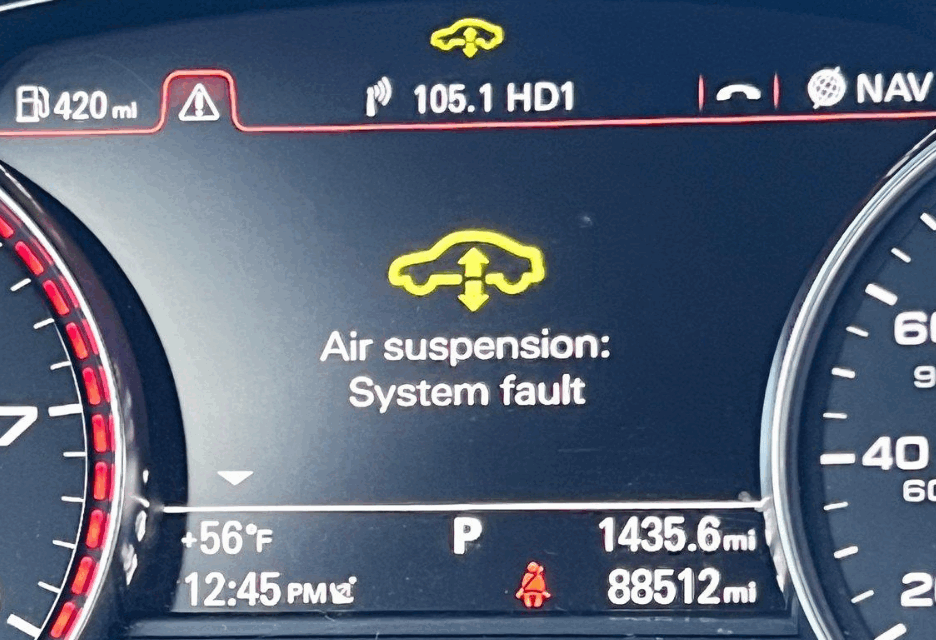
Check the vehicle’s ride height before deciding whether to drive. Follow the manufacturer’s guidance when a suspension warning appears. Arrange professional diagnosis when the vehicle sits very low, handles abnormally, or cannot maintain its normal height. Repairing the fault early can prevent a small air suspension problem from affecting additional components.
How Can You Prevent Air Suspension From Failing to Air Up?
Prevent air suspension inflation problems by finding leaks early, inspecting key components, and responding quickly to changes in ride height. Early action reduces pressure loss and prevents the compressor from working harder than necessary. Regular inspection can also reveal damaged air springs, lines, fittings, and electrical connections before they cause a complete failure.
Check the air springs for cracks, surface damage, and signs of deterioration. Air springs flex whenever the suspension moves, so their condition can change over time. Inspect visible air lines and fittings at the same time. Damage, loose connections, and leaks can reduce the pressure available to support the vehicle.
Pay attention to compressor behavior during normal vehicle operation. A compressor that starts more often or runs longer may indicate an air leak. The compressor must work longer when the system continuously loses pressure. This extra workload can increase wear and may eventually lead to compressor failure.
Monitor the vehicle’s ride height after parking. One corner that gradually sinks can indicate a local leak. A larger change in height may point toward a problem affecting multiple suspension circuits. Finding the cause at this stage can prevent the fault from becoming severe enough to keep the vehicle low.
Do not ignore suspension warning messages or noticeable changes in vehicle height. Diagnose these symptoms before replacing parts. A small leak, loose connection, or electrical fault may require a simpler repair when found early. Regular checks also help protect the compressor from damage caused by repeated attempts to restore lost air pressure.
When Should You Have an Air Suspension Problem Diagnosed by a Professional?
Have an air suspension problem diagnosed by a professional when basic checks cannot identify the fault or the repair requires specialized testing. Professional diagnosis is also appropriate when the vehicle cannot maintain a safe ride height. Complex electrical, pressure, sensor, and control faults often require equipment that most vehicle owners do not have.
Start with basic checks before seeking advanced diagnosis. You can inspect the ride height, visible air springs, accessible air lines, fuses, and electrical connections. You can also listen for compressor operation and look for obvious air leaks. These observations may reveal a simple problem without complex testing.
Seek professional diagnosis when the compressor receives power but does not operate correctly. A technician can test compressor output and compare the results with the required specifications. Pressure testing can separate a weak compressor from a leak or air distribution problem.
Electronic faults also require more detailed testing. A diagnostic scanner can read suspension related trouble codes and live sensor data. This information can reveal faults involving ride height sensors, pressure sensors, electrical circuits, or the suspension control module. Some repairs may also require ride height calibration.
Professional diagnosis becomes more important when several symptoms appear at the same time. For example, the compressor may run while multiple corners remain low and a suspension warning stays active. Replacing parts without confirming the cause can increase repair costs without solving the problem.
Get the system inspected promptly when the vehicle sits very low or handles abnormally. An accurate diagnosis identifies the failed circuit or component and helps prevent related air suspension damage.
What Should You Do If Your Air Suspension Is Not Airing Up?
Identify the symptom first when your air suspension is not airing up, then test the components connected to that symptom. A clear diagnostic order helps find the actual fault and prevents unnecessary parts replacement.
Check the electrical supply, fuse, relay, wiring, and compressor when the compressor does not run. If the compressor runs but the vehicle stays low, check its pressure output next. Then inspect the system for air leaks, damaged lines, and valve block problems. When only one corner stays low, focus on the air spring, local air line, fitting, valve circuit, and ride height sensor at that corner.
A vehicle that rises and then sinks requires a different approach. Inspect the system for pressure loss through an air spring, fitting, line, or valve block. The location and speed of the height loss can help narrow the affected circuit.
Do not replace the compressor simply because the air suspension fails to raise the vehicle. Electrical faults, leaks, valves, sensors, and control problems can produce similar symptoms. Confirm the failure first, complete the required repair, and verify that the vehicle returns to and maintains its correct ride height.