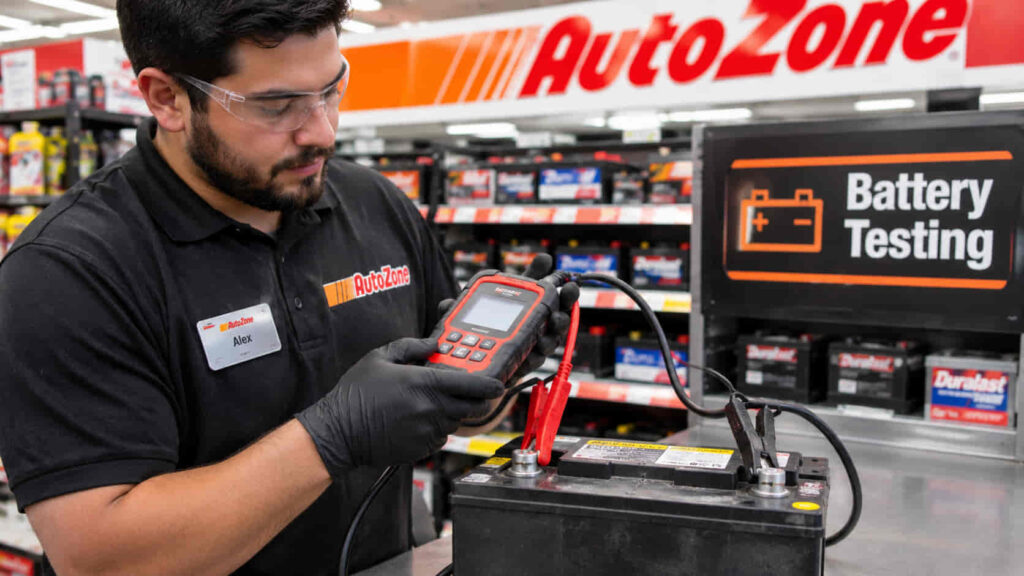
Yes, AutoZone offers free car battery testing at its stores across the United States. AutoZone employees use battery testing equipment to evaluate battery condition and determine whether a battery needs charging or replacement. The service is available without removing the battery from the vehicle in most accessible applications, subject to location, equipment availability, and vehicle restrictions. AutoZone+1
AutoZone battery testing helps distinguish a discharged battery from a deteriorated battery. A discharged battery lacks sufficient electrical charge but retains the ability to function after recharging, whereas a deteriorated battery has lost part of its capacity or ability to deliver starting current. AutoZone also provides free charging for eligible batteries that remain in good condition.
However, battery testing alone cannot identify every electrical problem within a vehicle. Symptoms such as slow engine cranking, dim headlights, and repeated battery discharge also occur due to alternator failure, starter motor problems, or excessive parasitic current draw. These conditions require additional diagnostic procedures.
Understanding how AutoZone tests batteries, how accurate its results are, and what its testing limitations are helps car owners avoid unnecessary battery replacements. This article explains the testing process, supported battery types, result interpretation, related automotive electrical services, and alternative methods for testing car batteries at home.
Does AutoZone Test Batteries for Free?
Yes, AutoZone provides free battery testing without requiring customers to purchase a new battery. Car owners can visit an AutoZone store to have their battery assessed and determine whether it requires recharging or replacement. This service helps prevent unnecessary replacement expenses when a battery is discharged rather than defective.
According to AutoZone’s official battery service policy, free battery testing is offered throughout its U.S. store network. Employees can test the battery while it remains installed in the vehicle, eliminating the need for removal in accessible applications. Service availability depends on the store’s equipment, personnel, and vehicle configuration. AutoZone+2
AutoZone’s published service policy does not specify that the battery must have been purchased from AutoZone. Customers with batteries from other retailers can request testing, although confirming eligibility with the local store is advisable.
Free battery testing covers the assessment of battery condition rather than the cost of replacement parts or comprehensive electrical repairs. If the battery fails the test and requires replacement, the customer must pay for the new battery unless an applicable warranty covers the replacement.
Read more: craftsman model number
How Does AutoZone Test Car Batteries?
AutoZone tests car batteries by connecting a battery testing device to the positive and negative battery terminals to evaluate the battery’s electrical condition and starting capability. The test helps determine whether the battery is functioning properly, requires recharging, or needs replacement.
The testing process begins with identifying the battery’s specifications, including its battery type and rated cold cranking amps (CCA). CCA represents the battery’s ability to deliver electrical current under cold starting conditions. Comparing the battery’s estimated available CCA with its rated CCA helps identify deterioration that affects engine starting performance.
Conductance testing and load testing are two common methods of evaluating automotive battery health. Conductance testing sends a small electrical signal through the battery and measures its electrical response to estimate available cranking power. Load testing applies an electrical load to the battery and measures its ability to maintain voltage under demand, simulating the electrical requirements of engine starting. AutoZone+1
Depending on the equipment used, battery testers evaluate parameters such as voltage, estimated CCA, internal resistance, state of charge (SOC), and state of health (SOH). State of charge indicates the remaining electrical charge, while state of health describes the battery’s condition relative to its original performance. These parameters help distinguish insufficient charge from permanent battery deterioration.
Measuring voltage alone is insufficient to determine battery health. For example, a fully charged conventional lead-acid battery may display a resting voltage of approximately 12.6 volts but still have insufficient cranking power due to internal deterioration. A dedicated battery tester provides additional diagnostic information that a standard multimeter cannot obtain from resting voltage alone.
After completing the test, an AutoZone employee uses the results to recommend continued use, recharging, or replacement. A battery with insufficient charge may require recharging and retesting before its condition can be reliably assessed.
How Long Does AutoZone Battery Testing Take?
AutoZone battery testing typically takes a few minutes once the testing equipment is connected to the battery. The total service time depends on battery accessibility, equipment availability, customer demand, and whether additional charging or testing is necessary.
Batteries with easily accessible terminals generally require less preparation. Digital battery testers evaluate electrical parameters and generate results quickly, allowing employees to determine whether a battery requires charging or replacement without lengthy diagnostic procedures.
Battery testing takes longer when the battery has insufficient charge for a reliable assessment. In this situation, recharging and retesting help distinguish temporary discharge from permanent battery deterioration. According to AutoZone, its fast chargers can recharge most automotive batteries in approximately 30 minutes, although deeply discharged batteries may require additional charging time. AutoZone+1
Car owners should therefore distinguish the duration of the battery test itself from the total time required for charging and retesting.
How Accurate Is AutoZone Battery Testing?
AutoZone battery testing is useful for identifying weak, discharged, or deteriorated car batteries, but its accuracy depends on battery condition, testing equipment, and testing conditions. The service provides an initial assessment of battery health and starting capability rather than a comprehensive diagnosis of the vehicle’s electrical system.
Battery testing accuracy depends on five primary factors: state of charge, battery temperature, terminal condition, surface charge, and the accuracy of the battery specifications entered into the testing device. These factors influence electrical measurements and the interpretation of battery performance.
State of charge affects battery testing accuracy because insufficient electrical charge can reduce the battery’s ability to deliver starting current without indicating permanent deterioration. Conversely, surface charge remaining after recent driving or charging can temporarily increase voltage readings, making the battery appear healthier than it is during voltage-based assessments.
Battery temperature influences chemical activity and electrical resistance. Low temperatures slow electrochemical reactions and reduce available cranking power. Testing equipment that accounts for battery temperature provides a more representative assessment of battery performance under different operating conditions.
Terminal corrosion and loose connections introduce additional electrical resistance, potentially producing misleading test results. Incorrect battery specifications, such as selecting the wrong battery chemistry or entering an inaccurate CCA rating, also affect how the testing device evaluates battery health. Midtronics, a manufacturer of automotive battery diagnostic equipment, identifies these conditions as factors affecting diagnostic reliability. Midtronics+2
Although AutoZone describes its battery testing service as accurate, there is no publicly verified accuracy percentage for its battery tests identified in the available sources. A passing result does not guarantee that the battery is free from intermittent internal faults or that the vehicle’s starting and charging systems are functioning correctly. If starting problems persist despite a satisfactory battery test result, further electrical system diagnostics are necessary.
What Types of Batteries Can AutoZone Test?
AutoZone primarily tests 12-volt automotive starting batteries, including conventional flooded lead-acid batteries and absorbent glass mat (AGM) batteries. Enhanced flooded batteries (EFB) can also be tested when the available diagnostic equipment supports the corresponding battery type.
Flooded lead-acid batteries contain liquid electrolytes and are commonly installed in conventional gasoline and diesel vehicles. AGM batteries use fiberglass mats to absorb the electrolyte, providing improved vibration resistance and cycling performance. EFB batteries offer enhanced cycling durability for vehicles equipped with basic start-stop systems. These structural differences require appropriate testing settings to obtain reliable battery health assessments.
AutoZone also provides battery services for non-automotive applications, including motorcycles, marine vehicles, ATVs, and lawn and garden equipment. Its official marine and RV battery guide confirms free battery testing for these applications. However, testing equipment and supported battery types vary by store, so customers should confirm compatibility before bringing in specialty batteries. AutoZone+2
AutoZone’s standard battery testing service should not be confused with high-voltage electric vehicle battery diagnostics. Hybrid and electric vehicles use auxiliary low-voltage batteries alongside high-voltage traction batteries. Diagnosing traction battery health requires specialized equipment, manufacturer-specific diagnostic procedures, and qualified technicians rather than conventional automotive battery testers.
Can AutoZone Test a Battery Without Removing It?
Yes, AutoZone can test a car battery while it remains installed in the vehicle. In-vehicle battery testing allows employees to assess battery condition by connecting diagnostic equipment to accessible battery terminals without disconnecting the battery from the vehicle’s electrical system.
Testing the battery without removing it saves time and reduces the risk of losing stored electronic settings. Modern vehicles rely on continuous electrical power to preserve information such as clock settings, radio presets, and learned control module parameters. Keeping the battery connected avoids unnecessary interruptions to these systems.
However, battery accessibility determines whether in-vehicle testing is practical. Vehicles with batteries located beneath seats, behind interior panels, or in confined engine compartments may require additional preparation. Customers should confirm service availability with their local AutoZone store if the battery is difficult to access.
Can AutoZone Test a Dead Battery?
Yes, AutoZone can test a dead car battery to determine whether it requires recharging or replacement. A dead battery does not necessarily indicate permanent battery failure. Leaving the headlights on overnight, prolonged vehicle inactivity, or insufficient charging during short trips can discharge an otherwise functional battery.
A deeply discharged battery may require charging before its health can be accurately evaluated. Insufficient electrical charge affects the battery’s ability to deliver current, making it difficult to distinguish temporary discharge from internal deterioration. AutoZone provides free charging for batteries that remain suitable for recharging, allowing their condition to be reassessed. AutoZone+1
Prolonged discharge can cause sulfation in lead-acid batteries, a condition in which lead sulfate crystals accumulate on the battery plates. Severe sulfation reduces charge acceptance, available capacity, and starting performance. A battery that fails to retain sufficient charge after recharging may require replacement.
If the vehicle cannot start, car owners can bring the removed battery to an AutoZone store for testing and charging. However, batteries showing physical damage, swelling, cracks, or electrolyte leakage should not be charged or tested at home. These conditions require professional assessment and safe handling.
What Do AutoZone Battery Test Results Mean?
AutoZone battery test results generally fall into three categories: good battery, charge and retest, and replace battery. These results help car owners determine whether their battery remains functional, requires additional charging, or has deteriorated beyond acceptable performance levels.
A good battery result indicates that the battery meets the performance criteria evaluated by the testing equipment. The battery retains sufficient starting capability under the tested conditions and does not require immediate replacement. However, if the vehicle continues to experience starting difficulties, the underlying problem may involve the starter motor, alternator, or electrical connections rather than the battery itself.
A charge and retest result indicates that the battery contains insufficient electrical charge for a reliable health assessment. Recharging restores the electrical energy needed to evaluate its starting capability. For example, a battery discharged by headlights left on overnight may pass a subsequent test after receiving sufficient charge, eliminating the need for replacement.
A replace battery result indicates that the battery no longer meets the required performance criteria. Internal deterioration, such as plate corrosion or increased internal resistance, reduces its ability to deliver sufficient starting current. According to AutoZone’s battery testing guidance, a measured CCA value substantially below the manufacturer’s rated CCA indicates a loss of cranking power. AutoZone+1
Car owners should request the measured voltage and estimated CCA values when available rather than relying exclusively on the final test recommendation. These measurements provide additional context about battery condition and help determine whether replacement or further electrical system diagnostics are necessary.
What Are the Limitations of AutoZone Battery Testing?
AutoZone battery testing has four main limitations: assessment of battery condition at the time of testing, limited battery capacity measurement, difficulty detecting intermittent faults, and inability to identify every cause of battery discharge. These limitations distinguish battery testing from comprehensive automotive electrical system diagnostics.
A battery test reflects the battery’s electrical condition at a specific time and under specific testing conditions. A battery that passes a test at moderate temperatures may struggle to deliver sufficient starting current during cold weather. This occurs because lower temperatures reduce the electrochemical activity of lead-acid batteries while increasing the electrical demand required to start the engine.
Standard battery testing also has limitations in measuring actual energy storage capacity. Conductance-based battery testers primarily estimate cranking performance rather than directly measuring the total energy a battery can store and deliver over an extended period. A battery may retain sufficient cranking power but have reduced reserve capacity, limiting its ability to power electrical accessories when the engine is off.
Intermittent internal faults are another diagnostic limitation. Damaged internal connections or deteriorated battery components may function normally during a brief test but fail under vibration, temperature changes, or repeated starting cycles. Identifying these problems requires additional testing under different operating conditions.
AutoZone battery testing alone cannot determine every underlying cause of repeated battery discharge. Excessive parasitic current draw, insufficient alternator output, and poor electrical connections can discharge a functional battery. For example, a malfunctioning control module that remains active after the ignition is switched off can gradually drain the battery overnight.
Further electrical system diagnostics are necessary when battery-related symptoms persist despite a satisfactory battery test result. Replacing a functional battery without identifying the underlying electrical fault does not resolve the original problem.
Does AutoZone Charge Batteries for Free?
Yes, AutoZone offers free battery charging for eligible car batteries that require recharging rather than replacement. This service helps restore electrical charge to functional batteries discharged by prolonged vehicle inactivity, electrical accessory use, or insufficient charging during driving.
AutoZone states that its fast chargers can recharge most automotive batteries in approximately 30 minutes. However, the actual charging duration depends on battery capacity, battery chemistry, state of charge, and charge acceptance. Deeply discharged batteries may require longer charging periods to reach a sufficient charge level.
Battery charging restores electrical energy but does not reverse permanent internal deterioration. Conditions such as severe sulfation, plate corrosion, and internal short circuits reduce battery performance even after recharging. A battery that fails a subsequent health test after receiving sufficient charge generally requires replacement.
Free battery charging also helps car owners avoid unnecessary replacement expenses. For example, a functional battery discharged after several weeks of vehicle inactivity may return to normal operation after recharging. However, repeated discharge requires further investigation of the vehicle’s charging system and electrical consumption.
Does AutoZone Replace Car Batteries?
Yes, AutoZone offers free battery installation when customers purchase a compatible replacement battery and their vehicle qualifies for the service. Employees help customers select a suitable battery based on vehicle specifications, including battery group size, cold cranking amps, and battery technology. AutoZone+1
However, free battery installation is subject to vehicle-specific restrictions. Vehicles with difficult-to-access batteries, complex electrical configurations, or specialized installation requirements may require professional assistance. Some modern vehicles also require battery registration after replacement to ensure the battery management system adjusts its charging strategy appropriately.
Customers pay for the replacement battery unless an applicable warranty covers the cost. AutoZone also offers free battery recycling at its stores, allowing customers to dispose of old lead-acid batteries responsibly. Recycling enables the recovery of reusable materials, such as lead and plastic, while reducing environmental contamination.
Does AutoZone Test Alternators and Starters for Free?
Yes, AutoZone offers free alternator and starter testing to help car owners identify problems within their vehicle’s starting and charging systems. These services complement battery testing because battery failure, alternator malfunction, and starter motor problems can produce similar symptoms, including slow engine cranking and difficulty starting the vehicle.
The alternator generates electrical power while the engine runs, replenishing the battery’s charge and supplying electricity to vehicle components. A malfunctioning alternator can cause repeated battery discharge even when the battery remains in good condition. Alternator testing evaluates charging performance to determine whether the component supplies sufficient electrical power.
The starter motor converts electrical energy from the battery into mechanical force to rotate the engine during ignition. A defective starter motor may produce a clicking noise or prevent the engine from cranking despite the battery having sufficient charge. Testing the starter helps distinguish component failure from battery-related starting problems.
AutoZone performs alternator testing directly on the vehicle, while its standard starter testing service requires the starter motor to be removed. According to AutoZone, testing a removed starter takes approximately five minutes. Alternators can also undergo bench testing after removal. Service availability depends on store equipment and vehicle-specific restrictions. AutoZone+1
Testing the battery, alternator, and starter helps narrow down the source of starting and charging problems before replacing components. Further electrical diagnostics are necessary when all three components pass their tests but the vehicle continues to experience starting difficulties.
Can You Test a Car Battery at Home Instead of AutoZone?
Yes, you can test a car battery at home using a digital multimeter or a dedicated automotive battery tester. These two methods provide different levels of diagnostic information, allowing car owners to evaluate battery voltage, starting capability, and overall battery health without visiting an AutoZone store.
A digital multimeter measures battery voltage to provide an initial assessment of its state of charge. A fully charged conventional 12-volt lead-acid battery typically has a resting voltage of approximately 12.6 to 12.8 volts. A reading around 12.2 volts generally indicates partial discharge under normal resting conditions. However, voltage readings alone cannot determine whether a battery retains sufficient cranking power or energy storage capacity.
A dedicated automotive battery tester provides a more comprehensive assessment by evaluating parameters such as estimated cold cranking amps (CCA), internal resistance, state of charge (SOC), and state of health (SOH), depending on the device. For example, a battery rated at 600 CCA may display a normal resting voltage while delivering an estimated cranking capacity of only 350 CCA. This difference indicates reduced starting capability that a resting voltage measurement alone would not reveal.
Automotive battery testers from manufacturers such as Autel and TOPDON also offer starting and charging system testing on supported models. These additional functions help users evaluate starter performance and alternator output, providing greater diagnostic context when battery-related problems occur.
AutoZone’s free battery testing service is suitable for occasional battery inspections, while owning a dedicated battery tester is more convenient for regular preventive maintenance. DIY mechanics, multi-vehicle owners, and automotive technicians benefit from monitoring battery deterioration over time without repeatedly visiting an automotive parts store. Selecting a tester that supports the vehicle’s battery chemistry and rated CCA range is essential for obtaining meaningful diagnostic results.