Toyota catalytic converter replacement involves removing a damaged, clogged, stolen, or malfunctioning catalytic converter and installing a compatible unit that meets applicable emissions standards. The catalytic converter is part of the vehicle’s exhaust system and reduces harmful pollutants, including carbon monoxide, hydrocarbons, and nitrogen oxides. Replacing a faulty converter restores proper exhaust treatment and can resolve performance problems caused by a restricted exhaust system.
The cost of replacing a Toyota catalytic converter depends on five main factors: vehicle model, model year, converter type, replacement part price, and labor requirements. Toyota Camry, Corolla, Prius, RAV4, and Tacoma models have different exhaust configurations, which affect converter accessibility, parts compatibility, and installation complexity. Original equipment manufacturer (OEM) converters and aftermarket alternatives also differ in price, warranty coverage, and emissions certification.
Common signs of catalytic converter problems include an illuminated check engine light, reduced engine power, unusual exhaust noises, and failed emissions tests. However, diagnostic trouble codes such as P0420 and P0430 do not automatically confirm converter failure. Exhaust leaks, faulty sensors, and engine performance problems must be investigated before replacement.
This guide explains Toyota catalytic converter replacement costs, failure symptoms, diagnostic procedures, installation steps, OEM versus aftermarket options, warranty coverage, and preventive maintenance.
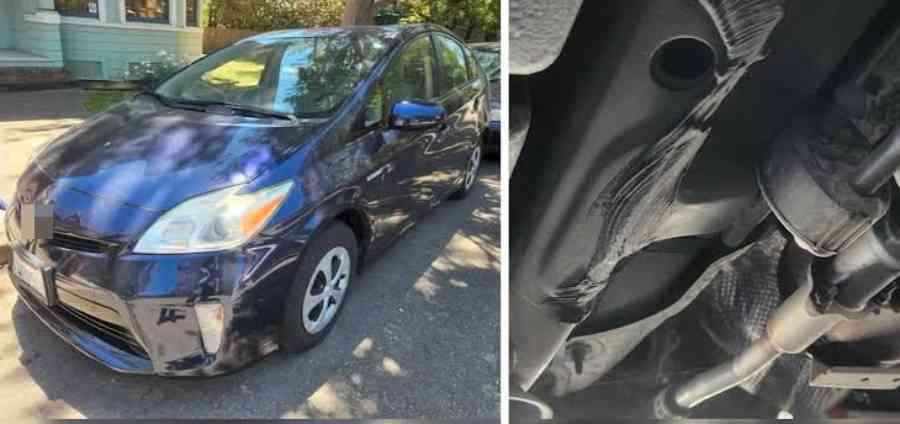
How Much Does Toyota Catalytic Converter Replacement Cost?
Toyota catalytic converter replacement typically costs $500 to $3,000 or more in the United States, including parts and labor. The total expense depends on the Toyota model, model year, engine configuration, converter location, and replacement part type. Vehicles requiring an original equipment manufacturer (OEM) converter or a complex exhaust assembly generally cost more to repair than vehicles compatible with a lower-priced, direct-fit aftermarket converter.
The replacement bill consists of three primary expenses: the catalytic converter, installation labor, and diagnostic services. Additional costs arise when exhaust gaskets, oxygen sensors, mounting hardware, or damaged exhaust pipes require replacement. For example, a converter integrated into the exhaust manifold generally requires more extensive disassembly than an accessible, bolt-on converter beneath the vehicle. These figures are broad planning estimates rather than verified quotes for a particular Toyota configuration.
How Much Does a Toyota Catalytic Converter Cost by Model?
Toyota catalytic converter prices vary by vehicle model, engine, model year, and emissions certification. The Camry, Corolla, Prius, RAV4, Tacoma, and Highlander use different exhaust system designs, and some configurations contain multiple catalytic converters. Consequently, two vehicles from the same Toyota model line can require different replacement assemblies.
The following table shows illustrative aftermarket and OEM parts-price planning ranges in USD. These are not live supplier quotations, and actual fitment and prices must be verified using the vehicle identification number (VIN) and applicable emissions requirements.
| Toyota Model | Aftermarket Converter | OEM Converter |
|---|---|---|
| Toyota Corolla | $200–$900 | $800–$2,000+ |
| Toyota Camry | $250–$1,000 | $900–$2,200+ |
| Toyota Prius | $300–$1,200 | $1,000–$2,500+ |
| Toyota RAV4 | $250–$1,100 | $900–$2,300+ |
| Toyota Tacoma | $300–$1,300 | $1,000–$2,800+ |
| Toyota Highlander | $300–$1,400 | $1,000–$3,000+ |
OEM catalytic converters are manufactured to Toyota’s specified vehicle applications, while aftermarket converters are produced by independent manufacturers. Aftermarket units can reduce parts expenses, but the replacement must match the vehicle’s engine, emissions configuration, and legal installation requirements. California and states applying California aftermarket converter rules impose additional compatibility and approval requirements, making emissions certification an essential purchasing consideration.
How Much Does Labor Cost to Replace a Toyota Catalytic Converter?
Labor for Toyota catalytic converter replacement commonly falls within an illustrative range of $150 to $600, although complicated installations can exceed this amount. The final charge depends on the repair shop’s hourly rate, the manufacturer’s labor-time estimate, converter accessibility, and the condition of the exhaust system. A straightforward bolt-on replacement generally requires less labor than removing an exhaust manifold assembly or repairing heavily corroded connections.
Labor costs increase when technicians must remove seized exhaust bolts, disconnect multiple sensors, replace damaged mounting hardware, or perform additional exhaust repairs. For example, replacing an accessible underbody converter may involve fewer disassembly steps than replacing a manifold-mounted converter in a tightly packaged engine compartment. Independent exhaust shops and Toyota dealerships may also charge different hourly rates for the same repair.
A complete replacement estimate should separately identify parts, labor, diagnostic charges, required gaskets, and applicable taxes. Confirming the underlying cause of converter failure before authorizing replacement is essential, because unresolved engine misfires, fuel-mixture faults, or oil contamination can damage the new converter. Comparing itemized estimates from qualified repair facilities helps Toyota owners evaluate the total repair cost rather than choosing a replacement based on the converter price alone.
What Are the Signs That a Toyota Catalytic Converter Needs Replacement?
The main signs of a failing Toyota catalytic converter include an illuminated check engine light, reduced engine power, poor acceleration, unusual exhaust noises, and failed emissions tests. These symptoms indicate potential problems with exhaust flow or emissions control, but they do not independently confirm that the catalytic converter requires replacement. A proper diagnosis must distinguish converter damage from ignition, fuel system, sensor, and exhaust-related faults.
An illuminated check engine light is one of the most recognizable indicators of a catalytic converter efficiency problem. Toyota vehicles use an onboard diagnostic system (OBD-II) to monitor emissions performance. When the engine control module detects catalyst efficiency below its calibrated threshold, it may store diagnostic trouble code P0420 or P0430. However, exhaust leaks, incorrect fuel mixtures, and deteriorating sensor performance can produce similar warnings. Replacing the converter without investigating these conditions can leave the original problem unresolved.
Reduced acceleration and engine power can indicate a restricted catalytic converter. A severely clogged converter obstructs exhaust gas flow, increasing exhaust backpressure and limiting the engine’s ability to expel combustion gases. Drivers may notice sluggish acceleration, difficulty maintaining power under load, or reduced performance at higher engine speeds. These symptoms are particularly concerning when accompanied by excessive exhaust heat or persistent engine performance problems. Fuel delivery faults and ignition problems can also cause similar symptoms, making mechanical testing necessary.
Unusual rattling noises can indicate physical damage inside the catalytic converter. The converter contains a ceramic or metallic substrate coated with catalytic materials. When this internal structure cracks or deteriorates, loose fragments may produce a metallic rattling sound, particularly during acceleration or engine startup. Similar noises can originate from loose exhaust heat shields, brackets, or other exhaust components. A visual inspection and targeted noise diagnosis help identify the actual source.
A failed emissions inspection can also indicate inadequate catalytic converter performance. The converter reduces carbon monoxide, unburned hydrocarbons, and nitrogen oxides through chemical reactions within the exhaust system. When conversion efficiency deteriorates, emissions can exceed applicable limits. However, inspection failures can also result from engine faults, incomplete OBD-II readiness monitors, or other emissions-control problems. Catalytic converter replacement should follow diagnostic confirmation rather than symptoms alone.
How Do You Diagnose a Bad Toyota Catalytic Converter Before Replacement?
Diagnosing a bad Toyota catalytic converter requires checking diagnostic trouble codes, evaluating engine operation, inspecting the exhaust system, and testing converter performance. These steps establish whether the converter itself has failed or whether another mechanical or electronic problem is affecting catalyst efficiency. A complete diagnosis is especially important because catalytic converter replacement is often more expensive than correcting an exhaust leak or an engine management fault.
The diagnostic process begins with an OBD-II scan tool capable of retrieving stored and pending trouble codes, freeze-frame information, and live engine data. Technicians examine fuel trims, oxygen sensor or air-fuel ratio sensor readings, and other relevant operating parameters. Excessively rich or lean fuel mixtures, misfires, and sensor abnormalities must be investigated because they can affect catalyst efficiency readings. A visual inspection should also identify exhaust leaks, damaged wiring, corrosion, and physical damage around the converter assembly.
Further testing depends on the symptoms and preliminary findings. For suspected exhaust restrictions, a technician may measure exhaust backpressure using an appropriate test connection or perform other manufacturer-recommended restriction tests. When the primary concern is catalyst efficiency, diagnostic procedures may involve evaluating sensor signals and operating conditions against Toyota service information. Temperature measurements alone cannot reliably establish catalytic converter failure because readings vary with engine load, fuel mixture, and converter operating conditions.
What Do Toyota Trouble Codes P0420 and P0430 Mean?
Toyota trouble code P0420 means “Catalyst System Efficiency Below Threshold (Bank 1),” while P0430 identifies the same condition for Bank 2. These codes indicate that the engine control module has detected catalyst monitoring results outside its expected operating range. Bank 1 refers to the cylinder bank containing cylinder number one, while Bank 2 refers to the opposite bank on engines with two cylinder banks.
P0420 is relevant to many Toyota four-cylinder engines, including configurations used in the Corolla, Camry, and RAV4. P0430 applies to vehicles with a second cylinder bank, such as certain Toyota V6 and V8 configurations. The presence of either code does not prove that the catalytic converter is physically damaged. It indicates that the catalyst monitoring system has identified an efficiency concern requiring further investigation.
Toyota’s engine control system evaluates catalyst performance using signals from exhaust-mounted sensors under specified operating conditions. Depending on the vehicle, these include upstream air-fuel ratio sensors and downstream oxygen sensors. The control module uses sensor behavior and calibrated monitoring logic to determine whether the catalyst is operating within its expected efficiency range. Exhaust leaks, sensor faults, combustion irregularities, and fuel-control problems can interfere with this evaluation.
For example, a Toyota Camry displaying P0420 may have a deteriorated catalytic converter, but it may also have an exhaust leak near the converter or an engine running outside its intended fuel-control range. A technician should examine additional diagnostic codes, fuel-trim values, exhaust integrity, and relevant sensor operation before recommending replacement. The correct repair is determined by the confirmed cause of the efficiency fault, not by the trouble code alone.
How Do You Replace a Toyota Catalytic Converter?
Replacing a Toyota catalytic converter involves confirming the faulty component, removing the existing converter assembly, installing an emissions-compliant replacement, and verifying that the exhaust system operates correctly. The procedure varies by Toyota model, model year, engine configuration, and converter location. Some vehicles use a bolt-on converter beneath the vehicle, while others integrate the converter into the exhaust manifold, requiring additional component removal.
Before replacement, the technician must identify the correct catalytic converter using the vehicle identification number (VIN), engine specifications, and emissions certification. Toyota vehicles may have multiple converters positioned at different points in the exhaust system. Replacing the wrong assembly will not resolve the diagnosed fault and can create unnecessary repair expenses. The replacement component must also satisfy applicable federal or state emissions regulations.
The required equipment typically includes a socket and wrench set, an oxygen sensor socket, penetrating lubricant, a torque wrench, and appropriate vehicle lifting equipment. Replacement gaskets, seals, and mounting hardware may also be necessary. Exhaust components must cool completely before work begins because catalytic converters operate at extremely high temperatures. When underbody access is required, the vehicle must be supported with appropriately rated equipment on a stable surface; a hydraulic jack alone is not sufficient.
What Are the Steps to Replace a Toyota Catalytic Converter?
Toyota catalytic converter replacement follows six main steps: confirm the diagnosis, prepare the vehicle, disconnect the existing assembly, remove the faulty converter, install the replacement, and verify the repair. The exact sequence and tightening specifications must follow the service instructions for the specific Toyota model and engine.
Step 1: Confirm the catalytic converter requires replacement. Retrieve diagnostic trouble codes, inspect the exhaust system, and evaluate relevant engine operating data. Confirm that the converter is damaged, restricted, missing, or unable to meet its required performance. Correct engine misfires, fuel-control faults, and other underlying problems before installing a new converter to prevent repeated failure.
Step 2: Prepare the vehicle and exhaust system. Park on a level surface, switch off the engine, and allow the exhaust system to cool. Raise and support the vehicle safely when access underneath is necessary. Locate the converter assembly and identify attached oxygen sensors, exhaust connections, brackets, and heat shields. Review Toyota service instructions for component-specific precautions.
Step 3: Disconnect sensors and exhaust connections. Disconnect the electrical connectors for affected oxygen or air-fuel ratio sensors and remove the sensors when required by the repair procedure. Loosen the converter mounting bolts, exhaust flange fasteners, and supporting brackets. Corroded fasteners may require penetrating lubricant or specialized removal techniques. Protect sensor wiring and nearby components from mechanical damage.
Step 4: Remove the faulty catalytic converter. Separate the converter from the adjoining exhaust components and remove the assembly without damaging the exhaust pipes or mounting surfaces. Manifold-mounted converters may require removal of additional engine-compartment components. Inspect the mating surfaces, exhaust flanges, and surrounding hardware for cracks, corrosion, or deformation that could prevent proper sealing.
Step 5: Install the replacement catalytic converter. Position the correct replacement assembly and install new gaskets, seals, and mounting hardware where specified. Align the exhaust connections before tightening fasteners to Toyota’s model-specific torque specifications. Reinstall removed sensors and reconnect their electrical connectors. Confirm that wiring is routed away from hot exhaust surfaces and moving components.
Step 6: Inspect and verify the completed repair. Start the engine and check the exhaust connections for leaks, abnormal noises, and improper component clearance. Use an OBD-II scan tool to inspect diagnostic information and confirm that relevant faults have been addressed. Complete the required drive cycle or readiness-monitor procedure when applicable. Clearing a diagnostic code alone does not establish that the catalytic converter repair was successful.
Professional installation is recommended when the converter is integrated into the exhaust manifold, exhaust fasteners are severely corroded, welding is required, or the original fault has not been conclusively diagnosed. Incorrect installation can produce exhaust leaks, sensor faults, and emissions compliance problems.
Should You Choose an OEM or Aftermarket Toyota Catalytic Converter?
An OEM Toyota catalytic converter is generally the most straightforward choice for factory-specified fitment, while a compatible, legally approved aftermarket converter can reduce replacement costs. The correct option depends on the vehicle’s emissions configuration, replacement budget, applicable regulations, and warranty requirements. Neither option should be selected solely on price because an incompatible converter may cause installation difficulties or emissions inspection failures.
OEM catalytic converters are supplied for specific Toyota vehicle applications and are designed to meet the corresponding factory specifications. They typically provide predictable mounting compatibility, sensor placement, and exhaust connections when the correct part number is selected. However, OEM assemblies can be expensive, particularly when the converter is integrated into an exhaust manifold or a larger exhaust component.
Aftermarket catalytic converters are manufactured by independent suppliers and are available in direct-fit and other application-specific configurations. A direct-fit converter is designed for installation at the intended exhaust location without extensive modification. However, aftermarket fitment and emissions compliance must be verified against the exact vehicle application. In California and states that apply California aftermarket catalytic converter requirements, the replacement must meet applicable approval and application-listing rules.
| Comparison Factor | OEM Toyota Converter | Aftermarket Converter |
|---|---|---|
| Manufacturer | Toyota-approved supplier | Independent manufacturer |
| Vehicle fitment | Factory-specified application | Depends on part compatibility |
| Purchase price | Generally higher | Often lower |
| Installation | Designed for specified factory configuration | Depends on direct-fit design |
| Emissions compliance | Must match vehicle requirements | Must meet applicable approval requirements |
| Warranty | Toyota parts warranty terms | Manufacturer-specific warranty |
| Availability | Toyota parts distribution network | Automotive parts retailers and suppliers |
For example, a Toyota Corolla owner replacing a failed converter may find a compatible aftermarket direct-fit assembly at a lower price than the corresponding OEM part. However, the aftermarket unit must match the vehicle’s model year, engine, emissions certification, and installation location. A converter approved for a federal-emissions vehicle is not automatically legal for installation on every California-certified vehicle.
Choose an OEM converter when factory-specific compatibility and original replacement specifications are the primary priorities. Choose an aftermarket converter when a properly certified, application-compatible unit offers a meaningful cost advantage. Before purchasing either option, confirm the part number, installation requirements, warranty coverage, and applicable emissions regulations. These checks reduce the risk of purchasing an unsuitable replacement or paying for additional installation work.
How Long Does It Take to Replace a Toyota Catalytic Converter?
Toyota catalytic converter replacement typically takes 1–4 hours of installation labor for a straightforward repair, while complex installations can require 5 hours or longer. The actual repair time depends on the Toyota model, engine configuration, catalytic converter location, and condition of the exhaust components. These are general planning estimates rather than factory labor times for a specific vehicle.
An accessible, bolt-on catalytic converter generally requires less installation time because technicians can disconnect the exhaust flanges, remove the existing assembly, and install the replacement without extensive disassembly. A converter integrated into the exhaust manifold requires additional work, including removing heat shields, accessing restricted fasteners, and disconnecting surrounding components. For example, replacement procedures on certain Toyota Camry and Corolla configurations differ from those on Toyota Tacoma or Highlander models because their engine layouts and exhaust assemblies are not identical.
Corroded exhaust bolts, damaged mounting brackets, seized oxygen sensors, and exhaust leaks can extend the repair process. Technicians may need to remove damaged fasteners, repair exhaust connections, or replace additional components before completing the installation. Diagnostic testing and post-repair verification also add to the total service time. Consequently, a vehicle may remain at a repair facility longer than the estimated installation hours.
The most accurate replacement time comes from a model-specific labor estimate provided after diagnosis. Toyota owners should confirm whether the quoted time includes diagnostic testing, converter installation, exhaust leak inspection, and emissions readiness verification. Parts availability and workshop scheduling can also affect when the vehicle is ready for collection.
Can You Replace a Toyota Catalytic Converter Yourself?
You can replace a Toyota catalytic converter yourself when the vehicle uses an accessible, bolt-on assembly and you have the necessary mechanical skills, diagnostic equipment, and safe lifting facilities. However, DIY replacement is not suitable for every Toyota model. Manifold-mounted converters, severely corroded exhaust connections, and installations requiring welding introduce additional technical and safety challenges.
A basic replacement requires appropriate sockets, wrenches, an oxygen sensor removal tool, a torque wrench, and vehicle-specific service information. Underbody work also requires properly rated lifting and support equipment. The vehicle must remain stable throughout the repair, and the exhaust system must cool completely before components are handled. Working beneath a vehicle supported only by a hydraulic jack creates a serious crushing hazard.
Correct diagnosis is the most important requirement before attempting DIY replacement. A P0420 or P0430 trouble code does not automatically mean the catalytic converter is defective. Exhaust leaks, fuel-mixture problems, engine misfires, and sensor faults can trigger catalyst efficiency warnings. Replacing the converter without identifying the actual cause can waste money and leave the vehicle’s emissions problem unresolved.
DIY installation must also comply with applicable emissions regulations. Replacement converters must be approved for the vehicle’s model year, engine, and emissions configuration. Federal and state requirements can restrict the use of certain aftermarket converters, particularly in California and states applying California emissions rules. Removing a functioning emissions-control device or installing an unsuitable replacement can violate applicable regulations.
Professional replacement is the better option when the converter is integrated into the exhaust manifold, specialized equipment is required, or diagnostic results remain uncertain. A qualified technician can verify part compatibility, complete the installation using manufacturer specifications, and test the exhaust system afterward. DIY replacement is most appropriate for experienced vehicle owners who can complete both the mechanical installation and the necessary diagnostic verification safely and legally.
What Causes a Toyota Catalytic Converter to Fail?
The five main causes of Toyota catalytic converter failure are engine misfires, incorrect air-fuel mixtures, oil contamination, coolant contamination, and physical damage. These problems can damage the converter’s internal substrate, reduce catalytic efficiency, or restrict exhaust flow. Identifying the underlying cause is essential because installing a new converter without correcting the original problem can result in repeated failure.
Engine misfires are a major cause of premature catalytic converter damage. When a cylinder fails to burn its air-fuel mixture properly, unburned fuel can enter the exhaust system and react inside the converter. This reaction generates excessive heat that can damage or melt the internal ceramic substrate. Faulty spark plugs, ignition coils, and fuel injectors are examples of components that can contribute to misfires. A flashing check engine light can indicate a severe misfire that threatens catalytic converter damage and requires immediate attention.
Incorrect air-fuel mixtures can also shorten catalytic converter life. A rich mixture introduces excessive fuel into the exhaust system, increasing the converter’s thermal load, while a lean mixture can contribute to abnormal combustion temperatures under certain operating conditions. Malfunctioning fuel injectors, inaccurate sensor readings, and fuel-control problems can disrupt the engine’s combustion process. Oil or coolant entering the combustion chambers can further damage the converter by depositing contaminants on its catalytic surfaces, reducing their ability to process exhaust pollutants.
Physical damage is another cause of converter failure. Road debris, impacts, corrosion, and damaged exhaust mounting components can crack the converter housing or internal substrate. For example, a Toyota RAV4 driven over a large road obstacle may sustain exhaust damage that causes leaks or damages the converter assembly. Correcting engine faults and inspecting damaged exhaust components before replacement helps protect the new catalytic converter from premature failure.
How Long Does a Toyota Catalytic Converter Last?
A Toyota catalytic converter can remain functional for more than 100,000 miles, and many units last substantially longer when the engine and exhaust system operate correctly. Catalytic converters do not have a universal scheduled replacement interval. Their service life depends primarily on engine condition, operating temperatures, fuel combustion quality, contamination, and physical exposure rather than mileage alone.
A properly functioning Toyota engine maintains controlled combustion and limits the amount of unburned fuel entering the exhaust system. These conditions help preserve the converter’s internal substrate and catalytic coating. Conversely, persistent misfires, excessive oil consumption, coolant leaks, and fuel-system malfunctions accelerate deterioration. For example, a Toyota Camry with a well-maintained engine may retain its original converter beyond 150,000 miles, while another vehicle with unresolved ignition problems may experience converter failure at considerably lower mileage. These mileage figures illustrate possible service life rather than guaranteed replacement intervals.
Catalytic converter lifespan should not be confused with emissions warranty coverage. Under U.S. federal emissions warranty requirements, qualifying catalytic converters are generally covered for 8 years or 80,000 miles, whichever occurs first. This warranty period establishes a minimum coverage requirement for eligible vehicles, not the expected mechanical lifespan of the component. Additional coverage may apply under specific Toyota warranties or state emissions regulations.
Toyota owners should replace a catalytic converter based on confirmed failure, physical damage, or applicable repair requirements rather than vehicle mileage alone. Regular engine maintenance, prompt misfire diagnosis, and timely repair of oil or coolant leaks help preserve converter performance. Monitoring check engine light warnings and correcting combustion problems also reduces the likelihood of premature catalytic converter replacement.
Is Toyota Catalytic Converter Replacement Covered Under Warranty?
Toyota catalytic converter replacement is generally covered under the U.S. federal emissions warranty for 8 years or 80,000 miles, whichever occurs first, when the vehicle and failure qualify for coverage. This warranty applies to designated major emissions-control components, including catalytic converters, on eligible vehicles. Coverage depends on the vehicle’s warranty start date, mileage, applicable emissions certification, and the cause of the converter failure.
The federal emissions warranty differs from Toyota’s basic vehicle warranty and powertrain warranty. Under the Clean Air Act, manufacturers must provide extended emissions warranty coverage for specified major components, including catalytic converters, engine control modules, and onboard diagnostic devices. For example, a qualifying Toyota Camry with 65,000 miles and six years of warranty age may remain eligible for catalytic converter coverage, provided the failure meets the applicable warranty conditions. A vehicle exceeding either the mileage or time limit generally falls outside the federal coverage period unless another warranty applies.
California emissions warranty requirements can provide different or additional coverage for eligible Toyota vehicles. Coverage depends on the vehicle’s emissions certification, model year, original sale or registration conditions, and the specific component. Certain California-certified vehicles have extended emissions warranty provisions beyond the federal minimum. Toyota owners should consult the emissions warranty booklet for their exact vehicle rather than assuming that every catalytic converter qualifies for the same coverage period.
Warranty claims may be denied when damage results from excluded causes, including certain forms of misuse, accidents, unauthorized modifications, or improper maintenance directly responsible for the failure. For example, physical damage caused by a road impact may not qualify as a manufacturing defect. A converter damaged by an unresolved engine problem also requires investigation to determine whether the underlying failure and resulting damage fall within applicable warranty terms.
The most reliable way to confirm Toyota catalytic converter warranty coverage is to contact an authorized Toyota dealership with the vehicle identification number (VIN), current mileage, and diagnostic information. The dealership can review the applicable warranty provisions, vehicle-specific coverage, and available repair programs. Toyota owners should check warranty eligibility before paying for replacement, particularly when the vehicle is approaching the federal emissions warranty limit.
Read more: Nissan Catalytic Converter Replacement: Cost & Guide
Can You Drive a Toyota With a Bad Catalytic Converter?
You may be able to drive a Toyota with a malfunctioning catalytic converter for a limited period if the vehicle operates normally and the problem is restricted to reduced catalyst efficiency. However, driving with a severely clogged, overheating, or physically damaged converter can be unsafe and may cause additional engine or exhaust system damage. The appropriate response depends on the symptoms, diagnostic findings, and severity of the malfunction.
A Toyota displaying a steady check engine light with a confirmed catalyst-efficiency code may continue to operate without noticeable performance problems. For example, a Corolla with a stored P0420 code may maintain normal acceleration and engine temperature while its emissions-control system operates below the required efficiency threshold. Nevertheless, the vehicle may fail an emissions inspection, and the underlying cause still requires diagnosis. A steady warning light does not establish that continued driving is safe under every condition.
A severely restricted catalytic converter can reduce engine performance by preventing exhaust gases from leaving the engine efficiently. Excessive exhaust backpressure can cause weak acceleration, difficulty maintaining speed, and abnormal exhaust temperatures. Continued operation under these conditions can place additional thermal stress on exhaust components and may contribute to further mechanical damage. Drivers experiencing substantial power loss, overheating, or unusual exhaust heat should stop driving when safe and arrange professional inspection.
A flashing check engine light requires particular attention because it can indicate an active misfire capable of damaging the catalytic converter. Unburned fuel entering the exhaust system can produce excessive temperatures inside the converter and rapidly deteriorate its internal structure. Toyota owners should follow the vehicle’s warning instructions and avoid continued driving when a severe misfire is suspected. Exhaust leaks that allow fumes to enter the passenger compartment also require immediate attention because exhaust gases can contain dangerous carbon monoxide.
Driving with a defective catalytic converter can also create legal and environmental consequences. U.S. emissions regulations require applicable emissions-control equipment to remain functional, and vehicles with unresolved catalyst-related faults may fail state inspection requirements. Removing a catalytic converter without installing a compliant replacement is not a lawful repair solution for vehicles subject to these requirements.
Toyota owners should arrange diagnostic testing promptly when catalytic converter problems appear and avoid driving when severe power loss, overheating, a flashing check engine light, or exhaust fumes are present. A confirmed catalyst-efficiency problem without dangerous symptoms may not require immediate roadside assistance, but delaying diagnosis can allow an underlying engine fault to worsen and increase the eventual repair cost.
How Can You Prevent Premature Toyota Catalytic Converter Failure?
You can prevent premature Toyota catalytic converter failure by maintaining proper engine combustion, repairing misfires promptly, fixing oil and coolant leaks, addressing fuel-system problems, and protecting the exhaust system from physical damage. These five preventive measures reduce excessive heat, chemical contamination, and mechanical stress that can damage the converter’s internal substrate. Regular engine maintenance is particularly important because catalytic converter failure frequently originates from problems outside the exhaust system.
Repairing engine misfires promptly is one of the most effective ways to protect a Toyota catalytic converter. Faulty spark plugs, ignition coils, and fuel injectors can prevent fuel from burning completely inside the combustion chambers. Unburned fuel then enters the exhaust system, where it can react inside the catalytic converter and generate damaging temperatures. For example, a Toyota Camry with a malfunctioning ignition coil may develop repeated misfires that overheat the converter. Following Toyota’s recommended spark plug replacement intervals and investigating misfire codes such as P0300, P0301, and P0302 helps prevent this damage.
Maintaining the correct air-fuel mixture also protects catalytic converter efficiency. Malfunctioning fuel injectors, inaccurate sensor readings, and fuel-pressure problems can cause excessive fuel delivery or unstable combustion. These conditions alter exhaust composition and can increase thermal stress on the converter. Toyota owners should investigate persistent fuel-trim abnormalities, rough idling, and unusual fuel consumption rather than continuing to drive with unresolved engine performance problems. Correcting the underlying fault helps maintain the operating conditions required for effective exhaust treatment.
Preventing oil and coolant contamination is essential for preserving the catalytic converter’s internal coating. Engine oil entering the combustion chambers can produce deposits that interfere with catalytic reactions, while coolant contamination can damage the converter’s active surfaces. Worn piston rings, valve stem seals, and certain gasket failures are examples of mechanical problems that allow these fluids to enter the combustion process. Excessive oil consumption, unexplained coolant loss, and persistent abnormal exhaust smoke should therefore be investigated before they contribute to converter deterioration.
Protecting the exhaust system from physical damage further extends catalytic converter service life. Road debris, severe impacts, loose exhaust mounts, and corrosion can damage the converter housing, mounting flanges, or internal substrate. Inspecting the exhaust system after an underbody impact helps identify cracks, leaks, and displaced components before the damage worsens. Vehicles frequently operated on rough roads or in environments where road salt accelerates corrosion may require closer inspection of exhaust connections and supporting hardware.
The most effective long-term prevention strategy is to correct engine and exhaust problems before they damage the catalytic converter. Toyota owners should follow model-specific maintenance schedules, respond promptly to check engine light warnings, and repair combustion-related faults as soon as they are identified. These practices help preserve emissions performance, reduce the likelihood of repeated converter replacement, and avoid unnecessary exhaust system repair expenses.