A Dodge Ram key stuck in the ignition with no power usually points to a failure in the vehicle’s electrical or ignition release system rather than the key itself. In most cases, the problem occurs because the ignition cylinder cannot complete its release sequence after losing battery power, the transmission is not recognized as being in the PARK position, or a component such as the ignition switch, shift interlock, or Totally Integrated Power Module (TIPM) stops communicating with the rest of the electrical system.
Although the symptom appears straightforward, several interconnected systems determine whether the ignition key can be removed. Battery voltage powers the electronic release mechanism, the brake light switch and shift interlock verify that the transmission is safely parked, and the ignition switch coordinates signals between the steering column, body control electronics, and starter circuit. A failure in any of these components can leave the vehicle with no dashboard lights, no crank condition, and a key that remains locked inside the ignition.
This guide explains how to safely remove the key without damaging the ignition cylinder, identifies the most common causes of complete power loss, and provides a step-by-step diagnostic process that starts with simple inspections such as checking the battery and fuses before progressing to advanced components like the TIPM, Body Control Module (BCM), and ignition switch. By following the troubleshooting sequence in order, you can identify the root cause more efficiently, avoid unnecessary parts replacement, and determine whether the repair is suitable for a DIY approach or requires professional diagnosis.
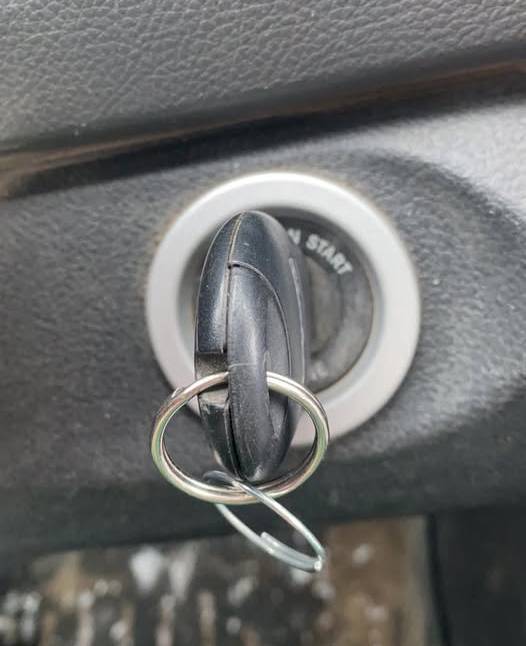
Why Is My Dodge Ram Key Stuck in the Ignition With No Power?
A Dodge Ram key gets stuck in the ignition with no power because the ignition key release mechanism depends on multiple mechanical and electrical systems working together. The ignition cylinder does not simply hold the key; it communicates with the battery, ignition switch, transmission shift interlock, steering column lock, and control modules before allowing the key to move to the LOCK position. If any of these systems fail, the key may remain trapped even though the engine is off.
Unlike a simple mechanical lock, modern Dodge Ram trucks use safety interlocks to prevent accidental key removal while the vehicle is still in gear. The ignition switch confirms the key position, the transmission system verifies that the shifter is in PARK, and the electrical system provides the voltage needed to release the locking mechanism. When the truck loses all electrical power, one or more of these conditions cannot be confirmed, preventing the release sequence from completing.
Although the symptom appears identical across many model years, the underlying cause can range from a discharged battery to a failed TIPM or a worn ignition cylinder. Identifying the correct cause requires diagnosing the power supply first before replacing ignition components.
Can a Dead Battery Prevent the Key From Releasing?
Yes. A completely discharged battery is one of the most common reasons a Dodge Ram key becomes stuck in the ignition. When battery voltage drops below the level required to power the ignition release system, the vehicle cannot complete the sequence that unlocks the ignition cylinder.
The battery supplies power to nearly every electrical component involved in the key release process, including the ignition switch, body control electronics, shift interlock, and instrument cluster. If the battery is fully discharged, you may notice several symptoms occurring simultaneously:
- No dashboard lights
- No interior lights
- No power door locks
- No response when turning the key
- Key remains locked in the ignition
Corroded battery terminals can produce the same symptoms even if the battery itself is in good condition. Corrosion increases electrical resistance, reducing voltage delivery to the vehicle’s power distribution system. A loose negative cable or damaged ground connection may also interrupt power completely.
Before investigating more expensive components, inspect the battery for signs of discharge, corrosion, damaged cables, or loose terminal connections. In many cases, restoring battery power immediately allows the ignition release mechanism to operate normally.
Can an Ignition Switch Failure Lock the Key?
Yes. A faulty ignition switch can prevent the key from returning to the LOCK position even when the vehicle has electrical power. The ignition switch coordinates electrical signals between the key cylinder, starter circuit, accessory circuits, and control modules. Internal wear, broken contacts, or heat damage can interrupt these signals and leave the ignition in an intermediate position.
As the ignition switch ages, its internal contacts may no longer align correctly with the key positions. The switch may fail to recognize that the driver has turned the key completely to OFF, preventing the locking pin inside the ignition cylinder from retracting. Common symptoms include:
- Accessories remain powered after turning the key off.
- The steering wheel does not lock.
- The key cannot rotate fully to the LOCK position.
- Intermittent starting problems before the key becomes permanently stuck.
- Dashboard electronics behave inconsistently.
Because ignition switch failure often develops gradually, many owners experience occasional difficulty removing the key before the problem becomes constant.
Can a Faulty Shift Interlock Keep the Key Trapped?
Yes. A malfunctioning shift interlock system can keep the key locked inside the ignition even when the engine has been turned off. The shift interlock prevents key removal unless the transmission is fully engaged in the PARK position, reducing the risk of vehicle movement.
The system relies on several components working together, including the gear selector, brake light switch, park position sensor, and shift interlock solenoid. If any component fails to report that the transmission is safely parked, the ignition release mechanism assumes the vehicle is still in gear and keeps the key locked.
Typical signs of a shift interlock problem include:
- The gear selector feels loose or does not fully engage PARK.
- Brake lights fail to illuminate when the brake pedal is pressed.
- The shifter must be moved repeatedly before the key can be removed.
- The key releases only after applying pressure to the gear selector.
- The transmission indicator does not accurately display the selected gear.
A quick way to identify this issue is to firmly move the shifter into PARK while gently attempting to rotate the key toward the LOCK position. If the key releases only after repositioning the shifter, the shift interlock mechanism or park position sensor should be inspected before replacing the ignition cylinder.
What Should You Check First When Your Dodge Ram Has No Power?
When a Dodge Ram has no electrical power and the key is stuck in the ignition, always diagnose the primary power supply before replacing ignition-related components. Most no-power conditions originate from a failed battery, poor electrical connections, or an interruption in the vehicle’s main power distribution system. Beginning with these components reduces unnecessary repairs and helps isolate the fault more efficiently.
The inspection process should follow the same path that electrical current travels through the vehicle. Start at the battery, continue to the battery terminals and ground cables, inspect the main fuses and fusible links, and finally verify whether the Totally Integrated Power Module (TIPM) is receiving and distributing power. If voltage is lost at any stage, components farther downstream—including the ignition switch, BCM, instrument cluster, and key release mechanism—cannot operate correctly.
Is the Battery Completely Discharged?
A completely discharged battery is the first component you should inspect because it is the most common cause of total power loss in a Dodge Ram. Without sufficient battery voltage, the vehicle cannot energize the ignition release mechanism, illuminate the dashboard, activate the starter relay, or power the electronic control modules.
A healthy 12-volt automotive battery should measure approximately 12.6 volts with the engine off. A reading between 12.4 and 12.5 volts generally indicates a partially charged battery, while a voltage below 12.2 volts suggests significant discharge. If the battery measures below 12.0 volts, many electronic systems may stop functioning correctly, and a completely failed battery can register close to zero volts.
Common signs of a dead battery include:
- No dashboard warning lights
- No interior or exterior lighting
- No response when turning the ignition key
- Power locks and windows do not operate
- Remote key fob fails to unlock the vehicle
- Key remains trapped inside the ignition
If the battery appears discharged, inspect it for physical damage such as a swollen case, leaking electrolyte, or cracked housing. These conditions indicate battery failure rather than normal discharge and require replacement instead of recharging.
Are the Battery Terminals Loose or Corroded?
Loose or corroded battery terminals can interrupt electrical power even when the battery is fully charged. Corrosion forms an insulating layer between the battery posts and cable terminals, increasing electrical resistance and reducing current flow to the vehicle’s electrical system.
Battery corrosion typically appears as white, blue, or green deposits around the positive or negative terminals. Moisture, acid vapor, and age gradually build this corrosion, eventually creating enough resistance to prevent the starter, ignition switch, and control modules from receiving adequate voltage.
During inspection, verify the following conditions:
- Both battery terminals are securely tightened.
- No corrosion is visible around the battery posts.
- The positive cable insulation is not damaged.
- The negative ground cable is securely attached to the chassis and engine.
- Battery cables are free from excessive heat damage or broken wire strands.
Cleaning corroded terminals with an approved battery terminal cleaner and tightening loose connections often restores electrical power immediately without replacing any parts.
Has the Main Fuse or Fusible Link Blown?
A blown main fuse or damaged fusible link can disconnect the battery from the rest of the electrical system, creating a complete no-power condition. Even a fully charged battery cannot supply electricity if the primary protection circuit has opened.
Most Dodge Ram trucks use high-amperage fuses and fusible links between the battery and the TIPM to protect the electrical system from overloads and short circuits. When one of these protective devices fails, power to multiple systems—including the ignition switch, starter circuit, dashboard, lighting, and body control module—is interrupted simultaneously.
Typical symptoms of a blown main fuse include:
- Complete loss of electrical power
- Instrument cluster remains dark
- Starter motor does not engage
- Headlights fail to operate
- No communication with an OBD-II scanner
- Key remains locked because the ignition release circuit receives no voltage
Inspect the high-amperage fuses inside the power distribution center for signs of a melted element, discoloration, or heat damage. If a replacement fuse blows immediately after installation, diagnose the underlying short circuit before replacing additional components.
Is the TIPM Receiving Battery Power?
The Totally Integrated Power Module (TIPM) acts as the primary electrical distribution center in many Dodge Ram models. If the TIPM does not receive battery voltage or fails internally, multiple vehicle systems can lose power simultaneously, including the ignition system and key release mechanism.
The TIPM distributes electrical power to critical components such as the ignition switch, fuel pump, starter relay, lighting circuits, body control functions, and electronic accessories. A fault within the module or its power supply can create symptoms that resemble a dead battery even when the battery itself is functioning normally.
Common indicators of a TIPM-related problem include:
- Intermittent electrical failures
- Random loss of dashboard power
- Starter does not operate despite a charged battery
- Multiple warning lights illuminate before total power loss
- Accessories stop working without an obvious cause
- Electrical systems operate inconsistently after reconnecting the battery
If the battery, terminals, and primary fuses all test correctly but the truck still has no electrical power, the next diagnostic step is to verify battery voltage at the TIPM and scan the vehicle for communication faults using an OBD-II diagnostic scanner. This helps determine whether the problem originates from the power distribution module, a damaged wiring harness, or one of the vehicle’s electronic control modules.
How Do You Remove a Stuck Key Safely?
You should remove a stuck Dodge Ram ignition key by checking the transmission position, relieving steering wheel pressure, using the manual key release if available, restoring battery power, and avoiding excessive force. Applying force to the key or ignition cylinder can damage internal locking components, resulting in a more expensive repair than the original electrical fault.
Because the ignition lock, steering column, shift interlock, and electrical system operate together, diagnosing the cause while attempting safe removal increases the likelihood of solving the problem without replacing unnecessary parts. Perform the following steps in order, moving to the next step only if the previous one does not release the key.
Verify the Transmission Is Fully in PARK
Confirm that the transmission is completely engaged in the PARK position before attempting to remove the key. The ignition lock system receives confirmation from the park position sensor or shift interlock mechanism that the transmission is safely parked. If this confirmation is missing, the ignition cylinder remains locked.
Move the gear selector firmly into PARK, even if the indicator already shows the correct position. Some Dodge Ram models develop wear in the shift linkage or cable adjustment over time, preventing the transmission from fully engaging the park detent. As a result, the control module may interpret the transmission as being between gears.
If the key remains stuck, hold the brake pedal, move the shifter slowly through each gear, and then return it firmly to PARK. While maintaining light pressure on the shifter, gently rotate the ignition key toward the LOCK position. If the key releases after repositioning the shifter, inspect the shift linkage, park position switch, or shift interlock assembly for wear or misalignment.
Release Steering Wheel Tension
Steering wheel tension can prevent the ignition cylinder from rotating completely, especially if the front wheels were turned before the engine was switched off. The steering column lock engages automatically after the key is turned off, and pressure from the front tires against a curb or uneven surface can place significant force on the locking mechanism.
Attempting to force the key under these conditions can bend the key, damage the lock cylinder, or accelerate wear inside the ignition assembly.
Grip the steering wheel with both hands and gently turn it toward the direction that allows slight movement. At the same time, apply light pressure to rotate the ignition key toward the LOCK position. Do not jerk the steering wheel or twist the key aggressively. Once the locking pin disengages, the key should rotate normally and slide out of the ignition.
Use the Ignition Key Release Override
Many Dodge Ram models include a manual ignition release override that allows the key to be removed if the electrical release mechanism fails. This feature is designed for emergency situations involving battery failure or electrical faults.
Depending on the model year, the override may be located beneath a removable trim cover near the ignition cylinder or integrated into the steering column housing. Accessing the release typically requires a small flat-head screwdriver or similar non-damaging tool.
After locating the override:
- Ensure the parking brake is applied.
- Confirm the transmission is in PARK.
- Insert the mechanical key into the ignition if using a key fob.
- Press the release mechanism while gently rotating the key toward LOCK.
- Remove the key without applying excessive force.
Consult the owner’s manual for the exact override location because its design varies between Dodge Ram generations.
Disconnect and Reconnect the Battery Safely
Restoring battery power may reactivate the ignition release mechanism if the key became trapped because of a discharged battery or interrupted electrical supply. Reconnecting a charged battery allows the Body Control Module, ignition switch, and shift interlock system to complete their normal operating sequence.
Before disconnecting the battery:
- Turn off all electrical accessories.
- Wear insulated gloves and eye protection.
- Disconnect the negative battery cable first.
- Disconnect the positive cable if necessary.
- Wait approximately five minutes before reconnecting.
Reconnect the positive cable first, followed by the negative cable. After electrical power is restored, check whether the dashboard illuminates, verify that the transmission indicator recognizes PARK, and attempt to rotate the key normally.
If electrical power returns but the key remains stuck, continue diagnosing the ignition switch, shift interlock, or ignition cylinder rather than repeatedly disconnecting the battery.
Avoid Damaging the Ignition Cylinder
Never use excessive force, pliers, or lubricants as the first solution when a Dodge Ram key becomes stuck in the ignition. The ignition cylinder contains precision locking wafers and an actuator mechanism that can be permanently damaged by improper removal techniques.
Avoid the following actions:
- Pulling forcefully on the key.
- Twisting the key with locking pliers.
- Hitting the ignition housing with a hammer.
- Spraying heavy grease into the lock cylinder.
- Attempting to drill the ignition without confirming the diagnosis.
If the key bends during removal, the internal tumblers may become damaged, requiring replacement of both the ignition cylinder and the matching key assembly. Likewise, forcing a worn cylinder can break the actuator pin connected to the ignition switch, increasing repair costs significantly.
When the key cannot be removed after confirming battery voltage, transmission position, steering lock release, and manual override operation, the safest approach is to stop applying force and proceed with a systematic inspection of the ignition switch, ignition cylinder, TIPM, and associated electrical circuits.
Which Components Commonly Cause This Problem?
Eight components are responsible for most cases where a Dodge Ram key becomes stuck in the ignition while the vehicle has no electrical power. These components include the battery, ignition switch, ignition cylinder, shift interlock solenoid, brake light switch, Totally Integrated Power Module (TIPM), Body Control Module (BCM), and the vehicle’s wiring harness. Each component performs a specific function within the ignition and power distribution system, and failure in any one of them can interrupt the sequence required to release the key.
Understanding how each component contributes to the problem makes diagnosis more accurate and prevents replacing expensive parts unnecessarily.
Battery
The battery is the most common root cause of a Dodge Ram experiencing both a stuck ignition key and complete electrical failure. It supplies the voltage required by the ignition switch, shift interlock, BCM, TIPM, and every other electronic control system involved in releasing the key.
Battery failure occurs for several reasons, including age, sulfation, parasitic battery drain, internal short circuits, or prolonged storage. Most automotive batteries last between 3 and 5 years, depending on climate and driving conditions.
Symptoms of a failing battery include:
- No dashboard illumination
- Slow or no engine cranking
- Clicking noise from the starter relay
- Power accessories stop working
- Remote key fob becomes unreliable
- Key remains locked in the ignition
A battery that repeatedly loses charge after being fully recharged may indicate an internal battery defect or an excessive parasitic draw elsewhere in the electrical system.
Ignition Switch
The ignition switch distributes electrical power to the vehicle according to the key position. When its internal contacts wear or fail, the switch may stop supplying power to the accessory, ignition, or starter circuits while simultaneously preventing the key from rotating completely to the LOCK position.
The ignition switch experiences mechanical wear every time the vehicle is started. Over thousands of operating cycles, the electrical contacts may burn, loosen, or become contaminated, resulting in intermittent electrical faults before complete failure occurs.
Common symptoms include:
- Dashboard lights flicker intermittently.
- Accessories lose power unexpectedly.
- Engine occasionally fails to crank.
- Vehicle stalls because ignition power is interrupted.
- Key becomes difficult to rotate.
- Key cannot reach the LOCK position.
Because these symptoms overlap with battery problems, voltage testing should always precede ignition switch replacement.
Ignition Cylinder
The ignition cylinder is the mechanical locking assembly that accepts the key and controls the ignition switch through an actuator mechanism. Unlike the ignition switch, which manages electrical circuits, the cylinder contains tumblers, locking wafers, springs, and a release pin that physically secures or releases the key.
Years of inserting worn keys gradually wear the internal tumblers, reducing their ability to align correctly. Dirt, metal debris, and insufficient lubrication accelerate this wear, eventually causing the cylinder to bind.
Signs of a worn ignition cylinder include:
- Key requires repeated insertion before turning.
- Key sticks only occasionally at first.
- Steering lock engages inconsistently.
- Key feels rough while rotating.
- Spare key works better than the original.
- Key remains trapped even after electrical power is restored.
If the ignition cylinder is mechanically damaged, restoring battery power alone will not solve the problem.
Shift Interlock Solenoid
The shift interlock solenoid prevents the ignition system from releasing the key until the transmission is confirmed to be in PARK. This safety mechanism reduces the risk of a vehicle rolling away after the driver exits.
The solenoid receives signals from the brake light switch, transmission range sensor, and Body Control Module. When any of these signals are missing, the interlock remains engaged.
Typical signs of a faulty shift interlock include:
- Gear selector feels difficult to move.
- Key releases only after moving the shifter repeatedly.
- Brake pedal must be pressed multiple times.
- Transmission indicator displays the wrong gear.
- Key remains locked despite the engine being off.
Mechanical wear inside the shifter assembly can produce symptoms similar to an electrical failure, making visual inspection equally important.
Brake Light Switch
The brake light switch provides one of the confirmation signals required by the shift interlock system. If the switch fails, the vehicle may not recognize that the brake pedal has been pressed, preventing the shifter from disengaging and, in some situations, preventing the ignition key from being released.
Because the brake switch serves several vehicle systems simultaneously, failure often creates multiple symptoms beyond a stuck key.
Common indicators include:
- Brake lights do not illuminate.
- Cruise control stops functioning.
- Gear selector remains locked.
- Electronic shifter operates inconsistently.
- Key becomes difficult to remove.
Checking brake light operation is one of the quickest diagnostic steps because it requires no specialized equipment.
Totally Integrated Power Module (TIPM)
The TIPM functions as the primary electrical distribution hub in many Dodge Ram models. It replaces traditional fuse boxes by combining high-current relays, electronic control circuits, and power management functions into a single module.
A defective TIPM can interrupt power to multiple vehicle systems simultaneously, creating symptoms that appear unrelated but originate from one central failure.
Typical TIPM failure symptoms include:
- Complete loss of electrical power.
- Starter relay operates intermittently.
- Fuel pump fails to prime.
- Dashboard powers on and off randomly.
- Multiple electrical accessories stop working together.
- Ignition system behaves unpredictably.
Because the TIPM controls numerous circuits, confirming battery voltage and fuse integrity before condemning the module is essential.
Body Control Module (BCM)
The Body Control Module manages communication between many electronic systems, including the ignition, lighting, security, and convenience features. Although BCM failure is less common than battery or ignition switch problems, communication faults within the module can interfere with the ignition release process.
A malfunctioning BCM may produce symptoms such as:
- Instrument cluster resets.
- Door locks operate erratically.
- Security system activates unexpectedly.
- Warning lights appear without active faults.
- Electrical accessories stop responding.
- Key remains locked despite normal battery voltage.
Professional diagnostic equipment is typically required to determine whether the BCM is failing or simply losing communication because of another electrical fault.
Wiring Harness
Damaged wiring or poor electrical connections can interrupt power anywhere between the battery and the ignition system. Unlike component failures, wiring faults often produce intermittent symptoms that change with temperature, vibration, or vehicle movement.
Areas most susceptible to wiring damage include battery cables, engine ground straps, connectors beneath the steering column, fuse box terminals, and harnesses routed near the firewall. Moisture intrusion, corrosion, rodent damage, and previous repair work are common causes of wiring problems.
Symptoms of wiring-related failures include:
- Random loss of electrical power.
- Dashboard lights flicker while driving.
- Vehicle starts intermittently.
- Voltage readings change unexpectedly.
- Fuses repeatedly fail.
- Electrical systems recover temporarily after moving a wiring connector.
If every major component tests correctly but the problem persists, inspect the wiring harness for loose connectors, damaged insulation, overheated terminals, or poor ground connections before replacing electronic modules.
How Do You Diagnose the Problem Step by Step?
The most effective way to diagnose a Dodge Ram key stuck in the ignition with no power is to follow a structured workflow that starts with the battery and progresses toward more complex electrical and mechanical components. Skipping steps or replacing parts based on assumptions often leads to unnecessary repairs because multiple failures can produce nearly identical symptoms.
Professional technicians begin by confirming whether the vehicle has a primary power supply. Once battery voltage is verified, they inspect the power distribution system, confirm that the transmission is recognized in the PARK position, test the ignition switch, and finally scan the vehicle for diagnostic trouble codes. Following this sequence isolates the fault efficiently while eliminating common causes before investigating expensive modules.
Step 1 — Check Battery Voltage
Measure battery voltage before inspecting any other component. The battery powers the ignition release mechanism, control modules, and power distribution system. If battery voltage is too low, every subsequent electrical test becomes unreliable.
Use a digital multimeter to measure voltage directly across the battery terminals with the engine off.
Interpret the readings as follows:
| Battery Voltage | Battery Condition |
|---|---|
| 12.6–12.8 V | Fully charged |
| 12.4–12.5 V | Approximately 75% charged |
| 12.2–12.3 V | Low charge |
| Below 12.0 V | Severely discharged |
| Below 10.5 V | Possible internal battery failure |
If the battery voltage is low, recharge or replace the battery before continuing the diagnosis. Testing downstream components with insufficient voltage can produce misleading results and unnecessary fault codes.
After restoring battery power, verify whether the dashboard lights illuminate, the accessories operate normally, and the ignition key can be removed. If the key releases after charging the battery, no additional ignition repairs may be required.
Step 2 — Inspect Fuses and Power Distribution
If the battery is healthy but the truck still has no electrical power, inspect the primary fuses and power distribution system. A blown main fuse, damaged fusible link, or failed power connection can disconnect the battery from the vehicle’s electrical network.
Begin with the high-amperage fuses inside the engine compartment fuse box or TIPM. Inspect each fuse visually for a broken element, heat damage, or discoloration. Do not rely solely on visual inspection if damage is unclear; verify continuity with a multimeter.
Next, inspect:
- Battery positive cable
- Battery negative cable
- Engine ground strap
- Chassis ground connection
- TIPM power feed
- Fusible links near the battery
A single loose ground cable can disable multiple electrical systems simultaneously, creating symptoms identical to complete battery failure.
Step 3 — Test Brake Light Operation
Verify that the brake lights illuminate when the brake pedal is pressed. This simple inspection helps determine whether the brake light switch is functioning correctly.
The brake light switch provides an input signal to the shift interlock system. If the switch fails, the vehicle may not recognize brake pedal application, preventing the transmission from disengaging from PARK and, in some cases, preventing the ignition key from being released.
If the brake lights remain off:
- Inspect the brake light fuse.
- Test the brake light switch.
- Check the connector for corrosion or loose terminals.
- Verify wiring continuity.
Because brake light switch replacement is inexpensive compared to ignition system repairs, confirming its operation early in the diagnostic process can save significant time and cost.
Step 4 — Verify the Transmission Is Fully in PARK
Confirm that the transmission range sensor accurately detects the PARK position. Even slight misalignment within the shift linkage can prevent the ignition release mechanism from receiving confirmation that the vehicle is safely parked.
Observe the gear indicator while moving the selector slowly through each gear. The displayed gear should correspond precisely to the selector position without flickering or hesitation.
If the transmission does not consistently recognize PARK, inspect:
- Shift linkage adjustment
- Shift cable condition
- Park position sensor
- Shift interlock mechanism
- Gear selector assembly
If applying gentle pressure to the gear selector allows the key to release, the issue is more likely related to the shift mechanism than the ignition cylinder.
Step 5 — Test the Ignition Switch
Evaluate ignition switch operation after confirming that battery power and transmission inputs are functioning correctly. The ignition switch distributes electrical power according to the key position and controls communication with several vehicle systems.
Rotate the key through each position while observing the dashboard.
Look for symptoms such as:
- Accessories fail in the ACC position.
- Dashboard remains dark in the ON position.
- Starter does not engage in the START position.
- Key does not rotate smoothly.
- Electrical power appears intermittently.
If battery voltage reaches the ignition switch but the expected outputs are absent, the switch may have failed internally.
Inspect the connector for overheated terminals or loose pins before replacing the switch, as poor electrical contact can produce the same symptoms.
Step 6 — Scan for Diagnostic Trouble Codes
Use an OBD-II diagnostic scanner to identify communication faults and module-related failures after completing the basic electrical inspections. Trouble codes provide valuable information that cannot be identified through visual inspection alone.
A scan can reveal faults involving:
- Body Control Module (BCM)
- Totally Integrated Power Module (TIPM)
- Transmission Control Module (TCM)
- Powertrain Control Module (PCM)
- Ignition switch circuits
- Communication network (CAN Bus)
Pay particular attention to communication-related diagnostic trouble codes beginning with the letter U, as these often indicate network failures or modules that have lost power.
If the scanner cannot establish communication with any control module, the problem usually lies with the primary power supply, ground connections, TIPM, or the CAN Bus network rather than the ignition cylinder itself.
Diagnostic Order Summary
Following a consistent inspection sequence minimizes unnecessary repairs and helps isolate the fault more quickly.
- Measure battery voltage.
- Inspect battery terminals and ground cables.
- Check high-amperage fuses and fusible links.
- Verify brake light operation.
- Confirm the transmission is fully in PARK.
- Test the ignition switch.
- Scan all vehicle modules for diagnostic trouble codes.
- Inspect the TIPM, BCM, and wiring harness if no fault has been identified.
Using this workflow allows most battery, ignition, and electrical faults to be identified before replacing costly components such as the ignition cylinder, TIPM, or Body Control Module.
How Much Does It Cost to Fix a Dodge Ram Key Stuck in the Ignition?
Repairing a Dodge Ram key stuck in the ignition with no power can cost anywhere from $0 to more than $1,500, depending on the failed component. Simple issues such as a discharged battery or corroded battery terminals often require minimal expense, while failures involving the TIPM, BCM, or ignition cylinder replacement can significantly increase repair costs.
Before authorizing any repair, complete the diagnostic process described earlier. Many owners replace the ignition cylinder only to discover that the actual problem was a weak battery, faulty brake light switch, or damaged power cable.
The table below summarizes the typical repair costs for the most common causes.
| Repair | Parts | Labor | Estimated Total |
|---|---|---|---|
| Battery replacement | $150–$350 | $20–$80 | $170–$430 |
| Battery terminal replacement | $10–$40 | $40–$100 | $50–$140 |
| Main fuse or fusible link | $10–$80 | $50–$120 | $60–$200 |
| Brake light switch | $20–$70 | $50–$120 | $70–$190 |
| Shift interlock repair | $80–$250 | $100–$250 | $180–$500 |
| Ignition switch replacement | $80–$250 | $150–$300 | $230–$550 |
| Ignition cylinder replacement | $120–$350 | $200–$400 | $320–$750 |
| TIPM replacement | $700–$1,300 | $150–$300 | $850–$1,600 |
| BCM replacement | $300–$700 | $150–$300 | $450–$1,000 |
| Wiring harness repair | Varies | Varies | $100–$1,000+ |
Actual repair costs vary according to the Dodge Ram model year, engine configuration, labor rates in your region, and whether original equipment (OEM) or aftermarket replacement parts are used.
Which Repair Is Usually the Least Expensive?
Battery-related repairs are usually the least expensive and the most common solution. Recharging or replacing the battery restores power to the ignition release mechanism in many cases, especially when the truck suddenly loses all electrical power.
Cleaning corroded battery terminals or replacing damaged battery cables also represents a low-cost repair that can resolve multiple electrical symptoms without replacing ignition components.
Which Repairs Are the Most Expensive?
TIPM replacement, BCM replacement, and extensive wiring repairs are typically the most expensive solutions. These repairs often require advanced diagnostic equipment, module programming, and electrical testing to confirm the root cause before installation.
Because these modules control numerous vehicle systems, replacing them without proper diagnosis can become an unnecessary expense. A professional technician should verify module failure by checking battery voltage, fuse integrity, ground circuits, and network communication before replacing any electronic control unit.
Which Dodge Ram Model Years Experience This Problem Most Often?
A Dodge Ram key stuck in the ignition with no power can occur on any model year, but certain generations are more likely to develop specific ignition and electrical problems because of component design, age, and accumulated wear. As vehicles age, batteries weaken, ignition cylinders wear, wiring insulation deteriorates, and electronic modules become more susceptible to intermittent failures.
Although no single model year is exclusively affected, understanding the common issues associated with each generation helps narrow the diagnostic process.
2002–2008 Dodge Ram
This generation commonly develops:
- Worn ignition cylinders
- Aging battery cables
- Corroded ground connections
- Ignition switch wear
- Steering column lock issues
Because many of these trucks are now over 15 years old, age-related electrical deterioration is often a larger factor than manufacturing defects.
2009–2012 Dodge Ram
Many trucks produced during this period are known for electrical issues involving the Totally Integrated Power Module (TIPM).
Common symptoms include:
- Random loss of electrical power
- No-start condition
- Fuel pump activation failures
- Starter relay problems
- Intermittent accessory operation
- Ignition-related electrical faults
When complete power loss accompanies a stuck ignition key on these model years, the TIPM should be included in the diagnostic process after verifying battery condition and primary power distribution.
2013–2018 Dodge Ram
These models generally feature more reliable electrical systems but may experience problems involving:
- Shift interlock components
- Brake light switch failures
- Battery degradation
- Electronic communication faults
- Ignition switch wear on high-mileage vehicles
Many issues within this generation originate from normal component wear rather than widespread design defects.
2019 and Newer Ram Trucks
Later Ram trucks incorporate more advanced electronic architecture, increasing dependence on communication between control modules.
Potential causes include:
- BCM software issues
- CAN Bus communication faults
- Smart key system malfunctions
- Battery management system faults
- Electronic steering column components
Because these vehicles rely heavily on integrated electronic systems, diagnostic scanning becomes significantly more important than visual inspection alone.
Can You Prevent a Dodge Ram Key From Getting Stuck Again?
Regular maintenance of the battery, ignition system, and electrical connections significantly reduces the likelihood of a Dodge Ram key becoming stuck in the ignition. While mechanical wear cannot be eliminated entirely, preventative maintenance minimizes many of the failures responsible for this problem.
Follow these maintenance practices to reduce future ignition issues:
- Test battery voltage at least twice per year.
- Replace aging batteries before they fail unexpectedly.
- Clean battery terminals whenever corrosion appears.
- Inspect ground cables for looseness or corrosion.
- Avoid carrying excessive weight on the ignition key ring, which accelerates ignition cylinder wear.
- Verify that the transmission shifts smoothly into PARK.
- Replace worn or bent ignition keys before they damage the lock cylinder.
- Repair intermittent electrical problems promptly instead of waiting for complete failure.
- Inspect wiring connectors for moisture or corrosion during routine maintenance.
Addressing minor electrical issues early often prevents more expensive failures involving the ignition switch, BCM, or TIPM.
When Should You Call a Mechanic Instead of Fixing It Yourself?
Professional diagnosis is recommended when basic inspections fail to identify the cause or when specialized electrical testing becomes necessary. While battery replacement, fuse inspection, and terminal cleaning are appropriate DIY repairs, diagnosing electronic modules and communication faults usually requires professional equipment.
Seek professional assistance if:
- The battery is fully charged but the truck still has no electrical power.
- The key remains stuck after restoring battery voltage.
- The ignition cylinder cannot rotate at all.
- Multiple electrical systems fail simultaneously.
- The vehicle displays communication-related diagnostic trouble codes.
- Fuses continue blowing after replacement.
- Burnt wiring or melted electrical connectors are visible.
- The TIPM or BCM is suspected to have failed.
- The steering column or ignition housing has been physically damaged.
- The key breaks inside the ignition cylinder.
Attempting to force the ignition lock or replacing electronic modules without confirming the root cause can increase repair costs considerably. A qualified technician can perform voltage-drop testing, module communication diagnostics, and wiring inspections that are difficult to complete with basic hand tools.
Conclusion
A Dodge Ram key stuck in the ignition with no power is usually the result of an interruption in the vehicle’s electrical or ignition release system rather than a defective key. In most cases, the problem can be traced to a discharged battery, poor battery connections, a faulty ignition switch, a malfunctioning shift interlock, or a failure within the power distribution system.
The most efficient diagnostic strategy is to begin with the battery, inspect the primary fuses and ground connections, verify that the transmission is fully in PARK, and then evaluate the ignition switch and electronic control modules. Following this sequence helps eliminate the most common causes before replacing expensive components such as the ignition cylinder, TIPM, or Body Control Module.
Routine battery maintenance, clean electrical connections, and prompt repair of intermittent electrical faults can significantly reduce the risk of future ignition problems. If the vehicle still has no power after completing the basic diagnostic steps, or if electronic control modules and wiring faults are suspected, professional diagnosis is the safest and most cost-effective solution.