The 6.4L HEMI is one of Stellantis’ most respected naturally aspirated V8 engines, delivering impressive power, strong towing capability, and dependable performance in vehicles such as the Dodge Charger Scat Pack, Challenger Scat Pack, Jeep Wrangler Rubicon 392, and Ram Heavy Duty trucks. With proper maintenance, many of these engines exceed 200,000 miles. However, like any high-performance powertrain, the 6.4 HEMI develops several recurring mechanical problems as components wear over time.
Most major engine failures do not happen without warning. A ticking noise during startup, increased oil consumption, rough idling, engine misfires, or an illuminated check engine light often appear long before serious internal damage occurs. Recognizing these symptoms early allows owners to replace worn components before they affect the camshaft, valve train, or other expensive engine parts. Early diagnosis also reduces repair costs and helps maintain long-term reliability.
This guide examines the nine most common 6.4 Hemi problems, explains why they occur, and shows how to identify each issue before it becomes severe. You will also learn the most common symptoms, repair solutions, expected repair costs, preventive maintenance practices, and overall reliability of the 6.4L HEMI. Whether you already own a vehicle equipped with this engine or are considering buying one, this article provides the practical information needed to make informed maintenance and ownership decisions.
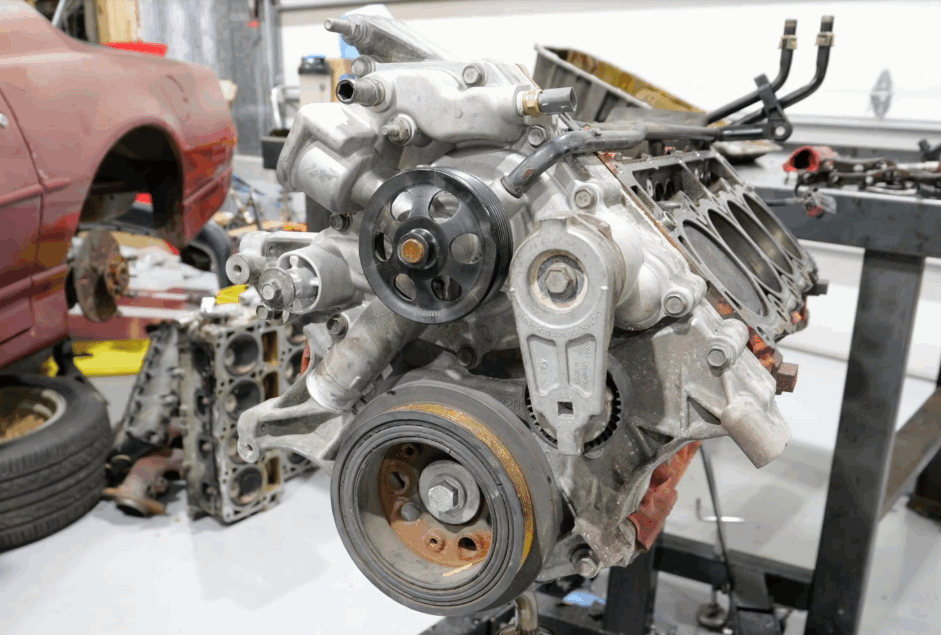
What Are the Most Common 6.4 Hemi Problems?
The most common 6.4 Hemi problems include lifter failure, camshaft wear, engine ticking, excessive oil consumption, ignition misfires, overheating, exhaust manifold leaks, power loss, and check engine light warnings. Most owners experience one or more of these issues after the engine reaches higher mileage. Heavy towing, aggressive driving, and skipped maintenance can also increase the risk of failure. Identifying these problems early helps prevent expensive engine repairs.
Lifter and camshaft damage rank among the most serious failures. These components work together to open and close the engine valves. Low oil quality or normal wear increases friction between the lifter and camshaft. Over time, the metal surfaces wear down and produce the well-known HEMI ticking noise. As the damage spreads, the engine may misfire, idle roughly, or lose power. Continuing to drive with worn valve train components often leads to much higher repair costs.
Several other problems affect performance without causing immediate engine damage. Excessive oil consumption lowers the oil level and reduces lubrication. Misfires decrease fuel efficiency and make the engine feel sluggish during acceleration. Cooling system failures raise engine temperature and increase stress on internal components. Exhaust manifold leaks often create a ticking sound that owners mistake for lifter failure. A proper diagnosis helps identify the real cause before replacing unnecessary parts.
Despite these common issues, the 6.4L HEMI remains a durable V8 engine. Many well-maintained engines exceed 200,000 miles without requiring major internal repairs. Routine oil changes, cooling system inspections, and early diagnosis significantly reduce the chance of serious failures. The following sections explain each problem in detail, including its symptoms, causes, repair options, and expected repair costs.
Why Do Lifter and Camshaft Failures Occur on the 6.4 Hemi?
Lifter and camshaft failures are among the most expensive and widely reported 6.4 Hemi problems. These two components work together to control valve movement, allowing the engine to breathe efficiently at every RPM. When either part begins to wear, engine performance declines quickly. If owners ignore the early symptoms, the damage often spreads throughout the valve train and leads to costly repairs.
Several factors contribute to premature wear. Poor lubrication is one of the most common causes because hydraulic lifters rely on a steady supply of clean engine oil. Dirty oil, extended oil change intervals, or low oil pressure reduce the protective film between moving parts. Metal-to-metal contact then increases friction and gradually wears down the camshaft lobes. High mileage also accelerates this process because every engine cycle places additional stress on the valve train.
A worn lifter usually creates a rhythmic ticking noise during cold starts or while the engine idles. As the affected camshaft lobe loses its original shape, the intake or exhaust valve can no longer open fully. This reduces airflow into the combustion chamber and disrupts the air-fuel mixture. Drivers often notice rough idling, slower acceleration, reduced engine power, or an illuminated check engine light. Diagnostic trouble codes related to cylinder misfires commonly appear as the damage progresses.
Replacing only the failed lifter rarely solves the problem when the camshaft already shows visible wear. Technicians typically inspect both components at the same time because a damaged camshaft can quickly destroy a new lifter. Many repair shops also recommend replacing related valve train parts if they show excessive wear. Performing repairs early costs significantly less than rebuilding an engine after widespread internal damage. Regular oil changes with the correct oil specification remain the most effective way to reduce lifter and camshaft wear and extend the service life of the 6.4L HEMI engine.
Why Does the 6.4 Hemi Develop a Ticking Noise?
A ticking noise is one of the most common reasons owners search for 6.4 Hemi problems. However, not every ticking sound points to a serious engine failure. The 6.4L HEMI can produce several types of ticking noises, and each one has a different cause. Identifying where the sound comes from and when it occurs helps narrow down the problem before unnecessary repairs begin.
Valve train wear is one of the most serious causes of engine ticking. A worn lifter or damaged camshaft creates a rhythmic metallic noise that often becomes louder as internal wear increases. Drivers may also notice rough idling, reduced engine power, or engine misfires at the same time. If these symptoms appear together, the engine should be inspected as soon as possible to prevent further damage.
Not every ticking sound comes from inside the engine. Fuel injectors naturally produce a light clicking noise as they open and close during normal operation. This sound remains consistent and does not affect performance. Exhaust manifold leaks can also create a ticking noise, especially during a cold start. As the exhaust system heats up, the metal expands and may temporarily reduce or eliminate the sound. Although an exhaust leak is less severe than valve train damage, it still requires repair to prevent exhaust gases from escaping.
The easiest way to identify the source is to observe when the noise appears and how it changes. A ticking noise that becomes louder under load or continues after the engine reaches operating temperature deserves immediate attention. In contrast, a light injector tick with no warning lights or performance issues is usually normal. Accurate diagnosis saves time, reduces repair costs, and prevents replacing parts that are still working correctly. If the noise persists or grows louder over time, a professional inspection is the safest way to determine whether the problem involves the lifters, camshaft, exhaust manifold, or another engine component.
Why Does the 6.4 Hemi Consume Excessive Oil?
Excessive oil consumption is another issue that concerns many owners of the 6.4L HEMI. Although every engine uses a small amount of oil during normal operation, frequent oil top-offs between scheduled services often indicate an underlying problem. Driving with a low oil level reduces lubrication, increases internal friction, and accelerates wear on critical components such as the lifters, camshaft, and crankshaft bearings.
Several factors can increase oil consumption over time. Worn piston rings may allow engine oil to enter the combustion chamber, where it burns together with the air-fuel mixture. Valve stem seals can also harden as the engine ages, allowing small amounts of oil to leak into the cylinders. In some cases, external oil leaks from the valve cover gasket, oil pan gasket, or oil filter housing cause the oil level to drop without producing obvious smoke from the exhaust. Owners who tow heavy loads or drive aggressively may also notice slightly higher oil consumption because the engine operates at higher temperatures and RPM.
Common warning signs include a low oil level on the dipstick, a burning oil smell, blue exhaust smoke during acceleration, or an oil pressure warning light. Some drivers also hear increased valve train noise because low oil levels reduce lubrication to the hydraulic lifters. Ignoring these symptoms can eventually lead to premature engine wear or serious internal damage.
Checking the oil level regularly is the best way to catch the problem early. If the engine consumes oil faster than expected, inspect it for external leaks before assuming an internal failure. Using the manufacturer-recommended oil viscosity and replacing the oil at the correct service interval also helps protect internal components. When oil consumption continues to increase despite proper maintenance, a professional inspection can identify the root cause and prevent more expensive repairs later.
What Causes Misfires and Power Loss in the 6.4 Hemi?
Engine misfires and power loss are common 6.4 Hemi problems that affect both performance and fuel efficiency. A healthy 6.4L HEMI delivers smooth acceleration and consistent power across the RPM range. When one or more cylinders fail to produce enough power, the engine begins to run unevenly. Drivers often notice hesitation, rough idling, slower acceleration, or reduced throttle response long before the problem becomes severe.
Several components can trigger a misfire. Worn spark plugs, failing ignition coils, clogged fuel injectors, and faulty fuel delivery all reduce combustion efficiency. Airflow sensors and oxygen sensors can also send incorrect data to the engine control module, causing an improper air-fuel mixture. In more serious cases, damaged lifters or a worn camshaft prevent the valves from opening correctly, reducing cylinder compression and creating persistent misfires.
Most vehicles display additional warning signs before performance drops significantly. The check engine light usually appears first, followed by engine vibration during idle or acceleration. Some drivers also experience poor fuel economy because the engine burns more fuel while trying to compensate for incomplete combustion. If the problem continues, unburned fuel may overheat the catalytic converter and shorten its service life.
Diagnosing a misfire requires a systematic approach. Technicians typically begin by scanning for diagnostic trouble codes before inspecting the ignition and fuel systems. If those components operate normally, they may perform a compression or leak-down test to evaluate the engine’s mechanical condition. Addressing the root cause as soon as possible helps restore performance, improve fuel economy, and prevent secondary damage to expensive components. Regular spark plug replacement, clean fuel injectors, and routine maintenance remain the most effective ways to reduce the risk of misfires and power loss in the 6.4L HEMI.
Why Does the 6.4 Hemi Overheat?
Overheating is one of the most serious 6.4 Hemi problems because excessive engine temperature can damage multiple internal components within a short period. The 6.4L HEMI operates efficiently within a specific temperature range. When the cooling system fails to control heat, the engine experiences additional stress that can affect the cylinder heads, head gaskets, water pump, and other critical parts. Ignoring an overheating engine greatly increases the risk of costly repairs.
Several cooling system components can cause the engine temperature to rise. A failing water pump may not circulate coolant effectively, while a stuck thermostat can restrict coolant flow between the engine and radiator. Low coolant levels, leaking radiator hoses, or a damaged radiator also reduce the system’s ability to remove heat. In addition, an electric cooling fan that fails to activate during slow traffic or extended idling may allow engine temperatures to climb quickly.
Drivers usually notice several warning signs before severe overheating occurs. The temperature gauge may rise above its normal range, and the engine may display an overheating warning message. Steam from the engine bay, coolant leaks beneath the vehicle, or a sweet smell from leaking coolant also indicate a cooling system problem. In some cases, the air conditioning loses cooling performance because the engine control system limits compressor operation to reduce heat.
Owners should stop driving as soon as the engine begins to overheat. Continuing to drive with a high engine temperature can warp cylinder heads, damage head gaskets, or cause permanent engine failure. Inspecting coolant levels, replacing worn hoses, and servicing the cooling system at the recommended intervals help prevent many overheating issues. Regular maintenance not only improves engine reliability but also protects expensive components from heat-related damage throughout the life of the 6.4L HEMI engine.
How Much Does It Cost to Fix Common 6.4 Hemi Problems?
Repair costs for 6.4 Hemi problems vary widely because each issue affects different engine components and requires a different amount of labor. Minor repairs such as replacing spark plugs or ignition coils are relatively affordable, while internal engine repairs involving the lifters or camshaft can become expensive. The final cost also depends on labor rates, parts quality, and whether the repair shop uses original equipment or aftermarket components.
The table below provides average repair costs for the most common 6.4 HEMI problems. These estimates represent typical repair prices and may vary by location and vehicle condition.
| Problem | Average Repair Cost | Severity | Safe to Keep Driving? |
|---|---|---|---|
| Lifter Replacement | $1,500–$3,000 | High | No |
| Camshaft Replacement | $2,500–$4,500 | High | No |
| Exhaust Manifold Leak | $300–$900 | Medium | Limited |
| Spark Plug Replacement | $250–$500 | Low | Yes, temporarily |
| Ignition Coil Replacement | $150–$400 | Low | Limited |
| Water Pump Replacement | $500–$1,000 | High | No |
| Thermostat Replacement | $200–$500 | Medium | Limited |
| Oil Leak Repair | $200–$1,200 | Medium | Depends on the leak |
Delaying repairs often increases the total cost. For example, replacing a worn lifter early is usually much less expensive than repairing a damaged camshaft and other valve train components. Likewise, fixing a coolant leak before the engine overheats can prevent damage to the head gasket or cylinder heads. Small problems rarely remain small once they begin affecting other systems.
Routine maintenance remains the most cost-effective way to reduce long-term ownership expenses. Regular oil changes, cooling system inspections, and prompt diagnosis help prevent many common failures before they require major repairs. Although some repairs involve a significant investment, addressing problems early usually saves money and helps the 6.4L HEMI deliver reliable performance for many years.
How Reliable Is the 6.4 Hemi Compared With Other HEMI Engines?
The 6.4L HEMI is widely regarded as one of the most reliable naturally aspirated V8 engines in the HEMI family. It combines strong performance with solid long-term durability, making it a popular choice for muscle cars, SUVs, and heavy-duty trucks. While no engine is completely free from mechanical issues, the 6.4 HEMI develops fewer widespread problems than many high-output turbocharged engines when owners follow the recommended maintenance schedule.
Compared with the 5.7L HEMI, the 6.4L version delivers significantly more horsepower and torque while maintaining a similar level of reliability. However, the larger engine places greater stress on internal components because it produces more power. As a result, repairs involving the valve train or cooling system often cost more than comparable repairs on the 5.7 HEMI. Even so, both engines share many maintenance requirements, including regular oil changes, cooling system inspections, and timely spark plug replacement.
The 6.2L Supercharged Hellcat HEMI offers much higher performance but also operates under greater mechanical and thermal stress. Its supercharger, increased cylinder pressure, and higher operating temperatures introduce additional wear that naturally increases maintenance costs over time. By comparison, the naturally aspirated 6.4L HEMI has a simpler design with fewer high-performance components that require specialized service. This makes it a more practical option for drivers who want strong performance without the higher ownership costs associated with forced induction.
Many well-maintained 6.4L HEMI engines exceed 200,000 miles, and some continue running reliably well beyond that point. Achieving this lifespan depends far more on maintenance than mileage alone. Owners who change the engine oil on schedule, monitor fluid levels, repair small problems promptly, and avoid prolonged overheating typically experience fewer major failures. With consistent care, the 6.4L HEMI remains a dependable engine that balances everyday drivability, towing capability, and long-term durability better than many performance-oriented V8 engines.
How Can You Prevent Most 6.4 Hemi Problems?
Preventing most 6.4 Hemi problems starts with consistent maintenance rather than expensive repairs. Although the 6.4L HEMI is built to handle demanding driving conditions, every engine depends on proper lubrication, cooling, and routine inspections to remain reliable. Following the manufacturer’s maintenance schedule significantly reduces wear on critical components and helps detect minor issues before they develop into major failures.
Regular oil changes provide the greatest long-term benefit. Engine oil lubricates the lifters, camshaft, crankshaft, and other moving parts while carrying away heat and contaminants. As oil ages, it loses its protective properties and allows friction to increase. Using the correct oil viscosity and a high-quality oil filter helps maintain stable oil pressure and protects the valve train from premature wear. Owners should also check the oil level between service intervals, especially before long trips or heavy towing.
The cooling system deserves equal attention because excessive heat shortens the life of many engine components. Inspecting coolant levels, radiator hoses, the thermostat, and the water pump helps prevent overheating. Replacing worn spark plugs at the recommended interval also improves combustion efficiency, reduces misfires, and lowers stress on the ignition system. In addition, cleaning the air filter and monitoring for fluid leaks support consistent engine performance throughout the year.
Driving habits also influence engine longevity. Allowing the engine to reach normal operating temperature before hard acceleration reduces unnecessary stress on internal parts. Avoiding repeated high-RPM driving when the engine is cold helps protect the pistons, bearings, and valve train. Owners should also investigate unusual noises, warning lights, or changes in engine performance as soon as they appear. Early diagnosis often turns a minor repair into a simple maintenance job instead of a costly engine overhaul. With proper care and timely servicing, the 6.4L HEMI can deliver dependable performance for well over 200,000 miles.
Conclusion
The 6.4L HEMI remains one of the most capable naturally aspirated V8 engines available, combining strong performance, impressive towing capability, and long-term durability. Like any high-output engine, it develops several recurring issues as mileage increases. Lifter failure, camshaft wear, engine ticking, excessive oil consumption, misfires, overheating, and exhaust manifold leaks are the problems owners encounter most often. Fortunately, these issues usually develop gradually and provide warning signs before they cause severe engine damage.
The key to long-term reliability is early diagnosis and consistent maintenance. Regular oil changes, routine cooling system inspections, timely spark plug replacement, and prompt attention to unusual noises or warning lights help prevent many common failures. Addressing small problems before they affect other components not only reduces repair costs but also extends the engine’s service life.
For buyers, the presence of one or more common 6.4 HEMI problems should not automatically rule out a used vehicle. Instead, focus on maintenance records, inspection results, and overall vehicle condition. A well-maintained engine with documented service history often proves to be a better investment than a lower-mileage vehicle that has received poor maintenance.
With proper care, the 6.4L HEMI can provide reliable performance for well over 200,000 miles. Understanding its common problems, recognizing early symptoms, and following a preventive maintenance schedule will help you enjoy the engine’s performance while avoiding many of the expensive repairs associated with neglected maintenance.