Correctly aligning the 3.6 Pentastar timing marks protects the engine from serious mechanical problems. A timing chain replacement, engine rebuild, or camshaft repair requires precise timing alignment. Even one tooth of error can reduce engine performance, trigger diagnostic trouble codes, or damage internal engine components.
The 3.6L Pentastar engine uses multiple timing chains, camshaft phasers, hydraulic tensioners, and timing guides to synchronize the crankshaft and camshafts. Each component works together to control valve timing during every combustion cycle. When every timing mark matches its reference point, the engine starts smoothly, delivers stable power, and maintains efficient fuel combustion. However, incorrect alignment often causes rough idle, poor acceleration, and fault codes such as P0016 and P0017.
This guide explains the complete timing chain alignment process for the 3.6 Pentastar engine. You will learn where each timing mark is located and how to position the engine at Top Dead Center before installation. The guide also explains how to match the colored timing chain links with the crankshaft and camshaft sprockets. Finally, you will learn how to verify the timing before reinstalling the timing cover and starting the engine. By following these steps, you can complete the repair accurately and avoid costly timing errors.
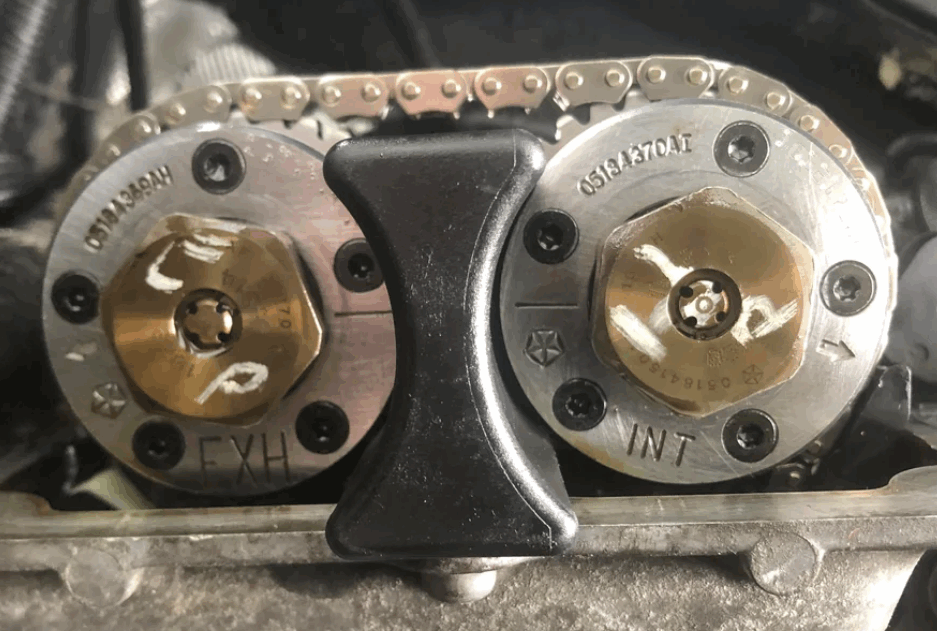
What Are the 3.6 Pentastar Timing Marks and Why Do They Matter?
The 3.6 Pentastar timing marks identify the exact alignment points for the crankshaft, camshafts, and timing chains during engine assembly. These reference points keep every rotating component synchronized throughout the four-stroke combustion cycle. Correct alignment allows the intake and exhaust valves to open and close at the proper time, helping the engine produce consistent power, maintain fuel efficiency, and reduce exhaust emissions. Even a slight misalignment changes valve timing and affects overall engine performance.
The timing system on the 3.6L Pentastar engine includes the crankshaft sprocket, primary timing chain, secondary timing chains, camshaft phasers, hydraulic tensioners, and timing chain guides. Colored links on each timing chain match specific timing marks on the sprockets during installation. These colored links serve as installation references instead of permanent alignment marks because they no longer line up after several engine rotations. For this reason, technicians must verify every timing mark before rotating the crankshaft for the first time.
Accurate timing alignment protects the engine from mechanical and electronic problems. A correctly timed engine starts quickly, idles smoothly, and delivers balanced performance across the entire RPM range. In contrast, incorrect timing often causes rough idle, reduced power, poor fuel economy, and diagnostic trouble codes such as P0016 or P0017. In severe cases, incorrect valve timing can allow the pistons and valves to move out of synchronization, increasing the risk of costly internal engine damage.
Understanding these timing marks provides the foundation for every repair involving the timing chain system. Once you recognize each reference point and its function, the remaining installation process becomes more accurate, predictable, and easier to verify before the engine returns to service.
What Components Are Involved in the 3.6 Pentastar Timing System?
The 3.6 Pentastar timing system uses several precision components to keep the crankshaft and camshafts synchronized during every engine cycle. Each part performs a specific function, and every component must operate correctly to maintain accurate valve timing. If one part wears out or fails, the entire timing system can lose synchronization and affect engine performance.
The crankshaft sprocket transfers rotational force from the crankshaft to the primary timing chain. The primary chain then drives the secondary timing chains, which connect to the intake and exhaust camshaft phasers on each cylinder bank. These phasers continuously adjust valve timing through the Variable Valve Timing (VVT) system. As a result, the engine can improve combustion efficiency, increase power at different engine speeds, and reduce fuel consumption without changing the mechanical timing relationship.
Hydraulic timing chain tensioners apply constant pressure to the chains while the engine operates. Engine oil pressure keeps the tensioners extended and removes excess chain slack during acceleration and deceleration. At the same time, timing chain guides support the chains and reduce vibration as they travel around the sprockets. This design limits chain movement, minimizes wear, and helps maintain consistent timing throughout the engine’s service life.
Every component in the timing system works together as a single assembly. Replacing only the timing chain while leaving worn guides, tensioners, or sprockets in place can shorten the life of the repair and increase the risk of future timing problems. For this reason, experienced technicians often inspect or replace the complete timing set whenever they perform a major timing chain service on the 3.6L Pentastar engine.
How Do You Align the 3.6 Pentastar Timing Marks Correctly?
Correctly aligning the 3.6 Pentastar timing marks requires a precise installation sequence. Every timing mark, colored chain link, and sprocket must match before you rotate the engine. Skipping a single step can shift valve timing and create synchronization problems after assembly. For this reason, always complete the alignment process before releasing the hydraulic tensioners.
Begin by rotating the crankshaft until cylinder No. 1 reaches Top Dead Center on the compression stroke. Confirm that the crankshaft timing mark points to the correct reference position before installing the primary timing chain. Next, place the colored link on the primary chain over the timing mark on the crankshaft sprocket. Then align the remaining colored link with the corresponding mark on the intermediate sprocket. This step establishes the correct relationship between the crankshaft and the rest of the timing system.
After installing the primary chain, position the secondary timing chains on both cylinder banks. Match every colored chain link with the timing mark on its camshaft phaser and intermediate sprocket. Make sure each camshaft remains in the correct position throughout the installation process. Even a small amount of movement can shift the timing and require you to repeat the procedure from the beginning.
Once every chain and sprocket aligns correctly, install the timing chain guides and hydraulic tensioners. Remove the locking pins from the tensioners only after confirming that every timing mark remains in its correct position. Rotate the crankshaft by hand through two complete revolutions and return it to Top Dead Center. Finally, inspect the sprocket alignment marks, verify smooth engine rotation, and confirm that no component binds or moves unexpectedly. Completing these final checks helps ensure accurate valve timing before you reinstall the timing cover and start the engine.
How Do You Verify the Timing After Installation?
Verifying the 3.6 Pentastar timing marks after installation confirms that every timing component remains in the correct position before the engine starts. This inspection helps prevent valve timing errors, reduces the risk of engine damage, and ensures the timing chain system operates as designed. A careful verification process also saves time by identifying installation mistakes before the engine is fully reassembled.
Begin by rotating the crankshaft clockwise with a suitable hand tool. Complete two full crankshaft revolutions without using the starter motor. The crankshaft should rotate smoothly with consistent resistance throughout the entire cycle. If you feel excessive resistance, hear unusual contact, or notice the crankshaft locking, stop immediately and inspect the timing system before continuing.
After returning the engine to Top Dead Center, examine the alignment marks on the crankshaft sprocket and camshaft phasers. The colored timing chain links will no longer align with the timing marks because the chains and sprockets rotate at different speeds during normal operation. Instead, confirm that the sprockets return to their specified reference positions according to the service procedure. This inspection provides a more reliable indication of correct valve timing than the colored links alone.
Finally, inspect the timing chain tension, chain guides, and hydraulic tensioners for proper installation. Make sure every fastener meets the manufacturer’s torque specification and every component sits securely in its original position. Once the timing system passes these checks, reinstall the timing cover and complete the remaining engine assembly. A thorough final inspection significantly reduces the chance of timing-related faults after the first engine start.
What Problems Can Incorrect 3.6 Pentastar Timing Marks Cause?
Incorrect 3.6 Pentastar timing marks can create immediate performance issues and long-term engine damage. Even a small timing error changes the relationship between the crankshaft and camshafts, preventing the valves from opening and closing at the correct time. As a result, the engine loses efficiency, combustion becomes unstable, and the powertrain control module quickly detects abnormal valve timing.
One of the first symptoms is difficult starting or a complete no-start condition. The engine may crank normally but fail to build proper compression because the intake and exhaust valves operate out of sequence. If the engine starts, it often develops a rough idle, weak acceleration, reduced throttle response, and noticeable power loss. Fuel consumption may also increase because the engine cannot complete an efficient combustion cycle.
Incorrect valve timing frequently triggers the Check Engine Light and stores diagnostic trouble codes. Common fault codes include P0016, which indicates a crankshaft and camshaft correlation problem, and P0017, which identifies incorrect timing on another camshaft position. Some vehicles may also record additional correlation or Variable Valve Timing codes if the camshaft phasers cannot reach their commanded positions. These codes usually appear soon after the first engine start when the control module compares the crankshaft and camshaft signals.
Continuing to operate the engine with incorrect timing can accelerate wear throughout the timing system. Loose chains, damaged guides, and overloaded tensioners may fail prematurely because the components operate under abnormal stress. In severe cases, excessive timing errors can allow the pistons and valves to lose proper synchronization, increasing the risk of internal engine damage. Identifying and correcting timing alignment before driving the vehicle remains the safest way to protect the 3.6L Pentastar engine and avoid expensive repairs.
What Are the Most Common Timing Chain Installation Mistakes?
Several installation mistakes can prevent the 3.6 Pentastar timing marks from aligning correctly. Most timing problems occur because technicians rush the installation process or skip important verification steps. Although the timing system appears straightforward, every chain, sprocket, and tensioner depends on precise positioning to maintain accurate valve timing.
One of the most common mistakes involves installing a timing chain one tooth off. A single misplaced tooth changes the relationship between the crankshaft and camshafts, causing poor engine performance and immediate camshaft correlation faults. Another frequent error occurs when the crankshaft moves away from Top Dead Center during installation. Even slight crankshaft movement can affect the alignment of every remaining timing component and require the procedure to start again.
Many installers also release the hydraulic tensioners before confirming the timing marks. Once the tensioners apply pressure, the chains become fully loaded, making it more difficult to correct an alignment error. Ignoring the colored timing chain links creates another common problem. These links provide the primary installation reference, so matching each colored link with its corresponding sprocket mark remains essential during assembly. Reusing worn guides, stretched chains, or weak tensioners can also shorten the life of a new timing chain installation.
The final inspection often determines whether the repair succeeds or fails. Some technicians install the timing cover immediately after completing the assembly without rotating the engine by hand. This shortcut increases the risk of discovering timing errors only after the first engine start. Rotating the crankshaft through two complete revolutions, confirming smooth movement, and verifying every reference mark before final assembly provide the best protection against costly engine repairs. Careful attention to these details helps ensure reliable valve timing and long-term engine performance.
Frequently Asked Questions About 3.6 Pentastar Timing Marks
Do the colored timing chain links align again after rotating the engine? No. The colored links only serve as installation references during timing chain assembly. After the crankshaft rotates, the chains and sprockets move at different speeds, so the colored links no longer line up with the timing marks. During inspection, always verify the sprocket reference marks instead of the chain links.
Can I check the timing without removing the timing cover? In most cases, no. The timing chains, sprockets, and alignment marks remain hidden behind the timing cover. Although a scan tool can detect camshaft correlation faults, it cannot visually confirm that the timing marks align correctly. Removing the timing cover provides the only reliable method for inspecting mechanical timing.
Should I replace the timing chain, guides, and tensioners together? Yes. Replacing the complete timing set improves reliability and reduces the chance of future failures. New timing chains can wear prematurely if old guides or weak hydraulic tensioners remain in service. Installing all major timing components at the same time also reduces labor costs if another repair becomes necessary later.
Does the 3.6 Pentastar engine require special timing tools? Yes. Chrysler recommends using dedicated camshaft holding tools and crankshaft positioning tools during timing chain service. These tools prevent unwanted camshaft movement and help maintain accurate timing while the chains and tensioners are installed.
Can incorrect timing damage the 3.6 Pentastar engine? Yes. Incorrect timing can cause hard starting, rough engine operation, poor fuel economy, and camshaft correlation fault codes. Severe timing errors may also increase the risk of internal engine damage if the valve timing moves far enough outside the specified operating range.
Conclusion
Correctly aligning the 3.6 Pentastar timing marks is essential for maintaining accurate valve timing and dependable engine performance. Every stage of the installation process, from positioning the crankshaft at Top Dead Center to verifying the final timing marks, directly affects how the engine starts, idles, and performs under load. Careful attention to each reference mark helps eliminate timing errors before the engine returns to service.
Replacing the complete timing set, including the chains, guides, and hydraulic tensioners, provides the most reliable long-term repair. After completing the installation, always rotate the engine by hand and verify the timing before installing the timing cover. This final inspection takes only a few minutes, but it can prevent expensive repairs caused by incorrect camshaft synchronization. Following the recommended timing procedure and using the proper service tools will help ensure the 3.6L Pentastar engine operates safely, efficiently, and reliably for many miles.