NAPA Oil comes from specialized lubricant manufacturers that produce motor oil according to NAPA’s requirements. Many drivers know NAPA as an automotive parts brand, but they often ask who actually makes NAPA Oil.
NAPA does not simply rely on its brand name. The company focuses on product standards, distribution, and customer needs. The manufacturers behind NAPA Oil handle the technical side of oil production, including formulation, blending, and quality testing.
Motor oil quality depends on several important factors. These factors include the base oil, additive package, viscosity grade, and industry certifications. A trusted manufacturing process helps ensure that the oil protects engines under different driving conditions.
This article explains who makes NAPA Oil and how the production process works. It also examines the quality factors that affect NAPA Motor Oil performance. By understanding the manufacturer relationship and technical standards, drivers can make better decisions when choosing engine oil for their vehicles.
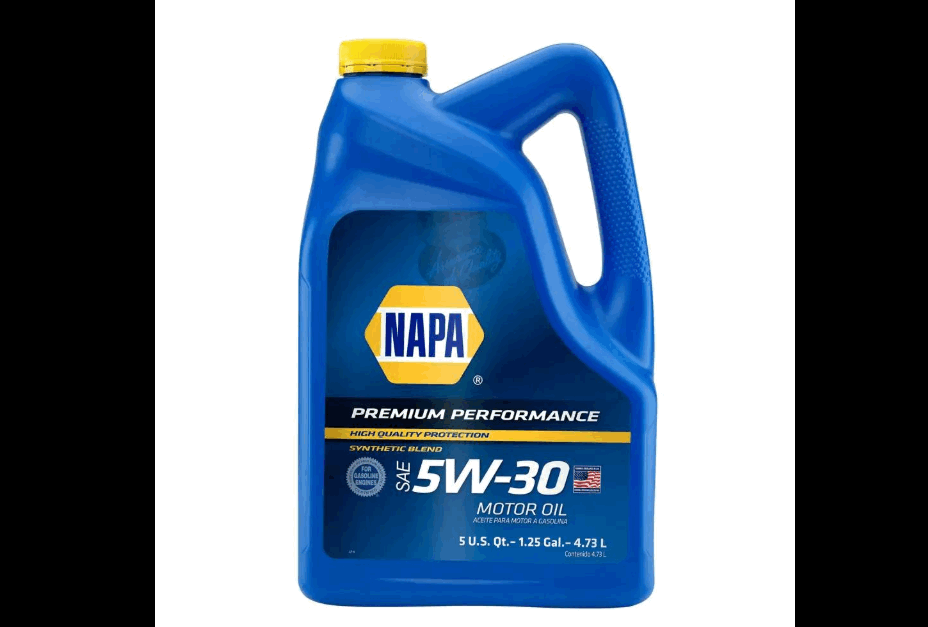
Who Makes NAPA Oil?
NAPA Oil comes from lubricant manufacturers that produce automotive oil products for the NAPA brand. NAPA focuses on selling and distributing automotive parts and maintenance products, while specialized oil manufacturers handle the technical production process.
The automotive aftermarket industry uses different manufacturing models. Many brands do not operate their own oil refineries or blending facilities. Instead, they work with experienced lubricant manufacturers that have the equipment, testing systems, and technical knowledge required to create engine oils.
NAPA follows this industry approach. The brand develops product requirements and sells NAPA Motor Oil through its automotive parts network. The actual production process involves manufacturers that blend base oils with additives to create specific oil formulations.
The relationship between a brand and a lubricant manufacturer does not determine quality by itself. The final performance depends on the oil formulation, manufacturing controls, and whether the product meets recognized industry standards. Motor oils must satisfy requirements related to engine protection, temperature performance, and wear reduction.
Drivers often search for the manufacturer behind NAPA Oil because they want to compare it with other oil brands. However, the more important factors are the product specifications, certifications, and compatibility with their vehicle. A motor oil that matches the engine manufacturer’s requirements can provide reliable protection regardless of whether the oil brand owns the production facility.
Does NAPA Manufacture Its Own Motor Oil?
NAPA does not operate as a traditional oil manufacturer that produces every component of its motor oil internally. Like many automotive brands, NAPA works within a supply chain that connects brand requirements with specialized lubricant production facilities.
Motor oil manufacturing requires advanced equipment and technical expertise. Manufacturers begin with base oils, then combine them with additive packages to create specific formulations. These additives help improve engine protection, reduce wear, control deposits, and maintain oil performance under different temperatures.
The production process also requires strict quality control. Manufacturers test oil properties such as viscosity, chemical stability, and performance characteristics before the product reaches consumers. These tests help ensure that the oil meets required specifications for different vehicle applications.
Private label motor oil production is common in the automotive industry. This model allows automotive brands to offer their own oil products while working with companies that specialize in lubricant development and manufacturing. The brand manages product positioning and distribution, while the manufacturer provides production capabilities and technical expertise.
For NAPA Oil, understanding this manufacturing model helps explain why the brand name alone does not define oil quality. The formulation, testing process, and compliance with industry standards have a stronger impact on engine performance and protection.
Who Owns NAPA Oil and What Company Is Behind NAPA?
NAPA Oil belongs to the NAPA automotive brand, which operates within the broader NAPA Auto Parts network. NAPA focuses on providing automotive parts, tools, equipment, and maintenance products for professional technicians and vehicle owners.
NAPA Auto Parts operates under Genuine Parts Company, a company that owns and manages several automotive and industrial distribution businesses. Genuine Parts Company supports NAPA’s operations by providing resources, supply chain management, and business infrastructure across the automotive aftermarket industry.
The relationship between NAPA and Genuine Parts Company helps explain how NAPA distributes products such as motor oil. NAPA uses its established automotive network to make maintenance products available through stores, service centers, and online channels. This distribution system connects manufacturers with customers who need reliable vehicle maintenance solutions.
Brand ownership and product manufacturing are two different parts of the supply chain. Genuine Parts Company owns the NAPA brand ecosystem, while specialized lubricant manufacturers handle the technical production of products such as motor oil. Understanding this distinction helps consumers evaluate NAPA Oil more accurately.
When drivers research NAPA Oil, they often want to know whether the company behind the brand affects product reliability. The answer depends on several factors, including manufacturing standards, oil specifications, and certification requirements. The ownership structure provides brand support, but the technical formulation determines how the oil performs inside an engine.
How Is NAPA Motor Oil Produced?
NAPA Motor Oil follows a production process that combines base oils, additives, blending techniques, and quality testing. The manufacturing process determines how the oil performs inside an engine and how effectively it protects engine components.
The first stage involves selecting the base oil. Manufacturers use different types of base oils depending on the required performance level. Conventional motor oils use refined mineral base oils, while synthetic oils use chemically modified base oils that provide improved stability in demanding conditions.
The second stage involves adding performance additives. These chemical components improve specific oil functions. Detergents help control deposits inside the engine. Anti wear additives reduce friction between moving parts. Viscosity modifiers help the oil maintain suitable flow characteristics across different temperatures.
After combining the ingredients, manufacturers blend the formulation under controlled conditions. The blending process ensures that each component works together to provide consistent performance. Manufacturers then test the finished oil to evaluate properties such as viscosity, oxidation resistance, and engine protection capabilities.
The production process also considers industry requirements. Motor oils must match specific performance standards to work effectively in modern engines. These standards help manufacturers create products that support different driving conditions, engine designs, and maintenance requirements.
For NAPA Oil, the manufacturing process plays a more important role than the brand name alone. A properly formulated motor oil with suitable specifications can help reduce engine wear, maintain lubrication, and support long term engine performance.
Is NAPA Oil Good Quality?
NAPA Oil can provide reliable engine protection when drivers choose the correct product specification for their vehicle. Oil quality depends on the formulation, performance standards, and compatibility with the engine rather than the brand name alone.
One of the most important quality indicators is the oil certification. Motor oils that meet industry standards must pass specific performance requirements related to engine cleanliness, wear protection, and lubrication performance. Certifications such as API standards help consumers identify products that follow recognized quality guidelines.
The viscosity grade also affects how well NAPA Oil performs in different conditions. Motor oils with grades such as 5W 30 or 10W 40 have different flow characteristics at low and high temperatures. Choosing the correct viscosity helps the engine receive proper lubrication during startup and normal operation.
The oil formulation also influences performance. Synthetic motor oils usually provide stronger temperature stability and longer service performance compared with conventional oils. High mileage formulations include specific additives that support engines with greater wear due to age and accumulated mileage.
Drivers should evaluate NAPA Oil based on their vehicle requirements instead of assuming that a brand name automatically represents quality. Checking the owner’s manual, recommended viscosity, and required performance specifications provides a more accurate way to determine whether a specific NAPA Oil product fits a vehicle.
A quality motor oil should match the engine’s needs, protect internal components, and maintain stable performance throughout the recommended oil change interval. These factors determine the real value of NAPA Oil for everyday vehicle maintenance.
What Types of NAPA Motor Oil Are Available?
NAPA offers different types of motor oil to support various vehicle requirements, driving conditions, and engine needs. Each oil type uses a different formulation approach to provide specific levels of protection, performance, and durability.
Full synthetic motor oil provides advanced protection for engines that require consistent performance under demanding conditions. Synthetic formulations use specially developed base oils that maintain stability during temperature changes. Drivers who experience extreme heat, cold weather, heavy towing, or frequent highway driving often choose synthetic oil because it maintains lubrication performance in challenging environments.
Synthetic blend motor oil combines synthetic and conventional base oils. This formulation provides a balance between performance and cost. It offers improved protection compared with traditional conventional oil while remaining more affordable than full synthetic products. Many drivers choose synthetic blends for everyday driving conditions.
Conventional motor oil uses refined mineral base oils and supports older vehicle designs that do not require synthetic formulations. It remains suitable for engines that follow traditional maintenance requirements and operate under normal driving conditions.
High mileage motor oil targets vehicles with higher accumulated mileage. These formulations include additives designed to support older engines by helping reduce oil consumption, protect seals, and maintain engine cleanliness.
Choosing the right type of NAPA Motor Oil depends on several factors, including vehicle age, manufacturer recommendations, driving environment, and maintenance goals. The correct oil type helps maintain engine efficiency and supports long term vehicle performance.
How Does NAPA Oil Compare With Other Motor Oil Brands?
NAPA Oil competes with other motor oil brands through product specifications, certifications, and availability rather than brand recognition alone. The performance of any motor oil depends on its formulation, testing standards, and suitability for a specific engine.
Major motor oil brands usually offer similar product categories, including full synthetic, synthetic blend, conventional, and high mileage oils. These products compete by improving areas such as engine protection, temperature stability, fuel efficiency support, and deposit control. NAPA Oil follows the same industry approach by providing different formulations designed for different vehicle requirements.
The most important comparison factor is the oil specification. Drivers should compare API certification, SAE viscosity grade, and manufacturer recommendations instead of focusing only on the company name. For example, a 5W 30 oil from different brands may perform similarly if both products meet the same industry standards and vehicle requirements.
NAPA Oil also benefits from NAPA’s position in the automotive aftermarket. The brand has an established distribution network that allows customers to purchase maintenance products alongside other automotive parts and services. This convenience makes NAPA Oil accessible to professional technicians and vehicle owners.
However, choosing between NAPA Oil and other brands requires attention to vehicle compatibility. A higher priced oil does not always provide better results if it does not match the engine specifications. The correct motor oil should provide the required protection level, meet industry standards, and support the vehicle manufacturer’s maintenance recommendations.
Should You Use NAPA Oil in Your Vehicle?
You should use NAPA Oil in your vehicle if the product matches your engine requirements and maintenance specifications. The right motor oil choice depends on factors such as viscosity grade, certification standards, vehicle age, and driving conditions.
The first step is checking the vehicle owner’s manual. Manufacturers specify the recommended oil viscosity and performance requirements for each engine design. Using an oil that meets these requirements helps maintain proper lubrication and reduces the risk of unnecessary engine wear.
Drivers should also consider their typical driving conditions. Vehicles that operate in extreme temperatures, carry heavy loads, or experience frequent stop and go traffic may require advanced oil formulations. Full synthetic oil can support demanding conditions, while conventional or synthetic blend oils may meet the needs of vehicles with standard driving patterns.
Vehicle age also affects oil selection. Older engines with higher mileage may benefit from high mileage formulations that include additives designed for aging engine components. These products focus on maintaining seal condition, reducing deposits, and supporting consistent engine performance.
NAPA Oil can be a suitable choice for many vehicles when drivers select the correct formulation. The most important factor is not the brand name but whether the oil meets the engine manufacturer’s specifications. A properly selected motor oil helps maintain engine protection, lubrication efficiency, and long term vehicle reliability.
What Should You Know About NAPA Oil Manufacturing?
NAPA Oil comes from a manufacturing process that combines specialized lubricant production with NAPA’s automotive product standards. NAPA operates as an automotive brand that provides maintenance solutions, while lubricant manufacturers handle the technical process of creating motor oil formulations.
Understanding who makes NAPA Oil helps drivers look beyond the brand name. The quality of motor oil depends on several factors, including base oil selection, additive technology, viscosity grade, and industry certifications. These elements determine how well the oil protects engine components and performs under different operating conditions.
NAPA Oil follows the same principles that guide the wider automotive lubricant industry. Manufacturers develop formulations, perform quality testing, and create products that meet specific performance requirements. Drivers can evaluate NAPA Oil by checking whether the product matches their vehicle’s recommended specifications.
The best motor oil choice depends on engine needs rather than popularity alone. Selecting the correct viscosity, certification level, and oil type helps maintain proper lubrication and support long term engine performance. For vehicle owners researching NAPA Oil, understanding its manufacturing process and quality factors provides a clearer way to make informed maintenance decisions.