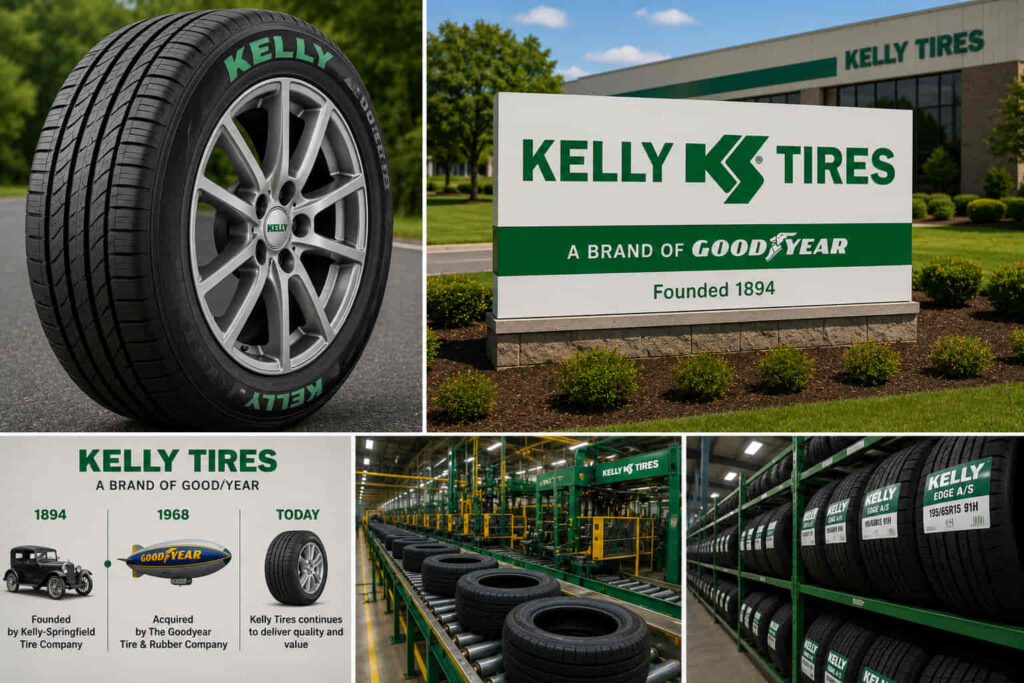
Kelly Tires are made under the ownership of Goodyear Tire & Rubber Company, with the Kelly brand continuing a long American tire manufacturing history while focusing on affordable replacement tires for everyday drivers. The brand is recognized as a value-oriented tire option for passenger vehicles, SUVs, crossovers, and light trucks.
Understanding who makes Kelly Tires helps explain why the brand has remained relevant in the competitive tire industry. A tire brand’s manufacturer and ownership structure influence important factors such as engineering resources, production standards, product development, and market positioning.
Kelly Tires has a unique position because it combines historical American tire heritage with the support of a major global tire company. While Goodyear operates in the premium tire segment with advanced technologies and high-performance products, Kelly focuses on providing practical tire solutions for drivers who want dependable performance at a more affordable price.
The brand offers products designed for common driving needs, including touring, all-season, SUV, and light truck applications. Kelly product lines such as Kelly Edge are developed for drivers who prioritize everyday reliability, comfort, and value.
This guide explains who makes Kelly Tires, the history behind the brand, its relationship with Goodyear, manufacturing background, product range, market position, and whether Kelly is a reliable choice for modern vehicles.
What Is Kelly Tires Known For?
Kelly Tires is known as an American tire brand with a long history that focuses on providing affordable replacement tires for everyday vehicles. The brand has built its reputation around practical performance, accessibility, and value rather than competing directly with premium tire manufacturers in advanced performance categories.
Kelly’s identity comes from its long connection to the American tire industry. The brand originally developed through Kelly-Springfield Tire Company, a manufacturer with roots dating back to the late 19th century. Over time, Kelly became recognized among drivers looking for dependable tires that offered a balance between cost and everyday driving needs.
Today, Kelly operates as a value-focused brand within the Goodyear Tire & Rubber Company portfolio. This relationship gives Kelly access to the resources, manufacturing expertise, and industry experience of one of the world’s largest tire companies while allowing the brand to maintain its own market position.
Kelly focuses primarily on replacement tires for passenger cars, SUVs, crossovers, and light trucks. Its products are designed for common driving situations such as commuting, highway travel, and general road use.
The brand’s approach is different from premium tire manufacturers that invest heavily in specialized performance categories such as racing, ultra-high-performance driving, or advanced electric vehicle applications. Kelly’s goal is to provide reliable transportation solutions for drivers who want a recognized brand without paying premium-level prices.
For example, a driver replacing tires on an older sedan or family SUV may consider Kelly because the brand offers practical all-season and touring options designed for normal daily driving.
Where Did Kelly Tires Start?
Kelly Tires started in the United States through the Kelly-Springfield Tire Company, which was founded in 1894 and became one of America’s historic tire manufacturers. The brand’s early development was closely connected with the growth of the automobile industry and the increasing demand for reliable rubber products.
The company was founded in Springfield, Ohio, during a period when transportation technology was rapidly changing. As automobiles became more common, tire manufacturers played an important role in improving vehicle reliability, comfort, and mobility.
Kelly-Springfield developed experience in tire manufacturing over many decades and became known as one of the established names in the American tire market. The brand’s history helped create recognition among consumers who valued domestic tire manufacturing heritage.
As the tire industry became more competitive and global, Kelly went through several ownership changes before becoming part of Goodyear. This transition allowed the brand to continue operating while benefiting from the resources and manufacturing knowledge of a larger tire organization.
The history of Kelly Tires demonstrates how many established tire brands evolve over time. A brand can maintain its identity and customer recognition while becoming integrated into a larger corporate structure.
For example, Kelly’s connection with Goodyear allows the brand to combine historical brand recognition with modern manufacturing capabilities and distribution support.
Read more: Who Makes Westlake Tires
Who Owns Kelly Tires?
Kelly Tires is owned by Goodyear Tire & Rubber Company, one of the world’s largest tire manufacturers with a long history in automotive products. Through Goodyear’s ownership, Kelly benefits from the resources, engineering experience, and distribution network of a major global tire company while maintaining its position as a value-focused tire brand.
The relationship between Kelly and Goodyear is important because it explains how the brand continues to compete in the modern tire market. Instead of operating as a completely independent manufacturer, Kelly uses the support and infrastructure of a larger tire organization while targeting customers who want affordable replacement options.
Goodyear manages multiple tire brands with different market positions. While Goodyear-branded products generally focus on premium technology, performance innovation, and broad vehicle applications, Kelly is positioned toward drivers who need dependable tires at a more accessible price point.
This brand structure allows Goodyear to serve different customer groups. Drivers looking for advanced performance solutions may choose Goodyear products, while customers prioritizing value and everyday reliability may consider Kelly tires.
Kelly’s connection with Goodyear also provides confidence for consumers because the brand is supported by a company with extensive experience in tire development, testing, and manufacturing.
For example, a customer comparing affordable replacement tires may view Kelly differently from an unknown budget brand because Kelly has the backing and industry experience of Goodyear.
Where Are Kelly Tires Made?
Kelly Tires are produced through Goodyear’s manufacturing and supply network, with production locations depending on the specific tire model, market demand, and manufacturing requirements. Because Kelly is part of Goodyear’s brand portfolio, its products are supported by the same type of industrial expertise and quality management systems used throughout Goodyear operations.
The exact manufacturing location of a Kelly tire can vary. Tire companies often use multiple production facilities to efficiently supply different regions and vehicle markets. As a result, the country of production alone does not determine the overall quality or performance of a tire.
Important factors include tire design, rubber compounds, construction methods, testing procedures, and quality control standards. A tire developed for passenger vehicles requires different engineering considerations compared with one designed for SUVs or light trucks.
Kelly products are developed around common driving applications, including commuting, highway driving, and general vehicle use. The manufacturing process must ensure that tires meet requirements for traction, durability, handling stability, and expected service conditions.
For example, a Kelly Edge Touring tire designed for daily passenger vehicle use requires a different balance of comfort and tread performance compared with a Kelly Edge AT tire designed for light trucks and SUV applications.
What Types of Tires Does Kelly Manufacture?
Kelly manufactures replacement tires for passenger vehicles, SUVs, crossovers, and light trucks, focusing on everyday driving applications where affordability and dependable performance are important. The brand’s product strategy is centered around providing practical tire solutions rather than competing primarily in specialized premium performance segments.
One of Kelly’s recognized product families is the Kelly Edge series, which includes tires designed for different driving needs. Kelly Edge Touring focuses on everyday passenger vehicles by providing a balance between ride comfort, traction, and general road performance. Kelly Edge HP is designed for drivers who want improved handling characteristics, while Kelly Edge AT targets SUV and light truck owners who need additional versatility for different road conditions.
Kelly also has a history of producing products for light truck and utility applications. These vehicles often require tires with stronger construction, reliable load capability, and stable performance under heavier conditions compared with standard passenger vehicles.
The product range shows Kelly’s position as a practical replacement tire brand. Instead of focusing on niche markets such as extreme performance driving or luxury vehicle applications, Kelly develops products for the large number of drivers who need dependable tires for normal transportation.
For example, a family using a crossover SUV for commuting and weekend travel may choose a Kelly Edge product because it provides the essential performance characteristics needed for daily driving without the higher cost associated with premium tire brands.
What Is Kelly Tires Known For?
Kelly Tires is known for offering affordable replacement tires backed by the experience and resources of Goodyear Tire & Rubber Company. The brand’s main appeal comes from combining established tire industry heritage with a lower price position compared with premium tire brands.
Kelly’s strongest market advantage is value. Many drivers do not require specialized tire technology or maximum performance capabilities, but they still want a recognizable manufacturer with a history in the tire industry. Kelly addresses this demand by providing products designed for common driving situations.
The brand is also recognized for accessibility. Because Kelly focuses on popular vehicle categories such as passenger cars, SUVs, and light trucks, its products are available for many everyday applications.
However, Kelly’s market position should be understood correctly. It is not designed to compete directly with premium brands that focus on advanced performance engineering, motorsports technology, or maximum durability in demanding conditions. Instead, Kelly provides a balanced solution for drivers who prioritize reasonable cost and reliable transportation.
The connection with Goodyear strengthens Kelly’s reputation because consumers are purchasing from a brand supported by a major tire manufacturer rather than an unknown low-cost producer.
For example, a vehicle owner who needs replacement tires for regular commuting may find Kelly attractive because the brand offers a combination of affordability, availability, and established manufacturing experience.
How Does Kelly Compare With Goodyear and Other Tire Brands?
Kelly competes differently from Goodyear and other tire brands because it targets value-focused customers rather than the premium tire segment. While both brands share a corporate connection, they serve different market needs and customer expectations.
Goodyear generally focuses on premium tire development, advanced technology, and a wider range of high-performance applications. The brand invests heavily in areas such as performance tires, specialized vehicle applications, and innovative tire technologies.
Kelly, on the other hand, focuses on providing affordable alternatives for drivers who need reliable replacement tires for everyday use. This difference does not mean Kelly is unrelated to quality; instead, it reflects a different product positioning within the overall tire market.
Compared with other value-oriented brands such as Douglas, General, or other affordable tire manufacturers, Kelly benefits from its long history and connection with Goodyear. This relationship provides brand recognition and manufacturing expertise that many smaller budget tire brands do not have.
The right choice depends on the driver’s priorities. Someone looking for maximum performance, advanced features, or premium comfort may prefer a higher-tier tire brand. Someone looking for dependable transportation at a reasonable price may find Kelly a suitable option.
For example, a commuter vehicle driven mainly on city roads and highways may not require expensive performance tires, making a value-focused brand like Kelly a practical choice.
Is Kelly a Reliable Tire Brand?
Kelly is considered a reliable tire brand for drivers who need affordable replacement tires for normal driving conditions. The brand’s long history, relationship with Goodyear, and focus on everyday applications support its position as a legitimate option in the replacement tire market.
Reliability depends on selecting the correct tire for the vehicle and maintaining it properly. Factors such as tire pressure, alignment, driving habits, road conditions, and regular inspections influence real-world tire performance.
Kelly is most suitable for drivers who prioritize value, predictable performance, and reasonable operating costs. The brand works well for commuters, family vehicles, and light truck owners who need dependable tires without moving into premium price categories.
Drivers with specialized requirements, such as high-performance driving, extreme weather conditions, or maximum off-road capability, may need tires specifically designed for those purposes.
The main advantage of Kelly is that it provides access to a recognized tire brand with American heritage and Goodyear support at a more affordable price level.
For example, a driver replacing worn tires on a daily-use sedan or SUV may choose Kelly because the brand provides practical performance for regular driving while avoiding the cost of premium alternatives.