Many Hyundai Santa Fe owners become confused the first time they stop at a gas station and cannot find the gas button inside the vehicle. Drivers often expect a traditional fuel release lever near the driver seat, but newer Hyundai Santa Fe models use a completely different system. This small design change creates a surprisingly common problem, especially for first time Hyundai owners, rental car users, or drivers upgrading from older SUVs.
The situation becomes even more frustrating when the fuel door refuses to open immediately. Some drivers think the fuel door is broken, while others spend several minutes searching around the dashboard or near the floor for a hidden release button. In reality, many modern Hyundai Santa Fe models no longer include a physical gas button at all. Instead, the fuel door works through the vehicle’s electronic locking system.
Understanding how the Hyundai Santa Fe fuel door mechanism works can save time and prevent unnecessary stress during refueling. Different model years also use different release systems, which explains why some vehicles still include a manual fuel lever while newer versions rely entirely on push to open technology.
This guide explains where the Hyundai Santa Fe gas button is located, how to open the fuel door correctly, and what to do if the fuel door becomes stuck or does not unlock properly.
Does the Hyundai Santa Fe Have a Gas Button?
Many drivers look for a gas button in the Hyundai Santa Fe because they expect a traditional fuel release lever inside the cabin. This expectation comes from older cars where a simple mechanical lever controlled the fuel door. However, the design in modern Hyundai Santa Fe models has changed, and this often causes confusion at gas stations.
Most new Hyundai Santa Fe models do not have a physical gas button inside the vehicle. Instead, Hyundai uses an electronic fuel door system that connects to the central door lock. When you unlock the car, the fuel door also unlocks at the same time. You then walk to the rear driver side of the vehicle and press the fuel door to open it. This design removes the need for an interior fuel release lever and creates a cleaner dashboard layout.
This system works well once drivers understand it. However, many people assume something is wrong because they cannot find a button inside the cabin. They may check the dashboard, the driver door panel, and the floor area, but find nothing related to fuel control. In reality, the system is designed to operate automatically with the vehicle lock status.
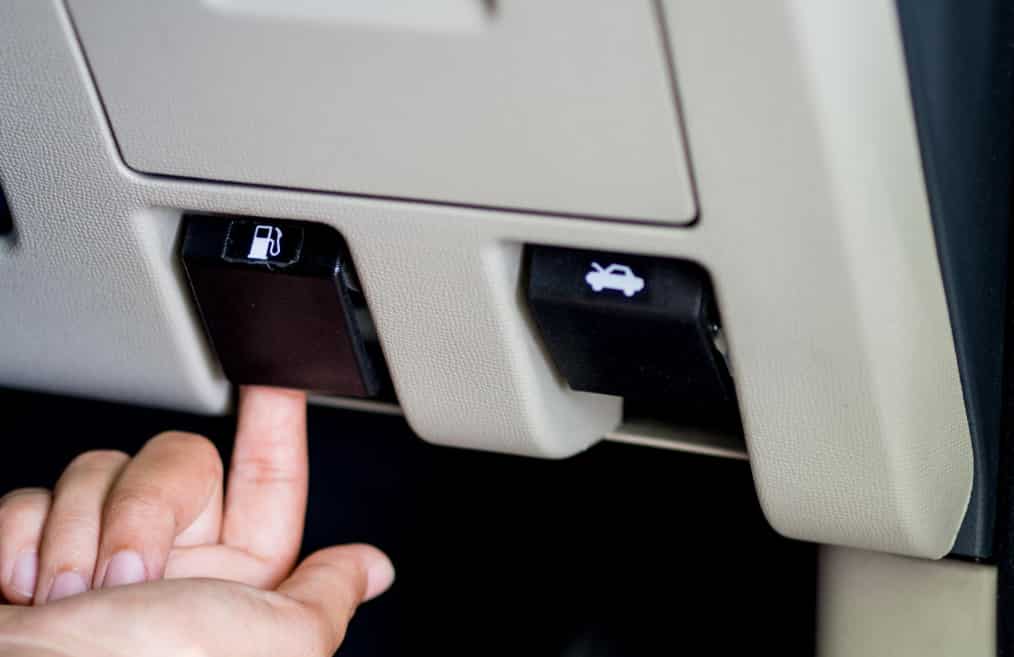
Older Hyundai Santa Fe models still use a manual fuel release lever. This lever usually sits near the lower left side of the driver seat. It is close to the floor and often shows a small fuel pump icon. Drivers pull this lever to open the fuel door manually.
Some newer hybrid versions add small timing delays for safety. In these models, the fuel door may not open immediately after the engine shuts off. Drivers may need to wait a few seconds before pressing the fuel door.
Understanding this system helps prevent damage and avoids frustration. You should always check your model year before forcing the fuel door open, because each generation of Hyundai Santa Fe uses a different design approach.
Where Is the Hyundai Santa Fe Gas Button Located?
The location of the Hyundai Santa Fe gas button depends on the model year, and this is the main reason many drivers feel confused at the fuel station. In newer versions of the Hyundai Santa Fe, there is no physical gas button inside the cabin. Hyundai removed the traditional fuel release lever and replaced it with an electronic fuel door system.
In most modern Santa Fe models, the fuel door sits on the rear driver side of the vehicle. You do not press any button inside the car to open it. Instead, the system unlocks the fuel door automatically when you unlock the doors of the vehicle. After unlocking, you walk to the fuel door and press it gently. The door pops open without any extra control inside the cabin.
This design helps simplify the interior layout. It also reduces the number of mechanical parts inside the car. However, it creates confusion for drivers who expect a visible gas button near the driver seat or on the dashboard. Many people search inside the cabin, especially near the steering wheel or lower left dashboard, but they do not find any fuel control because it no longer exists in most newer models.
In older Hyundai Santa Fe generations, the gas button or fuel release lever is located inside the vehicle. It is usually positioned near the lower left side of the driver seat, close to the floor area. This lever often includes a fuel pump icon, and drivers must pull it to open the fuel door manually.
Some hybrid and newer trims also adjust this system slightly. In certain versions, the fuel door may not unlock instantly after the vehicle is turned off. The system may add a short delay for safety and locking synchronization. This is normal and does not indicate a malfunction.
Understanding this difference between model generations is important. It helps drivers avoid unnecessary force on the fuel door and prevents damage to the locking mechanism.
How to Open the Fuel Door on a Hyundai Santa Fe
Opening the fuel door on a Hyundai Santa Fe is simple once you understand how the system works. Many drivers overthink it because they look for a gas button inside the cabin, but most modern Santa Fe models do not use one. Instead, the fuel door relies on the vehicle’s locking system and a push to open mechanism.
First, make sure the vehicle is fully stopped and placed in Park. Turn off the engine to ensure the car’s systems reset correctly. Next, unlock all doors using the key fob or the interior unlock button. This step is important because the fuel door stays locked when the vehicle is locked.
After the vehicle is unlocked, walk to the rear driver side where the fuel door is located. Press gently on the edge of the fuel door. You will feel it release and pop open. You do not need to force it or use any tool. The mechanism is designed to open with light pressure only.
Once the fuel door opens, remove the fuel cap slowly and place it on the built in holder if available. After refueling, close the cap tightly and push the fuel door until it clicks into place. The system will automatically lock again when you lock the vehicle.
In older Hyundai Santa Fe models, the process is slightly different. Those versions use a manual fuel release lever inside the cabin, usually near the driver seat floor area. In those cases, you pull the lever first, then go outside to open the fuel door.
Some newer trims may include a short delay in unlocking the fuel door. If it does not open immediately, wait a few seconds after unlocking the car and try again. This is normal behavior and not a sign of a fault.
Understanding this process helps you refuel smoothly without confusion or unnecessary force on the fuel door mechanism.
What to Do If the Hyundai Santa Fe Fuel Door Will Not Open
Sometimes the fuel door on a Hyundai Santa Fe may not open even when you follow the correct steps. This usually happens due to simple issues rather than serious mechanical failure. Understanding the cause helps you fix the problem quickly and avoid damaging the fuel door.
First, check whether the vehicle is fully unlocked. The fuel door stays locked when the central locking system is active. Lock the car and unlock it again using the key fob. Then try pressing the fuel door once more with gentle pressure. Many cases are solved at this step.
If the fuel door still does not open, make sure the vehicle is in Park and the engine is completely off. Some models delay the fuel door release for a few seconds after shutdown. Waiting a short time often resolves the issue without any extra action.
Dirt, ice, or debris around the fuel door can also block the mechanism. In this case, clean the edges carefully and try again. Do not force the door because excessive pressure can damage the latch or paint surface.
Another possible cause is a weak or failing fuel door actuator. When this happens, the door may stay locked even when the car is unlocked. You may hear no click or release sound at all. In this situation, the system may require inspection at a Hyundai service center.
In some cases, the issue is related to the key fob battery. A weak battery may not send a strong unlock signal to the vehicle. Replacing the battery can restore normal operation.
If none of these steps work, avoid forcing the fuel door open. Instead, use the emergency fuel door release if your model includes one, or contact a professional technician for inspection. This ensures you do not damage the locking mechanism or surrounding body panel.
Emergency Fuel Door Release Location
In rare cases, the fuel door on a Hyundai Santa Fe may stay locked even after you unlock the vehicle and try all normal methods. When this happens, many models include an emergency fuel door release system designed for situations like electrical failure or actuator malfunction.
On most Hyundai Santa Fe models, the emergency release is located inside the cargo area. You will usually find it behind a side trim panel on the driver side of the trunk. The panel hides a small manual release cable or lever. When you pull this cable gently, it triggers the fuel door latch and allows it to open from the outside.
To access it, open the rear trunk and check the inner side panel closest to the fuel door side. Some versions require you to remove a small cover by hand. Once exposed, pull the release slowly and firmly. After that, go to the fuel door and press it to open.
Not all Hyundai Santa Fe models include the same emergency layout. Some newer versions may integrate the release mechanism differently or reduce manual access points due to improved electronic reliability. That is why checking your owner’s manual is important before attempting any manual release.
If the emergency release does not work, the problem is usually related to a stuck latch or a failed actuator. In this case, forcing the fuel door can cause damage to the body panel or locking system. It is better to stop and contact a Hyundai service center for proper inspection.
Understanding the emergency fuel door release location helps you stay prepared in unexpected situations. It ensures you can still refuel your vehicle even when the electronic system fails or the normal unlocking process does not respond.
Frequently Asked Questions About the Hyundai Santa Fe Gas Button
Drivers often have the same questions when they try to find the gas button on a Hyundai Santa Fe. This section answers the most common concerns in a clear and practical way so you can refuel without confusion.
Most modern Hyundai Santa Fe models do not have a gas button inside the cabin. Instead, the fuel door unlocks automatically when you unlock the vehicle. You then open it by pressing the fuel door from the outside.
In older Santa Fe models, the gas release lever is usually located near the lower left side of the driver seat. It sits close to the floor area and often shows a small fuel pump icon.
Why won’t my Hyundai Santa Fe fuel door open?
The fuel door may not open if the vehicle is still locked, the system has a delay after shutdown, or the latch is stuck due to dirt or debris. In some cases, a weak key fob battery can also cause this issue.
Can I open the fuel door without unlocking the car?
No, in most modern Hyundai Santa Fe models, the fuel door stays locked when the vehicle is locked. You must unlock the doors first before attempting to open it.
Which side is the fuel door on the Hyundai Santa Fe?
The fuel door is located on the rear driver side of the vehicle in most models.
Is there an emergency way to open the fuel door?
Yes, many models include an emergency release inside the trunk behind a side panel. This is used when the electronic system does not respond.
Conclusion
Understanding where the gas button is on a Hyundai Santa Fe helps drivers avoid confusion at the fuel station and makes refueling faster and safer. The key point is that most modern Santa Fe models do not use a traditional fuel button inside the cabin. Instead, the system is integrated into the vehicle’s central locking system. Once the car is unlocked, the fuel door becomes accessible and can be opened with a simple press on the outside panel.
This design is part of Hyundai’s move toward cleaner interiors and more automated vehicle functions. While it improves convenience, it can be confusing for drivers who are used to older vehicles with a manual fuel release lever. That is why understanding your model year is important. Older Santa Fe versions still use a physical fuel lever near the driver seat, while newer versions rely on electronic locking and push to open fuel doors.
If the fuel door does not open, the issue is usually minor and related to locking status, timing delay, or dirt around the latch. In rare cases, an emergency release inside the trunk may be needed. Knowing these simple troubleshooting steps can save time and prevent unnecessary stress.
If you regularly drive a Hyundai Santa Fe, it is worth taking a few minutes to learn how your specific fuel system works. This small knowledge makes a big difference in everyday driving comfort and helps you avoid frustration in real situations.