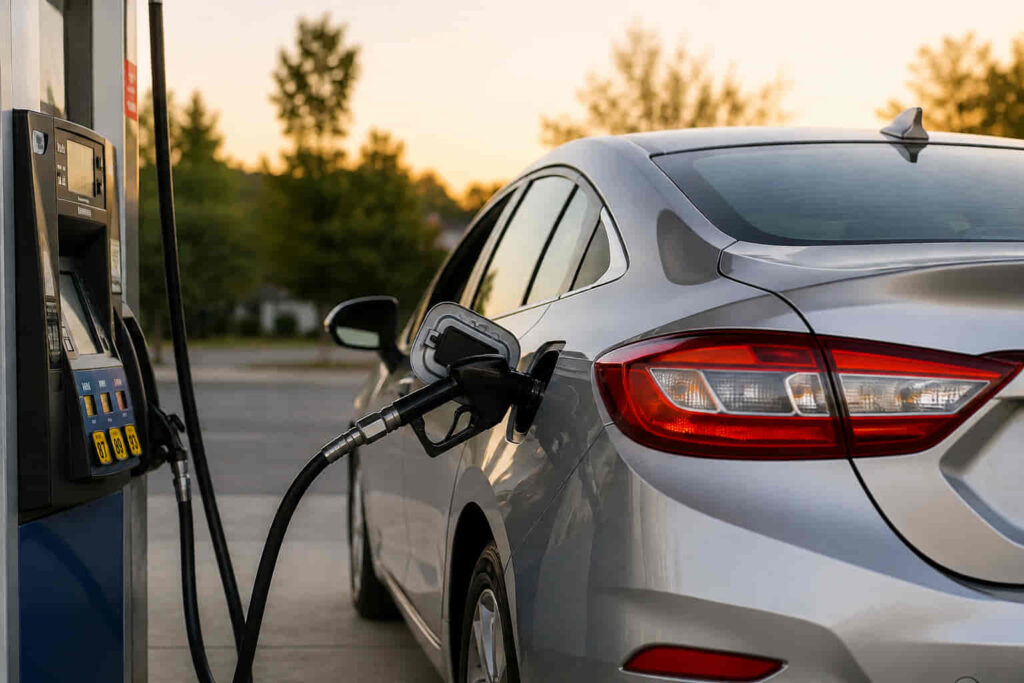
Choosing a car with excellent gas mileage has become one of the most important decisions for buyers because fuel costs directly affect the total cost of vehicle ownership. A fuel-efficient car reduces annual gasoline expenses, lowers carbon emissions, and often delivers better long-term value than a comparable model with lower fuel economy. While vehicle price, reliability, and comfort remain important considerations, fuel efficiency has become a defining factor for commuters, families, and high-mileage drivers who want to minimize operating costs without sacrificing everyday usability.
The cars with the best gas mileage in 2026 are primarily hybrid models that combine an efficient gasoline engine with an electric motor to maximize fuel economy. However, not every driver benefits equally from the highest EPA fuel economy rating. Real-world MPG depends on driving habits, traffic conditions, climate, maintenance, and the type of roads a vehicle travels every day. A compact hybrid that excels in urban traffic may not provide the same advantage for drivers who spend most of their time on highways, while an efficient gasoline-powered sedan may deliver better overall value for buyers who prefer lower purchase prices and simpler maintenance.
This guide compares the most fuel-efficient cars available in 2026, explains why they achieve exceptional gas mileage, examines the difference between EPA estimates and real-world performance, and helps you determine which vehicle offers the best combination of fuel savings, practicality, reliability, and ownership costs for your specific driving needs.
Which Cars Have the Best Gas Mileage in 2026?
The cars with the best gas mileage in 2026 are dominated by hybrid vehicles because hybrid powertrains recover energy during braking, optimize engine operation, and reduce fuel consumption during low-speed driving where conventional gasoline engines are least efficient. This combination allows many modern hybrids to exceed 50 miles per gallon in combined driving while maintaining the driving range and convenience of a traditional gasoline vehicle.
Among all mainstream models, the Toyota Prius continues to set the benchmark for fuel economy. Its latest hybrid system combines a lightweight platform, highly efficient gasoline engine, regenerative braking technology, and optimized battery management to achieve one of the highest EPA combined MPG ratings available in a production vehicle. Beyond impressive fuel efficiency, the Prius also offers strong reliability, relatively low maintenance costs, and high resale value, making it one of the most economical cars to own over several years.
The Hyundai Elantra Hybrid follows closely by delivering exceptional fuel economy in a compact sedan designed for everyday commuting. Its aerodynamic body, efficient hybrid drivetrain, and intelligent transmission calibration reduce fuel consumption in both city traffic and highway cruising. Drivers who travel long distances each week can significantly reduce annual fuel expenses without giving up passenger comfort or trunk space, making it an attractive alternative to more expensive hybrid models.
Another standout is the Toyota Corolla Hybrid, which balances affordability with excellent fuel efficiency. Instead of focusing solely on maximizing EPA ratings, the Corolla Hybrid emphasizes consistent real-world performance across different driving conditions. Its predictable fuel consumption, proven hybrid technology, and lower purchase price make it an appealing choice for first-time buyers, students, and families seeking dependable transportation with minimal operating costs.
The Honda Civic Hybrid also ranks among the most fuel-efficient vehicles available in 2026. Honda’s latest hybrid system prioritizes electric assistance during stop-and-go traffic while allowing the gasoline engine to operate within its most efficient range during highway driving. This approach not only improves fuel economy but also provides smoother acceleration and quieter operation compared with many conventional compact sedans.
Drivers looking for greater interior space without sacrificing efficiency often consider the Toyota Camry Hybrid or Honda Accord Hybrid. Both midsize sedans demonstrate that excellent gas mileage is no longer limited to smaller vehicles. Advanced hybrid systems, improved aerodynamics, and intelligent power management allow these larger cars to deliver fuel economy that rivals many compact gasoline vehicles while providing greater comfort for families and long-distance travel.
Fuel-efficient crossovers have also improved significantly. Models such as the Kia Niro Hybrid demonstrate that an SUV does not necessarily require substantially higher fuel consumption than a sedan. By combining a compact crossover design with hybrid technology, lightweight construction, and efficient engine management, vehicles in this category offer practical cargo capacity while maintaining fuel economy that would have been difficult to achieve only a few years ago.
Although EPA fuel economy ratings provide an effective benchmark for comparing vehicles, buyers should view these numbers as standardized estimates rather than guaranteed real-world results. Driving aggressively, carrying heavy cargo, using roof racks, operating in extremely cold temperatures, or spending extended time in congested traffic can all reduce actual MPG. Conversely, smooth acceleration, regular maintenance, properly inflated tires, and consistent highway driving often enable drivers to approach or even exceed official fuel economy estimates under favorable conditions.
Ultimately, the best gas mileage car is not simply the model with the highest MPG figure. The right choice depends on how closely a vehicle’s efficiency matches your daily driving patterns, annual mileage, maintenance expectations, and long-term ownership budget. Evaluating fuel economy together with purchase price, reliability, insurance costs, depreciation, and expected fuel savings provides a far more accurate picture of a vehicle’s true value than comparing MPG numbers alone.
Which Hybrid Cars Offer the Best Fuel Economy?
Hybrid cars offer the best fuel economy because they combine a gasoline engine with one or more electric motors to reduce fuel consumption during the driving conditions where conventional engines are least efficient. Instead of relying solely on gasoline, a hybrid powertrain captures energy through regenerative braking, stores it in a battery, and reuses that energy to assist acceleration or power the vehicle at lower speeds. This process reduces engine workload, improves thermal efficiency, and significantly increases miles per gallon, particularly in urban traffic where frequent braking creates more opportunities to recover energy.
The Toyota Prius remains the industry benchmark for fuel efficiency because every component of the vehicle is engineered to minimize energy loss. Its hybrid system seamlessly switches between electric power and gasoline power depending on driving conditions, allowing the engine to operate within its optimal efficiency range more often than a conventional vehicle. Combined with a lightweight chassis, low rolling-resistance tires, and an aerodynamic body designed to reduce drag, the Prius consistently delivers fuel economy that exceeds most competitors. For drivers covering thousands of miles each year, this translates into lower annual fuel expenses and fewer stops at the gas station without sacrificing driving range.
The Hyundai Elantra Hybrid has become one of the strongest alternatives to the Prius by offering excellent fuel economy in a more traditional compact sedan design. Its hybrid system uses an efficient gasoline engine paired with an electric motor that provides additional torque during acceleration, reducing the amount of fuel required in everyday driving. Unlike many vehicles that prioritize highway efficiency, the Elantra Hybrid performs particularly well in stop-and-go traffic because electric assistance minimizes fuel consumption during repeated acceleration from traffic lights and congested roads. This makes it an excellent choice for commuters who spend most of their time driving in cities.
The Toyota Corolla Hybrid demonstrates that exceptional fuel economy does not require sacrificing affordability. Built on Toyota’s mature Hybrid Synergy Drive technology, the Corolla Hybrid delivers consistent efficiency while maintaining the reliability that has made the Corolla one of the world’s best-selling vehicles. The hybrid system is designed to require minimal driver intervention, automatically determining when to operate on electric power, gasoline power, or a combination of both. This intelligent energy management enables the vehicle to achieve impressive fuel economy under a wide variety of driving conditions rather than only during standardized laboratory testing.
Honda has also made significant advances with the latest Civic Hybrid, which focuses on maximizing electric propulsion during low-speed driving while allowing the gasoline engine to deliver efficient power during higher-speed cruising. Unlike traditional hybrid systems that frequently alternate between engine and motor output, Honda’s two-motor architecture allows electric propulsion to play a larger role during daily commuting. The result is smoother acceleration, quieter cabin operation, and competitive fuel economy that remains stable even when traffic conditions frequently change. Drivers benefit not only from reduced fuel costs but also from a refined driving experience that closely resembles an electric vehicle during urban travel.
Buyers who require more passenger space without accepting higher fuel consumption often consider midsize hybrid sedans such as the Toyota Camry Hybrid and Honda Accord Hybrid. These vehicles demonstrate how advances in hybrid engineering have expanded beyond compact cars into larger family vehicles. Despite their increased size and weight, both models achieve fuel economy that rivals or even surpasses many gasoline-powered compact sedans. Improved engine efficiency, advanced battery management, and sophisticated energy recovery systems allow these larger vehicles to deliver long-distance comfort while maintaining remarkably low operating costs.
Hybrid crossovers have also become increasingly competitive as consumers continue to favor SUVs over traditional passenger cars. The Kia Niro Hybrid illustrates how careful engineering can offset the additional weight and higher driving position typically associated with crossover vehicles. Its compact dimensions, efficient hybrid drivetrain, and aerodynamic profile allow it to achieve fuel economy figures that are unusually high for an SUV. This balance between cargo capacity, passenger comfort, and fuel efficiency makes hybrid crossovers particularly attractive to families who need additional practicality without dramatically increasing fuel expenses.
Choosing the most fuel-efficient hybrid should involve more than comparing EPA combined MPG ratings. A vehicle that achieves the highest laboratory fuel economy may not produce the lowest ownership cost for every driver. Purchase price, insurance premiums, expected annual mileage, maintenance requirements, resale value, and local fuel prices all influence how much money a hybrid ultimately saves over its lifetime. Drivers with short daily commutes may recover the additional purchase cost of a hybrid more slowly than those who travel long distances each year, while commuters facing heavy traffic often experience the greatest financial benefit because hybrid systems perform most efficiently in low-speed urban environments.
Modern hybrid vehicles have also addressed many of the concerns that once discouraged buyers from adopting the technology. Battery systems are now engineered to last for hundreds of thousands of miles under normal operating conditions, manufacturers provide extensive warranty coverage for hybrid components, and maintenance procedures differ little from those of conventional gasoline vehicles. As hybrid technology has matured, improvements in reliability, efficiency, and long-term durability have transformed fuel-efficient vehicles from niche products into mainstream choices for drivers seeking lower operating costs without changing their daily driving habits.
Which SUVs Have the Best Gas Mileage?
Sport utility vehicles have become one of the most popular vehicle segments worldwide, but their larger dimensions and higher driving position naturally require more energy than compact sedans. Advances in hybrid technology, lightweight materials, engine efficiency, and aerodynamic engineering have significantly narrowed this gap, allowing many modern SUVs to achieve fuel economy that would have been considered impossible only a decade ago. Buyers no longer have to choose between practicality and efficiency because several crossover and SUV models now deliver excellent gas mileage while maintaining generous passenger space, cargo capacity, and everyday versatility.
The Kia Niro Hybrid consistently ranks among the most fuel-efficient SUVs because it was engineered with efficiency as its primary objective rather than adapting an existing gasoline platform. Its compact crossover design minimizes weight while maintaining the elevated seating position many drivers prefer. The hybrid system intelligently alternates between electric and gasoline power depending on driving conditions, reducing fuel consumption during stop-and-go traffic and maximizing efficiency during steady-speed cruising. This balance makes the Niro Hybrid particularly attractive to urban families and commuters who want SUV practicality without significantly increasing annual fuel costs.
Toyota has also established itself as a leader in fuel-efficient SUVs through models such as the Toyota Corolla Cross Hybrid and Toyota RAV4 Hybrid. The Corolla Cross Hybrid appeals to buyers who primarily drive in urban environments because its compact dimensions improve maneuverability while the hybrid powertrain reduces fuel consumption in congested traffic. The RAV4 Hybrid, on the other hand, targets drivers who require greater passenger space, increased cargo capacity, and enhanced long-distance comfort. Despite its larger size, the RAV4 Hybrid delivers fuel economy that exceeds many conventional compact SUVs by combining an efficient gasoline engine with Toyota’s proven Hybrid Synergy Drive system.
The Hyundai Tucson Hybrid demonstrates how midsize SUVs can combine strong performance with competitive fuel economy. Its turbocharged hybrid powertrain generates more power than many naturally aspirated competitors while maintaining efficient fuel consumption through intelligent electric motor assistance. Instead of sacrificing acceleration to achieve better MPG, the Tucson Hybrid uses electric torque to reduce engine workload during acceleration, creating a smoother driving experience while lowering gasoline consumption. This engineering approach allows drivers to enjoy confident highway performance without experiencing the fuel penalties traditionally associated with larger SUVs.
Honda’s CR-V Hybrid has become another benchmark in the compact SUV category because it emphasizes real-world efficiency rather than focusing exclusively on laboratory fuel economy ratings. Its two-motor hybrid architecture enables extensive electric operation during city driving, where fuel consumption is typically highest. As traffic conditions change, the gasoline engine seamlessly provides additional power while remaining within its optimal operating range. This combination results in stable fuel economy across a variety of driving environments, making the CR-V Hybrid an appealing choice for families who regularly alternate between urban commuting and highway travel.
Luxury buyers seeking improved fuel efficiency increasingly consider vehicles such as the Lexus NX Hybrid. Premium SUVs have traditionally prioritized performance and comfort over economy, but modern hybrid technology allows manufacturers to improve fuel consumption without compromising refinement. Advanced noise insulation, sophisticated hybrid control systems, and efficient engine calibration enable luxury hybrid SUVs to reduce operating costs while preserving the quiet ride and premium driving experience expected in this segment. For drivers who accumulate substantial annual mileage, these improvements can generate meaningful fuel savings over several years of ownership.
Vehicle size continues to influence SUV fuel economy because larger models require more energy to overcome inertia and aerodynamic resistance. Compact crossovers generally achieve the highest MPG due to their lighter construction and smaller frontal area, while midsize and full-size SUVs inevitably consume more fuel despite advances in engine technology. Manufacturers have responded by incorporating aluminum body panels, high-strength steel structures, active grille shutters, and improved underbody aerodynamics to reduce weight and drag. These engineering developments help modern SUVs achieve greater efficiency without reducing structural strength or passenger safety.
Driving conditions have an even greater impact on SUV fuel economy than on smaller passenger cars. Frequent acceleration, heavy traffic, steep terrain, towing, roof-mounted cargo carriers, and underinflated tires all increase engine workload and reduce MPG. Hybrid SUVs partially offset these challenges by recovering braking energy and using electric assistance during low-speed operation, but no vehicle can completely eliminate the effects of aggressive driving habits or excessive vehicle loads. Drivers who maintain steady speeds, accelerate progressively, and perform routine maintenance often achieve fuel economy much closer to official EPA estimates.
Choosing the most fuel-efficient SUV should involve evaluating how the vehicle will be used rather than simply selecting the highest MPG rating. Families who regularly transport passengers and luggage may benefit more from a midsize hybrid SUV that balances efficiency with interior space, while urban commuters may realize greater long-term savings from a smaller crossover optimized for city driving. Purchase price, expected annual mileage, maintenance costs, resale value, and fuel consumption together determine the true ownership cost, making overall value a more meaningful metric than fuel economy alone. When these factors are considered collectively, today’s hybrid SUVs demonstrate that buyers no longer need to sacrifice versatility to achieve outstanding gas mileage.
How Does EPA Gas Mileage Compare With Real-World Fuel Economy?
EPA gas mileage provides a standardized benchmark for comparing vehicle fuel efficiency, but it does not represent the exact fuel economy every driver will achieve in daily use. The Environmental Protection Agency measures fuel consumption through controlled laboratory testing that allows consumers to compare vehicles under identical conditions. While these ratings are highly valuable for evaluating different models, actual MPG often varies because every driver operates a vehicle in a unique environment with different weather conditions, traffic patterns, road surfaces, and driving habits.
EPA fuel economy testing follows carefully designed procedures that simulate both city and highway driving. During these tests, vehicles operate on dynamometers that replicate acceleration, deceleration, cruising speeds, and idle time under repeatable conditions. Manufacturers submit their vehicles for testing using standardized fuel, controlled temperatures, and prescribed driving cycles so that every model is evaluated using the same methodology. This consistency makes EPA ratings an effective comparison tool even though laboratory conditions cannot fully reproduce the complexity of real-world driving.
City driving generally produces the greatest variation between EPA estimates and actual fuel economy because urban traffic constantly changes vehicle operating conditions. Frequent stops, short trips, congested intersections, and prolonged idling force the engine to consume additional fuel while covering relatively little distance. Hybrid vehicles often outperform conventional gasoline cars in these environments because regenerative braking captures energy that would otherwise be lost during deceleration. Conventional gasoline vehicles, however, cannot recover this energy and therefore experience a larger reduction in fuel efficiency during heavy traffic.
Highway driving typically allows vehicles to achieve fuel economy closer to official EPA estimates because engine speed remains relatively stable over longer distances. Maintaining a constant cruising speed reduces unnecessary acceleration and allows modern engines to operate within their most efficient performance range. However, highway MPG can still decline when drivers consistently exceed speed limits. As vehicle speed increases, aerodynamic drag rises exponentially, forcing the engine to generate significantly more power simply to overcome air resistance. Even an efficient sedan can experience a noticeable reduction in fuel economy when driven at sustained high speeds.
Ambient temperature also plays a significant role in determining real-world gas mileage. Cold weather increases engine warm-up time, thickens lubricants, reduces battery efficiency, and often requires greater use of cabin heating systems. These factors cause vehicles to consume more fuel before reaching optimal operating temperature. Hybrid vehicles are particularly sensitive during short winter trips because their gasoline engines must run longer to heat both the engine and passenger cabin, temporarily reducing the efficiency advantages normally associated with electric assistance. Extremely hot weather can also lower fuel economy because air conditioning systems place additional demand on the engine or hybrid battery.
Driving behavior remains one of the most influential variables affecting actual MPG. Aggressive acceleration, hard braking, and rapid changes in speed force the engine to operate less efficiently and consume more fuel than necessary. Smooth acceleration, anticipating traffic flow, and maintaining consistent speeds reduce engine workload while allowing hybrid systems to maximize regenerative braking opportunities. Drivers who adopt efficient driving techniques frequently report fuel economy that closely matches or occasionally exceeds official EPA estimates, particularly during long-distance highway travel.
Vehicle maintenance further influences the difference between laboratory ratings and real-world performance. Underinflated tires increase rolling resistance, forcing the engine to expend additional energy to move the vehicle. Dirty air filters, aging spark plugs, worn engine oil, and neglected fuel system components can all reduce combustion efficiency and gradually lower MPG over time. Routine maintenance not only improves fuel economy but also helps preserve engine reliability and reduces long-term ownership costs by preventing unnecessary mechanical wear.
Vehicle load and external accessories are additional factors that are rarely reflected in standardized testing. Carrying heavy cargo, transporting multiple passengers, towing trailers, or installing roof racks all increase aerodynamic drag or overall vehicle weight. These changes require additional engine power during acceleration and cruising, reducing fuel efficiency even under otherwise favorable driving conditions. Drivers who frequently travel with sports equipment, rooftop cargo boxes, or recreational trailers often experience considerably lower MPG than official laboratory estimates suggest.
Understanding the relationship between EPA ratings and real-world fuel economy allows buyers to make more informed purchasing decisions. Rather than treating EPA figures as guaranteed performance, consumers should view them as a reliable baseline for comparing different vehicles. Evaluating fuel economy together with expected annual mileage, local driving conditions, climate, and personal driving habits provides a far more realistic estimate of long-term fuel costs. When interpreted correctly, EPA ratings remain one of the most valuable tools for identifying vehicles that deliver superior efficiency throughout their ownership life rather than only under controlled testing conditions.
What Factors Affect a Car’s Gas Mileage?
A car’s gas mileage is influenced by a combination of vehicle engineering, driving behavior, environmental conditions, and maintenance practices rather than a single mechanical component. Two vehicles with identical EPA fuel economy ratings can produce noticeably different real-world MPG when driven under different conditions because fuel consumption changes continuously in response to engine load, road conditions, and driver inputs. Understanding these variables allows drivers to improve fuel efficiency without modifying the vehicle itself while also helping buyers choose a model that best suits their driving habits.
Driving speed has one of the greatest impacts on fuel economy because aerodynamic drag increases exponentially as velocity rises. At lower speeds, a vehicle expends most of its energy overcoming rolling resistance and mechanical friction. Once highway speeds exceed approximately 50 to 60 miles per hour, air resistance becomes the dominant force opposing forward motion. Every additional increase in speed requires disproportionately more engine power to maintain momentum, causing fuel consumption to rise even if engine RPM remains relatively stable. This explains why many vehicles achieve their best fuel economy during steady highway cruising at moderate speeds rather than while traveling at higher interstate speeds.
Acceleration habits influence fuel efficiency just as much as cruising speed. Rapid acceleration demands immediate engine power, forcing the fuel injection system to deliver more gasoline into the combustion chamber within a short period. Smooth and progressive acceleration allows the engine to remain within its most efficient operating range while reducing unnecessary fuel consumption. Hybrid vehicles benefit even further from gentle driving because electric motors can assist acceleration more effectively when power demands remain moderate. Drivers who anticipate traffic conditions instead of repeatedly accelerating and braking often experience measurable improvements in average MPG over time.
Vehicle weight directly affects the amount of energy required to move a car. Heavier vehicles require additional fuel during acceleration because the engine must overcome greater inertia before reaching cruising speed. Extra cargo, permanently stored equipment, or towing trailers further increase engine workload throughout every journey. Manufacturers reduce this penalty by incorporating lightweight materials such as aluminum, magnesium alloys, and high-strength steel into modern vehicle structures. These materials decrease overall vehicle mass while maintaining structural rigidity and crash safety, enabling newer vehicles to achieve better fuel economy than larger or heavier models built with older manufacturing techniques.
Engine technology has transformed fuel efficiency over the past decade through improvements in combustion control and thermal efficiency. Modern gasoline engines utilize direct fuel injection, variable valve timing, turbocharging, and sophisticated electronic engine management systems to extract more usable energy from every gallon of fuel. Direct injection delivers gasoline precisely into each combustion chamber, improving fuel atomization and reducing waste. Variable valve timing adjusts engine breathing according to operating conditions, while smaller turbocharged engines generate the performance of larger engines without continuously consuming the same amount of fuel. Together, these technologies enable manufacturers to increase power output while simultaneously reducing fuel consumption.
Transmission design also plays a critical role in determining gas mileage because it controls how efficiently engine power reaches the wheels. Continuously variable transmissions optimize fuel economy by maintaining engine speed within its most efficient operating range instead of shifting through fixed gear ratios. Modern automatic transmissions with eight or ten gears achieve similar benefits by reducing engine RPM during highway cruising while providing shorter lower gears for acceleration. Efficient transmission calibration minimizes energy losses throughout the drivetrain and allows the engine to produce the required power using less fuel under a wider variety of driving conditions.
Tire condition and inflation pressure significantly affect rolling resistance, which represents the energy required for tires to move across the road surface. Underinflated tires deform more as they rotate, increasing friction and forcing the engine to generate additional power to maintain vehicle speed. Properly inflated tires reduce this resistance while also improving handling, braking performance, and tire longevity. Tire design also matters because manufacturers develop low rolling-resistance tires specifically to improve fuel economy. These tires use specialized rubber compounds and tread patterns that reduce energy loss without compromising safety under normal driving conditions.
Routine vehicle maintenance preserves fuel efficiency by ensuring every mechanical system operates as designed. Engine oil gradually loses its lubricating properties, air filters become restricted by dust and debris, spark plugs wear over time, and fuel injectors accumulate deposits that reduce combustion efficiency. Neglecting these maintenance items increases engine friction, disrupts optimal air-fuel mixtures, and ultimately lowers MPG. Following the manufacturer’s recommended maintenance schedule helps preserve fuel economy while reducing the likelihood of expensive mechanical failures later in the vehicle’s life.
Environmental conditions can also influence gas mileage even when the vehicle and driver remain unchanged. Cold temperatures increase fuel consumption because engines require additional time to reach optimal operating temperature, lubricants become more viscous, and battery performance declines. Hot weather places additional demand on the engine through air conditioning systems, while strong headwinds increase aerodynamic drag in the same way as driving at higher speeds. Mountainous terrain further reduces fuel economy because climbing steep grades requires sustained engine power, although some energy can be recovered during descents in hybrid vehicles through regenerative braking.
Fuel quality and engine compatibility contribute to overall efficiency as well. Using the octane rating recommended by the manufacturer allows the engine management system to optimize combustion timing without sacrificing performance or economy. Higher-octane fuel does not automatically improve gas mileage in vehicles designed for regular gasoline, while lower-quality fuel may contain contaminants that gradually reduce combustion efficiency if used consistently over long periods. Selecting the appropriate fuel ensures the engine operates according to its intended design parameters and maintains consistent performance throughout its service life.
Ultimately, fuel economy is determined by the interaction of engineering, maintenance, driving behavior, and operating environment rather than any single specification listed on a vehicle’s window sticker. Drivers who combine efficient driving techniques with regular maintenance and realistic vehicle selection consistently achieve lower fuel costs than those who rely solely on EPA ratings. For buyers comparing multiple vehicles, understanding these influencing factors provides a more accurate prediction of long-term operating expenses and helps identify the model that will deliver the greatest real-world value throughout years of ownership.
Is Buying a Hybrid Worth It for Fuel Savings?
Buying a hybrid is worth it for fuel savings if you drive frequently, spend significant time in city traffic, or plan to keep the vehicle for several years. Hybrid technology reduces gasoline consumption by combining an internal combustion engine with one or more electric motors that share the workload during acceleration and low-speed driving. This design allows the gasoline engine to operate more efficiently while recovering energy that would otherwise be lost during braking. As a result, hybrid vehicles typically consume substantially less fuel than comparable gasoline-powered models, making them an economical choice for drivers with high annual mileage.
The financial value of a hybrid depends largely on how many miles you drive each year. A driver covering 20,000 miles annually will consume considerably more fuel than someone driving only 7,000 miles, meaning every improvement in fuel economy has a greater impact on yearly operating costs. For example, replacing a vehicle that averages 30 MPG with a hybrid capable of 50 MPG can reduce annual gasoline consumption by more than 250 gallons when driving 20,000 miles per year. At an average fuel price of $3.50 per gallon, this difference represents approximately $875 in annual fuel savings, which can offset the higher purchase price of a hybrid within several years.
City driving amplifies the benefits of hybrid technology because electric motors perform most efficiently during repeated acceleration and deceleration. Conventional gasoline engines consume fuel even while idling at traffic lights or creeping through congestion, whereas many hybrid systems can temporarily shut off the engine and rely on electric power at low speeds. Regenerative braking further improves efficiency by converting kinetic energy into electricity that recharges the battery instead of wasting that energy as heat through the braking system. Drivers who commute through dense urban traffic therefore experience significantly greater fuel savings than those who travel primarily on open highways.
Highway driving presents a different economic equation. At constant cruising speeds, modern gasoline engines already operate near their peak efficiency, reducing the relative advantage of hybrid technology. Although hybrids still deliver better fuel economy on the highway, the difference is generally smaller than in city driving because there are fewer opportunities to recover braking energy or operate exclusively on electric power. Buyers who spend most of their driving time on long interstate journeys should compare real-world highway MPG rather than relying solely on combined EPA ratings when evaluating potential fuel savings.
Purchase price is another important factor when determining whether a hybrid is financially worthwhile. Hybrid vehicles typically cost more than equivalent gasoline models because they incorporate high-voltage battery packs, electric motors, power electronics, and sophisticated energy management systems. While these components increase manufacturing costs, they also generate long-term fuel savings that gradually offset the initial investment. Calculating the break-even point requires comparing the hybrid price premium with expected annual fuel savings, projected ownership duration, and estimated annual mileage. Buyers planning to own their vehicle for eight to ten years often realize a substantially greater return on investment than those who replace vehicles every three or four years.
Maintenance costs are frequently misunderstood when comparing hybrid and conventional vehicles. Many buyers assume hybrid vehicles require significantly more expensive servicing because of their additional electrical components. In reality, routine maintenance remains largely identical to that of gasoline-powered cars and includes oil changes, tire rotations, brake inspections, and fluid replacements. Hybrid systems can even reduce certain maintenance expenses because regenerative braking decreases wear on brake pads and rotors. Modern hybrid batteries are also engineered for long service lives, with many manufacturers providing warranties that extend eight years or 100,000 miles, while some jurisdictions require even longer battery coverage.
Reliability has become one of the strongest arguments in favor of modern hybrid vehicles. Early concerns regarding battery longevity and repair costs have diminished as hybrid technology has matured over more than two decades. Manufacturers such as Toyota and Honda have accumulated extensive real-world data demonstrating that hybrid powertrains can remain dependable well beyond 200,000 miles when maintained according to factory recommendations. This proven durability contributes to stronger resale values because used-car buyers recognize the long-term reliability associated with established hybrid systems.
Environmental benefits provide an additional advantage beyond direct financial savings. Lower fuel consumption naturally reduces carbon dioxide emissions because burning less gasoline produces fewer greenhouse gases. Hybrid vehicles also emit fewer pollutants during city driving by relying more heavily on electric propulsion at lower speeds, where conventional engines typically operate less efficiently. While environmental considerations may not be the primary purchasing factor for every consumer, they contribute additional long-term value for drivers seeking to reduce both operating costs and environmental impact.
Hybrid ownership is not equally beneficial for every driver. Individuals with very low annual mileage may require many years to recover the higher purchase price through fuel savings alone. Likewise, buyers who frequently tow heavy loads or operate primarily on highways may experience a smaller efficiency advantage than commuters navigating urban traffic. In these situations, a highly efficient gasoline-powered vehicle could provide a lower overall cost of ownership despite consuming slightly more fuel. Evaluating driving patterns, expected ownership period, local fuel prices, and purchase budget produces a more accurate assessment than comparing MPG figures alone.
Ultimately, a hybrid is worth buying when long-term operating costs matter more than minimizing the initial purchase price. Drivers who commute daily, accumulate high annual mileage, or expect to keep their vehicle for many years generally benefit from lower fuel expenses, slower brake wear, strong resale value, and proven reliability. Rather than viewing a hybrid solely as a fuel-saving technology, buyers should consider it a long-term investment that combines efficiency, durability, and reduced ownership costs into a package designed for modern driving conditions.
How Much Can You Save Each Year With a Fuel-Efficient Car?
A fuel-efficient car can save hundreds or even thousands of dollars in fuel costs each year, depending on annual mileage, fuel prices, and the difference in fuel economy between the new vehicle and the one it replaces. While many buyers focus on a vehicle’s MPG rating, the true financial benefit becomes clear only after calculating how much gasoline is consumed over an entire year. A relatively small improvement in fuel economy can translate into significant long-term savings because fuel is one of the largest recurring ownership expenses throughout a vehicle’s lifetime.
The amount of money saved increases as annual mileage grows. A driver traveling 10,000 miles per year will naturally consume less fuel than someone covering 20,000 or 25,000 miles annually, meaning improvements in MPG have a greater financial impact for high-mileage drivers. For example, a vehicle averaging 30 MPG requires approximately 667 gallons of gasoline to travel 20,000 miles. Replacing that vehicle with a hybrid achieving 50 MPG reduces annual fuel consumption to approximately 400 gallons. At an average gasoline price of $3.50 per gallon, the driver would save nearly $935 every year simply by consuming less fuel while driving the same distance.
Fuel prices further influence the economic value of a fuel-efficient vehicle. When gasoline prices rise, every gallon saved becomes more valuable, allowing hybrid and high-efficiency gasoline vehicles to recover their purchase cost more quickly. Conversely, when fuel prices decline, the annual savings become smaller, although efficient vehicles still provide lower operating costs over time. Because fuel prices fluctuate throughout the year and vary between regions, buyers should evaluate savings using realistic local fuel costs rather than relying on national averages alone.
Long-term ownership dramatically magnifies the financial benefits of better fuel economy. Saving $800 to $1,000 per year may appear modest over a single year, but those savings accumulate substantially over five to ten years of ownership. A driver saving $900 annually could reduce fuel expenses by approximately $4,500 after five years and more than $9,000 after ten years, assuming fuel prices remain relatively stable. These savings can offset a significant portion of the purchase price difference between a hybrid and a conventional gasoline vehicle while simultaneously reducing overall ownership costs.
Fuel economy also contributes indirectly to lower ownership expenses beyond gasoline purchases. Vehicles with efficient powertrains often experience reduced engine stress because hybrid systems distribute workload between electric motors and internal combustion engines. Regenerative braking decreases wear on brake pads and rotors, extending replacement intervals and lowering maintenance costs throughout the vehicle’s service life. Although routine maintenance such as tire rotations, oil changes, and fluid inspections remains necessary, these additional efficiencies improve the vehicle’s total cost of ownership over several years.
Depreciation should also be considered when estimating overall financial savings. Fuel-efficient vehicles frequently maintain stronger resale values because demand remains consistently high as fuel prices fluctuate and consumers increasingly prioritize lower operating costs. Models with established reputations for reliability and efficiency, such as the Toyota Prius, Toyota Corolla Hybrid, and Honda Accord Hybrid, often retain a higher percentage of their original value than less efficient alternatives. A stronger resale value reduces the effective cost of ownership by allowing owners to recover more of their initial investment when selling or trading in the vehicle.
Driving habits ultimately determine whether a driver realizes the full financial potential of a fuel-efficient vehicle. Smooth acceleration, maintaining consistent highway speeds, avoiding excessive idling, and keeping tires properly inflated all contribute to achieving fuel economy close to official EPA estimates. Aggressive driving, frequent short trips with cold engine starts, excessive cargo weight, and poor maintenance can significantly reduce real-world MPG, limiting the amount of money saved each year regardless of how efficient the vehicle appears on paper.
Comparing fuel savings should always include the total ownership picture rather than gasoline costs alone. Purchase price, financing costs, insurance premiums, maintenance expenses, expected resale value, and annual fuel consumption together determine the real economic value of a vehicle. A model with slightly lower MPG but a significantly lower purchase price may generate a better overall return for some buyers, while drivers covering long distances each year often benefit most from investing in the highest-efficiency hybrid models available.
Ultimately, fuel-efficient cars generate measurable financial advantages because they reduce one of the few ownership expenses that drivers pay continuously throughout the life of the vehicle. Every gallon of gasoline not consumed lowers operating costs, and those savings compound year after year as mileage increases. Buyers who evaluate fuel economy alongside total ownership costs instead of focusing exclusively on purchase price are more likely to select a vehicle that delivers lasting economic value as well as dependable everyday transportation.
Read more: How to Make Apple CarPlay Wireless
How Should You Choose the Best Fuel-Efficient Car for Your Needs?
Choosing the best fuel-efficient car requires evaluating how a vehicle fits your daily driving habits rather than selecting the model with the highest MPG rating. Fuel economy is only one component of long-term ownership costs, and the right vehicle depends on factors such as annual mileage, driving environment, passenger requirements, purchase budget, and how long you intend to keep the car. A vehicle that delivers exceptional fuel efficiency for one driver may not provide the greatest overall value for another whose driving conditions are entirely different.
Drivers who spend most of their time commuting through urban traffic benefit the most from hybrid technology because hybrid systems recover braking energy and rely heavily on electric power during low-speed operation. Frequent stops, traffic lights, and congestion create ideal conditions for regenerative braking, allowing the electric motor to reduce gasoline consumption where conventional engines are least efficient. For city commuters, vehicles such as the Toyota Prius, Toyota Corolla Hybrid, Honda Civic Hybrid, and Hyundai Elantra Hybrid consistently provide some of the lowest operating costs in the industry because they maximize fuel savings during everyday driving rather than only under laboratory testing conditions.
Long-distance drivers should evaluate highway fuel economy together with comfort, driving range, and overall reliability. Spending several hours behind the wheel each day places greater importance on ride quality, cabin noise, seating comfort, and driver assistance technologies than simply achieving the highest combined MPG rating. Midsize hybrid sedans such as the Toyota Camry Hybrid and Honda Accord Hybrid balance excellent highway fuel economy with spacious interiors and refined driving characteristics, making them particularly suitable for drivers who regularly travel hundreds of miles each week.
Families often require additional passenger space and cargo capacity without accepting excessive fuel costs. Modern hybrid SUVs address this challenge by combining practical interior layouts with highly efficient powertrains that significantly reduce fuel consumption compared with traditional sport utility vehicles. Compact and midsize hybrid crossovers such as the Toyota RAV4 Hybrid, Honda CR-V Hybrid, and Kia Niro Hybrid demonstrate that buyers no longer need to sacrifice everyday practicality to achieve excellent fuel economy. Their larger cabins, flexible cargo areas, and advanced safety systems make them well suited to households with children while maintaining operating costs that remain considerably lower than many conventional SUVs.
Budget-conscious buyers should consider the total cost of ownership rather than focusing exclusively on monthly payments or initial purchase price. A conventional gasoline vehicle with strong fuel economy may represent a better financial decision than a hybrid if annual mileage is relatively low or ownership duration is expected to be short. Models such as the Honda Civic, Toyota Corolla, and Nissan Versa continue to deliver competitive fuel efficiency while requiring a smaller upfront investment. Calculating expected fuel expenses, depreciation, insurance premiums, financing costs, and maintenance over several years provides a more accurate comparison than evaluating sticker prices alone.
Drivers who accumulate exceptionally high annual mileage generally realize the greatest return from purchasing a hybrid. Every improvement in fuel economy reduces fuel consumption over thousands of additional miles, allowing the hybrid’s purchase premium to be recovered more quickly. Sales representatives, healthcare professionals, rideshare drivers, delivery operators, and other motorists who regularly exceed 20,000 miles each year often experience the largest financial benefit because fuel savings accumulate continuously throughout the ownership period. For these drivers, long-term operating costs typically outweigh the higher initial purchase price.
Reliability should remain a central consideration when comparing fuel-efficient vehicles because long-term dependability directly affects ownership costs. A vehicle that achieves outstanding fuel economy but requires frequent repairs may ultimately cost more than a slightly less efficient model with an established reputation for durability. Manufacturers with decades of hybrid experience have demonstrated that mature hybrid systems can remain dependable well beyond 200,000 miles when maintained according to factory recommendations. Strong reliability not only reduces unexpected repair expenses but also contributes to higher resale values, further lowering the effective cost of ownership.
Future ownership plans should also influence the purchasing decision. Buyers intending to keep their vehicle for many years generally benefit more from investing in advanced fuel-saving technologies because the cumulative reduction in gasoline expenses continues throughout the life of the vehicle. Conversely, individuals who replace vehicles every few years may place greater emphasis on depreciation, resale demand, and financing incentives rather than maximizing fuel savings alone. Matching the vehicle to long-term ownership goals ensures that every aspect of the purchase supports overall financial value rather than short-term convenience.
Ultimately, the best gas mileage car is not universally defined by a single EPA rating or a single model. The most suitable vehicle is the one that delivers the lowest total ownership cost while meeting the driver’s daily transportation needs, lifestyle, and budget. Evaluating fuel economy alongside reliability, maintenance expenses, resale value, passenger capacity, and driving conditions provides a more complete picture of long-term value. By considering these factors together, buyers can confidently choose a fuel-efficient car that not only reduces fuel costs but also delivers dependable performance and lasting value throughout years of ownership.