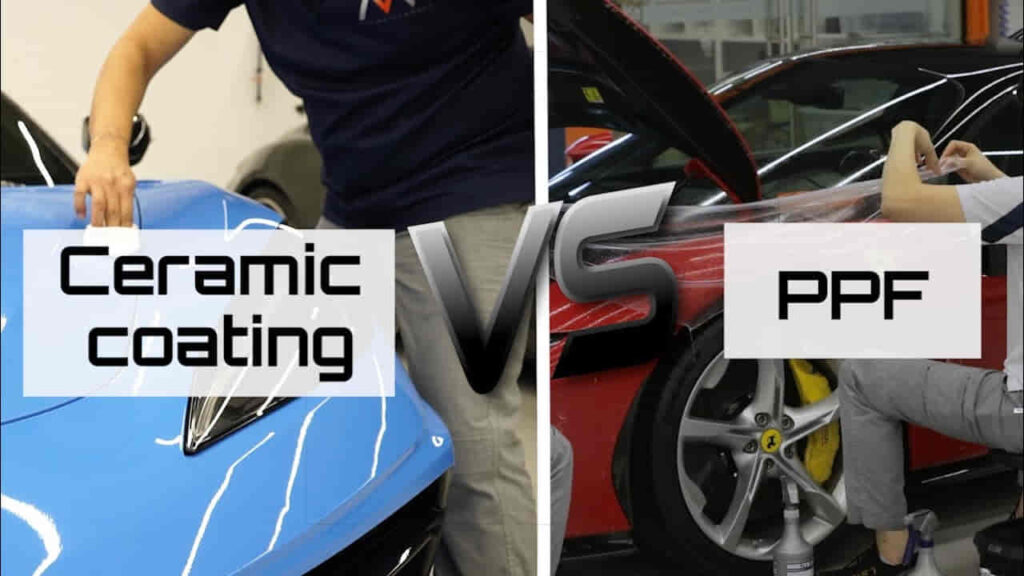
Protecting a vehicle’s paint has become a priority for many car owners because the exterior finish directly affects appearance, resale value, and long-term maintenance costs. Daily exposure to ultraviolet rays, road debris, bird droppings, tree sap, chemical contaminants, and environmental pollutants gradually damages a vehicle’s clear coat, causing oxidation, fading, stains, and surface imperfections. As modern automotive paint systems become increasingly sophisticated, preserving the factory finish requires more than routine washing and waxing.
Ceramic Coating and Paint Protection Film (PPF) are the two most popular paint protection solutions available today. Although both are designed to preserve a vehicle’s exterior, they work in fundamentally different ways and solve different problems. Ceramic Coating creates a durable protective layer that enhances gloss, improves chemical resistance, and makes the surface easier to clean, while PPF forms a physical barrier capable of absorbing impacts from road debris and minimizing paint damage caused by stone chips and minor abrasions. Because both technologies offer distinct advantages, many vehicle owners mistakenly believe they are direct substitutes when they actually serve complementary purposes.
This guide compares Ceramic Coating and PPF in terms of protection level, durability, maintenance requirements, installation costs, long-term value, and ideal use cases. By understanding how each solution functions and where it performs best, you can choose the paint protection system that matches your driving habits, ownership goals, and investment expectations.
What Is the Difference Between Ceramic Coating and PPF?
The primary difference between Ceramic Coating and Paint Protection Film lies in the way they protect automotive paint. Ceramic Coating is a liquid polymer that chemically bonds with the vehicle’s clear coat to create a thin, transparent protective layer. Paint Protection Film, commonly referred to as PPF or clear bra, is a thick thermoplastic polyurethane film that is physically applied over painted surfaces to absorb impacts before they reach the factory paint. While both technologies improve paint preservation, Ceramic Coating focuses on surface protection against environmental contaminants, whereas PPF provides mechanical protection against physical damage.
Ceramic Coating functions by forming a semi-permanent bond with the clear coat, creating a hydrophobic surface that repels water, dirt, road grime, and many chemical contaminants. This protective layer reduces the likelihood of water spots, oxidation, bird dropping stains, tree sap damage, and UV-related paint fading. Because contaminants have greater difficulty adhering to the coated surface, regular washing becomes easier and requires less aggressive cleaning methods that could introduce swirl marks during maintenance. However, despite its hardness, Ceramic Coating should not be viewed as a scratch-proof barrier. Its microscopic thickness limits its ability to absorb significant impacts from rocks, road debris, or accidental contact with hard objects.
Paint Protection Film operates through an entirely different mechanism. Instead of chemically bonding to the paint as a coating, PPF creates a sacrificial physical shield that separates the vehicle’s finish from external hazards. Modern PPF is manufactured from thermoplastic polyurethane, a flexible material engineered to absorb impacts while maintaining optical clarity. When stones, gravel, road debris, or minor abrasions strike the vehicle, the film absorbs much of the impact energy before it reaches the painted surface beneath. Many premium PPF products also incorporate self-healing technology, allowing light scratches and swirl marks within the film to disappear when exposed to heat from sunlight or warm water. This capability significantly extends the visual appearance of the protected surface over time.
Material thickness represents another major distinction between these two paint protection systems. Ceramic Coating measures only a few microns thick because its primary purpose is to enhance the chemical resistance and surface properties of the clear coat rather than create an impact-resistant barrier. By comparison, Paint Protection Film is typically between 150 and 250 microns thick depending on the manufacturer and product line. This substantial difference in thickness enables PPF to withstand road hazards that would easily penetrate or damage a ceramic coating layer. The additional material also allows the film to stretch slightly during impacts, dissipating energy before it reaches the paint.
The installation process further separates Ceramic Coating from PPF. Applying a ceramic coating requires meticulous paint preparation that often includes washing, decontamination, clay bar treatment, and paint correction to remove swirl marks or surface defects. Once the surface is properly prepared, the coating is carefully applied and allowed to cure into a hardened protective layer. PPF installation is generally more complex because each section of film must be precisely measured, stretched, positioned, and adhered to the vehicle without introducing air bubbles, contamination, or alignment errors. Due to the technical skill required, professional installation is strongly recommended for both products, although PPF installation typically demands greater expertise and significantly more installation time.
Visual appearance also differs between the two technologies. Ceramic Coating enhances paint gloss by increasing light reflection and creating a deeper, richer finish. Colors often appear more vibrant because the coating smooths microscopic surface imperfections and improves optical clarity. Paint Protection Film is designed primarily for protection rather than appearance, although many modern films also enhance gloss while preserving the original paint underneath. Matte PPF products offer an additional option by transforming gloss paint into a satin finish without requiring repainting, providing aesthetic flexibility alongside physical protection.
Maintenance requirements illustrate another important distinction. Ceramic Coating reduces maintenance effort because its hydrophobic properties cause water and contaminants to slide off the surface more easily. Dirt adheres less aggressively, allowing routine washing to restore a clean finish with minimal scrubbing. PPF similarly simplifies maintenance by shielding the paint from environmental contamination, but its greatest advantage lies in preventing permanent paint damage rather than improving water repellency alone. Many vehicle owners choose to apply Ceramic Coating over PPF because the coating enhances the film’s hydrophobic characteristics while making the protected surface easier to clean and maintain.
Ultimately, Ceramic Coating and Paint Protection Film should not be viewed as competing technologies because each addresses a different category of paint protection. Ceramic Coating excels at defending against chemical contaminants, ultraviolet radiation, oxidation, and routine maintenance challenges while enhancing gloss and simplifying cleaning. Paint Protection Film specializes in protecting against rock chips, road debris, scratches, and physical impacts that no ceramic coating can realistically prevent. Understanding this distinction is essential because selecting the right solution depends not only on the level of protection desired but also on driving conditions, ownership expectations, and the long-term preservation goals for the vehicle.
Which Protects Your Car Better: Ceramic Coating or PPF?
Paint Protection Film provides better overall paint protection than Ceramic Coating because it creates a physical barrier capable of absorbing impacts that would otherwise damage the vehicle’s factory paint. Ceramic Coating enhances the surface by improving chemical resistance, hydrophobic performance, and gloss retention, but it does not possess the thickness or flexibility required to stop rock chips, deep scratches, or abrasion from road debris. Although both products extend the life of automotive paint, they protect against different types of damage and should be evaluated according to the specific risks a vehicle encounters during everyday driving.
Protection against physical impact is the greatest advantage of Paint Protection Film. Every time a vehicle travels on highways or poorly maintained roads, small stones, gravel, sand, and other debris are projected toward the front bumper, hood, fenders, mirrors, and rocker panels. These impacts can penetrate the clear coat and permanently chip the paint surface. Because modern PPF is manufactured from thick thermoplastic polyurethane, the film absorbs and disperses much of the impact energy before it reaches the paint underneath. This sacrificial layer significantly reduces paint damage and preserves the factory finish even after years of regular driving. Ceramic Coating, by comparison, adds only a microscopic protective layer and cannot physically absorb the force generated by flying road debris.
Scratch resistance is another area where the distinction between the two technologies becomes clear. Ceramic Coatings are often marketed as scratch resistant because they create a harder surface than unprotected clear coat. In practice, this additional hardness primarily reduces the formation of fine wash-induced swirl marks and light marring that occur during improper washing or drying. It does not prevent scratches caused by shopping carts, keys, branches, luggage, or accidental contact with hard objects. Paint Protection Film offers substantially greater resistance because its flexible polyurethane construction cushions minor impacts while many premium films feature self-healing technology that allows superficial scratches to disappear when exposed to heat. This capability helps maintain a flawless appearance without requiring paint correction after every minor surface imperfection.
Protection against ultraviolet radiation is an area where both Ceramic Coating and PPF perform exceptionally well, although they achieve this through different mechanisms. Continuous exposure to sunlight gradually breaks down automotive paint by accelerating oxidation and fading pigments over time. Ceramic Coating forms a chemically resistant barrier that reduces UV penetration and slows oxidation of the clear coat. Paint Protection Film also incorporates UV inhibitors within the film itself, shielding the paint from prolonged sunlight while preserving color consistency across exposed panels. For vehicles frequently parked outdoors, both solutions contribute to maintaining paint clarity and reducing long-term environmental degradation.
Chemical resistance represents one of Ceramic Coating’s strongest advantages. Modern roads expose vehicles to acidic rain, industrial fallout, road salt, insect residue, bird droppings, tree sap, brake dust, and harsh cleaning chemicals that gradually degrade unprotected paint. Ceramic Coating creates a chemically stable surface that minimizes direct contact between these contaminants and the clear coat, reducing the likelihood of permanent etching or staining when contaminants are removed promptly. Paint Protection Film also protects against many of these substances because contaminants remain on the film rather than the paint itself, but ceramic coatings generally provide superior resistance to chemical bonding and simplify the cleaning process by preventing dirt and liquids from adhering strongly to the surface.
Hydrophobic performance further distinguishes Ceramic Coating from standard Paint Protection Film. One of the defining characteristics of ceramic coatings is their ability to create an extremely water-repellent surface. Water beads into small droplets and rolls away easily, carrying dust and loose contaminants with it. This self-cleaning effect reduces the amount of dirt that remains attached to the vehicle after driving in rain or dusty conditions and decreases the effort required during routine maintenance. Traditional PPF offers some water resistance due to its smooth surface but generally does not achieve the same level of hydrophobic performance unless a ceramic coating is applied over the film. For this reason, many professional installers recommend combining both technologies to maximize protection and simplify long-term maintenance.
Long-term appearance is influenced not only by protection against damage but also by the ability to preserve surface clarity and gloss. Ceramic Coating enhances paint depth by creating a smoother optical surface that reflects light more evenly, producing a rich, glossy finish that many enthusiasts associate with freshly polished paint. Paint Protection Film has improved significantly over recent years, with premium products offering exceptional transparency and gloss while resisting yellowing and discoloration. However, its primary purpose remains physical protection rather than cosmetic enhancement. Vehicle owners who prioritize visual appearance often appreciate the deeper gloss provided by Ceramic Coating, whereas those concerned about preserving pristine paint under demanding driving conditions typically prioritize the impact resistance offered by PPF.
The driving environment largely determines which protection system delivers greater real-world value. Vehicles that spend most of their time on highways are exposed to a much higher frequency of stone impacts than cars driven exclusively within urban areas. Sports cars with low front bumpers, luxury vehicles with expensive paint finishes, and performance vehicles featuring wide tires are particularly vulnerable to rock chips because their design increases exposure to road debris. In these situations, Paint Protection Film provides substantially greater long-term protection than Ceramic Coating alone. Conversely, vehicles primarily driven in urban environments may benefit more from Ceramic Coating’s resistance to environmental contamination and simplified maintenance if the risk of physical impact remains relatively low.
The highest level of paint protection is achieved when Ceramic Coating and Paint Protection Film are used together rather than viewed as competing alternatives. Applying Ceramic Coating over professionally installed PPF combines the impact resistance of polyurethane film with the hydrophobic properties, chemical resistance, and gloss enhancement provided by ceramic technology. The PPF protects against physical damage while the ceramic layer reduces contamination, simplifies washing, and maintains a cleaner appearance between maintenance intervals. This combination has become the preferred solution for luxury vehicles, exotic cars, collector automobiles, and owners seeking the maximum possible preservation of factory paint.
Ultimately, Paint Protection Film offers superior protection against physical damage, while Ceramic Coating provides superior protection against environmental contamination and routine maintenance challenges. Neither technology completely replaces the other because each addresses different threats that automotive paint encounters throughout its lifetime. Choosing the better option therefore depends not only on the product itself but also on where the vehicle is driven, how long it will be owned, and the level of preservation the owner expects to achieve.
Which Lasts Longer: Ceramic Coating or PPF?
Paint Protection Film generally lasts longer than Ceramic Coating because it is engineered to function as a thick sacrificial barrier that absorbs physical damage while maintaining its structural integrity for many years. Modern premium PPF products typically remain effective for seven to ten years, with some manufacturers offering warranties that extend up to twelve years under normal driving conditions. Ceramic Coating, by comparison, usually provides reliable protection for two to five years depending on the coating formulation, installation quality, environmental exposure, and maintenance routine. Although both products significantly outperform traditional waxes and paint sealants, PPF offers a longer service life because its protective mechanism relies on durable polyurethane film rather than an ultra-thin chemical layer.
The difference in longevity begins with material construction. Ceramic Coating forms a microscopic layer composed primarily of silicon dioxide (SiO₂), silicon carbide (SiC), or graphene-enhanced compounds that chemically bond with the vehicle’s clear coat. This bonded layer resists chemicals, oxidation, and ultraviolet radiation but gradually wears away through repeated washing, environmental abrasion, and natural weathering. Paint Protection Film, on the other hand, consists of a multi-layer thermoplastic polyurethane structure specifically designed to withstand years of physical impact, environmental exposure, and temperature fluctuations. Because the film itself measures several hundred microns thick, it continues protecting the paint even after experiencing minor scratches or surface wear that would quickly compromise a ceramic coating.
Ultraviolet exposure is one of the primary factors affecting the lifespan of both protection systems. Constant sunlight gradually breaks down unprotected automotive paint by accelerating oxidation and fading pigments, but prolonged UV exposure also influences the protective materials themselves. High-quality ceramic coatings contain UV-resistant compounds that slow degradation of both the coating and the underlying clear coat. Premium PPF products incorporate advanced UV stabilizers throughout the film to prevent yellowing, cracking, or loss of transparency over time. Modern polyurethane films are significantly more resistant to discoloration than earlier generations, allowing them to maintain optical clarity even after years of outdoor exposure in demanding climates.
Environmental contamination also influences long-term durability. Vehicles are continuously exposed to bird droppings, insect residue, tree sap, industrial fallout, road salt, acid rain, and mineral deposits from hard water. Ceramic Coating minimizes chemical bonding between these contaminants and the paint, reducing the likelihood of permanent etching when contaminants are removed promptly. However, repeated exposure to aggressive chemicals combined with infrequent maintenance gradually reduces the coating’s hydrophobic performance and protective characteristics. Paint Protection Film experiences similar environmental exposure but benefits from its greater physical thickness, allowing minor surface wear to occur without immediately affecting its ability to shield the paint underneath.
Routine maintenance has a direct impact on product longevity regardless of which protection system is installed. Ceramic Coatings retain their hydrophobic behavior longer when vehicles are washed using pH-neutral automotive shampoos, microfiber wash mitts, and proper drying techniques. Automatic car washes equipped with abrasive brushes can prematurely wear the coating by introducing friction during every wash cycle. Paint Protection Film is generally more tolerant of mechanical contact due to its thicker construction, but improper cleaning methods can still reduce surface clarity and accelerate cosmetic wear over time. Consistent maintenance therefore extends the effective lifespan of both products while preserving their protective performance.
Installation quality plays an equally important role in determining durability. Even the highest-quality Ceramic Coating cannot achieve its advertised lifespan if applied over contaminated paint, residual polishing oils, or improperly corrected surfaces. Inadequate curing conditions may also weaken the chemical bond between the coating and the clear coat, shortening its service life. Paint Protection Film requires even greater installation precision because poor alignment, trapped contamination, lifting edges, or excessive stretching can compromise long-term adhesion. Professional installation performed in a controlled environment significantly increases the likelihood that both systems will reach or exceed their expected lifespan.
Modern self-healing technology gives premium Paint Protection Film an additional durability advantage. Many high-end films contain elastomeric top layers that can repair light scratches and swirl marks when exposed to heat from sunlight, warm water, or a heat gun. Instead of accumulating visible imperfections over time, the film restores much of its original appearance through molecular reflow within the upper surface. Ceramic Coating does not possess this self-healing capability. Although it helps reduce the formation of fine swirl marks by creating a harder surface, scratches that penetrate the coating remain visible until the affected section is polished and recoated.
Warranty coverage further reflects the expected service life of each technology. Reputable ceramic coating manufacturers commonly provide warranties ranging from three to seven years, depending on the product line and whether periodic inspections or maintenance treatments are performed. Premium Paint Protection Film manufacturers frequently offer warranties extending ten years or longer against yellowing, cracking, peeling, bubbling, and manufacturing defects. While warranty length should not be interpreted as a guaranteed lifespan under every condition, it demonstrates the manufacturer’s confidence in the long-term durability of the material when properly installed and maintained.
Driving conditions ultimately determine how long either protection system remains effective. Vehicles operated primarily on highways experience continuous impacts from gravel, sand, and road debris that gradually wear both coatings and protective films. Cars parked outdoors year-round endure greater ultraviolet exposure, temperature fluctuations, and environmental contamination than vehicles stored in climate-controlled garages. Regions with severe winters introduce road salt and abrasive sand that accelerate surface wear, while extremely hot climates increase thermal stress on exposed materials. Understanding these environmental variables allows vehicle owners to establish realistic expectations regarding maintenance schedules and replacement intervals.
Although Paint Protection Film generally provides a longer service life than Ceramic Coating, longevity alone should not determine which solution is better. A ceramic coating may fully satisfy the needs of drivers primarily seeking easier maintenance, enhanced gloss, and resistance to environmental contamination, while PPF offers superior long-term value for owners focused on preserving factory paint against physical damage. When maximum durability is the objective, applying Ceramic Coating over professionally installed Paint Protection Film combines the extended lifespan of polyurethane film with the hydrophobic performance and chemical resistance of ceramic technology, creating the most comprehensive paint protection system currently available for modern vehicles.
Which Option Costs More?
Paint Protection Film costs significantly more than Ceramic Coating because it requires substantially more material, longer installation time, and greater installation expertise. While Ceramic Coating is applied as a liquid protective layer that chemically bonds with the vehicle’s clear coat, PPF consists of precision-cut thermoplastic polyurethane sheets that must be individually positioned, stretched, and installed on each body panel. The combination of premium materials and labor-intensive installation makes Paint Protection Film the more expensive solution, particularly when protecting an entire vehicle.
Material cost represents the first major difference between these two paint protection systems. Ceramic Coating products contain advanced ceramic nanoparticles such as silicon dioxide (SiO₂), silicon carbide (SiC), or graphene-enhanced formulations that create a durable protective layer over the paint. Although premium coatings command higher prices than consumer-grade products, the amount of material required to coat an entire vehicle remains relatively small. Paint Protection Film, by comparison, relies on thick thermoplastic polyurethane engineered to withstand impacts while maintaining optical clarity and self-healing capabilities. Manufacturing this specialized film requires multiple protective layers, UV inhibitors, pressure-sensitive adhesives, and elastomeric top coatings, resulting in considerably higher production costs before installation even begins.
Professional installation further widens the price difference because PPF demands exceptional precision throughout the application process. Every section of film must be carefully aligned with complex body contours while avoiding wrinkles, trapped air, contamination, or visible seams. Installers frequently use computer-cut templates specifically designed for each vehicle model to ensure accurate coverage of bumpers, hoods, mirrors, fenders, doors, and other painted surfaces. Even with digitally cut patterns, installation remains highly technical because the film must be stretched, repositioned, and secured without compromising its appearance or long-term adhesion. Ceramic Coating also requires professional preparation and application, but the installation process is generally less time-consuming once paint correction has been completed.
The total cost of Ceramic Coating depends largely on paint preparation rather than the coating itself. Before any ceramic product can bond properly, the vehicle typically undergoes a thorough wash, chemical decontamination, clay bar treatment, machine polishing, and paint correction to remove swirl marks, oxidation, and minor imperfections. These preparation stages often require many hours of skilled labor, especially on older vehicles with neglected paint. Applying the coating itself represents only the final stage of the process. Vehicles with heavily damaged paint usually require additional correction work, increasing the overall cost regardless of which ceramic coating product is ultimately selected.
Paint Protection Film installation follows a similar preparation process but introduces additional labor because every protected panel must be individually wrapped with polyurethane film. Complex body designs, sharp panel edges, aggressive curves, integrated sensors, and aerodynamic components increase installation difficulty while extending labor time. Full-body PPF installations often require several days to complete because each section must be installed carefully before the adhesive fully cures. This extensive labor commitment explains why full-vehicle PPF installations frequently cost several times more than professional ceramic coating applications.
Repair and replacement costs also differ significantly between the two systems. When Ceramic Coating becomes worn or loses its hydrophobic performance after several years, the affected area is typically polished before a new coating is applied. Although repainting is rarely necessary, recoating still requires surface preparation and professional labor. Paint Protection Film follows a different maintenance philosophy because the film functions as a sacrificial layer. If a section becomes damaged by road debris, deep scratches, or collisions, installers can remove and replace only the affected panel while preserving the original factory paint beneath. This modular repair approach often reduces long-term restoration costs because repainting is frequently unnecessary.
Maintenance expenses throughout ownership also influence overall value. Ceramic Coating benefits from periodic maintenance inspections and optional booster treatments that restore water repellency and surface performance as the coating naturally ages. These maintenance services help maximize coating longevity while preserving gloss and hydrophobic characteristics. Paint Protection Film generally requires less specialized maintenance beyond routine washing, although owners frequently choose to apply Ceramic Coating over the film to improve water repellency, reduce contamination, and simplify cleaning. Combining both technologies increases the initial investment but can lower long-term maintenance effort while preserving the appearance of the protective film.
The economic value of each solution depends on the vehicle being protected. Owners of luxury vehicles, exotic cars, and high-performance models often consider PPF a worthwhile investment because repainting factory finishes on premium vehicles can be extremely expensive. Protecting original paint also helps preserve resale value by reducing visible stone chips and maintaining factory panel integrity. Conversely, owners of daily commuter vehicles may determine that Ceramic Coating offers a better balance between protection and affordability because it delivers easier maintenance, improved gloss, and resistance to environmental contamination at a significantly lower upfront cost.
Long-term ownership should always be considered when comparing installation costs. Although Paint Protection Film requires a greater initial investment, preventing paint damage can reduce future repair expenses while helping maintain higher resale value. Ceramic Coating provides measurable financial benefits by reducing paint correction requirements, simplifying routine maintenance, and preserving the appearance of the vehicle over several years. Buyers planning to keep their vehicles for an extended period often recover part of their investment through lower maintenance costs and stronger resale prices, making total ownership cost a more meaningful comparison than installation price alone.
Ultimately, Paint Protection Film is the more expensive paint protection solution because of its premium materials, complex installation process, and superior resistance to physical damage. Ceramic Coating remains the more affordable option while delivering excellent protection against environmental contaminants, ultraviolet exposure, and chemical staining. Rather than choosing solely based on price, vehicle owners should evaluate how long they intend to keep the vehicle, where they drive most frequently, and the level of protection they expect. Comparing lifetime ownership value instead of initial installation cost leads to a more informed investment and a paint protection strategy that aligns with both driving habits and long-term ownership goals.
Which Is Easier to Maintain?
Ceramic Coating is generally easier to maintain than Paint Protection Film because its highly hydrophobic surface prevents water, dirt, road grime, and many environmental contaminants from bonding tightly to the vehicle’s exterior. This self-cleaning characteristic allows rainwater and routine washing to remove much of the accumulated contamination with minimal effort, reducing both washing time and the risk of introducing swirl marks during regular maintenance. While Paint Protection Film also protects the paint from contamination, its primary function is impact resistance rather than surface cleanliness, making Ceramic Coating the more maintenance-friendly solution when comparing each technology on its own.
One of the biggest maintenance advantages of Ceramic Coating is its ability to repel water. The coating forms an extremely smooth surface with a low surface energy, causing water to bead into small droplets that roll off the paint instead of spreading across it. As these droplets move across the surface, they carry loose dust, pollen, and light road contaminants away from the vehicle. This hydrophobic behavior reduces water spotting, limits mineral deposits left behind after rainfall, and helps the vehicle remain cleaner for longer periods between washes. Although regular cleaning is still necessary, contaminants are far less likely to adhere aggressively to a properly maintained ceramic-coated surface.
Routine washing also becomes more efficient because fewer contaminants bond directly to the paint. Brake dust, bug residue, bird droppings, tree sap, and road film can often be removed using gentler washing techniques compared with untreated paint. This reduces the need for aggressive scrubbing that may introduce fine scratches or swirl marks into the clear coat. Proper wash methods remain essential, but the coating significantly lowers the effort required to restore the vehicle’s appearance after everyday driving.
Paint Protection Film also simplifies maintenance, although for different reasons. Because the polyurethane film acts as a sacrificial barrier, contaminants accumulate on the film rather than directly affecting the factory paint underneath. Minor surface scratches, stone impacts, and everyday abrasion occur on the replaceable film instead of permanently damaging the vehicle’s finish. Many premium PPF products incorporate stain-resistant top coats that reduce contamination while allowing routine washing to restore much of the film’s original clarity. However, standard PPF generally does not produce the same level of water beading and self-cleaning performance as a high-quality ceramic coating unless an additional ceramic layer is applied over the film.
Water spots remain one of the most common concerns for vehicle owners regardless of the protection system installed. Hard water contains minerals such as calcium and magnesium that remain on the surface after evaporation, leaving visible deposits behind. Ceramic Coating minimizes water spot formation by encouraging water to roll off the surface before significant evaporation occurs, but it does not eliminate water spotting entirely. If mineral-rich water is allowed to dry under direct sunlight, deposits can still develop on both ceramic coatings and PPF. Prompt drying after washing and avoiding prolonged exposure to sprinkler systems remain important maintenance practices regardless of the protection method selected.
Chemical resistance further reduces maintenance requirements for ceramic-coated vehicles. Contaminants such as bird droppings, insect residue, tree sap, road salt, fuel spills, and industrial fallout contain acidic or corrosive compounds that can permanently damage unprotected clear coats when left untreated. Ceramic Coating delays this chemical interaction by creating a protective barrier between the contaminant and the paint, giving owners additional time to safely remove harmful substances before staining or etching occurs. Paint Protection Film provides similar protection because contaminants contact the film instead of the paint, but prompt cleaning remains necessary to preserve both the appearance and longevity of the protective material.
Regular maintenance schedules differ slightly between the two systems. Ceramic Coating benefits from periodic inspections and maintenance treatments that restore hydrophobic performance as the coating naturally weathers over time. Professional detailers may recommend annual inspections or ceramic maintenance sprays to reinforce the coating’s water-repellent properties and maintain peak performance throughout its service life. Paint Protection Film generally requires fewer specialized treatments because its physical protective characteristics remain effective even after its surface gradually loses some cosmetic appearance. Nevertheless, regular washing remains essential to prevent contamination from accumulating on the film.
Automatic car washes deserve careful consideration when maintaining either protection system. Facilities using abrasive rotating brushes can introduce fine scratches into ceramic coatings while also accelerating wear on the upper surface of Paint Protection Film. Touchless automatic washes are generally safer because they rely primarily on water pressure and detergents rather than physical contact. Even so, hand washing using pH-neutral automotive shampoo, microfiber wash mitts, and soft drying towels remains the preferred maintenance method because it minimizes friction while preserving both coating performance and film clarity.
Many professional installers recommend combining Ceramic Coating with Paint Protection Film because the two technologies complement one another during long-term maintenance. Applying Ceramic Coating over professionally installed PPF creates a highly hydrophobic surface that prevents dirt and water from adhering strongly to the film. As a result, the film remains cleaner, routine washing becomes easier, and contaminants are less likely to stain or discolor its surface over time. This combination delivers both the physical protection of polyurethane film and the low-maintenance characteristics of ceramic technology, reducing overall cleaning effort while preserving the vehicle’s appearance.
Ultimately, Ceramic Coating is easier to maintain because its hydrophobic properties significantly reduce contaminant adhesion and simplify routine cleaning. Paint Protection Film provides superior defense against physical damage but may require slightly more attention to maintain optimal visual clarity unless it is also protected with a ceramic coating. For vehicle owners seeking the lowest possible maintenance effort while preserving exceptional paint protection, combining Ceramic Coating with Paint Protection Film represents the most effective long-term strategy, delivering both impact resistance and a consistently clean, glossy finish with less ongoing maintenance.
Can Ceramic Coating Replace PPF?
Ceramic Coating cannot replace Paint Protection Film because the two technologies are designed to protect against different types of damage. Ceramic Coating protects automotive paint from chemical contaminants, ultraviolet radiation, oxidation, and environmental exposure, while Paint Protection Film is engineered to absorb physical impacts that would otherwise chip, scratch, or penetrate the vehicle’s paint. Although Ceramic Coating significantly improves surface durability and simplifies maintenance, it lacks the thickness and impact resistance necessary to prevent rock chips, road debris, or deeper mechanical damage that commonly occurs during everyday driving.
The misconception that Ceramic Coating can replace PPF often comes from marketing claims describing ceramic coatings as “scratch resistant” or “9H hardness.” These descriptions refer to the coating’s ability to resist microscopic surface marring rather than its ability to withstand significant physical impacts. The hardness rating reflects resistance to very light abrasion under controlled testing conditions and should not be interpreted as protection against flying stones, gravel, shopping carts, or accidental contact with hard objects. Even premium ceramic coatings measure only a few microns thick, making them far too thin to absorb the force generated by high-speed road debris.
Paint Protection Film achieves superior impact resistance because its protective mechanism is fundamentally different. Instead of chemically bonding to the paint as a microscopic layer, PPF creates a flexible polyurethane barrier several hundred microns thick that physically absorbs and disperses impact energy. When a stone strikes the front bumper or hood at highway speeds, the film compresses and stretches to reduce the force transmitted to the paint beneath. This sacrificial layer often prevents chips, scratches, and paint fractures that would permanently damage an unprotected surface. Ceramic Coating simply cannot replicate this level of mechanical protection because it lacks both the thickness and elasticity required to dissipate impact energy.
Protection against road debris highlights the practical difference between the two systems. Vehicles driven regularly on highways are constantly exposed to gravel, loose asphalt, sand, and other airborne particles projected by surrounding traffic. These impacts occur with enough force to penetrate the clear coat and chip factory paint, particularly on vulnerable areas such as the front bumper, hood, side mirrors, front fenders, rocker panels, and A-pillars. Paint Protection Film is specifically developed to protect these high-impact zones, whereas Ceramic Coating primarily preserves the paint’s appearance by reducing contamination rather than preventing physical damage.
Scratch resistance further illustrates why Ceramic Coating should not be considered a substitute for PPF. Ceramic coatings help reduce the formation of fine swirl marks caused by improper washing and drying because the hardened surface offers greater resistance to light friction. However, deeper scratches produced by keys, branches, luggage, automatic car washes, or accidental contact can still penetrate the coating and damage the clear coat underneath. Paint Protection Film provides a much higher level of defense because its flexible structure absorbs many of these minor impacts before they reach the paint. Premium self-healing films further enhance this protection by allowing superficial scratches within the film to disappear when exposed to heat, maintaining a cleaner appearance without requiring polishing or repainting.
Where Ceramic Coating excels is in protecting against environmental contamination. Acid rain, bird droppings, insect residue, tree sap, road salt, brake dust, industrial fallout, and ultraviolet radiation gradually degrade automotive paint if contaminants remain on the surface for extended periods. Ceramic Coating creates a chemically resistant barrier that delays this degradation while making contaminants significantly easier to remove during routine maintenance. Paint Protection Film also shields the paint from these environmental hazards because contaminants remain on the film rather than the factory finish, but Ceramic Coating generally delivers superior hydrophobic performance and easier cleaning due to its extremely low surface energy.
Vehicle ownership goals should determine whether Ceramic Coating alone provides sufficient protection. Drivers who primarily travel within cities, park in covered garages, and accumulate relatively low annual mileage may find that Ceramic Coating offers an appropriate balance between cost, appearance, and maintenance convenience. Their vehicles are less frequently exposed to high-speed road debris, reducing the likelihood of paint chips that require physical impact protection. In these situations, the gloss enhancement, UV resistance, and simplified maintenance provided by Ceramic Coating often satisfy long-term ownership objectives without requiring the higher investment associated with full-body PPF.
Vehicles operating under more demanding conditions generally benefit from Paint Protection Film. Cars driven extensively on highways, performance vehicles with low front-end profiles, luxury automobiles with expensive factory paint finishes, and collector vehicles intended to preserve maximum resale value experience significantly greater exposure to physical paint damage. For these owners, relying solely on Ceramic Coating creates a protection gap because the coating cannot prevent the most common forms of impact-related paint damage. Installing PPF on high-risk panels substantially reduces future paint repairs while preserving the originality of the factory finish.
Rather than asking whether Ceramic Coating can replace Paint Protection Film, vehicle owners should consider whether their driving conditions require protection against physical impacts, environmental contamination, or both. The answer frequently depends on annual mileage, road conditions, climate, parking environment, and long-term ownership expectations. Because each technology addresses a different category of paint deterioration, evaluating them as complementary systems produces a more accurate understanding of their individual strengths than viewing them as competing alternatives.
Ultimately, Ceramic Coating does not replace Paint Protection Film because it was never designed to perform the same function. Ceramic Coating enhances gloss, simplifies maintenance, and protects against chemical and environmental damage, while Paint Protection Film preserves the factory finish by absorbing physical impacts that no ceramic coating can realistically withstand. For owners seeking comprehensive paint preservation, the most effective solution is not choosing one technology instead of the other but selecting the protection strategy that matches the vehicle’s exposure to real-world driving hazards and long-term ownership goals.
Can You Apply Ceramic Coating Over PPF?
Yes, Ceramic Coating can be safely applied over Paint Protection Film, and this combination is widely considered the most comprehensive paint protection solution available for modern vehicles. Rather than replacing one another, Ceramic Coating and PPF perform complementary functions that address different forms of paint deterioration. Paint Protection Film shields the vehicle from physical damage such as rock chips, road debris, and minor abrasions, while Ceramic Coating enhances the film by improving water repellency, chemical resistance, UV protection, and ease of maintenance. Applying Ceramic Coating over professionally installed PPF allows vehicle owners to benefit from the strengths of both technologies without compromising the performance of either system.
The effectiveness of this combination is possible because Ceramic Coating bonds to the outer surface of the polyurethane film instead of the vehicle’s clear coat. Modern Paint Protection Films are manufactured with advanced top layers specifically designed to accept ceramic coatings, allowing the coating to form a durable chemical bond that enhances the film’s surface characteristics. Once cured, the coating creates an additional protective layer that repels water, dirt, brake dust, bug residue, bird droppings, tree sap, and other environmental contaminants before they have an opportunity to bond tightly to the film.
One of the most significant advantages of applying Ceramic Coating over PPF is the improvement in hydrophobic performance. Although premium Paint Protection Films already feature relatively smooth surfaces, they generally do not achieve the same level of water repellency as high-quality ceramic coatings. After the coating is applied, water forms tight beads that roll away easily, carrying loose dust and contaminants off the vehicle. This self-cleaning effect reduces the amount of dirt that accumulates between washes while minimizing water spotting caused by mineral deposits after rainfall or vehicle washing.
Ceramic Coating also helps preserve the appearance of Paint Protection Film over time. Even premium PPF is continuously exposed to ultraviolet radiation, road grime, industrial fallout, and environmental pollution that gradually reduce its optical clarity. The ceramic layer functions as the first line of defense against these contaminants, limiting direct exposure of the polyurethane film to chemical attack. As a result, the film remains cleaner, maintains its gloss for a longer period, and requires less aggressive cleaning to restore its original appearance. This additional protection contributes to preserving the transparency of the film throughout its service life.
Routine maintenance becomes significantly easier after Ceramic Coating is applied to Paint Protection Film. Contaminants that normally adhere to the film can usually be removed with gentle washing because the ceramic surface reduces chemical adhesion. Brake dust, insect residue, road tar, bird droppings, and tree sap are less likely to bond permanently, decreasing the need for strong chemical cleaners or intensive scrubbing that could gradually reduce the film’s cosmetic appearance. Vehicle owners often find that washing frequency decreases because dirt accumulates more slowly on ceramic-coated surfaces than on untreated PPF.
The ceramic layer also reduces the likelihood of staining, which can occasionally occur when contaminants remain on Paint Protection Film for extended periods. Acidic substances such as bird droppings and insect remains can discolor or etch the upper surface of the film if they are not removed promptly. While Ceramic Coating does not eliminate the need for routine cleaning, it delays chemical interaction by creating a sacrificial barrier that absorbs much of the environmental exposure before contaminants reach the film itself. This added protection helps maintain the visual clarity of the PPF while extending its aesthetic lifespan.
Applying Ceramic Coating does not interfere with the self-healing properties found in many premium Paint Protection Films. Modern self-healing films repair minor surface scratches through heat-activated elastomeric layers located beneath the ceramic coating. When exposed to sunlight or warm water, these underlying layers return to their original shape, allowing light scratches to disappear without affecting the ceramic coating’s overall performance. High-quality ceramic products designed specifically for PPF remain flexible enough to accommodate this natural movement, ensuring that the film continues to self-heal while benefiting from enhanced surface protection.
Proper installation sequence is essential to achieving the best results. Paint Protection Film should always be installed first because it must bond directly to the vehicle’s painted surface. Once the film has fully cured according to the manufacturer’s recommendations, Ceramic Coating can then be applied over the exposed film. Installing the coating before applying PPF would prevent the adhesive from bonding correctly to the paint and compromise the long-term durability of the film. Following the correct installation order ensures maximum adhesion, optimal protection, and consistent long-term performance from both products.
Although combining Ceramic Coating with PPF provides the highest level of paint protection, it may not be necessary for every vehicle. Owners of daily commuter cars driven primarily in urban environments may find that Ceramic Coating alone provides sufficient protection against environmental contamination, while drivers who frequently travel on highways may prioritize Paint Protection Film on high-impact areas without coating the entire vehicle. The decision ultimately depends on driving conditions, ownership goals, maintenance expectations, and budget. Nevertheless, for luxury vehicles, sports cars, collector automobiles, and owners intending to preserve factory paint for many years, combining both technologies often delivers the greatest long-term value.
Ultimately, applying Ceramic Coating over Paint Protection Film is not only possible but widely regarded as the industry’s best practice for comprehensive paint preservation. Paint Protection Film absorbs physical impacts that would otherwise damage the paint, while Ceramic Coating improves the film’s resistance to water, chemicals, ultraviolet radiation, and everyday contamination. Together, they create a layered protection system that enhances durability, simplifies maintenance, preserves appearance, and helps maintain the vehicle’s resale value throughout years of ownership.
Which Option Offers Better Value for Money?
Neither Ceramic Coating nor Paint Protection Film offers better value for every vehicle because the overall return on investment depends on driving conditions, ownership duration, vehicle value, and the type of paint protection required. Ceramic Coating delivers the best value for owners seeking easier maintenance, improved gloss, and long-term resistance against environmental contaminants at a relatively affordable cost. Paint Protection Film provides greater financial value when preserving factory paint from physical damage is the primary objective, particularly for vehicles that regularly encounter highway debris, gravel, and harsh driving environments. Determining which option is worth the investment requires evaluating total ownership costs rather than comparing installation prices alone.
Ceramic Coating represents a cost-effective investment because it improves several aspects of vehicle ownership simultaneously. In addition to creating a deep gloss and enhancing paint clarity, it reduces the amount of time and effort required for routine washing while minimizing contamination from bird droppings, tree sap, road salt, industrial fallout, and ultraviolet exposure. These benefits decrease the frequency of paint correction and intensive detailing throughout the ownership period. For many daily drivers, avoiding repeated polishing and preserving the appearance of the clear coat provides measurable long-term value without requiring the significantly larger financial commitment associated with full-body Paint Protection Film.
Paint Protection Film generates its greatest economic value by preventing paint damage that would otherwise require expensive cosmetic repairs. Rock chips, deep scratches, and impact damage frequently require repainting individual panels, blending adjacent surfaces, or performing extensive paint correction. These repairs not only increase maintenance expenses but may also reduce resale value because repainted panels often differ slightly from the original factory finish. By absorbing impacts before they reach the paint, Paint Protection Film preserves factory originality, which is particularly important for luxury vehicles, performance cars, collector automobiles, and high-end SUVs whose paint systems are expensive to repair or replace.
Vehicle depreciation should also be considered when evaluating long-term value. Buyers in the used vehicle market generally pay a premium for cars with well-preserved factory paint because original paint demonstrates that the vehicle has experienced fewer cosmetic repairs or accident-related refinishing. Stone chips across the front bumper, hood, mirrors, and front fenders immediately reduce visual appeal and often influence purchasing decisions during resale inspections. Vehicles protected by Paint Protection Film typically retain cleaner exterior panels throughout years of ownership, helping maintain stronger resale values than comparable vehicles with visible paint damage.
Ownership duration significantly influences which investment delivers the greatest return. Drivers planning to replace their vehicles within two or three years may not fully recover the additional cost of comprehensive Paint Protection Film because much of its financial benefit develops over longer ownership periods. Ceramic Coating often provides a faster return in these situations by maintaining appearance, reducing detailing expenses, and improving resale presentation without requiring the higher initial investment associated with PPF. Conversely, owners intending to keep their vehicles for seven to ten years frequently realize greater value from Paint Protection Film because preventing paint damage over a longer period substantially reduces restoration costs while preserving the factory finish.
Driving environment further determines the financial value of each solution. Vehicles operating primarily in urban areas are exposed to environmental contamination, automatic car washes, sunlight, and occasional surface scratches but generally experience fewer high-speed stone impacts. Under these conditions, Ceramic Coating often provides sufficient protection while offering lower installation costs and easier maintenance. Highway commuters, however, encounter continuous exposure to gravel, sand, construction debris, and loose asphalt projected by surrounding traffic. In these environments, the impact resistance of Paint Protection Film often prevents paint repairs that would quickly exceed the initial installation cost, making PPF the more economical long-term investment despite its higher purchase price.
Luxury and exotic vehicles present a different financial calculation because repainting premium factory finishes can be exceptionally expensive. Many manufacturers use multi-stage paint systems, specialized metallic finishes, or custom color formulations that require extensive labor and advanced refinishing techniques to restore properly. Even minor paint repairs may cost several thousand dollars while reducing collector value if originality is compromised. For these vehicles, Paint Protection Film frequently represents a relatively small investment compared with the potential cost of repairing paint damage throughout the vehicle’s lifetime. Ceramic Coating remains valuable for preserving gloss and simplifying maintenance but should generally be viewed as a complementary enhancement rather than the primary form of protection.
Budget-conscious owners often achieve the best balance by selectively combining both technologies instead of applying one solution exclusively across the entire vehicle. Installing Paint Protection Film only on high-impact areas such as the front bumper, hood, front fenders, side mirrors, and rocker panels significantly reduces installation costs while protecting the surfaces most vulnerable to stone chips. Applying Ceramic Coating over the remaining painted panels creates a consistent glossy appearance while improving chemical resistance and simplifying maintenance across the entire vehicle. This hybrid approach allows owners to maximize protection where it matters most while controlling overall investment.
Maintenance costs should also be incorporated into any value comparison. Ceramic Coating reduces the need for frequent paint polishing because contaminants are less likely to bond aggressively to the surface. Paint Protection Film minimizes repainting expenses by preventing physical damage to vulnerable body panels. When Ceramic Coating is applied over professionally installed Paint Protection Film, maintenance becomes even more efficient because the hydrophobic coating keeps the film cleaner while reducing staining and preserving optical clarity. Although this combination requires the highest initial investment, it often delivers the lowest long-term maintenance burden while maximizing paint preservation.
Ultimately, the option that offers the best value for money depends on the owner’s priorities rather than the products themselves. Ceramic Coating provides exceptional value for drivers seeking affordable paint preservation, enhanced appearance, and simplified maintenance. Paint Protection Film delivers greater value for owners prioritizing maximum impact protection, factory paint preservation, and long-term resale potential. For vehicle owners intending to protect a new car for many years, combining Paint Protection Film with Ceramic Coating frequently provides the strongest overall return because it addresses both physical damage and environmental deterioration within a single integrated paint protection strategy.
Read more: What Cars Have the Best Gas Mileage
Which Paint Protection Solution Should You Choose?
The best paint protection solution depends on how you use your vehicle, the level of protection you expect, your ownership plans, and your available budget rather than on a single product being universally superior. Ceramic Coating and Paint Protection Film are designed to solve different problems, which means the right choice is determined by the risks your vehicle faces every day. Understanding your driving environment and long-term ownership goals provides a far more accurate basis for selecting paint protection than comparing product specifications alone.
Owners of new vehicles often benefit the most from investing in paint protection immediately after purchase because the factory paint is still free from oxidation, scratches, and surface defects. Installing protection before damage occurs preserves the original finish and eliminates the need for extensive paint correction later. For buyers who intend to keep a new vehicle for many years, Paint Protection Film applied to high-impact areas followed by Ceramic Coating over the entire vehicle creates a comprehensive protection system that minimizes both physical damage and environmental deterioration from the first day of ownership.
Daily commuters who primarily drive within cities usually encounter fewer high-speed impacts than highway drivers, but their vehicles remain exposed to ultraviolet radiation, acid rain, bird droppings, industrial fallout, road salt, and frequent washing. Under these conditions, Ceramic Coating often provides the most practical balance between cost and performance. Its hydrophobic properties simplify maintenance, reduce contaminant adhesion, and preserve paint gloss while requiring a significantly lower investment than full-body Paint Protection Film. For many urban drivers, this combination of easier maintenance and long-term cosmetic preservation represents the most economical solution.
Drivers who spend substantial time on highways face a very different set of challenges. Gravel, loose asphalt, construction debris, and stones projected by surrounding vehicles continuously threaten the front bumper, hood, mirrors, front fenders, and rocker panels. These impacts occur at speeds capable of penetrating the clear coat and permanently damaging factory paint. Paint Protection Film is specifically engineered for these environments because its flexible polyurethane construction absorbs impact energy before it reaches the painted surface. Highway commuters therefore gain considerably greater long-term value from PPF than from Ceramic Coating alone, particularly if preserving factory paint is a priority.
Luxury vehicles, exotic automobiles, and high-performance sports cars require a more comprehensive approach because their paint systems are often more expensive to repair and contribute significantly to resale value. Multi-stage metallic finishes, premium color options, and manufacturer-specific paint processes can make even minor refinishing work costly while reducing the originality of the vehicle. For these owners, combining Paint Protection Film with Ceramic Coating is generally the preferred strategy because it protects against physical damage while preserving the deep gloss and visual clarity expected from premium vehicles. The additional investment represents a relatively small percentage of the vehicle’s total value while helping preserve its appearance and market desirability over many years.
Owners of used vehicles should evaluate the condition of the paint before selecting a protection system. Ceramic Coating and Paint Protection Film are designed to preserve existing paint rather than conceal significant defects. If the vehicle already exhibits oxidation, swirl marks, water spot etching, or minor scratches, professional paint correction should be completed before either product is installed. Applying protection over damaged paint locks those imperfections beneath the protective layer and limits the visual improvement that both technologies are capable of delivering. Restoring the paint first ensures that the protective system begins with the highest possible surface quality.
Budget also plays an important role in determining the most appropriate solution. Ceramic Coating offers excellent value for owners seeking long-term gloss enhancement, simplified maintenance, and protection against environmental contaminants without making a substantial financial investment. Paint Protection Film requires a higher initial cost but provides significantly greater defense against physical damage that could otherwise result in expensive repainting or bodywork. Buyers should therefore compare expected ownership costs over several years instead of focusing solely on installation pricing. A higher upfront investment may ultimately reduce repair expenses while preserving stronger resale value throughout the vehicle’s lifetime.
Many vehicle owners discover that the most effective solution is not choosing between Ceramic Coating and Paint Protection Film but combining them strategically. Applying Paint Protection Film to high-impact areas such as the front bumper, hood, mirrors, front fenders, and rocker panels protects the most vulnerable surfaces from stone chips and road debris. Ceramic Coating can then be applied over the remaining painted panels and even over the film itself to improve water repellency, chemical resistance, gloss retention, and ease of maintenance. This layered approach balances installation cost with comprehensive protection and has become the preferred strategy among professional detailers, luxury dealerships, and automotive enthusiasts.
Long-term ownership goals should ultimately guide every paint protection decision. Drivers planning to replace their vehicle within only a few years may achieve sufficient value from Ceramic Coating alone because it preserves appearance while improving resale presentation at a relatively modest cost. Owners intending to keep their vehicles for seven years or longer often realize greater financial benefits from Paint Protection Film because preventing paint damage over an extended period substantially reduces restoration expenses while maintaining factory originality. Matching the protection system to the expected ownership period allows the investment to generate measurable returns rather than simply increasing the initial purchase cost.
Ultimately, there is no universally better paint protection solution because Ceramic Coating and Paint Protection Film address different aspects of paint preservation. Ceramic Coating is the better choice for enhancing gloss, resisting environmental contamination, simplifying maintenance, and reducing long-term detailing requirements. Paint Protection Film is the better choice for defending against rock chips, road debris, scratches, and impact damage that cannot be prevented by any ceramic coating. For vehicle owners seeking the highest level of protection available today, combining professionally installed Paint Protection Film with a high-quality Ceramic Coating provides the most complete solution for preserving factory paint, minimizing maintenance, protecting resale value, and maintaining the vehicle’s appearance throughout years of ownership.