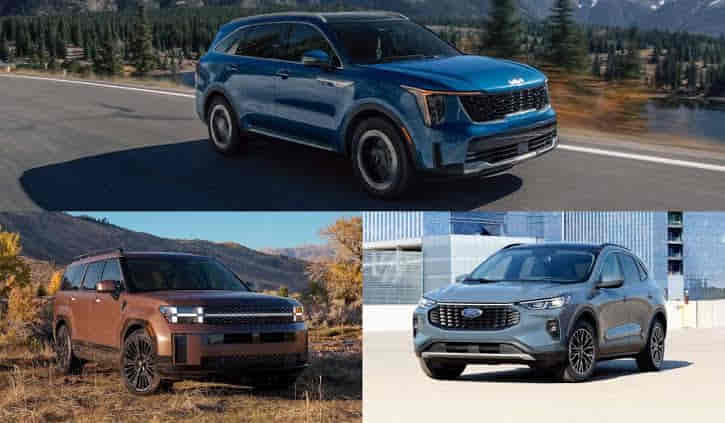
Sport utility vehicles continue to dominate the automotive market because they combine passenger comfort, cargo versatility, elevated driving visibility, and the flexibility to handle a wide variety of driving conditions. For many years, however, choosing an SUV often meant accepting significantly higher fuel consumption than a sedan or hatchback. Larger dimensions, increased vehicle weight, and less aerodynamic body designs traditionally resulted in lower fuel economy, making SUVs a more expensive option for drivers who accumulated substantial annual mileage.
Advancements in engine technology, hybrid powertrains, lightweight materials, and aerodynamic engineering have dramatically improved SUV fuel efficiency over the past decade. Many modern SUVs now deliver fuel economy that rivals conventional passenger cars while maintaining the practicality, cargo space, and all-weather capability that buyers expect from this segment. As fuel prices fluctuate and ownership costs become increasingly important, selecting an SUV with good gas mileage has become one of the most effective ways to reduce long-term operating expenses without compromising everyday usability.
This guide compares the most fuel-efficient SUVs available in 2026, explains the technologies that improve fuel economy, examines the differences between hybrid and gasoline-powered models, and helps you choose the SUV that offers the best balance of efficiency, reliability, passenger comfort, and long-term ownership value based on your driving habits and budget.
Which SUVs Have the Best Gas Mileage in 2026?
The SUVs with the best gas mileage in 2026 are primarily hybrid models because hybrid powertrains combine highly efficient gasoline engines with electric motors that reduce fuel consumption during acceleration, low-speed driving, and stop-and-go traffic. Regenerative braking further improves efficiency by recovering energy that would normally be lost during deceleration and storing it in the battery for later use. This combination enables modern hybrid SUVs to achieve fuel economy that was previously associated only with compact sedans while preserving the spacious interiors and elevated driving position that make SUVs so popular.
Among today’s most fuel-efficient SUVs, the Kia Niro Hybrid continues to stand out as one of the industry’s strongest performers. Unlike many crossovers that were originally designed around conventional gasoline engines, the Niro Hybrid was engineered from the beginning with fuel efficiency as its primary objective. Its lightweight construction, aerodynamic profile, and advanced hybrid system work together to deliver exceptional combined MPG while maintaining generous passenger space and practical cargo capacity. These characteristics make it particularly attractive to commuters who want SUV versatility without significantly increasing annual fuel expenses.
The Toyota Corolla Cross Hybrid has quickly established itself as another benchmark for fuel-efficient compact SUVs. Toyota combines its proven Hybrid Synergy Drive technology with a compact crossover platform that balances urban maneuverability with everyday practicality. The hybrid system intelligently distributes power between the gasoline engine and electric motors, maximizing efficiency during city driving where conventional SUVs typically consume the most fuel. Combined with Toyota’s reputation for long-term reliability and strong resale value, the Corolla Cross Hybrid represents one of the most economical choices for buyers seeking dependable transportation with low operating costs.
The Toyota RAV4 Hybrid remains one of the best-selling hybrid SUVs because it successfully combines outstanding fuel economy with greater passenger room and cargo capacity than many compact competitors. Its hybrid powertrain delivers strong acceleration without sacrificing efficiency, making it suitable for both urban commuting and long-distance highway travel. Drivers benefit from lower annual fuel costs while retaining the flexibility needed for family transportation, weekend travel, and light outdoor activities. This balance of efficiency and practicality has made the RAV4 Hybrid one of the most well-rounded SUVs in today’s market.
Honda’s CR-V Hybrid offers a similarly compelling combination of fuel economy and everyday usability. Its two-motor hybrid system prioritizes electric propulsion during lower-speed driving, allowing the gasoline engine to operate within its most efficient performance range when additional power is required. This design produces stable real-world fuel economy across a wide variety of driving conditions rather than delivering impressive results only during standardized laboratory testing. Families who require generous interior space but want to reduce long-term fuel expenses often consider the CR-V Hybrid among the strongest choices in the compact SUV segment.
The Hyundai Tucson Hybrid demonstrates how midsize SUVs have become increasingly fuel efficient without sacrificing performance. Its turbocharged hybrid powertrain combines responsive acceleration with intelligent electric assistance that reduces engine workload during everyday driving. Unlike earlier generations of hybrid vehicles that often prioritized economy at the expense of driving dynamics, the Tucson Hybrid provides confident highway performance while maintaining competitive fuel economy. Buyers who require additional passenger comfort and cargo flexibility without accepting excessive fuel costs frequently view it as an ideal compromise.
Ford has also strengthened its position in the fuel-efficient SUV market through the Escape Hybrid. Designed for drivers seeking familiar driving characteristics combined with improved efficiency, the Escape Hybrid delivers competitive fuel economy while offering multiple drivetrain configurations that accommodate different climates and road conditions. Available all-wheel-drive models allow buyers living in regions with frequent rain or snow to enjoy enhanced traction without experiencing the substantial fuel consumption traditionally associated with larger AWD SUVs.
Although EPA fuel economy ratings provide an excellent starting point for comparing SUVs, real-world fuel economy depends on numerous factors beyond laboratory testing. Driving style, traffic conditions, weather, terrain, tire pressure, cargo weight, and maintenance practices all influence the number of miles an SUV can travel on a gallon of fuel. Smooth acceleration, consistent highway speeds, properly inflated tires, and regular maintenance frequently allow drivers to approach or even exceed official fuel economy estimates under favorable conditions. Conversely, aggressive driving, excessive idling, and heavy vehicle loads can significantly reduce actual MPG regardless of the vehicle’s published ratings.
The best SUV with good gas mileage is therefore not simply the model that achieves the highest combined MPG. A vehicle’s overall value depends on how efficiently it meets the owner’s daily transportation needs while balancing passenger space, cargo capacity, reliability, maintenance costs, resale value, and purchase price. Evaluating fuel economy alongside these additional ownership factors provides a more accurate understanding of long-term value than comparing MPG figures alone. For most buyers, the ideal SUV is the one that minimizes operating costs while continuing to deliver the versatility and capability that define the segment.
Which Hybrid SUVs Deliver the Best Fuel Economy?
Hybrid SUVs deliver the best fuel economy because they combine an internal combustion engine with one or more electric motors to reduce gasoline consumption during the driving conditions where conventional SUVs are least efficient. Instead of relying entirely on the gasoline engine, hybrid systems recover energy through regenerative braking and use stored electricity to assist acceleration or power the vehicle at lower speeds. This approach reduces engine workload, minimizes fuel consumption in urban traffic, and enables many modern SUVs to achieve fuel economy that rivals compact passenger cars while maintaining the practicality and versatility expected from the SUV segment.
The Toyota RAV4 Hybrid continues to be one of the strongest choices for buyers seeking a balance between exceptional fuel economy and everyday practicality. Toyota’s Hybrid Synergy Drive has matured through multiple generations of development, resulting in a powertrain that consistently delivers impressive real-world efficiency across both city streets and highways. The electric motors provide immediate torque during acceleration, allowing the gasoline engine to operate within its most efficient range instead of working under heavy loads during stop-and-go traffic. Combined with generous cargo space, comfortable seating for five passengers, and Toyota’s reputation for reliability, the RAV4 Hybrid remains one of the most complete fuel-efficient SUVs available today.
The Honda CR-V Hybrid offers a different engineering philosophy while achieving similarly impressive fuel economy. Honda’s two-motor hybrid architecture allows the electric motor to perform a greater share of propulsion during low-speed driving, where fuel consumption is typically highest. As vehicle speed increases, the gasoline engine gradually assumes a larger role while remaining optimized for efficiency rather than maximum power output. This seamless transition creates a refined driving experience that feels smooth and responsive while maintaining stable fuel economy under changing traffic conditions. For families who alternate between daily commuting and longer weekend trips, the CR-V Hybrid provides an effective combination of efficiency, interior comfort, and long-term dependability.
The Kia Niro Hybrid continues to stand among the industry’s most fuel-efficient crossover SUVs because every aspect of its design emphasizes efficiency. Its compact dimensions reduce vehicle weight, while its aerodynamic body minimizes air resistance during highway travel. Rather than adapting an existing gasoline-powered SUV into a hybrid, Kia developed the Niro around an electrified powertrain from the beginning. This integrated design approach improves energy management throughout the vehicle and allows the hybrid system to maximize efficiency without compromising interior functionality. Drivers seeking the lowest possible fuel costs often consider the Niro Hybrid one of the most economical crossover options available.
Toyota has expanded its hybrid SUV lineup with the Corolla Cross Hybrid, providing buyers with an affordable entry point into fuel-efficient crossover ownership. Although positioned below the RAV4 in size, the Corolla Cross Hybrid retains Toyota’s proven hybrid technology while offering easier maneuverability in urban environments. Its compact footprint simplifies parking and city driving, yet the elevated seating position and flexible cargo area preserve the practicality that attracts many buyers to SUVs. This combination of affordability, efficiency, and reliability makes the Corolla Cross Hybrid particularly appealing to first-time SUV buyers and urban commuters.
The Hyundai Tucson Hybrid demonstrates how midsize SUVs can deliver strong fuel economy without sacrificing performance. Its turbocharged hybrid powertrain produces higher output than many naturally aspirated competitors while still maintaining competitive MPG figures. Electric motor assistance reduces the workload placed on the gasoline engine during acceleration, improving both responsiveness and efficiency. Unlike earlier hybrid vehicles that often prioritized economy above driving enjoyment, the Tucson Hybrid offers confident highway merging, comfortable long-distance cruising, and a refined cabin environment while keeping annual fuel costs relatively low.
Ford has successfully integrated hybrid technology into the Escape Hybrid, creating an SUV that combines familiar driving characteristics with modern fuel-saving technology. The Escape Hybrid performs particularly well during urban driving because regenerative braking captures energy from repeated stops that would otherwise be lost as heat. This recovered energy powers the electric motor during subsequent acceleration, reducing fuel consumption without requiring driver intervention. Available all-wheel-drive configurations further increase versatility for drivers living in regions with snow or frequent rain while maintaining respectable fuel economy compared with many conventional AWD SUVs.
Luxury buyers seeking fuel efficiency increasingly turn to vehicles such as the Lexus NX Hybrid. Premium SUVs have traditionally emphasized comfort and performance, but hybrid technology now allows manufacturers to reduce operating costs without compromising refinement. The NX Hybrid combines sophisticated noise insulation, premium interior materials, and advanced safety technology with an efficient hybrid drivetrain capable of delivering significantly lower fuel consumption than many conventional luxury SUVs. For drivers covering substantial annual mileage, the reduction in fuel expenses helps offset ownership costs while maintaining the premium driving experience expected in this market segment.
Fuel economy alone should not determine which hybrid SUV represents the best choice because ownership costs extend beyond gasoline consumption. Purchase price, maintenance requirements, insurance premiums, cargo capacity, passenger comfort, towing capability, and resale value all influence long-term financial outcomes. Hybrid SUVs from manufacturers with well-established electrification programs often retain stronger resale values due to their reputation for durability and proven battery reliability. These factors contribute additional economic value that extends beyond savings realized at the fuel pump.
Selecting the best hybrid SUV therefore requires balancing fuel efficiency with the practical demands of everyday life. Compact hybrids generally maximize MPG while minimizing operating costs, whereas larger hybrid SUVs provide greater passenger comfort and cargo flexibility with only a modest reduction in fuel economy. Buyers who evaluate hybrid technology alongside reliability, maintenance costs, interior space, and expected ownership duration are more likely to choose an SUV that delivers lasting value rather than simply achieving the highest EPA fuel economy rating. Modern hybrid SUVs demonstrate that exceptional efficiency and everyday practicality no longer represent competing priorities but can coexist within the same vehicle.
Which Gas-Powered SUVs Get the Best Gas Mileage?
Gas-powered SUVs continue to offer impressive fuel economy thanks to significant advancements in engine efficiency, transmission technology, lightweight construction, and aerodynamic design. Although hybrid SUVs generally achieve higher MPG ratings, many modern gasoline-powered crossovers deliver competitive real-world fuel economy while offering lower purchase prices, simpler powertrains, and reduced initial ownership costs. For buyers who drive moderate annual mileage or prefer conventional internal combustion engines, today’s most efficient gasoline SUVs provide an excellent balance between affordability, practicality, and long-term operating expenses.
The Nissan Kicks remains one of the most fuel-efficient gasoline-powered SUVs because it was engineered with efficiency as its primary objective. Its compact dimensions, lightweight chassis, and naturally aspirated four-cylinder engine minimize fuel consumption while maintaining sufficient performance for everyday commuting. The continuously variable transmission further improves efficiency by allowing the engine to operate within its optimal RPM range instead of shifting through fixed gear ratios. For urban drivers who prioritize low fuel costs over towing capability or off-road performance, the Kicks represents one of the most economical gasoline SUVs available.
The Hyundai Kona is another strong contender in the compact SUV segment, combining modern engine technology with efficient vehicle packaging. Its gasoline engine utilizes advanced fuel injection and variable valve timing to maximize combustion efficiency under a wide range of driving conditions. The vehicle’s relatively low curb weight also reduces the amount of energy required for acceleration, allowing it to deliver excellent city and highway fuel economy without sacrificing the elevated seating position and cargo flexibility expected from an SUV. Buyers looking for an affordable crossover with low operating costs often consider the Kona a practical alternative to hybrid models.
Toyota has also demonstrated that a conventional gasoline SUV can remain highly efficient through the Corolla Cross. Built on Toyota’s modern vehicle platform, the gasoline-powered Corolla Cross benefits from improved aerodynamics, optimized drivetrain calibration, and reduced rolling resistance. Although the hybrid version achieves higher combined MPG, the gasoline model offers competitive fuel economy while requiring a lower initial investment. Drivers with shorter commutes or lower annual mileage may find that the gasoline Corolla Cross delivers better overall value because the fuel savings generated by a hybrid may not fully offset its higher purchase price during the ownership period.
The Honda HR-V continues to appeal to buyers seeking dependable transportation with efficient fuel consumption. Honda’s naturally aspirated engine emphasizes reliability and smooth power delivery while maintaining competitive MPG under real-world driving conditions. The vehicle’s suspension tuning, aerodynamic profile, and efficient continuously variable transmission contribute to stable fuel economy across both urban and highway environments. For buyers prioritizing predictable maintenance costs alongside respectable fuel efficiency, the HR-V remains one of the strongest options in the subcompact SUV category.
Mazda approaches fuel efficiency from a different engineering perspective through the CX-30. Instead of relying primarily on downsized turbocharged engines or electrification, Mazda’s Skyactiv technology focuses on improving combustion efficiency while maintaining responsive driving dynamics. High compression ratios, optimized fuel injection, and lightweight vehicle construction enable the CX-30 to achieve impressive fuel economy without compromising acceleration or handling. Drivers who value a more engaging driving experience while still minimizing fuel expenses often appreciate Mazda’s balance between efficiency and performance.
Transmission technology plays a critical role in the fuel economy of gasoline-powered SUVs. Continuously variable transmissions have become increasingly common because they continuously adjust gear ratios to keep the engine operating within its most efficient range. This reduces unnecessary fuel consumption during acceleration and highway cruising while producing smoother power delivery under varying driving conditions. Some manufacturers instead utilize advanced eight-speed or ten-speed automatic transmissions that similarly reduce engine speed at cruising velocity while providing shorter lower gears for responsive acceleration. Both approaches contribute to significant improvements in fuel economy compared with older transmission designs.
Vehicle size remains one of the strongest predictors of gasoline consumption. Compact SUVs generally outperform midsize and full-size models because lower vehicle weight and reduced frontal area decrease both rolling resistance and aerodynamic drag. Smaller engines also require less fuel to accelerate lighter vehicles, particularly during stop-and-go city driving where repeated acceleration contributes substantially to overall fuel consumption. Buyers whose primary priorities are commuting efficiency and lower ownership costs frequently achieve the best long-term results by selecting a compact crossover rather than a larger SUV with capabilities they rarely use.
Real-world driving conditions often influence gasoline SUV fuel economy more than official EPA estimates suggest. Frequent short trips, heavy traffic, aggressive acceleration, underinflated tires, excessive cargo weight, and prolonged idling all increase fuel consumption regardless of engine technology. Highway driving at moderate speeds generally produces the highest fuel efficiency because engines operate under relatively stable loads while aerodynamic resistance remains manageable. Drivers who adopt smooth acceleration habits, maintain proper tire pressure, and follow recommended maintenance schedules consistently achieve lower fuel costs than those relying solely on manufacturer MPG ratings.
Choosing the most fuel-efficient gasoline SUV ultimately requires balancing fuel economy with the broader ownership experience. Purchase price, reliability, maintenance costs, insurance premiums, resale value, interior space, and expected annual mileage all influence the vehicle’s long-term financial value. Buyers who evaluate these factors alongside official fuel economy ratings often discover that a highly efficient gasoline SUV provides a more practical and economical solution than a hybrid, particularly when annual mileage is relatively low or budget limitations make minimizing upfront costs a priority. Modern gasoline-powered SUVs demonstrate that excellent fuel efficiency is no longer exclusive to hybrid technology and remains readily available for drivers seeking conventional performance with lower operating expenses.
How Does SUV Fuel Economy Compare Between Hybrid and Gas Models?
Hybrid SUVs consistently deliver better fuel economy than gasoline-powered SUVs because they combine an internal combustion engine with one or more electric motors that reduce fuel consumption during the least efficient phases of driving. Instead of relying entirely on gasoline, hybrid systems recover energy during braking, store it in a high-voltage battery, and reuse that energy to assist acceleration or propel the vehicle at lower speeds. This process minimizes engine workload, particularly in stop-and-go traffic, allowing hybrid SUVs to consume significantly less fuel than comparable gasoline models while maintaining similar practicality and driving range.
The greatest fuel economy advantage of a hybrid SUV appears during city driving. Conventional gasoline engines consume fuel continuously while idling at traffic lights, creeping through congestion, or repeatedly accelerating from low speeds. Hybrid powertrains reduce or eliminate these inefficiencies by temporarily shutting off the gasoline engine when it is not needed and allowing the electric motor to handle low-speed operation. Regenerative braking further improves efficiency by converting kinetic energy into electricity instead of losing that energy as heat through the braking system. As a result, hybrid SUVs often achieve substantially higher city MPG than gasoline-powered alternatives of similar size.
Highway driving produces a smaller difference between hybrid and gasoline SUVs because both powertrains operate under more stable conditions. Once cruising speed is reached, modern gasoline engines already function near their optimal efficiency range, reducing the relative contribution of the electric motor. Hybrid systems still provide measurable fuel savings during highway travel by assisting with acceleration, optimizing engine operation, and recovering energy during deceleration, but the improvement is generally less dramatic than in urban environments. Buyers who spend most of their time on interstate highways should therefore evaluate highway MPG alongside combined fuel economy instead of focusing exclusively on city ratings.
Annual fuel costs clearly illustrate the financial impact of improved fuel economy. Consider two compact SUVs that travel 15,000 miles each year, with one averaging 30 MPG and the other achieving 40 MPG. The gasoline-powered SUV would consume approximately 500 gallons of fuel annually, whereas the hybrid would require only about 375 gallons. Assuming an average gasoline price of $3.50 per gallon, the hybrid owner would save approximately $440 each year on fuel alone. Drivers covering 20,000 miles or more annually experience even greater savings because every additional mile increases the economic benefit of improved fuel efficiency.
Purchase price remains one of the primary differences between hybrid and gasoline SUVs. Hybrid models typically cost more because they incorporate electric motors, high-voltage batteries, sophisticated power electronics, and advanced energy management systems. Although this increases the initial investment, lower fuel consumption gradually offsets part of the price difference throughout the ownership period. Buyers should therefore evaluate fuel savings over the expected life of the vehicle rather than comparing purchase prices in isolation. Drivers planning to keep their SUV for many years generally recover a greater portion of the hybrid premium than owners who replace vehicles frequently.
Maintenance costs between the two powertrains are often more similar than many buyers expect. Routine maintenance items such as tire rotations, brake inspections, suspension servicing, cabin air filters, and engine oil changes remain largely identical regardless of whether the SUV is powered by gasoline or a hybrid system. Hybrid vehicles may even reduce certain maintenance expenses because regenerative braking decreases wear on brake pads and brake rotors. Modern hybrid batteries are also designed for long service lives and are typically backed by extensive manufacturer warranties, reducing concerns regarding premature battery replacement under normal operating conditions.
Driving habits strongly influence the real-world fuel economy achieved by both gasoline and hybrid SUVs. Smooth acceleration, moderate cruising speeds, and anticipating traffic conditions allow hybrid systems to maximize electric motor assistance and regenerative braking. Aggressive acceleration, excessive highway speeds, heavy cargo loads, and underinflated tires reduce efficiency regardless of the powertrain. Although hybrids generally maintain an advantage under nearly all conditions, careful driving techniques allow both vehicle types to achieve fuel economy much closer to official EPA estimates.
Environmental conditions also affect the relative performance of hybrid and gasoline SUVs. Cold weather increases fuel consumption because engines require additional time to reach operating temperature while battery efficiency temporarily declines at lower temperatures. Extremely hot weather increases demand on air conditioning systems, placing additional loads on both gasoline engines and hybrid batteries. Despite these seasonal variations, hybrid SUVs generally maintain their fuel economy advantage throughout the year because regenerative braking and electric propulsion continue to reduce overall fuel consumption under most operating conditions.
Ownership value extends beyond fuel costs alone. Hybrid SUVs often retain stronger resale values because consumer demand for fuel-efficient vehicles remains consistently high as fuel prices fluctuate. Buyers recognize the long-term operating savings associated with established hybrid systems, increasing demand in the used vehicle market. Combined with lower annual fuel expenses and competitive maintenance costs, stronger resale performance contributes to a lower total cost of ownership over several years. Gasoline SUVs remain attractive because of their lower purchase prices and mechanical simplicity, but hybrid models frequently narrow or eliminate this financial advantage during extended ownership.
Choosing between a hybrid SUV and a gasoline-powered SUV ultimately depends on how the vehicle will be used rather than which technology produces the highest MPG. Drivers who commute daily through urban traffic, accumulate substantial annual mileage, or intend to keep their vehicle for many years typically benefit more from the long-term fuel savings offered by hybrid technology. Buyers with lower annual mileage, limited budgets, or predominantly highway driving may find that an efficient gasoline SUV delivers comparable overall value despite consuming slightly more fuel. Evaluating fuel economy together with purchase price, maintenance expenses, resale value, and expected ownership duration provides the most accurate basis for selecting the SUV that delivers the greatest long-term value.
What Factors Affect an SUV’s Gas Mileage?
An SUV’s gas mileage is determined by a combination of vehicle engineering, driving behavior, environmental conditions, and maintenance practices rather than by engine size alone. Two SUVs with similar EPA fuel economy ratings can produce noticeably different real-world MPG because fuel consumption changes continuously according to vehicle weight, drivetrain configuration, road conditions, weather, cargo load, and driver inputs. Understanding these variables helps buyers choose a more efficient SUV while allowing owners to maximize fuel economy throughout the vehicle’s lifetime.
Vehicle size and overall weight have the greatest influence on fuel consumption because heavier SUVs require more energy to accelerate and maintain speed. Every additional pound increases the workload placed on the engine, particularly during stop-and-go driving where repeated acceleration consumes significantly more fuel than steady cruising. Compact SUVs generally achieve better fuel economy than midsize or full-size models because they combine lighter chassis designs with smaller engines and lower aerodynamic drag. Manufacturers have reduced this disadvantage by incorporating lightweight materials such as aluminum and high-strength steel into modern SUV construction, allowing larger vehicles to improve efficiency without sacrificing structural integrity or passenger safety.
Powertrain design also plays a critical role in determining fuel economy. Hybrid SUVs achieve higher MPG by combining gasoline engines with electric motors that share propulsion duties under different driving conditions. During low-speed operation and urban traffic, electric motors reduce reliance on gasoline while regenerative braking captures energy that would otherwise be lost during deceleration. Conventional gasoline SUVs depend entirely on internal combustion engines, making fuel efficiency more sensitive to traffic congestion and frequent acceleration. Advances such as direct fuel injection, turbocharging, variable valve timing, and intelligent engine management systems have significantly improved the efficiency of gasoline-powered SUVs, narrowing the gap between conventional and hybrid models in certain driving environments.
Drivetrain configuration further affects how efficiently an SUV consumes fuel. Front-wheel-drive models generally achieve higher MPG because they contain fewer drivetrain components and experience lower mechanical resistance than all-wheel-drive systems. All-wheel drive continuously distributes power to additional wheels, increasing vehicle weight and introducing extra friction throughout the drivetrain. Although modern AWD systems have become considerably more efficient than earlier generations, they still consume slightly more fuel than comparable front-wheel-drive models under identical driving conditions. Buyers living in regions with frequent snow, rain, or unpaved roads may consider this modest reduction in fuel economy a worthwhile trade-off for improved traction and stability.
Aerodynamics become increasingly important as vehicle speed rises. At highway speeds, air resistance represents one of the largest forces opposing forward motion, requiring additional engine power to maintain cruising speed. SUV manufacturers have responded by refining body shapes, reducing frontal turbulence, smoothing underbody airflow, and incorporating active grille shutters that improve aerodynamic efficiency when maximum engine cooling is unnecessary. Even relatively small improvements in aerodynamic design can reduce fuel consumption during long-distance highway driving while simultaneously decreasing wind noise within the passenger cabin.
Driving habits often influence fuel economy more than mechanical specifications. Aggressive acceleration forces the engine to deliver maximum power within a short period, increasing fuel consumption considerably compared with gradual throttle application. Frequent hard braking wastes momentum that must later be restored through additional acceleration, further increasing gasoline usage. Maintaining steady speeds, anticipating traffic conditions, and allowing sufficient following distance enable the vehicle to preserve momentum more efficiently while reducing unnecessary engine workload. Hybrid SUVs benefit particularly from smooth driving because regenerative braking systems recover more usable energy during controlled deceleration.
Tire condition and inflation pressure also affect fuel economy by changing rolling resistance. Underinflated tires create greater contact with the road surface, increasing friction and requiring additional engine power to move the vehicle forward. Properly inflated tires reduce rolling resistance while improving handling, braking performance, and tire lifespan. Many manufacturers equip fuel-efficient SUVs with low rolling resistance tires specifically engineered to minimize energy loss during rotation without significantly compromising safety or ride comfort. Regular tire pressure inspections remain one of the simplest and most effective methods for maintaining optimal fuel economy.
Vehicle maintenance directly influences engine efficiency over time. Dirty air filters restrict airflow into the engine, worn spark plugs reduce combustion quality, degraded engine oil increases internal friction, and neglected fuel injectors may disrupt precise fuel delivery. These issues force the engine to consume more gasoline to produce the same level of performance. Following the manufacturer’s recommended maintenance schedule preserves fuel efficiency while reducing mechanical wear and extending engine life. Preventive maintenance not only lowers fuel costs but also decreases the likelihood of expensive repairs later in the ownership cycle.
Cargo weight and external accessories frequently reduce fuel economy more than drivers expect. Carrying heavy equipment, transporting unnecessary items, or installing roof racks, roof boxes, and bicycle carriers increases both vehicle weight and aerodynamic drag. These additions require additional engine power during acceleration while creating greater resistance at highway speeds. Drivers who regularly transport cargo should remove unused roof-mounted accessories whenever possible because even empty roof racks can measurably reduce fuel economy during long-distance travel.
Weather and road conditions introduce additional variables that influence real-world MPG. Cold temperatures increase engine warm-up time, reduce battery efficiency in hybrid systems, and thicken lubricants, causing engines to consume more fuel before reaching optimal operating temperature. Hot weather places additional demands on air conditioning systems, increasing engine workload regardless of the powertrain. Mountainous terrain requires sustained engine power while climbing steep grades, although hybrid SUVs recover some energy during downhill braking through regenerative systems. Flat terrain and moderate temperatures generally provide the most favorable conditions for achieving EPA fuel economy estimates.
Ultimately, fuel economy is the result of continuous interaction between engineering, maintenance, driving behavior, and operating environment rather than a single vehicle specification. Buyers comparing SUVs should evaluate official MPG ratings alongside vehicle size, drivetrain configuration, expected driving conditions, and long-term ownership costs instead of relying solely on advertised fuel economy figures. Owners who combine efficient driving habits with proper maintenance consistently achieve lower fuel expenses while maximizing the performance and reliability of their SUV throughout years of everyday use.
Which SUVs Save the Most Money Over Time?
The SUVs that save the most money over time are those that balance excellent fuel economy with strong reliability, low maintenance costs, slow depreciation, and high resale value. While fuel efficiency is often the first specification buyers compare, gasoline consumption represents only one component of total ownership costs. Insurance premiums, routine maintenance, unexpected repairs, depreciation, and long-term durability all contribute to the amount an owner ultimately spends throughout the vehicle’s life. Evaluating these factors together provides a more accurate picture of long-term value than comparing MPG ratings alone.
Fuel costs remain one of the largest recurring ownership expenses because they continue throughout the entire lifespan of the vehicle. Even relatively small improvements in fuel economy can produce substantial financial savings over several years. For example, an SUV averaging 40 MPG instead of 30 MPG consumes approximately 125 fewer gallons of gasoline each year when driven 15,000 miles annually. At an average fuel price of $3.50 per gallon, that difference represents roughly $440 in yearly savings. Over eight years of ownership, fuel savings alone can exceed $3,500 before accounting for potential increases in gasoline prices. Hybrid SUVs consistently generate the greatest long-term fuel savings because they consume less gasoline under both urban and mixed driving conditions.
Reliability plays an equally important role in determining overall ownership costs. An SUV with exceptional fuel economy may become expensive to own if frequent mechanical failures offset savings achieved at the fuel pump. Manufacturers with well-established reputations for long-term dependability often deliver lower repair expenses because major drivetrain components remain reliable even after many years of service. Hybrid systems developed through multiple generations have demonstrated that electric motors and battery management systems can operate for hundreds of thousands of miles with relatively few major issues when maintained according to manufacturer recommendations. Reduced repair frequency lowers annual ownership costs while increasing confidence throughout the vehicle’s service life.
Routine maintenance expenses also influence which SUVs provide the greatest long-term value. Oil changes, tire rotations, brake servicing, coolant replacement, transmission maintenance, and fluid inspections remain necessary regardless of powertrain type. However, hybrid SUVs often experience reduced brake wear because regenerative braking allows electric motors to slow the vehicle while recovering energy that would otherwise be lost through friction braking. This technology extends the lifespan of brake pads and rotors, reducing replacement frequency over many years of ownership. Although hybrid vehicles include additional electrical components, their routine maintenance schedules remain remarkably similar to those of conventional gasoline-powered SUVs.
Depreciation frequently represents the single largest ownership expense, yet it receives less attention than fuel economy during the buying process. Every vehicle gradually loses value as it ages, but the rate of depreciation varies significantly between manufacturers and individual models. SUVs recognized for durability, fuel efficiency, and strong owner satisfaction generally retain a greater percentage of their original value than competitors with weaker reliability records. Vehicles that combine efficient hybrid technology with proven long-term performance often experience particularly strong demand in the used vehicle market because buyers seek lower operating costs without sacrificing dependability.
Resale value directly affects the overall financial return generated by an SUV. Buyers evaluating used vehicles frequently prioritize low operating costs, documented maintenance history, and fuel-efficient powertrains, particularly when fuel prices remain elevated. Models such as the Toyota RAV4 Hybrid, Honda CR-V Hybrid, and Toyota Corolla Cross Hybrid have consistently demonstrated strong resale performance because they combine proven reliability with excellent fuel economy and broad consumer demand. Recovering a larger percentage of the original purchase price substantially lowers the effective cost of ownership and enhances the vehicle’s long-term financial value.
Driving habits significantly influence the amount of money an owner ultimately saves regardless of the SUV selected. High-mileage drivers benefit most from superior fuel economy because every improvement in MPG reduces gasoline consumption across thousands of additional miles each year. A driver traveling 25,000 miles annually experiences far greater financial benefits from hybrid technology than someone driving only 8,000 miles. Conversely, owners with relatively low annual mileage may recover less of the hybrid purchase premium because reduced fuel consumption accumulates more slowly throughout the ownership period. Matching vehicle technology to expected driving distance therefore plays a critical role in maximizing long-term savings.
Ownership duration further determines which SUV represents the best financial investment. Buyers intending to replace their vehicle within three or four years often prioritize purchase price and projected resale value because fuel savings have less time to accumulate. Drivers planning to keep an SUV for eight to ten years benefit more from lower operating expenses because fuel savings, reduced maintenance costs, and stronger reliability continue generating financial advantages throughout the ownership cycle. Longer ownership periods generally increase the economic value of highly efficient hybrid SUVs while reducing the significance of their higher initial purchase prices.
Vehicle practicality also contributes to long-term value because purchasing an SUV that adequately satisfies changing lifestyle needs reduces the likelihood of replacing it prematurely. Compact hybrid SUVs often provide enough passenger room and cargo capacity for small families while maintaining outstanding fuel economy. Midsize hybrid SUVs offer additional flexibility for growing households without creating a dramatic increase in fuel expenses. Selecting the appropriate vehicle size from the beginning minimizes future ownership costs by avoiding unnecessary upgrades as transportation requirements evolve.
The total cost of ownership should therefore be evaluated as an integrated financial calculation rather than a collection of independent specifications. Purchase price, financing costs, fuel consumption, maintenance, insurance, depreciation, reliability, and resale value interact continuously throughout the life of the vehicle. Focusing exclusively on one category may lead buyers to overlook opportunities for greater long-term savings. A slightly more expensive SUV with superior reliability and stronger resale value frequently costs less to own than a lower-priced alternative requiring higher fuel expenses or more frequent repairs.
Ultimately, the SUVs that save the most money over time are not necessarily those with the highest EPA fuel economy ratings but those that combine efficiency with durability, predictable maintenance costs, and excellent long-term value retention. Hybrid SUVs from manufacturers with established reliability records consistently perform well across each of these ownership categories, making them attractive choices for drivers seeking to reduce transportation costs over many years. By evaluating total ownership costs instead of focusing solely on fuel consumption, buyers can choose an SUV that delivers meaningful financial benefits throughout its entire service life while continuing to meet everyday transportation needs.
Are Hybrid SUVs Worth Buying?
Hybrid SUVs are worth buying for many drivers because they reduce fuel consumption, lower long-term operating costs, and provide a balance between efficiency, practicality, and everyday usability without requiring major changes to driving habits. Unlike fully electric vehicles, hybrid SUVs do not depend on external charging infrastructure because the battery is automatically recharged through the gasoline engine and regenerative braking system. This allows drivers to benefit from improved fuel economy while maintaining the convenience and driving range of a conventional gasoline-powered SUV. Whether a hybrid SUV represents the best investment ultimately depends on annual mileage, driving conditions, ownership duration, and purchase budget rather than fuel economy alone.
Fuel savings remain the primary reason buyers choose hybrid SUVs. By combining electric propulsion with an efficient gasoline engine, hybrid systems significantly reduce fuel consumption during low-speed driving, repeated acceleration, and stop-and-go traffic where conventional engines are least efficient. Every gallon of gasoline not consumed reduces annual operating expenses, making hybrid SUVs particularly attractive to commuters and families who drive frequently throughout the year. A driver traveling approximately 20,000 miles annually can often reduce yearly fuel consumption by several hundred gallons compared with a similarly sized gasoline SUV, allowing fuel savings to accumulate steadily throughout the ownership period.
Urban driving provides the greatest opportunity for hybrid technology to demonstrate its advantages. Conventional gasoline engines continue consuming fuel while idling in traffic or waiting at intersections, whereas hybrid systems can temporarily shut down the engine and rely on electric propulsion at lower speeds. Regenerative braking further improves efficiency by converting kinetic energy into electricity instead of wasting it as heat during braking. These technologies work together to maximize city fuel economy, making hybrid SUVs especially valuable for drivers whose daily routines involve congested roads, frequent traffic signals, and repeated short-distance trips.
Highway driving produces a different efficiency profile because gasoline engines already operate more efficiently under steady cruising conditions. Although hybrid SUVs still consume less fuel than comparable gasoline models on highways, the difference is generally smaller than during city driving because electric propulsion plays a less significant role once cruising speed has been established. Buyers who spend most of their time traveling long interstate distances should therefore compare highway MPG and expected annual mileage when calculating potential fuel savings instead of relying solely on combined EPA fuel economy ratings.
Purchase price is often the largest obstacle for buyers considering a hybrid SUV. Hybrid models generally cost more because they incorporate electric motors, high-voltage batteries, sophisticated power electronics, and advanced energy management systems in addition to a conventional gasoline engine. While this increases the initial investment, the additional cost should be evaluated over the expected ownership period rather than at the time of purchase alone. Lower fuel expenses, competitive maintenance costs, and stronger resale values frequently offset much of the price difference for owners who keep their vehicles for many years.
Battery longevity has become significantly less of a concern than it was during the early years of hybrid vehicle development. Modern hybrid battery systems are engineered to operate reliably under demanding conditions while sophisticated battery management software regulates charging cycles, operating temperatures, and power distribution to maximize service life. Most manufacturers support their hybrid systems with extensive battery warranties, often extending eight years or 100,000 miles, while certain markets require even longer coverage. Real-world ownership data has demonstrated that many hybrid batteries continue functioning well beyond their warranty periods when vehicles receive proper maintenance and are operated under normal driving conditions.
Maintenance requirements for hybrid SUVs remain remarkably similar to those of conventional gasoline vehicles. Routine servicing still includes oil changes, tire rotations, suspension inspections, coolant replacement, air filter changes, and other standard maintenance procedures. Hybrid systems can even reduce certain maintenance expenses because regenerative braking decreases wear on brake pads and brake rotors, extending replacement intervals. Electric motors contain relatively few moving components compared with internal combustion engines, contributing to the long-term reliability demonstrated by many established hybrid platforms.
Resale value further strengthens the financial case for purchasing a hybrid SUV. As fuel prices fluctuate and consumer demand for efficient vehicles remains strong, used hybrid SUVs often retain a higher percentage of their original value than comparable gasoline-powered models. Buyers in the used vehicle market increasingly recognize the long-term operating savings associated with proven hybrid technology, particularly from manufacturers with extensive experience in electrified powertrains. Strong resale performance lowers the effective cost of ownership by allowing owners to recover a greater portion of their initial investment when selling or trading in the vehicle.
The financial break-even point varies according to driving patterns and ownership duration. Drivers covering high annual mileage recover the additional purchase cost more quickly because fuel savings accumulate at a faster rate. A household driving 25,000 miles each year may offset the hybrid price premium several years earlier than someone traveling only 8,000 miles annually. Similarly, owners planning to keep their SUV for eight to ten years generally experience greater long-term financial benefits because lower fuel costs, reduced brake wear, and stronger resale values continue generating economic advantages throughout the ownership cycle.
Hybrid SUVs are not necessarily the best solution for every buyer. Individuals with very low annual mileage or those planning to replace their vehicle after only a few years may find that an efficient gasoline-powered SUV delivers comparable overall value while requiring a smaller initial investment. Buyers living in predominantly rural areas with long highway commutes may also experience a smaller efficiency advantage than drivers operating primarily in urban environments. Evaluating expected fuel savings alongside purchase price, financing costs, maintenance expenses, and ownership duration provides a more accurate assessment than comparing MPG figures alone.
Ultimately, hybrid SUVs are worth buying when long-term ownership costs matter more than minimizing the initial purchase price. They combine lower fuel consumption, dependable reliability, competitive maintenance expenses, and strong resale value into a package that meets the needs of modern families and commuters without sacrificing the versatility expected from an SUV. Buyers who carefully match hybrid technology to their driving habits and ownership plans are more likely to realize meaningful financial savings while benefiting from a quieter, more efficient, and environmentally responsible driving experience throughout the life of the vehicle.
Read more: Ceramic Coating vs PPF
How Should You Choose an SUV With Good Gas Mileage?
Choosing an SUV with good gas mileage requires evaluating how the vehicle fits your daily lifestyle rather than selecting the model with the highest EPA fuel economy rating. Fuel efficiency is only one element of overall ownership value, and the right SUV should balance operating costs with passenger space, cargo capacity, reliability, safety, driving performance, and long-term ownership goals. A vehicle that delivers exceptional MPG for one driver may not provide the best value for another whose driving patterns, family size, or transportation needs are significantly different.
Daily commuters should prioritize fuel economy because frequent driving allows every improvement in MPG to generate measurable financial savings over time. Drivers who spend much of their day navigating urban traffic benefit most from hybrid SUVs because electric motors reduce fuel consumption during stop-and-go driving while regenerative braking recovers energy that would otherwise be lost during deceleration. Compact hybrid models such as the Toyota Corolla Cross Hybrid, Toyota RAV4 Hybrid, Honda CR-V Hybrid, and Kia Niro Hybrid provide an excellent balance between efficiency, comfort, and practicality while minimizing annual fuel expenses for commuters covering substantial mileage.
Families should evaluate interior space alongside fuel economy because passenger comfort and cargo flexibility remain essential throughout years of ownership. A fuel-efficient SUV that lacks sufficient rear-seat space or cargo capacity may require replacement sooner as transportation needs change. Compact and midsize hybrid SUVs offer generous seating for five passengers, flexible cargo areas, and modern safety technologies while maintaining fuel economy that significantly reduces long-term operating costs. Selecting an SUV that comfortably accommodates both current and future family requirements often delivers greater long-term value than choosing the vehicle with the highest MPG alone.
Highway drivers should focus on highway fuel economy, driving comfort, and overall cruising refinement rather than city MPG. Long-distance travel places greater emphasis on ride quality, cabin insulation, supportive seating, and driver assistance technologies such as adaptive cruise control and lane-centering systems. Hybrid SUVs continue to provide fuel savings during highway travel, but the efficiency gap compared with gasoline-powered models is generally smaller than in urban driving. Buyers who regularly drive hundreds of highway miles each week should compare real-world highway MPG together with fuel tank capacity and driving range to better understand long-distance operating costs.
Drivers living in regions with snow, heavy rain, or unpaved roads should carefully consider drivetrain configuration when comparing fuel-efficient SUVs. Front-wheel-drive models typically achieve higher fuel economy because they contain fewer mechanical components and experience lower drivetrain losses. However, all-wheel drive provides additional traction and stability under challenging weather conditions, improving driver confidence throughout the year. Modern AWD systems have become increasingly efficient, allowing buyers to enjoy enhanced capability with only a modest reduction in fuel economy compared with equivalent front-wheel-drive versions.
Budget-conscious buyers should evaluate total cost of ownership rather than focusing exclusively on purchase price. A gasoline-powered SUV with competitive fuel economy may provide better overall value than a hybrid if annual mileage is relatively low or ownership duration is expected to be short. Conversely, drivers covering long distances each year often recover the higher purchase cost of a hybrid through reduced fuel expenses, lower brake wear, and stronger resale value. Comparing financing costs, insurance premiums, maintenance expenses, fuel consumption, and expected depreciation provides a far more accurate financial assessment than comparing MSRP alone.
Reliability should remain a central consideration because long-term dependability directly influences ownership costs. An SUV with outstanding fuel economy but poor reliability may ultimately cost more to own than a slightly less efficient model with an established record of mechanical durability. Manufacturers with extensive experience producing hybrid systems have demonstrated that modern electrified powertrains can deliver hundreds of thousands of miles of dependable operation when maintained according to factory recommendations. Strong reliability also contributes to higher resale values, further reducing the effective cost of ownership over time.
Owners who frequently transport sports equipment, camping gear, bicycles, or luggage should consider how cargo requirements affect fuel economy. Larger SUVs naturally consume more fuel because increased weight and frontal area require additional engine power, particularly during acceleration. Buyers who only occasionally require extra cargo space may achieve better long-term efficiency by selecting a compact SUV equipped with flexible folding rear seats rather than purchasing a larger model whose additional capacity remains unused during most daily driving. Matching vehicle size to actual transportation needs prevents unnecessary fuel consumption throughout the ownership period.
Long-term ownership plans should influence every purchasing decision. Buyers intending to keep an SUV for eight to ten years generally benefit more from investing in highly efficient hybrid technology because cumulative fuel savings, lower operating expenses, and stronger resale values continue generating financial returns throughout the vehicle’s service life. Owners who replace vehicles more frequently may place greater emphasis on depreciation, manufacturer incentives, and short-term ownership costs instead of maximizing lifetime fuel savings. Aligning the purchase decision with expected ownership duration ensures the vehicle delivers the greatest possible financial value over time.
Ultimately, the best SUV with good gas mileage is the one that satisfies your transportation needs while minimizing overall ownership costs rather than simply delivering the highest MPG rating. Fuel economy should be evaluated alongside reliability, maintenance expenses, resale value, passenger comfort, cargo capacity, drivetrain configuration, and anticipated driving conditions. Buyers who consider each of these factors together are more likely to choose an SUV that provides dependable performance, practical versatility, and meaningful long-term savings throughout years of everyday ownership.