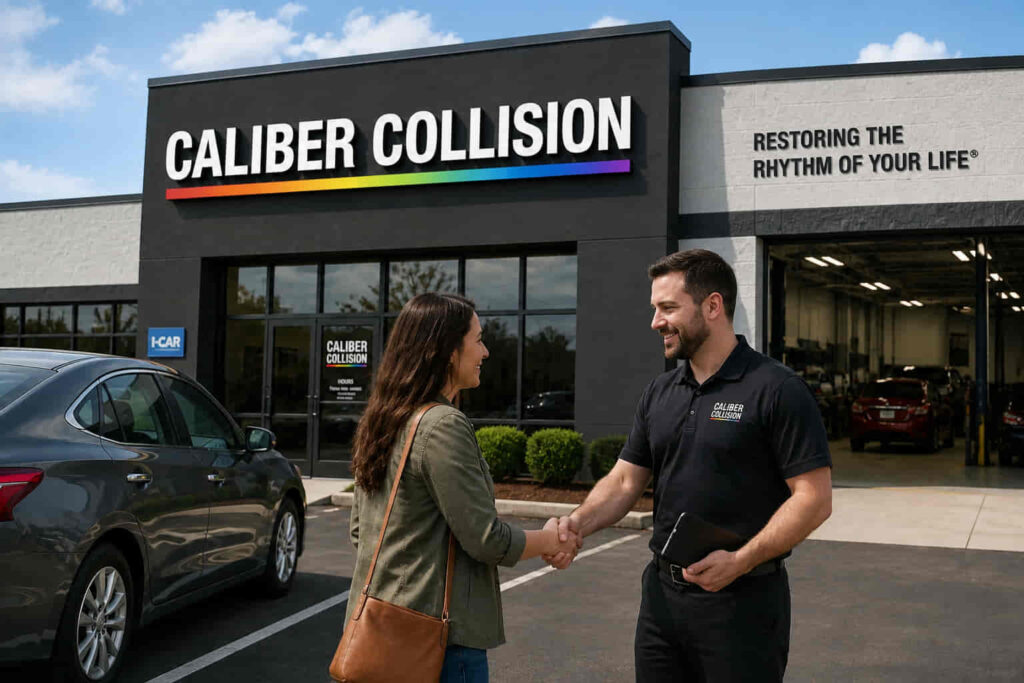
Choosing the right collision repair shop after an accident is one of the most important decisions a vehicle owner can make. A quality repair affects far more than the appearance of the vehicle. It directly influences structural integrity, occupant safety, advanced driver assistance system performance, long-term reliability, and resale value. Modern vehicles incorporate sophisticated materials, electronic safety systems, and manufacturer-specific repair procedures that require specialized equipment and highly trained technicians. As a result, selecting a reputable repair facility has become increasingly important, especially after moderate or severe collision damage.
Caliber Collision has grown into one of the largest collision repair providers in the United States, operating hundreds of repair centers that serve both individual vehicle owners and major insurance companies. Its nationwide presence, standardized repair processes, and partnerships with leading insurers have made it one of the most recognized names in the collision repair industry. However, many drivers still ask whether a large national repair network consistently delivers high-quality workmanship or whether independent body shops provide a better alternative.
This guide evaluates Caliber Collision from every major perspective that influences a repair decision, including repair quality, technician certifications, OEM repair procedures, insurance claim support, replacement parts, warranty coverage, customer experience, and overall long-term value. Rather than relying on isolated customer reviews or marketing claims, the article explains how Caliber Collision operates, where its strengths are most apparent, and the situations in which another repair facility may be a better choice.
Is Caliber Collision Good?
Yes, Caliber Collision is generally considered a reputable collision repair provider because it combines nationwide operational standards, certified repair processes, advanced repair technology, and extensive insurance partnerships to deliver consistent repair quality across a large network of locations. The company has established itself as one of the largest collision repair organizations in the United States by investing heavily in technician training, repair equipment, quality control procedures, and manufacturer-approved repair methods. While individual customer experiences may vary depending on the specific repair center, the overall organization maintains a strong reputation for handling insurance-related repairs, structural damage restoration, paint refinishing, and post-collision vehicle safety inspections.
One of Caliber Collision’s greatest strengths is its standardized repair process. Unlike many independent body shops that develop their own repair procedures, Caliber operates under company-wide repair standards designed to create consistency across its locations. Every repair typically follows a structured workflow beginning with a comprehensive damage assessment, followed by disassembly, structural inspection, repair planning, parts ordering, body repair, refinishing, reassembly, quality inspection, and final delivery. This systematic approach reduces the likelihood of overlooked damage and helps ensure repairs follow established safety procedures rather than relying solely on technician judgment.
Repair quality is supported by continuous technician education and industry-recognized certifications. Modern collision repair extends far beyond replacing damaged body panels because today’s vehicles incorporate high-strength steel, aluminum components, complex airbag systems, radar sensors, cameras, and advanced driver assistance technologies that require specialized repair techniques. Many Caliber Collision facilities employ technicians who receive ongoing training in structural repair, welding procedures, electronic diagnostics, refinishing systems, and manufacturer repair requirements. Continuous education allows repair teams to adapt to evolving vehicle technology while maintaining repair standards across a wide range of vehicle brands.
Another factor contributing to Caliber Collision’s reputation is its commitment to following manufacturer repair procedures whenever appropriate. Vehicle manufacturers publish detailed repair documentation explaining how damaged components should be repaired or replaced to restore the vehicle’s original crash performance. These procedures specify welding techniques, replacement methods, structural measurements, corrosion protection requirements, and calibration processes for electronic safety systems. Repairing a vehicle according to OEM guidelines helps preserve occupant protection and reduces the risk of improper structural repairs that could compromise safety during future collisions.
Caliber Collision also benefits from extensive relationships with major insurance companies through Direct Repair Program partnerships. These relationships streamline communication between insurers, repair facilities, rental vehicle providers, and customers throughout the repair process. Estimates, supplemental damage approvals, and repair status updates can often be processed more efficiently because standardized communication channels already exist between the repair center and participating insurance carriers. For many customers, this coordinated approach reduces administrative complexity following an accident while accelerating the overall repair timeline.
Customer satisfaction frequently depends on communication rather than repair quality alone. Collision repairs often require several weeks when hidden structural damage, parts availability, or insurance approvals extend repair timelines. Caliber Collision generally emphasizes regular progress updates throughout the repair process so customers understand repair status, expected completion dates, and any unexpected delays. Transparent communication helps reduce uncertainty during what is often a stressful experience, particularly when the damaged vehicle serves as the owner’s primary transportation.
Despite these advantages, no nationwide collision repair network delivers identical customer experiences at every location. Individual repair centers differ in technician experience, management quality, workload, regional staffing, and local demand. A facility with experienced technicians, efficient scheduling, and strong quality control may consistently exceed customer expectations, while another location facing technician shortages or unusually high repair volume may experience longer repair times or communication challenges. This variation explains why online reviews sometimes differ significantly even though repair procedures are standardized throughout the organization.
The complexity of modern collision repair also influences customer expectations. Cosmetic repairs involving bumpers or minor dents generally require fewer specialized procedures than major structural repairs involving frame alignment, suspension damage, or airbag deployment. Vehicles equipped with advanced driver assistance systems frequently require post-repair calibration of cameras, radar sensors, and electronic safety systems before returning to the road. These additional procedures increase repair complexity but are essential for restoring factory safety performance after a collision. Repair facilities capable of performing these operations correctly often provide greater long-term value than shops focused primarily on cosmetic appearance.
Ultimately, Caliber Collision has earned a positive industry reputation because it combines standardized repair processes, ongoing technician training, manufacturer repair procedures, insurance coordination, and comprehensive quality control within one of the largest collision repair networks in the United States. While evaluating the specific reputation of the individual repair center remains important before authorizing repairs, Caliber Collision generally represents a reliable choice for vehicle owners seeking professional collision repair supported by established repair standards and long-term commitment to vehicle safety.
What Makes Caliber Collision Different From Other Body Shops?
Caliber Collision distinguishes itself from many independent body shops through its nationwide repair network, standardized operating procedures, extensive technician training, and close integration with major insurance providers. While many local repair facilities rely on individual shop experience and independently developed workflows, Caliber Collision operates under company-wide repair standards designed to deliver consistent quality regardless of location. This standardized approach allows the company to manage complex collision repairs using structured repair planning, advanced repair technology, and manufacturer-recommended procedures while maintaining a consistent customer experience across hundreds of repair centers.
One of the company’s most significant advantages is the scale of its national network. Operating hundreds of repair facilities across the United States enables Caliber Collision to invest in equipment, technician development, and repair technologies that may be difficult for smaller independent shops to justify financially. Modern collision repair requires computerized frame measuring systems, precision welding equipment, digital paint-matching technology, advanced refinishing booths, and specialized diagnostic tools capable of communicating with increasingly sophisticated vehicle electronics. Large-scale investment in these technologies allows Caliber Collision to repair a broad range of vehicle makes and models while adapting to rapidly changing automotive engineering standards.
Standardized repair procedures represent another key differentiator. Every vehicle entering a Caliber Collision repair center follows a structured workflow beginning with a comprehensive inspection designed to identify both visible and hidden damage. Modern collisions often transfer impact forces throughout the vehicle’s structure, meaning cosmetic damage visible from the exterior may represent only a portion of the repairs required to restore factory safety standards. Detailed disassembly and damage analysis allow technicians to identify structural deformation, damaged suspension components, compromised mounting points, and electronic system faults before repairs begin. This methodical process reduces the likelihood of incomplete repairs while supporting more accurate repair planning and insurance estimates.
Technician education also plays an important role in distinguishing Caliber Collision from many smaller repair facilities. Vehicle construction has changed dramatically over the past decade as manufacturers increasingly incorporate ultra-high-strength steel, aluminum body panels, composite materials, and advanced driver assistance systems into new vehicles. Repairing these materials requires specialized welding techniques, manufacturer-specific joining methods, and precise calibration procedures that differ significantly from traditional body repair practices. Continuous technical training helps technicians remain current with evolving repair methods while improving consistency across the organization’s repair network.
Advanced driver assistance systems have become another area where specialized expertise is increasingly important. Features such as automatic emergency braking, adaptive cruise control, blind-spot monitoring, lane-keeping assistance, surround-view cameras, and forward collision warning rely on precisely calibrated sensors positioned throughout the vehicle. Even relatively minor collisions can alter sensor alignment or require recalibration after replacement of body panels, windshields, bumpers, or suspension components. Caliber Collision has invested in diagnostic equipment and calibration procedures that allow qualified technicians to restore these safety systems according to manufacturer specifications before returning the vehicle to the customer.
Insurance partnerships further distinguish Caliber Collision from many independent repair shops. The company participates in Direct Repair Programs with numerous insurance carriers, allowing repair facilities and insurers to communicate through established workflows that simplify estimate approvals, supplemental damage requests, repair authorizations, and payment processing. This coordination often reduces administrative delays following an accident because insurers are already familiar with the repair documentation and quality standards used throughout the network. Customers frequently benefit from faster claim processing, improved repair status communication, and more efficient coordination of rental vehicle services during the repair period.
Repair quality is also supported by comprehensive quality control procedures performed throughout the repair process rather than only after repairs have been completed. Structural measurements, panel alignment, paint matching, electronic diagnostics, and final inspections are evaluated at multiple stages to verify that repairs meet both internal quality standards and manufacturer repair requirements. Identifying potential issues before vehicle delivery reduces the likelihood of rework while improving overall customer satisfaction and long-term repair reliability.
Paint refinishing capabilities represent another area where larger repair organizations often maintain a competitive advantage. Achieving an accurate color match on modern automotive finishes requires sophisticated spectrophotometers, computerized color databases, controlled spray environments, and experienced refinishing technicians. Modern paint systems frequently contain metallic flakes, pearl pigments, and multi-stage finishes that vary according to lighting conditions and viewing angles. Caliber Collision’s investment in digital paint-matching technology and standardized refinishing procedures helps technicians produce repairs that blend seamlessly with adjacent factory panels while maintaining long-term durability and appearance.
Despite these advantages, size alone does not guarantee identical service at every repair center. Individual location performance continues to depend on technician experience, local management, workload, staffing levels, and regional demand. Some independently owned body shops may offer highly personalized customer service or specialize in classic vehicle restoration, custom paintwork, or niche performance vehicles that fall outside the primary focus of large collision repair networks. Evaluating the reputation of the specific repair facility remains an important step regardless of whether the shop operates independently or as part of a national organization.
Ultimately, Caliber Collision differentiates itself by combining standardized repair processes, advanced equipment, ongoing technician education, insurance coordination, and manufacturer-focused repair procedures within a nationwide network capable of repairing today’s increasingly complex vehicles. These organizational strengths make the company particularly well suited for modern collision repairs involving structural damage, advanced safety systems, and insurance claims while providing vehicle owners with a repair process designed to prioritize consistency, safety, and long-term vehicle performance.
Does Caliber Collision Provide High-Quality Repairs?
Caliber Collision generally provides high-quality repairs because its repair process emphasizes structural integrity, manufacturer repair procedures, technician training, advanced diagnostic technology, and multiple quality control inspections rather than focusing solely on cosmetic appearance. Modern collision repair requires far more than replacing damaged body panels or repainting exterior surfaces. A properly repaired vehicle must restore its original crash performance, maintain the functionality of advanced safety systems, preserve factory corrosion protection, and meet precise manufacturer specifications. Caliber Collision has built its repair process around these principles, making it a reliable option for many drivers following moderate or major collision damage.
Structural repair represents one of the most critical aspects of collision restoration because the vehicle’s frame and body structure are engineered to absorb and redirect crash energy during future accidents. Even relatively minor collisions can alter structural dimensions by only a few millimeters, yet those small deviations may affect suspension alignment, steering geometry, door fitment, airbag deployment timing, and overall crash performance. Caliber Collision utilizes computerized frame measuring systems that compare the damaged vehicle against factory specifications before repairs begin. These measurements allow technicians to identify structural deformation that may not be visible during an external inspection and ensure repairs restore the vehicle as closely as possible to its original engineering design.
Repair procedures become increasingly important as manufacturers introduce new construction materials and assembly techniques. Many modern vehicles combine high-strength steel, ultra-high-strength steel, aluminum, magnesium alloys, and composite materials within a single body structure. Each material requires different repair methods, specialized welding procedures, bonding techniques, and replacement criteria established by the vehicle manufacturer. Caliber Collision technicians are trained to follow OEM repair procedures whenever applicable, reducing the likelihood of improper repairs that could compromise structural strength or long-term durability. Adhering to manufacturer repair documentation also helps preserve the engineered safety characteristics built into the original vehicle.
Paint refinishing quality is another area where professional collision repair can significantly influence both vehicle appearance and long-term value. Matching modern automotive paint requires more than selecting the correct factory color code because paint naturally changes over time due to sunlight exposure, oxidation, environmental conditions, and previous maintenance. Caliber Collision utilizes computerized color-matching technology and digital spectrophotometers that analyze the existing paint before creating a customized refinishing formula. Experienced refinishing technicians then blend adjacent panels when necessary to minimize visible color variation and produce a repair that closely matches the surrounding factory finish under different lighting conditions.
Surface preparation contributes just as much to paint quality as the refinishing process itself. Before new paint is applied, damaged panels must be repaired, cleaned, sanded, primed, sealed, and inspected to ensure proper adhesion and long-term durability. Any contamination beneath the paint can lead to premature peeling, bubbling, or corrosion months after the repair has been completed. Professional refinishing facilities use controlled spray booths with regulated airflow, humidity, and temperature to minimize dust contamination while allowing paint to cure according to manufacturer recommendations. These environmental controls improve finish consistency and increase the long-term durability of repaired surfaces.
Modern vehicles also require sophisticated electronic diagnostics throughout the repair process. Many collisions affect sensors, wiring harnesses, cameras, radar modules, parking sensors, and control units even when visible body damage appears relatively minor. Vehicles equipped with advanced driver assistance systems depend on these electronic components to operate functions such as adaptive cruise control, automatic emergency braking, blind-spot monitoring, lane departure warning, and traffic sign recognition. After repairs are completed, affected systems frequently require recalibration using manufacturer-approved diagnostic equipment to ensure they continue functioning within factory specifications. Caliber Collision has invested in diagnostic technology capable of performing these calibration procedures on many modern vehicle platforms, an increasingly important capability as automotive electronics continue to evolve.
Quality control procedures extend throughout the entire repair process rather than occurring only at final delivery. Vehicles typically undergo multiple inspections during disassembly, structural repair, panel installation, paint preparation, refinishing, reassembly, and post-repair verification. Technicians evaluate panel alignment, body gaps, weld quality, paint finish, electronic system operation, suspension geometry, and overall workmanship before the vehicle is released to the customer. Conducting inspections at multiple stages allows potential issues to be corrected before subsequent repair steps make adjustments more difficult or costly. This systematic quality assurance process improves repair consistency while reducing the likelihood of post-delivery concerns.
Repair quality also depends on using appropriate replacement components. Depending on manufacturer requirements, insurance policy terms, vehicle age, and parts availability, repairs may involve original equipment manufacturer components, certified aftermarket parts, recycled OEM components, or remanufactured assemblies. Regardless of component type, proper installation according to manufacturer procedures remains essential to maintaining vehicle safety and performance. A correctly installed certified replacement component frequently performs better than an improperly installed OEM part because installation accuracy directly affects structural integrity, fitment, and long-term reliability.
Customer satisfaction often reflects more than technical workmanship alone. Clear communication, realistic repair timelines, regular progress updates, and transparent explanations regarding supplemental damage contribute significantly to the overall repair experience. Hidden damage discovered after vehicle disassembly may extend repair time because additional parts, insurance approvals, or manufacturer procedures become necessary. Repair facilities that communicate these developments proactively help customers maintain confidence throughout the repair process while reducing uncertainty during what is often a stressful situation.
Although Caliber Collision generally maintains strong repair standards, repair quality can still vary between individual locations because technician experience, management practices, repair volume, and staffing levels differ throughout a nationwide network. For this reason, vehicle owners should evaluate the reputation of the specific repair center handling their vehicle by reviewing local customer feedback, confirming technician certifications, and discussing repair procedures before authorizing work. A well-managed Caliber Collision location staffed by experienced technicians is more likely to deliver consistently excellent results than any repair facility operating under excessive workload or limited technical resources.
Ultimately, Caliber Collision provides high-quality repairs by combining manufacturer repair procedures, advanced structural repair equipment, sophisticated paint refinishing technology, electronic diagnostic capabilities, and comprehensive quality control into a standardized repair process focused on restoring both appearance and vehicle safety. For most collision repairs involving modern passenger vehicles, this systematic approach delivers a level of repair quality that meets the expectations of vehicle manufacturers, insurance providers, and owners seeking dependable long-term performance after an accident.
Does Caliber Collision Use OEM Parts?
Caliber Collision uses OEM parts in many repairs, but whether original equipment manufacturer components are installed depends on several factors, including the vehicle manufacturer’s repair requirements, the customer’s insurance policy, vehicle age, parts availability, and customer preferences. Contrary to a common misconception, no collision repair center can guarantee that every repair will automatically use OEM parts because the final decision is often influenced by insurance coverage and the specific repair agreement. Instead, Caliber Collision follows the repair plan approved for each vehicle while complying with applicable manufacturer procedures and insurer requirements.
OEM parts are components manufactured by or for the original vehicle manufacturer and are designed to match the exact specifications of the parts installed during factory assembly. Because these components are engineered specifically for a particular make and model, they generally provide the most predictable fit, structural performance, corrosion protection, and compatibility with surrounding vehicle systems. During collision repairs involving structural components, safety equipment, or advanced driver assistance systems, many vehicle manufacturers publish repair procedures recommending or requiring specific OEM replacement parts to restore the vehicle’s original crash performance.
Not every damaged component, however, requires an OEM replacement. Insurance companies frequently approve certified aftermarket parts or recycled original equipment components when they meet established quality standards and comply with policy terms. Certified aftermarket parts are manufactured by independent suppliers and are tested to meet specific fit and performance requirements. Recycled OEM parts originate from donor vehicles and retain their original factory design, making them an appropriate solution for certain non-structural repairs when properly inspected. The choice between these alternatives depends on repair complexity, part availability, insurance coverage, and the recommendations outlined in the repair estimate.
Insurance policies play a significant role in determining which replacement parts are authorized during a repair. Many standard automobile insurance policies permit the use of alternative replacement components when they satisfy applicable quality requirements and help control repair costs. Some policies, particularly those offering OEM parts endorsements, specifically provide coverage for original manufacturer components under defined circumstances. Vehicle owners who consider OEM parts essential should review their insurance policy before an accident occurs or discuss available options with both the insurer and the repair facility during the estimate process. Understanding policy limitations early helps avoid misunderstandings after repairs have already begun.
Vehicle age also influences replacement part selection. Newer vehicles, particularly those still covered by factory warranties or equipped with advanced safety technology, are more likely to receive OEM components because manufacturers often specify original replacement parts for critical structural and electronic systems. Older vehicles may receive certified aftermarket or recycled OEM parts when those options restore functionality while remaining economically appropriate relative to the vehicle’s market value. Insurance carriers frequently evaluate repair costs against the overall value of the vehicle before authorizing replacement component selection.
Structural repairs require especially careful consideration because replacement components directly affect crash energy management and occupant protection. High-strength steel reinforcements, front and rear crash structures, bumper reinforcements, roof rails, and suspension mounting points are engineered as part of an integrated safety system rather than as individual parts. Using components that comply with manufacturer specifications and following OEM repair procedures ensures these systems continue performing as designed during future collisions. Caliber Collision technicians reference manufacturer repair documentation throughout the repair process to determine when specific replacement procedures or original components are required for safety-related repairs.
Advanced driver assistance systems introduce another important consideration when selecting replacement parts. Modern vehicles integrate cameras, radar sensors, ultrasonic sensors, and electronic control modules into bumpers, windshields, mirrors, and body panels. Even small dimensional differences between replacement parts can influence sensor positioning and calibration accuracy. OEM components are designed to maintain precise mounting locations for these systems, while proper calibration after installation ensures technologies such as adaptive cruise control, lane-keeping assistance, blind-spot monitoring, and automatic emergency braking continue functioning according to manufacturer specifications. Caliber Collision’s diagnostic capabilities help verify these systems after repairs are completed, regardless of the replacement components used.
Parts availability can also affect repair decisions. Global supply chain disruptions, manufacturer production schedules, and regional inventory shortages occasionally delay the delivery of OEM components. When extended delays would significantly increase repair time, insurers and customers may discuss alternative replacement options that satisfy repair requirements while allowing the vehicle to return to service sooner. Professional repair facilities communicate these circumstances with both the insurance company and the vehicle owner before proceeding so that replacement decisions remain transparent throughout the repair process.
Customers who specifically prefer OEM parts should communicate that preference during the initial repair consultation rather than waiting until repairs have begun. Early discussion allows the repair facility to verify insurance coverage, confirm manufacturer recommendations, identify potential parts availability issues, and prepare a repair estimate reflecting the desired component selection. Open communication helps establish realistic expectations regarding repair cost, completion time, and insurance participation before replacement parts are ordered.
Ultimately, Caliber Collision does use OEM parts when they are specified by the repair plan, required by manufacturer procedures, approved by the insurance carrier, or requested by the customer. The company does not rely on a single replacement strategy because every collision repair presents unique technical, financial, and insurance considerations. Rather than asking whether Caliber Collision always uses OEM parts, vehicle owners should focus on understanding which parts are being installed, why those components were selected, and whether the repair follows manufacturer-approved procedures that prioritize vehicle safety, structural integrity, and long-term performance.
How Does Caliber Collision Work With Insurance Companies?
Caliber Collision works closely with many major insurance companies through established claims management processes that simplify communication, repair approvals, and vehicle restoration after an accident. While customers are free to choose their preferred repair shop regardless of an insurer’s recommendation in most situations, Caliber Collision’s participation in numerous Direct Repair Programs allows repairs to move through the insurance process more efficiently. This coordination reduces administrative delays, improves communication between all parties involved, and helps vehicle owners focus on returning their vehicle to the road rather than managing complex claim documentation.
A Direct Repair Program, commonly referred to as a DRP, is an agreement between an insurance company and a collision repair provider that establishes repair standards, documentation requirements, quality expectations, and communication procedures. Participating repair facilities agree to meet specific performance metrics established by the insurer while maintaining repair quality and customer service standards. In return, insurance companies frequently recommend these repair centers to policyholders following a collision because standardized workflows allow estimates, approvals, and payment processing to proceed more efficiently. Caliber Collision participates in DRP networks with many of the nation’s largest insurance carriers, making it a common recommendation after insured vehicle accidents.
The repair process typically begins with a comprehensive damage assessment performed by trained collision estimators. During this inspection, technicians document visible damage, photograph affected areas, evaluate structural integrity, and prepare an initial repair estimate based on manufacturer repair procedures and insurer guidelines. This estimate outlines anticipated labor, replacement parts, refinishing materials, diagnostic procedures, and expected repair operations. The information is then submitted electronically to the insurance company for review, allowing claim representatives to evaluate repair costs before authorizing work.
Initial estimates rarely represent the final repair cost because collision damage often extends beyond what is visible during the first inspection. Once damaged panels are removed and the vehicle is partially disassembled, technicians may discover hidden structural damage, damaged suspension components, compromised mounting points, or affected electronic systems that were impossible to identify during the preliminary inspection. When additional repairs become necessary, Caliber Collision prepares supplemental estimates supported by photographs, measurements, and manufacturer repair documentation before requesting approval from the insurance company. This supplemental approval process ensures necessary repairs are completed without compromising vehicle safety while maintaining transparency throughout the claim.
Communication between the repair facility and the insurance carrier continues throughout the repair process. Repair status updates, additional damage findings, parts availability, revised completion timelines, and quality inspections are regularly shared to ensure all parties remain informed. This coordinated communication helps reduce misunderstandings while allowing insurance adjusters to respond quickly when additional authorizations become necessary. Customers also benefit from receiving progress updates that explain repair status, anticipated completion dates, and any unexpected delays resulting from parts availability or additional structural repairs.
Replacement part selection frequently involves collaboration between the repair facility and the insurance company. Depending on policy coverage, vehicle age, manufacturer requirements, and local regulations, repairs may utilize OEM components, certified aftermarket parts, recycled original equipment components, or remanufactured assemblies. Caliber Collision reviews manufacturer repair procedures while working with insurers to determine appropriate replacement components that satisfy both technical requirements and policy provisions. Customers who prefer OEM parts should discuss this preference early in the repair process because insurance coverage varies according to individual policy terms and optional endorsements.
Modern collision repairs often require electronic diagnostics and calibration procedures in addition to traditional body repairs. Vehicles equipped with advanced driver assistance systems frequently require calibration of radar sensors, forward-facing cameras, blind-spot monitoring systems, parking sensors, and lane-keeping assistance technologies after repairs have been completed. Insurance companies increasingly recognize these procedures as essential components of modern collision repair because properly calibrated safety systems are necessary to restore the vehicle to its pre-accident operating condition. Caliber Collision documents these procedures as part of the overall repair process when manufacturer repair documentation specifies calibration requirements.
Rental vehicle coordination represents another area where insurance partnerships improve the customer experience. Many insurance policies include rental reimbursement coverage that provides temporary transportation while repairs are being completed. Caliber Collision frequently works directly with rental vehicle providers and insurance carriers to coordinate pickup schedules, rental extensions when repairs require additional time, and return arrangements once the repaired vehicle is ready for delivery. This integrated approach minimizes inconvenience while reducing the number of separate arrangements customers must manage during an already stressful situation.
Although insurance companies may recommend Caliber Collision through Direct Repair Programs, policyholders generally retain the legal right to choose their own repair facility in most jurisdictions. An insurer’s recommendation does not obligate the vehicle owner to use a specific collision center, nor does selecting an independent repair shop automatically reduce repair quality or insurance coverage. However, choosing a repair facility outside the insurer’s preferred network may require additional communication, estimate reviews, or administrative coordination because standardized workflows established through DRP partnerships are no longer available. Understanding this distinction allows vehicle owners to make informed decisions based on repair quality rather than assuming they must accept the insurer’s first recommendation.
The duration of the insurance repair process depends on factors extending well beyond the repair facility itself. Minor cosmetic repairs may be completed within several days, while major structural damage involving frame repairs, airbag replacement, electronic diagnostics, and specialized parts ordering can require several weeks. Delays are commonly associated with hidden collision damage, manufacturer backorders, insurance approval timelines, or complex calibration procedures rather than inefficiencies at the repair facility. Maintaining open communication throughout the process helps customers understand why timelines occasionally change as repairs progress.
Ultimately, Caliber Collision’s long-standing relationships with major insurance companies provide meaningful advantages for customers navigating the collision repair process after an accident. Standardized claim handling, efficient communication, structured repair documentation, coordinated rental vehicle support, and familiarity with insurer requirements allow repairs to progress more smoothly while maintaining a strong focus on manufacturer repair procedures and vehicle safety. For many drivers filing insurance claims, these established partnerships simplify what can otherwise become a complicated and time-consuming repair experience without limiting the customer’s ability to remain informed and involved throughout every stage of the repair.
Does Caliber Collision Offer a Lifetime Warranty?
Yes, Caliber Collision offers a limited lifetime warranty on qualifying collision repairs for as long as the customer owns the vehicle. This warranty is designed to provide confidence that covered repairs will continue to meet professional workmanship standards after the vehicle has been returned to the owner. Rather than serving as a general vehicle warranty, the lifetime warranty specifically applies to eligible repair work performed by Caliber Collision and is intended to address defects in workmanship or materials associated with those repairs. The exact terms may vary depending on repair type, replacement components, local regulations, and specific repair documentation, making it important for customers to review the written warranty provided at vehicle delivery.
A lifetime repair warranty demonstrates a repair facility’s confidence in the quality of its workmanship. Collision repairs involve numerous specialized processes, including structural repairs, panel replacement, refinishing, corrosion protection, welding, and mechanical reassembly. Each procedure must be completed according to manufacturer repair specifications to ensure the repaired vehicle performs as intended during everyday driving and in the event of another collision. By providing warranty coverage on qualifying repairs, Caliber Collision assumes responsibility for correcting workmanship-related issues that arise under the warranty terms, reinforcing its commitment to long-term repair quality rather than focusing solely on the initial delivery.
Workmanship is generally the primary focus of the warranty. This includes repairs involving body panel installation, structural alignment, refinishing, welding, and other collision repair operations completed by Caliber Collision technicians. If a repair-related defect develops because workmanship failed to meet professional standards, the repair facility typically evaluates the concern and performs corrective repairs when the issue falls within the scope of warranty coverage. Examples may include panel alignment problems, paint adhesion failures resulting from improper preparation, or workmanship issues affecting components repaired during the original collision restoration. Warranty evaluation is intended to distinguish repair-related defects from normal wear, unrelated mechanical failures, or damage caused by subsequent accidents.
Paint refinishing is another area commonly associated with collision repair warranties because finish quality significantly affects both vehicle appearance and long-term corrosion resistance. Professional automotive refinishing requires careful surface preparation, precise color matching, controlled spray booth conditions, and proper curing procedures. If paint defects occur due to errors in the refinishing process, such as premature peeling, blistering, or loss of adhesion resulting from workmanship, warranty coverage may apply after inspection by the repair facility. However, paint deterioration caused by environmental contamination, improper maintenance, chemical exposure, or damage occurring after vehicle delivery generally falls outside the scope of workmanship warranties because these factors are unrelated to the original repair process.
Replacement parts included in a collision repair may also carry separate manufacturer warranties in addition to Caliber Collision’s workmanship warranty. Original equipment manufacturers, aftermarket suppliers, and remanufactured component manufacturers frequently provide independent warranty coverage for defects associated with the parts themselves. If a replacement component fails because of a manufacturing defect rather than installation quality, warranty resolution may involve both the repair facility and the component supplier. Understanding the distinction between workmanship coverage and manufacturer parts warranties helps customers identify the appropriate source of support should an issue arise after repairs have been completed.
The warranty does not eliminate the need for proper vehicle maintenance following collision repairs. Vehicle owners remain responsible for routine maintenance, periodic inspections, and addressing unrelated mechanical issues that develop through normal vehicle operation. Damage resulting from future collisions, road debris, environmental exposure, improper maintenance, vehicle modifications, or misuse is generally not covered because these conditions occur independently of the original repair. Similarly, repairs performed by another repair facility after the original collision may affect warranty eligibility if subsequent work alters or replaces components previously repaired by Caliber Collision.
Documentation plays an essential role in preserving warranty protection. Customers should retain repair estimates, final invoices, warranty documentation, and photographs associated with the completed repairs because these records establish the scope of work performed and simplify future warranty evaluations if concerns arise. Detailed documentation also provides valuable information should the vehicle later require additional repairs or if ownership records are needed during resale discussions. Maintaining organized repair records contributes to transparency while supporting the long-term value of professionally repaired vehicles.
Warranty coverage can also influence resale value because documented professional repairs provide reassurance to prospective buyers. Vehicles that have undergone collision repairs are often scrutinized during resale transactions, particularly when structural damage was involved. Being able to demonstrate that repairs were completed by a nationally recognized collision repair provider and supported by a written lifetime workmanship warranty may improve buyer confidence compared with undocumented repairs completed without ongoing warranty support. While warranty coverage does not eliminate all concerns associated with previous accident history, it demonstrates that the repair facility stands behind the quality of its work.
Customers should review warranty details before authorizing repairs rather than assuming all repair items receive identical coverage. Certain replacement components, wear items, glass products, mechanical systems, or manufacturer-supplied parts may be covered under separate warranty programs with different terms and durations. Discussing warranty coverage with the repair advisor before repairs begin helps establish clear expectations regarding what is covered, how warranty claims are handled, and what documentation should be retained after vehicle delivery.
A lifetime warranty should not be interpreted as a guarantee that repaired components will never experience future problems. Instead, it reflects the repair facility’s commitment to correcting workmanship-related defects that occur under normal ownership conditions within the applicable warranty terms. Like any professional warranty, its value depends on accurate documentation, proper maintenance, and adherence to the stated conditions of coverage rather than the simple use of the word “lifetime.”
Ultimately, Caliber Collision’s limited lifetime warranty represents an important indicator of its confidence in the quality of its collision repair services. By standing behind qualifying workmanship for as long as the customer owns the vehicle, the company provides additional assurance that repairs have been completed according to established professional standards. When considered alongside technician training, manufacturer repair procedures, quality control inspections, and insurance partnerships, the warranty contributes to Caliber Collision’s reputation as a collision repair provider focused on both immediate repair quality and long-term customer confidence.
What Do Customers Say About Caliber Collision?
Customer feedback generally indicates that Caliber Collision provides a positive repair experience for many vehicle owners, particularly in cases involving insurance claims, major collision repairs, and modern vehicles equipped with advanced safety systems. Many customers praise the company for its professional communication, organized repair process, quality workmanship, and ability to coordinate directly with insurance providers throughout the repair. At the same time, some reviews report delays, communication issues, or inconsistent service quality. These mixed experiences are common within large national repair networks because individual repair centers operate under different management teams, technician groups, regional workloads, and local market conditions.
One of the most frequently praised aspects of Caliber Collision is its structured communication throughout the repair process. After an accident, vehicle owners often experience uncertainty regarding repair costs, insurance approvals, replacement parts, and estimated completion dates. Repair advisors at many Caliber Collision locations provide regular status updates that explain each stage of the repair, notify customers when supplemental damage is discovered, and communicate revised timelines when additional work becomes necessary. This level of transparency reduces confusion while helping customers understand why certain repairs require more time than originally anticipated.
Customers also commonly recognize the professionalism of the repair process itself. Modern collision repair involves far more than cosmetic restoration because structural repairs, electronic diagnostics, manufacturer repair procedures, and safety system calibrations must all be completed before the vehicle can safely return to the road. Many reviews describe vehicles being returned with consistent panel alignment, accurate paint matching, smooth surface finishes, and properly functioning safety features. For owners who have experienced significant collision damage, confidence that the vehicle has been restored according to professional standards is often as important as the appearance of the finished repair.
Insurance claim management is another area where customer satisfaction is frequently reported. Because Caliber Collision works with many major insurance companies through established repair programs, customers often appreciate having fewer administrative responsibilities during the repair process. Estimates, repair approvals, supplemental documentation, and payment coordination can frequently be handled directly between the repair facility and the insurer. This integrated approach allows many vehicle owners to focus on transportation arrangements and recovery after an accident rather than managing multiple conversations between repair shops and insurance adjusters.
Despite these strengths, negative reviews also appear across online review platforms, and understanding the reasons behind those reviews is essential before drawing conclusions about overall repair quality. One of the most common complaints involves repair timelines. Collision repairs frequently take longer than customers initially expect because hidden damage is often discovered after vehicle disassembly. Additional structural repairs, parts backorders, manufacturer repair requirements, or calibration procedures can all extend completion dates beyond the original estimate. While these delays may not reflect poor workmanship, they can create frustration when communication is insufficient or expectations are not clearly established from the beginning.
Parts availability has become an increasingly significant factor affecting customer satisfaction throughout the collision repair industry. Modern vehicles rely on thousands of manufacturer-specific components, many of which experience temporary shortages due to supply chain disruptions, production schedules, or regional inventory limitations. A repair cannot proceed until critical replacement parts become available, regardless of the repair facility’s efficiency. Customers sometimes associate these unavoidable delays with the repair center itself, even though the underlying cause lies outside the shop’s direct control. Facilities that communicate openly about parts availability generally receive more favorable customer feedback because expectations remain realistic throughout the repair process.
Communication quality is another factor that strongly influences customer reviews. Even when repairs are completed successfully, inconsistent updates or difficulty contacting the repair advisor may leave customers feeling disconnected from the repair process. Conversely, repair centers that proactively explain repair progress, insurance approvals, expected delivery dates, and unexpected complications often receive higher satisfaction ratings because customers remain informed at every stage. Effective communication therefore contributes almost as much to the overall customer experience as technical workmanship itself.
Differences between individual Caliber Collision locations also explain why online reviews sometimes vary significantly. Although every location follows standardized corporate repair procedures, each facility operates with its own management team, technicians, workload, equipment utilization, and local staffing levels. A repair center with experienced technicians, balanced scheduling, and effective leadership may consistently deliver outstanding customer experiences, while another location managing unusually high repair volumes or labor shortages may encounter longer turnaround times and communication challenges. Evaluating reviews for the specific location performing the repair is therefore considerably more valuable than relying solely on national brand ratings.
The complexity of the repair also affects customer perception. Minor cosmetic repairs involving a bumper cover or a single fender generally require fewer repair stages than vehicles with structural damage, deployed airbags, suspension repairs, or extensive electronic recalibration. Larger repairs naturally introduce more opportunities for parts delays, supplemental insurance approvals, and extended labor requirements. Customers whose vehicles require comprehensive structural restoration may experience longer repair times despite receiving repairs that fully comply with manufacturer specifications. Understanding this distinction helps place repair timelines into the appropriate technical context.
When evaluating customer reviews, vehicle owners should look beyond simple star ratings and examine the details provided within each review. Comments describing repair quality, communication, warranty support, professionalism, and post-repair vehicle performance generally provide more meaningful insight than isolated complaints about scheduling or individual service interactions. Patterns observed across numerous detailed reviews often present a more accurate representation of a repair facility than a small number of highly positive or highly negative experiences viewed independently.
Ultimately, customer feedback suggests that Caliber Collision generally delivers dependable collision repair supported by professional repair standards, insurance coordination, and comprehensive quality control. While individual experiences naturally vary between locations and repair complexity, the majority of customer concerns relate to communication, parts availability, or repair timelines rather than fundamental repair quality. For vehicle owners evaluating whether Caliber Collision is a good choice, reviewing the reputation of the specific repair center, discussing expectations before repairs begin, and understanding the realities of modern collision repair will provide a far more reliable basis for decision-making than relying exclusively on overall online ratings.
Read more: SUVs With Good Gas Mileage
When Should You Choose Caliber Collision?
Caliber Collision is an excellent choice when a vehicle requires professional collision repair that restores both cosmetic appearance and structural safety according to established industry standards. While many collision repair shops can repair visible body damage, modern vehicles require increasingly specialized knowledge, manufacturer repair procedures, electronic diagnostics, and safety system calibration following even moderate accidents. Caliber Collision’s nationwide repair network, standardized repair process, advanced equipment, and experience working with insurance companies make it particularly well suited for repairs involving modern passenger vehicles where safety, consistency, and long-term reliability are priorities.
One of the strongest situations for choosing Caliber Collision is after an insurance-covered accident. Navigating a collision claim often involves multiple parties, including the vehicle owner, insurance adjuster, repair facility, rental vehicle provider, and replacement parts suppliers. Coordinating these interactions independently can become time-consuming and stressful, particularly after a major collision. Because Caliber Collision maintains Direct Repair Program relationships with many large insurance companies, communication between the repair center and insurer is often more streamlined. Repair estimates, supplemental approvals, payment processing, and repair updates can frequently move through established workflows that reduce administrative delays while allowing customers to remain informed throughout the repair process.
Owners of newer vehicles also benefit from Caliber Collision’s repair capabilities because today’s automobiles incorporate advanced construction methods and sophisticated electronic systems that require specialized repair procedures. High-strength steel, aluminum body structures, radar sensors, forward-facing cameras, blind-spot monitoring systems, and advanced driver assistance technologies all require careful inspection and precise calibration after collision damage. Repair facilities lacking appropriate diagnostic equipment or manufacturer repair information may struggle to restore these systems correctly. Caliber Collision’s investment in modern repair technology and technician education makes it a strong option for vehicles equipped with complex safety features that extend well beyond traditional body repair.
Major structural collisions represent another situation where standardized repair procedures become especially valuable. Damage affecting frame rails, unibody structures, suspension mounting points, or crash energy management systems cannot be evaluated accurately through visual inspection alone. These repairs require computerized measuring systems, manufacturer repair documentation, precision welding techniques, and multiple quality control inspections to restore the vehicle’s structural integrity. Caliber Collision’s structured repair methodology helps ensure that hidden damage is identified early in the repair process and corrected according to manufacturer specifications rather than cosmetic appearance alone.
Drivers who intend to keep their vehicles for many years should also prioritize repair quality over initial repair convenience. Proper structural restoration, corrosion protection, paint refinishing, and electronic system calibration contribute directly to long-term vehicle reliability, safety, and resale value. A professionally repaired vehicle that follows OEM repair procedures is more likely to maintain its original driving characteristics and safety performance throughout years of continued ownership. Choosing a repair facility capable of delivering consistent workmanship can reduce the likelihood of future issues related to premature corrosion, improper panel alignment, suspension problems, or malfunctioning electronic safety systems.
Luxury vehicles and premium brands frequently benefit from collision repair centers capable of handling increasingly complex repair requirements. Many luxury manufacturers specify unique repair methods, proprietary structural materials, specialized paint systems, and manufacturer-approved replacement procedures that differ significantly from conventional vehicle repairs. Premium paint finishes often require advanced color-matching technology and blending techniques, while sophisticated driver assistance systems demand precise recalibration after body repairs. Caliber Collision’s emphasis on technician training and manufacturer repair procedures makes it a practical option for many owners seeking repairs that preserve both vehicle appearance and engineering integrity.
Fleet operators and commercial vehicle owners may also find Caliber Collision particularly valuable because minimizing vehicle downtime directly affects business operations. A standardized repair process, coordinated insurance communication, and access to a broad repair network help organizations return damaged vehicles to service more efficiently while maintaining consistent repair standards across multiple locations. Businesses managing company vehicles often benefit from working with a repair provider capable of delivering similar repair quality regardless of geographic location, particularly when fleets operate across multiple states.
Vehicle owners who value warranty protection often view Caliber Collision as an attractive option because qualifying repairs are supported by a limited lifetime workmanship warranty. Although warranty coverage does not eliminate every future repair concern, it demonstrates the company’s willingness to stand behind the quality of eligible repairs for as long as the customer owns the vehicle. This additional level of confidence can be particularly important after major collision repairs where long-term structural integrity and finish durability remain significant ownership considerations.
Another situation where Caliber Collision performs well is when repairs involve multiple interconnected systems rather than isolated cosmetic damage. Modern collisions frequently affect body panels, suspension components, steering systems, electronic modules, airbag systems, and driver assistance technologies simultaneously. Coordinating these repairs requires technicians from multiple disciplines working within an organized repair plan supported by comprehensive quality control procedures. Larger repair organizations with standardized workflows are often better equipped to manage this level of complexity than smaller facilities that may outsource significant portions of the repair process.
Choosing Caliber Collision should still involve evaluating the reputation of the specific repair center rather than relying solely on the company’s national reputation. Technician experience, local management, customer communication, repair volume, and scheduling efficiency can influence the overall repair experience regardless of corporate standards. Reading recent reviews for the individual location, discussing manufacturer repair procedures before authorizing work, and asking questions about technician certifications, parts selection, and quality control provide valuable insight into how that particular facility operates. These conversations help establish realistic expectations while ensuring the repair strategy aligns with both the vehicle’s technical requirements and the owner’s long-term priorities.
Ultimately, Caliber Collision is an excellent choice for drivers seeking professionally managed collision repairs supported by standardized procedures, advanced repair technology, manufacturer-focused repair methods, and established insurance relationships. It is particularly well suited for newer vehicles, insurance claims, structural repairs, ADAS-equipped automobiles, and owners who prioritize long-term safety and repair consistency over simply restoring cosmetic appearance. When combined with careful evaluation of the individual repair center performing the work, Caliber Collision offers a repair solution that balances technical expertise, operational efficiency, and long-term ownership value for a wide range of modern vehicles.
Are There Situations Where Another Body Shop May Be Better?
Although Caliber Collision is a strong choice for many collision repairs, there are situations where another body shop may be better suited to a vehicle’s specific repair requirements. Collision repair is not a one-size-fits-all service because different vehicles, damage types, restoration goals, and customer priorities require different levels of expertise. While Caliber Collision excels at standardized repairs for modern passenger vehicles, insurance claims, and manufacturer-guided structural restoration, certain specialized repair scenarios may benefit from facilities that focus exclusively on niche automotive work.
Classic and collector vehicles are among the clearest examples where a specialty restoration shop may provide greater value than a large collision repair network. Unlike modern production vehicles, classic automobiles often require custom metal fabrication, restoration of discontinued components, hand-shaped body panels, and historically accurate refinishing techniques that extend well beyond conventional collision repair. Replacement parts may no longer be available through manufacturers, requiring technicians to rebuild damaged components rather than replace them. Restoration specialists typically possess extensive experience working with vintage construction methods, obsolete materials, and historically correct finishes that preserve the originality and collector value of older vehicles.
Custom-built vehicles also present unique repair challenges. Cars equipped with aftermarket body kits, custom paint finishes, air suspension systems, forged wheels, carbon fiber components, or performance modifications frequently require repair techniques outside the scope of standardized collision procedures. Matching multi-layer custom paint, pearl finishes, candy colors, matte coatings, or airbrushed artwork often demands refinishing specialists who regularly perform bespoke paintwork rather than conventional factory color matching. In these situations, a custom fabrication or performance-oriented body shop may achieve a more accurate visual result because its technicians routinely work with modified vehicles and non-standard materials.
High-end exotic and ultra-luxury vehicles sometimes benefit from manufacturer-certified repair centers dedicated to a single automotive brand. Manufacturers such as Ferrari, Lamborghini, McLaren, Bentley, Aston Martin, and Rolls-Royce often require specialized repair equipment, proprietary aluminum or carbon fiber repair techniques, brand-specific welding procedures, and dedicated technician certification before structural repairs can be performed according to factory standards. While Caliber Collision repairs many premium vehicles, certain manufacturers maintain highly specialized certification programs that only selected facilities are authorized to perform. Owners of these vehicles should verify manufacturer certification requirements before authorizing structural repairs.
Extensive restoration projects differ significantly from conventional collision repairs because the objective extends beyond returning the vehicle to its pre-accident condition. Full restorations frequently involve complete vehicle disassembly, rust removal, chassis restoration, engine compartment refinishing, interior refurbishment, suspension rebuilding, and concours-level paint correction. These projects may require months of specialized craftsmanship rather than the structured repair timelines associated with insurance-supported collision work. Restoration facilities are generally organized around long-term craftsmanship rather than rapid repair throughput, making them more appropriate for projects where originality and historical accuracy take precedence over repair speed.
Certain independent body shops also develop exceptional expertise within specific vehicle brands. Some facilities focus almost exclusively on European luxury vehicles, while others specialize in Japanese performance cars, electric vehicles, pickup trucks, or commercial fleet repairs. Years of concentrated experience with particular manufacturers allow these technicians to develop deep familiarity with recurring repair patterns, proprietary construction methods, and model-specific repair procedures. For owners seeking a repair facility with extensive experience working on a particular vehicle platform, a well-established independent specialist may offer valuable expertise that complements or exceeds the advantages of a larger multi-brand repair organization.
Personalized customer service represents another reason some owners choose independent collision repair shops. Smaller facilities often allow customers to communicate directly with the technician performing the repairs or the shop owner overseeing the project. This direct communication can provide greater flexibility when discussing repair preferences, replacement part selection, cosmetic refinishing expectations, or project scheduling. Owners who value highly individualized service may appreciate the closer working relationship that smaller repair businesses can provide, particularly when repairs involve unique customer requests beyond standard insurance restoration.
Repair priorities also influence whether an independent shop or a national repair network represents the better choice. Insurance-supported repairs generally emphasize restoring the vehicle according to manufacturer procedures while working within policy coverage and insurer-approved repair documentation. Customers paying entirely out of pocket may have greater flexibility in determining repair methods, replacement component selection, or cosmetic refinishing priorities. Independent repair facilities sometimes offer customized repair strategies that better accommodate these situations, particularly when customers seek restoration work not typically associated with insurance claims.
Geographic location can further affect repair quality. While Caliber Collision follows standardized corporate repair procedures, individual repair center performance still depends on technician experience, local management, staffing levels, and repair volume. In some communities, an independent body shop with decades of local experience may have earned an exceptional reputation for craftsmanship, communication, and customer satisfaction that rivals or exceeds nearby national repair facilities. Evaluating local reputation, technician certifications, completed repair examples, and customer reviews often provides more useful insight than selecting a repair shop solely based on brand recognition.
Regardless of which repair facility is ultimately selected, the most important consideration is whether repairs will follow manufacturer-approved procedures designed to restore the vehicle’s structural integrity and safety systems. Proper frame measurements, correct welding techniques, corrosion protection, electronic diagnostics, and calibration of advanced driver assistance systems are significantly more important than whether the repair is completed by a national chain or an independent business. Vehicle owners should ask how repairs will be performed, whether OEM repair procedures will be followed, and what quality control measures are used before authorizing work.
Ultimately, another body shop may be a better choice when a vehicle requires specialized restoration, custom fabrication, exotic vehicle expertise, concours-level refinishing, or highly personalized repair services that extend beyond conventional collision restoration. However, for the vast majority of modern passenger vehicles involved in insurance-supported accidents, Caliber Collision remains a highly capable repair provider with the equipment, standardized processes, technician training, and manufacturer-focused repair methodology necessary to restore vehicles safely and professionally. The best repair facility is not determined by company size alone but by how closely its expertise matches the technical requirements of the specific repair.
Should You Choose Caliber Collision?
Whether you should choose Caliber Collision depends on the type of vehicle you own, the severity of the collision, your insurance coverage, and your expectations for repair quality and long-term vehicle safety. For most drivers with modern passenger vehicles, Caliber Collision represents a dependable choice because it combines standardized repair procedures, manufacturer-focused repair methods, advanced diagnostic capabilities, and extensive experience handling insurance claims. Rather than simply restoring the visible appearance of a damaged vehicle, the company’s repair process is designed to address structural integrity, electronic safety systems, and long-term reliability, making it particularly well suited for today’s increasingly complex automobiles.
Drivers involved in insurance-covered accidents are often among those who benefit the most from choosing Caliber Collision. Coordinating repairs after a collision frequently requires communication between the repair facility, insurance adjusters, replacement parts suppliers, rental vehicle providers, and the customer. Because Caliber Collision participates in numerous Direct Repair Programs with major insurance companies, these interactions are often more efficient than they would be through facilities without established insurer relationships. Faster estimate approvals, streamlined documentation, and coordinated claim management can reduce administrative delays while allowing repairs to progress according to structured repair plans supported by manufacturer procedures.
Owners of newer vehicles should also consider Caliber Collision a strong option because modern automobiles require repair methods that extend well beyond traditional bodywork. High-strength steel, aluminum structures, advanced airbag systems, radar sensors, cameras, and sophisticated driver assistance technologies all require specialized inspection and calibration following a collision. Restoring these systems correctly is essential because even minor alignment errors may affect safety features such as automatic emergency braking, adaptive cruise control, lane-keeping assistance, and blind-spot monitoring. Repair facilities equipped with advanced diagnostic equipment and technicians trained in current OEM repair procedures are better positioned to restore these technologies according to manufacturer specifications.
Vehicle owners planning to keep their cars for many years should prioritize repair quality over short-term convenience or minimal repair costs. Proper structural repairs, corrosion protection, accurate paint refinishing, and comprehensive quality inspections contribute directly to long-term durability, resale value, and occupant safety. A professionally repaired vehicle that follows manufacturer repair procedures is more likely to maintain its original driving characteristics while reducing the risk of future issues caused by improper repairs. Caliber Collision’s emphasis on standardized repair processes and post-repair quality control makes it a practical choice for owners who view collision repair as a long-term investment rather than simply restoring cosmetic appearance.
The company is particularly well suited for repairs involving moderate to severe collision damage. Structural repairs affecting frame rails, suspension mounting points, roof structures, or crash energy management systems require specialized equipment capable of measuring and restoring vehicle dimensions with high precision. Hidden damage frequently extends beyond visible exterior panels, making comprehensive inspection essential before repairs begin. Caliber Collision’s systematic repair process allows technicians to identify concealed structural issues early while documenting repairs according to manufacturer guidelines and insurance requirements. This methodical approach improves repair consistency and helps ensure the finished vehicle performs as intended in future driving conditions.
Customers who value warranty protection may also find Caliber Collision appealing. Qualifying repairs are supported by a limited lifetime workmanship warranty for as long as the customer owns the vehicle, providing additional confidence that covered repairs will continue meeting professional standards after delivery. Although warranty coverage does not eliminate the need for routine maintenance or protect against future accidents, it demonstrates the company’s willingness to stand behind the quality of eligible repairs. Combined with standardized repair documentation and quality assurance procedures, warranty coverage contributes additional long-term value beyond the initial repair itself.
At the same time, selecting Caliber Collision should not be an automatic decision based solely on national brand recognition. Individual repair centers vary in technician experience, management quality, customer communication, scheduling efficiency, and local workload. Before authorizing repairs, vehicle owners should review recent customer feedback for the specific location, discuss the proposed repair plan with the repair advisor, and ask whether manufacturer repair procedures will be followed throughout the restoration process. Understanding how replacement parts will be selected, whether advanced safety systems require recalibration, and how quality inspections are performed helps establish realistic expectations before work begins.
There are also circumstances where another repair facility may better satisfy specialized needs. Owners of classic automobiles, exotic vehicles, concours restorations, or heavily modified performance cars often require expertise beyond conventional collision repair. Specialty restoration facilities may possess unique fabrication capabilities, manufacturer-specific certifications, or custom refinishing experience tailored to these highly specialized vehicles. In these situations, choosing a repair facility with focused expertise may provide greater value than relying on a general collision repair network, regardless of its overall reputation.
For the majority of modern vehicles involved in everyday traffic accidents, however, Caliber Collision offers a repair process that aligns closely with current automotive engineering requirements. The combination of trained technicians, advanced repair equipment, OEM repair procedures, insurance coordination, electronic diagnostics, structural repair capabilities, and systematic quality control allows the company to manage repairs that extend well beyond cosmetic restoration. These capabilities become increasingly important as vehicle construction grows more sophisticated and electronic safety technologies become standard across nearly every vehicle segment.
Ultimately, Caliber Collision is generally a good choice for drivers seeking reliable collision repair supported by professional standards, manufacturer-guided repair methods, and established insurance relationships. It is particularly well suited for owners of newer vehicles, drivers filing insurance claims, and anyone who prioritizes structural safety, repair consistency, and long-term vehicle performance after an accident. The best results, however, always depend on selecting a reputable individual repair center, maintaining open communication throughout the repair process, and confirming that every repair follows the procedures recommended by the vehicle manufacturer. When those conditions are met, Caliber Collision provides a level of repair quality and technical capability that makes it one of the strongest options for collision repair in today’s automotive industry.