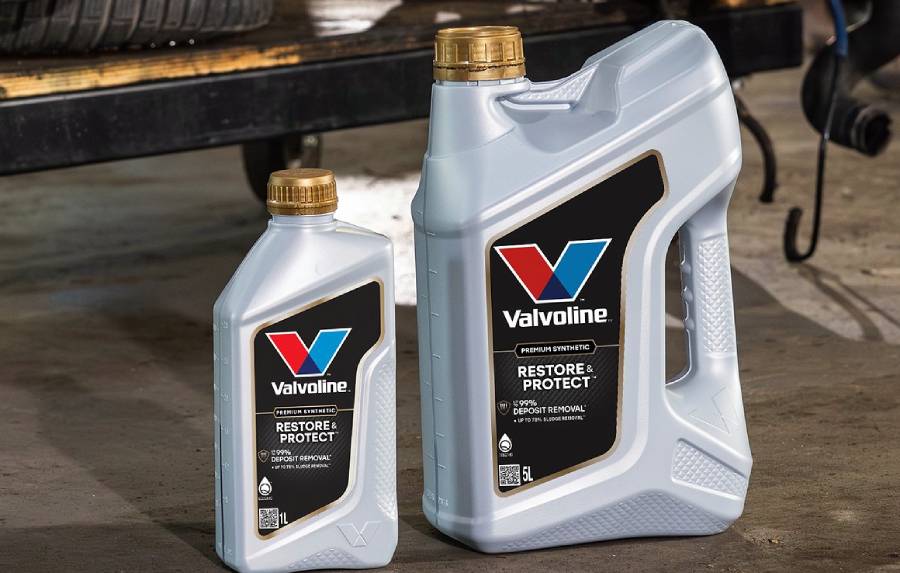
Valvoline Restore & Protect is a full synthetic motor oil designed to remove existing engine deposits, prevent new buildup, and protect engine components against wear. Its main selling point is the ability to remove up to 100% of piston deposits after four consecutive oil changes under specified test conditions. However, this manufacturer claim does not guarantee identical results in every engine.
Valvoline Restore & Protect uses Active Clean Technology to target deposits that accumulate on engine components over time. It also features Liqui-Shield Technology, which is designed to help prevent new deposits from forming. These technologies distinguish the oil from synthetic motor oils that primarily emphasize lubrication, wear protection, and extended drain intervals.
The effectiveness of Valvoline Restore & Protect depends on several factors, including engine condition, maintenance history, oil viscosity, and the type of deposits present. Although its cleaning claims are supported by manufacturer testing, independent long-term evidence remains important when evaluating real-world performance.
This Valvoline Restore and Protect review examines its engine-cleaning capabilities, wear protection, customer feedback, advantages, disadvantages, and comparisons with competing synthetic oils. It also explains whether the product is worth its price and which vehicles are most likely to benefit from its formulation.
Is Valvoline Restore and Protect Good Motor Oil?
Valvoline Restore & Protect is a good full synthetic motor oil for gasoline engines that require a compatible viscosity grade and performance specification. Its main advantage is a formulation designed to remove existing engine deposits while protecting internal components against wear. This makes it particularly relevant to drivers concerned about engine cleanliness and long-term maintenance.
Valvoline Restore & Protect uses two proprietary technologies: Active Clean Technology and Liqui-Shield Technology. Active Clean Technology targets deposits that accumulate on engine components, while Liqui-Shield Technology is designed to prevent new deposits from forming. These functions address two different aspects of engine cleanliness: removing existing contamination and limiting future buildup.
The oil also provides the lubrication, oxidation resistance, and wear protection expected from a modern full synthetic motor oil. Its performance should be evaluated against the API and ILSAC specifications applicable to the selected formulation. Meeting these standards establishes baseline performance requirements, but it does not independently verify every additional cleaning claim made by the manufacturer.
Valvoline Restore & Protect is particularly relevant to engines with accumulated deposits from previous operation. However, its effectiveness depends on the type and severity of contamination, engine condition, and maintenance history. It cannot repair worn piston rings, damaged bearings, or other mechanical defects. Drivers with clean, properly maintained engines may also obtain suitable protection from other synthetic oils that meet their vehicle manufacturer’s requirements.
Overall, Valvoline Restore & Protect offers a compelling combination of engine-cleaning technology and conventional synthetic oil protection. Its strongest distinguishing feature is its deposit-removal formulation rather than a demonstrated ability to outperform every competing synthetic motor oil.
Does Valvoline Restore and Protect Really Clean Engines?
Valvoline Restore & Protect can remove certain existing engine deposits, according to manufacturer testing, but the amount removed depends on the engine and operating conditions. Valvoline advertises the removal of up to 100% of piston deposits after four consecutive oil changes under specified test conditions. This claim provides evidence of cleaning performance in a controlled environment, not a guarantee that every engine will become completely clean.
Engine deposits develop when oil oxidation products, combustion byproducts, and other contaminants accumulate on internal components. High operating temperatures accelerate chemical reactions that contribute to deposit formation, particularly around pistons and piston ring grooves. Excessive deposits can interfere with piston ring movement and contribute to reduced engine efficiency or increased oil consumption.
Active Clean Technology is designed to address these deposits through the oil’s additive formulation. Detergent additives help control deposits on hot engine surfaces, while dispersants keep contaminants suspended in the oil so they are less likely to accumulate elsewhere. The oil filter captures particles within its filtration range, while the remaining suspended contaminants are removed when the used oil is drained.
Cleaning existing deposits differs from preventing new deposits. Removing accumulated contamination requires the formulation to act on deposits already attached to engine surfaces. Deposit prevention focuses on reducing the formation and adhesion of new contamination during engine operation. Valvoline Restore & Protect addresses both functions through its Active Clean and Liqui-Shield technologies.
Can Valvoline Restore and Protect Remove 100% of Piston Deposits?
Valvoline claims that Restore & Protect can remove up to 100% of piston deposits after four consecutive oil changes, based on its specified engine testing. The percentage describes the reported result under those test conditions and should not be interpreted as complete removal of every type of deposit throughout an engine.
The four-oil-change requirement is significant because deposit removal is presented as a progressive process rather than an immediate result. Fresh oil introduces a renewed supply of cleaning additives during each service interval. Repeated oil changes also remove suspended contaminants and replenish the formulation’s ability to control deposits.
The distinction between piston deposits and other engine contamination is equally important. Piston deposits are not identical to heavy sludge in an oil pan, varnish on internal surfaces, or carbon buildup in intake passages. Different contaminants form through different mechanisms and respond differently to cleaning methods. Therefore, a successful piston-deposit test does not establish that the oil removes all sludge, varnish, or intake-valve carbon deposits.
Valvoline’s advertised result supports the product’s cleaning-focused positioning, but publicly available manufacturer claims alone do not establish the same level of effectiveness across different engines. Independent testing involving controlled before-and-after inspections, deposit measurements, and consistent operating conditions would provide stronger evidence of real-world cleaning performance.
For drivers considering Restore & Protect, the practical expectation is gradual deposit control over successive oil changes rather than immediate restoration of engine cleanliness. The oil should be used according to the vehicle manufacturer’s viscosity and service requirements, without extending oil change intervals solely to increase cleaning time.
How Well Does Valvoline Restore and Protect Prevent Engine Wear?
Valvoline Restore & Protect provides engine wear protection through its full synthetic base oil and anti-wear additive system. Valvoline advertises 79% stronger anti-wear protection under its specified testing conditions. However, this figure represents a comparison against a particular test benchmark, not a 79% reduction in engine wear during everyday driving.
Engine wear occurs when moving metal components experience friction, particularly during cold starts, high-load operation, and periods of reduced oil-film thickness. Components such as camshafts, piston rings, and bearings depend on adequate lubrication to minimize direct metal contact. Full synthetic motor oils maintain lubricating properties across a range of operating temperatures, while anti-wear additives provide additional protection when the oil film becomes thin.
Restore & Protect combines these protective functions with deposit-control technology. Keeping piston ring areas cleaner can help maintain normal ring movement, although deposit removal does not reverse existing mechanical wear. The oil’s ability to protect an engine also depends on using the correct viscosity grade, maintaining adequate oil levels, and following the manufacturer’s recommended service intervals.
API and ILSAC performance specifications provide additional evidence of an oil’s suitability for compatible engines. These standards include requirements related to wear protection, deposit control, oxidation resistance, and other performance characteristics. Drivers should verify the certifications printed on their specific Restore & Protect container because requirements and approvals vary by formulation.
Restore & Protect offers credible wear protection for compatible gasoline engines, but its advertised 79% advantage should not be interpreted as proof that it protects engines better than every competing synthetic oil. Establishing that conclusion would require directly comparable testing under identical conditions.
What Do Real Users Say About Valvoline Restore and Protect?
Customer feedback on Valvoline Restore & Protect is generally positive, with buyers frequently expressing satisfaction with engine operation and the product’s cleaning-focused formulation. For example, AutoZone has displayed an average customer rating of approximately 4.8 out of 5 stars for its Restore & Protect 5W-30 five-quart product, based on roughly 500 reviews. Ratings and review counts change over time and should be checked again before publication.
Customer experiences are useful for understanding satisfaction, perceived engine behavior, and product usability. However, they cannot independently establish how much piston deposit removal or wear reduction occurs inside an engine.
Positive feedback generally centers on perceived engine smoothness, quieter operation, and confidence in Valvoline’s synthetic oil formulation. Some owners also discuss using the product across multiple oil changes to evaluate its advertised cleaning benefits. These observations reflect individual experiences rather than controlled comparisons because engine condition, driving patterns, and previous oil formulations differ between vehicles.
Changes in engine noise or smoothness do not necessarily indicate that internal deposits have been removed. Oil viscosity, ambient temperature, engine operating conditions, and differences between fresh and used oil can influence how an engine sounds or feels. Confirming deposit removal requires more direct evidence, such as comparable internal engine inspections before and after treatment.
Negative feedback and purchasing concerns primarily involve the product’s price, the time required to evaluate its cleaning claims, and uncertainty about measurable improvements. Restore & Protect is positioned as a specialized full synthetic oil, so buyers may compare its cost with conventional synthetic alternatives that already meet their vehicle’s required specifications.
The advertised four-oil-change cleaning period also makes short-term evaluation difficult. A driver who notices no immediate difference after one oil change has not necessarily demonstrated that the formulation is ineffective. Conversely, an owner reporting improved engine operation cannot establish that Restore & Protect caused the improvement without accounting for other variables.
Customer reviews therefore provide supporting evidence of product satisfaction rather than definitive proof of engine cleaning performance. The most reliable assessment combines verified customer feedback, manufacturer testing, applicable industry specifications, and independent mechanical measurements when available.
What Are the Pros and Cons of Valvoline Restore and Protect?
The main advantages of Valvoline Restore & Protect are its deposit-cleaning formulation, full synthetic engine protection, and ability to address existing deposits while helping prevent new buildup. Its main disadvantages include premium pricing, the need for repeated oil changes to achieve advertised cleaning results, and limited independent evidence confirming the same performance across different engines.
The following table summarizes the product’s key strengths and limitations.
| Pros | Cons |
|---|---|
| Designed to remove existing piston deposits | Advertised cleaning results require up to four consecutive oil changes |
| Active Clean Technology targets accumulated deposits | Cleaning effectiveness varies with engine condition and deposit type |
| Liqui-Shield Technology helps prevent new deposits | Does not repair mechanical damage or severe engine wear |
| Full synthetic formulation provides lubrication and wear protection | Costs more than some conventional full synthetic alternatives |
| Available in multiple viscosity grades | Not suitable for every engine or manufacturer specification |
| Combines cleaning and protective functions in one oil | Limited independent long-term testing of its specific cleaning claims |
The product’s most distinctive advantage is its focus on existing engine deposits. Many synthetic motor oils contain detergent and dispersant additives to maintain engine cleanliness, but Restore & Protect specifically emphasizes removing deposits that have already accumulated. This makes its formulation relevant to drivers concerned about piston cleanliness, particularly when an engine has experienced extended service intervals or inconsistent maintenance.
Another advantage is the combination of cleaning and wear protection within a regular motor oil. Drivers do not need to introduce a separate engine-flushing product to use Restore & Protect as intended. However, this does not mean the oil provides the same cleaning action as a dedicated engine flush or can safely remove every form of contamination.
The primary limitation is the time required to evaluate cleaning performance. Valvoline’s advertised deposit-removal results are based on four consecutive oil changes under specified conditions. Drivers expecting immediate improvements in engine noise, fuel economy, or oil consumption may be disappointed because those outcomes are not guaranteed.
Valvoline Restore & Protect is most attractive to buyers who prioritize deposit control alongside standard synthetic oil protection. Drivers whose engines are already clean and properly maintained may find that another approved full synthetic oil meets their needs at a lower price.
Is Valvoline Restore and Protect Better Than Other Synthetic Oils?
Valvoline Restore & Protect is not universally better than other premium synthetic motor oils, but its deposit-removal positioning distinguishes it from products that primarily emphasize extended oil-change intervals or general engine protection. The best choice depends on engine condition, required oil specifications, maintenance priorities, and product price.
Mobil 1 Extended Performance and Pennzoil Ultra Platinum are two relevant alternatives because they also target drivers seeking premium synthetic lubrication. However, their advertised performance benefits are not always measured using identical testing procedures, making direct numerical comparisons unreliable.
| Feature | Valvoline Restore & Protect | Mobil 1 Extended Performance | Pennzoil Ultra Platinum |
|---|---|---|---|
| Oil type | Full synthetic | Full synthetic | Full synthetic |
| Primary positioning | Existing deposit removal and deposit prevention | Extended oil-change performance and engine protection | Engine cleanliness and premium synthetic protection |
| Deposit control | Active Clean and Liqui-Shield technologies | Detergent and deposit-control additives | Deposit-control formulation |
| Existing deposit removal | Advertises up to 100% piston deposit removal under specified conditions | No directly equivalent claim established here | No directly equivalent claim established here |
| Wear protection | Advertises enhanced anti-wear performance | Formulated for engine wear protection | Formulated for engine wear protection |
| Extended drain focus | Follow vehicle manufacturer recommendations | Advertises extended protection under specified conditions | Follow applicable product and vehicle recommendations |
| Best suited for | Drivers prioritizing removal of existing deposits | Drivers prioritizing extended oil-change performance where permitted | Drivers prioritizing premium synthetic protection and cleanliness |
Valvoline Restore & Protect has the clearest cleaning-focused product positioning among these three options. Its manufacturer advertises removal of existing piston deposits, whereas Mobil 1 Extended Performance emphasizes protection over extended service intervals. Pennzoil Ultra Platinum emphasizes premium engine protection and cleanliness through its synthetic formulation.
Mobil 1 Extended Performance is a relevant alternative for drivers interested in longer oil-change intervals. Certain formulations are marketed with protection claims extending up to 20,000 miles or one year under specified conditions. However, these claims do not override vehicle manufacturer requirements, operating conditions, or warranty restrictions. An extended-drain claim also does not establish superior protection in every engine.
Pennzoil Ultra Platinum offers another approach to engine cleanliness and wear protection. Its formulation emphasizes maintaining clean engine components and protecting against wear under demanding operating conditions. However, the absence of an identical published deposit-removal claim in this comparison does not prove that Pennzoil removes fewer deposits than Restore & Protect.
The distinction between these products is primarily one of documented positioning and performance priorities rather than a verified ranking of overall quality. Direct comparisons would require the same viscosity grades, applicable approvals, engine test procedures, operating conditions, and measurement methods.
Valvoline Restore & Protect is the more directly targeted option for drivers specifically interested in its advertised piston-deposit removal capability. Mobil 1 Extended Performance is more closely aligned with extended-drain priorities, while Pennzoil Ultra Platinum remains a competitive choice for premium synthetic lubrication and deposit control.
For any of these oils, compatibility with the vehicle manufacturer’s required viscosity and performance specifications takes priority over marketing claims. Price differences should also be evaluated using equivalent container sizes and verified current retail prices.
Is Valvoline Restore and Protect Worth the Money?
Valvoline Restore & Protect is worth considering for drivers who want a full synthetic motor oil specifically formulated to remove existing engine deposits while providing wear protection. Its value comes from combining deposit-cleaning technology with routine engine lubrication, although the additional cost is harder to justify for engines that are already clean and properly maintained.
Restore & Protect is positioned as a premium synthetic motor oil, placing it in competition with products such as Mobil 1 Extended Performance, Pennzoil Ultra Platinum, and Castrol EDGE. The actual price difference depends on viscosity grade, container size, retailer, and available discounts. Comparing equivalent five-quart containers provides a more meaningful assessment than comparing products sold in different quantities.
The oil’s potential value is closely connected to its cleaning performance. Valvoline advertises the removal of up to 100% of piston deposits after four consecutive oil changes under specified test conditions. For an engine with accumulated deposits, progressive cleaning may help restore normal operation of affected components. However, improved fuel economy, reduced oil consumption, and longer engine life are not guaranteed outcomes of using Restore & Protect.
The four-oil-change period also affects the purchasing decision. Drivers evaluating the product’s advertised cleaning capability must account for repeated purchases over several maintenance intervals. For example, an additional $5 per oil change would represent $20 in extra oil costs across four changes, excluding differences in taxes, filters, and labor. This is an illustrative calculation rather than a verified current retail price difference.
Restore & Protect offers less distinctive value for drivers whose engines have no known deposit-related concerns. Modern full synthetic oils that meet the vehicle manufacturer’s required specifications already provide lubrication, wear protection, and deposit control. Paying extra for a cleaning-focused formulation does not automatically produce measurable improvements in a healthy engine.
The strongest reason to choose Valvoline Restore & Protect is its targeted deposit-removal formulation, not a proven reduction in overall maintenance costs. It is a reasonable premium option for compatible engines when deposit cleaning is a priority. Drivers primarily concerned with routine lubrication may obtain comparable everyday protection from another properly approved synthetic oil at a lower price.
Is Valvoline Restore and Protect Safe for High-Mileage Engines?
Valvoline Restore & Protect is generally suitable for high-mileage gasoline engines when the selected formulation meets the vehicle manufacturer’s viscosity and performance requirements. Engine mileage alone does not make the oil unsafe, but existing mechanical problems, oil leaks, and excessive oil consumption should be evaluated before changing lubricants.
High-mileage engines experience years of combustion, heat exposure, and mechanical operation. These conditions contribute to wear and can allow deposits to accumulate around pistons, piston rings, and other internal components. Engines with irregular oil-change histories may have greater deposit accumulation than similarly aged engines maintained according to recommended service intervals.
Restore & Protect targets existing deposits through its Active Clean Technology. Cleaning deposits around piston rings may help maintain normal ring movement when contamination interferes with their operation. However, the oil cannot restore worn cylinder walls, replace damaged piston rings, or reverse mechanical deterioration. An engine burning oil because of physical component wear requires diagnosis rather than reliance on a cleaning formulation.
The distinction between Restore & Protect and dedicated high-mileage motor oils is important. High-mileage formulations are commonly designed with additional attention to aging seals, oil consumption, and wear-related operating conditions. Restore & Protect primarily emphasizes deposit removal and prevention. These product categories address overlapping but different maintenance priorities, and their exact additive formulations vary.
Drivers should also distinguish between deposit-related symptoms and mechanical defects. For example, increased oil consumption may result from restricted piston rings, worn valve stem seals, damaged piston rings, or other problems. A cleaning-focused oil may address certain deposit-related conditions, but it cannot resolve every underlying cause of oil consumption.
An older engine with existing leaks or abnormal oil consumption should be inspected before its maintenance strategy is changed. Switching to Restore & Protect does not guarantee that leaks will develop or worsen, but neither does it guarantee that existing problems will improve. Monitoring oil level, consumption, and engine behavior remains important after any lubricant change.
Valvoline Restore & Protect is a reasonable option for high-mileage engines that meet its application requirements, particularly when deposit accumulation is a concern. A dedicated high-mileage oil may be more appropriate when seal conditioning or oil consumption is the primary maintenance priority. The final selection should follow the vehicle manufacturer’s specifications and the engine’s actual mechanical condition.
Which Valvoline Restore and Protect Viscosity Should You Use?
Choose the Valvoline Restore & Protect viscosity grade specified in your vehicle owner’s manual, provided the oil also meets the required performance standards and manufacturer approvals. Common formulations include SAE 0W-20 and SAE 5W-30, but the correct grade depends on engine design, operating requirements, and manufacturer specifications rather than personal preference.
Motor oil viscosity describes its resistance to flow at specified temperatures. The Society of Automotive Engineers (SAE) classifies multigrade engine oils using designations such as 0W-20 and 5W-30. The number before W indicates the oil’s low-temperature viscosity classification, while the second number represents its viscosity grade at normal engine operating temperatures.
Using the correct viscosity helps maintain the oil film required to protect bearings, camshafts, piston rings, and other moving components. Oil that does not meet an engine’s specified viscosity requirements can affect lubrication performance, hydraulic systems, and fuel economy. Some engines also require particular manufacturer approvals beyond general API or ILSAC classifications.
Valvoline Restore & Protect’s cleaning technology does not eliminate these compatibility requirements. Drivers should confirm the recommended viscosity, applicable performance standards, and any required OEM approvals before purchasing the oil.
What Is the Difference Between Valvoline Restore and Protect 0W-20 and 5W-30?
The main difference between Valvoline Restore & Protect 0W-20 and 5W-30 is their viscosity classification at low and operating temperatures. Both are multigrade synthetic motor oils, but they are designed to meet different engine lubrication requirements.
| Feature | 0W-20 | 5W-30 |
|---|---|---|
| Low-temperature SAE grade | 0W | 5W |
| Operating-temperature SAE grade | 20 | 30 |
| Cold-temperature performance | Meets more demanding low-temperature viscosity limits | Meets 5W low-temperature viscosity limits |
| Operating-temperature viscosity | Lower SAE viscosity range | Higher SAE viscosity range |
| Typical application | Engines designed for lower-viscosity oils | Engines requiring SAE 5W-30 |
| Selection priority | Vehicle manufacturer specification | Vehicle manufacturer specification |
SAE 0W-20 meets stricter low-temperature viscosity requirements than SAE 5W-30. This makes it appropriate for engines designed around its viscosity characteristics, including applications where cold-start oil circulation and fuel efficiency are important. However, the 0W designation does not mean the oil is suitable for every engine operating in cold weather.
SAE 5W-30 belongs to a higher operating-temperature viscosity grade than SAE 0W-20. Its viscosity characteristics may be required by engines designed for different bearing clearances, operating loads, or lubrication systems. A higher viscosity grade does not automatically provide better wear protection because engine components are designed around specific oil-flow and oil-film requirements.
Use 0W-20 when the manufacturer specifies 0W-20, and use 5W-30 when the manufacturer specifies 5W-30. Do not switch to a thicker viscosity solely because an engine has accumulated mileage or developed deposits. Any alternative grade must be permitted by the vehicle manufacturer.
Read more: Valvoline Express Care Reviews: Is It Worth It?
How Often Should You Change Valvoline Restore and Protect Oil?
Change Valvoline Restore & Protect according to your vehicle manufacturer’s recommended oil-change interval or oil-life monitoring system. The product’s advertised four-oil-change cleaning period does not establish a separate service interval or justify extending the time between oil changes.
Oil-change intervals depend on engine design, driving conditions, oil specifications, and maintenance requirements. Some modern gasoline vehicles permit intervals of approximately 5,000 to 10,000 miles under specified operating conditions, while other engines require shorter intervals. These figures are examples of vehicle-dependent maintenance schedules, not universal recommendations for Restore & Protect.
Severe operating conditions can require more frequent oil changes. Repeated short trips, extended idling, towing, dusty environments, and sustained high-temperature operation can increase oil contamination or accelerate degradation. Drivers should follow the severe-service schedule when their operating conditions meet the manufacturer’s definition.
Valvoline’s deposit-removal claim refers to four consecutive oil changes using Restore & Protect under specified testing conditions. For example, a vehicle with a manufacturer-approved 5,000-mile interval would complete four oil changes over successive 5,000-mile service periods. The cleaning claim does not mean the oil must be changed every 5,000 miles in all vehicles or that complete deposit removal is guaranteed after 20,000 miles.
Oil filters should also be replaced according to the vehicle manufacturer’s maintenance instructions. Regular oil-level checks remain necessary because synthetic oil can still be consumed or contaminated during operation.
The correct maintenance strategy is to use Restore & Protect consistently while following the vehicle’s approved oil-change schedule. Shortening or extending service intervals solely to reproduce the advertised cleaning result is not supported by the product’s marketing claim.
Who Should Use Valvoline Restore and Protect?
Valvoline Restore & Protect is best suited for gasoline-engine owners who want full synthetic lubrication combined with a formulation specifically designed to remove existing deposits and prevent new buildup. It is particularly relevant to drivers concerned about engine cleanliness, provided the selected oil meets their vehicle’s viscosity and performance requirements.
There are four main groups of drivers who may find Restore & Protect worth considering.
- Drivers concerned about existing engine deposits. Restore & Protect targets deposits that accumulate during engine operation. Its cleaning-focused formulation is relevant to engines with suspected piston deposits, although the presence and severity of contamination require appropriate diagnosis.
- Owners of high-mileage gasoline vehicles. Older engines may have accumulated deposits over years of operation. Restore & Protect offers a cleaning-focused option when the engine remains mechanically sound and the oil meets manufacturer specifications. It does not replace repairs for worn components or damaged seals.
- Drivers seeking preventive engine maintenance. Restore & Protect combines deposit-removal technology with additives designed to limit new buildup. Drivers who prioritize engine cleanliness may value these functions alongside the normal lubrication benefits of synthetic motor oil.
- Vehicle owners comparing premium synthetic oils. Restore & Protect provides an alternative to products such as Mobil 1 Extended Performance and Pennzoil Ultra Platinum. Its strongest distinguishing feature is its advertised ability to remove existing piston deposits rather than a demonstrated advantage in every aspect of engine protection.
Restore & Protect is less compelling for drivers whose engines are already operating normally and who primarily need an affordable oil that meets manufacturer requirements. A compatible full synthetic oil with the correct certifications can provide suitable routine protection without the additional emphasis on removing existing deposits.
The product should not be selected solely to address serious mechanical symptoms such as persistent low oil pressure, severe oil consumption, abnormal engine knocking, or significant oil leaks. These conditions require diagnosis because changing motor oil cannot repair damaged engine components.
Owners of diesel engines, motorcycles with shared engine and transmission oil systems, or vehicles requiring specialized manufacturer approvals must verify compatibility rather than assuming that a gasoline-engine formulation is suitable.
Valvoline Restore & Protect is a reasonable choice for drivers who prioritize engine deposit control and are willing to pay for a cleaning-focused synthetic oil. Its value is strongest when the formulation addresses a relevant maintenance concern, while correct oil specifications and regular maintenance remain the foundation of engine protection.