Choosing between Uconnect 4 and Uconnect 5 is an important consideration when buying a new or used Jeep, Ram, Dodge, Chrysler, or other Stellantis vehicle. While both infotainment systems provide navigation, smartphone connectivity, voice controls, and entertainment features, they differ significantly in performance, software capabilities, and long-term functionality. Understanding these differences helps drivers select a vehicle that matches their technology expectations and future needs.
Uconnect 4 served as Stellantis’ primary infotainment platform for several years and earned a reputation for its intuitive interface and reliable performance. Uconnect 5 builds on that foundation with a completely redesigned software architecture, substantially faster processing power, wireless smartphone integration, over-the-air software updates, and personalized user profiles. These enhancements create a smoother and more connected driving experience while supporting modern digital features that were unavailable in the previous generation.
This guide provides a comprehensive comparison of Uconnect 4 and Uconnect 5 by examining their performance, available features, compatibility, supported vehicle models, upgrade possibilities, and overall value. By the end of this article, you will clearly understand the strengths of each system and determine which infotainment platform is the better choice for your driving habits, budget, and long-term ownership plans.
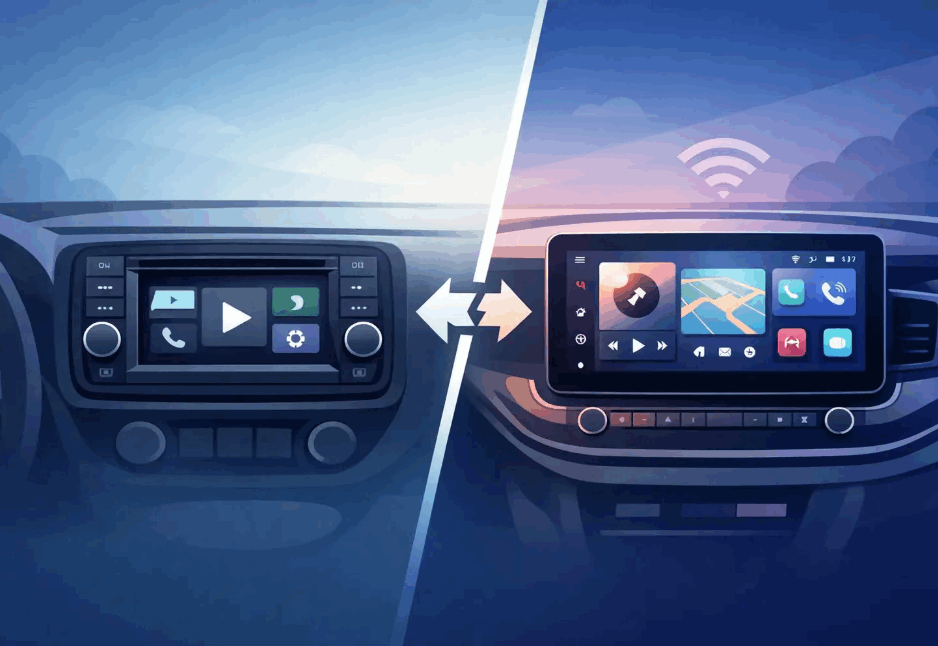
What Is the Difference Between Uconnect 4 and Uconnect 5?
The biggest difference between Uconnect 4 and Uconnect 5 is that Uconnect 5 is built on an entirely new software platform with significantly faster hardware, expanded connectivity, and more advanced personalization features. Although both systems provide navigation, media playback, Bluetooth connectivity, and smartphone integration, Uconnect 5 delivers a more responsive and future-ready experience. It was designed to support modern connected vehicle technologies while improving everyday usability.
Uconnect 4 debuted as a dependable infotainment system for many Jeep, Ram, Dodge, and Chrysler models. Its straightforward interface and stable performance made it one of the easiest in-vehicle systems to operate. Drivers could access navigation, Apple CarPlay, Android Auto, SiriusXM, voice commands, and vehicle settings from a central touchscreen. For most daily driving needs, these features remain practical and reliable, especially in vehicles released before the introduction of Uconnect 5.
Uconnect 5 represents a major technological upgrade rather than a simple software refresh. The system operates on the Android operating system and uses processing hardware that is substantially more powerful than its predecessor. This improvement reduces startup times, speeds up screen transitions, and allows multiple applications to run simultaneously without noticeable lag. The redesigned interface also presents information more efficiently, making menus easier to navigate while reducing the number of taps required to access frequently used functions.
Another important distinction is long-term capability. Uconnect 5 supports technologies that were either unavailable or limited on Uconnect 4, including wireless Apple CarPlay, wireless Android Auto, over-the-air software updates, customizable user profiles, and larger high-resolution displays. These enhancements allow the infotainment system to remain compatible with evolving smartphone technologies and connected vehicle services, making it a better choice for drivers who expect their vehicle’s technology to remain current for many years.
How Does Uconnect 5 Improve Performance and Everyday Usability?
Uconnect 5 improves daily usability through faster processing, better software design, and stronger connectivity. The system uses a more powerful computer architecture than Uconnect 4. This allows drivers to open applications faster, switch between functions smoothly, and access important controls with fewer delays.
The biggest performance improvement appears in system response time. Uconnect 5 starts faster after the vehicle turns on. The touchscreen reacts more quickly to user commands. Navigation, media controls, and vehicle settings load with less waiting time. These changes create a smoother experience because drivers spend less time interacting with menus while driving.
Uconnect 5 also improves the touchscreen experience with a redesigned interface. The system organizes applications and vehicle controls more clearly. Drivers can customize the home screen and place frequently used features in easier locations. For example, a driver who uses navigation and audio controls every day can access those functions without opening multiple menus.
Another important improvement is support for personalized user profiles. Uconnect 5 allows different drivers to save individual preferences. These profiles can store settings such as audio preferences, navigation history, display options, and connected device settings. This feature benefits families who share one vehicle because each driver can quickly restore their preferred setup.
The stronger hardware inside Uconnect 5 also supports future software development. Stellantis designed the system to handle new connected services and software improvements over time. Unlike older infotainment platforms, Uconnect 5 has more capacity for additional features. This makes it a more future-ready solution for drivers who plan to keep their vehicles for many years.
Which Features Does Uconnect 5 Offer That Uconnect 4 Does Not?
Uconnect 5 introduces several features that Uconnect 4 does not support. These upgrades focus on wireless connectivity, software flexibility, personalization, and integration with modern digital services. The goal of Uconnect 5 is to create a more connected driving experience that matches current smartphone and vehicle technology expectations.
One of the most noticeable additions is wireless Apple CarPlay and wireless Android Auto. Uconnect 4 supports these smartphone platforms, but drivers usually need a USB connection to access them. Uconnect 5 removes this limitation by allowing compatible smartphones to connect automatically without cables. This creates a cleaner cabin experience and makes daily phone integration more convenient.
Uconnect 5 also adds over-the-air software updates. This feature allows Stellantis to deliver software improvements, system updates, and new functions remotely. Drivers no longer need to visit a dealership for every software change. This approach helps maintain system performance and allows the infotainment platform to receive improvements throughout the vehicle’s ownership period.
Another major upgrade is Amazon Alexa integration. Uconnect 5 allows drivers to use voice commands for selected connected services, smart home functions, and vehicle-related features. This expands the role of the infotainment system beyond basic entertainment and navigation.
The system also supports multiple user profiles and dual-phone connectivity. Different drivers can save personal preferences, while the vehicle can connect two smartphones at the same time. For example, one passenger can handle phone calls while another device manages music streaming.
Uconnect 5 provides better support for larger displays and advanced vehicle interfaces. The platform can manage higher-resolution screens and additional digital features more effectively than Uconnect 4. These improvements make Uconnect 5 a stronger choice for drivers who want modern connectivity and longer software support from their vehicle.
Uconnect 4 and Uconnect 5 share many core infotainment features because both systems serve the same purpose: connecting drivers with navigation, communication, entertainment, and vehicle controls. Although Uconnect 5 introduces more advanced technology, Uconnect 4 still provides the essential functions that most drivers need for daily use.
Both systems support Apple CarPlay and Android Auto, allowing drivers to access smartphone applications through the vehicle touchscreen. These platforms provide access to navigation apps, music streaming services, messages, and phone calls. Drivers can use familiar smartphone features without handling their devices while driving.
Navigation remains another shared feature between Uconnect 4 and Uconnect 5. Both systems can provide turn-by-turn directions, map information, and points of interest. Vehicles equipped with built-in navigation can display route guidance directly through the infotainment screen. This integration helps drivers manage travel information without relying only on external devices.
Both versions also include Bluetooth connectivity, voice commands, and audio controls. Drivers can connect smartphones wirelessly for hands-free calling and media playback. Voice recognition allows users to perform basic actions, such as making calls or selecting entertainment options, while keeping their attention on the road.
Entertainment features also remain consistent across both platforms. Uconnect 4 and Uconnect 5 support services such as SiriusXM, USB media connections, and digital audio controls. They also integrate with vehicle functions, including backup cameras, climate settings, and other available controls depending on the vehicle model.
The main difference is not the availability of basic features but the way each system delivers them. Uconnect 4 provides reliable access to essential functions, while Uconnect 5 improves speed, customization, and future compatibility. Drivers who only need standard infotainment features may find Uconnect 4 sufficient, but users who want a more advanced digital experience will benefit from Uconnect 5.
Which Vehicles Come With Uconnect 4 and Uconnect 5?
Uconnect 4 and Uconnect 5 appear in different generations of Stellantis vehicles. The availability of each system depends on the vehicle model, production year, trim level, and factory equipment. Uconnect 4 became widely used across Jeep, Ram, Dodge, and Chrysler vehicles before Stellantis introduced Uconnect 5 as the next-generation infotainment platform.
Uconnect 4 appears in many vehicles from the late 2010s and early 2020s. Jeep models such as the Grand Cherokee, Wrangler, Cherokee, Compass, and Renegade commonly used Uconnect 4 depending on the model year and configuration. Ram trucks, including the Ram 1500 and heavy-duty models, also offered Uconnect 4 with different screen sizes and feature packages.
Dodge and Chrysler vehicles also adopted Uconnect 4 across several models. The Dodge Charger, Dodge Challenger, and Dodge Durango used different versions of the system during this period. Chrysler vehicles such as the Pacifica minivan also included Uconnect 4 before the introduction of newer technology platforms.
Uconnect 5 started appearing in newer Stellantis vehicles as the company updated its infotainment technology. Modern Jeep models, including newer Grand Cherokee, Wrangler, Compass, and Wagoneer versions, use Uconnect 5 depending on configuration. Ram trucks, including newer Ram 1500 models, also introduced Uconnect 5 with larger displays and additional connectivity features.
The transition between Uconnect 4 and Uconnect 5 does not happen at the same time for every vehicle. Some models changed platforms earlier, while others continued using Uconnect 4 for specific trims or production periods. Therefore, buyers should check the vehicle identification number, model year, and official equipment list before assuming which system a vehicle includes.
For used vehicle shoppers, identifying the exact Uconnect version is important because the two systems provide different long-term capabilities. A vehicle with Uconnect 5 offers newer connectivity features, while a vehicle with Uconnect 4 may provide better value if the buyer only needs basic navigation, smartphone integration, and entertainment functions.
Can You Upgrade From Uconnect 4 to Uconnect 5?
Upgrading from Uconnect 4 to Uconnect 5 is possible in some situations, but it is not a simple software update. Uconnect 5 uses different hardware and software architecture, which means most vehicles cannot receive the upgrade through a standard download or over-the-air update. The possibility depends on the vehicle model, production year, existing components, and compatibility between systems.
The main limitation is hardware compatibility. Uconnect 5 requires a newer processing unit, updated display components, and different electronic connections compared with Uconnect 4. Because of these differences, a vehicle with Uconnect 4 usually needs physical hardware replacement rather than only a software installation. This makes the upgrade more complex and expensive than typical infotainment updates.
Some owners choose aftermarket solutions or replacement modules to add newer features. These options may provide functions such as wireless Apple CarPlay, Android Auto, or improved connectivity. However, aftermarket upgrades may not fully integrate with all factory vehicle controls. Features such as steering wheel controls, climate settings, vehicle settings, and safety system information may require additional compatibility checks.
For many Uconnect 4 owners, upgrading may not provide enough value compared with keeping the original system. Uconnect 4 already supports essential features such as smartphone integration, navigation, Bluetooth, and entertainment services. If these functions meet the driver’s needs, replacing the system may not justify the cost.
A factory-installed Uconnect 5 system is usually the better option for buyers who want the latest technology. Drivers who are purchasing a new vehicle or choosing between similar used models should prioritize a vehicle equipped with Uconnect 5 instead of planning a future upgrade. This approach provides better compatibility, official software support, and a more reliable long-term ownership experience.
Which System Should You Choose?
The better choice between Uconnect 4 and Uconnect 5 depends on how you use your vehicle and how long you plan to keep it. Uconnect 5 is the stronger option for drivers who want faster performance, newer connectivity features, and better long-term technology support. However, Uconnect 4 remains a practical choice for buyers who only need reliable infotainment functions at a lower vehicle price.
New vehicle buyers should choose Uconnect 5 whenever possible because it represents the current generation of Stellantis infotainment technology. The system provides wireless Apple CarPlay, wireless Android Auto, faster processing, user profiles, and over-the-air updates. These features create a more convenient experience and help the vehicle stay compatible with future digital services.
Technology-focused drivers will benefit the most from Uconnect 5. The improved hardware, larger display support, and advanced connectivity options make the system better suited for users who depend on navigation, smartphone integration, and connected services every day. Drivers who frequently switch between applications will also notice the difference in speed and responsiveness.
Uconnect 4 can still be the right choice for budget-conscious buyers. Vehicles equipped with Uconnect 4 often cost less in the used car market while still providing essential features. The system handles common tasks such as phone calls, music streaming, navigation, and smartphone integration without major issues.
For long-term ownership, Uconnect 5 offers a clear advantage because it uses newer technology and supports future software improvements. Buyers choosing between two similar vehicles should consider Uconnect 5 as a valuable upgrade. Meanwhile, current Uconnect 4 owners do not necessarily need to replace their system if it continues to meet their daily needs.
Overall, Uconnect 5 is the better infotainment system because it improves performance, expands available features, and provides stronger future compatibility. Uconnect 4 remains functional, but Uconnect 5 delivers the more complete experience for modern drivers.
Conclusion
Uconnect 4 and Uconnect 5 serve the same purpose, but they represent two different generations of vehicle infotainment technology. Uconnect 4 provides reliable performance with essential features such as Apple CarPlay, Android Auto, navigation, Bluetooth, and entertainment controls. It remains a practical option for drivers who want a functional system without requiring the latest connected features.
Uconnect 5 creates a more advanced driving experience through faster hardware, improved software, wireless smartphone integration, personalized user profiles, and over-the-air updates. These improvements make the system easier to use and better prepared for future vehicle technology. Drivers who spend significant time using navigation, smartphone applications, and connected services will notice the advantages of the newer platform.
For buyers choosing between two similar Stellantis vehicles, Uconnect 5 offers the stronger long-term value because it provides better performance and broader technology support. For existing Uconnect 4 owners, an upgrade may not always be necessary if the current system meets daily needs.
The final decision depends on personal priorities, vehicle price, and expected ownership period. However, when comparing Uconnect 4 vs 5, Uconnect 5 is the better choice for drivers who want a modern infotainment system that can support future digital features.