A Honda CR-V differential fluid change is one of the most important maintenance tasks for AWD owners. However, many drivers overlook this service. They change the engine oil on time, inspect the brakes, and replace transmission fluid, but they often forget the rear differential.
The rear differential helps the AWD system deliver power to the rear wheels whenever extra traction is needed. Clean fluid reduces friction, controls heat, and protects the gears and clutch components. As the fluid ages, it loses its protective properties and collects contaminants. This wear can lead to groaning during tight turns, vibration at low speeds, or binding while parking.
Replacing the differential fluid at the right time helps protect the drivetrain and reduces the risk of expensive repairs. It also keeps the AWD system operating smoothly in wet, snowy, and uneven road conditions. Many owners can complete this maintenance themselves with the correct tools, the proper fluid, and a safe working environment.
This guide explains everything you need to know about a Honda CR-V differential fluid change. You will learn the recommended service interval, common warning signs, the correct differential fluid, estimated service costs, and a complete DIY procedure. You will also discover common mistakes to avoid so you can keep your Honda CR-V AWD system performing at its best.
What Does the Rear Differential Do in a Honda CR V?
The rear differential is a key part of every Honda CR V equipped with an all wheel drive system. It helps distribute power between the rear wheels while allowing each wheel to rotate at a different speed. This function becomes especially important when the vehicle turns, drives on slippery roads, or travels across uneven terrain.
During a turn, the outside wheel follows a longer path than the inside wheel. The rear differential allows both wheels to rotate at different speeds without creating unnecessary stress on the drivetrain. This design improves handling, reduces tire wear, and helps maintain stability in changing road conditions.
Honda’s Real Time AWD system sends power to the rear wheels only when additional traction is needed. Under normal driving conditions, the front wheels provide most of the driving force. When the system detects wheel slip, it quickly transfers torque to the rear axle. The rear differential manages that power and helps both rear wheels work together efficiently.
Differential fluid plays a vital role in this process. It lubricates gears, bearings, and internal clutch components while reducing friction and heat. Fresh fluid also removes contaminants that develop during normal operation. As the fluid ages, its protective qualities decline. Excessive heat and contamination can increase wear and reduce the efficiency of the AWD system.
Many drivers confuse differential fluid with transmission fluid, but the two serve different purposes. Transmission fluid supports the transmission, while differential fluid protects the gears and moving parts inside the rear differential. Using the wrong fluid can reduce performance and may cause premature wear.
It is also important to understand that front wheel drive Honda CR V models do not use the same rear differential found in AWD versions. Because of this difference, only AWD models require regular rear differential fluid service. Knowing your vehicle’s drivetrain helps you follow the correct maintenance schedule and avoid unnecessary repairs.
Do All Honda CR V Models Need Differential Fluid Changes?
The answer depends on your Honda CR V drivetrain. Not every model requires a rear differential fluid change. Only Honda CR V models equipped with an all wheel drive system have a rear differential that needs regular maintenance. Front wheel drive models do not include this component, so they do not require this specific service.
Many owners assume every Honda CR V uses the same maintenance schedule. This misunderstanding can lead to unnecessary service or missed maintenance. Before purchasing differential fluid or scheduling an appointment, confirm whether your vehicle has front wheel drive or all wheel drive.
You can identify an AWD model in several ways. Many vehicles display an AWD badge on the rear liftgate. The owner’s manual also lists the drivetrain configuration. If you cannot find this information, check the vehicle information label or enter the VIN into Honda’s official parts catalog. A visual inspection underneath the vehicle can also help. AWD models include a driveshaft that connects the transmission to the rear differential.
Owners who purchase a used Honda CR V should pay extra attention to the vehicle’s service history. Previous owners may not have replaced the rear differential fluid at the recommended interval. If maintenance records are incomplete or unavailable, inspecting the fluid and performing preventive service can help protect the AWD system from unnecessary wear.
The table below highlights the maintenance difference between front wheel drive and all wheel drive Honda CR V models.
| Drivetrain | Rear Differential | Differential Fluid Service |
|---|---|---|
| Front Wheel Drive | No | Not Required |
| All Wheel Drive | Yes | Required at Recommended Intervals |
Understanding your drivetrain is the first step toward proper maintenance. It also prevents confusion between transmission service and rear differential service. Following the correct maintenance schedule helps extend the life of the AWD system and reduces the risk of expensive drivetrain repairs.
How Often Should You Change Honda CR V Differential Fluid?
The ideal time for a Honda CR V differential fluid change depends on the model year, driving conditions, and maintenance history. Honda provides service recommendations through the owner’s manual and the Maintenance Minder system. Following these recommendations is the best way to keep the AWD system in good condition.
Drivers who use their vehicles under normal conditions can usually rely on the Maintenance Minder to determine when service is necessary. However, severe driving conditions can shorten the life of the differential fluid. Frequent towing, mountain driving, heavy traffic, repeated short trips, and driving on muddy or flooded roads can all increase heat and contamination inside the rear differential.
If you recently purchased a used Honda CR V, review the available maintenance records before assuming the differential fluid is in good condition. Many used vehicles have incomplete service histories. Replacing the fluid early can provide peace of mind and establish a reliable maintenance baseline for future service.
Pay attention to the way your vehicle behaves between scheduled inspections. Groaning during low speed turns, vibration while parking, or unusual noises from the rear of the vehicle may indicate that the fluid has lost its effectiveness. These symptoms do not always confirm a fluid problem, but they should never be ignored.
The following table provides general maintenance guidance based on common driving conditions.
| Driving Condition | Recommended Maintenance Approach |
|---|---|
| Daily commuting | Follow the owner’s manual and the Maintenance Minder |
| Frequent towing | Inspect the differential more often and replace the fluid as needed |
| Mountain or steep roads | Consider shorter inspection intervals because higher temperatures increase fluid stress |
| Stop and go traffic | Monitor the AWD system for unusual noise or vibration during routine maintenance |
| Unknown service history | Inspect the differential and consider preventive fluid replacement |
Regular inspections are just as important as fluid replacement. Clean differential fluid protects gears, bearings, and clutch components from excessive friction and heat. Replacing old fluid before problems develop is usually far less expensive than repairing a damaged rear differential.
Signs Your Honda CR V Needs a Differential Fluid Change
A Honda CR V rarely develops differential problems without showing warning signs. Recognizing these symptoms early can help you avoid expensive repairs and keep the AWD system operating as designed.
One of the most common signs is a groaning or chattering noise during slow, tight turns. Many owners notice the sound while pulling into a parking space or making a U turn. Old or contaminated differential fluid can reduce lubrication and prevent the internal clutch components from working smoothly.
Some drivers also feel vibration at low speeds. The vibration may become more noticeable when the vehicle changes direction or drives over uneven pavement. While degraded differential fluid can contribute to this problem, worn suspension parts, damaged wheel bearings, or uneven tire wear may produce similar symptoms.
Another warning sign is delayed AWD engagement. The vehicle may hesitate to transfer power to the rear wheels when additional traction is needed. Although several components can affect AWD performance, old differential fluid may reduce the system’s ability to operate efficiently.
Inspecting the condition of the fluid can also provide valuable information. Healthy differential fluid usually appears clean and flows smoothly. Dark fluid, a burnt odor, or visible contamination often indicates that the lubricant has reached the end of its service life. During a fluid change, a small amount of fine metallic residue on the magnetic drain plug is usually normal. However, large metal fragments may indicate excessive internal wear and require further inspection.
Keep in mind that these symptoms do not always point to differential fluid alone. Incorrect tire pressure, mismatched tire sizes, damaged CV axles, worn bearings, or internal drivetrain problems can produce similar behavior. Replacing the fluid may improve performance, but it will not repair damaged mechanical components.
If unusual noises or vibrations continue after replacing the differential fluid, schedule a professional inspection as soon as possible. Early diagnosis often prevents minor issues from becoming costly drivetrain repairs.
What Differential Fluid Does a Honda CR V Use?
Choosing the correct differential fluid is one of the most important steps in any Honda CR V differential fluid change. Using the wrong lubricant can reduce AWD performance, increase wear, and create noise during low speed turns. Always verify the correct fluid specification for your model year before beginning the service.
Honda has developed different rear differential fluids for different generations of AWD systems. Many older Honda CR V models require Honda Dual Pump Fluid II, while many newer models use Honda Differential Fluid DPSF II. The required fluid depends on the vehicle’s production year and drivetrain design. For this reason, you should always confirm the specification in the owner’s manual or the official Honda service information before purchasing fluid.
Many aftermarket gear oils advertise broad compatibility with multiple vehicles. However, a matching viscosity rating does not guarantee that the fluid meets Honda’s performance requirements. The rear differential relies on specific friction characteristics to help the clutch components engage smoothly. A fluid that lacks these properties may cause chatter, groaning, or reduced AWD performance.
Some owners also confuse differential fluid with transmission fluid or transfer case fluid. These lubricants serve different purposes and contain different additive packages. Never substitute transmission fluid for differential fluid unless Honda specifically approves that application for your vehicle.
If you choose an aftermarket product, make sure the manufacturer clearly states that the fluid meets the exact Honda specification required for your CR V. Generic claims of compatibility should never replace official approval or documented testing.
The table below summarizes common questions about differential fluid selection.
| Question | Recommended Answer |
|---|---|
| Can I use regular gear oil | Only if the manufacturer specifically approves it for your Honda CR V |
| Can I use CVT fluid | No. CVT fluid does not replace differential fluid unless Honda explicitly states otherwise |
| Should I choose genuine Honda fluid | Genuine Honda fluid is the safest choice because it matches the required specification |
| Can different differential fluids be mixed | Avoid mixing different fluids unless the manufacturer confirms full compatibility |
Using the correct fluid protects the gears, bearings, and clutch components inside the rear differential. It also helps the AWD system respond smoothly under changing road conditions and reduces the risk of premature drivetrain wear.
Honda CR V Differential Fluid Capacity
The differential fluid capacity varies between Honda CR V generations and AWD system designs. For this reason, there is no single capacity that applies to every model. Always verify the correct specification for your model year before purchasing fluid or starting the service.
Most rear differential services require only a small amount of fluid compared with an engine oil change or transmission service. Even so, adding the correct amount is essential. Too little fluid can reduce lubrication and increase wear, while too much fluid may create excess pressure and affect sealing performance.
During a Honda CR V differential fluid change, the correct fluid level is usually determined at the fill opening rather than by pouring in a fixed volume. With the vehicle parked on a level surface, fill the differential slowly until the fluid reaches the bottom edge of the fill hole. This method helps achieve the proper level regardless of small manufacturing differences or residual fluid left inside the housing.
Before beginning the service, purchase enough differential fluid to complete the job without interruption. Having an extra bottle available is also helpful if a small amount spills during filling or if additional fluid is needed to reach the correct level.
The table below provides general guidance. Always confirm the exact specification in the owner’s manual or official Honda service information.
| Honda CR V Model | Rear Differential Capacity | Recommended Fluid |
|---|---|---|
| AWD Models | Verify by model year | Honda specified differential fluid |
| FWD Models | Not applicable | Not required |
Never estimate the fluid level by sight alone or rely on information intended for another Honda model. A few minutes spent confirming the correct capacity and fluid specification can help protect the rear differential and extend the service life of the entire AWD system.
Tools and Supplies Needed
Preparing the right tools before you begin makes the job safer and more efficient. It also reduces the chance of interruptions after you have drained the old differential fluid. Spend a few minutes gathering everything you need before lifting the vehicle.
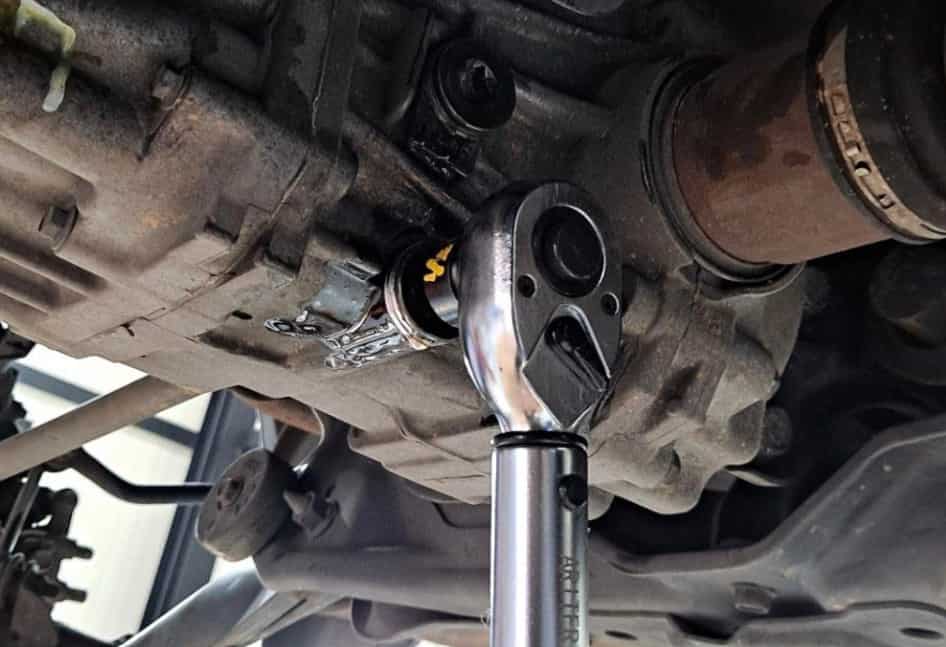
Most Honda CR V differential fluid changes require only basic hand tools. A quality socket wrench helps remove the fill and drain plugs, while a torque wrench ensures that both plugs are tightened to the correct specification. Using the proper torque helps prevent leaks and protects the aluminum housing from thread damage.
A fluid transfer pump is one of the most useful tools for this service. The rear differential fill opening is difficult to reach with a standard funnel, so a pump allows you to add fresh fluid cleanly and accurately. Keep a drain pan nearby to collect the old fluid and prevent spills on the ground.
Safety should always come first. Use a floor jack only to lift the vehicle, then support it with properly rated jack stands before working underneath. Place wheel chocks behind the tires that remain on the ground to prevent the vehicle from moving during the service. Wear safety glasses and protective gloves to reduce the risk of injury.
You should also prepare a few replacement parts before starting the job. New sealing washers help create a proper seal when you reinstall the drain and fill plugs. Reusing old washers can increase the risk of fluid leaks after the service.
The checklist below summarizes the recommended tools and supplies.
| Item | Purpose |
|---|---|
| Socket wrench and correct socket | Remove and install the drain and fill plugs |
| Torque wrench | Tighten plugs to the correct specification |
| Fluid transfer pump | Fill the rear differential with new fluid |
| Drain pan | Collect used differential fluid |
| Floor jack | Lift the vehicle safely |
| Jack stands | Support the vehicle while you work |
| Wheel chocks | Prevent vehicle movement |
| Safety glasses | Protect your eyes |
| Mechanic gloves | Improve grip and protect your hands |
| New sealing washers | Help prevent leaks after installation |
| Honda specified differential fluid | Refill the rear differential |
| Shop towels | Clean spills and wipe components |
Before removing any plugs, make sure you have confirmed the correct differential fluid specification for your Honda CR V. Taking a few extra minutes to prepare can help you complete the service more smoothly and avoid unnecessary mistakes.
How to Change Honda CR V Differential Fluid
A Honda CR V differential fluid change is a straightforward maintenance job when you follow the correct procedure. Working carefully also helps protect the rear differential from contamination, leaks, and thread damage. Before you begin, verify that you have the correct differential fluid, new sealing washers, and all the necessary tools.
Step 1. Warm the Differential
Drive the vehicle for about ten to fifteen minutes before starting the service. Warm fluid flows more easily and carries away more contaminants during draining. Do not begin the job immediately after driving because the differential housing may still be hot. Allow a few minutes for the components to cool to a safe temperature.
Step 2. Park on a Level Surface
Park the vehicle on a flat, stable surface. Apply the parking brake and place wheel chocks behind the wheels that remain on the ground. If additional clearance is necessary, lift the vehicle with a floor jack and support it securely with jack stands. Never work under a vehicle supported only by a hydraulic jack.
Step 3. Locate the Rear Differential
Move underneath the rear of the vehicle and locate the differential housing between the rear wheels. Identify both the fill plug and the drain plug before removing anything. Clean the surrounding area with a shop towel to prevent dirt from entering the housing after the plugs are removed.
Step 4. Remove the Fill Plug First
Always loosen the fill plug before removing the drain plug. This simple step can save a great deal of time and frustration. If the fill plug cannot be removed after the differential has been drained, you will not be able to refill the housing with fresh fluid.
Step 5. Drain the Old Fluid
Position a drain pan beneath the differential. Remove the drain plug carefully and allow the old fluid to drain completely. Watch the condition of the fluid as it leaves the housing. Dark fluid, a burnt smell, or visible contamination may indicate that the lubricant has reached the end of its service life.
Step 6. Inspect and Clean the Drain Plug
Many Honda CR V rear differentials use a magnetic drain plug. Inspect the magnet for fine metallic particles. A thin layer of gray paste usually results from normal wear. Large metal fragments or shiny chips may indicate internal damage and should not be ignored.
Clean the drain plug thoroughly before reinstalling it. Replace the sealing washer with a new one to help prevent leaks after the service.
Step 7. Reinstall the Drain Plug
Thread the drain plug into the housing by hand to avoid cross threading. Once it seats correctly, tighten it with a torque wrench according to the specification for your Honda CR V model year. Avoid excessive force because the differential housing can be damaged if the plug is overtightened.
Step 8. Fill the Differential with New Fluid
Insert the hose from the fluid transfer pump into the fill opening. Pump fresh differential fluid into the housing slowly. Continue filling until the fluid reaches the bottom edge of the fill hole while the vehicle remains level. This level indicates that the differential contains the correct amount of fluid.
Step 9. Install the Fill Plug
Install a new sealing washer on the fill plug before placing it back into the housing. Tighten the plug to the correct torque specification with a torque wrench. Wipe away any excess fluid from the differential housing so you can easily identify leaks during the final inspection.
Step 10. Inspect Your Work
Lower the vehicle safely if you raised it during the service. Start the engine and drive at low speed for several minutes. Make a few slow turns in both directions to allow the new fluid to circulate throughout the rear differential.
Park the vehicle again and inspect the fill and drain plugs for signs of leakage. If both plugs remain dry and the vehicle operates normally, the service is complete.
Recording the service date, mileage, and fluid specification can make future maintenance easier. Keeping accurate records also helps preserve the vehicle’s maintenance history and may improve its resale value.
Honda CR V Differential Fluid Change Cost
The cost of a Honda CR V differential fluid change depends on several factors. Your location, vehicle model, labor rates, and the type of differential fluid all affect the final price. Choosing between a Honda dealership, an independent repair shop, or a do it yourself service also changes the overall cost.
A Honda dealership typically uses genuine parts and follows factory service procedures. Many owners choose this option because it provides documented maintenance records and technicians who work with Honda vehicles every day. However, dealership labor rates are often higher than those charged by independent repair shops.
Independent repair shops usually offer lower labor costs while still providing professional service. A reputable shop can perform a differential fluid change correctly when it uses the fluid specified for your Honda CR V. Before scheduling the service, ask which fluid the shop plans to use and confirm that it meets Honda’s requirements.
Many owners choose to perform the service themselves. A DIY differential fluid change eliminates labor charges and gives you complete control over the products used. However, you still need the correct fluid, replacement sealing washers, a fluid transfer pump, and a torque wrench. If you already own these tools, the overall cost is often lower than paying for professional labor.
The table below compares the three most common service options.
| Service Option | Typical Cost Factors | Best Choice For |
|---|---|---|
| DIY | Differential fluid, sealing washers, and basic tools | Owners with mechanical experience and the proper equipment |
| Independent Repair Shop | Labor, differential fluid, shop supplies, and inspection | Owners who want professional service at a competitive price |
| Honda Dealership | Genuine Honda fluid, factory procedures, labor, and maintenance records | Owners who prefer dealership service and official documentation |
Choosing the lowest price does not always provide the best value. Using the wrong fluid or skipping important installation steps can lead to expensive drivetrain repairs later. A properly completed differential fluid change protects the AWD system, improves long term reliability, and helps reduce future maintenance costs.
If your Honda CR V continues to make unusual noises after the fluid has been replaced, additional diagnostic work may be necessary. In that situation, the total repair cost may include inspections, replacement parts, or repairs that extend beyond routine maintenance.
Dealer Service vs DIY Differential Fluid Change
Both dealership service and a DIY differential fluid change can produce excellent results when the work is completed correctly. The best choice depends on your experience, available tools, budget, and confidence in performing vehicle maintenance.
A Honda dealership follows factory service procedures and uses the differential fluid specified for your vehicle. Certified technicians also have access to service information, technical updates, and specialized equipment. Many owners value the maintenance records provided by the dealership because they help document the vehicle’s service history.
A reputable independent repair shop offers another professional option. Many experienced technicians perform Honda differential fluid services regularly and can complete the job correctly at a lower labor cost than a dealership. Before authorizing the repair, confirm that the shop will use the fluid required for your Honda CR V.
A DIY differential fluid change gives you complete control over the maintenance process. You can verify every step, inspect the drained fluid, and choose the products that meet Honda’s specifications. Many owners also appreciate the opportunity to learn more about their vehicle while reducing labor expenses.
However, a DIY approach requires careful attention to detail. Improper lifting procedures, incorrect torque, reused sealing washers, or the wrong differential fluid can lead to leaks, poor AWD performance, or expensive repairs. If you are uncertain about any step, professional service is often the safer choice.
The comparison below highlights the advantages of each option.
| Factor | DIY Service | Professional Service |
|---|---|---|
| Labor Cost | Lower | Higher |
| Tool Investment | Required | Not required |
| Mechanical Experience | Recommended | Not necessary |
| Maintenance Records | Owner maintained | Professionally documented |
| Convenience | Moderate | High |
| Risk of Installation Errors | Higher for inexperienced owners | Lower when performed correctly |
Neither option is universally better. A knowledgeable owner with the proper tools can successfully complete a Honda CR V differential fluid change at home. At the same time, professional service offers convenience, technical expertise, and peace of mind for owners who prefer not to perform vehicle maintenance themselves.
Common Mistakes During a Honda CR V Differential Fluid Change
A differential fluid change is a simple maintenance task, but small mistakes can lead to poor AWD performance, fluid leaks, or expensive drivetrain repairs. Understanding the most common errors helps you complete the service correctly and avoid unnecessary problems.
Using the Wrong Differential Fluid
One of the most common mistakes is choosing a fluid that does not meet Honda’s specification. Even if another product has a similar viscosity, it may not provide the friction characteristics required by the AWD system. Always verify the correct fluid for your model year before beginning the service.
Draining the Fluid Before Removing the Fill Plug
Always loosen the fill plug first. If the fill plug becomes stuck after the differential has been drained, the vehicle cannot be refilled until the problem is resolved. This simple step can save significant time and frustration.
Reusing Old Sealing Washers
Sealing washers compress during installation. Reusing them increases the chance of fluid leaks after the service. Replacing the washers is inexpensive and helps ensure a reliable seal.
Overtightening the Plugs
Applying excessive force can damage the threads in the aluminum differential housing. Always tighten the drain and fill plugs with a torque wrench using the specification for your Honda CR V model year.
Underfilling the Differential
Too little fluid reduces lubrication for gears, bearings, and clutch components. Operating the vehicle with a low fluid level can increase wear and shorten the life of the rear differential.
Overfilling the Differential
Adding more fluid than required does not improve protection. Excess fluid may increase internal pressure and place additional stress on seals. Fill the differential only until the fluid reaches the bottom of the fill opening while the vehicle is level.
Allowing Dirt to Enter the Housing
Dust, sand, or metal debris can contaminate fresh differential fluid. Clean the area around the fill and drain plugs before removing them to reduce the risk of contamination.
Ignoring Metal Debris on the Magnetic Drain Plug
A small amount of fine metallic paste is usually normal. Large metal fragments or shiny chips may indicate internal wear that requires further inspection. Ignoring these warning signs can allow a developing problem to become much more expensive.
Skipping the Final Leak Inspection
Some owners complete the service and immediately return the vehicle to normal use. A brief inspection after a short test drive can confirm that both plugs are sealed correctly and that no fluid is leaking from the differential housing.
Forgetting to Record the Service
Keeping a record of the service date, mileage, and fluid specification makes future maintenance easier. Accurate records also help demonstrate that the vehicle has been maintained according to the recommended schedule.
Quick Checklist Before Finishing the Job
Use this checklist before considering the service complete.
| Check | Completed |
|---|---|
| Correct Honda specified differential fluid used | Yes |
| Fill plug removed before drain plug | Yes |
| New sealing washers installed | Yes |
| Drain and fill plugs tightened to specification | Yes |
| Differential filled to the proper level | Yes |
| No visible leaks after the test drive | Yes |
| Service date and mileage recorded | Yes |
Avoiding these common mistakes helps protect the rear differential, improves AWD performance, and reduces the risk of unnecessary repairs. Careful preparation and attention to detail often make the difference between a successful maintenance job and a costly drivetrain problem.
Frequently Asked Questions
Does every Honda CR V need a differential fluid change?
No. Only Honda CR V models equipped with all wheel drive have a rear differential that requires periodic fluid changes. Front wheel drive models do not have a rear differential and therefore do not require this service.
How do I know if my Honda CR V is AWD?
You can verify the drivetrain by checking the owner’s manual, the vehicle information label, or the original sales documentation. Many AWD models also display an AWD badge on the rear of the vehicle, although badges alone should not be considered the only source of confirmation.
Can I drive with old differential fluid?
Driving with degraded differential fluid increases wear on the gears, bearings, and clutch components inside the rear differential. Over time, this may reduce AWD performance and lead to expensive drivetrain repairs.
What happens if I use the wrong differential fluid?
Using the wrong fluid may cause groaning, chatter, vibration, or poor AWD engagement. Continued operation with an incorrect fluid can accelerate wear and reduce the service life of the rear differential.
Can I change the differential fluid myself?
Yes. Many owners successfully perform a Honda CR V differential fluid change at home with the proper tools, the correct fluid, and careful attention to the service procedure. If you are unsure about any step, professional service is the safer option.
How long does a differential fluid change take?
Most experienced technicians complete the service in less than one hour. A first time DIY owner may need additional time to safely lift the vehicle, inspect the components, and refill the differential correctly.
Should I replace the sealing washers?
Yes. New sealing washers help create a reliable seal and reduce the risk of leaks after reinstalling the fill and drain plugs. Replacing them is considered a good maintenance practice.
Why does my differential still make noise after a fluid change?
Persistent noise may indicate worn bearings, damaged gears, clutch wear, or another drivetrain problem. If unusual sounds continue after replacing the fluid, inspect the vehicle or have it diagnosed by a qualified technician.
Can I mix different differential fluids?
Mixing different fluids is generally not recommended unless the manufacturer specifically confirms compatibility. Using a single fluid that meets Honda’s required specification provides the best protection for the AWD system.
Is differential fluid the same as transmission fluid?
No. Differential fluid and transmission fluid perform different functions and use different additive packages. They should never be considered interchangeable unless Honda specifically approves that application.
Does changing the differential fluid improve AWD performance?
Fresh differential fluid helps the AWD system operate smoothly by providing proper lubrication and friction characteristics. If the previous fluid was degraded, many owners notice quieter operation and smoother power delivery after the service.
What should I do with the old differential fluid?
Used differential fluid should never be poured onto the ground or into household drains. Store it in a sealed container and take it to a recycling center or an authorized waste oil collection facility that accepts used automotive fluids.
Conclusion
A Honda CR V differential fluid change is a small maintenance task that plays an important role in protecting the rear differential and maintaining reliable AWD performance. Replacing the fluid at the recommended service interval helps reduce wear, improve lubrication, and support smooth operation under a wide range of driving conditions.
Throughout this guide, you learned how the rear differential works, which Honda CR V models require this service, how to recognize signs of worn differential fluid, and how to complete the replacement safely. You also discovered how to select the correct Honda specified differential fluid, prepare the necessary tools, avoid common mistakes, and decide whether a DIY service or professional maintenance is the better choice for your situation.
If you own an AWD Honda CR V, do not wait for unusual noises or drivetrain problems before checking the maintenance schedule. Preventive maintenance is almost always less expensive than repairing damaged drivetrain components. Following the recommended service procedures and using the correct differential fluid can help extend the life of the rear differential and improve long term vehicle reliability.
Before performing your next Honda CR V differential fluid change, confirm the correct fluid specification, service interval, and torque values for your exact model year. Taking a few extra minutes to verify these details can help you complete the job correctly the first time.
If you found this guide helpful, consider sharing it with other Honda CR V owners. You can also leave a comment below to share your maintenance experience, ask a question, or provide additional tips that may help other drivers keep their AWD systems in excellent condition.