A Tundra cam tower leak is an engine oil leak that develops around the sealing surface of the cam tower, also called the camshaft housing. The leak may begin as light oil seepage around the engine and progress into a more noticeable problem that leaves wet oil residue, produces a burning-oil smell, or allows oil to reach nearby components. Finding oil in this area does not automatically confirm a cam tower leak because valve cover and timing cover leaks can leave oil in similar locations.
The severity of a Toyota Tundra cam tower leak depends primarily on the amount of oil escaping and where that oil travels. Minor seepage may require monitoring rather than immediate repair, while an active leak that lowers the engine oil level or allows oil to reach hot components requires more urgent attention. Correct diagnosis is therefore important before authorizing a major repair.
Repair typically involves accessing the cam tower, removing the existing sealing material, preparing the mating surfaces, applying new sealant, and reassembling the affected components. Much of the repair expense comes from the labor required to access and reseal the assembly rather than from the sealing material itself. This guide explains the symptoms, causes, diagnosis, severity, repair process, and cost factors associated with a Tundra cam tower leak.
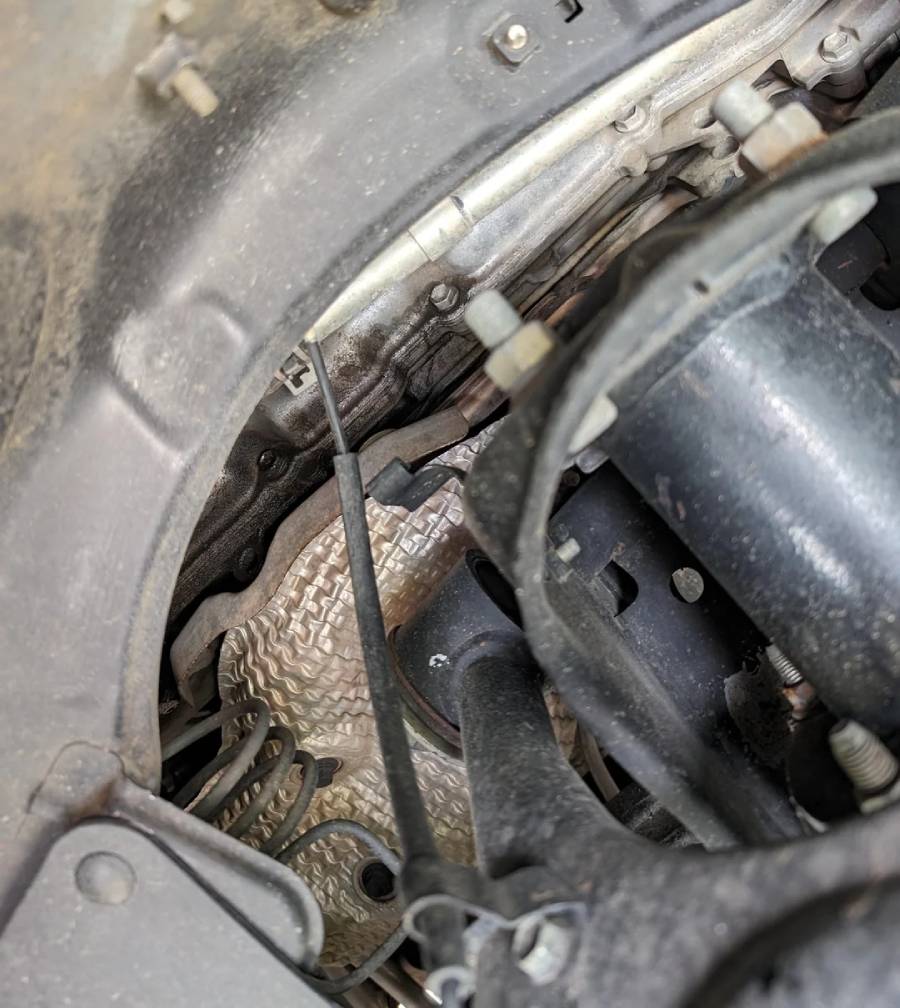
What Is a Tundra Cam Tower Leak?
A Tundra cam tower leak is an engine oil leak or seepage that develops at the sealed mating surface around the cam tower, or camshaft housing, on the engine. The cam tower supports components associated with the camshafts and sits in the upper portion of the cylinder head assembly. Engine oil circulates through this area to lubricate moving valvetrain components, so the sealing surfaces must prevent oil from escaping externally.
The problem develops when the seal between mating surfaces no longer contains the engine oil effectively. Oil can begin as a thin film or localized wet area before spreading across adjacent engine surfaces. Gravity and airflow through the engine compartment can then carry the oil away from its original source. For this reason, the lowest or most visible patch of oil is not necessarily where the leak started.
A cam tower leak also needs to be distinguished from other upper-engine oil leaks. Oil originating around a valve cover, timing cover, or another sealing point can travel across the engine and make the cam tower area appear wet. A visual observation of oil near the cam tower therefore identifies a suspected leak location rather than confirming the diagnosis. The source should be traced to the highest fresh-oil point after the affected area has been inspected and, when necessary, cleaned.
What Are the Symptoms of a Tundra Cam Tower Leak?
The main symptoms of a Tundra cam tower leak are visible oil seepage around the upper engine, oily residue on nearby components, a burning-oil smell, smoke from oil contacting hot surfaces, and engine oil loss when the leak becomes substantial. The exact symptoms depend on the location and rate of the leak, so a minor seep may produce only visible residue while a more active leak can create several symptoms at the same time.
Visible oil is one of the most direct signs. Fresh engine oil can leave a wet or glossy surface around the affected sealing area, while an older leak may appear as dark, greasy buildup because oil collects dust and road debris. The pattern matters during diagnosis. Oil found lower on the engine may have traveled downward from another sealing point, so tracing the residue upward toward its origin provides more useful information than inspecting only where the oil accumulates.
A burning-oil smell can develop when leaking engine oil reaches sufficiently hot components. The odor may become more noticeable after driving because engine and exhaust temperatures have increased. Smoke can also appear in the engine compartment when oil reaches a hot surface. Smoke from oil leaking externally should not be confused with smoke coming from the exhaust pipe, because these symptoms indicate different diagnostic paths.
Engine oil loss is a more important severity indicator than surface staining alone. A small seep may leave the engine dirty without producing an easily measurable change on the dipstick, whereas an active leak can gradually reduce the amount of oil available for lubrication. Checking the oil level at consistent intervals helps determine whether the problem is primarily external seepage or an active leak associated with measurable oil loss.
The combination of symptoms provides stronger diagnostic evidence than any single sign. Visible oil around the cam tower area, a recurring burning-oil smell, and a declining oil level justify a closer inspection, but these symptoms still do not prove that the cam tower itself is the source. Confirming the origin before repair prevents a valve cover, timing cover, or another engine oil leak from being incorrectly diagnosed as a cam tower leak.
What Causes a Cam Tower Leak on a Toyota Tundra?
A Tundra cam tower leak develops when the sealing interface around the camshaft housing no longer prevents engine oil from escaping. The failure can involve deterioration of the sealing material, repeated engine heat cycles, problems with the mating surfaces, or incorrect sealing during previous engine work. These factors affect the seal itself rather than the oil simply finding a random path out of the engine.
Repeated heating and cooling can contribute to deterioration at a sealing interface. Engine components expand as operating temperature rises and contract after the engine cools. The seal must continue maintaining an oil-tight interface through these repeated thermal cycles. As the sealing material ages or loses its ability to maintain that interface, oil can begin migrating through a weak point and appear externally as seepage.
The condition of the mating surfaces also affects the seal. A reliable reseal requires the surfaces to be clean and properly prepared so the new sealing material can form a continuous barrier. Oil contamination, remaining old sealant, improper sealant application, or errors during reassembly can create a path for another leak. This is one reason a previous repair does not guarantee that the same area will remain leak-free.
Oil appearing near the cam tower should still be diagnosed before the sealing material is identified as the cause. Oil can migrate from another source and collect around the cam tower area. Confirming the starting point of fresh oil helps distinguish an actual sealing-interface failure from oil that originated at a valve cover, timing cover, or another nearby location.
Which Toyota Tundra Years and Engines Can Develop Cam Tower Leaks?
A cam tower leak should be identified by the Tundra’s engine configuration and the actual location of the oil leak rather than by assuming every Toyota Tundra model year has the same problem. The Tundra has used different engines across its generations, and differences in engine architecture mean that a diagnosis or repair procedure applicable to one engine should not automatically be applied to another.
Model year alone is therefore insufficient when researching the problem. Two Tundras from different production periods can have different engine designs, sealing arrangements, component locations, and service procedures. Identifying the model year, engine, and exact leak source gives a technician a more reliable starting point for determining whether the suspected area is actually the cam tower or another part of the engine.
Claims that specific Tundra years or engines are especially prone to cam tower leaks require reliable technical or failure data. Owner reports can reveal that a problem is being discussed within a particular vehicle community, but the number of online reports alone does not establish a failure rate or prove that a component has a manufacturing defect. A higher-confidence assessment requires evidence such as Toyota service information, documented repair data, or other verifiable technical records.
For owners, the practical approach is to identify the vehicle configuration before comparing symptoms with another Tundra. Record the model year and engine, locate the highest point where fresh oil appears, and determine whether the oil is actively leaking or only leaving residual staining. These details make the diagnosis more useful than relying on a model-year list without confirming the source of the leak.
How Can You Tell If a Tundra Has a Cam Tower Leak?
You can identify a suspected Tundra cam tower leak by locating fresh engine oil around the cam tower sealing area and tracing the oil back to its highest visible source. Oil residue alone is not enough to confirm the diagnosis because oil can move downward and across engine surfaces before accumulating in a more visible location.
Start the inspection with the engine cool and look for wet oil, dark residue, or dirt-covered oily areas around the upper portion of the engine. Fresh oil generally provides better diagnostic information than old buildup because it shows where the leak is currently active. Follow the oil pattern upward rather than assuming the lowest wet area is the source. Gravity can carry oil downward, while airflow inside the engine compartment can spread it across adjacent surfaces.
Cleaning a heavily contaminated area can make the source easier to identify. After accumulated oil and grime have been removed safely, the area can be inspected again after the engine has operated. New oil appearing at a specific sealing interface provides stronger evidence of the leak source than residue that has accumulated over months or years. A technician may use additional diagnostic methods when the source remains difficult to see or when several areas are wet.
The engine oil level should also be checked during diagnosis. A stable oil level with light surface staining suggests a different severity than fresh oil that repeatedly returns while the dipstick level declines. The diagnosis should establish both where the oil originates and how quickly oil is being lost, because these two findings determine whether the condition can be monitored or requires prompt repair.
How Can You Tell a Cam Tower Leak From Other Tundra Oil Leaks?
A cam tower leak is distinguished from other Tundra oil leaks by finding the highest fresh-oil source and identifying the sealing interface where the oil first emerges. Valve cover and timing cover leaks can create similar oil patterns, so diagnosis should focus on the origin of the oil rather than the component that happens to be wet.
What Is the Difference Between a Cam Tower Leak and a Valve Cover Leak?
A valve cover leak originates at the valve cover sealing area, while a cam tower leak originates lower at the cam tower or camshaft-housing sealing interface. Because the valve cover sits above other portions of the cylinder head assembly, oil escaping from its sealing area can run downward and contaminate surfaces near the cam tower. This can make a valve cover leak appear to be a cam tower problem during a quick visual inspection.
The most useful distinction is where fresh oil first appears. Oil beginning at the valve cover sealing perimeter and traveling downward points toward the valve cover as the source. Oil that first becomes visible below that area, around the cam tower sealing interface, supports a different diagnosis. Cleaning old residue before reinspecting the engine can make this distinction clearer.
This distinction matters because the repairs are not equivalent. Replacing or resealing a valve cover does not address oil escaping from the cam tower interface, while a cam tower repair introduces unnecessary disassembly if the actual source is higher on the engine. Correctly locating the leak before parts are removed reduces unnecessary labor and repair expense.
What Is the Difference Between a Cam Tower Leak and a Timing Cover Leak?
A timing cover leak originates at a timing-cover sealing interface, while a cam tower leak originates around the camshaft-housing sealing area. Oil from either location can spread across adjoining engine surfaces, particularly after the vehicle has accumulated significant driving time with an unresolved leak.
The oil path provides an important diagnostic clue. A technician should trace fresh oil toward its uppermost and earliest visible point while considering the location of each sealing interface. Oil concentrated around the timing cover should not be classified as a cam tower leak simply because some residue has spread toward the cylinder head area. The same principle applies in reverse.
Misdiagnosis becomes more likely when the engine is already coated with old oil and dirt. Multiple wet surfaces can make separate sealing areas appear to be part of one leak. Cleaning the affected area and observing where fresh oil returns helps isolate the source. A confirmed Tundra cam tower leak requires evidence that oil originates from the cam tower sealing interface rather than merely appearing nearby.
How Serious Is a Tundra Cam Tower Leak?
A Tundra cam tower leak ranges from minor oil seepage that can be monitored to an active leak that requires prompt repair. Severity depends on the rate of oil loss, whether the engine oil level is declining, and whether leaking oil is reaching hot or sensitive components. The amount of visible residue alone does not determine how serious the problem is.
Minor seepage generally leaves a thin film of oil or localized greasy buildup without producing measurable oil loss between checks. This condition still deserves inspection because the leak establishes that the sealing area is no longer completely oil-tight. Monitoring the affected area and engine oil level provides a way to determine whether the seepage remains stable or progresses into an active leak.
An active leak requires greater attention when fresh oil repeatedly appears after the engine has been cleaned or when the oil level begins declining. Engine oil lubricates and protects moving components, so allowing the level to fall excessively creates a separate lubrication risk beyond the external leak itself. Adding oil can maintain the correct level temporarily, but it does not repair the failed sealing interface.
Oil reaching hot components increases the urgency because it can produce a strong burning-oil smell or visible smoke from the engine compartment. These symptoms indicate that the location of the escaping oil has become relevant in addition to the amount being lost. A leak should therefore be evaluated using a progression such as minor seepage → active leakage → measurable oil loss → oil contacting hot components, rather than treating every cam tower leak as equally severe.
Can You Drive a Toyota Tundra With a Cam Tower Leak?
You may be able to drive a Toyota Tundra with minor cam tower seepage when the engine maintains the correct oil level and the leak is not contaminating hot or critical components, but an active or worsening leak should be repaired rather than indefinitely monitored. There is no reliable universal mileage limit for driving with a cam tower leak because two leaks can lose oil at very different rates.
The engine oil level is one of the most useful factors when deciding whether continued driving is reasonable. Check the level according to the correct procedure for the vehicle and compare it over time. A stable reading combined with minor seepage represents a different situation from a level that repeatedly falls and requires additional oil. The second condition indicates continuing oil loss and warrants faster diagnosis and repair.
Burning smells, smoke from the engine compartment, fresh oil appearing rapidly after cleaning, or oil collecting beneath the vehicle are signs that the condition has progressed beyond simple staining. Continuing to drive without determining the source can allow additional oil loss and spread oil over a larger area, making both the mechanical risk and eventual diagnosis more significant.
Do not use the absence of an oil warning light as proof that a leak is harmless. A warning system is not a substitute for checking the oil level and inspecting an external leak. The practical decision is based on leak rate, oil level, and where the escaping oil is going—not simply on whether the truck still drives normally. A Tundra with minor stable seepage can be inspected and monitored, while measurable oil loss, smoke, or substantial active leakage calls for professional diagnosis and timely repair.
How Is a Toyota Tundra Cam Tower Leak Repaired?
A Toyota Tundra cam tower leak is repaired by accessing the leaking cam tower, removing the components required for access, cleaning the old sealing material from the mating surfaces, applying the specified sealing material, and reassembling the engine correctly. The objective is to restore an oil-tight sealing interface rather than simply remove the oil visible on the outside of the engine.
The first step is confirming the source before disassembly begins. The technician needs to distinguish a cam tower leak from a valve cover, timing cover, or another nearby oil leak. Once the cam tower sealing interface has been identified as the source, the surrounding components are removed as required to provide access. The exact disassembly sequence depends on the Tundra’s engine configuration, so one repair procedure should not automatically be applied to every model year and engine.
Surface preparation is a critical part of the resealing process. Old sealing material and oil contamination must be removed from the mating surfaces without damaging them. New sealing material is then applied according to the appropriate repair procedure before the components are reassembled. Incorrect surface preparation or sealant application can prevent the new seal from forming a continuous oil barrier and allow the leak to return.
The engine should be inspected for leakage after reassembly. This verifies that the original source has been corrected and helps identify any separate oil leak that may have been hidden by the previous contamination. The repaired area can then be checked again after the engine has operated to confirm that fresh oil is no longer emerging from the sealing interface.
A cam tower reseal is more involved than simply replacing an external seal that is immediately accessible. The work requires accurate disassembly and reassembly around engine components, making the repair less suitable for an inexperienced DIY owner. A person attempting the job also needs the correct service procedure, tools, sealant specification, tightening sequence, and torque information for the specific engine.
How Much Does a Tundra Cam Tower Leak Cost to Repair?
The cost to repair a Tundra cam tower leak is determined primarily by labor time, local labor rates, the engine configuration, and any additional parts or repairs required during disassembly. The sealing material itself does not represent the full cost of the job because accessing and resealing the cam tower requires substantially more work than applying new sealant.
Why Is Tundra Cam Tower Leak Repair Labor-Intensive?
Tundra cam tower leak repair is labor-intensive because the technician must remove and reinstall components to reach the leaking sealing interface. The repair bill therefore reflects access, disassembly, surface preparation, resealing, reassembly, and final inspection rather than the price of sealant alone.
Labor requirements can also change with engine configuration and repair scope. A quote for one Tundra should not automatically be used as the expected price for another truck without confirming that both vehicles require the same procedure. A repair estimate should identify the diagnosed leak source and specify the work included so the owner can compare equivalent repairs rather than comparing only the final dollar amounts.
What Factors Affect Tundra Cam Tower Leak Repair Cost?
The main factors affecting Tundra cam tower leak repair cost are labor hours, shop labor rate, engine configuration, replacement materials or related parts, and additional problems discovered during the repair. These variables explain why two owners can receive different estimates for what appears to be the same oil leak.
Labor rate varies between repair facilities and locations, while the required labor time depends on the procedure for the specific vehicle. Dealerships and independent repair shops can also structure estimates differently. A lower quote is not necessarily the better repair if it excludes work, parts, or procedures included in another estimate.
Related components can increase the final invoice when replacement becomes necessary during disassembly or when another leak is identified at the same time. Owners should therefore request an itemized estimate that separates labor, materials, replacement parts, and additional recommended repairs. This makes it easier to determine what portion of the quote applies specifically to the cam tower reseal.
A single universal repair price would be misleading without verified labor data for the specific Tundra configuration and current regional shop rates. The most useful repair estimate is one based on the truck’s model year, engine, confirmed leak location, required labor procedure, and local labor rate. These details provide a more reliable cost expectation than an isolated price reported for another Toyota Tundra.
How Can You Monitor a Minor Tundra Cam Tower Leak?
You can monitor a minor Tundra cam tower leak by tracking the engine oil level, checking whether fresh oil is spreading beyond the original leak area, and watching for new symptoms such as oil spots, a burning-oil smell, or engine-bay smoke. Monitoring is appropriate only when the condition remains minor and the engine maintains the correct oil level. It does not repair the failed sealing interface.
Start by establishing the current condition of the leak. Note where fresh oil is visible and distinguish it from older residue that has collected dirt. Cleaning the accessible contaminated area can make changes easier to detect because newly appearing oil becomes more obvious. Photographs taken from the same position can also provide a useful visual comparison during later inspections.
Check the engine oil level consistently rather than relying only on the appearance of the leak. A small amount of oil can spread over a relatively large surface, making a seep look worse than the actual volume lost. The opposite is also possible: an active leak may require attention even when the most visible area does not appear dramatically different. A declining oil level provides stronger evidence that oil loss is becoming significant.
The monitoring strategy should change when the symptoms change. Fresh oil spreading rapidly, recurring oil spots beneath the truck, a falling oil level, a strong burning-oil odor, or smoke from the engine compartment indicates that the condition is progressing. At that point, continuing to describe the problem as minor seepage is no longer useful. The leak should be diagnosed again and repaired according to its current severity.
Read more: Why Is My Blend Door Actuator Clicking? Causes and Fixes
Should You Buy a Used Toyota Tundra With a Cam Tower Leak?
You can consider buying a used Toyota Tundra with a cam tower leak, but the leak should be professionally diagnosed and its repair cost established before you agree on a purchase price. A suspected cam tower leak introduces an unresolved repair expense, and visible oil alone does not confirm either the source or the amount of work required.
Confirming the source is the first priority during a pre-purchase inspection. Oil around the upper engine may originate from the cam tower, valve cover, timing cover, or another sealing area. A seller’s description of the problem should not replace an independent diagnosis because different leak sources can require substantially different repair procedures.
Review the truck’s maintenance and repair history after identifying the leak. Records can show whether the same area has previously been repaired, whether oil leaks have been documented before, and whether related engine work has been performed. Evidence of a previous cam tower repair deserves additional inspection because a recurring leak may affect the scope of the next repair.
Obtain an itemized repair estimate before negotiating the vehicle price. The estimate should identify the confirmed leak source, expected labor, required materials or parts, and related work discovered during inspection. The relevant financial question is the purchase price plus the expected repair expense, not simply whether the Tundra costs less than comparable trucks without the leak.
A cam tower leak does not automatically make a used Tundra a poor purchase. A minor, clearly diagnosed problem with a known repair scope creates a different purchasing decision from an active leak with declining oil level, multiple unidentified oil sources, or incomplete maintenance records. The condition of the entire vehicle, the certainty of the diagnosis, and the expected repair expense should determine whether the purchase still represents reasonable value.