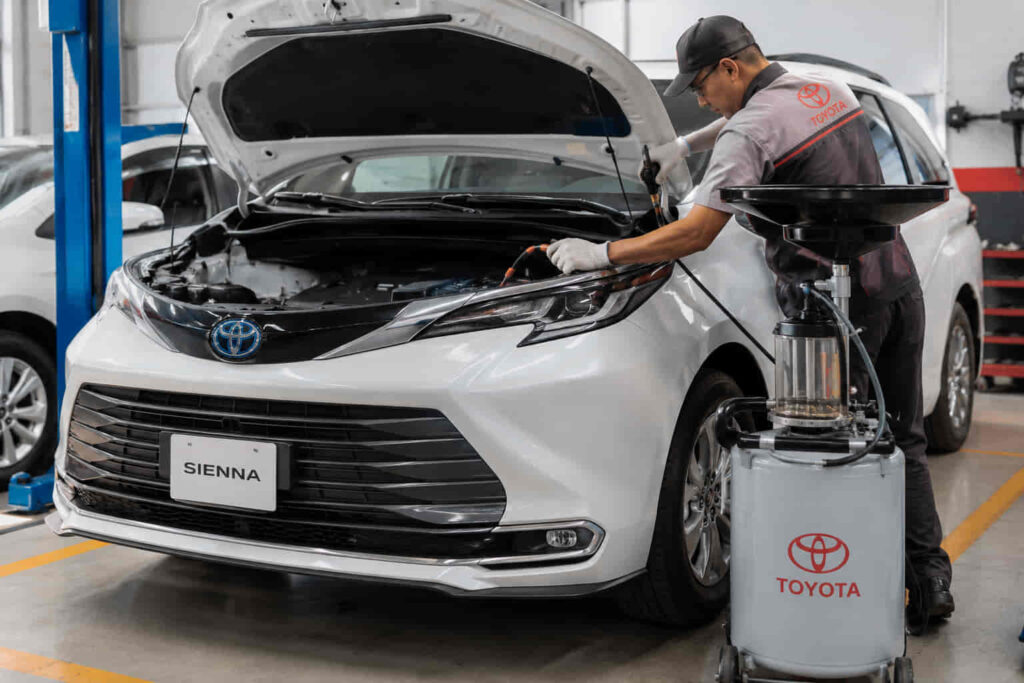
A Toyota Sienna oil change requires the correct engine oil specification, oil capacity, replacement interval, and filter for the vehicle’s model year and powertrain. These specifications are not identical across every Sienna generation. Earlier gasoline-powered models and newer hybrid models use different engine configurations, so owners should verify the requirements for their specific model year before draining or refilling the engine oil.
Changing the engine oil at the correct interval helps maintain lubrication between moving engine components, control heat and contaminants, and protect internal surfaces from excessive wear. The service involves more than simply draining old oil and adding new oil. A complete Toyota Sienna oil change includes identifying the specified oil viscosity, confirming the required capacity, replacing the appropriate oil filter, refilling the engine correctly, checking the final oil level and leaks, and resetting the maintenance reminder when applicable.
This guide explains the Toyota Sienna oil type, oil capacity, oil change interval, filter requirements, and oil change procedure. It also covers oil change costs, maintenance indicators, common service mistakes, and the factors that determine whether changing the oil yourself or using a professional service is the better option.
What Type of Oil Does a Toyota Sienna Take?
The correct oil for a Toyota Sienna depends on its model year, engine, and the viscosity specification assigned to that powertrain. Toyota has used different gasoline engines across Sienna generations, while 2021 and newer models use a hybrid powertrain. For this reason, an oil specification from one Sienna model year should not automatically be applied to another. The safest reference is the oil viscosity printed on the engine oil filler cap and specified in the owner’s manual for the exact model year.
Oil viscosity is expressed through an SAE grade such as 0W-20. The first number describes the oil’s low-temperature viscosity characteristics, while the second represents its viscosity at normal engine operating temperatures. Using the specified viscosity allows the oil to circulate through the engine as designed during startup while maintaining an appropriate lubricating film as engine temperature increases. Substituting another viscosity without checking Toyota’s specification can change lubrication behavior and should not be treated as an equivalent choice simply because the oil fits the engine.
Synthetic motor oil is closely associated with modern Toyota Sienna maintenance because low-viscosity oils must meet specific performance standards. However, the correct buying decision should be based on the viscosity and oil specification required for the specific Sienna, rather than on the word “synthetic” alone. Two bottles marketed as synthetic oil are not necessarily interchangeable when they have different viscosity grades or performance specifications.
Model year is therefore the first piece of information to check before purchasing engine oil. An owner maintaining an older gasoline Sienna and an owner servicing a newer hybrid Sienna may both be performing the same basic oil-change procedure, but they should not assume that the required oil is identical. This model-year distinction also applies when researching oil capacity and filters, because all three specifications are connected to the engine configuration rather than simply to the Toyota Sienna name.
How Much Oil Does a Toyota Sienna Take?
Toyota Sienna oil capacity also depends on the model year and engine, so there is no single oil-capacity figure that is correct for every Sienna. The relevant specification is normally the refill capacity for the specific engine when the oil filter is replaced. This distinction matters because an oil change removes oil from both the engine lubrication system and the replaceable filter, and the amount required to restore the proper level can differ between configurations.
Oil capacity should be treated as a refill reference rather than a reason to pour the entire stated quantity into the engine without checking the result. After draining the old oil and replacing the filter, add the specified amount according to the applicable Toyota documentation, run the engine as required to circulate the new oil, shut it off, allow the oil to settle, and verify the level according to the vehicle’s prescribed checking procedure. The final level provides an important confirmation that the engine has been filled correctly.
Overfilling and underfilling are both incorrect outcomes. Underfilling reduces the available oil supply for engine lubrication, while overfilling places the oil level above its intended operating range. This is why adding extra oil “to be safe” is not a valid maintenance practice. The correct objective is to bring the oil level into the specified range for that vehicle.
The same principle applies after the vehicle has been driven following an oil change. Check the oil level again when appropriate and inspect the filter and drain-plug areas for leakage. A measured refill followed by an oil-level check provides stronger confirmation than relying on oil capacity alone, especially when some residual oil remains inside the engine during a routine drain-and-fill service.
Because the exact viscosity and capacity values vary by Toyota Sienna model year and engine, they should be verified against the corresponding Toyota documentation before publication as year-specific specifications. This prevents a specification for one generation from being presented as universal information for every Sienna.
How Often Should You Change the Oil in a Toyota Sienna?
A Toyota Sienna should have its engine oil changed according to the maintenance interval specified for its model year and operating conditions. Oil-change timing should not be determined by oil appearance alone or by applying one mileage figure to every Sienna. Toyota maintenance requirements can distinguish between routine scheduled maintenance and vehicles operated under specific conditions, so the correct interval must be matched to the vehicle rather than inferred from a generic oil-change rule.
Mileage and elapsed time both matter when determining when an oil change is due. A Sienna that accumulates mileage quickly can reach its mileage-based service point first, while a low-mileage vehicle can reach a time-based maintenance point even though it has traveled relatively few miles. Engine oil remains exposed to heat cycles, moisture, combustion by-products, and contamination during operation, which means low annual mileage does not automatically justify leaving the same oil in the engine indefinitely.
Driving conditions can also change the maintenance requirements that apply to a Toyota Sienna. The important distinction is not simply whether the owner considers the vehicle’s use “normal” or “severe,” but whether its actual operating pattern matches a condition identified in the applicable Toyota maintenance documentation. Frequent short-distance operation, extensive idling, repeated low-speed use, towing, or operation under demanding environmental conditions can place different demands on the engine and lubrication system. The maintenance schedule for the exact model year should therefore determine whether an adjusted service interval applies.
The vehicle’s maintenance reminder is useful for tracking scheduled service, but it should not be treated as an oil-quality sensor. A maintenance reminder indicates that a scheduled maintenance point has been reached; it does not directly measure the physical condition of the engine oil. Resetting the reminder without completing the required service can therefore create an inaccurate maintenance record and make the next service point harder to track.
For owners maintaining a Sienna over the long term, consistency is more important than repeatedly changing oil earlier without a vehicle-specific reason. Record the date, mileage, oil specification, and filter used at each service. This creates a maintenance history that makes the next oil change easier to schedule and reduces the risk of using an interval intended for a different Toyota Sienna model year or operating condition.
What Oil Filter Does a Toyota Sienna Use?
The correct Toyota Sienna oil filter is determined by the model year and engine configuration, not by the Sienna name alone. Different generations can use different filter designs or part specifications, so an oil filter should be selected by matching it to the exact vehicle and engine. This is particularly important when comparing older gasoline Sienna models with later powertrains, because physical compatibility and filtration specifications must both be correct.
The oil filter removes contaminants from circulating engine oil while allowing the lubrication system to maintain the required flow. During operation, oil carries particles and other contaminants away from lubricated engine components. The filter captures applicable contaminants before the oil continues circulating through the system. An incorrect filter can introduce problems involving fitment, sealing, or filtration characteristics even when it appears similar to the correct part.
Replace the oil filter as part of the oil-change service when required by the applicable Toyota maintenance procedure. Installing fresh oil while leaving a filter due for replacement in service undermines the purpose of completing the scheduled maintenance as specified. The replacement filter must also be installed correctly because the sealing surface between the filter assembly and engine is a potential leak point after an oil change.
Filter installation requires attention to the old sealing components as well as the new filter. A seal or gasket that remains attached where it should have been removed can prevent the new filter from sealing correctly. Conversely, improper installation or incorrect tightening can damage components or allow oil to escape once the engine develops oil pressure. After completing the service, start the engine as prescribed and inspect the filter area for visible leakage before considering the oil change complete.
Oil type, oil capacity, oil-change interval, and oil-filter selection therefore form one connected maintenance process. Each specification should be identified from the same Toyota Sienna model year and powertrain context rather than collected independently from specifications belonging to different generations. This entity-to-attribute consistency is central to keeping the article semantically precise instead of treating “Toyota Sienna oil change” as one universal specification.
Read more: BMW Parking Lamp Malfunction
What Do You Need to Change the Oil in a Toyota Sienna?
To change the oil in a Toyota Sienna, you need the correct engine oil, matching oil filter, required sealing component, an oil drain container, and the tools needed to access and remove the drain plug and filter. The exact oil specification, filter, fastener requirements, and service tools should match the Sienna’s model year and powertrain. Confirming these items before starting prevents the vehicle from being left without engine oil while an incorrect filter, missing gasket, or unsuitable tool is replaced.
The engine oil and filter are the two primary service components. Use the oil viscosity and performance specification required for the specific Sienna rather than choosing oil based only on brand or a generic recommendation for Toyota vehicles. The replacement filter must likewise correspond to the engine configuration. Where the applicable service procedure calls for replacement of a drain-plug gasket or another sealing component, that component should be prepared before the old oil is drained.
The remaining equipment supports safe removal and controlled installation. An oil drain pan captures used oil, while the appropriate wrench or socket allows the drain plug to be removed without damaging its head. The correct filter tool is required when the filter design cannot be removed appropriately by hand. A funnel helps transfer new oil through the filler opening without spilling it onto surrounding engine components. If access requires raising the vehicle, use lifting and supporting equipment appropriate for the vehicle rather than relying on an unsupported lifting device while working underneath it.
Preparation also includes identifying the oil filler cap, drain location, filter location, and method used to check the final oil level before beginning the service. This converts the oil change from a sequence of improvised actions into a controlled maintenance procedure. The objective is not simply to replace old oil, but to complete the service without contamination, incorrect filling, damaged components, or leaks.
How Do You Change the Oil in a Toyota Sienna?
To change the oil in a Toyota Sienna, prepare the vehicle, drain the used engine oil, replace the oil filter and required sealing components, reinstall the drain plug correctly, add the specified new oil, and verify the final oil level and absence of leaks. The sequence is broadly consistent across Sienna models, but exact component locations, capacities, specifications, and installation requirements depend on model year and powertrain.
Start with the vehicle parked on a stable, appropriate surface and prepare it according to the service procedure for the specific model. Identify the engine oil filler cap before draining the crankcase and position the drain container beneath the drain plug. If the vehicle must be raised for access, it must be supported correctly before anyone works underneath it. Engine components and used oil can also remain hot after operation, so the service should begin under conditions that permit the oil to be drained without creating an unnecessary burn hazard.
Remove the drain plug and allow the used oil to flow into the drain container. The draining period should provide enough time for the bulk of the serviceable oil to leave the oil pan rather than reinstalling the plug immediately after the initial flow slows. Inspect the drain plug and its sealing component during this stage. Install the required replacement sealing component where specified and reinstall the drain plug according to the requirements for that particular Sienna. Excessive tightening is not a substitute for correct installation because it can damage the drain plug, threads, oil pan, or sealing surface.
Replace the oil filter as part of the applicable service procedure. Position the drain container to catch oil released from the filter area, remove the old filter, and check the mounting area before installing the replacement. The old filter seal must not remain on the sealing surface when a replacement design requires a new seal to contact that surface. Leaving an old seal in place can prevent proper sealing and create an oil leak after startup. Prepare and install the replacement filter according to its specified procedure rather than assuming that every Toyota Sienna filter uses the same installation method.
Add new engine oil only after confirming that the drain plug and filter have been installed. Use the oil specification established for the model year and begin with the applicable refill quantity rather than estimating the amount. The stated oil capacity is a reference for filling the engine; the final oil-level check remains necessary because the amount actually drained during routine service can vary.
After filling, reinstall the oil filler cap and complete the applicable circulation and level-check procedure. Allow the new oil to circulate through the lubrication system and filter, then check the oil level under the conditions specified for the vehicle. Add oil only when the reading indicates that additional oil is required. This final verification prevents both underfilling and overfilling.
Finish the oil change by inspecting the drain-plug and filter areas for leakage. A dry engine immediately after filling does not prove that every sealing point is correct because a leak can become apparent only after oil has circulated and the system has operated. Check the relevant areas after startup and verify the oil level again as appropriate. A Toyota Sienna oil change is complete only when the correct oil and filter have been installed, the final oil level is correct, and no leakage is present.
How Do You Reset the Oil Maintenance Light on a Toyota Sienna?
Reset the Toyota Sienna maintenance reminder only after completing the required oil change or scheduled maintenance. The exact reset procedure depends on the model year and instrument or multimedia interface, so one sequence should not be presented as universal for every Sienna generation. Older models can use controls associated with the odometer or trip display, while newer models can provide maintenance settings through the vehicle information display and steering-wheel controls.
The maintenance reminder serves as a service-tracking function rather than a direct measurement of engine oil condition. Resetting it starts a new maintenance tracking cycle, but it does not confirm that the correct oil was installed, that the engine contains the correct amount of oil, or that the filter was replaced. Complete the mechanical service first, verify the oil level and check for leaks, and then reset the reminder according to the procedure specified for the vehicle’s model year.
Owners should also distinguish a scheduled maintenance reminder from an engine oil pressure warning. An oil pressure warning can indicate a lubrication-system problem and should not be treated as a reminder that simply needs to be reset. If an oil-related warning remains illuminated after an oil change, verify the oil level and address the underlying condition rather than attempting to clear the warning as part of routine maintenance.
After resetting the scheduled maintenance reminder, confirm that the reset was accepted by the vehicle. Recording the service date and odometer reading at the same time creates a second maintenance reference independent of the dashboard reminder. This is particularly useful when the vehicle is serviced by different owners, repair shops, or dealerships over its service life.
How Much Does a Toyota Sienna Oil Change Cost?
Toyota Sienna oil change cost depends on the model year, required engine oil quantity and specification, oil filter, labor rate, and whether the service is completed at home or by a professional. A single price cannot accurately represent every Sienna because oil requirements differ between powertrains and professional labor prices vary by service provider and location.
A DIY oil change primarily consists of recurring costs for engine oil, an oil filter, and any required replacement sealing component. Tools such as a drain pan, appropriate sockets or wrenches, filter-removal equipment, funnel, and vehicle-support equipment should be treated separately as initial equipment costs when the owner does not already have them. This distinction makes a DIY cost comparison more accurate because reusable tools are not purchased for every subsequent oil change.
Professional oil-change pricing combines parts and labor and can include additional inspection or maintenance services. A dealership, independent repair facility, and quick-service oil-change business can therefore quote different prices for the same vehicle. The useful comparison is not simply which provider advertises the lowest starting price, but whether the quoted service includes the correct oil specification and quantity, the correct filter, required sealing components, labor, and applicable fees.
Oil capacity can have a direct effect on service cost because the amount of motor oil purchased is part of the material expense. Oil specification can also affect price because products meeting different viscosity and performance requirements do not necessarily have the same retail or service-shop price. For this reason, a cost estimate should first identify the exact Toyota Sienna model year and powertrain before calculating the expected oil-change expense.
DIY service can reduce recurring labor expense, but the financial comparison should include more than the price of oil and a filter. The owner must have a suitable work area, appropriate tools, the ability to lift and support the vehicle safely when required, and a method for handling used engine oil. Professional service incorporates labor and shop overhead but transfers the physical service work to the provider.
The better value depends on whether the owner can complete the Toyota Sienna oil change correctly and safely, not solely on the lowest immediate price. Using the wrong oil, incorrectly installing a filter, damaging a drain plug, underfilling the engine, or failing to identify a leak can outweigh the labor savings from a DIY oil change. Cost should therefore be evaluated alongside specification accuracy and service quality.
What Are the Signs That a Toyota Sienna Needs an Oil Change?
The most reliable indication that a Toyota Sienna needs an oil change is reaching the applicable maintenance interval for its model year and operating conditions. Owners should use the vehicle’s maintenance schedule, mileage, elapsed service time, and maintenance reminder as the primary references rather than waiting for the engine to produce noticeable symptoms. Scheduled oil changes are preventive maintenance, so the objective is to replace the oil at the specified service point before lubrication-related problems develop.
A maintenance reminder can indicate that a scheduled service point has arrived, but the reminder should be interpreted within the maintenance schedule for the specific Sienna. It does not analyze the engine oil and determine its remaining lubrication performance. The reminder therefore works best alongside a written service history containing the previous oil-change date and odometer reading. This prevents uncertainty when a reminder has previously been reset or the vehicle has changed owners.
Oil level also requires attention between scheduled oil changes. A level below the specified range does not automatically mean that the normal oil-change interval has arrived; it indicates that the engine does not currently contain the intended amount of oil. The correct response is to verify the level according to the vehicle procedure, identify why it is low when necessary, and correct the underlying condition. Simply performing an early oil change does not resolve an active leak or abnormal oil consumption.
Visible oil beneath the vehicle or around the drain plug and filter area also requires inspection, particularly after recent service. Leakage after an oil change can result from a sealing problem at a serviced component and can progressively reduce the amount of oil available to the engine. Inspecting these areas after the initial startup and again after the vehicle has been operated helps distinguish a properly completed oil change from a service that requires correction.
An oil pressure warning requires a different response from a scheduled maintenance reminder. Do not continue treating an oil pressure warning as an ordinary “oil change due” notification. Oil pressure is directly related to the engine lubrication system, so a warning that appears while the engine is operating requires appropriate diagnosis rather than simply resetting the dashboard indicator or assuming that fresh oil alone will solve the problem.
Oil color by itself is also an unreliable way to schedule a Toyota Sienna oil change. Engine oil changes appearance as it circulates and carries contaminants, so darker oil does not provide a precise measurement of remaining service life. The applicable maintenance schedule remains a stronger basis for routine oil-change timing than visual inspection alone.
What Toyota Sienna Oil Change Mistakes Should You Avoid?
Toyota Sienna oil change mistakes generally occur when the oil specification, fill quantity, filter installation, drain components, final verification, or maintenance record is handled incorrectly. Avoiding these errors requires matching every service decision to the same model year and powertrain rather than combining specifications from different Sienna generations.
Using the wrong engine oil is a fundamental specification error. Selecting a bottle simply because it is marketed as synthetic oil or recommended broadly for Toyota vehicles does not establish that it meets the requirements of a specific Sienna. Confirm the required viscosity and applicable performance specification before purchasing the oil. This keeps oil selection connected to the engine configuration for which Toyota established the requirement.
Adding the wrong amount of oil is another preventable error. Oil capacity provides the starting reference for refilling the engine, while the final level check confirms the actual result. Pouring in additional oil because “more protection” seems desirable can overfill the engine, while adding substantially less than required can leave insufficient oil available for normal lubrication. The objective is the specified oil level, not the maximum quantity that can physically enter the engine.
Incorrect oil-filter installation can create a leak even when the correct filter has been purchased. The filter mounting area must be checked during replacement, and the applicable sealing components must be installed as intended. An old seal left where it interferes with the new filter, an incorrectly positioned sealing component, or improper installation can allow oil to escape once the lubrication system is operating.
Drain-plug installation requires the same attention. Reusing a sealing component when the applicable procedure requires replacement, damaging the threads, or applying inappropriate tightening force can compromise the seal between the drain plug and oil pan. A drain plug should be installed according to the specification for the vehicle rather than tightened as aggressively as possible.
Skipping the post-service inspection is another significant mistake because it removes the final opportunity to identify an incorrect oil level or leak before normal driving resumes. After the new oil and filter are installed, complete the applicable circulation procedure, inspect the filter and drain areas, and verify the oil level. These checks confirm that the service produced the intended result instead of assuming success because fresh oil was added.
Resetting the maintenance reminder before completing the service can also create an inaccurate maintenance timeline. Reset the scheduled reminder after the oil change and record the mileage and date separately. A correctly completed Toyota Sienna oil change ends with verification and documentation, not with the last bottle of oil being poured into the engine.
Can You Change Toyota Sienna Oil Yourself?
You can change Toyota Sienna oil yourself when you have the correct specifications, appropriate tools, a safe working area, and enough mechanical knowledge to complete the service correctly. An oil change is a routine maintenance procedure, but successful DIY service requires more than draining the old oil and pouring new oil into the engine. The owner must correctly identify the oil specification, refill capacity, filter, sealing components, service procedure, and final oil-level requirements for the specific Sienna model year and powertrain.
The working environment is the first practical consideration. The vehicle needs to remain stable throughout the service, particularly when access to the drain plug or oil filter requires working underneath it. Appropriate lifting and supporting methods are therefore essential when additional clearance is necessary. An owner who cannot create a safe working environment should use a professional service facility rather than attempting to reduce the cost of the oil change by accepting additional safety risk.
Specification accuracy is equally important. A DIY oil change requires the owner to match the engine oil and filter to the vehicle instead of relying on specifications found for another Sienna generation. The refill quantity must then be treated as a reference and confirmed through the correct oil-level checking procedure. This is especially important across Toyota Sienna generations because differences in engines and powertrains mean that one oil specification or capacity should not automatically be applied to every model year.
DIY maintenance also requires the ability to identify an unsuccessful service. Oil leaking around the filter or drain plug, an incorrect oil-level reading, damaged components, or an oil-related warning after the service should not be ignored simply because the oil has already been replaced. The vehicle should be inspected and the cause corrected before the oil change is considered complete.
Professional oil service is the more appropriate choice when the owner lacks the required equipment, suitable workspace, vehicle-specific information, or confidence to perform the procedure correctly. The decision between DIY and professional service should be based on the ability to complete the oil change safely and accurately, not on labor cost alone. A correctly performed professional service provides greater value than a cheaper DIY oil change that introduces a leak, incorrect oil level, or damaged component.
How Should You Dispose of Used Toyota Sienna Engine Oil?
Used Toyota Sienna engine oil should be collected in a sealed container and delivered to an appropriate used-oil collection or recycling facility instead of being poured onto the ground, into drains, or discarded with ordinary liquid waste. Disposal is part of the oil-change process because every DIY service produces used motor oil and normally a used oil filter that must be handled after they are removed from the vehicle.
Start by draining the old engine oil into a container designed to capture it without unnecessary spills. Transfer the collected oil into a secure, leak-resistant container when the drain pan itself is not suitable for transportation. Keeping the used oil contained prevents it from spreading across the work area and makes transportation to an authorized collection point easier.
Avoid mixing used engine oil with unrelated automotive fluids or household chemicals. A container holding only used motor oil is easier for a collection or recycling facility to process than contaminated fluid containing coolant, solvents, fuel, or other substances. Keep the container closed during storage and transportation to reduce the risk of leakage.
The used oil filter also retains engine oil after removal. Allow it to drain in a controlled manner where appropriate and handle it according to the requirements of the collection facility or applicable local waste program. Requirements for accepting used filters and motor oil vary by location, so the owner should confirm the rules of the intended collection point before transportation.
Proper disposal completes the Toyota Sienna oil-change workflow. The service begins by identifying the correct oil and filter, continues through draining, replacement, refilling, and leak inspection, and ends when the used materials have been handled responsibly. An oil change is not fully complete when the engine has been refilled; the removed oil and filter must also leave the work area through an appropriate disposal or recycling route.