Finding the right Mopar OAT coolant equivalent protects your engine and prevents expensive cooling system damage. However, many drivers choose a replacement based only on coolant color. That approach often leads to compatibility problems because color does not identify the coolant’s chemical formula.
Mopar OAT coolant uses Organic Acid Technology and meets the MS-12106 specification for many Chrysler, Dodge, Jeep, and RAM vehicles. Manufacturers develop this coolant to protect aluminum components, reduce corrosion, and provide long service life. A compatible replacement must match the required specification instead of simply claiming to be an OAT coolant.
Several aftermarket brands offer products that claim compatibility with Mopar OAT coolant. Even so, not every product delivers the same level of protection or meets the same technical standards. Choosing the correct coolant helps maintain cooling efficiency, protects the water pump, and extends the life of the radiator and engine.
This guide explains what makes a coolant a true Mopar OAT coolant equivalent. You will also learn which products are compatible, whether Dex-Cool is a suitable substitute, and how to avoid common mistakes when replacing or mixing engine coolant.
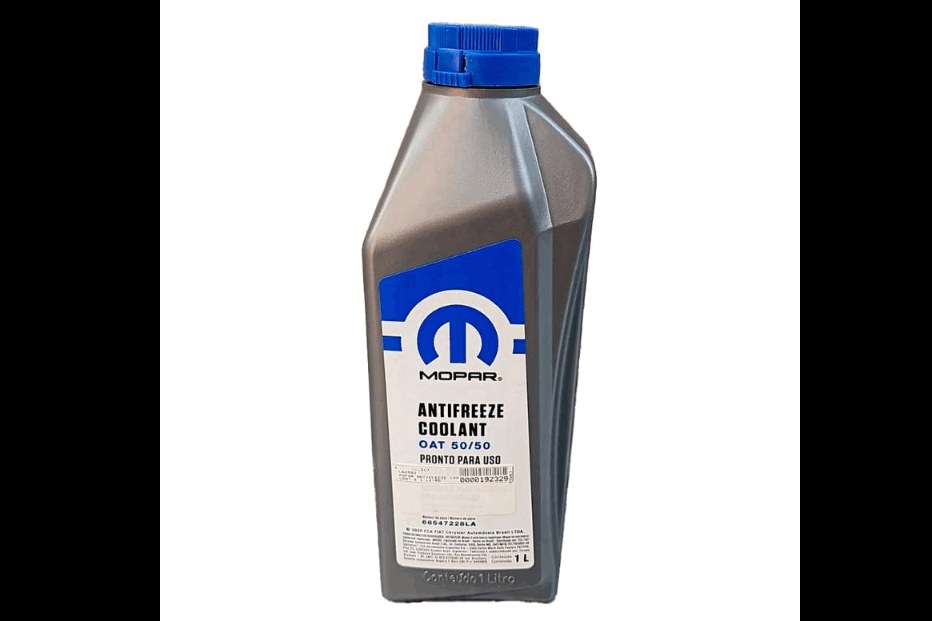
What Is a Mopar OAT Coolant Equivalent?
A Mopar OAT coolant equivalent is an engine coolant that matches the chemical technology and performance requirements of genuine Mopar OAT coolant. The most important requirement is compliance with the MS-12106 specification. This specification ensures the coolant delivers the corrosion protection, heat transfer, and long service life that Chrysler, Dodge, Jeep, and RAM vehicles require.
OAT stands for Organic Acid Technology, a coolant formula that uses organic corrosion inhibitors instead of traditional silicates and phosphates. This technology protects aluminum engine components, the radiator, and the water pump while reducing mineral deposits inside the cooling system. It also provides a much longer service interval than conventional coolant, making it the preferred choice for many modern Mopar vehicles.
Many drivers believe coolant color determines compatibility, but that assumption is incorrect. Manufacturers often use purple, orange, pink, or red dyes for different coolant formulas. Those colors help identify products, yet they do not guarantee the same chemical composition. Always verify the product label and confirm that it meets MS-12106 or the specification listed in your owner’s manual before purchasing a replacement.
A true Mopar OAT coolant equivalent should also use ethylene glycol as its base fluid and provide long-lasting protection against corrosion, rust, cavitation, and overheating. It must remain stable under high operating temperatures while protecting rubber seals, metal surfaces, and cooling system components. Products that only advertise “universal compatibility” without listing the required specification may not provide the same level of protection.
Choosing a coolant based on the correct specification instead of color or brand helps preserve engine reliability and prevents unnecessary cooling system repairs. Checking compatibility before adding or replacing coolant is the safest way to maintain your vehicle’s original cooling performance.
Which Coolants Are Compatible Alternatives to Mopar OAT?
Several manufacturers produce coolants that work as compatible alternatives to Mopar OAT coolant. However, compatibility depends on the product meeting the required technical specification instead of using a similar color or marketing label. Always confirm that the coolant matches your vehicle’s requirements before replacing the original fluid.
Genuine Mopar OAT coolant remains the safest option because engineers design it specifically for Chrysler, Dodge, Jeep, and RAM cooling systems. Even so, several aftermarket brands also manufacture products for vehicles that require the MS-12106 specification. Reputable manufacturers clearly identify approved applications and compatibility information on the product label.
Popular alternatives include products from Zerex, PEAK, and Prestone when they specifically state compatibility with vehicles requiring Mopar OAT coolant or the appropriate OEM specification. Some products use the same Organic Acid Technology while providing similar corrosion protection, thermal stability, and extended service intervals. Reading the technical data sheet offers more reliable information than relying on the front label alone.
Comparing product specifications also helps you choose the right replacement. Check whether the coolant is premixed or concentrated, verify its recommended service life, and confirm that it protects aluminum engines and modern cooling system components. These details have a greater impact on long-term performance than the coolant brand itself.
Selecting a high-quality Mopar OAT coolant equivalent reduces the risk of corrosion, overheating, and premature component wear. It also helps maintain consistent engine temperature under normal driving conditions. Before adding any replacement coolant, compare the product specifications with your owner’s manual to ensure full compatibility and reliable cooling system protection.
| Brand | Technology | MS-12106 Compatible* | Available Form |
|---|---|---|---|
| Mopar | OAT | Yes | Premixed / Concentrate |
| Zerex | OAT | Check product label | Premixed / Concentrate |
| PEAK | OAT | Check product label | Premixed |
| Prestone | OAT | Check product label | Premixed / Concentrate |
*Always verify the latest manufacturer specifications before purchasing because formulations and approvals may change.
Is Dex-Cool the Same as Mopar OAT Coolant?
Dex-Cool and Mopar OAT coolant share several characteristics, but they are not exactly the same product. Both use Organic Acid Technology to protect modern cooling systems and provide extended corrosion resistance. However, each manufacturer develops its coolant to meet specific engineering requirements and OEM specifications.
The biggest difference lies in the approval standard rather than the coolant technology. Mopar OAT coolant must satisfy the MS-12106 specification, which Chrysler, Dodge, Jeep, and RAM vehicles require. Dex-Cool, on the other hand, was originally developed for General Motors vehicles. Although both products belong to the OAT family, they do not always carry the same manufacturer approval.
Some Dex-Cool products may state that they are compatible with vehicles requiring Mopar OAT coolant. In that case, the product label should clearly identify the appropriate OEM specification or list compatible vehicle manufacturers. A similar coolant technology does not automatically guarantee the same level of protection for every engine or cooling system.
Using Dex-Cool without confirming compatibility may increase the risk of cooling system problems. An incompatible formula can reduce corrosion protection, shorten coolant service life, or affect seals and gaskets over time. These issues rarely appear immediately, but they can become expensive if the coolant remains in the system for several years.
The safest approach is to verify the manufacturer’s specifications before replacing Mopar OAT coolant with Dex-Cool. If the product explicitly meets the required standard for your vehicle, it can serve as a suitable replacement. Otherwise, choose a coolant that clearly states compliance with MS-12106 or another approved specification listed in your owner’s manual.
Can You Mix Mopar OAT with Other Types of Coolant?
Mixing Mopar OAT coolant with another coolant is not recommended unless the manufacturer specifically approves the combination. Different coolant technologies contain different corrosion inhibitors and additives. When those formulas interact, they can reduce cooling system protection and shorten the coolant’s service life.
Mixing OAT coolant with HOAT coolant often creates long-term maintenance problems. Both technologies protect engine components, but they rely on different chemical packages. Combining them can weaken corrosion resistance and reduce the effectiveness of the original coolant. As a result, the cooling system may require an earlier flush and refill.
The risk becomes even greater when OAT coolant mixes with conventional IAT coolant. Traditional IAT formulas contain silicates and other additives that do not work well with modern OAT chemistry. This combination may produce deposits inside the radiator, restrict coolant flow, and reduce heat transfer. Poor circulation can eventually increase engine operating temperatures.
Universal coolant also deserves careful attention. Some universal products support multiple vehicle brands, while others provide only limited compatibility. Always read the technical specification instead of trusting the marketing description. A product should clearly state that it meets the required OEM specification for your vehicle before you add it to the cooling system.
If you accidentally mix incompatible coolants, inspect the cooling system as soon as possible. A complete coolant flush removes the mixed solution and restores the correct chemical balance. Filling the system with a verified Mopar OAT coolant equivalent protects the radiator, water pump, heater core, and engine from unnecessary wear while maintaining reliable long-term performance.
How Do You Choose the Right Mopar OAT Coolant Equivalent?
Choosing the right Mopar OAT coolant equivalent starts with your vehicle’s specifications instead of the product brand. Every cooling system has unique requirements, and manufacturers design coolant formulas to meet those standards. Selecting a compatible product protects the engine, maintains cooling efficiency, and helps prevent premature component failure.
The first step is to check your owner’s manual or the coolant reservoir cap. Most Chrysler, Dodge, Jeep, and RAM vehicles that use Mopar OAT coolant require a product that meets the MS-12106 specification. A replacement should clearly display this approval or identify the vehicle applications that match your model. Verifying the specification eliminates guesswork and reduces the chance of using an incompatible coolant.
Next, confirm your vehicle’s model year before making a purchase. Some manufacturers changed coolant technology during different production years, even within the same vehicle line. A Jeep Wrangler or RAM 1500 built in one model year may require a different coolant than a similar model produced a few years earlier. Matching the coolant to the exact vehicle specification ensures reliable long-term protection.
You should also decide whether a premixed or concentrated coolant best fits your maintenance needs. Premixed coolant offers convenience because it already contains the correct ratio of coolant and deionized water. Concentrated coolant provides greater flexibility, but it requires proper mixing with distilled water before use. Using tap water may introduce minerals that reduce cooling system performance.
Finally, purchase coolant from a trusted manufacturer that provides complete technical information. Reliable brands publish specifications, compatibility lists, and product data sheets instead of relying on broad marketing claims. Choosing a verified Mopar OAT coolant equivalent gives your cooling system the protection it needs while reducing the risk of costly repairs in the future.
Which Vehicles Require Mopar OAT Coolant?
Many Chrysler, Dodge, Jeep, and RAM vehicles require Mopar OAT coolant to maintain proper cooling system performance. Manufacturers introduced this coolant in many models beginning with the 2013 model year, although the exact transition date varies by vehicle. Checking the owner’s manual remains the most reliable way to confirm the correct coolant for your engine.
Jeep models such as the Wrangler, Grand Cherokee, Cherokee, Compass, and Gladiator often use Mopar OAT coolant in newer production years. The coolant protects aluminum engine components, supports stable operating temperatures, and provides long-term corrosion resistance. Using the correct coolant also helps preserve the performance of the radiator, heater core, and water pump during daily driving and demanding off-road conditions.
Many Dodge vehicles also rely on Mopar OAT coolant, including the Charger, Challenger, Durango, and Journey. These models use advanced cooling systems that require a coolant formulated for extended service intervals. A compatible Mopar OAT coolant equivalent helps maintain the same level of protection when genuine Mopar coolant is unavailable.
RAM trucks, including the RAM 1500, RAM 2500, and RAM 3500, frequently require Mopar OAT coolant for both gasoline and diesel engines. Heavy-duty applications place additional demands on the cooling system, making the correct coolant specification especially important. A product that meets MS-12106 helps control engine temperature while protecting metal surfaces from corrosion and scale buildup.
Never assume that every vehicle from the same manufacturer uses identical coolant. Production changes, engine options, and model-year updates may require a different coolant technology. Before replacing or topping off the cooling system, verify your vehicle’s specification and choose a Mopar OAT coolant equivalent that fully matches the manufacturer’s requirements.
When Should Mopar OAT Coolant Be Replaced?
Replacing Mopar OAT coolant at the correct interval keeps the cooling system efficient and protects critical engine components from corrosion. Most vehicles that use Mopar OAT coolant recommend a replacement interval of up to 10 years or 150,000 miles for the factory fill. After the initial service, many manufacturers recommend replacing the coolant every 5 years or 100,000 miles. Always confirm the exact interval in your owner’s manual because service schedules vary by model and engine.
Time and mileage are not the only factors that determine when coolant should be replaced. Regular inspections can reveal early signs of coolant degradation before serious damage occurs. Discolored coolant, floating debris, rust particles, or an unusual odor often indicate that the coolant has lost its protective properties. Ignoring these warning signs may reduce cooling efficiency and increase wear throughout the system.
Engine performance can also reveal coolant problems. A rising temperature gauge, inconsistent engine temperature, frequent overheating, or poor heater performance may indicate that the coolant no longer transfers heat effectively. Air pockets, contamination, or internal corrosion can produce similar symptoms. Identifying these issues early helps prevent damage to the radiator, thermostat, water pump, and head gasket.
A complete coolant flush is the best option whenever the coolant reaches its service interval or becomes contaminated. Flushing removes old coolant, corrosion deposits, and residual additives that reduce system performance. Refilling the system with a verified Mopar OAT coolant equivalent restores the correct chemical balance and provides long-lasting protection for the entire cooling system.
Routine coolant maintenance costs far less than repairing an overheated engine. Following the recommended replacement schedule and using the correct coolant specification helps maintain reliable engine performance while extending the life of every cooling system component.
What Mistakes Should You Avoid When Replacing Mopar OAT Coolant?
Many cooling system problems result from simple maintenance mistakes rather than defective parts. Choosing the wrong coolant, mixing incompatible formulas, or skipping basic service procedures can reduce cooling performance and shorten the life of important components. Avoiding these common errors helps protect your engine and prevents unnecessary repair costs.
Many drivers choose coolant based only on its color. Although genuine Mopar OAT coolant is typically purple, coolant color is not an industry standard. Different manufacturers often use similar colors for completely different chemical formulas. Always verify the product specification instead of relying on appearance alone.
Mixing different coolant technologies is another common mistake. OAT, HOAT, and IAT coolants contain different additive packages that protect the cooling system in different ways. Combining these formulas may reduce corrosion resistance, create deposits, and shorten the coolant’s service life. If you plan to switch coolant types, perform a complete system flush before adding the new product.
Some vehicle owners also overlook the importance of water quality. Concentrated coolant requires distilled or deionized water to achieve the correct mixture. Tap water often contains minerals that leave deposits inside the radiator and engine passages. Those deposits reduce heat transfer and gradually decrease cooling system efficiency.
Ignoring small coolant leaks can also create larger problems over time. A low coolant level allows air to enter the cooling system, which reduces circulation and increases the risk of overheating. Inspect hoses, clamps, the radiator, and the coolant reservoir during every service interval to identify leaks before they become serious.
Following the manufacturer’s recommendations remains the safest approach. Select a Mopar OAT coolant equivalent that meets the required specification, replace it at the recommended interval, and inspect the cooling system regularly. These simple practices help maintain stable engine temperatures and extend the service life of the entire cooling system.
Frequently Asked Questions About Mopar OAT Coolant Equivalent
Can I use Prestone instead of Mopar OAT coolant?
Yes, but only if the product clearly states compatibility with your vehicle’s required OEM specification. Do not assume every Prestone coolant is suitable because different formulas serve different vehicle manufacturers and cooling system designs.
Is Zerex a good Mopar OAT coolant equivalent?
Several Zerex products are compatible with Mopar OAT applications when they meet the required specification. Always verify the product label and technical data sheet before adding the coolant to your vehicle.
Can I mix Mopar OAT coolant with Dex-Cool?
Avoid mixing the two products unless the manufacturer specifically confirms compatibility. Even though both belong to the OAT family, different additive packages may reduce long-term cooling system protection.
Does coolant color identify the correct replacement?
No. Coolant color is only a visual identifier selected by the manufacturer. Purple, orange, pink, or red coolant may use different chemical formulations. Always confirm the required specification instead of relying on color.
What is the best Mopar OAT coolant equivalent?
The best replacement is a coolant that fully meets the MS-12106 specification and matches your vehicle’s model year and engine requirements. A verified specification provides more reliable protection than choosing a product based only on brand recognition.
Conclusion
Choosing the correct Mopar OAT coolant equivalent requires more than selecting a coolant with a similar color or an OAT label. The most important factor is matching the specification recommended by your vehicle manufacturer. A coolant that meets MS-12106 delivers the corrosion protection, thermal stability, and long service life required for modern Chrysler, Dodge, Jeep, and RAM cooling systems.
Before replacing or topping off your coolant, verify your vehicle’s model year, engine, and OEM requirements. If you decide to use an aftermarket product, choose one that clearly lists compatible vehicle applications and approved specifications. Avoid mixing different coolant technologies unless the manufacturer specifically approves the combination.
Following these recommendations helps maintain stable engine temperatures, reduces the risk of corrosion, and extends the service life of the radiator, water pump, heater core, and other cooling system components. A compatible Mopar OAT coolant equivalent protects your engine today while helping you avoid expensive repairs in the future.