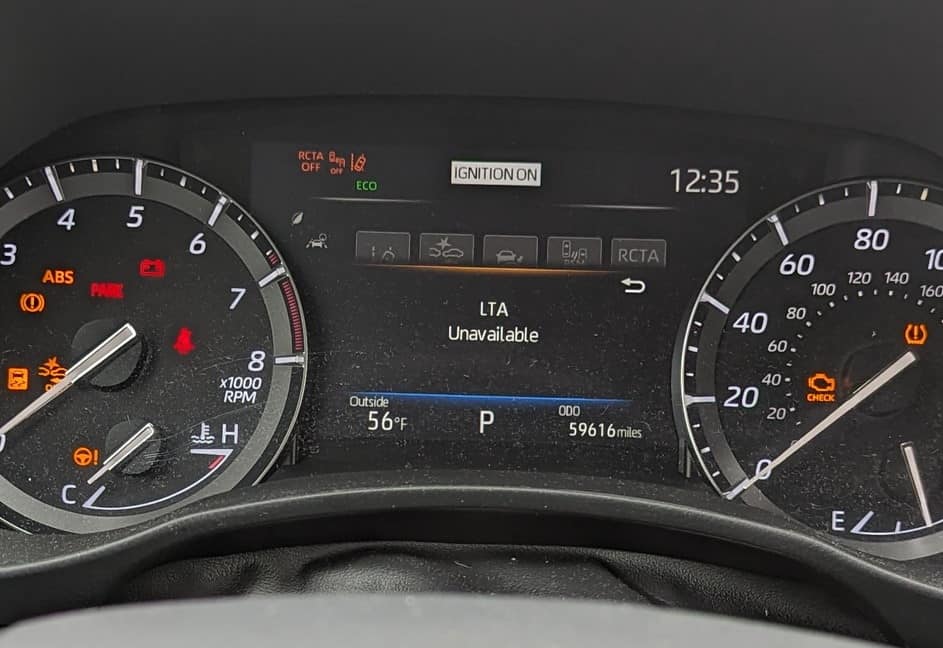
Have you recently started your Toyota only to see a warning message that says “Toyota LTA Malfunction” on the dashboard? If so, you are not alone. This warning can be alarming, especially because it affects one of the vehicle’s advanced driver assistance features designed to improve safety and reduce driver fatigue.
Lane Tracing Assist (LTA) is part of Toyota Safety Sense, a suite of technologies that helps keep your vehicle centered within its lane while working alongside Dynamic Radar Cruise Control. When the system detects a problem with its camera, radar sensor, software, or related components, it may display a Toyota LTA Malfunction warning and temporarily disable certain safety functions.
For many drivers, the biggest concern is whether the vehicle is still safe to drive and how expensive the repair might be. In some cases, the issue may be as simple as a dirty windshield or blocked sensor. In others, professional calibration or component replacement may be required.
This guide explains the most common causes of a Toyota LTA Malfunction warning, how to troubleshoot the problem, when to visit a Toyota dealer, and the typical repair costs you can expect. By understanding the root cause, you can make informed decisions and restore your vehicle’s safety systems as quickly as possible.
What Is Toyota LTA Malfunction?
Before troubleshooting the warning, it is important to understand what the Lane Tracing Assist system does and why it plays such a significant role in modern Toyota vehicles.
Lane Tracing Assist, commonly known as LTA, is one of the advanced safety features included in Toyota Safety Sense. The system is designed to help drivers maintain their position within a clearly marked lane by using a forward facing camera and radar sensors. When activated alongside Dynamic Radar Cruise Control, LTA can provide subtle steering assistance to help keep the vehicle centered on the road.
The technology continuously monitors lane markings and the vehicle’s position. If the system detects that the vehicle is drifting toward the edge of the lane without a turn signal being used, it can provide steering input and visual alerts to assist the driver. Although LTA improves driving comfort and safety, it is not a self driving system. Drivers must remain attentive and keep their hands on the steering wheel at all times.
A Toyota LTA Malfunction warning appears when the vehicle detects an issue that prevents the Lane Tracing Assist system from operating correctly. When this occurs, the system may temporarily disable itself to avoid providing inaccurate steering assistance. Depending on the severity of the issue, other safety features connected to Toyota Safety Sense may also become unavailable.
Many drivers notice messages such as “LTA Malfunction Visit Your Dealer” or “Lane Tracing Assist Unavailable” displayed on the instrument cluster. While these warnings may sound serious, they do not always indicate a major mechanical failure. Environmental conditions, sensor obstructions, software glitches, and calibration issues can all trigger the warning.
Understanding how the system works is the first step toward identifying the cause and determining the most effective solution.
Common Causes of Toyota LTA Malfunction
Several factors can trigger a Toyota LTA Malfunction warning. Some issues can be resolved quickly at home, while others require professional diagnostics and repair.
One of the most common causes is a dirty or obstructed front camera. The camera is typically mounted behind the windshield near the rearview mirror. Dirt, dust, mud, heavy rain, snow, ice, or even insect debris can block the camera’s view of the road. Since the system relies on a clear image to detect lane markings, any obstruction can interfere with normal operation and trigger a warning message.
Another frequent cause is windshield replacement without proper calibration. Modern Toyota vehicles equipped with Lane Tracing Assist require camera calibration whenever the windshield is replaced. Even a slight change in camera position can affect the system’s accuracy. Many vehicle owners experience LTA warnings shortly after having a windshield replaced by a third party repair shop that lacks ADAS calibration equipment.
Front radar sensor issues can also lead to system malfunction. The radar sensor is usually located behind the Toyota emblem or within the front grille. If the sensor becomes dirty, damaged, misaligned, or obstructed by road debris, the vehicle may disable multiple driver assistance features, including Lane Tracing Assist.
Battery related problems are another surprisingly common cause. Modern vehicles depend heavily on stable electrical power. A weak battery, low voltage condition, or recent battery replacement can sometimes generate temporary communication errors between electronic control modules. As a result, the vehicle may display various warning messages, including Toyota LTA Malfunction.
Software issues may also be responsible. Like many advanced vehicle systems, Toyota Safety Sense relies on software programming to process sensor data and control vehicle functions. Occasionally, software bugs or outdated firmware can cause false warnings. In some cases, Toyota releases service updates to address these concerns.
Finally, physical damage to the camera, radar sensor, wiring harness, or control modules can trigger persistent malfunction warnings. This is more likely after a collision, even a minor one that appears to cause little visible damage.
Is It Safe to Drive With a Toyota LTA Malfunction Warning?
One of the first questions most drivers ask after seeing the warning message is whether it is safe to continue driving. The answer depends on the underlying cause of the problem and whether other vehicle systems are affected.
In many situations, the vehicle remains fully drivable. The engine, transmission, brakes, and steering typically continue functioning normally because Lane Tracing Assist is a driver assistance feature rather than a core driving system. If the warning appears due to temporary weather conditions or a dirty camera lens, the vehicle may operate without any noticeable changes beyond the loss of lane keeping assistance.
However, drivers should understand that the absence of Lane Tracing Assist reduces an additional layer of safety designed to help prevent unintended lane departures. During long highway trips or heavy traffic conditions, the lack of steering assistance may increase driver fatigue.
Extra caution is required if the Toyota LTA Malfunction warning appears together with other alerts. Messages involving the Pre Collision System, Dynamic Radar Cruise Control, Blind Spot Monitoring, or additional safety systems may indicate a larger issue affecting multiple sensors or communication networks within the vehicle.
If you notice abnormal vehicle behavior, multiple warning lights, recent collision damage, or recurring alerts that do not disappear after restarting the vehicle, scheduling a professional inspection is strongly recommended. Prompt diagnosis can prevent minor issues from developing into more expensive repairs and ensure that all safety features continue operating as intended.
In most cases, the safest approach is to treat the warning seriously, investigate the cause as soon as possible, and restore full functionality to the Toyota Safety Sense system.
How to Fix Toyota LTA Malfunction at Home
Before scheduling a service appointment, there are several troubleshooting steps you can perform yourself. While these methods may not resolve every issue, they can help identify simple causes and potentially eliminate the warning without incurring repair costs.
Start by inspecting and cleaning the windshield area directly in front of the forward facing camera. Dirt, road grime, water spots, and insect residue can interfere with the camera’s ability to detect lane markings accurately. Use a high quality glass cleaner and ensure the area around the camera housing is completely clear.
Next, examine the front radar sensor. Depending on the Toyota model, the radar unit is often positioned behind the front grille or integrated into the Toyota emblem. Remove any dirt, snow, ice, leaves, or debris that may be obstructing the sensor. Even a small amount of buildup can affect the sensor’s performance and trigger warning messages.
Restarting the vehicle can also help resolve temporary software communication errors. Turn the engine off, wait several minutes, and restart the vehicle. In some cases, a temporary malfunction may clear itself after the system performs a fresh self diagnostic check.
Checking the battery condition is another important step. Low voltage can create unexpected electronic issues throughout the vehicle. If the battery is several years old or has recently shown signs of weakness, testing its voltage may reveal the source of the problem. Replacing a failing battery often resolves multiple warning messages that appear unrelated.
Drivers with access to an OBD2 scanner can read diagnostic trouble codes stored in the vehicle’s computer system. These codes provide valuable information about which component is causing the warning. Knowing the exact fault code can save time and prevent unnecessary repairs.
If the warning disappears after performing these checks but returns repeatedly, the vehicle likely requires professional diagnosis and calibration.
When Should You Visit a Toyota Dealer?
Although some Toyota LTA Malfunction warnings are caused by temporary conditions, others require specialized equipment and expertise that only qualified technicians can provide.
A dealership or certified repair facility should inspect the vehicle if the warning remains active for several days despite cleaning the camera and radar sensors. Persistent alerts often indicate deeper issues involving calibration, electrical systems, software, or damaged components.
You should also seek professional service if the warning appeared shortly after replacing the windshield. Modern ADAS systems require precise calibration procedures that cannot be completed with basic tools. Without proper calibration, the camera may misinterpret lane markings and generate inaccurate steering corrections.
Another situation that warrants immediate inspection is a recent collision. Even a low speed impact can slightly shift sensor alignment without causing visible exterior damage. Because Lane Tracing Assist relies on highly accurate measurements, even minor misalignment can trigger system errors.
Drivers should also pay close attention if multiple warnings appear simultaneously. Messages involving the Pre Collision System, Dynamic Radar Cruise Control, Blind Spot Monitoring, or Lane Departure Alert may indicate a shared sensor failure or communication issue affecting the broader Toyota Safety Sense network.
During a professional inspection, technicians typically begin by scanning the vehicle for diagnostic trouble codes. They then inspect the camera, radar sensor, wiring, and control modules. If necessary, software updates are installed and calibration procedures are performed to restore proper system operation.
Seeking professional assistance early can often prevent more extensive repairs and help ensure that all driver assistance features continue to operate safely and accurately.
Toyota LTA Malfunction Repair Costs
Repair costs for a Toyota LTA Malfunction can vary significantly depending on the underlying cause. Some issues require only a simple cleaning procedure, while others involve replacing expensive electronic components.
If the problem is related to camera calibration after a windshield replacement, owners can generally expect to pay between $100 and $400. The exact amount depends on the vehicle model, local labor rates, and the complexity of the calibration process.
Software updates are typically among the least expensive solutions. Depending on warranty coverage and dealership policies, software related repairs may cost anywhere from $50 to $200. In some cases, manufacturers provide updates free of charge if they address a known issue.
Replacing the forward facing camera is considerably more expensive. Costs often range from $500 to $1,500, including parts, installation, and calibration. Premium Toyota models equipped with advanced driver assistance technology may fall toward the higher end of this range.
Radar sensor replacement is usually one of the most costly repairs. Depending on the model and sensor type, total expenses can range from $700 to $2,000 or more. This estimate generally includes recalibration after installation.
Battery replacement is relatively affordable by comparison. Most Toyota owners can expect to spend between $100 and $350 depending on battery specifications and installation charges.
Diagnostic fees should also be considered. Many dealerships charge between $80 and $200 for a comprehensive system scan and inspection. While some drivers hesitate to pay diagnostic fees, accurate diagnosis often prevents unnecessary part replacements and reduces overall repair costs.
Vehicle warranty coverage can significantly affect out of pocket expenses. If the vehicle is still covered by the factory warranty or an extended protection plan, some repairs may be partially or fully covered. Owners should review their warranty documentation before authorizing major repairs.
Understanding the potential costs associated with a Toyota LTA Malfunction helps drivers make informed decisions and avoid unexpected repair bills while ensuring that critical safety systems remain fully operational.
Toyota Models Most Commonly Associated with LTA Malfunction
The Toyota LTA Malfunction warning is not limited to a single vehicle model. Any Toyota equipped with Toyota Safety Sense and Lane Tracing Assist technology can potentially experience the issue. However, certain models appear more frequently in owner reports due to their popularity and widespread use of advanced driver assistance systems.
The Toyota Corolla is one of the most commonly discussed models when it comes to LTA related warnings. Since newer Corolla generations feature extensive safety technology as standard equipment, owners occasionally encounter camera calibration issues following windshield replacement or front end repairs.
The Toyota Camry is another model frequently associated with Lane Tracing Assist warnings. Because many Camry owners use the vehicle for long distance commuting, the LTA system is often activated for extended periods, making any malfunction more noticeable. Camera obstructions, radar sensor contamination, and software related concerns are among the most commonly reported causes.
Toyota RAV4 owners also report LTA Malfunction messages from time to time. As one of Toyota’s best selling SUVs, the RAV4 is often exposed to varying road and weather conditions that can affect camera and radar performance. Mud, snow, and road debris are frequent contributors to temporary warnings.
The Toyota Highlander incorporates sophisticated driver assistance features that rely heavily on sensor accuracy. Following minor front end collisions or windshield replacements, recalibration may be necessary to restore proper system functionality.
Hybrid models such as the Toyota Prius also utilize advanced safety technologies that depend on precise sensor communication. Although the systems are generally reliable, low battery voltage conditions or software anomalies can occasionally trigger warning messages.
It is important to remember that the appearance of a Toyota LTA Malfunction warning does not necessarily indicate a design flaw in any specific model. In most cases, the warning reflects the system’s built in safety mechanisms, which are designed to disable assistance features whenever sensor accuracy cannot be guaranteed.
Frequently Asked Questions About Toyota LTA Malfunction
Can a Toyota LTA Malfunction warning go away on its own?
Yes. In some situations, the warning disappears after the camera or radar sensor regains a clear view of the road. Temporary weather conditions such as heavy rain, fog, snow, or direct sunlight can interfere with system operation and trigger a warning that clears once conditions improve.
Does a dirty windshield cause Toyota LTA Malfunction?
Absolutely. The forward facing camera relies on a clear view through the windshield to identify lane markings. Dirt, dust, water spots, insect residue, and other contaminants can reduce visibility and cause the system to disable itself temporarily.
Is it safe to drive with a Toyota LTA Malfunction warning?
In many cases, yes. The vehicle’s primary driving systems typically continue to operate normally. However, Lane Tracing Assist and potentially other driver assistance features may become unavailable. Drivers should remain attentive and schedule an inspection if the warning persists.
Why did the warning appear after replacing my windshield?
The camera mounted behind the windshield often requires recalibration after replacement. Without proper calibration, the system may be unable to accurately detect lane markings, resulting in a Toyota LTA Malfunction message.
Can a weak battery trigger Toyota LTA Malfunction?
Yes. Modern Toyota vehicles rely on stable voltage levels to operate electronic systems correctly. A weak battery or voltage fluctuations can create communication errors that trigger multiple warning messages.
How much does it cost to fix Toyota LTA Malfunction?
Repair costs vary widely depending on the cause. Simple issues may require no more than cleaning a sensor, while major repairs involving cameras or radar units can cost several hundred or even thousands of dollars.
Do I need a dealer to diagnose the problem?
Not always. Basic troubleshooting can often be performed at home. However, persistent warnings, calibration requirements, software updates, and component replacements generally require professional diagnostic equipment and specialized expertise.
Conclusion
A Toyota LTA Malfunction warning can be concerning, especially when it appears unexpectedly during everyday driving. Because Lane Tracing Assist is an important part of Toyota Safety Sense, many drivers worry about potential safety risks, expensive repairs, and whether their vehicle remains safe to operate.
Fortunately, the warning does not always indicate a serious problem. In many cases, the issue is caused by a dirty windshield, blocked radar sensor, temporary weather conditions, or minor electrical irregularities. Simple inspections and basic maintenance may be enough to restore normal operation.
However, persistent warnings should never be ignored. Problems involving camera calibration, radar alignment, software faults, or damaged components require prompt attention to ensure that all driver assistance systems function as intended. Addressing these issues early can help prevent more expensive repairs and maintain the safety benefits that modern Toyota vehicles are designed to provide.
If you are currently experiencing a Toyota LTA Malfunction warning, begin with the basic troubleshooting steps outlined in this guide. If the problem continues, schedule a professional inspection to identify the root cause and restore your vehicle’s advanced safety features. A properly functioning Lane Tracing Assist system not only improves driving confidence but also contributes to a safer and more comfortable driving experience.