A car horn is one of those features most drivers rarely think about until it suddenly stops working. However, when you need to alert another driver, warn a pedestrian, or avoid a potential accident, a functioning horn becomes an essential safety component. If your Subaru horn is not working, the issue can range from a simple blown fuse to a more complex electrical problem involving the steering wheel or body control module.
Many Subaru owners are surprised to discover that diagnosing a horn problem is not always straightforward. In some cases, the horn may stop working entirely without any warning signs. In others, it may work intermittently, making the issue difficult to identify. The problem could be related to the horn itself, a faulty relay, damaged wiring, a defective horn switch, or even a worn clock spring inside the steering column.
The good news is that many horn-related issues can be diagnosed without advanced mechanical knowledge. Understanding the most common causes can help you determine whether the repair is a quick and inexpensive fix or something that requires professional attention.
In this guide, we’ll explore the most common reasons why a Subaru horn stops working, how to troubleshoot each potential cause, and what you can expect to pay for repairs. Whether you drive a Forester, Outback, Crosstrek, WRX, or Impreza, these troubleshooting steps can help get your horn working properly again.
1. Blown Horn Fuse
One of the most common reasons a Subaru horn stops working is a blown fuse. The horn circuit is protected by a fuse designed to prevent damage to the vehicle’s electrical system when a power surge or short circuit occurs. When the fuse fails, power can no longer reach the horn, resulting in complete loss of functionality.
A blown fuse typically causes the horn to become completely silent. Unlike other horn-related issues that may create intermittent operation, a failed fuse usually prevents the horn from working altogether. Fortunately, this is also one of the easiest and least expensive problems to diagnose and repair.
To check the fuse, start by locating the fuse box. Most Subaru models have one fuse box inside the cabin and another in the engine compartment. Consult your owner’s manual to identify the exact location of the horn fuse. Once located, remove the fuse and inspect the metal strip inside. If the strip appears broken or burnt, the fuse has failed and should be replaced.
When replacing a fuse, always use one with the same amperage rating specified by Subaru. Installing a higher-rated fuse may create a safety risk and potentially damage other electrical components.
In many cases, replacing a blown fuse immediately restores horn operation. However, if the replacement fuse blows again shortly afterward, an underlying electrical fault may be present. Damaged wiring, moisture intrusion, or a short circuit elsewhere in the system could be causing repeated failures.
The good news for Subaru owners is that fuse replacement is inexpensive. Most replacement fuses cost only a few dollars, making this the first component that should be inspected whenever the horn stops working.
2. Faulty Horn Relay
If the fuse is intact but the horn still refuses to work, the next component to investigate is the horn relay. The relay functions as an electronic switch that controls the flow of power from the battery to the horn. When you press the horn button on the steering wheel, the relay receives a signal and activates the horn circuit.
Over time, relay contacts can wear out due to age, heat exposure, vibration, and repeated use. When this happens, the relay may fail to deliver consistent power to the horn. In some situations, the horn may work intermittently before stopping completely.
A faulty relay often produces symptoms that can be confusing for vehicle owners. You may hear a clicking sound from the fuse box when pressing the horn, yet no sound comes from the horn itself. In other cases, the horn may work only occasionally, particularly during certain weather conditions or after the vehicle has been running for a while.
Testing the relay is relatively simple. Many Subaru models use identical relays for different vehicle systems. By temporarily swapping the horn relay with another matching relay, you can determine whether the relay is the source of the problem. If the horn begins functioning after the swap, the original relay is likely defective.
Replacing a horn relay is generally inexpensive and requires minimal labor. Most relays are easy to access and can be installed within minutes. Because of their affordability and ease of replacement, relays are often one of the first components mechanics check during horn diagnostics.
Ignoring a failing relay can eventually leave you without a functioning horn when you need it most. Addressing the issue early helps prevent inconvenience and ensures your Subaru remains safe to operate in busy traffic situations.
3. Failed Horn Unit
Sometimes the issue is not with the electrical system at all. The horn itself may simply have reached the end of its service life. Like any electromechanical component, a horn can wear out over time due to exposure to moisture, road debris, corrosion, and constant temperature changes.
Most Subaru horns are mounted near the front of the vehicle, where they are exposed to harsh environmental conditions. Water, salt, dirt, and debris can gradually damage internal components and reduce the horn’s ability to produce sound. In colder climates, corrosion is particularly common and may eventually cause complete horn failure.
A failed horn unit typically produces no sound despite having proper electrical power. If the fuse and relay both test good, technicians often perform a direct power test. This involves supplying battery voltage directly to the horn. If the horn remains silent during this test, replacement is usually necessary.
Drivers sometimes notice warning signs before total failure occurs. The horn may sound weaker than usual, produce a distorted tone, or work inconsistently. These symptoms often indicate that internal components are deteriorating and that complete failure may not be far away.
Fortunately, replacing a horn assembly is usually a straightforward repair. Depending on the Subaru model, access may require removal of a grille panel or front bumper trim. Once exposed, the old horn can typically be disconnected and replaced without extensive disassembly.
The cost of horn replacement varies depending on the model and whether genuine Subaru parts or aftermarket components are used. Although the repair is more expensive than replacing a fuse or relay, it remains relatively affordable compared to many other automotive electrical repairs. More importantly, restoring proper horn function ensures that one of your vehicle’s most important safety features remains available when needed.
4. Defective Horn Switch
If the fuse, relay, and horn unit are all functioning correctly, the problem may be located inside the steering wheel. The horn switch is responsible for sending the signal that activates the horn whenever the driver presses the horn pad. Although this component is designed to last for many years, constant use and normal wear can eventually lead to failure.
A defective horn switch can produce a variety of symptoms. In some cases, the horn may only work when pressure is applied to a specific area of the steering wheel. Other drivers may notice that the horn responds intermittently or stops working completely. Because the switch is activated every time the horn is used, repeated mechanical stress can gradually wear down internal contacts.
Diagnosing a faulty horn switch often requires electrical testing. A technician may check for continuity within the switch assembly while pressing the horn button. If the circuit fails to complete properly, the switch may need replacement. Some Subaru models allow individual switch components to be replaced, while others may require replacement of a larger steering wheel assembly.
Many drivers overlook the horn switch because it is hidden behind the steering wheel cover. However, this component plays a critical role in the horn circuit. When it fails, even a perfectly functioning horn and electrical system will not receive the signal necessary to produce sound.
Repair costs can vary depending on vehicle model and labor requirements. Accessing the switch may involve partial steering wheel disassembly, which increases labor time. Despite the additional work, replacing a faulty horn switch is often a permanent solution that restores reliable horn operation.
Drivers should not ignore symptoms of a failing switch, especially if the horn works only occasionally. Intermittent operation can quickly become complete failure, leaving you without a vital safety feature during emergency situations.
5. Broken Clock Spring
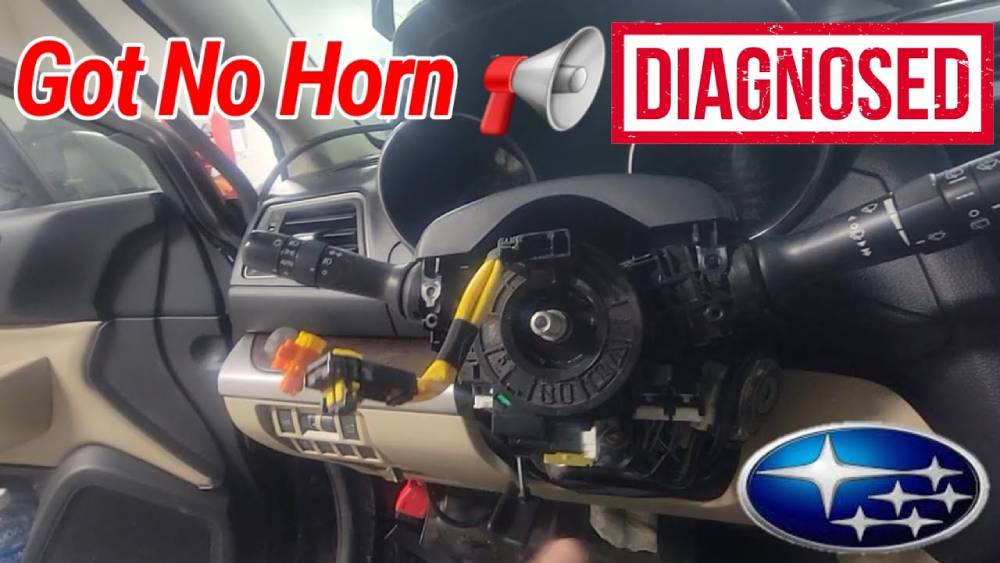
Among the more serious causes of a Subaru horn not working is a damaged clock spring. The clock spring is an electrical connector located inside the steering column behind the steering wheel. Its purpose is to maintain electrical connections while allowing the steering wheel to rotate freely.
Every time you turn the steering wheel, the clock spring flexes and moves. After years of use, the internal ribbon cable can wear out, crack, or break. When this occurs, electrical signals can no longer travel properly between the steering wheel controls and the vehicle’s electrical system.
A broken clock spring often causes more than just horn failure. One of the most common warning signs is the appearance of an airbag warning light on the dashboard. Drivers may also notice that steering wheel-mounted controls, such as audio buttons, cruise control functions, or hands-free communication features, stop working at the same time.
Because multiple systems can be affected simultaneously, a faulty clock spring is often easier to identify than other horn-related problems. If your horn suddenly stops working and other steering wheel functions fail as well, the clock spring becomes a likely suspect.
Replacing a clock spring requires special care because the airbag system must be handled correctly during the repair process. Improper procedures can damage sensitive components or create safety risks. For this reason, many Subaru owners choose professional installation rather than attempting a do-it-yourself repair.
Although clock spring replacement is more expensive than replacing a fuse or relay, addressing the problem promptly is important. Delaying repairs may affect not only horn operation but also critical safety systems designed to protect vehicle occupants during a collision.
6. Damaged Wiring or Corroded Connections
Electrical wiring serves as the pathway that delivers power and signals throughout the horn system. When wires become damaged or connectors develop corrosion, the flow of electricity can be interrupted, preventing the horn from functioning correctly.
Wiring problems can develop for several reasons. Exposure to moisture, road salt, extreme temperatures, and vibration can gradually degrade electrical connections. In some cases, rodents may chew through wiring harnesses located within the engine compartment. Physical damage from previous repairs or minor accidents can also affect the horn circuit.
Unlike a blown fuse or failed horn unit, wiring issues often create inconsistent symptoms. The horn may work intermittently, stop functioning during wet weather, or operate only under certain conditions. Some drivers experience repeated fuse failures, which may indicate a short circuit somewhere within the wiring system.
A visual inspection is often the first step in diagnosing wiring problems. Technicians examine connectors, grounding points, and wiring harnesses for signs of corrosion, broken insulation, loose connections, or physical damage. Areas near the front bumper deserve special attention because they are exposed to water, dirt, and road debris.
Corroded terminals can sometimes be cleaned and restored, eliminating the need for extensive repairs. More severe damage may require replacing sections of wiring or installing new connectors. The complexity of the repair depends on the location and extent of the damage.
Electrical issues can be frustrating because they are not always immediately visible. However, identifying and repairing damaged wiring is essential for long-term reliability. Even a small wiring fault can eventually affect other vehicle systems if left unresolved. Restoring clean and secure electrical connections ensures that the horn receives the power and signals it needs to operate consistently whenever required.
7. Body Control Module (BCM) or Electrical System Issues
Modern Subaru vehicles rely heavily on electronic control systems to manage everything from lighting and power accessories to safety features and communication between various components. At the center of many of these functions is the Body Control Module, commonly known as the BCM. Although BCM-related horn problems are less common than blown fuses or faulty relays, they can be among the most challenging issues to diagnose.
The BCM acts as a central hub that processes signals from different vehicle systems and controls specific electrical functions. In certain Subaru models, the horn circuit may depend on signals routed through the BCM. If the module develops a fault, communication errors can prevent the horn from operating correctly even when all mechanical and electrical components appear functional.
Symptoms of BCM-related issues often extend beyond the horn itself. Drivers may notice multiple electrical problems occurring simultaneously. Interior lights may behave unpredictably, power locks may malfunction, dashboard warning lights may appear, or other electronic features may stop responding as expected. When several unrelated electrical systems begin experiencing problems at the same time, the BCM becomes a potential source of concern.
Diagnosing a BCM problem typically requires professional equipment capable of reading diagnostic trouble codes and monitoring communication between vehicle modules. Unlike a fuse or relay that can be visually inspected, electronic modules often require advanced testing procedures to identify the exact cause of failure.
In some situations, the solution may be as simple as a software update that corrects communication errors. More serious cases may require module reprogramming, repair, or replacement. Because BCM replacement often involves programming the new unit to communicate with the vehicle, professional service is usually necessary.
While BCM failures are relatively rare, they should not be ignored. Electrical communication problems can affect multiple systems throughout the vehicle and may eventually lead to additional performance or safety concerns if left unresolved.
Subaru Horn Troubleshooting Checklist
When your Subaru horn stops working, following a logical diagnostic process can save both time and money. Rather than replacing parts at random, working through a structured checklist helps identify the root cause more efficiently.
Begin by testing the horn itself. Press the horn button and listen carefully for any sound or clicking noise. A completely silent system may indicate a power supply issue, while clicking sounds can suggest that the relay is operating.
Next, inspect the horn fuse. A blown fuse is one of the simplest and most common causes of horn failure. If the fuse appears damaged, replace it with one of the correct amperage rating and test the horn again.
If the fuse is functioning properly, move on to the horn relay. Swapping the relay with an identical relay from another circuit can provide a quick way to determine whether the relay is defective.
The next step involves examining the horn unit itself. Applying direct battery power to the horn can confirm whether the component is capable of producing sound. If the horn remains silent during this test, replacement is likely required.
Drivers should also pay attention to warning lights on the dashboard. An illuminated airbag light combined with a non-functioning horn may indicate a failed clock spring. Similarly, steering wheel controls that stop working alongside the horn can point toward clock spring issues.
Finally, inspect visible wiring and connectors for corrosion, loose connections, or physical damage. If no obvious faults are found, a professional diagnostic scan may be necessary to identify module-related problems or hidden electrical faults.
Following this step-by-step approach helps eliminate unnecessary repairs and increases the likelihood of finding the actual cause of the problem quickly.
Average Subaru Horn Repair Costs
One of the first questions Subaru owners ask after discovering a horn problem is how much the repair will cost. The answer depends largely on which component has failed and whether the repair is performed at home or by a professional technician.
Fuse replacement represents the least expensive repair. Most automotive fuses cost only a few dollars, making this an affordable do-it-yourself fix for many drivers. Even when performed at a repair shop, labor costs remain minimal.
Horn relay replacement is slightly more expensive but still considered a relatively low-cost repair. Since relays are easy to access on most Subaru models, labor charges are generally modest.
A failed horn unit typically costs more due to the price of the replacement component and the labor required to access it. Some models may require removal of front trim panels or bumper components, increasing repair complexity.
Repairs involving the steering wheel often result in higher costs. Horn switch replacement requires disassembly of steering wheel components, while clock spring replacement involves working around the airbag system. These procedures demand additional labor and expertise, leading to higher overall repair expenses.
Wiring repairs vary significantly depending on the extent of the damage. A simple connector repair may be inexpensive, while extensive wiring harness repairs can become considerably more costly.
The most expensive horn-related repairs typically involve electronic control modules such as the BCM. In addition to replacement costs, programming and diagnostic procedures can increase the total expense.
Although repair costs vary, addressing horn issues early can prevent more extensive electrical problems from developing. Early diagnosis often results in faster repairs and lower overall costs.
Typical Repair Cost Summary
Fuse Replacement: $2 to $50
Relay Replacement: $50 to $120
Horn Replacement: $80 to $250
Horn Switch Repair: $150 to $350
Clock Spring Replacement: $250 to $600
Wiring Repair: $50 to $800+
BCM Repair or Replacement: $200 to $1,000+
Frequently Asked Questions
Can I drive my Subaru if the horn is not working?
In most cases, the vehicle can still be driven safely from a mechanical standpoint. However, a functioning horn is an important safety feature that allows drivers to warn others of potential hazards. In some regions, operating a vehicle without a working horn may also violate vehicle safety regulations.
Why does my Subaru horn work intermittently?
Intermittent horn operation is commonly caused by a failing relay, loose electrical connections, corroded wiring, or a defective horn switch. A worn clock spring can also produce inconsistent performance before complete failure occurs.
How long does it take to repair a Subaru horn?
Simple repairs such as fuse or relay replacement may take less than thirty minutes. More complex repairs involving wiring, steering wheel components, or electronic modules can require several hours depending on the severity of the issue.
Is a horn covered under Subaru warranty?
Warranty coverage depends on the vehicle’s age, mileage, and warranty terms. Components that fail due to manufacturing defects may be covered under the factory warranty, while wear-related failures may not qualify for coverage.
What is the most common cause of a Subaru horn not working?
A blown fuse, faulty relay, or failed horn unit are among the most frequently reported causes. These components should be inspected first before moving on to more complex diagnostic procedures involving the steering wheel or electronic control systems.
Conclusion
A Subaru horn not working may seem like a minor inconvenience at first, but it is a problem that should never be ignored. Your horn plays a critical role in vehicle safety, helping you communicate with other drivers, warn pedestrians, and react to unexpected road situations. When the horn fails, your ability to avoid potential accidents can be significantly reduced.
Fortunately, most horn-related issues can be traced to a handful of common causes. A blown fuse, faulty relay, damaged horn unit, defective horn switch, worn clock spring, corroded wiring, or an electronic control module problem are typically responsible for the loss of horn functionality. By following a systematic troubleshooting process, you can often identify the source of the problem without immediately resorting to expensive repairs.
For many Subaru owners, the solution may be surprisingly simple and affordable. Replacing a fuse or relay can often restore horn operation within minutes. However, more complex issues involving steering wheel components or vehicle electronics may require professional diagnosis and repair. Addressing the problem early can help prevent additional electrical complications and reduce long-term repair costs.
Whether you drive a Subaru Forester, Outback, Crosstrek, WRX, Legacy, or Impreza, maintaining a fully functional horn is an important part of keeping your vehicle safe and roadworthy. If your Subaru horn has stopped working, use the troubleshooting tips outlined in this guide to pinpoint the issue and get back on the road with confidence.
Have you experienced a horn problem in your Subaru? Share your symptoms, repair experience, or troubleshooting tips in the comments below. Your insight may help other Subaru owners solve the same issue faster.