A timing belt replacement may not be the most exciting maintenance task for Subaru owners, but ignoring it can lead to some of the most expensive engine repairs you’ll ever face. For many older Subaru Forester models, the timing belt plays a critical role in keeping the engine running smoothly by synchronizing the movement of the crankshaft and camshaft. When this component wears out or fails, the consequences can range from poor engine performance to catastrophic internal engine damage.
One of the biggest challenges for Forester owners is knowing exactly when the timing belt should be replaced. Some drivers assume that if the vehicle is running normally, the belt is still in good condition. Unfortunately, timing belts often show little to no warning before failure. This makes understanding the recommended replacement interval and recognizing potential warning signs essential for protecting your investment.
Whether you own a high-mileage Subaru Forester, are planning preventative maintenance, or are considering purchasing a used model, knowing the facts about timing belt service can save you thousands of dollars in repair costs. In this guide, you’ll learn the recommended replacement mileage, the most common symptoms of timing belt wear, and what can happen if replacement is delayed for too long.
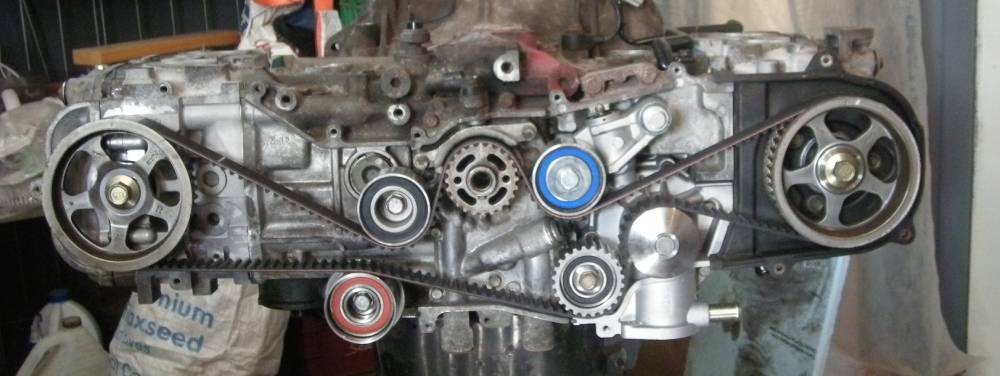
What Does a Timing Belt Do in a Subaru Forester?
The timing belt is one of the most important components in older Subaru Forester engines. Its primary function is to synchronize the rotation of the crankshaft and camshaft, ensuring that the engine’s valves open and close at precisely the right moments during each combustion cycle. This synchronization allows the pistons and valves to work together efficiently, delivering smooth performance, optimal fuel economy, and reliable engine operation.
In Subaru Forester models equipped with the EJ25 engine, the timing belt is made from reinforced rubber and is designed to withstand thousands of miles of use. However, like any wear item, it gradually deteriorates over time due to heat, friction, and environmental conditions. As the belt ages, it may develop cracks, lose tension, or suffer internal damage that is not always visible during routine inspections.
If the timing belt slips or breaks, the engine’s timing immediately falls out of sync. In many Subaru engines, this can cause the pistons to collide with the valves, resulting in bent valves, damaged cylinder heads, and costly repairs. This is why replacing the timing belt at the recommended interval is considered preventive maintenance rather than an optional service.
Understanding the role of the timing belt helps explain why Subaru places such importance on replacement schedules. While a timing belt replacement may seem expensive, it is far less costly than repairing an engine damaged by a failed belt.
Which Subaru Forester Models Have a Timing Belt?
Not every Subaru Forester requires timing belt replacement. The maintenance requirements depend largely on the model year and engine type installed in the vehicle.
Subaru Forester models produced from 1998 through 2010 generally use the EJ-series engine, including the popular EJ25. These engines rely on a timing belt to control valve timing and therefore require periodic replacement according to Subaru’s maintenance schedule.
Beginning with the 2011 model year, Subaru introduced the FB25 engine in the Forester lineup. Unlike the earlier EJ engines, the FB25 uses a timing chain rather than a timing belt. Timing chains are designed to last significantly longer and typically do not require routine replacement under normal driving conditions.
For owners unsure about their engine type, checking the owner’s manual, service records, or vehicle identification information can help determine whether the vehicle is equipped with a timing belt or timing chain.
| Subaru Forester Model Years | Engine Family | Timing System |
|---|---|---|
| 1998–2010 | EJ25 | Timing Belt |
| 2011–Present | FB25 | Timing Chain |
This distinction is especially important when purchasing a used Subaru Forester. Many buyers focus on mileage and appearance while overlooking timing belt service history. A well-maintained Forester with documented timing belt replacement can often be a safer purchase than a lower-priced vehicle with incomplete maintenance records.
When Should You Replace a Subaru Forester Timing Belt?
For most Subaru Forester models equipped with a timing belt, Subaru recommends replacement every 105,000 miles or approximately every 105 months, whichever comes first. This interval was established to reduce the risk of belt failure while maintaining long-term engine reliability.
Mileage is often the primary factor owners consider, but age is equally important. Even if a vehicle has accumulated relatively few miles, the rubber components within the timing belt continue to age and degrade over time. A ten-year-old belt with low mileage may still require replacement due to material deterioration.
Certain driving conditions can also accelerate wear. Vehicles frequently driven in extremely hot climates, subjected to heavy loads, used for towing, or operated in dusty environments may experience faster timing belt degradation. In such cases, some mechanics recommend inspecting the timing belt more frequently and considering earlier replacement if signs of wear are present.
Owners of older Foresters often make the mistake of postponing timing belt service because the engine appears to be operating normally. Unfortunately, timing belts rarely provide dramatic warnings before failure. Waiting until symptoms appear can significantly increase the risk of severe engine damage.
As a general rule, if your Subaru Forester is approaching the 105,000-mile mark and there is no documented evidence of previous timing belt replacement, scheduling the service as soon as possible is one of the smartest maintenance decisions you can make.
7 Warning Signs Your Subaru Forester Timing Belt May Need Replacement
A timing belt does not always fail without warning, but the signs can be subtle and easy to overlook. Recognizing these symptoms early can help prevent unexpected breakdowns and costly engine repairs.
1. Ticking Noise Coming from the Engine
One of the earliest warning signs of timing belt wear is a ticking or clicking sound coming from the front of the engine. This noise may indicate belt deterioration, improper tension, or wear in associated components such as the tensioner or idler pulleys. While a ticking noise does not automatically mean the timing belt is about to fail, it should never be ignored.
2. Engine Misfires
A worn or stretched timing belt can affect valve timing, causing cylinders to misfire. Drivers may notice hesitation during acceleration, reduced engine responsiveness, or intermittent performance issues. Misfires can also increase fuel consumption and place additional stress on engine components.
3. Rough Idling
If the timing belt begins to lose proper alignment, the engine may idle roughly or vibrate more than usual. While rough idling can result from various mechanical problems, timing-related issues should be considered, especially in high-mileage vehicles.
4. Difficulty Starting the Engine
As timing belt wear progresses, the engine may become harder to start. Improper valve timing can disrupt the combustion process, resulting in longer cranking times or inconsistent starts.
5. Loss of Engine Power
Many drivers report noticeable performance loss before a timing belt replacement becomes necessary. Reduced acceleration, sluggish throttle response, and decreased overall efficiency may indicate that engine timing is no longer operating as intended.
6. Oil Leaks Near the Timing Belt Cover
Oil leaking from camshaft seals or crankshaft seals can contaminate the timing belt. Oil exposure accelerates rubber deterioration and increases the likelihood of premature failure. If oil is visible around the timing belt cover, immediate inspection is recommended.
7. High Mileage with No Service Records
Sometimes the biggest warning sign is not a mechanical symptom at all. If you own a used Subaru Forester with more than 100,000 miles and no documented timing belt replacement, the safest assumption is that the service may be overdue. In such cases, preventive replacement is often far less expensive than risking engine damage.
What Happens If a Subaru Forester Timing Belt Breaks?
A broken timing belt is one of the most serious failures that can occur in an engine equipped with this system. The moment the belt snaps, the camshaft stops rotating while the crankshaft continues moving. This causes the engine’s internal timing to fall out of synchronization almost instantly.
In many Subaru Forester engines, particularly those equipped with the EJ25 engine, this loss of synchronization can result in contact between the pistons and valves. Because both components occupy the same space at different moments in the combustion cycle, even a brief timing failure can cause significant damage.
The most common consequences include bent valves, damaged valve guides, cracked cylinder heads, and in severe cases, piston damage. Repairing these components often requires extensive engine disassembly and specialized machine work.
The financial impact can be substantial. A routine timing belt replacement typically costs between $700 and $1,500 depending on location and parts selection. By comparison, repairing an engine after a timing belt failure can easily exceed $3,000 and may reach $6,000 or more if major internal components are damaged.
Beyond the repair costs, a failed timing belt often leaves drivers stranded without warning. Whether the failure occurs during a daily commute or on a long road trip, the inconvenience and towing expenses add to the overall burden. This is why proactive replacement remains one of the most cost-effective maintenance decisions for owners of older Subaru Forester models.
Should You Replace the Water Pump at the Same Time?
When replacing a Subaru Forester timing belt, most experienced technicians strongly recommend replacing the water pump during the same service appointment. Although the water pump and timing belt perform different functions, they are located in the same area of the engine and require similar labor to access.
The water pump is responsible for circulating coolant throughout the engine to maintain proper operating temperatures. Like the timing belt, it is a wear item that can eventually fail due to bearing wear, seal deterioration, or internal corrosion. Because both components have comparable service lifespans, replacing them together can save significant labor costs in the future.
Many timing belt service kits include a complete set of related components, including the timing belt, water pump, hydraulic tensioner, idler pulleys, camshaft seals, and crankshaft seals. Installing these parts simultaneously helps improve long-term reliability and reduces the likelihood of needing another major repair shortly after completing the timing belt service.
From a financial perspective, replacing the water pump during timing belt service is usually more economical than waiting for the pump to fail later. If the water pump develops problems after a new timing belt has already been installed, much of the same labor must be repeated, increasing overall maintenance expenses.
For Subaru Forester owners planning a timing belt replacement, a complete timing belt and water pump service package is often the best investment in long-term engine health and reliability.
How Much Does Subaru Forester Timing Belt Replacement Cost?
The cost of a Subaru Forester timing belt replacement can vary depending on several factors, including the vehicle’s model year, geographic location, labor rates, and whether additional components are replaced during the service. While the price may seem significant at first glance, it is important to compare the cost of preventive maintenance with the potential expense of repairing an engine damaged by timing belt failure.
For most Subaru Forester models equipped with the EJ25 engine, timing belt replacement typically ranges between $700 and $1,500. This estimate often includes both parts and labor. The timing belt itself is relatively affordable, but labor costs account for a large portion of the total bill because accessing the timing components requires substantial disassembly.
Many repair shops recommend installing a complete timing belt kit rather than replacing the belt alone. These kits commonly include the timing belt, water pump, hydraulic tensioner, idler pulleys, and various seals. Although this increases the upfront cost, it can significantly reduce the risk of future failures and eliminate duplicate labor charges.
Vehicle owners may also notice a price difference between dealerships and independent repair facilities. Dealerships often charge higher labor rates but may offer technicians with extensive Subaru-specific experience. Independent shops can sometimes provide more competitive pricing while maintaining excellent service quality.
When evaluating costs, it is helpful to remember that delaying replacement can be far more expensive. Spending a few hundred dollars on scheduled maintenance is usually preferable to facing thousands of dollars in engine repair bills after a timing belt failure.
Tips for Buying a Used Subaru Forester
Purchasing a used Subaru Forester can be an excellent investment, but timing belt maintenance should be one of the first items evaluated before completing the purchase. Many buyers focus primarily on mileage, exterior condition, and vehicle history reports while overlooking critical maintenance records.
If the vehicle was manufactured between 1998 and 2010, confirming timing belt replacement history is essential. Ask the seller for service receipts, maintenance records, or documentation showing that the timing belt was replaced at the recommended interval. A recently replaced timing belt can add significant value and reduce the likelihood of expensive repairs shortly after purchase.
If no documentation exists, it is wise to assume that timing belt service may be overdue. This assumption allows buyers to budget appropriately and avoid unpleasant surprises after taking ownership of the vehicle.
In addition to timing belt records, inspect the overall maintenance history. Evidence of regular oil changes, cooling system service, and routine inspections often indicates that the vehicle has been cared for responsibly. Vehicles with complete service histories generally present lower ownership risks than those with missing or incomplete records.
Prospective buyers should also ask whether the water pump, tensioners, and idler pulleys were replaced during the timing belt service. A comprehensive repair provides greater peace of mind than a simple belt replacement alone.
A used Subaru Forester with documented maintenance may cost slightly more upfront, but it often proves to be the better long-term value.
Conclusion
Understanding when to replace a Subaru Forester timing belt is one of the most important aspects of maintaining older Forester models. Although timing belts are designed to last for many years, they are not lifetime components. Ignoring the recommended replacement interval can expose the engine to serious mechanical damage and potentially leave drivers facing repair bills worth several thousand dollars.
For most Subaru Forester models equipped with the EJ25 engine, replacing the timing belt every 105,000 miles or approximately every 8 to 10 years remains the safest approach. Vehicle owners should also remain alert for warning signs such as ticking noises, rough idling, engine misfires, oil leaks, and unexplained performance issues. While these symptoms do not always indicate imminent failure, they should never be ignored.
Replacing the water pump and related components during timing belt service can further improve reliability and help avoid additional labor expenses in the future. For used vehicle buyers, verifying timing belt maintenance records should be a top priority before making a purchase decision.
Ultimately, proactive maintenance is far less expensive than major engine repairs. By following Subaru’s recommended service schedule and addressing potential issues early, owners can keep their Forester running smoothly, safely, and reliably for many years to come.