For many drivers, this message is alarming. Your steering wheel may immediately feel heavier than usual, making the vehicle more difficult to control, especially at low speeds or while parking. Naturally, questions arise: Is it safe to keep driving? What caused the warning? How expensive will the repair be?
This warning usually indicates that your vehicle’s Electric Power Steering (EPS) system is no longer providing its full level of steering assistance. While the steering system itself may continue to function, reduced assistance means you’ll need significantly more effort to turn the wheel. In some cases, the issue is caused by something as simple as a weak battery or low system voltage. In others, it may point to a failing steering angle sensor, damaged wiring, a faulty EPS motor, or a malfunctioning steering control module.
Ignoring the warning can lead to more than just uncomfortable driving. Reduced steering assistance may compromise vehicle handling, increase driver fatigue, and potentially create hazardous situations during emergency maneuvers. Addressing the problem early can often prevent more extensive and costly repairs down the road.
In this comprehensive guide, you’ll learn exactly what the “Steering Assist Is Reduced Drive With Care” message means, the most common causes behind it, how to diagnose the issue, practical repair solutions, estimated repair costs, and whether it’s safe to continue driving. By the end of this article, you’ll have the knowledge needed to make informed decisions and restore your vehicle’s steering performance with confidence.
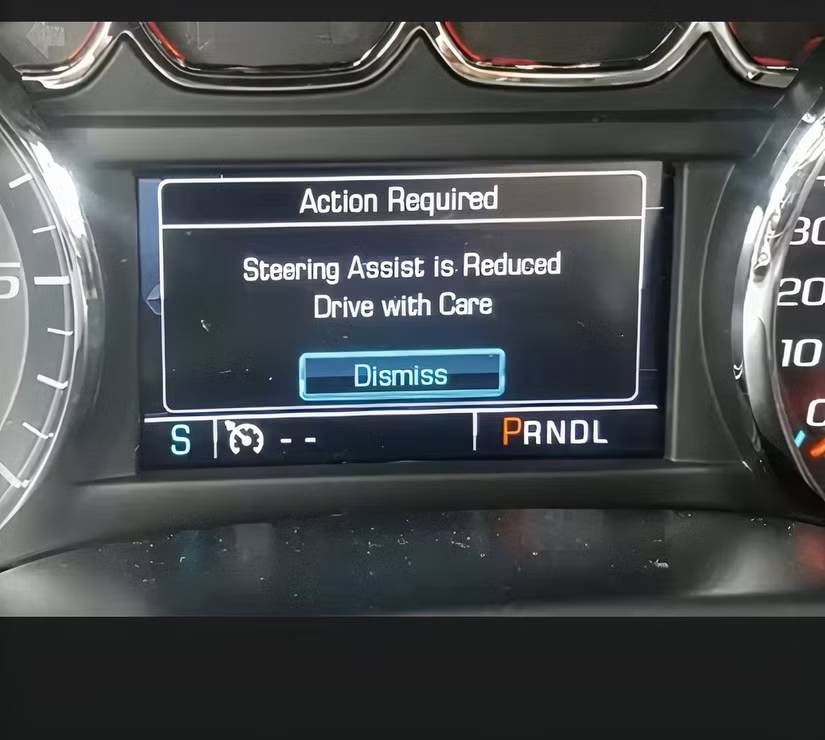
What Does “Steering Assist Is Reduced Drive With Care” Mean?
The message “Steering Assist Is Reduced Drive With Care” means that your vehicle’s power steering system is providing less assistance than normal. You can usually still turn the steering wheel, but it may require more physical effort, particularly when parking, making tight turns, or driving at low speeds.
Most modern vehicles use Electric Power Steering, commonly known as EPS. Unlike traditional hydraulic power steering systems, EPS relies on an electric motor, sensors, wiring, and an electronic control module to assist the driver. The system continuously monitors steering wheel movement, vehicle speed, battery voltage, and other operating conditions. It then adjusts the level of assistance based on how much support the driver needs.
When the vehicle detects a problem, the control module may reduce steering assistance to protect the system from further damage. This is often called a fail safe or reduced performance mode. The vehicle does not necessarily lose all steering capability, but the wheel may feel noticeably heavier.
In many cases, the warning is triggered by low battery voltage, a weak alternator, an overheated steering motor, a faulty sensor, or a communication problem between electronic modules. The message may appear briefly and disappear after the vehicle is restarted, but that does not always mean the underlying issue has been resolved.
Some drivers make the mistake of assuming the warning is only a temporary electronic glitch. While that is possible, the message should never be ignored. Even a minor voltage problem can develop into a larger electrical issue, while a failing EPS motor or steering control module may eventually cause the loss of most power steering assistance.
The important point is that “Steering Assist Is Reduced Drive With Care” is not the same as complete steering failure. You can still mechanically steer the vehicle in most situations, but the reduced assistance can make it harder to react quickly, especially during sudden turns or emergency maneuvers.
Is It Safe to Drive With the Warning?
Whether it is safe to keep driving depends on how the vehicle feels and what other warning lights or symptoms are present.
If the steering wheel feels only slightly heavier and the vehicle remains predictable, you may be able to drive carefully to a nearby repair shop. Reduce your speed, avoid sharp turns, leave additional distance from other vehicles, and stay away from heavy traffic whenever possible.
However, you should not continue driving normally as if nothing is wrong. Reduced steering assistance can make the vehicle more difficult to control during parking, tight turns, lane changes, and sudden obstacle avoidance. The extra effort required to turn the wheel may also surprise drivers who are not expecting the change.
Stop the vehicle in a safe location if the steering becomes extremely heavy, jerky, inconsistent, or difficult to control. You should also stop driving if you notice burning smells, electrical problems, repeated warning chimes, battery warning lights, or multiple dashboard messages appearing at the same time.
A towing service is the safer choice when the steering wheel is very hard to turn or when the warning is accompanied by abnormal noises. Grinding, clicking, whining, or clunking sounds may indicate a mechanical or electrical problem that requires immediate inspection.
Driving with reduced steering assistance is especially risky in crowded areas, bad weather, mountain roads, or situations that require frequent low speed maneuvering. A driver may be able to maintain control on a straight road but struggle when entering a parking space or making a sudden turn.
The safest approach is to treat the warning as an urgent maintenance issue. Even if the vehicle still feels manageable, schedule a diagnosis as soon as possible. Continuing to drive for days or weeks may increase the risk of complete power steering loss and may allow a relatively inexpensive electrical problem to damage more expensive steering components.
Common Causes of “Steering Assist Is Reduced Drive With Care”
Several electrical, mechanical, and software related problems can trigger the “Steering Assist Is Reduced Drive With Care” warning. The following causes are among the most common.
Weak or Failing Battery
A weak battery is one of the first components to check. Electric power steering systems require stable voltage to operate correctly. If the battery cannot provide enough power, the steering control module may reduce assistance or temporarily disable certain functions.
This problem is more likely to appear during cold weather, after the vehicle has been parked for an extended period, or when the battery is near the end of its service life. Drivers may also notice slow engine cranking, dim lights, flickering dashboard displays, or other electrical warnings.
Replacing a weak battery may resolve the message, but the charging system should also be tested to confirm that the new battery will receive adequate power.
Faulty Alternator
The alternator charges the battery and supplies electricity while the engine is running. If it begins to fail, system voltage may drop below the level required by the EPS motor and steering control module.
A failing alternator may cause the steering warning to appear together with a battery light, dim headlights, unstable engine idle, or multiple electrical faults. In some cases, the steering assistance may work normally immediately after starting the vehicle and then become weaker as the battery loses charge.
An alternator output test can determine whether the charging system is producing stable voltage.
Steering Angle Sensor Problem
The steering angle sensor measures the position and movement of the steering wheel. This information is used by the power steering system, stability control system, and other safety features.
If the sensor sends incorrect data, loses calibration, or fails completely, the vehicle may reduce steering assistance as a precaution. The warning may also appear after a wheel alignment, battery replacement, steering repair, or suspension work if the sensor was not recalibrated properly.
Recalibration may solve the problem when the sensor is still functional. A damaged sensor will usually require replacement.
Electric Power Steering Motor Failure
The EPS motor provides the force that makes the steering wheel easier to turn. Excessive heat, internal wear, moisture, electrical overload, or damaged internal components can reduce the motor’s performance.
A failing motor may cause intermittent assistance. The steering may feel normal during one trip and unusually heavy during the next. Assistance may also decrease after driving for a long time if the motor overheats.
Depending on the vehicle design, the motor may be replaceable separately or integrated into the steering rack assembly. An integrated design can make the repair considerably more expensive.
Damaged Wiring or Loose Connections
The power steering system depends on high current electrical connections and reliable communication between multiple modules. Damaged wires, loose battery terminals, corroded grounds, water intrusion, or partially disconnected plugs can interrupt the system.
These problems often cause intermittent warnings that appear after hitting bumps, driving in wet conditions, or starting the vehicle. A visual inspection may reveal corrosion, broken insulation, loose connectors, or evidence of rodent damage.
Wiring problems can be difficult to diagnose because the fault may disappear temporarily. A technician may need to perform voltage drop tests and inspect the circuit while the system is under load.
Faulty Steering Control Module
The steering control module processes sensor information and controls the amount of assistance provided by the EPS motor. An internal electronic failure may cause incorrect steering behavior, communication errors, or repeated warning messages.
Before replacing the module, technicians usually check battery voltage, wiring, grounds, sensors, and diagnostic trouble codes. Replacing an expensive module without confirming the cause can lead to unnecessary repair costs.
Some modules also require programming or calibration after installation.
Software or Communication Errors
Modern vehicles rely on several electronic modules that communicate through a shared data network. A software error or lost communication signal can cause the steering system to enter reduced assistance mode even when the mechanical components are still functional.
In certain cases, restarting the vehicle may temporarily clear the warning. A manufacturer software update or module reprogramming may be required to prevent the problem from returning.
A professional diagnostic scanner can identify communication codes and determine whether updated software is available for the vehicle.
Blown Fuse or Electrical Protection Issue
The EPS system uses fuses and other protective devices to prevent electrical damage. A blown fuse can interrupt power to the steering motor or control module.
Replacing the fuse may restore operation, but a fuse rarely fails without a reason. A short circuit, damaged motor, loose connection, or excessive current draw may be responsible. Installing another fuse without diagnosing the cause may result in repeated failure or additional electrical damage.
Symptoms You May Notice
The “Steering Assist Is Reduced Drive With Care” warning is often accompanied by several noticeable symptoms that can help identify the severity of the problem. While some vehicles display only the warning message, others exhibit changes in steering performance or additional electrical issues.
The most common symptom is a steering wheel that feels significantly heavier than usual. This is especially noticeable when driving at low speeds, making U-turns, or parking. Since the Electric Power Steering system is providing less assistance, the driver must apply more force to turn the wheel.
Some drivers experience intermittent steering assistance. The steering may feel completely normal during one trip but become heavy the next time the vehicle is started. This inconsistent behavior often indicates an electrical problem, such as unstable battery voltage, loose wiring, or an overheating EPS motor.
Another common symptom is the illumination of additional warning lights on the dashboard. Along with the steering assist warning, you may also see the battery warning light, ABS warning light, traction control light, or the check engine light. Multiple warning lights often suggest that the issue is related to the vehicle’s electrical system rather than the steering components alone.
The steering wheel may also respond more slowly than normal. Instead of feeling smooth and precise, the steering can become stiff or less responsive, making the vehicle more difficult to maneuver in tight spaces.
Some vehicles produce unusual noises while turning the steering wheel. Clicking, grinding, whining, or humming sounds may indicate a failing electric steering motor, worn steering components, or damaged internal gears.
In more severe cases, the steering assistance may disappear completely after several minutes of driving. The warning message may remain on the dashboard until the vehicle is restarted or the underlying fault is repaired.
Because the EPS system is closely connected with other electronic control modules, drivers may also notice unrelated electrical symptoms such as flickering dashboard displays, unstable infotainment systems, dim headlights, or difficulty starting the engine. These symptoms often point to low system voltage or charging system problems.
Recognizing these warning signs early allows drivers to diagnose the issue before it develops into a complete loss of steering assistance or more expensive repairs.
How to Diagnose the Problem
Accurately diagnosing the cause of the “Steering Assist Is Reduced Drive With Care” warning is essential before replacing any parts. Since several different components can trigger the message, a systematic inspection can save both time and money.
Begin by checking the battery condition. Measure the battery voltage using a digital multimeter. A healthy battery should read approximately 12.6 volts with the engine off and between 13.8 and 14.7 volts while the engine is running. If the voltage is outside this range, the battery or charging system may be responsible for the warning.
Next, inspect the battery terminals for corrosion or loose connections. Even a small amount of corrosion can create resistance that affects the performance of the Electric Power Steering system.
The next step is to connect an OBD-II diagnostic scanner and retrieve any stored diagnostic trouble codes. These codes provide valuable information about communication failures, sensor malfunctions, steering motor faults, or electrical problems within the EPS system. Recording the codes before clearing them can significantly simplify the repair process.
After reading the fault codes, inspect the vehicle’s fuses and relays associated with the power steering system. A blown fuse may indicate an electrical overload or a short circuit somewhere in the steering circuit.
A visual inspection of the wiring harness is equally important. Look for damaged insulation, broken wires, loose connectors, water intrusion, or signs of rodent damage. Pay particular attention to the wiring near the steering rack, battery, and steering control module.
If no obvious electrical problems are found, evaluate the steering angle sensor using a professional diagnostic scanner. The sensor should report accurate steering wheel position data and respond smoothly as the wheel is turned. If the values appear erratic or fail to update correctly, recalibration or replacement may be necessary.
The Electric Power Steering motor should also be tested for proper operation. Excessive current draw, overheating, or internal electrical faults can reduce steering assistance even when other components appear to function normally.
Finally, check whether the manufacturer has released any software updates for the steering control module. Several vehicle manufacturers have issued software revisions that resolve false warning messages or improve communication between electronic modules.
Following these diagnostic steps helps identify the actual cause of the warning instead of replacing expensive components based on guesswork.
How to Fix “Steering Assist Is Reduced Drive With Care”
Once the root cause has been identified, the appropriate repair can restore full steering assistance and eliminate the warning message.
If the battery is weak or no longer capable of maintaining proper voltage, replacing it is often the simplest solution. After installing a new battery, some vehicles may require a steering angle sensor calibration or a short driving procedure before the warning disappears.
When the alternator is not charging correctly, repairing or replacing it will restore stable electrical power to the steering system. A charging system test should always be performed after the repair to verify that the battery is receiving adequate voltage.
If diagnostic testing reveals a faulty steering angle sensor, recalibration may solve the problem if the sensor has merely lost its reference position. However, a defective sensor with internal damage must be replaced before the warning can be cleared permanently.
A failing Electric Power Steering motor typically requires replacement. Depending on the vehicle design, the motor may be serviced separately or as part of the complete steering rack assembly. Although this is one of the more expensive repairs, replacing the faulty component restores normal steering performance and improves driving safety.
Damaged wiring, corroded connectors, or poor grounding should be repaired as soon as possible. Cleaning electrical terminals, replacing damaged connectors, or repairing broken wires often resolves intermittent steering assist warnings without replacing major components.
If the steering control module has failed internally, replacement and programming are usually required. Modern modules must often be configured using manufacturer-specific diagnostic equipment to communicate correctly with the rest of the vehicle.
Software-related issues can frequently be corrected by updating the steering control module with the latest firmware provided by the manufacturer. This repair is relatively inexpensive and may eliminate recurring warning messages caused by outdated software.
After completing any repair, clear the diagnostic trouble codes and perform a road test under various driving conditions. Verify that steering assistance remains consistent, no warning messages return, and all steering functions operate normally. If the warning reappears, additional diagnostic testing should be performed before replacing any further components.
Repair Cost Estimate
The cost of repairing the “Steering Assist Is Reduced Drive With Care” warning varies widely depending on the underlying cause, the vehicle model, labor rates in your area, and whether original equipment manufacturer (OEM) or aftermarket parts are used.
The least expensive repair is often replacing a weak battery. Since the Electric Power Steering system depends on stable voltage, installing a healthy battery may immediately restore normal operation if low voltage is the only issue. Battery replacement generally costs between $150 and $350, including installation.
If the alternator is no longer charging the battery properly, expect to pay $400 to $900 for parts and labor. Luxury vehicles or trucks with limited engine access may cost even more due to additional labor time.
A faulty steering angle sensor typically costs $200 to $600 to replace, depending on the vehicle. Some models also require calibration after installation, which may increase labor costs slightly.
Repairing damaged wiring can range from $100 to $500. Minor repairs involving loose connectors or corroded terminals are relatively inexpensive, while repairing damaged wiring harnesses can become much more labor intensive.
Software updates are usually among the least expensive repairs. A dealership or qualified repair shop may charge $50 to $200 to update the steering control module if no hardware replacement is required.
If the steering control module itself has failed, replacement generally costs between $500 and $1,200, including programming and calibration.
One of the most expensive repairs involves replacing the Electric Power Steering motor or the complete steering rack assembly. Depending on the vehicle, repair costs typically range from $700 to $2,500. Premium SUVs, luxury vehicles, and heavy-duty trucks often fall at the higher end of this range.
The table below provides a general estimate of common repair costs.
| Repair | Estimated Cost |
|---|---|
| Battery Replacement | $150 to $350 |
| Alternator Replacement | $400 to $900 |
| Steering Angle Sensor | $200 to $600 |
| Wiring Repair | $100 to $500 |
| Software Update | $50 to $200 |
| Steering Control Module | $500 to $1,200 |
| EPS Motor Replacement | $700 to $2,000 |
| Complete Steering Rack | $1,000 to $2,500 |
It is important to remember that diagnostic fees are often charged separately. Most repair shops charge between $80 and $180 for a comprehensive diagnostic inspection. Although this adds to the initial cost, an accurate diagnosis can prevent unnecessary replacement of expensive steering components.
How to Reset the “Steering Assist Is Reduced Drive With Care” Warning
Many drivers wonder whether they can simply reset the warning message instead of repairing the vehicle. While resetting the system may temporarily remove the message in some situations, it should never be considered a permanent solution unless the underlying problem has been corrected.
The first step is to turn the engine off and allow the vehicle to sit for several minutes. Restarting the vehicle may clear temporary software glitches or communication errors. If the warning does not return, continue monitoring the vehicle closely during your next few trips.
Next, inspect the battery voltage. If the battery has recently been discharged or replaced, charging or replacing it may restore proper operation. Some vehicles automatically recalibrate the steering system after sufficient driving time once stable voltage has been restored.
If the battery was disconnected, drive the vehicle at low speed while making several smooth left and right turns. Certain vehicles use this procedure to recalibrate the steering angle sensor automatically.
An OBD-II scan tool can also be used to clear stored diagnostic trouble codes after repairs have been completed. However, if the actual fault remains, the warning message will usually return shortly after driving.
In some vehicles, recalibrating the steering angle sensor with professional diagnostic equipment is required after replacing the battery, performing a wheel alignment, or installing steering components. Without proper calibration, the warning may remain active even though no mechanical fault exists.
If the warning continues to appear after multiple reset attempts, additional diagnosis is necessary. Repeatedly clearing the codes without repairing the underlying issue will not solve the problem and may delay necessary repairs.
Drivers should avoid disconnecting the battery solely to erase the warning. Doing so may temporarily remove the message, but it can also erase adaptive memory settings and create additional electronic issues on certain vehicles.
The safest approach is to use a reset procedure only after confirming that the electrical system, steering components, and control modules are functioning correctly.
Vehicles Commonly Affected
Although the “Steering Assist Is Reduced Drive With Care” warning can appear on various vehicles equipped with Electric Power Steering, it is reported most frequently on several General Motors models.
The Chevrolet Silverado is one of the vehicles most commonly associated with this warning. Owners often report the message after battery replacement, low battery voltage, alternator failure, or problems with the Electric Power Steering system. Both light-duty and heavy-duty Silverado models have experienced similar issues across multiple model years.
The GMC Sierra shares many of the same steering components as the Silverado, making it another vehicle that frequently displays the warning. Similar causes include weak batteries, steering control module failures, damaged wiring, and steering angle sensor problems.
Chevrolet Tahoe and Chevrolet Suburban owners have also reported intermittent steering assist warnings, particularly on vehicles with higher mileage or aging electrical systems. In many cases, software updates or battery replacement successfully resolve the issue.
The Chevrolet Traverse and Chevrolet Equinox are additional models where drivers have encountered reduced steering assistance. These crossover SUVs rely heavily on electronic steering components, making them sensitive to voltage fluctuations and communication errors between control modules.
Cadillac Escalade models equipped with advanced driver assistance systems may also display the warning when the steering system detects abnormal operating conditions. Because these vehicles integrate steering functions with multiple electronic safety systems, proper diagnosis often requires manufacturer-specific diagnostic equipment.
Although General Motors vehicles account for many reported cases, other manufacturers that use Electric Power Steering systems can experience similar warnings under certain conditions. Regardless of the vehicle brand, the diagnostic process remains largely the same. Battery condition, charging system performance, steering sensors, electrical wiring, software, and the steering control module should all be inspected before replacing major steering components.
Understanding whether your vehicle belongs to a model with a history of steering assist issues can help technicians prioritize likely causes and reduce diagnostic time, ultimately leading to faster and more cost-effective repairs.
Frequently Asked Questions (FAQ)
What does “Steering Assist Is Reduced Drive With Care” mean?
This warning indicates that your vehicle’s Electric Power Steering (EPS) system has reduced the amount of steering assistance available. While you can usually continue steering the vehicle, the steering wheel may feel much heavier than normal. The system enters this reduced-assistance mode to protect itself after detecting an electrical, mechanical, or software-related problem.
Can I continue driving with the warning displayed?
In many cases, you can carefully drive a short distance to a repair facility if the steering remains manageable and the vehicle behaves normally. However, if the steering becomes extremely heavy, difficult to control, or is accompanied by multiple warning lights, unusual noises, or electrical problems, you should stop driving and have the vehicle inspected immediately. Continuing to drive under these conditions may increase the risk of an accident.
Can a weak battery cause the warning?
Yes. A weak or failing battery is one of the most common causes of the “Steering Assist Is Reduced Drive With Care” message. Electric Power Steering systems require stable voltage to operate correctly. When battery voltage drops below the required level, the steering control module may reduce assistance to protect the system.
Will replacing the battery fix the problem?
It depends on the root cause. If low battery voltage is the only issue, replacing the battery may completely resolve the warning. However, if the problem is caused by a faulty alternator, damaged wiring, a defective steering angle sensor, or a failing EPS motor, additional repairs will still be necessary.
How much does it cost to repair the problem?
Repair costs vary significantly depending on the faulty component. A battery replacement may cost between $150 and $350, while replacing an Electric Power Steering motor or steering rack can cost anywhere from $700 to more than $2,500. Obtaining an accurate diagnosis before replacing parts is the most effective way to avoid unnecessary expenses.
Can I reset the warning myself?
You may be able to clear the warning temporarily by restarting the vehicle or using an OBD-II scanner after repairs have been completed. However, if the underlying problem has not been fixed, the warning will usually return after a short period of driving. Resetting the message should never be considered a permanent repair.
Is the warning covered under warranty?
Warranty coverage depends on your vehicle’s age, mileage, manufacturer, and warranty terms. If your vehicle is still covered by the factory warranty or an extended warranty, repairs involving the Electric Power Steering system may be eligible for coverage. Contact your dealership or warranty provider to verify your specific coverage.
Does the warning mean the steering rack has failed?
Not necessarily. Although a damaged steering rack can trigger the warning, many cases are caused by electrical issues such as low battery voltage, alternator failure, wiring problems, or software faults. A complete diagnostic inspection should always be performed before replacing the steering rack.
Can cold weather trigger the warning?
Yes. Extremely low temperatures can reduce battery performance, making it difficult for the Electrical Power Steering system to receive adequate voltage. Older batteries are especially susceptible to this problem during winter months.
How can I prevent the warning from returning?
Regular vehicle maintenance is the best prevention. Keep the battery and charging system in good condition, inspect electrical connections for corrosion, perform software updates recommended by the manufacturer, and address dashboard warning lights as soon as they appear. Early maintenance can often prevent minor electrical issues from developing into expensive steering repairs.
Conclusion
Seeing the “Steering Assist Is Reduced Drive With Care” warning can be unsettling, but it does not always mean your vehicle has suffered a major steering failure. In many situations, the warning is triggered by relatively simple issues such as a weak battery, low charging voltage, outdated software, or a steering angle sensor that requires recalibration. However, it can also indicate more serious problems involving the Electric Power Steering motor, steering control module, wiring, or steering rack.
The most important step is to avoid ignoring the warning. While the vehicle may remain drivable for a short period, reduced steering assistance makes the steering wheel harder to turn and can compromise vehicle control, especially during emergency maneuvers or low-speed driving. Prompt diagnosis not only improves safety but can also prevent minor electrical faults from turning into expensive repairs.
If your vehicle displays the “Steering Assist Is Reduced Drive With Care” message, begin by checking the battery, charging system, and any stored diagnostic trouble codes. If the warning persists, have the vehicle inspected by a qualified technician who can accurately identify the root cause and recommend the appropriate repair.
By understanding how the Electric Power Steering system works and recognizing the warning signs early, you can restore normal steering performance, improve driving safety, and potentially save hundreds or even thousands of dollars in unnecessary repair costs.
Have you experienced the “Steering Assist Is Reduced Drive With Care” warning on your vehicle? Share your experience, the symptoms you noticed, and the solution that worked in the comments below. Your insight may help other drivers diagnose and fix the same problem more quickly.