Most Ram 1500 models run on regular unleaded gasoline, but the correct fuel grade depends on the engine under the hood. While many naturally aspirated engines are engineered to operate on 87-octane fuel, certain turbocharged or high-performance variants are designed to deliver their intended power and efficiency with premium gasoline. Using the recommended fuel helps the engine perform as designed, reduces the risk of engine knock, and supports long-term reliability.
Fuel requirements also vary across model years as the Ram 1500 lineup has evolved from the 3.6L Pentastar V6 and 5.7L HEMI V8 to the newer Hurricane inline-six engines. Because of these changes, a fuel recommendation that applies to one Ram 1500 may not apply to another.
This guide explains what gas a Ram 1500 takes for each engine option, how octane ratings affect performance, whether premium gasoline is worth the additional cost, and which models can use ethanol-blended fuels such as E85. You’ll also learn what happens if the wrong fuel is used, how fuel quality influences engine performance, and practical tips to maximize fuel economy while protecting your truck’s engine.
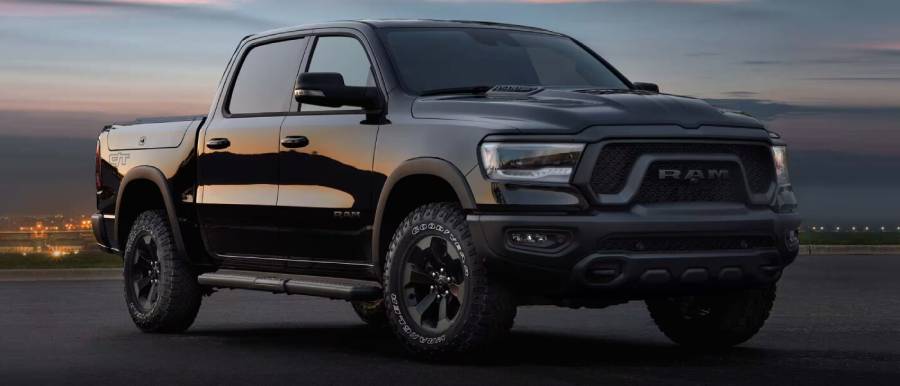
What Gas Does a Ram 1500 Take?
Most Ram 1500 models use regular unleaded gasoline with an octane rating of 87, but the recommended fuel depends on the engine and model year. Naturally aspirated engines, such as the 3.6L Pentastar V6 and the 5.7L HEMI V8, are engineered to run on regular unleaded fuel under normal driving conditions. In contrast, newer turbocharged Hurricane engines achieve their intended performance with premium gasoline because of their higher combustion pressure and engine calibration.
Choosing the recommended fuel grade allows the engine management system to operate as designed. The correct octane rating minimizes engine knock, maintains combustion efficiency, and delivers the expected balance of power, fuel economy, and emissions. While many Ram 1500 engines can compensate for lower octane fuel through ignition timing adjustments, doing so may reduce horsepower and throttle response under heavy acceleration or towing.
The table below summarizes the recommended gasoline type for the most common Ram 1500 engines.
| Engine | Recommended Fuel | Premium Required |
|---|---|---|
| 3.6L Pentastar V6 | Regular Unleaded (87 Octane) | No |
| 5.7L HEMI V8 | Regular Unleaded (87 Octane) | No |
| 3.0L Hurricane I6 | Premium Unleaded (91 Octane or Higher) | Yes |
| High Output Hurricane I6 | Premium Unleaded (91 Octane or Higher) | Yes |
Because Ram has introduced new powertrains over multiple generations, owners should always confirm the fuel specification listed in the owner’s manual or on the fuel-filler door. Engine requirements may differ even between trucks that share the same trim level.
Which Gasoline Does Each Ram 1500 Engine Require?
What Fuel Does the 3.6L Pentastar V6 Use?
The 3.6L Pentastar V6 is designed to operate on regular unleaded gasoline with an octane rating of 87. This engine uses a naturally aspirated design and does not require premium fuel for normal operation. Running 87-octane gasoline provides the performance, fuel economy, and emissions levels specified by the manufacturer.
Owners may occasionally use higher-octane gasoline without harming the engine, but the Pentastar V6 is not calibrated to gain additional horsepower or significantly improve fuel economy from premium fuel. In most situations, paying more for 91- or 93-octane gasoline provides little measurable benefit.
What Fuel Does the 5.7L HEMI V8 Use?
The 5.7L HEMI V8 also operates on regular 87-octane unleaded gasoline under normal driving conditions. The engine incorporates electronic knock sensors that continuously monitor combustion and adjust ignition timing when necessary to maintain safe operation.
Although premium gasoline is compatible with the HEMI V8, most daily drivers will not notice a significant improvement in performance. Drivers who frequently tow heavy trailers, carry maximum payloads, or drive in extremely hot climates may experience slightly more consistent performance with higher-octane fuel, but regular unleaded remains the standard recommendation for routine use.
What Fuel Does the 3.0L Hurricane Engine Use?
The standard-output 3.0L Hurricane twin-turbo inline-six is engineered for premium unleaded gasoline with a minimum octane rating of 91. Turbocharged engines generate higher cylinder pressures than naturally aspirated engines, making higher-octane fuel essential for preventing pre-ignition and maintaining optimal combustion.
Using premium gasoline enables the engine to deliver its advertised horsepower and torque while preserving fuel efficiency and smooth acceleration. If lower-octane fuel is used, the engine control system may reduce ignition timing to protect internal components, resulting in lower performance.
Does the High Output Hurricane Require Premium Gas?
Yes. The High Output Hurricane engine requires premium unleaded gasoline with an octane rating of at least 91. This high-performance powertrain is tuned to produce substantially greater horsepower and torque than the standard Hurricane engine, relying on premium fuel to support its elevated boost pressure and combustion characteristics.
Using regular gasoline in a High Output Hurricane engine can reduce power output and increase the likelihood of engine knock before the control system intervenes. To achieve the truck’s full towing capability, acceleration, and overall performance, owners should consistently refuel with the recommended premium gasoline.
What Do Octane Ratings Mean for a Ram 1500?
An octane rating measures a gasoline’s ability to resist engine knock during combustion. A higher octane fuel does not contain more energy or produce more power by itself. Instead, it allows engines with higher compression ratios or turbochargers to operate safely under greater cylinder pressure without premature ignition.
Selecting the correct octane rating is important because every Ram 1500 engine is calibrated for a specific fuel grade. When gasoline ignites too early inside the combustion chamber, it creates abnormal combustion known as engine knock or detonation. Persistent knocking can reduce engine efficiency and, over time, contribute to excessive wear if the engine cannot compensate.
What Is 87-Octane Gasoline?
87-octane is the standard regular unleaded gasoline recommended for most naturally aspirated Ram 1500 engines. It provides sufficient knock resistance for engines such as the 3.6L Pentastar V6 and the 5.7L HEMI V8 during normal commuting, highway driving, and light towing.
Modern Ram engines continuously monitor combustion through knock sensors. If slight knocking is detected, the engine control module adjusts ignition timing to maintain safe operation. This electronic management system allows the engine to deliver reliable performance while operating on the recommended regular fuel.
What Is 89-Octane Gasoline?
89-octane gasoline is a mid-grade fuel positioned between regular and premium. Although it is available at many fuel stations, Ram does not generally require 89-octane fuel for standard Pentastar or HEMI engines.
Some owners choose mid-grade gasoline when towing moderate loads or driving in consistently high ambient temperatures. While it may provide slightly greater resistance to engine knock under heavy engine load, the improvement is typically small and does not justify the additional fuel cost for everyday driving.
What Is 91- or 93-Octane Gasoline?
91- and 93-octane gasoline are premium fuels designed for engines that operate with higher compression or turbocharger boost pressure. The Hurricane and High Output Hurricane engines are engineered around premium gasoline to achieve their published horsepower, torque, and fuel efficiency figures.
Higher-octane fuel burns more predictably under extreme pressure, allowing the engine to maintain optimal ignition timing without reducing performance. This becomes especially important during rapid acceleration, steep hill climbs, or heavy towing, where combustion temperatures and cylinder pressure increase significantly.
Why Do Turbocharged Engines Require Higher Octane?
Turbocharged engines compress more air into the combustion chamber, increasing cylinder pressure before ignition. This design produces substantially more power from a smaller engine displacement but also raises the risk of uncontrolled combustion if fuel with insufficient octane is used.
The Hurricane engine relies on premium gasoline because its turbochargers generate high boost pressure under acceleration. Premium fuel allows the engine to operate with more aggressive ignition timing, producing maximum horsepower while protecting pistons, valves, and other internal components. If regular gasoline is used, the engine management system retards ignition timing to prevent knock, which reduces both acceleration and towing performance.
Can You Use Premium Gas in a Ram 1500?
Yes, premium gasoline can be used in every Ram 1500, but it is only required for engines specifically designed for high-octane fuel. Filling a Pentastar V6 or 5.7L HEMI V8 with premium gasoline will not damage the engine because higher-octane fuel is fully compatible with engines that require regular gasoline.
Many drivers assume premium fuel automatically increases horsepower or improves fuel economy. In reality, naturally aspirated Ram 1500 engines are calibrated to achieve their intended performance using 87-octane gasoline. Since ignition timing and compression ratio are optimized for regular fuel, premium gasoline rarely produces measurable gains during everyday driving.
Premium fuel becomes valuable when the engine has been engineered to depend on higher knock resistance. The Hurricane engines use advanced turbocharging technology and higher combustion pressure to generate significantly greater output. Running premium gasoline allows these engines to maintain optimal ignition timing, preserve maximum torque, and achieve the performance figures published by the manufacturer.
Drivers who frequently tow heavy trailers or climb long mountain grades with a 5.7L HEMI may notice slightly more consistent power delivery when using premium gasoline because the engine has additional resistance to knock under sustained load. However, for most owners, the difference is modest, making regular unleaded gasoline the most cost-effective choice unless premium fuel is specifically required.
Ultimately, the best practice is to follow the fuel recommendation provided for your specific engine. Using the recommended octane rating delivers the intended balance of performance, fuel economy, operating cost, and long-term engine durability.
Can a Ram 1500 Use E85 or Ethanol-Blended Fuel?
Most Ram 1500 models are compatible with E10 gasoline, but only specific Flex Fuel models can use E85. Before filling the tank with ethanol-blended fuel, owners should verify their truck’s fuel compatibility in the owner’s manual or by checking for a Flex Fuel badge. Using an unsupported fuel blend may affect engine performance and fuel system durability.
Which Ram 1500 Models Support E85?
Only Ram 1500 models equipped with a Flex Fuel-compatible engine are designed to operate on E85. Earlier model years equipped with the 5.7L HEMI V8 and the appropriate Flex Fuel system could run on either regular gasoline or E85 without requiring any driver intervention. The engine management system automatically adjusts ignition timing and the air-fuel mixture to accommodate the higher ethanol content.
Not every 5.7L HEMI is a Flex Fuel engine, however. Ram has offered multiple engine configurations over different model years, meaning two trucks with the same engine displacement may have different fuel requirements. Owners should always confirm compatibility before using E85.
Is E10 Safe?
Yes. E10 is safe for virtually every modern Ram 1500. E10 contains up to 10% ethanol mixed with conventional gasoline and is the standard fuel available at most gas stations across North America.
Ram engines are engineered to operate with E10 without requiring any modifications. When high-quality gasoline is used, E10 provides reliable combustion, maintains fuel system cleanliness, and delivers the performance expected by the manufacturer.
Is E15 Recommended?
E15 is not universally recommended for every Ram 1500. Although some newer vehicles are approved to use gasoline containing up to 15% ethanol, fuel recommendations vary by model year and engine configuration.
Using an ethanol blend that exceeds the manufacturer’s specification may lead to drivability issues or affect emissions-related components. Before using E15, owners should consult the owner’s manual to verify whether their specific Ram 1500 is approved for this fuel blend.
What Happens If You Use the Wrong Gas in a Ram 1500?
The consequences of using the wrong fuel depend on whether the octane rating is lower than recommended, higher than required, or the fuel itself is incorrect. Modern engine management systems can compensate for some fuel-related issues, but they cannot eliminate every risk.
What Happens If You Use Lower-Octane Gasoline?
Using gasoline with a lower octane rating than recommended can reduce engine performance. Turbocharged engines such as the Hurricane are particularly sensitive because they operate under higher combustion pressure. When lower-octane fuel is detected, knock sensors signal the engine control module to retard ignition timing, reducing horsepower and torque to protect internal components.
Drivers may notice slower acceleration, reduced towing capability, and lower throttle responsiveness. Although occasional use of lower-octane gasoline may not cause immediate mechanical damage, repeatedly operating the engine under heavy load with insufficient octane can increase thermal stress and reduce overall efficiency.
What Happens If You Use Higher-Octane Gasoline?
Using gasoline with a higher octane rating than required is generally safe but rarely provides additional benefits. Engines designed for 87-octane fuel cannot fully utilize the additional knock resistance offered by premium gasoline because their compression ratio and ignition mapping are already optimized for regular fuel.
As a result, most owners will not experience noticeable improvements in fuel economy, acceleration, or engine longevity after switching from regular to premium gasoline. The primary difference is a higher fuel cost.
What Happens If Diesel Is Added by Mistake?
Accidentally filling a gasoline-powered Ram 1500 with diesel fuel requires immediate attention. Diesel does not ignite properly in a spark-ignition engine, preventing normal combustion and potentially causing severe fuel system damage if the engine is started.
If diesel has been added to the fuel tank, the safest approach is to avoid starting the engine. The vehicle should be towed to a qualified repair facility where the fuel tank, fuel lines, and injection system can be drained and cleaned before operation resumes.
Can Contaminated Fuel Damage the Engine?
Yes. Contaminated gasoline can cause poor engine performance and damage components within the fuel system. Water, dirt, rust particles, or excessive ethanol contamination may interfere with fuel injector operation, reduce combustion efficiency, and trigger diagnostic trouble codes.
Common symptoms include difficult starting, engine hesitation, rough idling, reduced fuel economy, and illumination of the check engine light. Purchasing gasoline from reputable stations that regularly maintain their storage tanks helps minimize the risk of fuel contamination.
Which Gasoline Brand Is Best for a Ram 1500?
The best gasoline for a Ram 1500 is fuel that meets the recommended octane rating and comes from a reputable Top Tier™ fuel retailer. Fuel quality is just as important as octane because gasoline contains detergent additives that help keep fuel injectors, intake valves, and combustion chambers clean over time.
Top Tier gasoline includes higher detergent standards than the minimum requirements established by the U.S. Environmental Protection Agency (EPA). These additives help reduce carbon deposits that can negatively affect fuel economy, idle quality, and engine performance. For trucks that accumulate high mileage or frequently tow heavy loads, consistently using high-quality gasoline can contribute to smoother engine operation and lower maintenance requirements.
Many major fuel retailers offer Top Tier gasoline. Examples include Shell, Chevron, Exxon, Mobil, Costco, Phillips 66, Sinclair, Texaco, and Marathon. While each brand uses its own additive package, all certified Top Tier fuels meet the same detergent performance standard.
When choosing where to refuel, fuel freshness is also important. Busy fuel stations typically replenish their underground storage tanks more frequently, reducing the likelihood of fuel degradation or contamination. Purchasing fuel from well-maintained stations can improve reliability over the long term.
How Can You Improve Fuel Economy in a Ram 1500?
Improving fuel economy requires consistent driving habits and proper vehicle maintenance rather than simply changing gasoline grades. Even when using the recommended fuel, several factors have a much greater impact on fuel consumption than octane rating alone.
Use the Recommended Octane Rating
Use the fuel grade specified for your engine. Engines designed for regular gasoline do not become significantly more efficient when filled with premium fuel. Likewise, turbocharged engines that require premium gasoline deliver their intended efficiency only when the recommended octane is used.
Maintain Proper Tire Pressure
Keep tires inflated to the manufacturer’s recommended pressure. Underinflated tires increase rolling resistance, forcing the engine to work harder during acceleration and highway cruising. Checking tire pressure at least once a month can help improve both fuel economy and tire life.
Reduce Unnecessary Idling
Limit engine idling whenever possible. Modern Ram 1500 engines consume less fuel restarting than they do idling for extended periods. Reducing unnecessary idle time lowers fuel consumption and minimizes engine wear.
Keep the Fuel System Clean
Use high-quality gasoline and follow the recommended maintenance schedule. Clean fuel injectors promote efficient fuel atomization, resulting in more complete combustion and smoother engine performance. Replacing clogged air filters and worn spark plugs at the recommended service intervals also helps maintain optimal fuel efficiency.
Drive Smoothly
Accelerate gradually and maintain steady speeds whenever possible. Aggressive acceleration, sudden braking, and excessive highway speeds increase fuel consumption regardless of engine type. Using cruise control on long highway trips can help maintain a consistent speed and improve overall efficiency.
Frequently Asked Questions About Ram 1500 Gas Type
Does Premium Gas Increase Horsepower in a Ram 1500?
Premium gasoline only increases horsepower in engines that are specifically calibrated for higher-octane fuel. The Hurricane engines are designed to produce their advertised power using premium gasoline. The 3.6L Pentastar V6 and 5.7L HEMI V8 generally do not generate noticeable additional horsepower when premium fuel is used.
Does Premium Gas Improve Fuel Economy?
Premium gasoline does not significantly improve fuel economy in engines designed for regular fuel. Any difference is typically too small to offset the higher price per gallon. For engines that require premium gasoline, however, using the correct octane helps maintain the efficiency intended by the manufacturer.
Can I Switch Between Regular and Premium Gasoline?
Yes, provided the fuel meets your engine’s minimum octane requirement. Owners of engines designed for regular gasoline may alternate between regular and premium without causing damage. Owners of Hurricane engines should consistently use premium gasoline to maintain performance and prevent unnecessary ignition timing adjustments.
Does Towing Require Premium Gas?
Towing alone does not change the manufacturer’s fuel recommendation. A 3.6L Pentastar V6 or 5.7L HEMI V8 should continue using 87-octane gasoline unless otherwise specified by the owner’s manual. Premium fuel may provide slightly more consistent performance under sustained heavy loads, but it is not required for these engines.
Can I Mix Different Octane Ratings?
Yes. Mixing different octane grades is safe. The resulting octane level will fall between the two fuel grades based on the proportion of each fuel in the tank. While occasional mixing is not harmful, consistently using the recommended octane remains the best practice for maintaining engine performance and fuel economy.
Final Thoughts
Choosing the correct gasoline for a Ram 1500 starts with identifying the engine installed in your truck. Most models equipped with the 3.6L Pentastar V6 or the 5.7L HEMI V8 are engineered to operate on regular 87-octane gasoline, while the newer Hurricane engines require premium fuel to achieve their designed performance and efficiency.
Using the recommended gasoline protects the engine from abnormal combustion, supports consistent power delivery, and helps optimize fuel economy. Although premium gasoline is compatible with engines designed for regular fuel, it typically offers little measurable benefit unless the engine has been specifically calibrated for higher-octane fuel.
In addition to selecting the correct fuel grade, purchasing gasoline from reputable Top Tier retailers, following the manufacturer’s maintenance schedule, and adopting efficient driving habits can have a greater impact on long-term reliability and operating costs than switching between fuel grades.