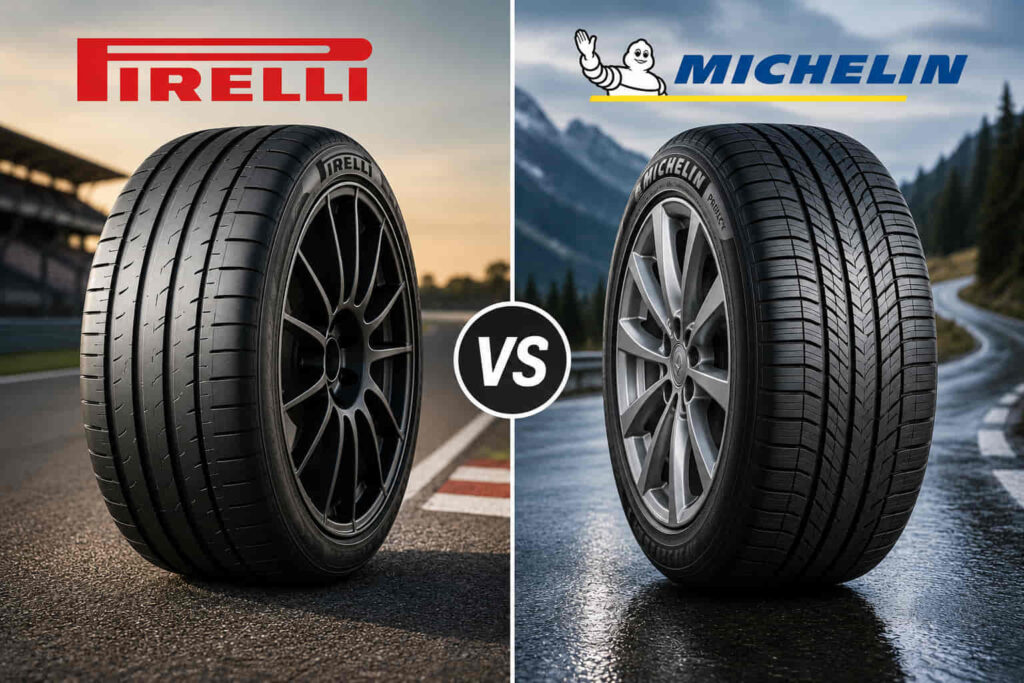
Pirelli and Michelin are two of the most recognized premium tire brands in the automotive industry, but choosing between them depends on what drivers value most: performance, durability, comfort, price, or vehicle application. Both manufacturers produce advanced tires designed for different driving conditions, yet their engineering priorities create noticeable differences in driving experience.
Pirelli is widely associated with high-performance vehicles, sports cars, and motorsport-inspired tire technology. The brand focuses heavily on handling response, cornering ability, and performance characteristics that appeal to drivers seeking a more dynamic driving experience.
Michelin takes a broader approach by combining performance with durability, comfort, and long-term value. The brand produces tires for everyday vehicles, luxury cars, SUVs, and performance applications while maintaining a strong focus on tread life and overall balance.
The question of whether Pirelli or Michelin is better does not have a single answer because the ideal tire depends on the vehicle and driving requirements. A sports car owner looking for maximum grip may prioritize different features than a daily commuter who wants longer tread life and a quieter ride.
This comparison explains how Pirelli and Michelin differ in performance, durability, comfort, technology, and value to help drivers choose the premium tire brand that best matches their needs.
Which Brand Offers Better Tire Performance, Pirelli or Michelin?
Pirelli and Michelin both offer high-performance tires, but Pirelli generally focuses more on sporty driving characteristics while Michelin emphasizes a balance between performance, control, and everyday usability. The better-performing tire depends on whether the driver prioritizes maximum grip, precise handling, comfort, or consistent performance across different conditions.
Pirelli tires are often developed with performance-oriented vehicles in mind. Many Pirelli models focus on responsive steering, strong cornering ability, and high-speed stability. These characteristics make Pirelli a popular choice for sports cars and drivers who want a more engaging driving experience.
Michelin approaches performance through a combination of grip, efficiency, durability, and predictability. Michelin tires are engineered to provide strong traction while maintaining comfort and consistent handling over a wider range of driving conditions. This makes the brand suitable for drivers who want performance without sacrificing everyday practicality.
Wet traction and braking performance also depend heavily on the specific tire model rather than only the brand name. A premium performance tire from either manufacturer may outperform another model from the same brand because tread design, rubber compound, and intended usage play major roles.
For example, a driver using a high-performance sports car on winding roads may prefer the sharper handling characteristics of a Pirelli performance tire. A driver using a luxury sedan for daily commuting may prefer Michelin because of its balance between grip, comfort, and predictable handling.
The better choice between Pirelli and Michelin depends on the type of driving experience the owner wants. Pirelli often appeals to drivers seeking performance-focused handling, while Michelin provides a more balanced approach across different driving conditions.
Which Tires Last Longer, Pirelli or Michelin?
Michelin tires are generally recognized for strong tread life and long-term durability, while Pirelli tires often prioritize performance characteristics that may involve different wear expectations depending on the tire model. Tire lifespan is influenced by the tire compound, tread design, driving style, road conditions, and maintenance habits rather than the brand alone.
Michelin has built a reputation around producing tires that combine durability with consistent performance. Many Michelin models are designed for drivers who want longer service intervals, stable performance over time, and strong value from their tire investment.
Pirelli tires often use specialized compounds and tread designs optimized for performance applications. These designs can provide excellent grip and handling response, especially in performance-focused tires, but the expected lifespan varies significantly depending on whether the tire is designed for touring, ultra-high performance, or track-oriented use.
Maintenance plays an important role in determining how long either brand lasts. Proper tire inflation, regular rotation, correct alignment, and avoiding aggressive driving habits can significantly extend tire life.
For example, a Michelin touring tire used on a commuter vehicle may deliver a longer service life because it is designed around durability and comfort. A Pirelli performance tire installed on a sports car may wear faster because it prioritizes maximum grip and handling response.
When comparing Pirelli vs Michelin for longevity, Michelin often has an advantage for drivers who prioritize mileage and long-term ownership value. However, Pirelli can still be the better choice for drivers who value performance characteristics over maximum tread life.
Are Michelin Tires More Comfortable Than Pirelli Tires?
Michelin tires are often considered more comfort-focused than Pirelli tires because the brand places strong emphasis on reducing road noise, improving ride quality, and creating a balanced driving experience. However, comfort depends on the specific tire model, vehicle suspension system, tire size, and driving conditions.
Michelin develops many tire lines with a focus on daily usability, including touring tires and premium passenger tires. These tires are designed to absorb road imperfections, reduce vibration, and maintain predictable handling during normal driving. This approach makes Michelin a popular option for drivers who spend most of their time commuting or traveling long distances.
Pirelli also produces comfortable tires, especially within its touring and luxury vehicle categories. However, many of its well-known performance tires are designed around responsiveness and road feedback rather than maximum softness. Drivers who prefer a more connected feeling with the road may appreciate this characteristic, while others may notice more road feedback compared with comfort-oriented tires.
Road noise is another important factor in tire comfort. Tire construction, tread pattern, and rubber compound all influence how much sound reaches the cabin. A tire designed for maximum grip may generate a different driving experience compared with a tire designed primarily for quiet highway travel.
For example, a luxury sedan owner who prioritizes a quiet cabin and smooth ride may prefer a Michelin touring tire. A performance car driver who wants more steering response and road communication may find a Pirelli performance tire more suitable.
Michelin often has an advantage for drivers seeking comfort and refinement, while Pirelli appeals more to drivers who value an engaging performance-oriented driving experience.
Are Pirelli Tires Better for Sports Cars?
Pirelli tires are often a strong choice for sports cars because many of their performance tires are designed around handling response, cornering ability, and high-speed stability. The brand has a long association with motorsport and performance vehicles, which influences the development of many of its premium tire models.
Sports cars require tires that can handle higher levels of acceleration, braking force, and cornering pressure. Pirelli designs performance tires with specialized rubber compounds and tread patterns that help maximize grip and driver feedback in demanding conditions.
The advantage of Pirelli for performance vehicles comes from its focus on driving dynamics. A tire with strong cornering ability and responsive steering can improve how a sports car feels during aggressive driving or enthusiastic road use. This characteristic is especially important for drivers who value precision and control.
Michelin also produces high-performance tires and competes strongly in the sports car segment. Michelin performance tires are known for combining grip with durability, consistency, and everyday usability. The difference is often that Michelin tends to seek a broader balance, while Pirelli frequently emphasizes performance feel.
For example, a driver of a high-performance coupe who frequently enjoys winding roads may prefer the sharper response of a Pirelli performance tire. A driver who uses the same sports car for commuting and long-distance travel may prefer Michelin because of its combination of performance and comfort.
Pirelli is often the better match for drivers who prioritize maximum driving engagement, while Michelin may be more suitable for those who want performance combined with versatility.
Which Brand Provides Better Value, Pirelli or Michelin?
The better value between Pirelli and Michelin depends on how drivers measure value because tire ownership involves more than the initial purchase price. A premium tire’s value comes from the combination of performance, durability, comfort, replacement frequency, and how well the tire matches the driver’s needs.
Michelin often provides strong long-term value for drivers who prioritize durability and consistent performance. Many Michelin tires are designed to deliver extended tread life while maintaining reliable traction and comfort throughout their service period. This can reduce the frequency of tire replacement and lower the overall cost of ownership for daily drivers.
Pirelli provides value through performance-focused engineering. Drivers who choose Pirelli are often paying for specific characteristics such as sharper handling, stronger road feedback, and performance capabilities that match sports cars or premium performance vehicles. For these drivers, the additional performance benefits may justify the investment.
The price difference between premium tires should also be evaluated based on vehicle requirements. A driver using an everyday sedan may receive more practical value from a long-lasting touring tire, while a performance vehicle owner may benefit more from a tire designed to maximize handling and driving experience.
For example, replacing high-performance tires on a sports car may cost more frequently than replacing touring tires on a commuter vehicle. However, the performance advantage of a specialized tire can provide value that is not measured only by mileage.
Pirelli and Michelin both offer premium value, but they serve different priorities. Michelin often provides stronger value for drivers seeking longevity and balance, while Pirelli delivers value for drivers who prioritize performance and driving engagement.
Should You Choose Pirelli or Michelin Tires?
The choice between Pirelli and Michelin depends on your vehicle, driving habits, and the performance characteristics you expect from your tires. Neither brand is universally better because each manufacturer focuses on different aspects of tire development.
Drivers who prioritize sporty handling, aggressive cornering, and a more connected driving experience may prefer Pirelli. The brand’s performance-focused tire lines are designed for vehicles where grip and responsiveness are major priorities.
Drivers who want a balanced combination of comfort, durability, safety, and everyday performance may find Michelin to be the better option. Michelin’s wide range of passenger, SUV, and performance tires allows the brand to serve different types of drivers while maintaining a strong focus on reliability.
The vehicle itself should also influence the decision. A sports car, luxury performance vehicle, or enthusiast-driven vehicle may benefit from Pirelli’s performance characteristics. A family vehicle, commuter sedan, or SUV used for daily transportation may benefit more from Michelin’s balance of comfort and longevity.
For example, a Porsche owner looking for maximum handling performance may select a Pirelli tire designed for performance driving. A Toyota, Honda, or Lexus owner who values quiet operation and long-term reliability may prefer Michelin.
The best tire choice is not about selecting the brand with the highest reputation but choosing the tire that matches the vehicle’s purpose and the driver’s expectations. Pirelli and Michelin are both excellent premium tire manufacturers, but their strengths appeal to different driving needs.
Read more: Does Discount Tire Patch Tires for Free
Is Pirelli or Michelin the Better Tire Brand?
Pirelli and Michelin are both premium tire brands that deliver strong performance, but the better choice depends on the type of driving experience a driver wants. The comparison between these two manufacturers is not about finding a universal winner but identifying which brand better matches specific vehicle requirements and ownership priorities.
Pirelli stands out for drivers who value performance-oriented characteristics such as responsive handling, strong cornering ability, and a more engaging driving feel. Its connection with motorsport and performance vehicles makes it a strong option for sports cars and drivers who prioritize driving dynamics.
Michelin is often the better fit for drivers who want a balanced combination of durability, comfort, safety, and long-term value. Its tire range supports everyday vehicles, luxury cars, SUVs, and performance applications while maintaining a strong focus on consistent performance and tread life.
The right choice should consider factors such as vehicle type, driving conditions, budget, and maintenance expectations. A performance-focused driver may benefit more from Pirelli’s handling characteristics, while a daily driver may receive greater value from Michelin’s durability and comfort.
Ultimately, both brands represent high-quality tire engineering. Choosing between Pirelli and Michelin requires understanding the difference between performance priorities and practical ownership needs. The best tire is the one that delivers the right balance of grip, comfort, longevity, and value for the way the vehicle is actually used.