Mercedes vehicles have earned a strong reputation for luxury, comfort, and advanced engineering. One feature that sets them apart is the AIRMATIC air suspension system. It automatically adjusts ride height and suspension firmness to improve comfort, handling, and stability. Drivers enjoy a smoother ride on rough roads while the system adapts to changing driving conditions.
Despite its advantages, AIRMATIC is not free from problems. Mercedes air suspension problems often appear without obvious warning. You may notice that one side of the vehicle sits lower after parking overnight. The suspension warning light may appear on the dashboard. The compressor may also run longer than normal or become unusually loud. Some vehicles refuse to rise to the correct height, while others deliver a rough and uncomfortable ride.
Many owners ignore these early symptoms because the vehicle still feels drivable. Unfortunately, small issues rarely stay small. A tiny air leak can force the compressor to work harder every time you start the engine. Over time, this extra workload can damage other suspension components and increase repair costs.
Finding the real cause as early as possible helps you avoid unnecessary repairs. In many cases, replacing one inexpensive part can prevent a much larger and more expensive failure. Understanding how the system works also makes it easier to recognize warning signs before they become serious problems.
This guide covers the most common Mercedes air suspension problems in detail. You will learn the typical symptoms, the most likely causes, practical diagnostic methods, estimated repair costs, and proven repair solutions. By the end of this article, you will know how to identify suspension issues early and choose the most effective repair option for your Mercedes.
What Is the Mercedes AIRMATIC Air Suspension System?
The Mercedes AIRMATIC air suspension system is one of the brand’s most advanced comfort features. It improves ride quality, handling, and vehicle stability by using compressed air instead of traditional steel springs. The system adjusts the suspension automatically, so the vehicle stays level under different driving conditions. It also responds to changes in speed, road surface, and vehicle load.
Unlike a conventional suspension, AIRMATIC does much more than absorb bumps. It actively controls ride height to improve both comfort and performance. The vehicle can raise its body to clear rough roads or lower itself at higher speeds to increase stability. These automatic adjustments help create the smooth driving experience that many Mercedes owners expect.
How Does the AIRMATIC System Work?
Several components work together to keep the suspension operating efficiently. The air compressor supplies pressurized air to the system. Air springs support the weight of the vehicle and replace conventional coil springs. The valve block directs air to each suspension corner, while ride height sensors monitor the vehicle’s position. The suspension control module collects data from every sensor and makes instant adjustments whenever conditions change.
Every component depends on the others. If one part begins to fail, the entire system can lose performance. For example, a small leak inside an air spring reduces air pressure over time. The compressor then works harder to restore the correct ride height. This constant operation creates extra heat and accelerates compressor wear. As the problem grows, repair costs often increase as well.
Which Mercedes Models Have AIRMATIC Suspension?
Mercedes has equipped many luxury models with the AIRMATIC suspension system. The feature appears most often in vehicles that prioritize comfort and long distance driving.
Popular models include the Mercedes S Class, E Class, CLS, GLE, GLS, ML, GL, and R Class. Some versions of the G Class and newer EQS models also use AIRMATIC technology. However, not every trim level includes this system. Equipment varies by model year, market, and vehicle specification.
Although the design differs slightly between generations, the operating principle remains the same. Every AIRMATIC system uses compressed air, electronic sensors, and an intelligent control unit to maintain the correct ride height.
Why Do AIRMATIC Repairs Cost So Much?
Many suspension failures begin with a simple problem. An aging air spring may develop a small crack. A loose air line may allow pressure to escape. These faults often seem minor at first, but they rarely stay that way.
When the system loses air, the compressor must work harder to replace the missing pressure. Continuous operation increases heat and shortens the compressor’s lifespan. If drivers ignore the warning signs, one failed component can quickly damage several others. A repair that starts with a small air leak may eventually require a new compressor, valve block, or air strut.
Early diagnosis is the best way to control repair costs. Identifying the real cause allows you to replace only the faulty component instead of repairing the entire system. It also helps protect expensive suspension parts and keeps your Mercedes performing as intended.
Common Symptoms of Mercedes Air Suspension Problems
Mercedes air suspension problems often develop gradually, giving drivers several warning signs before a complete failure occurs. One of the earliest symptoms is an uneven ride height. You may notice that one corner of the vehicle sits lower after it has been parked for several hours. In more serious cases, the entire vehicle remains low because the system cannot generate enough air pressure. These changes usually indicate an air leak, a weak compressor, or another fault that prevents the suspension from maintaining its normal height.
Another common symptom is a suspension warning message on the dashboard. The vehicle may also take longer than usual to reach the correct ride height after the engine starts. If the compressor runs frequently or sounds louder than normal, it often means the system is losing air pressure and trying to compensate for the leak. Ignoring this warning can shorten the compressor’s lifespan and lead to more expensive repairs.
Changes in ride quality also deserve attention. A healthy AIRMATIC system delivers a smooth and stable driving experience. When a problem develops, the vehicle may feel unusually stiff, bounce over uneven roads, or become less stable while cornering. Steering response may also change because the suspension can no longer support the vehicle as designed.
Although these symptoms may appear minor at first, they rarely disappear on their own. Most suspension faults become worse over time and place additional stress on other components. Identifying the warning signs early allows you to diagnose the root cause, repair the affected part, and avoid unnecessary damage to the rest of the AIRMATIC system.
What Causes Mercedes Air Suspension Problems?
Several components work together to keep the Mercedes AIRMATIC suspension operating smoothly. When one component begins to fail, it can affect the entire system. Identifying the root cause is essential because different faults often produce similar symptoms.
Air leaks are the most common cause of suspension failure. Over time, rubber air springs wear out and develop small cracks that allow compressed air to escape. Even a minor leak forces the compressor to run more often to restore the correct ride height. This constant operation increases heat, accelerates wear, and may eventually damage the compressor.
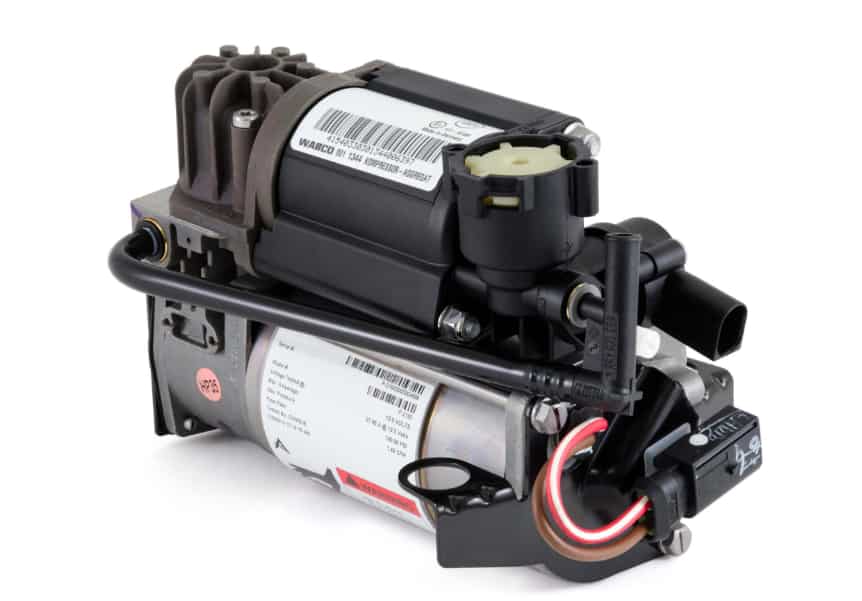
A failing air suspension compressor is another frequent problem. As the compressor ages, it loses the ability to generate enough pressure to support the vehicle. Electrical issues such as a blown fuse, faulty relay, or damaged wiring can also prevent the compressor from operating correctly.
Other components can create similar issues. A worn valve block may distribute air unevenly between the suspension corners, while faulty ride height sensors can send incorrect data to the control module. As a result, the system may raise or lower the vehicle at the wrong time or display suspension warning messages even when no visible leak is present.
Most Mercedes air suspension problems do not result from a single catastrophic failure. They usually begin with one worn component and gradually place additional stress on the rest of the system. Diagnosing the actual cause early helps prevent secondary damage, reduces repair costs, and restores the smooth ride quality that AIRMATIC was designed to deliver.
How to Diagnose Mercedes Air Suspension Problems
A proper diagnosis helps you identify the real cause of the failure before replacing expensive parts. Since several components can produce similar symptoms, inspecting the entire system is more effective than guessing which part has failed.
Start with a visual inspection. Check whether the vehicle sits evenly on all four corners after it has been parked for several hours. Look for cracked air springs, damaged air lines, loose electrical connectors, or signs of air leaks around the suspension components. Even a small crack can reduce system pressure over time.
Next, listen to the air suspension compressor when you start the engine. A healthy compressor should run briefly before stopping. If it continues running for an extended period or produces unusual noise, the system may be losing air pressure or the compressor may be wearing out.
A diagnostic scan provides more accurate information than a visual inspection alone. A Mercedes compatible scan tool can read fault codes from the suspension control module and display live data from ride height sensors, pressure sensors, and other electronic components. These readings help determine whether the problem is mechanical, electrical, or software related.
Finally, test the system after completing any repairs. Confirm that the vehicle reaches the correct ride height, remains level, and no longer displays suspension warning messages. A complete diagnosis not only solves the current problem but also helps prevent future failures by identifying worn components before they cause additional damage.
Mercedes Air Suspension Repair Costs
The cost of repairing a Mercedes AIRMATIC suspension depends on the failed component, the vehicle model, and local labor rates. A small air leak usually costs much less to repair than a damaged compressor or a complete air strut replacement. Getting an accurate diagnosis before replacing parts can save both time and money.
Air springs are among the most common replacement items because the rubber material wears over time. Replacing a single air spring generally costs less than replacing a complete air strut, which includes additional suspension components. If the compressor has worked against a leak for an extended period, it may also require replacement. In that situation, repair costs increase because more than one component has failed.
Electronic parts can also affect the final repair bill. A faulty ride height sensor, valve block, or suspension control module may require additional testing and calibration after installation. Labor costs vary depending on the complexity of the repair and the accessibility of the affected component.
Many owners choose aftermarket parts to reduce expenses, while others prefer original equipment components for their proven fit and reliability. Both options have advantages, but quality should always be a priority. Low quality replacement parts may fail early and create additional repair costs in the future.
Regular inspections and early repairs remain the most effective way to control maintenance expenses. Fixing a small leak before it damages the compressor often costs far less than replacing multiple suspension components at the same time. Investing in proper diagnosis also helps ensure that only the failed part is replaced, avoiding unnecessary repairs and unexpected costs.
Proven Fixes for Mercedes Air Suspension Problems
The best solution depends on the actual cause of the suspension failure. Replacing parts without a proper diagnosis often increases repair costs and leaves the original problem unresolved. For this reason, every repair should begin with a complete inspection of the AIRMATIC system.
If an air spring develops a leak, replacing the damaged unit is usually the most effective solution. Many technicians also inspect the opposite side because both air springs often wear at a similar rate. Replacing worn components early helps prevent unnecessary strain on the compressor.
A weak or noisy compressor should also receive immediate attention. In some cases, replacing the compressor relay or repairing an air leak restores normal operation. However, a compressor that has suffered internal damage usually requires replacement. Installing a new compressor without repairing the original leak can lead to another failure in a short period.
Electrical faults require a different approach. Damaged wiring, faulty ride height sensors, or a defective valve block can prevent the suspension from operating correctly even when the mechanical components remain in good condition. A professional diagnostic scan helps identify these issues and confirms whether calibration or software updates are necessary after the repair.
Routine maintenance also plays an important role in extending the life of the suspension system. Regular inspections, prompt repairs, and high quality replacement parts reduce the risk of major failures. Addressing small problems early keeps the suspension operating efficiently and helps preserve the smooth, comfortable driving experience that Mercedes AIRMATIC is designed to deliver.
Conclusion
Mercedes air suspension problems can range from minor air leaks to major component failures, but they rarely occur without warning. Uneven ride height, frequent compressor operation, suspension warning messages, and poor ride quality often indicate that the AIRMATIC system needs attention. Recognizing these symptoms early gives you the best chance to prevent more extensive and expensive repairs.
Accurate diagnosis is the key to finding the right solution. Replacing parts based on assumptions can increase repair costs and leave the original fault unresolved. A careful inspection of the air springs, compressor, valve block, ride height sensors, and electrical system helps identify the real cause and ensures that only the necessary components are repaired or replaced.
Regular maintenance also plays an important role in keeping the suspension system in good condition. Addressing small air leaks, responding to warning messages promptly, and using high quality replacement parts can extend the lifespan of the AIRMATIC system and improve long term reliability.
Understanding the most common Mercedes air suspension problems allows you to make informed maintenance decisions and avoid unexpected breakdowns. Whether you are dealing with an early warning sign or planning a suspension repair, taking action at the right time will help protect your investment and preserve the comfort, stability, and driving experience that make Mercedes vehicles stand out.