Seeing a Mazda In Vehicle Network Malfunction warning can be alarming. Many drivers think the engine or transmission has failed. In most cases, the warning points to a communication problem inside the vehicle’s electronic network instead. Even a small interruption can trigger multiple warning lights and affect several systems at once.
Modern Mazda vehicles rely on many electronic control modules. These modules manage the engine, transmission, braking system, steering, infotainment system, and advanced safety features. They constantly exchange information through the Controller Area Network, often called the CAN bus. When this network loses communication, the vehicle detects the problem and displays the Mazda In Vehicle Network Malfunction message.
Several issues can interrupt network communication. A weak battery is one of the most common causes. Loose battery terminals, damaged wiring, software glitches, or a faulty control module can also trigger the warning. In some situations, the message appears after replacing the battery because the electronic systems require recalibration.
You should never ignore this warning. The vehicle may continue to drive normally, but the underlying problem can become more serious over time. Early diagnosis helps prevent unexpected breakdowns and reduces the risk of expensive repairs. It also protects important systems such as the brakes, steering, and engine management.
This guide explains everything you need to know about Mazda In Vehicle Network Malfunction. You will learn what the warning means, what symptoms to watch for, and which problems cause it most often. The guide also covers professional diagnostic methods, effective repair solutions, estimated repair costs, and practical maintenance tips. Whether you drive a Mazda CX 5, Mazda CX 30, Mazda CX 50, Mazda3, Mazda6, or another Mazda model, you will find clear answers and practical solutions that help you diagnose the problem with confidence.
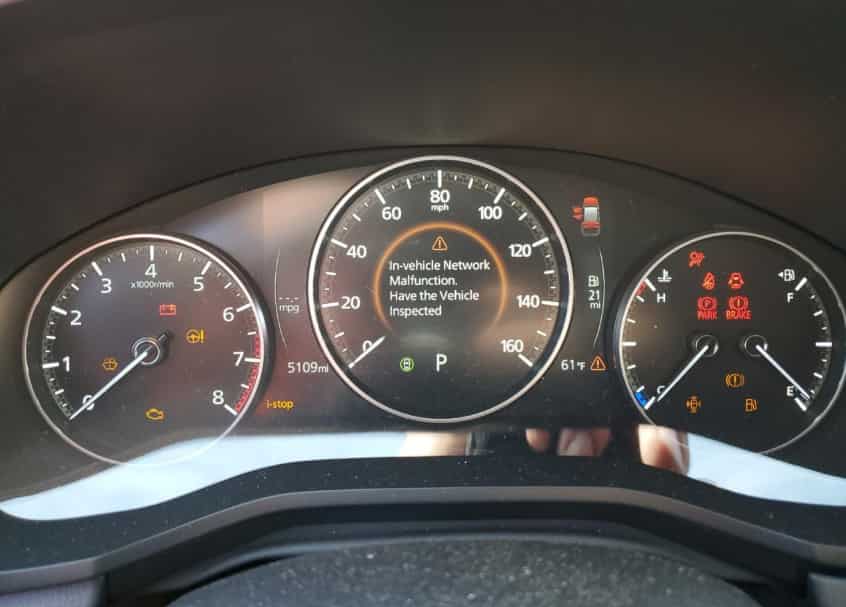
What Does Mazda In Vehicle Network Malfunction Mean?
The Mazda In Vehicle Network Malfunction warning means that your vehicle has detected a communication problem between its electronic control systems. Modern Mazda vehicles use multiple computers to manage different functions, including engine performance, braking, safety technology, transmission operation, and infotainment features. These systems must exchange information continuously to keep the vehicle operating correctly.
Mazda uses a communication system called the Controller Area Network, commonly known as CAN bus. This system allows control modules to share important data with each other. The Powertrain Control Module, Body Control Module, ABS module, and other electronic units depend on this network to coordinate vehicle functions.
When one module cannot communicate properly, the vehicle may display the Mazda In Vehicle Network Malfunction message. This warning does not always mean that a control module has failed. Many cases come from simple electrical problems, such as a weak battery, unstable voltage, loose connections, or damaged wiring.
Drivers may notice several warning lights appearing at the same time. The dashboard may show alerts related to the engine, safety systems, braking system, or driver assistance features. This happens because many vehicle systems share information through the same communication network.
Ignoring this warning can lead to bigger problems. A small electrical issue can affect important vehicle functions if it remains unresolved. Proper diagnosis helps identify the real cause and prevents unnecessary repairs.
To fix the issue correctly, technicians usually begin with battery testing, electrical inspections, and diagnostic scanning. These steps help locate the communication fault and determine the right repair solution for your Mazda.
Common Symptoms of Mazda In Vehicle Network Malfunction
A Mazda In Vehicle Network Malfunction can create different symptoms depending on the affected control module and the cause of the communication problem. Some drivers notice only a warning message on the dashboard, while others experience multiple electrical or driving issues. Understanding these symptoms can help identify the problem before it becomes more serious.
One of the most common signs is the appearance of multiple warning lights. The dashboard may display the Check Engine Light, Master Warning Light, ABS warning, Smart Brake System alert, or other safety system messages. These warnings often appear together because different vehicle systems rely on the same communication network.
Another common symptom involves electronic features that behave incorrectly. The infotainment system may freeze, restart, or stop responding. Drivers may also notice problems with power windows, door locks, keyless entry, or other electrical functions. These issues often indicate that certain control modules are not communicating properly.
Some Mazda owners may experience changes in vehicle performance. The engine may hesitate, lose power, or enter a reduced power mode. The transmission may shift differently because it cannot receive or send accurate information between control systems. In some cases, the vehicle may have difficulty starting due to communication problems between electronic components.
The warning can also appear after specific events, such as battery replacement or jump starting the vehicle. A sudden voltage change can confuse electronic modules and create temporary communication errors. If the warning disappears after a restart, the issue may seem minor, but repeated warnings still require proper inspection.
Recognizing these symptoms helps Mazda owners take action early. A professional diagnosis can identify whether the problem comes from the battery, wiring, software, or a failing control module.
Main Causes of Mazda In Vehicle Network Malfunction
The Mazda In Vehicle Network Malfunction warning can appear for many reasons. Most causes involve problems with electrical power, communication signals, or electronic control systems. Finding the exact cause requires proper testing because the warning does not point to one specific failed component.
A weak or failing battery is one of the most common causes. Mazda vehicles depend on stable voltage to operate many electronic modules. When the battery becomes weak, voltage can drop during startup and interrupt communication between control systems. An old battery, incorrect battery type, or poor charging condition can increase the chance of network errors.
Loose battery terminals and poor ground connections can also trigger this warning. Even a small connection problem can affect the electrical flow between important components. Corrosion around battery terminals or damaged cables may create unstable communication between modules.
Another common cause involves CAN bus communication problems. The CAN bus allows different control modules to exchange information. Damaged wiring, connector issues, or signal interruptions can prevent modules from communicating correctly. When this happens, the vehicle may display multiple warning messages at the same time.
Faulty control modules can also cause network malfunctions. The Powertrain Control Module, Body Control Module, ABS module, or other electronic units may develop internal faults. However, technicians should confirm module failure before replacing expensive components.
Software problems can create similar symptoms. Outdated software, failed updates, or temporary electronic glitches may affect communication between vehicle systems. In some cases, a software update or module reset can solve the problem without replacing hardware.
Understanding these common causes helps Mazda owners avoid unnecessary repairs. A complete diagnosis should always begin with simple checks, such as battery testing and connection inspection, before moving to advanced electrical testing.
Is It Safe to Drive With Mazda In Vehicle Network Malfunction?
When your Mazda displays an In Vehicle Network Malfunction warning, your first question is often whether you can continue driving. The answer depends on the cause of the problem and the symptoms that appear with the warning. Some vehicles can continue operating normally, while others may have issues that affect important safety systems.
If the warning appears once and the vehicle drives normally, you may be able to drive a short distance for further inspection. A temporary voltage drop or minor software issue can sometimes trigger the message without causing immediate performance problems. However, you should still diagnose the issue because the warning may return.
You should avoid driving your Mazda if you notice serious symptoms. These include sudden power loss, difficulty starting the engine, unusual transmission behavior, braking problems, steering issues, or multiple critical warning lights. These signs may indicate a communication failure that affects important vehicle systems.
The Mazda In Vehicle Network Malfunction warning can involve systems such as the ABS, stability control, driver assistance features, and engine management. When these systems cannot communicate correctly, the vehicle may not provide the expected level of safety and performance.
Continuing to ignore the warning can make the problem harder to diagnose. A small electrical issue can develop into a larger failure if you delay inspection. For example, a weak battery can damage the reliability of electronic systems when it repeatedly causes voltage instability.
The safest approach is to perform a basic inspection as soon as possible. Check the battery condition, look for loose connections, and scan the vehicle for diagnostic trouble codes. If the vehicle shows serious symptoms, contact a qualified Mazda technician before driving further.
How to Diagnose Mazda In Vehicle Network Malfunction
Diagnosing a Mazda In Vehicle Network Malfunction requires a step by step approach. The warning can come from many different sources, so replacing parts without proper testing can lead to unnecessary expenses. Technicians usually start with basic electrical checks before moving to advanced communication testing.
The first step involves checking the battery condition. A weak battery can create unstable voltage and interrupt communication between electronic modules. Technicians measure battery voltage when the vehicle is off, during startup, and while the engine is running. These tests help determine whether the battery or charging system causes the problem.
The next step is inspecting battery terminals and ground connections. Loose terminals, corrosion, or damaged cables can reduce electrical stability. Cleaning and securing these connections may solve the issue if poor contact caused the communication failure.
After checking the power supply, technicians use an OBD2 scanner to retrieve diagnostic trouble codes. Communication related problems often create U codes, which indicate that one module cannot communicate with another system. These codes help identify which part of the vehicle network requires further inspection.
A professional diagnosis also includes checking the CAN bus system. Technicians inspect CAN High and CAN Low wiring, connectors, and network resistance. Damaged wires or poor connections can prevent control modules from exchanging information correctly.
The final stage involves testing individual control modules. The Powertrain Control Module, Body Control Module, ABS module, and other electronic units may require additional testing. Technicians confirm module communication before deciding whether repair or replacement is necessary.
A complete diagnosis prevents unnecessary repairs. Many Mazda owners replace expensive components without solving the real problem because they skip basic electrical testing. A proper diagnostic process identifies the actual cause of the Mazda In Vehicle Network Malfunction and provides a reliable repair plan.
How to Fix Mazda In Vehicle Network Malfunction
Fixing a Mazda In Vehicle Network Malfunction depends on the actual cause of the communication problem. Some repairs require only basic electrical maintenance, while others need professional diagnostic equipment and module programming. The correct solution always starts with identifying the source of the failure.
One of the simplest fixes involves checking and replacing the battery. A weak battery can create unstable voltage and affect communication between electronic modules. If the battery cannot maintain proper power, replacing it with the correct specification may resolve the warning. Technicians may also need to perform battery initialization after replacement on certain Mazda models.
Cleaning and securing battery connections can also solve network problems. Corroded terminals, loose connections, or damaged ground cables can interrupt electrical flow. Inspecting these areas should be one of the first steps before replacing expensive components.
If the problem comes from damaged wiring, technicians must repair or replace the affected sections. Water damage, corrosion, rodent damage, or previous repair work can affect communication lines. Proper wiring repair restores stable communication between control modules.
Software related issues may require a module update or reprogramming. Mazda control modules rely on software to communicate correctly. An outdated or corrupted program can create network errors. Updating the software can restore normal operation without replacing hardware.
A faulty control module may require repair or replacement. However, technicians should confirm the failure through testing before installing a new module. Control units such as the Powertrain Control Module, Body Control Module, and ABS module often require programming after replacement.
After completing any repair, technicians should clear diagnostic trouble codes and perform a road test. This final step confirms that all systems communicate correctly and that the Mazda In Vehicle Network Malfunction warning does not return.
Proper diagnosis saves time and money. The most effective repair focuses on the real cause instead of replacing parts based only on warning messages.
How to Reset Mazda In Vehicle Network Malfunction
Many Mazda owners search for ways to reset the Mazda In Vehicle Network Malfunction warning after seeing it appear on the dashboard. A reset can sometimes remove a temporary communication error, but it does not always repair the underlying problem. If the cause remains, the warning will likely return.
The first method involves restarting the vehicle. Turn off the engine, remove the key or switch off the ignition, and allow the electronic systems to shut down completely. After a few minutes, restart the vehicle and check whether the warning disappears. This method may help when a temporary software issue causes the message.
Another common method involves disconnecting and reconnecting the battery. Removing power from the vehicle can reset some electronic modules. However, this method requires caution because it may erase settings, trigger calibration requirements, or create additional warning messages. Always follow proper battery safety procedures before attempting this step.
A more reliable method uses an OBD2 diagnostic scanner. The scanner can read stored diagnostic trouble codes and clear warning messages after repairs. Clearing codes without fixing the cause only removes the symptom temporarily. If the system detects the same communication problem again, the warning will return.
Some Mazda models may require additional procedures after a battery reset. These procedures can include window calibration, steering angle calibration, or system relearning. A professional technician can complete these steps using Mazda compatible diagnostic equipment.
The best way to handle a Mazda In Vehicle Network Malfunction is to combine resetting with proper diagnosis. A reset may remove a temporary error, but a complete inspection identifies why the communication problem happened in the first place. This approach prevents repeated warnings and avoids unnecessary repairs.
Common Diagnostic Trouble Codes Related to Mazda In Vehicle Network Malfunction
When diagnosing a Mazda In Vehicle Network Malfunction, technicians often use diagnostic trouble codes to identify communication problems between electronic modules. These codes provide valuable information about which systems may have lost communication. However, a code does not always mean that the named module has failed.
One common code is U0100 Lost Communication With ECM or PCM. This code indicates that the vehicle cannot communicate with the engine control module or powertrain control module. Possible causes include low battery voltage, wiring problems, connector issues, or a communication network failure.
Another frequent code is U0121 Lost Communication With ABS Control Module. The ABS module controls important safety functions related to braking and stability systems. When communication stops, the vehicle may display ABS, traction control, or stability warning messages.
The U0140 Lost Communication With Body Control Module code points to a possible communication problem with the body control module. This module manages many electrical features, including lighting, door locks, and other body related systems.
The U0155 Lost Communication With Instrument Panel Cluster code indicates that the dashboard display may have lost communication with other vehicle systems. Drivers may notice incorrect warning messages or unusual instrument panel behavior.
Another important code is U3003 Battery Voltage. This code often appears when the vehicle experiences unstable voltage. A weak battery, charging system issue, or poor electrical connection can create voltage problems that affect network communication.
The U3000 Control Module code may indicate a problem related to an electronic control unit. However, technicians must perform additional testing before replacing any module.
Understanding these codes helps technicians diagnose a Mazda In Vehicle Network Malfunction more accurately. The correct repair depends on the complete diagnostic process, including battery testing, wiring inspection, and communication testing. Replacing parts without confirming the cause can lead to unnecessary costs and may not solve the original problem.
Mazda Models Commonly Associated With the Warning
The Mazda In Vehicle Network Malfunction warning can appear on many Mazda models because modern vehicles use similar electronic communication systems. The cause depends on the vehicle condition, model year, maintenance history, and the specific diagnostic codes stored in the system.
The Mazda CX 5 is one of the most popular models where owners may search for this warning. Like other modern SUVs, the CX 5 uses multiple control modules that manage engine performance, safety features, and driver assistance technology. Battery condition, electrical connections, and software issues can affect communication between these systems.
The Mazda3 can also display network related warnings because it relies on advanced electronic systems for daily operation. Owners may experience dashboard alerts, infotainment issues, or multiple warning lights when communication problems occur.
The Mazda CX 30 and CX 50 include many modern safety and convenience features. These additional electronic systems increase the number of control modules that must communicate correctly. A voltage problem or communication fault can affect several features at the same time.
The Mazda6 and Mazda CX 9 also use complex electronic networks. Issues with battery performance, wiring connections, or control module communication may trigger the Mazda In Vehicle Network Malfunction message.
The Mazda MX 5 Miata uses a different vehicle design, but it still depends on electronic communication between important systems. Electrical issues can affect warning systems, engine management, and other vehicle functions.
Although these Mazda models may display similar warnings, each vehicle requires individual diagnosis. The same message can result from different causes depending on the vehicle condition and stored fault codes. Technicians should always check diagnostic information before replacing components.
Understanding your specific Mazda model helps narrow the possible causes, but accurate testing remains the most important step in finding the correct solution.
Mazda In Vehicle Network Malfunction After Battery Replacement
Many Mazda owners notice an In Vehicle Network Malfunction warning after replacing or disconnecting the battery. This situation can be confusing because the vehicle may have worked perfectly before the battery service. In many cases, the warning appears because electronic systems experience a sudden power interruption or voltage change.
Modern Mazda vehicles rely on multiple control modules that store important settings and communication information. When the battery loses power, some modules may need time to restart and reconnect with each other. A temporary communication error can occur during this process and trigger warning messages on the dashboard.
A weak replacement battery can also cause problems. Mazda vehicles require stable voltage to support electronic systems. If the new battery has the wrong specifications, insufficient charge, or poor connection quality, the vehicle may continue experiencing communication issues.
Incorrect battery installation can create another problem. Loose terminals, damaged connectors, or poor ground connections can interrupt electrical flow. Even a small connection issue can affect communication between the Powertrain Control Module, Body Control Module, ABS module, and other electronic systems.
Some Mazda models may require system relearning or calibration after battery replacement. Features such as power windows, steering angle sensors, and safety systems may need additional setup. A professional diagnostic tool can help complete these procedures and confirm that all modules communicate correctly.
Resetting the warning message may temporarily remove the Mazda In Vehicle Network Malfunction, but it does not always solve the actual cause. If the warning returns after a battery replacement, technicians should check battery voltage, electrical connections, stored diagnostic trouble codes, and module communication.
Proper battery installation and testing can prevent many network problems. Before replacing expensive electronic components, Mazda owners should confirm that the battery and electrical system work correctly.
Repair Cost for Mazda In Vehicle Network Malfunction
The repair cost for a Mazda In Vehicle Network Malfunction depends on the actual cause of the communication problem. Some cases require only a simple battery service, while others may involve complex electrical repairs or control module replacement. A proper diagnosis is the most important step before spending money on repairs.
Battery related problems are usually among the most affordable repairs. A technician may only need to test the battery, clean the terminals, or replace an old battery. If poor connections cause the warning, repairing or cleaning the battery terminals and ground points may solve the issue with minimal cost.
Wiring problems can create higher repair expenses because technicians need to locate the damaged section and restore proper communication. The final cost depends on the location of the damage, the amount of labor required, and whether connectors or wiring harness sections need replacement.
Software updates and module programming can also affect repair costs. Some Mazda vehicles may require specialized diagnostic equipment to update control modules or complete calibration procedures. These services often take less time than physical repairs but require professional tools.
Control module replacement represents one of the more expensive solutions. Components such as the Powertrain Control Module, Body Control Module, or ABS module can require replacement and programming. However, technicians should confirm module failure before installation because communication codes do not always mean the module itself has failed.
The best way to control repair costs is to diagnose the problem early. Ignoring a Mazda In Vehicle Network Malfunction can allow a small electrical issue to develop into a larger repair. A complete inspection helps identify the real cause and prevents unnecessary replacement of expensive components.
Before approving major repairs, Mazda owners should request a detailed diagnostic report. Understanding the cause of the malfunction helps ensure that the repair addresses the actual problem instead of only clearing the warning message.
How to Prevent Future Network Malfunctions
Preventing a Mazda In Vehicle Network Malfunction starts with maintaining the vehicle’s electrical system. Modern Mazda vehicles depend on stable power and reliable communication between multiple electronic modules. Regular maintenance can reduce the risk of unexpected warning messages and expensive repairs.
Battery care is one of the most important prevention steps. A weak battery can create voltage instability and affect communication between control modules. Mazda owners should check battery health regularly, especially before extreme weather conditions. Replacing an aging battery before complete failure can prevent many electrical problems.
Keeping battery terminals clean and secure also helps maintain proper electrical flow. Corrosion, loose connections, and damaged cables can interrupt communication between vehicle systems. Regular inspections can identify these problems before they trigger warning messages.
Avoiding poor quality aftermarket installations can also protect the vehicle network. Accessories such as dash cameras, remote starters, audio systems, and tracking devices can create electrical problems if technicians install them incorrectly. Always choose qualified installers who understand Mazda electrical systems.
Water protection plays an important role in preventing communication failures. Moisture can damage wiring, connectors, and electronic modules. Repairing water leaks quickly and checking damaged areas after accidents can reduce the risk of future network issues.
Keeping vehicle software updated can also improve system reliability. Mazda control modules use software to manage communication between different systems. Updated software can fix known issues and improve electronic performance.
Finally, do not ignore early warning signs. Repeated dashboard warnings, unusual electrical behavior, or starting problems often indicate a developing issue. Early diagnosis can prevent a minor problem from becoming a major repair.
Following these maintenance practices helps reduce the chance of another Mazda In Vehicle Network Malfunction and keeps the vehicle’s electronic systems working properly for longer.
Frequently Asked Questions About Mazda In Vehicle Network Malfunction
Can a weak battery cause Mazda In Vehicle Network Malfunction?
Yes, a weak battery can cause a Mazda In Vehicle Network Malfunction warning. Low voltage can interrupt communication between electronic control modules. When the battery cannot provide stable power, multiple systems may display warning messages at the same time.
Can I drive with Mazda In Vehicle Network Malfunction?
You may be able to drive for a short distance if the vehicle operates normally. However, you should avoid driving if you notice power loss, braking issues, steering problems, transmission problems, or multiple critical warning lights. A professional inspection can help determine whether the vehicle remains safe.
Will disconnecting the battery reset the warning?
Disconnecting the battery may remove a temporary communication error, but it does not always fix the underlying cause. If the vehicle has a battery problem, wiring issue, or faulty module, the warning may return after the reset.
Does Mazda In Vehicle Network Malfunction mean the ECU is damaged?
Not always. The warning indicates a communication problem between electronic systems. The issue may come from low voltage, damaged wiring, poor connections, software problems, or a control module fault. Technicians need diagnostic testing before replacing the ECU.
Why did the warning appear after replacing the Mazda battery?
The warning can appear after battery replacement because the vehicle experiences a power interruption. Some modules may need to reconnect or complete calibration procedures. Incorrect battery specifications or poor terminal connections can also trigger the message.
Can an OBD2 scanner diagnose Mazda In Vehicle Network Malfunction?
Yes, an OBD2 scanner can help identify communication related fault codes. It can show which modules have lost communication and provide useful information for diagnosis. However, technicians may need additional testing to confirm the exact cause.
How much does it cost to fix Mazda In Vehicle Network Malfunction?
The repair cost depends on the cause. Battery replacement, terminal cleaning, or software updates usually cost less than wiring repairs or control module replacement. A proper diagnosis helps prevent unnecessary expenses.
Can aftermarket accessories cause this warning?
Yes, incorrectly installed accessories can interfere with the vehicle network. Poor wiring from dash cameras, audio systems, alarms, or tracking devices can create communication problems between electronic modules.
When should I visit a Mazda technician?
You should contact a Mazda technician when the warning appears repeatedly, affects vehicle performance, or appears with safety related warnings. Professional diagnosis can identify the real problem and prevent further damage.
Conclusion
The Mazda In Vehicle Network Malfunction warning can be confusing, but it does not always mean your vehicle has a major mechanical failure. In many cases, the problem starts with simple electrical issues such as a weak battery, poor connections, unstable voltage, or damaged wiring. However, some situations may involve software problems, CAN bus communication failures, or faulty control modules.
The most important step is accurate diagnosis. Replacing expensive components without proper testing can waste money and may not solve the original problem. Checking the battery, inspecting electrical connections, scanning diagnostic trouble codes, and testing module communication can help identify the real cause.
Mazda vehicles rely on complex electronic networks to control important systems such as engine management, braking, safety features, and driver assistance technology. Addressing communication problems early can help maintain vehicle reliability and prevent larger repair costs in the future.
If your Mazda displays an In Vehicle Network Malfunction warning, do not ignore it. Start with basic checks and seek professional assistance if the warning continues or affects driving performance.
Have you experienced this warning on your Mazda? Share your Mazda model, vehicle year, symptoms, and any diagnostic codes you found. Your experience may help other Mazda owners understand and solve similar network communication problems.