Seeing the Mazda Depress Brake Pedal to Start Engine message can be frustrating, especially when your vehicle refuses to start even though you are pressing the brake pedal. Many Mazda owners assume this warning points to a serious mechanical failure. In reality, the message is often part of the vehicle’s normal starting sequence. However, if it remains on the screen after you press the brake, it usually means the system cannot confirm one of the conditions required to start the engine.
Modern Mazda vehicles use a smart push button start system that depends on several components working together. The brake pedal switch, key fob, vehicle battery, transmission position, and ignition system must all communicate correctly before the engine can start. If just one of these components fails to respond, the vehicle may continue displaying the Mazda Depress Brake Pedal to Start Engine message instead of starting normally.
Fortunately, many of the most common causes are simple to identify. A weak battery, a worn brake light switch, a low key fob battery, or even an improperly positioned gear selector can all trigger the same warning. Some issues can be resolved in just a few minutes without special tools, while others require professional diagnosis to prevent further electrical or starting problems.
This guide explains exactly what the Mazda Depress Brake Pedal to Start Engine message means, why it appears, and how to fix it step by step. You will also learn how to recognize the warning signs of more serious faults, estimate possible repair costs, and prevent the problem from returning in the future. By the end of this article, you will know how to troubleshoot the issue with confidence and decide when it is time to seek professional assistance.
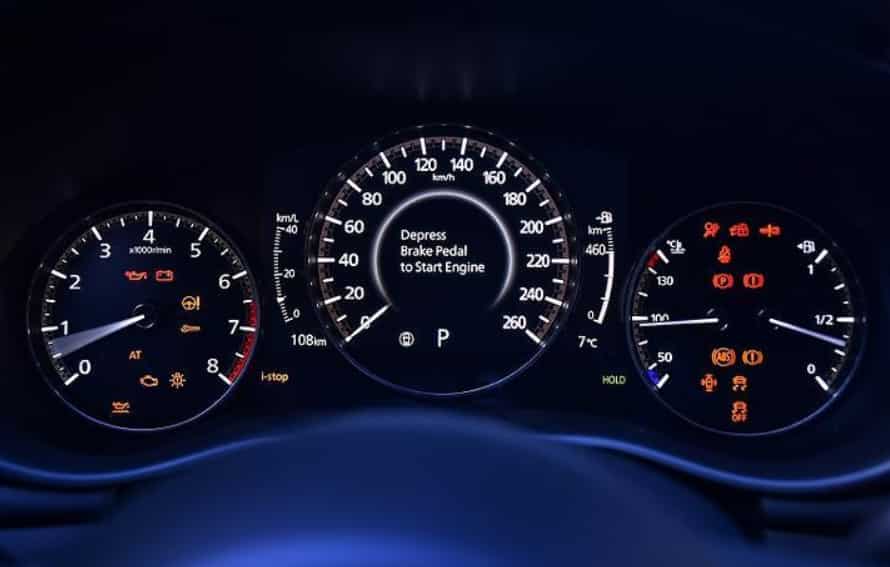
What Does “Mazda Depress Brake Pedal to Start Engine” Mean?
The Mazda Depress Brake Pedal to Start Engine message is a normal instruction from the push button start system. It tells the driver to press the brake pedal before starting the engine. Mazda uses this safety feature to prevent accidental engine activation.
The starting system checks several conditions before it allows the engine to run. The vehicle needs to detect the smart key inside the cabin. The transmission must stay in the Park position. The brake pedal switch must also send the correct signal.
When everything works correctly, the message disappears after you press the brake pedal. The engine then starts normally. Many Mazda owners see this message during daily driving and never experience a problem.
The issue begins when the message stays on after you press the brake pedal. This means the vehicle cannot confirm an important starting condition. The problem may come from a weak battery, a damaged brake switch, a low key fob battery, or another electrical issue.
The warning does not always identify the exact cause. Instead, it tells you that the vehicle cannot complete the starting process. The system waits for the missing signal before it allows the engine to start.
For example, a faulty brake light switch can create this message even when the driver presses the pedal correctly. A weak battery can also confuse the vehicle’s electronic systems and prevent a normal startup.
Understanding this message helps you avoid unnecessary repairs. You should always start with simple checks before replacing expensive parts. Check the brake pedal, key fob, battery, and transmission position first.
A logical troubleshooting process saves time and money. It also helps you decide whether you can fix the problem yourself or need professional help.
Why Does My Mazda Say “Depress Brake Pedal to Start Engine”?
The Mazda Depress Brake Pedal to Start Engine message appears when the vehicle cannot complete the normal starting process. In many cases, the system simply needs a clear signal from the brake pedal before it allows the engine to start. However, if the message remains after you press the brake pedal, your Mazda may have another issue that needs attention.
Several components work together during the starting process. The brake pedal switch, key fob, 12 volt battery, transmission system, and starter system all play important roles. When one component fails to send the correct signal, the vehicle may stop the starting process and continue showing the brake pedal message.
The most common causes usually involve simple issues that drivers can check themselves. A weak battery can reduce electrical power and affect the starting system. A low key fob battery can prevent the vehicle from recognizing the key. A faulty brake pedal switch can stop the vehicle from detecting that you pressed the brake.
The transmission position can also create this problem. Mazda vehicles with automatic transmissions require the gear selector to stay in Park before the engine can start. If the system does not detect the correct position, it may block the startup process.
Some Mazda owners also experience this message because of electrical problems. A damaged fuse, loose wiring connection, or failing starter component can prevent the vehicle from receiving the signals it needs.
Before visiting a mechanic, you can perform several basic checks. Press the brake pedal firmly, confirm the vehicle stays in Park, check whether the brake lights work, and test the key fob battery. These simple steps can help you identify common problems without spending money on unnecessary repairs.
Understanding the possible causes makes troubleshooting easier. Instead of replacing parts without evidence, you can follow a clear inspection process and find the real source of the starting issue.
Common Causes and Easy Fixes
The Mazda Depress Brake Pedal to Start Engine message can appear for several reasons. Some causes require only a quick adjustment, while others need a deeper inspection. You should always begin with the simplest checks first. This approach helps you save time and avoid unnecessary repair costs.
Brake Pedal Not Fully Depressed
The most common reason for this message is a brake pedal that does not receive enough pressure. Mazda vehicles need a clear brake signal before they allow the engine to start. If you press the pedal lightly, the system may not recognize your action.
Many drivers experience this situation after the engine has been off for a long time. The brake pedal can feel harder because the brake assist system does not work without engine vacuum. As a result, the driver may need to apply more pressure than expected.
A floor mat or object near the driver’s feet can also limit pedal movement. Even a small obstruction can prevent the brake switch from activating correctly.
You can fix this problem by pressing the brake pedal firmly and holding it while you press the Start button. Make sure nothing blocks the pedal area. If the engine starts after this step, your Mazda likely does not have a serious issue.
Faulty Brake Light Switch
The brake light switch plays an important role in the Mazda starting system. This small component sits near the brake pedal and sends a signal when you press the pedal. The vehicle uses this signal to confirm that you are ready to start the engine.
A damaged brake light switch can create the Mazda Depress Brake Pedal to Start Engine message even when you press the brake correctly. The vehicle may not understand that the brake pedal is active.
A faulty switch often creates other symptoms. The brake lights may not turn on when you press the pedal. In some cases, the brake lights may stay on even when you release the pedal. The vehicle may also refuse to move out of Park.
You can perform a simple check by asking someone to watch the brake lights while you press the pedal. If the lights do not respond, the brake switch or its related circuit may need inspection.
Replacing a brake light switch usually requires less time than repairing major electrical components. However, you should confirm the problem before replacing the part.
Weak or Dead 12 Volt Battery
A weak 12 volt battery is another common cause of Mazda starting problems. Many drivers assume the battery only affects engine cranking. However, modern vehicles rely on stable electrical power for many electronic systems.
When the battery voltage drops, the push button start system may not communicate correctly with other components. The vehicle may display unusual warnings, including the Mazda Depress Brake Pedal to Start Engine message.
A weak battery usually shows several warning signs. The dashboard lights may look dim. The starter may produce a clicking sound. The engine may crank slowly or fail to crank at all. You may also notice that electrical features work differently than usual.
You can check the battery condition by inspecting the terminals and testing the voltage. Clean any corrosion around the battery connections. If the battery cannot hold enough charge, replacement may become necessary.
A healthy battery helps every electronic system work correctly. Regular battery testing can prevent unexpected starting problems.
Low Key Fob Battery
The key fob allows your Mazda to identify the correct vehicle key. When the key fob battery becomes weak, the vehicle may struggle to detect the signal. This problem can interrupt the normal starting process.
A low key fob battery can create symptoms that look similar to other electrical problems. The vehicle may display a key warning. The Start button may not respond normally. The engine may fail to start even though the brake pedal works correctly.
You can try holding the key fob close to the Start button while pressing the brake pedal. Many Mazda models support this emergency starting method when the key fob battery becomes weak.
Replacing the key fob battery is usually simple and inexpensive. However, you should also check for other possible causes if the problem continues after installing a new battery.
Transmission Not Fully in Park
The transmission position plays an important role in the Mazda starting process. Automatic Mazda models usually require the gear selector to stay in Park before the engine can start. If the vehicle cannot confirm the correct gear position, it may display the Mazda Depress Brake Pedal to Start Engine message.
This problem can happen when the gear selector does not fully engage in Park. It may also appear after parking on an incline because pressure on the transmission system can prevent a complete Park position signal.
Drivers may notice a few common signs. The engine may refuse to start even though the brake pedal works correctly. The Start button may respond normally, but the vehicle does not activate the starter. In some cases, moving the gear selector slightly can change the vehicle’s response.
You can try a simple solution. Press the brake pedal firmly, move the gear selector back into Park, and try starting the engine again. If the problem continues, move the selector to Neutral and attempt to start the vehicle if your owner’s manual allows this procedure.
A repeated transmission position issue may indicate a problem with the shift position sensor or related components. In that situation, professional diagnosis can help prevent further starting problems.
Push Button Start System Cannot Detect the Key
The push button start system depends on communication between the vehicle and the key fob. When the system cannot detect the correct key signal, your Mazda may prevent the engine from starting. The vehicle may continue showing the brake pedal message because it has not completed the security verification process.
Several situations can affect key detection. The key fob battery may be weak. The key may be outside the detection range. Other electronic devices near the key may interfere with the signal. A damaged key fob or vehicle receiver can also create communication problems.
You may notice additional warning signs. The vehicle may display a key not detected message. The Start button may show an unusual color. The doors may also lock or unlock inconsistently.
You can try several quick solutions before seeking professional help. Keep the key fob inside the cabin. Move it away from smartphones or other electronic devices. Try using a spare key if one is available. If the vehicle starts with the spare key, the original key fob may need attention.
If both keys fail to work, the problem may involve the vehicle’s keyless entry system. A technician can inspect the communication system and identify the faulty component.
Starter Motor, Fuse, or Wiring Problems
Some Mazda starting problems come from electrical or mechanical failures. These issues usually appear after you check the simpler causes, such as the brake pedal, battery, and key fob.
The starter motor receives power from the battery and turns the engine during startup. If the starter fails, the vehicle may show normal dashboard functions but still refuse to start. A faulty starter relay or damaged wiring can create similar symptoms.
A blown fuse can also interrupt the starting process. Fuses protect electrical circuits from damage. When a fuse fails, the related system may stop working until you replace the damaged component.
Common signs of electrical problems include no engine cranking, repeated clicking sounds, intermittent starting, or multiple warning lights appearing together. These symptoms often require more detailed testing.
You can begin by checking the battery connections and inspecting the related fuses. Always use the correct fuse type recommended for your Mazda model. If the problem continues, a professional technician can test the starter system, wiring connections, and control modules.
Avoid replacing expensive parts without proper diagnosis. Electrical problems can have similar symptoms, so accurate testing helps you find the real cause faster.
Quick Troubleshooting Checklist
When your Mazda shows the Mazda Depress Brake Pedal to Start Engine message, a quick inspection can help you identify the possible cause. Start with the easiest checks before moving to more complex systems. The table below helps you connect common symptoms with likely causes and practical solutions.
| Symptom | Possible Cause | Recommended Fix |
|---|---|---|
| The message appears even after pressing the brake pedal | Brake pedal switch problem or insufficient pedal pressure | Press the brake firmly and check if the brake lights work |
| The engine does not crank and the dashboard lights look weak | Weak or dead 12 volt battery | Test the battery voltage and inspect battery connections |
| The vehicle does not recognize the key fob | Low key fob battery or key detection issue | Replace the key fob battery or use the emergency start method |
| The brake lights do not turn on | Faulty brake light switch, fuse, or wiring issue | Inspect the brake light system before replacing parts |
| The vehicle starts after moving the gear selector | Transmission position sensor or Park position issue | Confirm the vehicle stays fully in Park before starting |
| The Start button shows an unusual warning light | Push button start system or key communication problem | Check the key fob and scan the vehicle for fault codes |
| The vehicle makes clicking sounds but does not start | Battery, starter relay, or starter motor issue | Test the battery and inspect the starting system |
| The problem happens only sometimes | Intermittent electrical connection or weak component | Perform a complete electrical diagnosis |
A simple troubleshooting order can make the repair process much easier. First, check the brake pedal and confirm that you press it firmly. Next, inspect the brake lights because they provide a quick indication of whether the brake switch works correctly.
After that, check the key fob and vehicle battery. These two components often create starting problems without obvious warning signs. A weak battery can affect multiple electronic systems at the same time.
If these basic checks do not solve the problem, move to more advanced inspections. The starter system, wiring connections, fuses, and control modules may require professional testing.
The goal is not to replace parts randomly. Each symptom provides valuable information about the possible cause. A careful troubleshooting process helps you find the real problem faster and avoid unnecessary repair expenses.
Step by Step Guide to Fix the Problem
The Mazda Depress Brake Pedal to Start Engine message does not always require professional repair. In many cases, you can identify and solve the issue by following a simple inspection process. Start with basic checks because they are faster, safer, and usually cost nothing.
Step 1: Press the Brake Pedal Correctly
Begin by checking how you press the brake pedal. Mazda vehicles need a clear signal from the brake pedal switch before the engine can start. A light press may not activate the system.
Sit in the driver’s seat and press the brake pedal firmly. Keep your foot on the pedal while pressing the Start button. Make sure you do not release the brake too early.
Also, check the area around the pedal. Floor mats, personal items, or other objects can limit pedal movement. Remove anything that prevents the pedal from moving fully.
If the engine starts after this step, the vehicle likely does not have a major problem. The system simply needed a stronger brake signal.
Step 2: Confirm the Transmission Is in Park
Your Mazda checks the transmission position before starting the engine. The vehicle needs to know that the gear selector is safely in Park.
Look at the gear indicator on the dashboard. Make sure it shows the Park position clearly. If the indicator looks incorrect, move the gear selector firmly into Park again.
You can also try shifting to Neutral and starting the vehicle if your owner’s manual allows this method. If the vehicle starts in Neutral but not in Park, the transmission position sensor may need inspection.
A proper transmission signal helps the starting system work safely. Ignoring this issue can lead to repeated starting problems.
Step 3: Check the Brake Lights
The brake lights provide a quick way to test the brake pedal switch. When you press the brake pedal, the lights should turn on immediately.
Ask another person to stand behind the vehicle while you press the pedal. If the brake lights do not work, the brake switch, fuse, or wiring may have a problem.
If the brake lights stay on after you release the pedal, the switch may also be faulty. This issue can drain the battery and create additional electrical problems.
A working brake light system helps both safety features and the engine starting system operate correctly.
Step 4: Test the Key Fob
The smart key system must recognize the correct key before your Mazda starts. A weak key fob battery can prevent normal communication between the key and vehicle.
Try holding the key fob close to the Start button while pressing the brake pedal. Many Mazda models can start this way when the key battery becomes weak.
You should also remove the key from your wallet or other electronic devices. Nearby signals can sometimes interfere with key detection.
If you have a spare key, test it as well. A spare key that works normally can help confirm that the original key fob has a problem.
Step 5: Inspect the 12 Volt Battery
The vehicle battery provides power for the starter and electronic control systems. A weak battery can create confusing warnings, including the Mazda Depress Brake Pedal to Start Engine message.
Check for common battery symptoms. These include dim dashboard lights, slow engine cranking, clicking sounds, and unusual electrical behavior.
Inspect the battery terminals for corrosion or loose connections. Clean the terminals carefully if needed. If the battery is several years old, a battery test can confirm its condition.
A healthy battery supports reliable starting and prevents many electrical issues.
Step 6: Check the Relevant Fuses
Fuses protect important electrical circuits in your Mazda. A damaged fuse can stop the brake lights, starter system, or other components from working correctly.
Check your owner’s manual to find the correct fuse locations. Inspect the related fuses for damage and replace only the fuse with the correct specification.
Never install a fuse with a higher rating. Doing so can create electrical risks and damage vehicle components.
Step 7: Scan the Vehicle for Fault Codes
If the previous steps do not solve the problem, your Mazda may have a deeper electrical issue. A diagnostic scanner can read stored fault codes from the vehicle computer.
Fault codes can provide useful information about the brake switch, keyless entry system, battery voltage, starter system, or control modules.
Professional diagnosis becomes more valuable when the problem happens repeatedly. Accurate testing helps technicians repair the correct component instead of replacing parts based on guesses.
Following these steps gives you a clear method to diagnose the Mazda Depress Brake Pedal to Start Engine issue. Start with simple solutions first, then move toward advanced checks only when necessary.
Can You Start a Mazda with a Dead Key Fob Battery?
Yes, many Mazda vehicles can still start even when the key fob battery becomes weak or completely dead. The smart key system includes an emergency recognition method that allows the vehicle to identify the key without normal wireless communication.
When the key fob battery becomes too weak, your Mazda may show warning messages or fail to detect the key normally. You may see a key warning light, an unusual Start button indicator, or the Mazda Depress Brake Pedal to Start Engine message even after pressing the brake pedal.
The first solution is to place the key fob close to the Start button. Press the brake pedal firmly and hold the key fob near the button while you press Start. The vehicle can often read the key signal through a backup detection system.
Different Mazda models may use slightly different emergency starting procedures. The exact method depends on the model year and equipment package. Checking the owner’s manual for your specific Mazda provides the most accurate instructions.
A weak key fob battery usually creates warning signs before it completely stops working. You may notice reduced remote range, delayed door locking or unlocking, or inconsistent key recognition. Replacing the key fob battery early can prevent unexpected starting problems.
You should also remember that a dead key fob battery is different from a dead vehicle battery. The key fob controls communication with the vehicle, while the 12 volt battery powers the vehicle’s main electrical systems. A new key fob battery will not solve problems caused by a weak car battery.
If your Mazda still cannot start after using the emergency key detection method, check other possible causes. The problem may involve the brake pedal switch, vehicle battery, starter system, or keyless entry components.
Keeping a spare key and replacing the key fob battery regularly can reduce the chance of being stranded. These simple maintenance steps help your Mazda starting system work more reliably.
Repair Costs
The repair cost for the Mazda Depress Brake Pedal to Start Engine problem depends on the actual cause. Some solutions require only a few minutes and cost very little. Other repairs may involve electrical diagnosis, replacement parts, or professional labor.
The best approach is to identify the real cause before spending money. Many drivers replace expensive components too quickly because several different problems can create the same starting message. A proper inspection helps you avoid unnecessary repairs.
| Possible Repair | Difficulty Level | Estimated Cost Range |
|---|---|---|
| Replace key fob battery | Easy | $5 to $20 |
| Clean battery terminals | Easy | Minimal cost |
| Replace 12 volt vehicle battery | Easy to Moderate | $100 to $300 |
| Replace brake light switch | Moderate | $100 to $250 |
| Replace fuse | Easy | $5 to $50 |
| Repair damaged wiring | Moderate to Difficult | $100 to $500 or more |
| Replace starter motor | Difficult | $300 to $900 or more |
| Diagnose push button start system | Advanced | $100 to $200 for diagnostic service |
A key fob battery replacement is usually the cheapest solution. Most owners can complete this task at home with basic tools. If the key fob battery causes the problem, replacing it can restore normal starting operation immediately.
A weak 12 volt battery requires more attention because it affects multiple vehicle systems. Battery replacement costs vary depending on the battery type, Mazda model, and labor charges. Some owners can replace the battery themselves, while others prefer professional installation.
A faulty brake light switch usually costs more than a battery replacement but remains a relatively simple repair. The technician needs to access the switch near the brake pedal and confirm that it sends the correct signal.
Electrical problems often create the highest uncertainty. A damaged wire, control module issue, or communication problem may require additional diagnostic time. Technicians usually need specialized equipment to locate the exact fault.
A starter motor replacement represents a more serious repair because the component requires more labor. However, starter failure usually creates additional symptoms, such as clicking sounds or no engine movement.
Before approving any repair, ask for a complete diagnosis. A professional technician should identify the failed component instead of replacing parts based only on the warning message.
Regular maintenance can reduce the chance of expensive repairs. Checking the vehicle battery, replacing the key fob battery when needed, and inspecting brake lights regularly can help prevent many starting problems.
Is It Safe to Drive?
Whether you can safely drive with the Mazda Depress Brake Pedal to Start Engine message depends on the cause of the problem. Some situations only involve the normal starting process. Other cases may point to a problem with the brake system, battery, or electronic components.
If your Mazda starts normally after you press the brake pedal, you can usually continue driving. The message may simply appear as part of the vehicle’s standard push button start procedure. However, you should monitor the situation if the warning appears frequently.
A faulty brake light switch requires more attention. This component helps the vehicle detect brake pedal movement. It also controls the brake lights. If the brake lights fail, other drivers may not see when you slow down or stop. This creates a serious safety concern.
You should avoid driving when your Mazda shows signs of a major starting or electrical problem. For example, the engine may fail to start several times. The dashboard may display multiple warning lights. The vehicle may also lose electrical power or produce unusual sounds during startup.
A weak 12 volt battery can create another risk. Your Mazda may start today but fail without warning later. If you need repeated jump starts, test the battery as soon as possible.
Do not continue driving if you notice these warning signs:
The brake lights do not work.
The vehicle cannot recognize the key fob.
The Start button shows an abnormal warning light.
The engine does not crank or only makes clicking sounds.
The vehicle starts only after several attempts.
The warning appears together with other serious dashboard alerts.
The best approach is to check the simple causes first. Confirm that the brake pedal works correctly. Check the brake lights. Test the key fob battery. Inspect the vehicle battery condition.
If the message keeps returning, schedule a professional inspection. A proper diagnosis can find the real cause and prevent a sudden starting failure.
How to Prevent the Warning from Coming Back
Preventing the Mazda Depress Brake Pedal to Start Engine message from returning starts with regular vehicle care. Many starting problems develop slowly before they become serious. Simple maintenance habits can help your Mazda start reliably and reduce unexpected failures.
One of the easiest steps is to replace the key fob battery before it becomes completely weak. A low key fob battery can make the vehicle struggle to recognize the key. If you notice a shorter remote range or delayed response from the buttons, replace the battery early.
You should also check the condition of your 12 volt battery regularly. Vehicle batteries lose performance over time, especially in extreme temperatures. A weak battery can affect the starter system, electronic controls, and push button start operation. Testing the battery voltage during routine service can help identify problems before the vehicle fails to start.
Keeping the battery terminals clean is another important step. Corrosion around the terminals can reduce electrical flow and create unstable connections. Inspect the terminals occasionally and clean them when necessary.
The brake system also needs regular attention. Check your brake lights from time to time to make sure they turn on correctly. If the lights behave differently or stay on after releasing the brake pedal, inspect the brake light switch and related components.
Keep the driver’s footwell clear to prevent objects from blocking the brake pedal. Floor mats should fit correctly and should not interfere with pedal movement. A restricted brake pedal can prevent the vehicle from receiving the correct starting signal.
You should also avoid placing electronic devices close to your key fob for long periods. Strong signals from other devices may interfere with key communication in some situations.
Regular maintenance helps your Mazda starting system work correctly. By checking the key fob, battery, brake lights, and pedal area, you can reduce the chance of seeing the Mazda Depress Brake Pedal to Start Engine message unexpectedly.
A small amount of prevention can save time, money, and frustration. Taking care of these basic components helps your Mazda deliver a more reliable driving experience.
Frequently Asked Questions
Why won’t my Mazda start even when I press the brake?
If your Mazda does not start after you press the brake pedal, the vehicle may not receive the correct starting signal. The most common causes include a weak battery, faulty brake pedal switch, low key fob battery, or a transmission position issue.
Start by checking the simple things first. Press the brake pedal firmly, confirm the gear selector is in Park, and check whether the brake lights work. If these checks do not solve the problem, the vehicle may need further diagnosis.
Can a weak battery cause the Mazda Depress Brake Pedal to Start Engine message?
Yes, a weak 12 volt battery can cause this message. Modern Mazda vehicles depend on stable electrical power for many systems, including the push button start system.
When battery voltage drops, the vehicle may not communicate correctly with the brake switch, key fob, or starter system. A weak battery can also create other symptoms, such as dim lights, slow engine cranking, or clicking sounds during startup.
How do I start a Mazda with a dead key fob battery?
Many Mazda models allow emergency starting when the key fob battery becomes weak or empty. Place the key fob close to the Start button, press the brake pedal firmly, and press the Start button.
The exact procedure may vary depending on the Mazda model and model year. Always check your owner’s manual for the correct emergency starting method.
How do I know if my Mazda brake switch is bad?
A faulty brake switch can create several warning signs. The brake lights may not turn on when you press the pedal. They may also stay on after you release the pedal.
Another common symptom is the Mazda Depress Brake Pedal to Start Engine message staying on even when you press the brake correctly. A technician can test the switch to confirm whether it sends the correct signal.
Can I start my Mazda without pressing the brake pedal?
No, Mazda vehicles with automatic transmissions and push button start systems require the brake pedal signal before starting the engine. This safety feature prevents accidental vehicle movement during startup.
If the vehicle does not recognize the brake pedal, the engine will not start until the system receives the correct signal.
Why is my Mazda brake pedal hard when the engine is off?
A hard brake pedal is often normal when the engine is off. The brake assist system depends on engine vacuum to reduce pedal effort. After the engine stops, repeated pedal presses can remove the remaining vacuum and make the pedal feel harder.
However, if the brake pedal feels unusual while driving or requires excessive force, you should have the brake system inspected.
An orange or amber Start button may indicate a problem with the push button start system or key recognition process. The vehicle may not detect the key fob correctly, or another starting condition may not be satisfied.
Check the key fob battery, keep the key inside the vehicle, and look for other warning messages. If the indicator continues, professional diagnosis may be necessary.
Will replacing the key fob battery fix the starting problem?
Replacing the key fob battery can fix the problem if the vehicle cannot recognize the key because of a weak battery. However, it will not solve issues caused by a weak vehicle battery, faulty brake switch, starter failure, or electrical problems.
A proper diagnosis helps identify the real cause before replacing parts.
Should I disconnect the Mazda battery to reset the warning?
Disconnecting the battery may temporarily reset some electronic warnings, but it does not repair the underlying problem. If a faulty component continues to send incorrect signals, the message will likely return.
Use battery disconnection only when recommended by a qualified technician or the vehicle manufacturer.
When should I take my Mazda to a mechanic?
You should seek professional help when the vehicle repeatedly fails to start, the warning appears frequently, or basic checks do not solve the issue.
A mechanic can inspect the brake switch, battery condition, starter system, wiring, and electronic control modules. Accurate diagnosis prevents unnecessary part replacement and helps restore reliable starting performance.
Conclusion
The Mazda Depress Brake Pedal to Start Engine message is usually a simple instruction, but it can also point to a starting system problem when it does not disappear after pressing the brake pedal. Understanding the possible causes helps you avoid unnecessary repairs and find the right solution faster.
The most common reasons include a weak 12 volt battery, a low key fob battery, a faulty brake light switch, an incorrect transmission position, or a problem with the push button start system. Many of these issues require only basic checks before you consider professional repair.
Start with the easiest solutions first. Press the brake pedal firmly, confirm the vehicle stays in Park, check the brake lights, test the key fob, and inspect the battery condition. These simple steps can often identify the problem without expensive diagnostic work.
However, repeated starting problems should not be ignored. A faulty brake switch, electrical issue, or failing starter system can become more serious over time. A professional inspection can help you identify the exact cause and prevent unexpected breakdowns.
Regular maintenance also plays an important role. Replacing the key fob battery, testing the vehicle battery, and checking brake lights can reduce the chance of future starting issues.
Have you experienced the Mazda Depress Brake Pedal to Start Engine message on your vehicle? Share your Mazda model, model year, and symptoms. Your experience may help other Mazda owners find the right solution faster.