Kia’s Blind Spot Collision Warning: How It Works and Why It Matters for Driving Safety is an important topic as modern cars focus more on safety technology. Blind spot accidents still happen often on roads today. Drivers cannot always see vehicles outside their direct view. This creates risk during lane changes, especially in heavy traffic or at high speed.
Kia designed the Blind Spot Collision Warning system to reduce this risk. The system monitors areas that drivers cannot easily see. It uses sensors to detect vehicles in blind spots and warns the driver in real time. This helps drivers react faster and avoid possible collisions.
Modern driving conditions are more complex than before. Traffic is denser, and drivers face more distractions. Because of this, safety systems like Kia’s Blind Spot Collision Warning are becoming more important in everyday driving. They support drivers by adding an extra layer of awareness.
This article explains how the system works. It also shows why it matters for safety in real driving situations. You will understand both the technology behind it and the real benefits it brings to drivers.
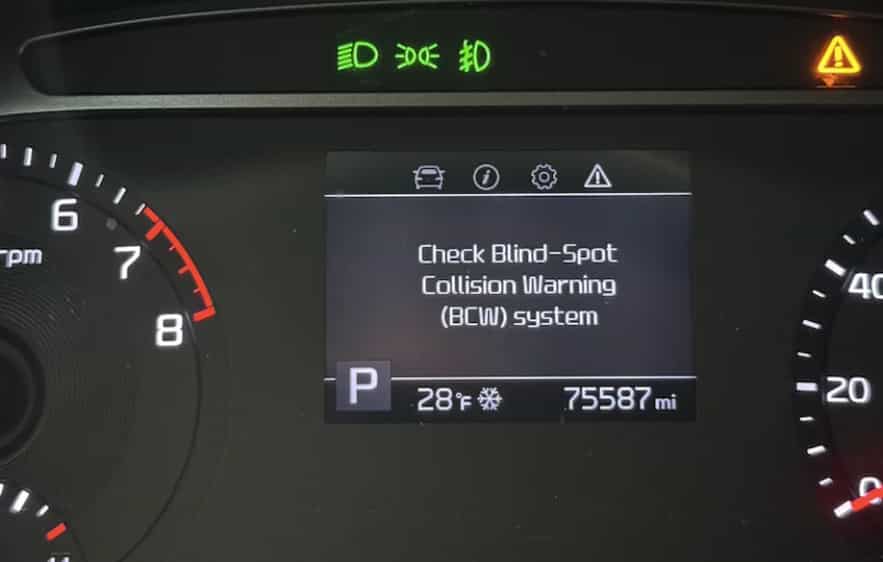
What is Kia’s Blind Spot Collision Warning?
Kia’s Blind Spot Collision Warning is a driver assistance feature that helps detect vehicles in areas the driver cannot easily see. These areas are called blind spots. They are located on the rear left and rear right sides of the vehicle. Drivers often miss these areas when changing lanes or merging into traffic.
This system is part of Kia’s ADAS, which stands for Advanced Driver Assistance System. Kia integrates it with other safety technologies to improve overall driving awareness. The main goal is to reduce the risk of side collisions during lane changes.
The system works by constantly scanning the space around the vehicle. When it detects another vehicle in the blind spot, it alerts the driver immediately. The warning usually appears in the side mirror or dashboard. In some Kia models, it can also trigger an audible alert to gain the driver’s attention.
Kia’s Blind Spot Collision Warning does not take control of the vehicle. It supports the driver by providing extra information in real time. This makes it easier to make safer decisions while driving in traffic, on highways, or in crowded city streets.
By adding this layer of awareness, Kia improves driver confidence and reduces the chance of accidents caused by limited visibility.
How Kia’s Blind Spot Collision Warning Works
Kia’s Blind Spot Collision Warning works by using radar sensors placed at the rear corners of the vehicle. These sensors constantly scan the lanes beside and behind the car. They track the movement and distance of nearby vehicles in real time.
When another vehicle enters the blind spot area, the system detects it immediately. It then sends a warning to the driver. The alert usually appears as a visual signal on the side mirror. This helps the driver quickly understand which side has a potential risk.
In some Kia models, the system also adds an audio warning. This extra alert helps when the driver may not notice the visual signal. In advanced versions of Kia ADAS, the system can also assist with braking or steering support if the driver attempts a risky lane change.
The system performs best in normal driving conditions such as city traffic and highway driving. It works continuously, even when the driver is not actively checking blind spots. This reduces the chance of human error during lane changes.
Kia designed this technology to act as an extra set of eyes for the driver. It does not replace driver attention. Instead, it enhances awareness and helps drivers react faster in situations where visibility is limited.
Key Features and Technology Behind the System
Kia’s Blind Spot Collision Warning uses radar-based technology to monitor surrounding traffic. Radar sensors are installed on both sides of the rear bumper. These sensors scan continuously and measure the distance and speed of nearby vehicles. This allows the system to react quickly in real time.
One key advantage of radar technology is its stability in different weather conditions. It can still detect vehicles in rain, fog, or low light. This makes the system more reliable than visual-only detection methods.
The system focuses on accuracy during lane changes. It identifies vehicles that approach from behind and stay in the blind spot zone. Once a risk is detected, it sends an immediate warning to the driver through the mirror indicator.
In some Kia models, the system is connected to other ADAS features. These may include lane keeping assist and forward collision avoidance assist. When combined, they create a more complete safety network that supports the driver in multiple driving situations.
Kia also designs the system to reduce false alerts. It filters irrelevant signals and focuses only on vehicles that pose a real risk. This helps drivers avoid unnecessary distractions while driving.
Overall, the technology behind Kia’s Blind Spot Collision Warning is built to balance accuracy, speed, and real-world usability.
Why Kia’s Blind Spot Collision Warning Matters for Driving Safety
Kia’s Blind Spot Collision Warning plays a major role in reducing accidents caused by limited visibility. Many lane change collisions happen because drivers fail to notice vehicles in adjacent lanes. This problem becomes more serious in heavy traffic and at high speeds.
The system helps solve this issue by providing real-time awareness of hidden areas. It gives drivers an early warning when another vehicle is too close to the blind spot. This extra information helps drivers make safer decisions before changing lanes.
Urban driving often creates constant pressure on drivers. Cars, motorcycles, and frequent lane shifts increase the chance of mistakes. In these conditions, Kia’s system reduces mental workload by acting as a second layer of awareness.
On highways, the system becomes even more important. Vehicles move faster, and small mistakes can lead to serious accidents. Blind spot detection helps drivers avoid sudden lane changes when another vehicle is approaching from behind.
Another important benefit is driver confidence. Many drivers feel more secure when they know the system is actively monitoring their blind spots. This leads to smoother and more controlled driving behavior.
Overall, Kia’s Blind Spot Collision Warning improves safety by reducing human error, increasing awareness, and supporting better driving decisions in real time.
Limitations and Situations Where It May Not Be Perfect
Kia’s Blind Spot Collision Warning is an advanced safety feature, but it is not perfect. Like all driver assistance systems, it has certain limitations that drivers need to understand clearly.
The system depends on radar sensors to detect nearby vehicles. In extreme weather conditions such as heavy rain, snow, or mud buildup on sensors, its performance can decrease. This may reduce detection accuracy or delay warnings.
Another limitation comes from unusual traffic situations. Small motorcycles, fast lane splitters, or vehicles moving at sharp angles may not always be detected early. This can create brief gaps in system response.
Drivers can also become too dependent on the system. This is a common risk with ADAS technologies. Some drivers may stop actively checking mirrors or blind spots, which increases overall risk if they rely only on alerts.
It is important to understand that Kia’s Blind Spot Collision Warning is a support system, not an automatic driving system. It does not replace driver responsibility. The driver must still check mirrors and surroundings before changing lanes.
Kia designs the system to assist awareness, not to fully control the vehicle. When used correctly, it adds an important safety layer. When misused or over-relied on, it can create a false sense of security.
Kia Models Equipped with Blind Spot Collision Warning
Kia offers Blind Spot Collision Warning on many modern vehicles as part of its ADAS safety package. The availability of this feature often depends on the model and trim level, so not every version of a car includes it as standard.
Popular models such as the Kia Sportage often come with Blind Spot Collision Warning in mid to high trims. This makes it a strong choice for drivers who want a balance between price and advanced safety features. The system supports everyday driving in both city and highway conditions.
The Kia Sorento also integrates this feature as part of its broader safety suite. In this model, it is often combined with other driver assistance technologies. This creates a more complete safety environment for family use and long-distance driving.
Kia Seltos is another model where Blind Spot Collision Warning appears in selected trims. It is especially useful in compact SUV driving conditions, where traffic density and frequent lane changes increase risk.
The main difference between models usually comes from the ADAS package level. Higher trims tend to include more advanced versions of the system, sometimes with additional support features.
Kia positions this technology as a key value point across its lineup. It helps improve safety without requiring drivers to move into luxury vehicle segments.
Conclusion
Kia’s Blind Spot Collision Warning: How It Works and Why It Matters for Driving Safety shows how modern vehicle technology can significantly improve road safety. This system helps drivers detect vehicles in areas that are difficult to see. It reduces risks during lane changes and improves overall awareness in real time.
The technology works by using radar sensors to monitor blind spots continuously. It alerts the driver when another vehicle enters a risky zone. This simple but effective function helps reduce human error, which is one of the main causes of road accidents.
In real driving conditions, the system proves most valuable in heavy traffic and highway situations. It supports drivers by adding an extra layer of safety without taking control away from them. This balance between assistance and driver responsibility is what makes the system effective.
At the same time, drivers must understand that this feature is not a replacement for careful driving. It works best when combined with proper mirror checks and attentive driving habits.
Overall, Kia’s Blind Spot Collision Warning represents an important step in automotive safety. It improves confidence, reduces collision risk, and supports safer driving behavior in everyday conditions.