If you’re wondering what gas a Jeep Wrangler takes, you’re not alone. It’s one of the most common questions among new owners and prospective buyers. While many Jeep Wrangler models run perfectly on regular unleaded gasoline, not every engine has the same fuel requirements. Choosing the wrong fuel can reduce engine performance, lower fuel efficiency, and in some cases, increase long-term maintenance costs. That’s why understanding the correct Jeep Wrangler gas type is more important than simply filling up at the nearest gas station.
The answer isn’t always as straightforward as “regular” or “premium.” Jeep has offered several engines over the years, including the reliable 3.6L Pentastar V6, the turbocharged 2.0L inline-four, the high-performance 6.4L HEMI V8 found in the Rubicon 392, and the innovative Wrangler 4xe plug-in hybrid. Each engine is designed with specific fuel recommendations to deliver the best balance of power, efficiency, and durability.
In this comprehensive guide, you’ll learn the recommended fuel type for every modern Jeep Wrangler model, understand the difference between regular and premium gasoline, and discover what happens if you accidentally use the wrong octane rating. We’ll also provide an easy-to-follow breakdown by engine and model year, helping you make the right fueling decision every time you visit the pump. Whether you drive your Wrangler on city streets, tackle rugged off-road trails, or embark on long road trips, using the correct fuel is one of the simplest ways to keep your vehicle performing at its best.
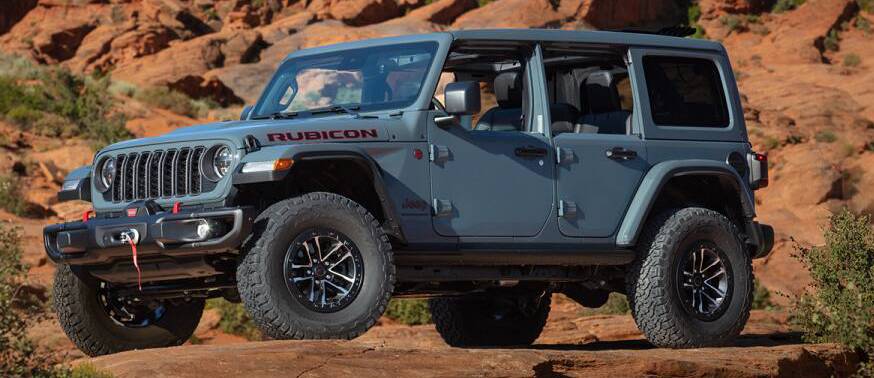
Quick Answer: What Gas Does a Jeep Wrangler Take?
Most modern Jeep Wrangler models can run safely on regular unleaded gasoline with an octane rating of 87. This applies to Wranglers equipped with the 3.6L Pentastar V6, the standard 2.0L turbocharged engine, and the gasoline engine used in the Wrangler 4xe plug-in hybrid.
However, the correct Jeep Wrangler gas type depends on the engine under the hood. The 2.0L turbo can use 87 octane, but Jeep states that 91 octane or higher allows the engine to deliver optimal performance. The 6.4L HEMI V8 in the Wrangler Rubicon 392 requires premium unleaded gasoline rated at 91 octane or higher.
Here is the basic breakdown:
| Jeep Wrangler engine | Minimum fuel | Best choice |
|---|---|---|
| 3.6L Pentastar V6 | 87 octane | Regular unleaded |
| 2.0L Turbo I4 | 87 octane | 91 octane for optimal performance |
| 2.0L Turbo 4xe | 87 octane | Regular or premium, depending on driving demands |
| 6.4L HEMI V8 | 91 octane | Premium unleaded only |
The most important distinction is the difference between required and recommended fuel. When premium gasoline is recommended, the vehicle can usually operate safely on regular fuel, although acceleration, responsiveness, or performance under demanding conditions may be reduced. When premium fuel is required, as it is with the 6.4L HEMI V8, using lower-octane gasoline can increase the likelihood of reduced performance and engine knock.
Owners should also remember that octane labels vary by country. Jeep’s North American recommendations use the Anti-Knock Index, shown at the pump as the R+M/2 method. An 87-octane rating in the United States may correspond to a higher Research Octane Number in countries that use the RON system.
Before filling the tank, check the fuel label inside the filler door and the owner’s manual for your exact model year. Engine availability and fuel instructions can change, so the guidance printed for your vehicle should always take priority over general recommendations.
Jeep Wrangler Gas Type by Engine
3.6L Pentastar V6
The 3.6L Pentastar V6 uses regular unleaded gasoline rated at 87 octane. Premium fuel is not required, which makes this engine attractive to drivers who want dependable performance without paying more at every fill-up. Jeep’s 2025 documentation lists 87 octane fuel containing no more than 15 percent ethanol for this engine.
The naturally aspirated V6 does not depend on turbocharger boost, so it is designed to deliver its expected power using regular gasoline. Filling it with 91 or 93 octane will not damage the engine, but most drivers should not expect a dramatic increase in horsepower or fuel economy.
This matters because Wrangler ownership can already involve higher fuel expenses than driving a small crossover or sedan. Larger tires, roof accessories, heavy bumpers, off-road equipment, and frequent four-wheel-drive use can all increase fuel consumption. Paying for premium gasoline when the engine does not require it may add unnecessary cost without producing a noticeable everyday benefit.
For most 3.6L Wrangler owners, high-quality 87-octane gasoline from a reputable station is the practical choice. Premium may be considered during extreme heat, demanding towing, or sustained high-load driving, but it is not necessary for normal operation unless the vehicle’s manual states otherwise.
2.0L Turbocharged I4
The 2.0L turbocharged four-cylinder engine can operate on 87-octane regular unleaded gasoline, but premium fuel rated at 91 octane or higher allows it to achieve optimal performance. Jeep gives this guidance for the current Wrangler and confirms that both fuel grades can satisfy normal operating and emissions requirements.
This is where many owners become confused. Some assume that every turbocharged engine requires premium gas. That is not the case with the standard Wrangler 2.0L Turbo. Regular fuel is acceptable, but the engine management system may adjust ignition timing and boost behavior when lower-octane fuel is used.
During relaxed commuting, the difference may be difficult to notice. Under hard acceleration, steep climbing, hot weather, off-road driving, or heavy loads, premium gasoline may help the engine deliver more consistent response. Drivers who regularly push the engine may therefore consider 91 octane worth the additional cost.
The best decision depends on how the Wrangler is used. A driver traveling to work on flat roads may be satisfied with 87 octane. Someone climbing mountain trails, carrying camping equipment, or towing near the vehicle’s rated limit may prefer premium for stronger and more predictable performance.
2.0L Turbo Wrangler 4xe
The Jeep Wrangler 4xe combines a turbocharged 2.0L gasoline engine with electric motors and a rechargeable battery. Its gasoline engine follows the same basic fuel guidance as the other 2.0L turbocharged Wrangler applications. The 2025 owner handbook specifies 87-octane fuel for the 2.0L engine, while Jeep notes that 91 octane or higher can help the turbo engine achieve optimal performance.
Using electricity for short trips does not eliminate the need to maintain fresh gasoline in the tank. Plug-in hybrid owners may go long periods between fuel stops, especially when charging frequently. Over time, gasoline can degrade, which is why the vehicle may occasionally run the engine to help maintain its fuel and lubrication systems. Jeep specifically notes that fuel and oil in a hybrid model continue to age even when the vehicle is driven primarily in electric mode.
For most 4xe drivers, regular 87-octane gasoline is sufficient. Premium may be useful when the gasoline engine is working hard, particularly during highway acceleration, mountain driving, towing, or demanding off-road use. The battery does not change the gasoline octane rating, so owners should not assume that a plug-in hybrid requires a special fuel blend.
The 4xe should not be filled with diesel, E85, or gasoline containing more ethanol than Jeep permits. Always follow the fuel label on the vehicle because regional gasoline specifications may differ.
6.4L HEMI V8 in the Wrangler 392
The 6.4L HEMI V8 is the major exception in the Wrangler lineup. Jeep specifies premium unleaded gasoline with an octane rating of 91 or higher for this engine. The manufacturer’s 2025 handbook lists premium fuel as the required selection and warns against using E85.
Unlike the 3.6L V6 and the standard 2.0L Turbo, the Wrangler 392 is a high-performance model. Its large-displacement V8 is calibrated to produce substantial horsepower and torque, and the higher octane rating helps resist uncontrolled combustion under heavy load.
Using regular gas once in an emergency is unlikely to cause immediate catastrophic damage, especially if the vehicle is driven gently. However, repeatedly filling a 392 with 87 octane can lead to reduced performance and may force the engine management system to compensate for knock risk. That defeats much of the reason for buying the V8 model in the first place.
Fuel cost is therefore an important ownership consideration. The Wrangler 392 consumes more gasoline than lower-output Wrangler versions and requires a more expensive grade. Buyers attracted by its sound, acceleration, and off-road capability should include premium-fuel expenses in their long-term budget.
Jeep Wrangler Gas Type by Model Year
Fuel requirements are easier to understand when the Wrangler is grouped by generation and engine rather than trim name alone. Models such as Sport, Sahara, Willys, Rubicon, and High Altitude may share the same engine, while specialized versions such as the Rubicon 392 have different requirements.
The table below covers common gasoline engines in recent North American Wrangler models. The owner’s manual for the specific vehicle remains the final authority.
| Model years | Engine or model | Fuel requirement |
|---|---|---|
| 2026 Wrangler | 3.6L Pentastar V6 | 87-octane regular unleaded |
| 2026 Wrangler | 2.0L Turbo I4 | 87 octane accepted, 91 or higher for optimal performance |
| 2026 Moab 392 | 6.4L HEMI V8 | Check the vehicle manual and fuel-door label for the premium requirement |
| 2025 Wrangler | 3.6L Pentastar V6 | 87-octane regular unleaded |
| 2025 Wrangler | 2.0L Turbo I4 | 87 octane accepted |
| 2025 Wrangler 4xe | 2.0L turbo plug-in hybrid | 87 octane accepted |
| 2025 Wrangler Rubicon 392 | 6.4L HEMI V8 | Premium unleaded, 91 octane or higher |
| 2018 to 2024 Wrangler JL | 3.6L Pentastar V6 | Generally 87-octane regular unleaded |
| 2018 to 2024 Wrangler JL | 2.0L Turbo I4 | Regular accepted, premium commonly recommended for best performance |
| 2021 to 2024 Wrangler 4xe | 2.0L turbo plug-in hybrid | Follow the model-year manual, generally regular accepted |
| 2021 to 2024 Wrangler Rubicon 392 | 6.4L HEMI V8 | Premium gasoline required |
| 2012 to 2018 Wrangler JK | 3.6L Pentastar V6 | Generally 87-octane regular unleaded |
| 2007 to 2011 Wrangler JK | 3.8L V6 | Generally 87-octane regular unleaded |
For the 2026 Wrangler, Jeep officially states that both the 2.0L Turbo and 3.6L Pentastar V6 can use high-quality 87-octane unleaded gasoline. It also states that using 91 octane or higher in the 2.0L Turbo allows that engine to deliver optimal performance.
The 2025 handbook gives similarly clear guidance. It lists 87 octane for the 2.0L and 3.6L engines, while the 6.4L engine requires premium unleaded gasoline rated at 91 octane or higher. It also limits the listed gasoline engines to fuel containing no more than 15 percent ethanol.
Owners of older Wranglers should be careful when using broad online charts. A model year may have offered several engines, and fuel recommendations can vary by country, emissions specification, or powertrain calibration. Modifications also matter. An aftermarket supercharger, turbocharger, engine tune, or high-compression rebuild may require premium gasoline even when the original factory engine used regular fuel.
For that reason, identify the engine before choosing a fuel grade. The vehicle identification label, dealership build sheet, fuel-filler label, and owner’s manual can confirm the correct specification. This simple check prevents wasted money at the pump and reduces the risk of using an octane level that does not match the engine’s calibration.
Regular vs. Premium Gas for Jeep Wrangler
One of the biggest misconceptions among Jeep owners is that premium gasoline is always better than regular fuel. In reality, the best fuel is the one recommended by the manufacturer for your specific engine. Using a higher octane gasoline than required does not automatically increase horsepower, improve fuel economy, or extend engine life.
Regular gasoline with an octane rating of 87 is formulated for engines with lower compression ratios. It ignites at the proper moment during combustion and provides all the performance that engines like the 3.6L Pentastar V6 are designed to deliver. Since this engine was engineered around 87-octane fuel, switching to premium gasoline usually provides little to no measurable improvement during everyday driving.
Premium gasoline, typically rated at 91 or 93 octane, is designed to resist premature combustion, commonly known as engine knock or detonation. High-performance and turbocharged engines generate greater cylinder pressures and temperatures, making higher-octane fuel beneficial or, in some cases, mandatory. This is why the Wrangler Rubicon 392 requires premium fuel, while the 2.0L Turbo can take advantage of it during demanding driving conditions.
The financial difference between regular and premium fuel can become significant over time. If premium gasoline costs $0.50 more per gallon and you fill a 21.5-gallon tank every week, the additional annual expense can exceed several hundred dollars. For drivers whose Wrangler performs perfectly on regular gasoline, that extra money is often better spent on scheduled maintenance, quality tires, or off-road accessories.
Fuel economy is another area where myths persist. Some drivers believe premium gasoline always increases miles per gallon enough to offset its higher price. While premium fuel may allow certain turbocharged engines to operate more efficiently under heavy loads, the improvement is generally too small to recover the additional fuel cost during normal commuting. Unless your Wrangler specifically recommends or requires premium fuel, the economic advantage usually favors regular gasoline.
Performance differences depend largely on the engine. Drivers of the 3.6L Pentastar V6 are unlikely to notice any meaningful change after switching to premium. Owners of the 2.0L Turbo, however, may experience slightly stronger acceleration, smoother power delivery, and improved throttle response when using 91-octane fuel, particularly in hot weather, mountainous terrain, or while towing.
The table below summarizes the key differences.
| Feature | Regular Gas (87 Octane) | Premium Gas (91+ Octane) |
|---|---|---|
| Cost | Lower | Higher |
| Suitable for 3.6L V6 | Yes | Yes, but little benefit |
| Suitable for 2.0L Turbo | Yes | Recommended for best performance |
| Suitable for Rubicon 392 | No | Required |
| Everyday fuel economy | Comparable | Slight improvement in some turbo applications |
| Knock resistance | Standard | Higher |
For most Jeep Wrangler owners, following the fuel recommendation in the owner’s manual remains the smartest choice. Premium gasoline should not be viewed as a universal upgrade but rather as a fuel specifically intended for engines designed to benefit from its higher octane rating.
Can You Put Premium Gas in a Jeep Wrangler That Recommends Regular?
Yes, you can safely use premium gasoline in a Jeep Wrangler that recommends regular unleaded fuel. Premium gasoline will not damage the engine, fuel system, catalytic converter, or emissions equipment. Modern Wranglers use sophisticated engine control systems that automatically adjust ignition timing based on the fuel’s octane level.
Many first-time Jeep owners assume that premium fuel acts like a performance upgrade. While this can be true for engines specifically calibrated to exploit higher octane ratings, it is generally not the case for naturally aspirated engines such as the 3.6L Pentastar V6. Because the engine is already optimized for 87-octane gasoline, the additional knock resistance provided by premium fuel often goes unused.
There are situations where premium gasoline may offer modest advantages. During extremely hot summer temperatures, extended highway driving, towing heavy trailers, or tackling challenging off-road terrain, the engine operates under greater thermal and mechanical stress. Higher-octane fuel may help maintain smoother combustion under these demanding conditions, particularly in turbocharged models.
Some owners also choose premium fuel before long road trips simply because they believe it provides extra protection. While this practice is generally harmless, it should not replace proper maintenance. Clean air filters, fresh engine oil, correctly inflated tires, and routine servicing have a much greater impact on performance and reliability than filling the tank with a higher octane fuel than required.
Another common question concerns mixing different octane ratings. Fortunately, this is completely normal. If half a tank contains 87-octane gasoline and you add 91-octane fuel, the resulting octane level will simply fall somewhere between the two values. Modern engine management systems can adapt to these small changes without issue.
Drivers should also avoid confusing octane rating with fuel quality. Major fuel brands often include detergent additives that help reduce carbon deposits inside the engine. Choosing gasoline from reputable stations is generally more beneficial than selecting a higher octane level from an unknown supplier.
Ultimately, premium gasoline should be viewed as an option rather than a necessity for Wranglers designed to operate on regular fuel. Unless Jeep specifically requires premium gasoline for your engine, you are unlikely to see enough performance or efficiency gains to justify the additional expense.
What Happens If You Use the Wrong Gas?
Using the wrong gasoline does not always result in immediate engine damage, but the consequences depend on whether the fuel’s octane rating is lower or higher than what your Jeep Wrangler requires.
If you accidentally fill a Wrangler equipped with the 3.6L Pentastar V6 with premium gasoline, there is little reason for concern. The engine will continue operating normally, and the only noticeable difference is likely to be a higher fuel bill. Since the engine is not designed to take advantage of the additional octane, performance gains are typically negligible.
The opposite situation deserves more attention. If a Wrangler Rubicon 392 receives regular 87-octane gasoline instead of the required premium fuel, the engine’s knock sensors will detect abnormal combustion and instruct the engine control module to retard ignition timing. This protective strategy helps prevent serious damage but also reduces horsepower, torque, throttle response, and overall driving performance.
Repeated use of fuel with an octane rating lower than recommended may contribute to excessive engine knocking under heavy acceleration or sustained high-load operation. Although modern electronic controls provide significant protection, consistently ignoring the manufacturer’s fuel recommendation can place additional stress on internal engine components over time.
Turbocharged engines occupy the middle ground. The 2.0L Turbo is capable of operating safely on regular gasoline because its engine management software continuously adjusts timing and boost pressure. However, drivers may notice slower acceleration, reduced responsiveness, or slightly lower fuel efficiency compared with using premium fuel under demanding conditions.
It is equally important to distinguish between using the wrong octane and using the wrong fuel type. Accidentally filling a gasoline-powered Jeep Wrangler with diesel fuel is a far more serious mistake. Diesel fuel cannot ignite properly in a gasoline engine and may damage the fuel system if the engine is started. Likewise, gasoline should never be added to a diesel-powered vehicle.
Many drivers also ask whether occasional use of lower-octane gasoline will permanently damage their Wrangler. In most modern models, a single tank is unlikely to cause lasting problems. If lower-octane fuel was used accidentally, drive conservatively until the tank is nearly empty, then refill with the recommended fuel grade. Persistent knocking, warning lights, rough engine operation, or noticeable power loss should be inspected by a qualified technician.
The safest habit is to verify the fuel requirement before every fill-up, especially if you are driving a rental vehicle, recently purchased Wrangler, or a model with an unfamiliar engine. Spending a few seconds checking the fuel label inside the filler door can help prevent unnecessary repair costs and ensure your Jeep continues delivering the performance it was engineered to provide.
Tips for Choosing the Best Fuel for Your Jeep Wrangler
Selecting the right gasoline involves more than simply choosing between regular and premium. Fuel quality, driving conditions, and routine maintenance all influence your Wrangler’s performance, fuel economy, and long-term reliability. Following a few practical habits can help you get the most from every tank.
Follow the Owner’s Manual First
The owner’s manual is always the most reliable source for your vehicle’s fuel requirements. While online guides provide helpful information, Jeep may update fuel recommendations as engines evolve. If there is ever a conflict between a website and your owner’s manual, follow the manufacturer’s recommendation.
Buy Fuel from Reputable Gas Stations
Not all gasoline is identical. Major fuel brands often include detergent additives that help keep fuel injectors, intake valves, and combustion chambers cleaner. Cleaner engines generally operate more efficiently and may reduce carbon buildup over time.
Busy gas stations also tend to have fresher fuel because their underground storage tanks are refilled more frequently. This is particularly beneficial for drivers who own a Wrangler 4xe and may not consume gasoline as quickly as drivers of conventional vehicles.
Avoid Running the Tank Nearly Empty
Driving until the fuel warning light comes on occasionally is not harmful, but repeatedly operating with very little fuel can shorten the life of the fuel pump. The gasoline inside the tank helps cool and lubricate the pump during operation.
Keeping at least one-quarter of a tank of fuel is a good practice, especially before long road trips or off-road adventures where gas stations may be scarce.
Consider Your Driving Conditions
Your driving style should influence your fuel choice.
If your Wrangler spends most of its time commuting through city traffic or cruising on highways, regular gasoline is usually sufficient for engines designed to use it.
If you frequently tow trailers, climb steep mountain roads, travel through extremely hot climates, or spend long days on difficult off-road trails, premium gasoline may provide smoother performance in turbocharged engines that recommend higher octane fuel.
Pay Attention to Fuel Economy
A sudden decrease in fuel economy is not always caused by gasoline quality. Tire pressure, dirty air filters, aging spark plugs, excessive cargo weight, and aggressive driving habits often have a much larger impact.
Tracking your average miles per gallon can help identify potential maintenance issues before they become expensive repairs.
Use the Correct Ethanol Blend
Most modern Jeep Wrangler models are designed to operate on gasoline containing up to 15% ethanol. Higher ethanol blends, such as E85, should only be used in vehicles specifically designed for flex-fuel operation. Using an incompatible fuel blend may lead to poor performance and engine damage.
Store Fuel Properly for Off-Road Adventures
Many Wrangler owners carry extra fuel during overlanding trips or remote off-road expeditions. Always use approved fuel containers and avoid storing gasoline for extended periods without a fuel stabilizer. Fresh gasoline burns more efficiently and helps maintain consistent engine performance.
By following these simple practices, you can maximize engine life, improve fuel efficiency, and reduce the likelihood of costly repairs while ensuring your Jeep Wrangler performs reliably both on the road and off the beaten path.
Frequently Asked Questions
Does every Jeep Wrangler use regular gas?
No. Most Jeep Wrangler models equipped with the 3.6L Pentastar V6 use regular 87-octane gasoline. However, the recommended fuel depends on the engine. The 2.0L Turbo performs best with premium fuel, while the 6.4L HEMI V8 in the Rubicon 392 requires premium gasoline.
What gas does a Jeep Wrangler 3.6L V6 take?
The 3.6L Pentastar V6 is designed to run on regular unleaded gasoline with an octane rating of 87. Premium fuel is not required for normal driving.
No. The 2.0L Turbo can safely operate on 87-octane gasoline. However, Jeep recommends 91-octane premium fuel for optimal engine performance, particularly under heavy loads or demanding driving conditions.
Can I mix 87 and 91 octane gasoline?
Yes. Mixing different octane ratings is completely safe. The resulting fuel will have an octane rating somewhere between the two, and your Wrangler’s engine management system will automatically adapt.
For most Wrangler models, the improvement is minimal. Turbocharged engines may experience slightly better efficiency under certain conditions, but naturally aspirated engines like the 3.6L V6 usually show little measurable difference.
If your Wrangler requires premium fuel, the answer is yes. If your vehicle only recommends or accepts regular gasoline, the additional expense often outweighs any small performance benefit during normal driving.
What happens if I accidentally use regular gas in a Rubicon 392?
One tank of regular gasoline is unlikely to cause immediate engine damage. However, the engine will reduce ignition timing to prevent knocking, resulting in lower performance. Refill with premium gasoline as soon as practical and avoid aggressive driving until the correct fuel is back in the tank.
Can I use fuel containing ethanol?
Yes. Most modern Jeep Wrangler gasoline engines are compatible with gasoline containing up to 15% ethanol. Always check your owner’s manual before using fuels with higher ethanol content.
Which Jeep Wrangler engine is the least expensive to fuel?
The 3.6L Pentastar V6 is generally the most economical gasoline engine because it performs well on regular 87-octane fuel and does not require premium gasoline.
How can I confirm the correct fuel for my Wrangler?
The easiest way is to check the owner’s manual or the label inside the fuel filler door. Both provide the manufacturer’s official fuel recommendation for your specific engine and model year.
Conclusion
Choosing the correct Jeep Wrangler gas type is one of the simplest yet most important steps in protecting your vehicle’s performance and longevity. Although many Wrangler models are perfectly suited for regular 87-octane gasoline, fuel requirements vary depending on the engine. Understanding these differences helps you avoid unnecessary fuel expenses while ensuring your engine operates as Jeep intended.
For most drivers, the 3.6L Pentastar V6 delivers reliable performance with regular unleaded gasoline, making it an economical choice for everyday use. Owners of the 2.0L Turbo have more flexibility, as the engine can safely run on regular fuel while delivering its best performance with premium gasoline. Meanwhile, drivers of the Wrangler Rubicon 392 should always use premium 91-octane fuel to support the high-performance HEMI V8 and maintain maximum power and engine protection.
Fuel selection is only one part of responsible vehicle ownership. Purchasing gasoline from reputable stations, following the maintenance schedule, monitoring tire pressure, and using the proper engine oil all contribute to better fuel economy and long-term reliability. Small maintenance habits often have a greater impact on ownership costs than switching between regular and premium gasoline.
If you are ever uncertain about your Wrangler’s fuel requirements, take a moment to check the owner’s manual or the fuel filler door label before filling the tank. A few seconds of verification can prevent unnecessary expenses and ensure your Jeep continues to deliver dependable performance whether you’re commuting through the city, exploring remote trails, or embarking on your next off-road adventure.
With the right fuel and proper maintenance, your Jeep Wrangler will be ready for thousands of miles of confident driving, no matter where the road or trail leads next.