The Jeep Wrangler Gas Cap Light is one of those dashboard warnings that can leave even experienced Jeep owners scratching their heads. In many cases, the issue is as simple as a loose or improperly tightened gas cap. However, that small warning light can also indicate a leak in the Evaporative Emission Control (EVAP) system, a faulty fuel cap seal, or another emissions-related problem that requires further diagnosis. Ignoring the warning may not immediately affect your Wrangler’s drivability, but it can lead to reduced fuel efficiency, increased emissions, and even trigger the Check Engine Light if the underlying issue persists.
Fortunately, diagnosing a Jeep Wrangler Gas Cap Light doesn’t always require a trip to the repair shop. Many common causes can be identified and resolved at home with a few simple checks, potentially saving both time and repair costs. Understanding how the fuel cap and EVAP system work together is the first step toward determining whether the problem is minor or if professional attention is needed.
In this comprehensive guide, you’ll learn what the Jeep Wrangler Gas Cap Light really means, the most common reasons it appears, how to diagnose the problem step by step, and the proper methods to reset the warning light. We’ll also cover model-specific considerations for the Jeep Wrangler TJ, JK, JL, and 4xe, helping you keep your Wrangler running reliably while avoiding unnecessary repairs.
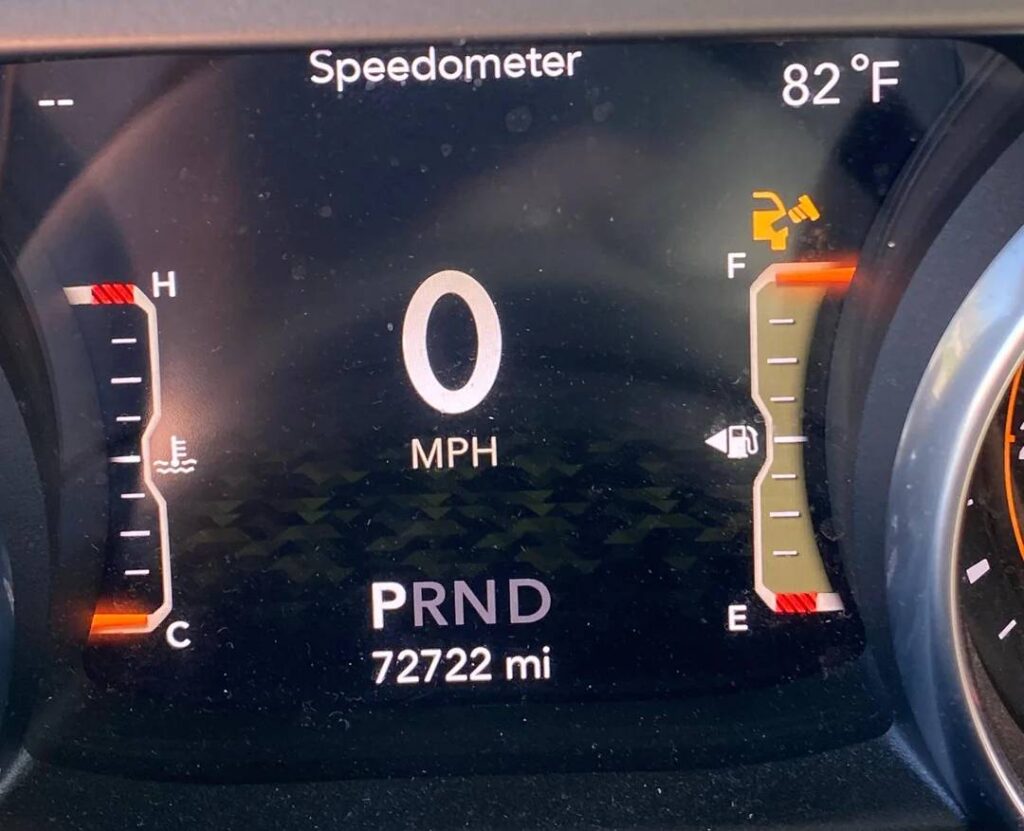
What Does the Jeep Wrangler Gas Cap Light Mean?
The Jeep Wrangler Gas Cap Light means the vehicle has detected a possible problem with the fuel system’s ability to maintain a sealed environment. In many cases, the warning appears because the fuel filler cap is loose, installed incorrectly, missing, or no longer capable of creating an airtight seal.
On Jeep Wrangler models equipped with a traditional fuel cap, the cap is an important part of the evaporative emission control system, commonly called the EVAP system. This system is designed to prevent gasoline vapors from escaping into the atmosphere. Instead of allowing those vapors to leave the fuel tank, the system stores them in a charcoal canister and later sends them into the engine to be burned during normal operation. Fuel system leaks can allow vapor to escape and interfere with the vehicle’s emissions controls.
When the fuel cap is not properly tightened, the onboard diagnostic system may detect a pressure or vacuum change that suggests a leak. Depending on the Wrangler’s model year and instrument cluster, the driver may see a dedicated gas cap warning light, a “Check Fuel Cap” message, the Check Engine Light, or a combination of these warnings.
Jeep’s guidance for recent Wrangler models states that an improperly tightened fuel filler cap can cause the yellow Loose Fuel Filler Cap Warning Light and the “Check Fuel Cap” message to appear. The manufacturer generally instructs the driver to tighten the cap until it clicks, although the exact procedure can vary by model year.
The warning does not necessarily mean that the cap itself has failed. It only means the vehicle has detected conditions consistent with a leak or an improperly sealed fuel system. A cracked EVAP hose, damaged filler neck, faulty purge valve, defective vent valve, or failing pressure sensor can create similar symptoms.
Is the Gas Cap Light a Serious Warning?
A gas cap warning is usually not an immediate roadside emergency. Your Jeep Wrangler will often continue to start, accelerate, and drive normally. However, the warning should not be ignored.
A fuel vapor leak may increase evaporative emissions and eventually trigger the Check Engine Light. It can also cause the vehicle to fail an emissions inspection in areas where OBD testing is required. In rare cases, a noticeable gasoline odor may indicate a more significant vapor or liquid fuel leak that requires prompt inspection.
If the warning appears shortly after refueling, safely pull over when convenient and inspect the cap. Remove it, check for visible dirt or damage, reinstall it carefully, and tighten it according to the instructions for your Wrangler. Do not continue forcing the cap once it has reached its normal tightened position.
If the warning remains after several normal trips, the vehicle may need further diagnosis. The monitoring system does not always test the EVAP system immediately, so the light may not disappear as soon as the cap is tightened.
Can You Keep Driving With the Gas Cap Light On?
You can generally drive a short distance with the Jeep Wrangler Gas Cap Light illuminated when the vehicle is running normally and there is no strong fuel smell, visible leak, rough operation, or flashing Check Engine Light.
However, continued driving without diagnosing the problem is not recommended. The longer an EVAP leak remains unresolved, the greater the chance that another warning will appear or that a minor issue will become more difficult to identify.
Stop driving and arrange an inspection if you notice liquid fuel, an intense gasoline odor, smoke, engine performance problems, or a flashing Check Engine Light. Those symptoms may point to a condition more serious than a loose cap.
Common Causes of the Jeep Wrangler Gas Cap Light
The most common cause of a Jeep Wrangler Gas Cap Light is a loose fuel filler cap, but it is not the only possible explanation. The warning is connected to a system containing several hoses, valves, sensors, seals, and vapor storage components. A fault anywhere in that network may produce a gas cap message.
Understanding the possible causes will help you avoid replacing parts unnecessarily.
1. Loose or Incorrectly Installed Gas Cap
A loose gas cap is the first thing every Wrangler owner should check. It often happens when the cap is not fully tightened after refueling or when the cap is installed at an angle and fails to seat correctly.
On models with a click style cap, the sound indicates that the cap has reached its intended tightened position. Some Jeep guidance specifies tightening the cap approximately one quarter turn until one click is heard.
Even a small sealing gap may cause the EVAP monitor to interpret the system as leaking. This is why a warning can appear even when the cap looks secure from the outside.
Remove the cap completely and reinstall it rather than simply turning it harder. Check that the threads engage smoothly and that no debris is trapped between the cap seal and filler opening.
2. Worn or Damaged Gas Cap Seal
The rubber gasket inside the gas cap creates the seal between the cap and the filler neck. Over time, heat, gasoline vapor, dirt, and repeated use can cause this gasket to become hard, flattened, cracked, or distorted.
A cap with a damaged gasket may still tighten and click normally while allowing vapor to escape. This creates a frustrating situation in which the Jeep Wrangler Gas Cap Light returns even though the driver has tightened the cap correctly.
Inspect the gasket under good lighting. Look for visible cracks, missing sections, severe flattening, or a surface that feels unusually brittle. A damaged cap is normally replaced as a complete assembly.
When buying a replacement, confirm that the cap is designed for the correct Wrangler year, engine, and emissions configuration. An incorrect cap may fit the opening but use the wrong sealing or pressure characteristics.
3. Dirt or Corrosion Around the Filler Neck
Dust, dried fuel residue, mud, rust, or other contamination can prevent the gas cap gasket from sitting flat against the filler neck.
This issue may be more common on Wranglers that are regularly used on trails, exposed to road salt, or driven in dusty environments. Because the fuel door area is exposed whenever the vehicle is refueled, dirt can gradually accumulate around the sealing surface.
Clean the contact area gently with a lint free cloth. Avoid allowing debris or cleaning liquid to enter the fuel tank. If the metal sealing surface is heavily corroded, bent, or chipped, cleaning alone may not restore a reliable seal.
4. Cracked or Disconnected EVAP Hose
The EVAP system uses vapor lines to connect the fuel tank, charcoal canister, purge valve, vent valve, and engine intake. A hose may crack because of age, heat, vibration, impact, or improper service.
Wranglers used off road may also experience damage from debris or contact beneath the vehicle. A disconnected hose or broken plastic fitting can create a leak large enough to trigger both the gas cap warning and the Check Engine Light.
Some damaged hoses can be found through a careful visual inspection, but smaller cracks may only open under certain temperatures or pressure conditions. A smoke test is often the most effective professional method for locating small EVAP leaks.
5. Faulty Purge Valve
The purge valve controls when stored fuel vapor moves from the charcoal canister into the engine. It should open and close according to commands from the powertrain control module.
If the valve becomes stuck open, stuck closed, or begins leaking internally, the system may fail its self test. Possible symptoms include a Check Engine Light, difficult starting after refueling, rough idle, or several EVAP related diagnostic codes.
A purge valve should be tested before replacement. Similar symptoms can be caused by hoses, wiring, connectors, or other EVAP components.
6. Faulty Vent Valve
The vent valve allows filtered air to enter the EVAP system when necessary and closes during certain leak tests. If it sticks open, the vehicle may be unable to seal the system for testing. If it sticks closed, fuel tank ventilation may be affected.
Dust, water, mud, and corrosion can interfere with the valve, its filter, or its electrical connector. This possibility is particularly relevant for vehicles driven in harsh environments.
A technician may test the valve with a scan tool, inspect its wiring, and command it open or closed while checking whether the system holds pressure.
7. Damaged Charcoal Canister
The charcoal canister stores fuel vapor until it can be burned by the engine. Physical damage, internal contamination, or saturation may stop it from working correctly.
Repeatedly topping off the fuel tank after the pump nozzle automatically shuts off can increase the chance of liquid fuel entering parts of the vapor control system. For this reason, it is generally best to stop fueling when the nozzle clicks off rather than continuing to add fuel.
A damaged canister may be accompanied by persistent EVAP codes, fuel odor, refueling difficulty, or problems with purge flow. Because canisters can be expensive, proper diagnosis is important before replacement.
8. Damaged Fuel Filler Neck
The fuel filler neck connects the fuel opening to the tank. Rust, impact damage, a distorted sealing lip, or a crack in the assembly can prevent the cap from sealing.
This problem may be easy to miss because the gas cap itself can look perfectly normal. Pay close attention to the area where the cap gasket makes contact. An uneven or corroded surface may allow vapor to escape even with a new cap.
Repair requirements depend on the location and severity of the damage. A severely corroded or cracked filler neck may need replacement.
9. Faulty Fuel Tank Pressure Sensor
The fuel tank pressure sensor helps the vehicle monitor pressure and vacuum inside the fuel system. The onboard computer uses this information during EVAP leak checks.
A sensor that provides inaccurate or inconsistent readings can make the computer believe there is a leak when the system is actually sealed. Wiring damage, corrosion in a connector, or a poor electrical connection can produce similar symptoms.
Because sensor failure is less common than a loose cap or damaged seal, the basic checks should be completed first.
10. Electrical or Software Related Fault
Damaged wiring, loose connectors, low system voltage, or a control module issue can occasionally interfere with EVAP monitoring. Some symptoms may also be affected by vehicle specific service updates or diagnostic procedures.
This type of problem usually requires a scan tool capable of displaying live data and commanding EVAP components. Replacing the gas cap repeatedly will not solve a warning caused by an electrical fault.
Symptoms That Often Accompany the Gas Cap Light
The Jeep Wrangler Gas Cap Light may appear by itself, especially when the problem begins immediately after refueling. In other situations, it may be accompanied by additional symptoms that help identify the source of the fault.
Check Engine Light
The Check Engine Light is the most common warning associated with a gas cap or EVAP problem. A loose cap may initially produce a fuel cap message. If the system continues to detect a leak during later self tests, the powertrain control module may store a diagnostic trouble code and illuminate the Check Engine Light.
A steady Check Engine Light often indicates an emissions related fault that should be diagnosed soon. A flashing light usually indicates a more urgent engine problem and should not be treated as a simple gas cap issue.
EVAP Diagnostic Trouble Codes
An OBD2 scanner may reveal one or more EVAP related codes. Common examples include:
P0455 usually indicates a large evaporative emission system leak or a condition resembling a missing fuel cap.
P0456 generally indicates a very small EVAP leak.
P0442 commonly indicates a small EVAP leak.
These codes identify the type of fault detected, but they do not always identify the failed component. For example, a P0456 code can be caused by a gas cap seal, a small hose crack, a valve that does not close completely, or another leak in the system.
A code should therefore be treated as a diagnostic starting point rather than proof that a specific part must be replaced.
Fuel Odor
A faint gasoline smell near the fuel filler area may indicate vapor escaping from a loose cap, damaged gasket, cracked hose, or faulty EVAP component.
A persistent or powerful fuel odor requires more urgent attention. Inspect the ground and visible fuel system areas for signs of liquid leakage. Avoid flames, sparks, smoking, and other ignition sources around the vehicle.
Do not assume that every fuel smell is caused by the gas cap. Liquid fuel leaks can create a significant fire risk and should be handled by a qualified technician.
Hard Starting After Refueling
A Wrangler that takes longer to start immediately after filling the tank may have a purge valve that is stuck open. Excess fuel vapor can enter the intake while the engine is off, creating a mixture that is temporarily too rich when the driver attempts to restart it.
The engine may crank for several seconds, start roughly, or require light throttle input. This symptom is not normally caused by a loose cap alone, so it is an important clue during diagnosis.
Rough Idle
A leaking purge valve or related vapor control issue may allow unexpected airflow or fuel vapor into the intake. The engine may idle unevenly, hesitate, or feel unstable at low speed.
However, rough idle has many possible causes, including ignition, vacuum, fuel delivery, and sensor problems. EVAP components should not be replaced without testing.
Reduced Fuel Economy
A basic gas cap leak usually has little noticeable effect on fuel consumption. However, a malfunctioning purge system or persistent fuel vapor problem may contribute to inefficient operation in some cases.
Fuel economy can also change because of tire pressure, weather, driving style, accessories, gearing, engine condition, or larger tires. Treat poor mileage as supporting evidence rather than a definitive EVAP symptom.
Difficulty Refueling
If the gas pump repeatedly shuts off before the tank is full, the EVAP vent path may be restricted. A blocked vent valve, contaminated filter, damaged hose, or saturated charcoal canister can prevent displaced vapor from leaving the tank correctly during refueling.
This symptom points beyond the gas cap itself and may require inspection of the venting system.
Failed Emissions Inspection
A Wrangler may fail an OBD based emissions inspection when the Check Engine Light is illuminated, EVAP trouble codes are stored, or the required readiness monitors have not completed.
Clearing the codes immediately before an inspection is rarely an effective solution because it also resets the readiness monitors. The vehicle must complete the appropriate driving conditions before those monitors become ready again.
The correct approach is to diagnose the leak, repair the cause, clear the codes when appropriate, and allow the vehicle to complete its normal self tests.
Warning Light That Returns After Resetting
A warning that disappears and then returns suggests that the underlying problem remains. Tightening the cap, disconnecting the battery, or clearing codes with a scanner may temporarily remove the message, but none of those actions repairs a damaged hose, leaking valve, defective sensor, or worn seal.
The timing of the warning can provide a clue. If it appears soon after every refueling stop, inspect the cap and filler neck first. If it returns only after several days of driving, the vehicle may be completing an EVAP monitor under specific fuel level, temperature, and operating conditions.
Careful diagnosis is more effective than repeatedly resetting the light.
How to Diagnose the Jeep Wrangler Gas Cap Light
Diagnosing a Jeep Wrangler Gas Cap Light doesn’t have to be complicated. In many cases, you can identify the source of the problem with a few basic inspections before investing in replacement parts or scheduling a repair appointment. Following a logical process can save time, reduce unnecessary expenses, and prevent misdiagnosis.
Step 1: Inspect the Gas Cap
Begin with the most obvious component. Remove the gas cap completely and inspect it under good lighting. Check for cracks, broken plastic, damaged threads, or signs of excessive wear. Pay close attention to the rubber sealing ring, as even a small crack can allow fuel vapors to escape.
If the gas cap appears dirty, wipe it clean with a soft cloth before reinstalling it. Dirt, sand, and debris can prevent the cap from creating a proper seal.
Reinstall the cap carefully and tighten it until it clicks according to your Wrangler’s operating instructions. A cap that is cross threaded or only partially tightened is one of the most common reasons for the warning light.
Step 2: Examine the Fuel Filler Neck
Next, inspect the filler neck where the gas cap seals against the vehicle. Look for rust, dents, scratches, or accumulated dirt that could prevent the gasket from making full contact.
Wranglers that are frequently driven off road or exposed to winter road salt are more likely to develop corrosion around the filler neck. Even minor imperfections may be enough to trigger an EVAP leak warning.
Clean the sealing surface carefully without allowing debris to fall into the fuel tank.
Step 3: Check for Fuel Odors
Walk around the vehicle after it has been parked for several minutes. A noticeable gasoline smell near the rear of the vehicle may indicate a vapor leak.
Do not ignore a strong fuel odor, especially if it is accompanied by visible liquid fuel. While many EVAP leaks involve vapor only, a liquid fuel leak requires immediate attention because it presents a fire hazard.
Step 4: Scan for Diagnostic Trouble Codes
If the warning remains after inspecting the gas cap, connect an OBD2 scanner to the diagnostic port located beneath the dashboard.
Record every stored and pending trouble code before clearing anything. Common EVAP related codes include:
P0455 indicating a large EVAP leak.
P0456 indicating a very small EVAP leak.
P0442 indicating a small EVAP leak.
P0457 indicating that the fuel cap may be loose or missing.
Remember that these codes identify the type of fault detected by the computer, not necessarily the exact failed component. A professional diagnosis often combines scan tool data with visual inspection and leak testing.
Step 5: Inspect Visible EVAP Components
Open the hood and inspect visible EVAP hoses for cracks, disconnected fittings, or damaged plastic connectors.
If your Wrangler has recently been serviced, verify that no vacuum lines were accidentally left disconnected.
Underneath the vehicle, inspect exposed hoses near the charcoal canister if they are safely accessible. Look for broken clips, loose connections, or obvious impact damage caused by rocks or trail obstacles.
Step 6: Perform a Smoke Test
If no obvious problems are found, a smoke test is one of the most effective methods for locating small EVAP leaks.
During this procedure, specialized equipment fills the EVAP system with harmless low pressure smoke. Any escaping smoke reveals the exact location of the leak, even when the opening is too small to see during a visual inspection.
Professional repair shops frequently use smoke testing because tiny leaks that trigger codes such as P0456 are often impossible to locate by sight alone.
Step 7: Test EVAP Components
If the system passes a smoke test, attention should turn to the electronic components.
A technician may test the purge valve, vent valve, fuel tank pressure sensor, and associated wiring using a scan tool and multimeter. These tests confirm whether each component responds correctly to commands from the engine control module.
Replacing parts without testing can become expensive because several EVAP components produce similar symptoms.
How to Reset the Jeep Wrangler Gas Cap Light
Once the underlying issue has been corrected, the next step is resetting the Jeep Wrangler Gas Cap Light. Depending on the cause of the warning, the light may turn off automatically or require additional steps.
Method 1: Tighten the Gas Cap Properly
If the warning was caused by a loose fuel cap, remove the cap completely and reinstall it.
Make sure the threads engage correctly and tighten the cap until it reaches its normal locking position. Avoid overtightening, as excessive force can damage the cap or filler neck.
After reinstalling the cap, continue driving normally. The vehicle’s onboard computer will perform an EVAP self test during future driving cycles.
Method 2: Drive Through Several Complete Drive Cycles
Many Jeep Wrangler models automatically clear the gas cap warning after several successful EVAP self tests.
This process does not happen immediately after tightening the cap. The computer must confirm that the leak is no longer present before removing the warning.
Depending on driving conditions, fuel level, ambient temperature, and vehicle operation, this may take several trips over one or more days.
If the warning disappears on its own, the original problem was likely a loose or improperly sealed fuel cap.
Method 3: Clear the Codes With an OBD2 Scanner
After repairing the problem, you can use an OBD2 scanner to erase stored diagnostic trouble codes.
Turn the ignition on, connect the scanner, access the stored codes, and select the option to clear them.
Keep in mind that clearing the codes also resets the vehicle’s emissions readiness monitors. If your Wrangler requires an emissions inspection, those monitors must complete their self tests again before the vehicle is considered ready.
Method 4: Disconnect the Battery
Some owners disconnect the negative battery terminal for several minutes in an attempt to reset warning lights.
While this method may erase temporary memory on some older vehicles, it is generally less effective than using a scan tool and is not recommended as the primary solution.
Disconnecting the battery can also erase radio presets, clock settings, and other learned vehicle data without fixing the actual cause of the warning.
Why the Gas Cap Light Keeps Coming Back
If the gas cap light returns shortly after resetting, the original problem has not been resolved.
Common reasons include a damaged gas cap gasket, leaking EVAP hose, faulty purge valve, defective vent valve, failing pressure sensor, or an undetected vapor leak elsewhere in the system.
Repeatedly clearing the warning without diagnosing the cause only delays the repair and may allow additional fault codes to develop over time.
When Should You Replace the Gas Cap?
Although many gas cap warnings are caused by a cap that was not tightened correctly, there are situations where replacing the gas cap is the most practical solution.
Fortunately, a replacement gas cap is usually one of the least expensive repairs associated with the EVAP system.
Signs Your Gas Cap Needs Replacement
Replace the gas cap if you notice any of the following:
The rubber gasket is cracked, flattened, hardened, or missing.
The cap no longer tightens securely.
The cap clicks inconsistently or fails to lock into position.
The plastic housing is cracked or damaged.
The warning repeatedly returns after confirming the cap is properly installed.
The cap has been dropped or physically damaged.
These symptoms indicate that the cap may no longer provide an airtight seal, even though it still appears functional.
How Long Does a Gas Cap Last?
There is no fixed replacement interval for a Jeep Wrangler gas cap.
A quality fuel cap can often last many years under normal driving conditions. However, exposure to heat, ultraviolet light, road salt, dirt, fuel vapors, and repeated use gradually weakens the sealing materials.
Owners who frequently drive off road or in harsh climates may notice earlier wear because the fuel door area is exposed to dust, mud, and moisture more often.
Inspecting the cap during routine maintenance is a simple way to identify wear before it causes warning lights.
OEM vs Aftermarket Gas Caps
When replacing the gas cap, many owners choose between an original equipment manufacturer part and an aftermarket alternative.
An OEM gas cap is designed specifically for your Jeep Wrangler and typically provides the best fit and sealing performance. It is often the safest choice when repeated EVAP warnings have occurred.
High quality aftermarket gas caps can also perform well if they meet original equipment specifications. However, very inexpensive replacement caps may use lower quality sealing materials or incorrect pressure ratings, increasing the likelihood of future EVAP warnings.
Whenever possible, purchase replacement parts from reputable manufacturers that clearly list compatibility with your Wrangler’s model year and engine.
Typical Replacement Cost
A replacement gas cap is generally an affordable repair.
Most aftermarket gas caps cost between $15 and $35, while genuine OEM replacements typically range from $25 to $60, depending on the model year and supplier.
Installation takes only a few seconds and requires no special tools.
If the gas cap does not solve the problem, additional diagnosis may be necessary to identify leaks within the EVAP system. Professional smoke testing and component inspection typically cost more than replacing the cap itself, but they are often the fastest way to locate persistent vapor leaks.
Jeep Wrangler Gas Cap Light by Model Year
Although the Jeep Wrangler Gas Cap Light serves the same basic purpose across all generations, the design of the EVAP system, onboard diagnostics, and dashboard notifications has evolved significantly over the years. Understanding these differences can make troubleshooting faster and more accurate.
Jeep Wrangler TJ (1997 to 2006)
The TJ generation uses a relatively simple EVAP system compared to newer Wranglers. While the system still monitors fuel vapor leaks, it relies on fewer electronic components than later models.
Owners of TJ models commonly experience gas cap warnings caused by worn fuel caps, aging rubber seals, cracked vacuum hoses, or deteriorated EVAP lines. Since many TJ Wranglers are now more than twenty years old, rubber components often become brittle due to heat, age, and environmental exposure.
If the warning appears on a TJ, begin by replacing the fuel cap if it shows signs of wear. Because the replacement cost is relatively low, many owners find this to be an effective first step before investigating more complex EVAP issues.
Older TJ models may also develop corrosion around the filler neck, particularly in regions where road salt is used during winter. Even minor corrosion can prevent the gas cap from sealing properly.
Jeep Wrangler JK (2007 to 2018)
The JK introduced a more sophisticated onboard diagnostic system capable of detecting much smaller EVAP leaks.
Many JK owners report seeing either the Check Fuel Cap message or the Check Engine Light when the vehicle detects a pressure leak.
Common causes include:
Loose or damaged gas cap
Faulty purge valve
Cracked EVAP hoses
Damaged charcoal canister
Leaking leak detection pump
Fuel tank pressure sensor faults
Because the JK performs EVAP self tests under specific driving conditions, the warning may not disappear immediately after tightening the gas cap. It may take several complete drive cycles before the computer verifies that the leak has been repaired.
Off road use can also increase the likelihood of EVAP damage. Rocks, mud, and trail debris may strike exposed components underneath the vehicle, resulting in cracked hoses or damaged electrical connectors.
Jeep Wrangler JL (2018 to Present)
The JL generation features one of the most advanced emissions monitoring systems in Wrangler history.
Its enhanced sensors can detect extremely small vapor leaks that older models may not have recognized. While this improves emissions performance, it also means that even a slightly worn gas cap gasket can trigger a warning.
JL owners should pay close attention to proper fuel cap installation after every refueling stop. Dirt trapped between the sealing surfaces may be enough to trigger an EVAP fault.
When a warning appears repeatedly, an OBD2 scanner capable of reading manufacturer specific data is recommended. Live sensor information often helps narrow down whether the problem involves the gas cap, purge valve, vent valve, or another EVAP component.
Software updates issued during routine dealership service may also improve diagnostic accuracy for certain model years.
Jeep Wrangler 4xe
The Wrangler 4xe combines a gasoline engine with a plug in hybrid powertrain, but it still uses a conventional fuel tank and EVAP system.
As a result, the Jeep Wrangler Gas Cap Light functions much like it does on gasoline powered JL models.
Many owners mistakenly assume the warning is related to the hybrid battery. In reality, the gas cap light almost always indicates an issue within the fuel or EVAP system rather than the electric drive components.
Because the vehicle may spend long periods operating in electric mode, some EVAP monitoring routines occur less frequently than drivers expect. This can make the warning appear hours or even days after the original problem occurred.
If the warning persists after confirming the gas cap is secure, a complete diagnostic scan remains the best approach.
Regardless of model year, replacing parts without confirming the source of the leak often results in unnecessary expense. A systematic diagnosis always provides the most reliable solution.
Frequently Asked Questions
Can I drive with the Jeep Wrangler Gas Cap Light on?
Yes, in most cases you can continue driving if the vehicle operates normally and there is no strong gasoline odor, visible fuel leak, flashing Check Engine Light, or noticeable performance problem.
However, the warning should not be ignored. A persistent EVAP leak can eventually illuminate the Check Engine Light, increase emissions, and cause the vehicle to fail an emissions inspection.
Can a loose gas cap trigger the Check Engine Light?
Yes. A loose, damaged, or improperly installed gas cap is one of the most common reasons for EVAP related diagnostic trouble codes.
If the onboard computer repeatedly detects a leak during self testing, it may illuminate the Check Engine Light and store codes such as P0455, P0456, P0442, or P0457.
How long does it take for the gas cap light to reset?
There is no fixed timeframe.
After correcting the problem, the vehicle usually needs to complete one or more successful EVAP self tests before the warning disappears automatically.
Depending on driving conditions, fuel level, outside temperature, and vehicle operation, this may take anywhere from one trip to several days.
Will disconnecting the battery reset the warning?
Disconnecting the battery may temporarily clear some stored information on certain vehicles, but it is not considered the proper repair.
If the leak still exists, the warning will usually return after the computer performs another EVAP self test.
Using an OBD2 scanner to diagnose and clear codes after repairs is a more reliable approach.
Can a bad gas cap reduce fuel economy?
A worn gas cap alone typically has little effect on fuel economy.
However, if the warning is caused by a malfunctioning EVAP component such as the purge valve, the engine may not operate as efficiently, potentially affecting fuel consumption under certain conditions.
What does code P0457 mean?
P0457 generally indicates that the computer has detected a fuel cap that is loose, missing, or not sealing correctly.
Although the code strongly suggests inspecting the gas cap first, it does not completely rule out other EVAP leaks. If replacing or tightening the cap does not solve the issue, additional diagnosis should be performed.
Can cold weather cause the gas cap light to come on?
Cold temperatures can affect rubber seals and cause small EVAP leaks to become more noticeable.
Temperature changes may also influence fuel tank pressure during the vehicle’s self testing process.
If the warning only appears during extremely cold weather, inspect the gas cap seal carefully before replacing other components.
Should I replace the gas cap first?
In many situations, yes.
If the gas cap is old, damaged, or no longer seals properly, replacing it is inexpensive and often resolves the problem.
However, if the warning remains after installing a new cap, further diagnosis should be performed instead of replacing additional parts based solely on guesswork.
Conclusion
The Jeep Wrangler Gas Cap Light is often viewed as a minor inconvenience, but it serves an important purpose by alerting drivers to potential leaks within the fuel and EVAP systems. While a loose gas cap remains the most common cause, the warning can also point to worn seals, damaged hoses, faulty valves, pressure sensor problems, or other emissions related issues that require closer inspection.
The best way to diagnose the problem is to begin with the simplest possibilities. Inspect the gas cap, examine the filler neck, check for fuel odors, and scan the vehicle for diagnostic trouble codes before replacing any components. This systematic approach can prevent unnecessary repairs while saving both time and money.
If tightening or replacing the gas cap does not eliminate the warning after several drive cycles, a professional EVAP smoke test is often the fastest and most accurate method of locating hidden leaks. Identifying the root cause early can help prevent additional warning lights, improve emissions system performance, and reduce the likelihood of more expensive repairs in the future.
Whether you own a classic TJ, a dependable JK, a modern JL, or the innovative Wrangler 4xe, understanding how the Jeep Wrangler Gas Cap Light works allows you to respond with confidence whenever the warning appears. Regular inspections, routine maintenance, and prompt attention to dashboard alerts will help keep your Wrangler reliable both on the highway and on the trail.